© Shutterstock
 Votre guide Ryo
Visiting Beaune in 2 Days: The Complete Itinerary for 2026
Beneath the glazed tiles of the Hôtel-Dieu, Beaune hides five kilometres of underground galleries where some of the most sought-after bottles in Burgundy rest. Visiting Beaune in 2 days means embracing this contrast: the town can be walked in half a day, yet two days barely suffice to descend into the cellars, climb the ramparts and push out to the villages of the Route des Grands Crus. That is precisely the ground covered by the Ryo audio-guided tour of Beaune, designed to connect these places without wasting time between two tastings.
This two-day itinerary strings together a polychrome roof more than 580 years old, a family mustard factory that has resisted the industrialisation of the condiment since 1840, a museum opened in 2023 at the heart of a UNESCO-listed vineyard, and a flat cycling path that threads through several wine-growing villages without ever crossing a busy road. Between the two days, there is still the question of accommodation, where to eat and the surrounding area to explore if the stay extends by an evening.
Beaune in 2 Days: The Ideal Itinerary at a Glance
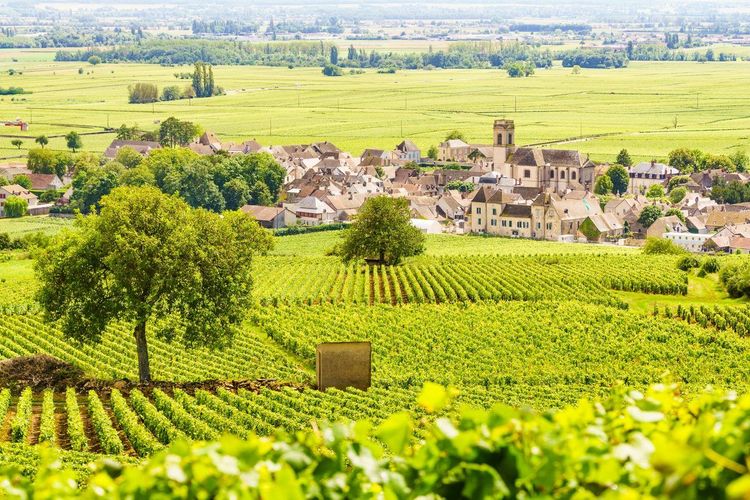
Two days in Beaune is the format that comes up most often among travellers wondering how many days they need to visit Beaune without rushing. The answer fits in a single sentence: two full days are enough to cover the essential wine and architectural heritage, provided you are willing to choose rather than trying to tick every box.
The first day focuses on the historic heart: the Hospices de Beaune and their polychrome roof, a loop along the ramparts, the basilique Notre-Dame, then a descent into the cellars before a foodie break. The second day shifts to the vineyard, with the Cité des Climats et Vins de Bourgogne as the entry point, followed by a choice between the Route des Grands Crus by car or a cycling excursion along the Voie des Vignes.
For travellers who prefer to keep their hands free during the visit rather than juggling a paper map, this same route is available on the Ryo app, from the town centre all the way to the first vines.
Day 1: The Hospices de Beaune and the Hôtel-Dieu, the Town's Must-See
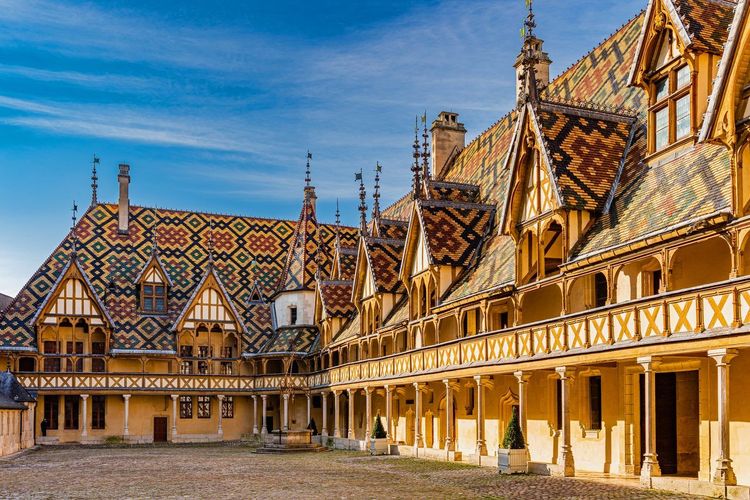
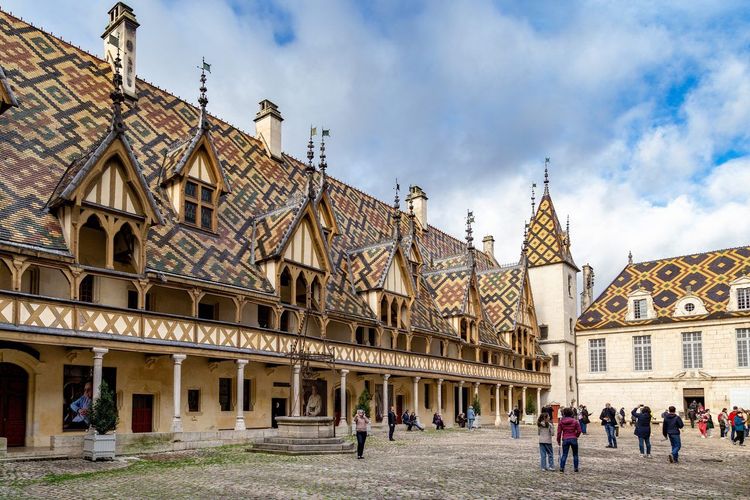
Nicolas Rolin, chancellor to the Duke of Burgundy, founded the Hôtel-Dieu in 1443 to provide free care to the town's poor. Nearly six centuries later, the building remains the monument that almost every visitor puts first on their list, and for good reason: its glazed diamond-pattern tiles in green, yellow and black make up one of the most photographed rooftops in Burgundy. The complex forms the Hospices de Beaune, a hospital that remained in operation until the early 1970s, before its services moved to the hôpital Philippe le Bon and the building was fully given over to visitors.
The visit is self-guided with an audio guide included in the ticket price, taking around 1 to 1.5 hours depending on your pace. It begins in the inner courtyard, where the half-timbered galleries frame a wrought-iron well, and where the contrast between the sober street-facing façade and the ornate courtyard-facing side never fails to surprise first-time visitors.
Next comes the Grande Salle des Malades, also known as the Salle des Pauvres, with its red canopied beds lined up beneath an upturned ship's hull roof. Rogier van der Weyden's Polyptych of the Last Judgement, kept in an adjoining room, rounds off the visit: the commissioners of the time had insisted on a magnifying mirror so that bedridden patients could make out the details from their beds.
Book your ticket online to avoid the morning queue, especially between June and September. In high season, from 1 April to 15 November, the Hôtel-Dieu opens continuously from 9am to 7:30pm; for the rest of the year, hours narrow to 9am–12:30pm and then 2pm–6:30pm, with a midday break that regularly catches visitors who arrive at noon off guard. In both cases, the ticket office closes one hour before the site itself to allow enough time for the visit. Expect to pay between 12 and 16 euros for an adult ticket depending on the option chosen, audio guide included, with combined tickets available for other sites in the town.
Every third Sunday in November, the Hospices de Beaune has held its famous wine auction since 1859, an event that sets part of the Burgundy market prices for the year ahead. If your stay falls during this period, expect a town in full swing, with hotels fully booked and restaurants packed from Friday onwards.
For a photograph of the roof without the crowds, arrive at opening time or come in the late afternoon: the raking light brings out the geometric patterns far better than at midday. The best viewpoint remains the inner courtyard itself, but there is also a gap in the street for those who have not bought a ticket and simply want to admire the rooftop from outside.
Consider this visit the natural starting point of your stay: the Hôtel-Dieu ticket office sits steps from the tourist office, where you can pick up a map and identify the other must-see attractions in the centre before continuing to the ramparts. Families sometimes enjoy workshops and puzzle trails offered alongside the standard visit; allow half a day to combine the Hôtel-Dieu, the courtyard and the temporary exhibition without rushing, or one hour if your schedule is tight.
Strolling Through the Historic Centre and Along the Ramparts of Beaune
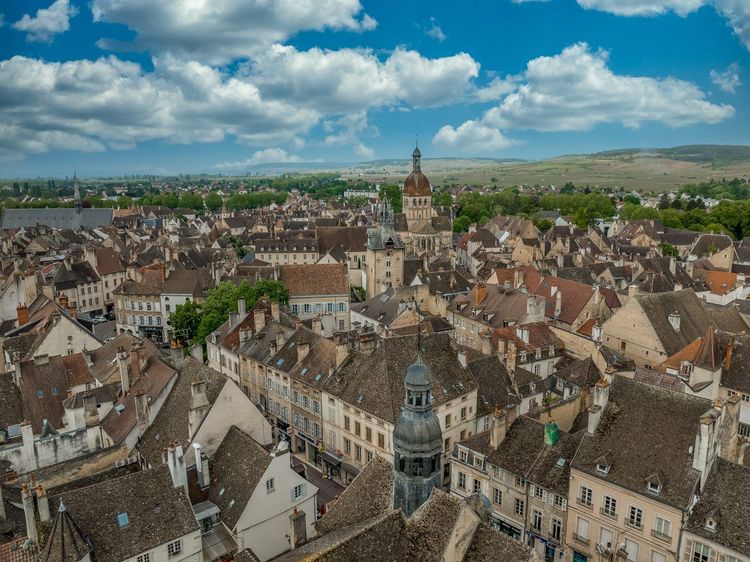
Beaune fits entirely within its Écusson, the name given to the historic centre shaped like a shield by the medieval ramparts that still surround it almost in their entirety. Allow 20 to 30 minutes to walk around it following the tree-lined promenade that runs along the inside of the fortifications, longer if you stop at each bastion.
The ramparts of Beaune (Boulevard Maréchal Foch, 21200 Beaune, rated 4.6/5 on Google from 12 reviews) date largely from the 15th century, with later reinforcements following the Wars of Religion. Seven bastions survive, some converted into cellars or private gardens, while another now hosts a traditional Burgundian game of boules. The walk on the outer side, along the former moats now laid to grass, offers a different perspective on the town from that of the cobbled centre.
To wander through the historic centre without a fixed itinerary, start from the place Carnot and head along the rue Monge then the rue d'Alsace: these are the two main shopping streets that concentrate wine boutiques, craftsmen's workshops and old shopfronts. The side streets running perpendicular, narrower and less busy, reveal half-timbered façades and archways that are invisible from the main thoroughfares.
This is precisely the route followed by the Ryo audio guide Entre pierres et grands crus, which strings together the ramparts, the lanes of the Écusson and the wine-trade façades in just under an hour. A good option if you prefer to walk at the pace of a commentary rather than guessing which building deserves a stop.
The centre is entirely pedestrianised or has restricted traffic on its main axes, making the stroll pleasant even at the height of the tourist season. Wear comfortable shoes: the original cobblestones, still in place on several streets, are unforgiving in heels.
Late in the morning, the light filters well through the arcades of the place Carnot and sets off the nearby covered market hall to good effect — a fine moment to take the pulse of the town if you happen to be there on a Saturday, market day.
The Basilique Notre-Dame de Beaune, an Underrated Romanesque Gem
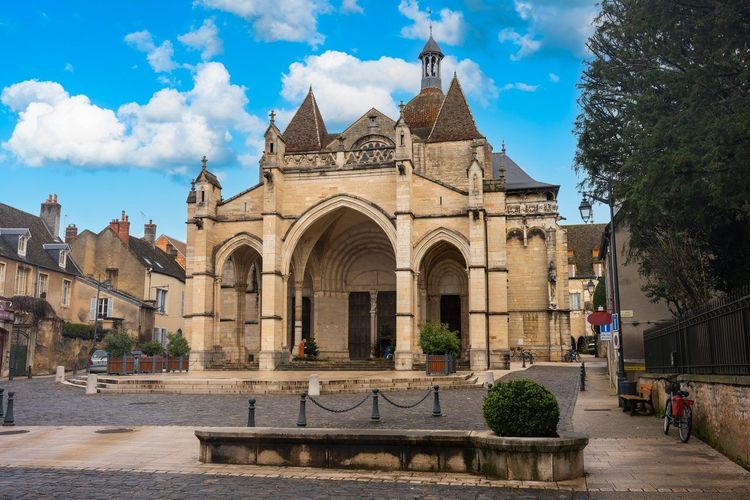
A short walk from the Hospices, the basilique Notre-Dame de Beaune (Place Général Leclerc, 21200 Beaune, rated 4.5/5 on Google from 1,129 reviews) first reveals itself through its grand porch, a vast Gothic narthex added in the 14th century to the front of a 12th-century Romanesque nave directly inspired by Cluny. It is one of the few monuments in the centre that most hurried visitors overlook, yet it concentrates several centuries of Burgundian religious history under a single roof.
Inside, a set of five 15th-century tapestries depicting the life of the Virgin unfolds in the choir, usually on display from spring to autumn and stored for the rest of the year for conservation reasons. Check with the tourist office before making a detour if these tapestries are the main reason for your visit. The adjoining cloister, more discreet, offers a quiet pause away from the tourist flow on the main street.
In the evening, from spring to autumn, the town projects the Chemin des Lumières, a trail of light installations and video projections on several façades in the historic centre, including that of the basilica. Check the dates locally: the programme varies from year to year and generally stops in winter.
Descending into the Cellars: Patriarche, Bouchard Aîné & Fils and Underground Visits
Beaune sits atop a subsoil carved with kilometres of galleries, remnants of medieval quarries converted into wine cellars as far back as the Middle Ages. The Caves Patriarche, housed in a former 13th-century convent, alone claim 5 kilometres of galleries and one of the largest collections of Burgundy wines in storage, with certain bottles dating back to the early 19th century.
The visit is self-guided with a silver tastevin offered at the entrance, allowing you to taste around a dozen wines at your own pace along the underground route. Allow 1 to 1.5 hours; the cool temperature is guaranteed even in the height of summer — a welcome refuge when the afternoon heat pushes you to seek shelter without admitting it.
A few streets away, the Caves Bouchard Aîné & Fils (4 Boulevard Maréchal Foch, 21200 Beaune, rated 4.5/5 on Google from 269 reviews) occupy former 15th-century Cistercian cellars, with a more focused approach: a guided visit of just under an hour, small group, and a commented tasting of 3 to 5 wines depending on the option chosen. This is the one to go for if you prefer an educational accompaniment rather than a solo tour.
A third format exists for those curious to understand the town through its foundations: the guided "from town to cellar" tour, which alternates above-ground stretches through the Écusson with descents into two or three different cellars in a single outing. Ask at the tourist office; these themed visits usually depart at fixed times and should be booked in advance during high season.
Several Beaune estates carry the "Vignobles & Découvertes" label, which guarantees a welcome suited to non-specialist visitors and explanations free of excessive technical jargon. Look for this logo on shopfronts if you are new to wine: it helps you avoid visits where terroir is discussed at length without ever leaving room for a simple question.
Between Patriarche, Bouchard Aîné & Fils and the more discreet cellars tucked beneath the town house hôtels particuliers, it is better to choose one or two houses rather than visiting them in succession: attention fades quickly after the third glass.
The Moutarderie Fallot: Beaune's Mustard, a Great Family Visit
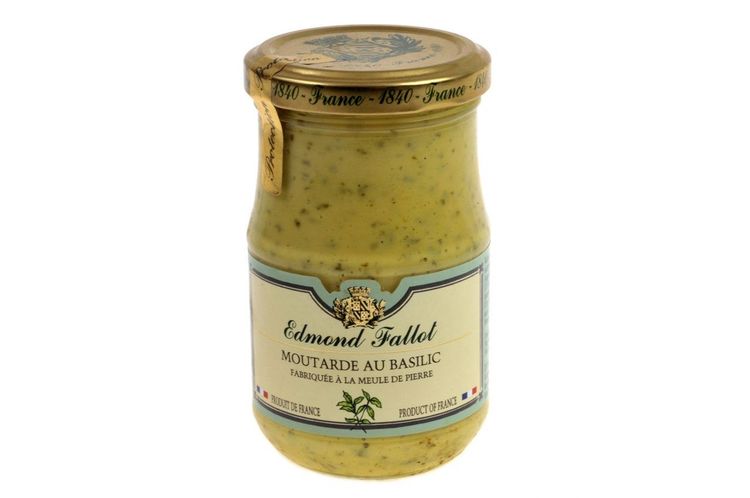
Burgundy mustard has long been associated with Dijon as much as with Beaune, but it is indeed in Beaune that the region's last independent family mustard factory is found. The Moutarderie Fallot (31 Rue du Faubourg Bretonnière, 21200 Beaune, rated 4.5/5 on Google from 3,732 reviews) has been producing its mustard since 1840 using a process that grinds the seeds with a stone mill rather than heating them, a method that preserves more of the condiment's natural kick.
The visit, called the Moutard'Tour, combines explanations of mustard seed cultivation with a recreation of an old mill, featuring interactive stations that appeal as much to children as to adults. Allow around one hour; suitable from around age 6–7, it is a good option if your stay in Beaune includes young children who need to be kept engaged between two cellar visits.
The visit invariably ends at the Fallot workshop boutique, where you can sample several varieties before buying, from classic Dijon mustard to flavoured versions with blackcurrant or pain d'épices. It is also the place to understand why mustard remains, alongside bœuf bourguignon and snails, one of the culinary specialities that visitors instinctively associate with Beaune.
Book your time slot online the day before during high season, as school groups often occupy the spring mornings. Opening hours narrow considerably outside the summer season — a detail that regularly catches last-minute visitors off guard.
Where to Have Lunch and a Gourmet Break on Day One
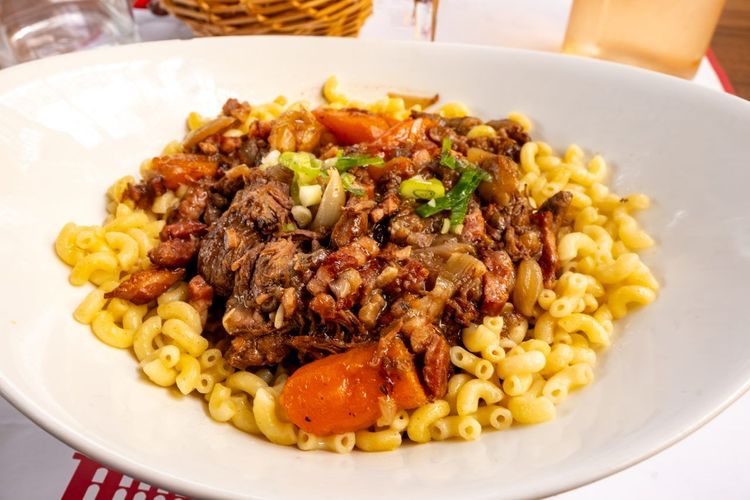
Between visits, Beaune has no shortage of places to grab a break, from the neighbourhood bistro to a more polished table. For a no-fuss lunch between two cellar visits, Biz'tro offers simple Burgundian bistro cooking, generous portions and no reservation required on weekdays.
If you are looking for a slightly more relaxed table for the evening, the Table du Square plays the market-fresh and local-producer card in a setting that is more contemporary than most restaurants in the historic centre. Reservation recommended at weekends.
For a mid-afternoon treat, the Marie Simon patisserie remains a safe bet for those with a sweet tooth, with pastries that change with the seasons. For Sunday brunch, les Popiettes offer a hearty set menu in a deliberately laid-back atmosphere, a good option if your first day starts gently rather than at Hospices opening time.
For aperitif hour, the wine bars in the centre fall into two distinct camps: those that focus on a by-the-glass selection refreshed each week to showcase little-distributed small producers, and those that go for a lively atmosphere with sharing boards of local charcuterie and cheese. The most popular ones cluster around the place Carnot and the place Madeleine, within walking distance of each other — handy for moving on without getting back in the car.
Before heading back to the hotel, a detour to a pain d'épices shop such as Mulot et Petitjean, the Dijon-based house with a presence in several towns in the region, is a must for fans of this Burgundian speciality that is less famous than mustard but just as deeply rooted in local habits. A few streets further on, the bookshop Athenaeum, located right opposite the Hospices and specialising in books on wine and gastronomy, rounds off the stop nicely for anyone who wants to leave with something other than a bottle.
Day 2: The Cité des Climats et Vins de Bourgogne
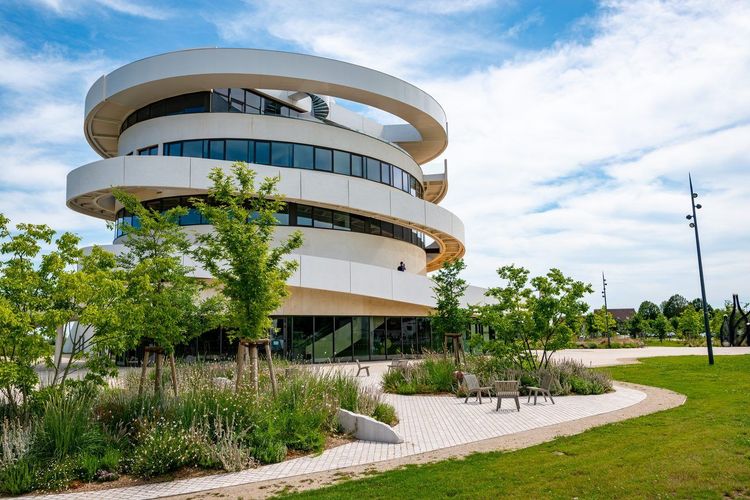
The second day logically begins at the Cité des Climats et Vins de Bourgogne, which opened in 2023 on the heights of Beaune and serves as an educational introduction to everything you will encounter on the Route des Grands Crus afterwards. The site is part of a network of three venues spread across Chablis, Beaune and Mâcon, each covering a different sector of the Burgundy vineyard.
The immersive trail retraces the inscription of the Burgundy Climats on the UNESCO World Heritage List in 2015 — that mosaic of more than 1,200 plots delineated over centuries according to their aspect, soil and microclimate. Scale models, projections and soil samples allow you to understand in one hour what the guides at wine estates then explain plot by plot.
This site largely replaces the former Beaune wine museum housed in the Hôtel des Ducs de Bourgogne, which remains open for those who prefer a more historical and less digital approach to the subject. The two complement each other more than they compete: the first for understanding the terroir, the second for the history of the tools and trades of the vine.
Allow 1.5 hours for the full visit including the tasting area at the end of the trail, where several wines are offered depending on the ticket chosen. Two pricing tiers exist, one for the trail alone and one for the trail with tasting: choose the second if you are not planning to visit an estate during the day. Book your time slot in advance at weekends, as capacity remains limited relative to summer visitor numbers.
It is also the best moment of the day to decide on the rest of the day's programme: after this context-setting, you will have a much clearer sense of which villages on the Route des Grands Crus genuinely interest you, rather than wanting to tick everything off indiscriminately. The site has a dedicated car park and is around a 15-minute walk from the historic centre, a pleasant stroll that partly follows Beaune's urban vines.
On the Route des Grands Crus: Iconic Villages and Estates
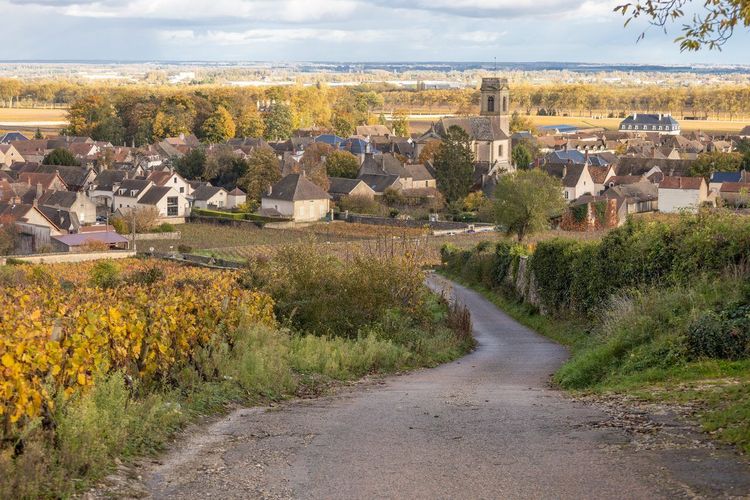
The Route des Grands Crus connects Dijon to Santenay over roughly 60 kilometres, passing through some of the most prestigious names in the world of wine. For a second day based in Beaune, a stretch of about twenty kilometres south of the town is more than enough to grasp the essentials, without spending the entire day behind the wheel.
The logical first stop, just 5 minutes from Beaune, is the village of Pommard, home to the château de Pommard (15 Rue Marey-Monge, 21630 Pommard, rated 4.3/5 on Google from 342 reviews), the property of the clos Marey-Monge, one of the largest single-walled enclosures in Burgundy at around 20 hectares. Visits combine a walk through the clos with a tasting, and you can leave with a bottle from the very plot you have just crossed.
Heading north, Aloxe-Corton stands out for the Corton hill, which produces both a red grand cru, corton, and a white grand cru, corton-charlemagne — a unique case on the Côte de Beaune. The village itself is tiny, just a few hundred inhabitants, but its climat names appear on the wine lists of the world's greatest restaurants.
Head south next to Meursault, an essential reference for white wine lovers, where chardonnay achieves a characteristic buttery richness that few other Burgundy terroirs replicate. The village hosts its Paulée de Meursault every year in mid-November, a vast banquet that closes the Trois Glorieuses: the chapter of the Confrérie des Chevaliers du Tastevin at the Clos de Vougeot on Saturday, the Hospices wine auction on Sunday and the Paulée on Monday. Not to be confused with the Saint-Vincent tournante, another major Burgundian gathering held in January in a different village each year.
Further south still, Chassagne-Montrachet shares with its neighbour Puligny-Montrachet the Montrachet plots, often cited as producing one of the most expensive white wines in the world. The village deserves a stop even without a tasting, if only for the contemporary sculptures scattered through its streets — an unexpected contrast with the traditional image of the Burgundy vineyard.
To visit this route without worrying about driving after a tasting, several options are available: a private driver for a half day, a shared minibus departing from Beaune, or an electric bike for the shorter stretches between neighbouring villages. Allow at least half a day for two or three villages, or a full day if you want to push north as far as Nuits-Saint-Georges.
Each estate operates differently when it comes to bookings: some accept walk-in visitors, others require a reservation at least 48 hours in advance. A phone call the day before avoids closed doors, especially out of season when opening hours narrow.
Tasting Burgundy Wines: Estates and Wine Courses
Beyond the big names on the Route des Grands Crus, Beaune itself is home to a handful of houses reachable on foot from the centre — practical if you do not want to get back in the car to taste. Champy, founded in 1720, claims the title of the oldest négociant house in Burgundy still in operation, with cellars visited by passing through the barrel-ageing warehouse.
The Domaine Besancenot, more under the radar, cultivates around thirty hectares across village and premier cru appellations on the Côte de Beaune, with a family welcome that contrasts sharply with the more tourist-oriented format of the larger houses. This is the kind of address to seek out if you want a conversation with a winemaker rather than a polished group presentation.
The Clos de la Belle Châtelaine and the Clos du Cèdre round out this overview with shorter tasting formats, often by the glass, suited to those who want to try wines without committing to a full hour-long visit.
Fancy bubbles rather than still wine? Veuve Ambal, a house specialising in Crémant de Bourgogne based at Montagny-lès-Beaune, offers a tour of its cellars and traditional method — a refreshing alternative for those who are beginning to tire of tannic red wine tastings after a full day on the Route des Grands Crus.
To make sense of it all, several addresses in the centre, including L'Ecrit'Vin, offer introductory wine courses lasting 1.5 to 2 hours, designed for beginners who want to leave able to tell a red Burgundy from a white without embarrassing themselves at their next dinner party. Sessions combine a short theory segment with a comparative tasting of 5 to 6 wines, usually in a small group of 6 to 10 people.
If time is short, opt for a single wine course rather than visiting individual cellars one after another: it is the most efficient format for coming away with genuine bearings on the appellations of the Côte de Beaune.
Cycling the Voie des Vignes: Route and Bike Hire
To change pace after a morning of tastings, the Voie des Vignes offers an alternative to the car: a signposted cycling route, largely on a dedicated path, connecting Beaune to Santenay over about twenty kilometres through the vineyards of the Côte de Beaune.
The terrain is broadly flat, accessible to occasional cyclists, with regular stopping points in the villages along the way (Pommard, Volnay, Meursault, Saint-Aubin) for those who want to combine cycling with a tasting break. Allow 2 to 3 hours for the one-way ride without stopping, or half a day if you make multiple halts.
Several hire shops in the centre of Beaune offer standard bikes and electric-assist bikes by the day or half day, sometimes with the option of returning the bike in a different village from your starting point. Book the day before in summer, as the stock of electric bikes goes quickly in the morning.
For those who prefer a more unusual and less strenuous option, a ride in an open-top 2CV through the vineyards covers much the same scenery without the pedalling effort, with a driver who provides commentary along the way. A good choice for a couple looking for a different kind of outing without committing to several hours on a bike.
Bring water and a cap even on overcast days: exposure on the path is considerable given the lack of shade for most of the route. The villages along the way all have at least one place to restock, but it is best not to rely on them during busy summer periods.
Day Trips from Beaune: the Château du Clos de Vougeot and Dijon
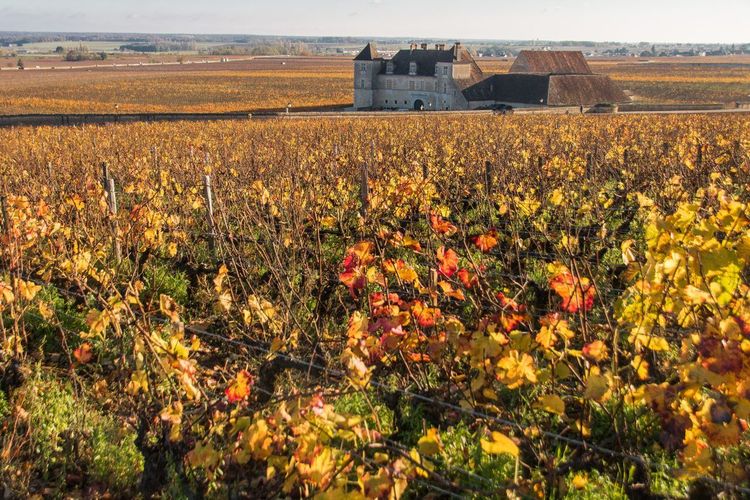
If your stay extends beyond two days, or if you prefer to vary the second day's programme rather than devoting it entirely to the Route des Grands Crus heading south, two excursions north of Beaune are worth the detour. For a deeper look at this option, the Ryo article on what to see around Beaune sets out a full one-day itinerary.
About twenty minutes by road, the château du Clos de Vougeot (21640 Vougeot, rated 4.5/5 on Google from 4,125 reviews) occupies the former cellars of a Cistercian abbey, today the headquarters of the Confrérie des Chevaliers du Tastevin, founded in 1934 to promote Burgundy wines. Visitors tour the monumental old press, several centuries old, and the rooms where the confrérie's solemn chapters are still held today.
Along the way, several wine-growing villages of the Côte-d'Or merit a quick stop even without visiting an estate: Vosne-Romanée for a name that alone evokes some of the most sought-after wines in the world, or Nuits-Saint-Georges for its livelier town centre and its own cellars open to the public.
For a more complete change of scenery, Dijon is 25 minutes away by regional train or 45 minutes by car from Beaune. The Burgundian capital offers a considerably larger historic centre, with the Palais des Ducs et des États de Bourgogne, the cathédrale Saint-Bénigne and the famous owl trail — a series of markers set into the pavement guiding visitors from monument to monument.
Dijon is also the city most associated in the public mind with mustard, even though Beaune retains, with the Moutarderie Fallot, the region's last truly artisan production. A day in Dijon complements a stay in Beaune well without competing with it; the two towns are visited for different reasons.
If you only have time for one return trip as a day excursion, choose Dijon by train rather than by car: the central station drops you directly into the historic centre, without the parking constraints of Dijon's town centre during the day.
Unusual and Family-Friendly Activities in Beaune
Beaune is not only an adult tasting destination; the town has developed several activities designed to keep children occupied without sacrificing the heritage interest of the visit. The tourist train, departing from the centre steps from the tourist office, offers a commented tour of around 40 minutes through the streets of the historic centre — a good warm-up for families before tackling the Hospices on foot.
For a more memorable experience, several operators based near Beaune organise hot-air balloon flights at dawn over the vineyards of the Côte de Beaune, a fairly spectacular way to grasp the plot-by-plot organisation of the vineyard at a single glance. Plan to book several weeks ahead in high season; flights are also heavily weather-dependent and can be cancelled at short notice due to wind.
For families with slightly older children, a treasure hunt trail called the Quête de Guigone — in reference to Guigone de Salins, co-founder of the Hospices alongside her husband Nicolas Rolin — turns the discovery of the historic centre into a puzzle trail. Children follow clues through the lanes, a way of keeping engaged those who might otherwise find monument visits a little long.
More broadly, Beaune is a kid-friendly town on its own scale: limited traffic in the centre, short distances between the main sites, and ice cream shops and tea rooms on hand for the essential breaks. To put together a complete family programme over several days, the Ryo article on visiting Beaune with family suggests addresses and a pace suited to children.
The Parc de la Bouzaise, a few minutes' walk from the centre, rounds out the family programme nicely with its play areas and lake — a welcome outdoor break after a morning of indoor visits.
Where to Sleep and Eat Well in Beaune
Book your hotel as soon as your dates are confirmed, especially if your stay falls on a summer weekend or during the Hospices wine auction in November: Beaune is a small town and its accommodation fills up quickly. Three types of lodging dominate the centre and its immediate surroundings.
Within the Écusson itself, several addresses occupy former wine merchants' townhouses, with vaulted cellars converted into spas or breakfast rooms. This is the obvious choice for those who want to do everything on foot and sleep in a setting that constantly echoes the town's wine-growing identity, even if prices tend to run a little above the regional average.
For a romantic weekend in Beaune, several guest houses offer rooms overlooking a flower-filled inner courtyard or with direct access to a private cellar for a tasting for two — a formula that comes up regularly in searches for a romantic Beaune weekend. Gastronomic restaurants in the centre pair well with this type of stay, with a tasting menu in the evening.
For a tighter budget, the immediate surroundings of Beaune (Savigny-lès-Beaune, Ladoix-Serrigny, Montagny-lès-Beaune) offer bed and breakfasts and small hotels at noticeably lower rates than the town centre, just 10–15 minutes by car. A good option if you have a vehicle and are not planning to walk back late in the evening.
For those looking for an all-inclusive Beaune weekend package, several hotels bundle a night's stay, a tasting at a partner cellar and breakfast into a single rate — convenient for anyone who would rather book once than juggle multiple addresses. Always check what is actually included; some packages limit the number of wines in the tasting.
Whatever neighbourhood you choose, the Ryo audio-guided tour of Beaune can be used directly from your hotel, since the bulk of the historic centre is covered on foot in just under an hour without depending on a fixed starting point.
Practical Information: Getting to Beaune, Parking and When to Go
By train, Beaune is easily reached via the Mobigo regional network of Bourgogne-Franche-Comté: around 20 to 25 minutes from Dijon, and just over 90 minutes from Paris with a change at Dijon by TGV. Beaune station is a 10-minute walk from the historic centre — easily manageable on foot with carry-on luggage.
By car, Beaune is 45 minutes from Dijon and around 2h30 from Paris via the A6 motorway, with a dedicated exit that drops you directly at the gates of the town centre.
For parking, several car parks encircle the Écusson without any need to drive into the inner streets, which are often one-way and poorly suited to through traffic. The Hospices car park, steps from the Hôtel-Dieu, is the most convenient for getting straight into the first day's visit, with a few free spaces on the immediate outskirts for longer stays.
On the question of season, spring and early autumn (April–June, September–October) offer the best compromise between pleasant weather and still-manageable crowds. Summer, particularly July–August, sees the highest visitor numbers and the steepest hotel prices, while the September harvest adds a particular buzz to the wine-growing villages — interesting to witness but sometimes making estate visits trickier to arrange.
The Beaune market is held every Saturday morning around the place Carnot and the covered market hall — a good moment to sample local produce before starting the day's sightseeing. Try to arrive before 10am if you want to avoid the thickest of the crowd.
Finally, if you are looking for a quiet moment between visits, the Parc de la Bouzaise is a reliable option year-round, shady in summer and pleasant to walk in even on cooler shoulder-season days.



FAQ
Is Beaune worth visiting?
Yes, without hesitation for anyone interested in heritage or wine: the town packs a major monument, the Hospices, several renowned cellars and direct access to the Route des Grands Crus into a compact historic centre. Even a short weekend is enough to come away with a genuine feel for wine-growing Burgundy.
How many days do you need to visit Beaune?
Two days cover the essentials: the historic centre and the cellars on the first day, the vineyards and the Route des Grands Crus on the second. A third day allows you to add a trip to Dijon or the château du Clos de Vougeot at a more leisurely pace.
What is the culinary speciality of Beaune?
Mustard remains the speciality most associated with the town, thanks to the Moutarderie Fallot, Burgundy's last independent artisan producer. Bœuf bourguignon and snails complete this trio, both served in the majority of restaurants in the historic centre.
What are the must-see attractions in Beaune?
The Hospices de Beaune and their polychrome roof top the list, followed by a descent into the Patriarche or Bouchard Aîné & Fils cellars and a visit to the Cité des Climats et Vins de Bourgogne. The basilique Notre-Dame, less crowded, rounds out this trio nicely for a two-day stay.
What day is the market in Beaune?
The main market is held every Saturday morning around the place Carnot and the covered market hall. A smaller market also takes place on Wednesday mornings, aimed more at locals than passing visitors.
How do you get to Beaune without a car?
The Mobigo regional train connects Dijon to Beaune in 20 to 25 minutes, with easy TGV connections from Paris, Lyon or Marseille. Beaune station is a 10-minute walk from the historic centre, making a car-free stay perfectly realistic.
Where can you park to visit Beaune?
Several car parks surround the historic centre without any need to drive into the Écusson, particularly around the Hospices and near the ramparts. It is best to avoid driving through the inner lanes, which are narrow and often one-way. The Ryo audio-guided tour, Among Stones and Great Wines, passes right by the Hospices de Beaune and Place Carnot, no car needed to follow it.
Two Days in Beaune — What Next?
Two days in Beaune are enough to understand why this small town carries such weight in the history of French wine, with its polychrome roof, kilometres of cellars and a UNESCO-listed vineyard just minutes from the town centre. The hardest part is deciding what to prioritise, not finding enough to fill the programme: keep one visit in reserve — it will give you a good reason to return out of season, when the cellars can be explored without queuing.
If you prefer a ready-made thread rather than putting together your own itinerary, the Ryo audio-guided tour of Beaune covers the essential historic centre and can be complemented, once on the ground, by a foray along the Route des Grands Crus or the Voie des Vignes depending on how much energy you have left for the second day.