





Walk
Among Stones and Great Wines
Beaune, France
Walk
Among Stones and Great Wines
Beaune, France
2.5 km
Distance
1h10
Durée
20
Audios
Loop
Parcours
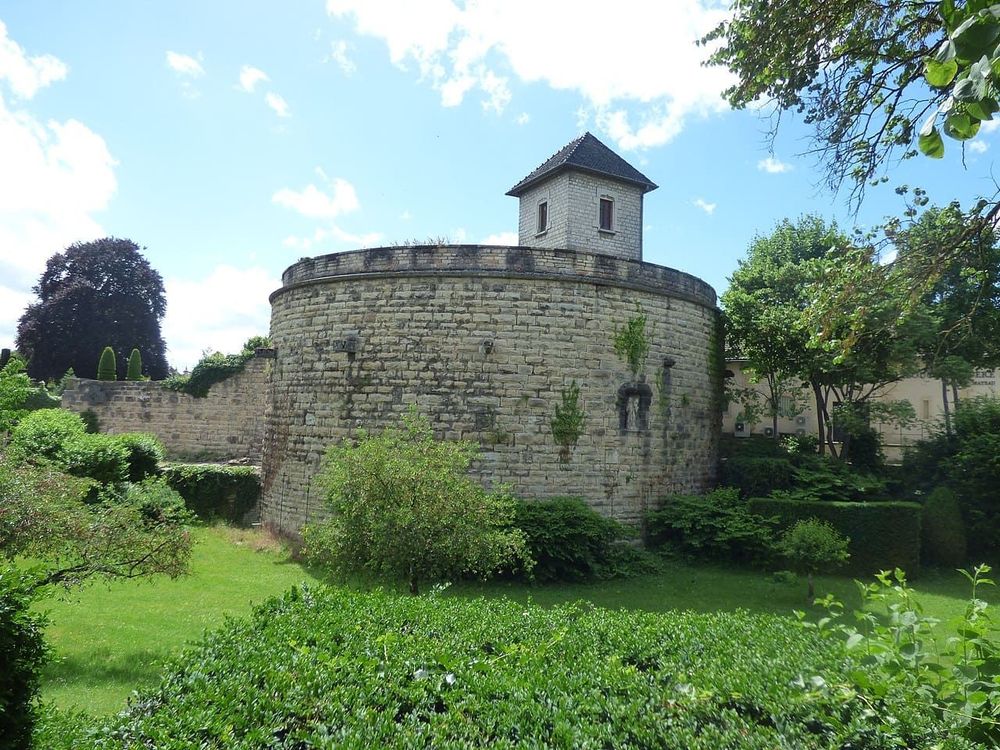
©Eliott Brown CC BY-SA 2.0. <https://creativecommons.org/licenses/by-sa/2.0/deed.fr>via Wikipedia Commons
The Beaune audio-guided tour leads you before the town's castle, one of its most emblematic buildings. With its high stone walls, its circular towers and its imposing portal, it recalls the time when Burgundy was at the peak of its power.
The castle was first designed to defend the town, in a context where Burgundy, then very powerful, was also going through periods of tension. Its construction dates back to 1443, a date that history enthusiasts will recognise: it is also that of the founding of the Hospices de Beaune. Reinforced over the centuries, notably during the Thirty Years' War, it was later opened up and transformed, gradually losing its military function.
To discover the castle, you must take the street that runs along it and go to the end to see its oldest part, with its circular towers and high stone walls. The building today houses trading cellars, faithful to the wine-making vocation of Beaune. Its imposing silhouette bears witness to the eventful history of the capital of Burgundy wines.
The Castle of Beaune is in the historic centre of the town. Its walls and towers can be seen freely from the street. As the building today houses trading cellars, interior access depends on their activity and possible visits or tastings, whose hours vary; it is best to check in advance.
Its construction dates back to 1443, the very year of the founding of the Hospices de Beaune.
It houses trading cellars, faithful to the wine-making vocation of Beaune, capital of Burgundy wines.
Aucun avis pour le moment
