




Walk
Among Stones and Great Wines
Beaune, France
Walk
Among Stones and Great Wines
Beaune, France
2.5 km
Distance
1h10
Durée
20
Audios
Loop
Parcours
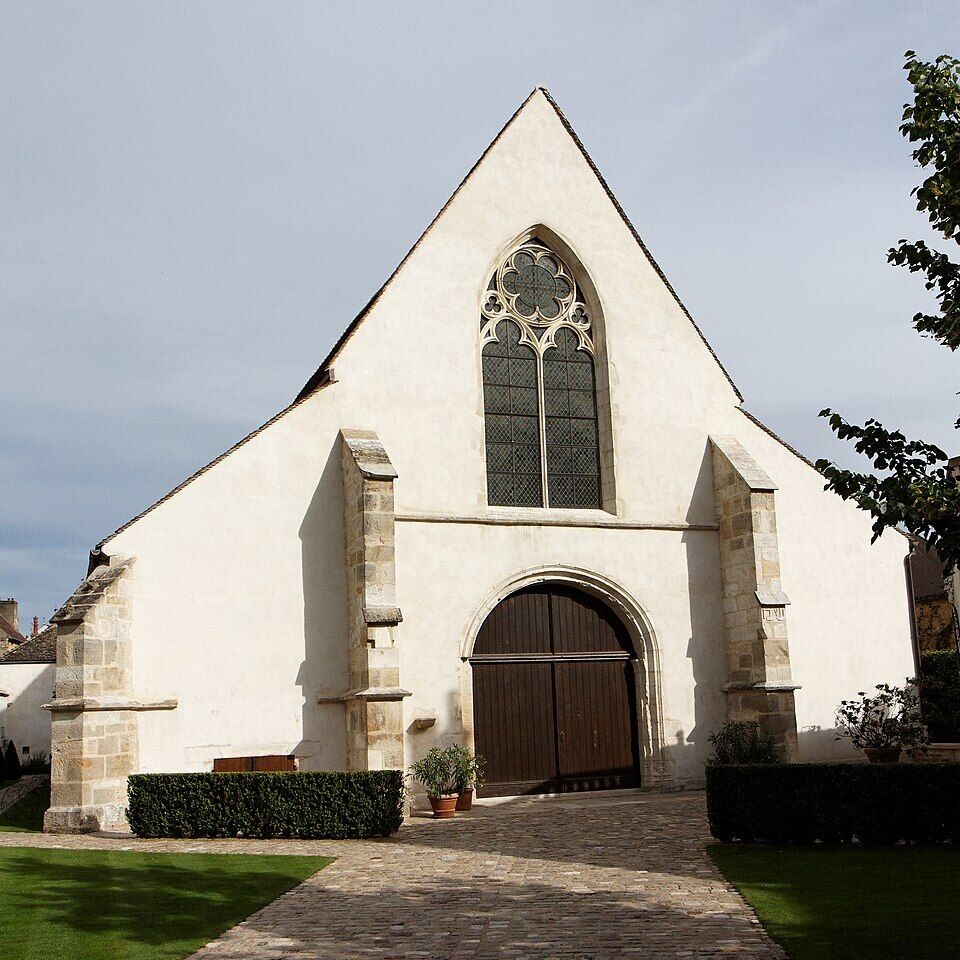
©Thesupermat CC BY-SA 3.0. <https://creativecommons.org/licenses/by-sa/3.0/deed.fr>via Wikipedia Commons
The Beaune audio-guided tour points out to you, behind a wall, an elegant Gothic building, discreet but steeped in history: the former Jacobins chapel. A remnant of an important convent, this place of worship is discovered with respect, in the calm proper to this kind of building.
The chapel is all that remains of a convent founded in Beaune in the 15th century by the Dominican order, then called the Jacobins, in reference to their first Parisian convent on Rue Saint-Jacques. The monks had the mission of preaching the faith, in a century when the Church was asserting its authority. Consecrated in 1483, the chapel reflects a late Gothic architecture, with a nave of four bays.
The building, plain and elegant, illustrates the Flamboyant Gothic of the late Middle Ages and the presence of the mendicant orders in Beaune. The original bell tower and choir have disappeared over the centuries, but the nave survives and bears witness to the past wealth of the convent. It is approached with respect, keeping in mind its religious vocation.
The former Jacobins chapel is in the historic centre of Beaune. Depending on the period, it may host events or exhibitions; its access then depends on the programming, whose hours vary. A place of religious heritage, it is discovered with a respectful attitude; it is best to check locally.
They were the monks of the Dominican order, so named after their first Parisian convent on Rue Saint-Jacques.
Only the chapel remains, consecrated in 1483, of late Gothic architecture, the bell tower and choir having disappeared.
Aucun avis pour le moment
