




Walk
The birthplace of Louis Pasteur
Dole, France
Walk
The birthplace of Louis Pasteur
Dole, France
4.3 km
Distance
1h45
Durée
20
Audios
Loop
Parcours
Shutterstock
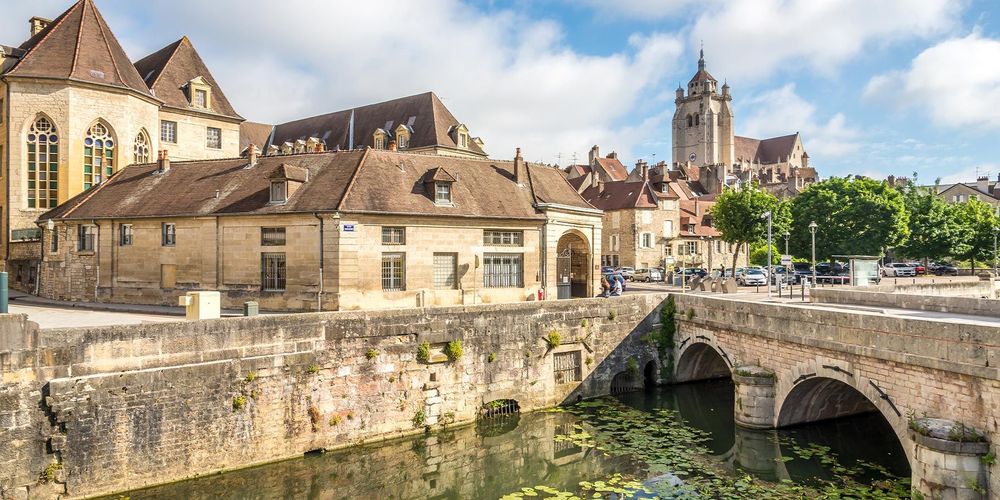
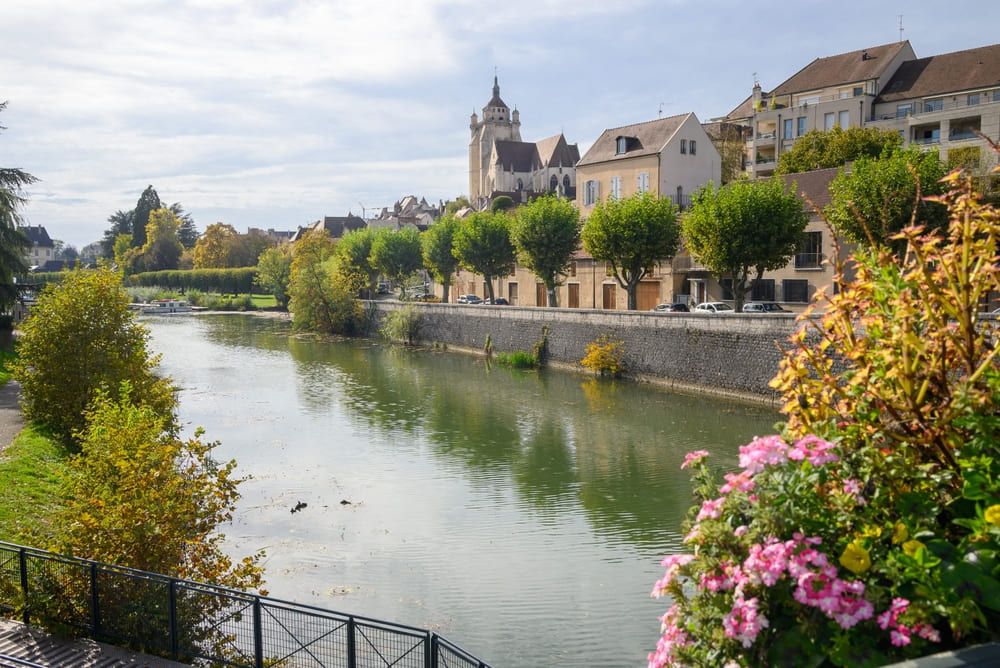
The Dole audio-guided tour takes you to where the Rhône-Rhine canal ends, which flows into the Doubs. This river, which crosses the city in its centre, has deeply marked the history and the landscape of Dole.
The Doubs, which gave its name to the neighbouring department, is the main tributary of the Saône. It rises in the Jura massif and runs four hundred and fifty-three kilometres before flowing into the Saône, at the village of Verdun-sur-le-Doubs, about fifty kilometres from Dole. In ancient times, the river was called Dubis, a Celtic word meaning "black". It crosses the city in its centre, separating the historic heart from the new town.
Along the Doubs and the canal that flows into it, one discovers fine perspectives over the city, its bridges and its banks. The river offers pleasant walks and shapes the river identity of Dole, nicknamed the "Little Venice of the Jura". It is a central natural element, inseparable from the charm of the city.
The Doubs crosses the centre of Dole, where the Rhône-Rhine canal flows into it. Its banks and the paths that run along it can be walked freely on foot at all hours and on the level, offering fine viewpoints over the city.
Four hundred and fifty-three kilometres; it rises in the Jura and flows into the Saône, of which it is the main tributary.
It comes from the Celtic word Dubis, which means "black", a name borne by the river since ancient times.
Aucun avis pour le moment
