





Walk
From the Concorde square to the Eiffel Tower
Paris, France
Walk
From the Concorde square to the Eiffel Tower
Paris, France
8.9 km
Distance
3h40
Durée
19
Audios
Loop
Parcours
Shutterstock
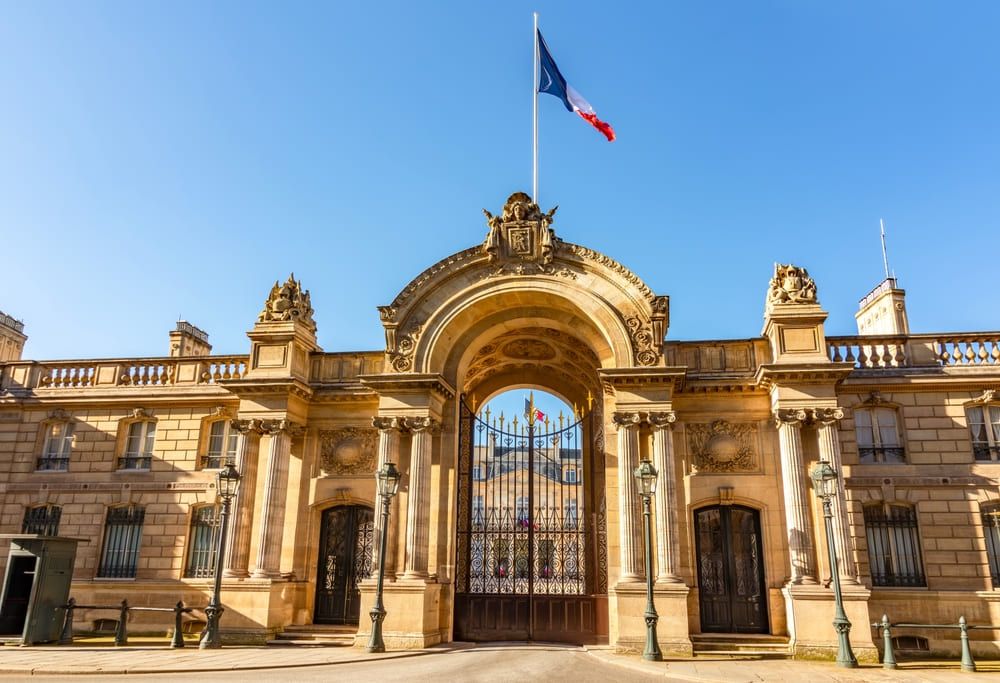
The Paris audio-guided tour takes you to the Rue du Faubourg-Saint-Honoré, one of the most prestigious thoroughfares of the capital, where, at number 55, stands the Élysée Palace, residence of the presidents of the French Republic.
The palace was built at the beginning of the eighteenth century for the Count of Évreux, thanks to the fortune of Antoine Crozat, then the richest man in France. This private mansion was not intended for power: it welcomed the great aristocracy, including Madame de Pompadour, favourite of Louis XV, and even became, at the end of the eighteenth century, a café-concert. Under the Second Republic, Louis-Napoleon Bonaparte, the first president elected by male universal suffrage, settled there. On 22 January 1879, a law officially declared the Élysée the residence of the presidents. The successive heads of state modernised the palace: telephone lines under Jules Grévy, electricity under Sadi Carnot, a lift under Armand Fallières, heating and bathrooms under Raymond Poincaré.
From the street, one glimpses the noble façade and the main gate of the Élysée, permanently guarded, in the heart of a district of luxury boutiques, art galleries and private mansions. While the palace cannot be visited freely, its prestigious surroundings and its history make it a striking stage of the walk. The palace exceptionally opens its doors during the European Heritage Days.
The Élysée Palace is at 55 Rue du Faubourg-Saint-Honoré, in the 8th arrondissement of Paris. Its façade can be contemplated from the street; the interior is accessible only during exceptional openings, generally on the European Heritage Days.
Since the law of 22 January 1879, which officially declared it the residence of the presidents of the French Republic.
For the Count of Évreux, at the beginning of the eighteenth century, thanks to the fortune of Antoine Crozat; it was first a private mansion of the aristocracy.
Aucun avis pour le moment
