



Walk
Echoes of the Middle Ages
Sarlat-la-Canéda, France
Walk
Echoes of the Middle Ages
Sarlat-la-Canéda, France
1.1 km
Distance
1h00
Durée
16
Audios
Loop
Parcours
Shutterstock
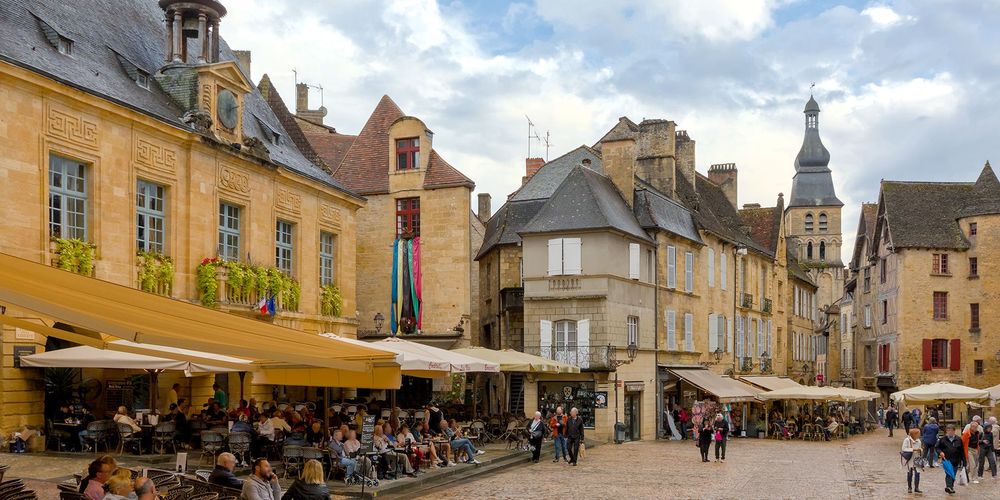
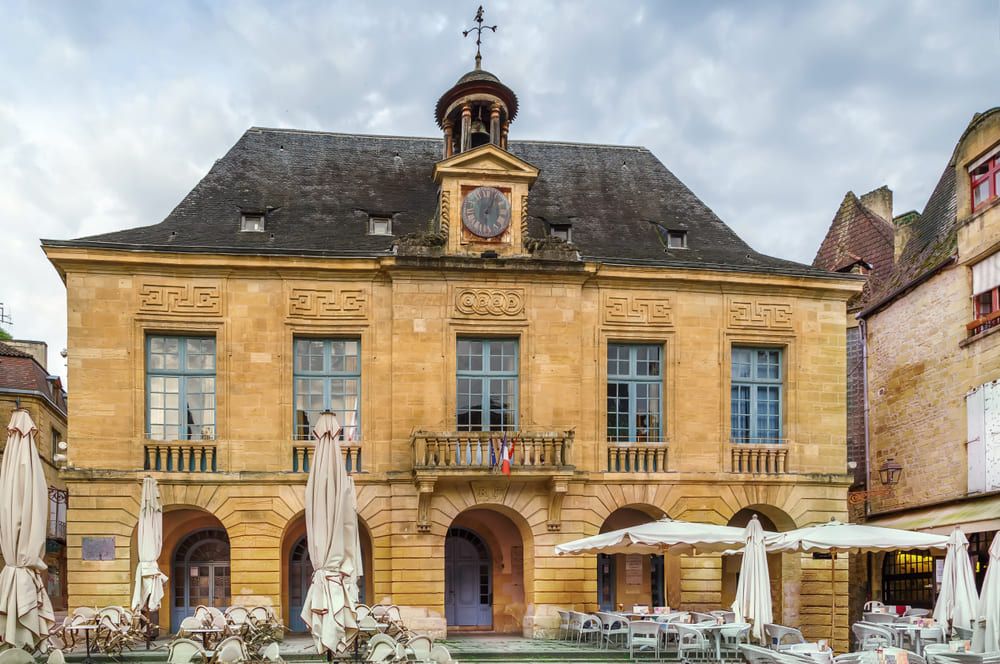
A stop on the Sarlat audio-guided tour, the former town hall sums up the city's entire history. This former episcopal palace became over time a town hall, a court, a prison, a theatre, and today a tourist office.
When the diocese of Sarlat was created in 1317, the bishops first settled in the former abbey dwelling, then a true palace was built at the end of the fifteenth century. The wing facing Place du Peyrou, with its Gothic mullioned windows and Renaissance openings, bears witness to this. At the Revolution, the building lost its spiritual purpose and became a town hall, court, police station and even prison.
In 1900, a spectacular transformation gave the building a new life. Now a tourist office, it preserves the traces of its many vocations. Observe the fine Gothic and Renaissance wing, a witness to the religious and political influence of Sarlat.
The former town hall is on Place du Peyrou, in the heart of old Sarlat. It houses the tourist office; opening days and hours should be checked depending on the season.
An episcopal palace, built at the end of the fifteenth century after the creation of the diocese of Sarlat in 1317.
The Sarlat tourist office.
Aucun avis pour le moment