





Walk
A Journey Through History
Compiègne, France
Walk
A Journey Through History
Compiègne, France
4.5 km
Distance
1h50
Durée
18
Audios
Loop
Parcours
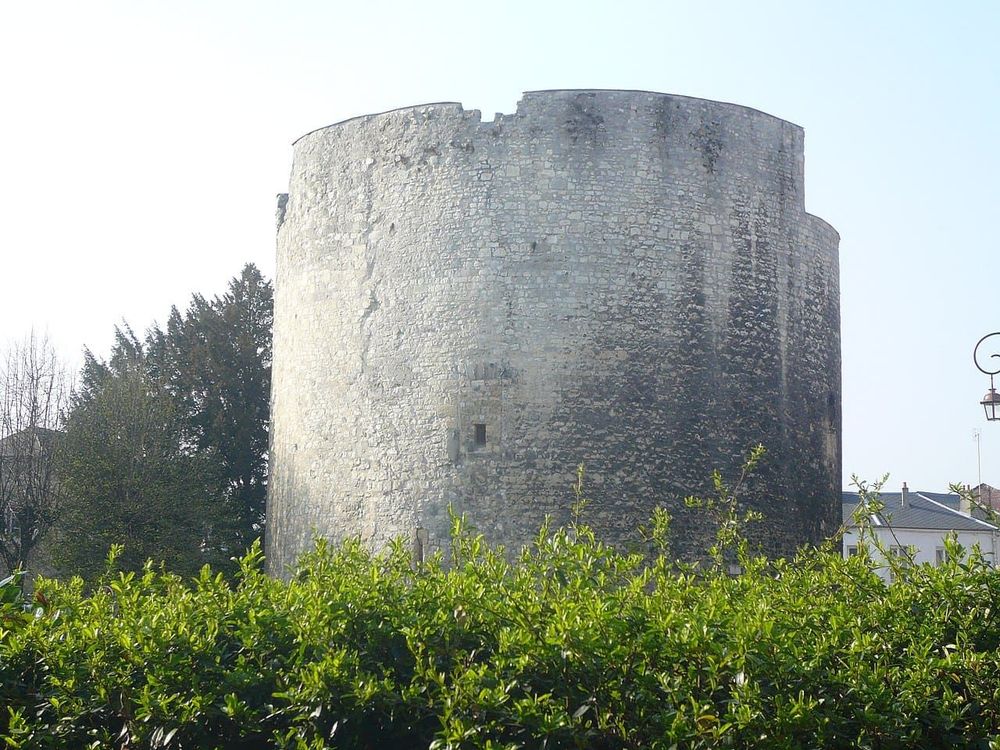
©Raisonnier CC BY-SA 3.0. https://creativecommons.org/licenses/by-sa/3.0/deed.fr
The Tour Jeanne d'Arc, or great tower of the king, is the last vestige of the former medieval castle of Compiègne. The Compiègne audio-guided tour stops here, with respect, to evoke this witness of the past of the town, closely linked to the capture of the heroine in 1430.
The tower of which you observe today the vestiges is called the great tower of the king, or Tour Jeanne d'Arc. It is all that remains of the primitive castle of the Capetians, which itself succeeded a Carolingian castle, on this site occupied since the early Middle Ages by the royal residences. But this tower owes its fame above all to its link with Joan of Arc. It is indeed at Compiègne that the heroine, come to defend the town besieged by the Burgundians, was captured on 23 May 1430, marking the beginning of her captivity, which would lead her up to her trial and her ordeal in Rouen. Tradition associates her memory with this tower, a witness of this dark and decisive page of the history of France. A vestige of the medieval royal power and a place of memory of the heroine, the Tour Jeanne d'Arc is discovered with respect, evoking the tragic destiny of the young woman.
Here you discover, with respect, the vestiges of the great tower of the king, the last remnant of the primitive castle of the Capetians, closely linked to Joan of Arc who was captured at Compiègne on 23 May 1430 while she was defending the town besieged by the Burgundians, marking the beginning of her captivity up to her ordeal in Rouen. The Tour Jeanne d'Arc is a place of memory of Compiègne. It is a stop to be discovered with respect.
The Tour Jeanne d'Arc lies in the heart of Compiègne, reachable on foot. They are open-air vestiges, freely visible from the public space. You discover them during a walk in the historic centre.
It is at Compiègne that Joan of Arc, come to defend the town besieged by the Burgundians, was captured on 23 May 1430, marking the beginning of her captivity; the tower, the last vestige of the primitive castle of the Capetians, is associated with the memory of the heroine.
In the heart of Compiègne, in the Oise, in France.
Aucun avis pour le moment
