
Créé par Emilie, le 17 nov. 2026
Votre guide Ryo
Compiègne, France
A Journey Through History
Parcours audioguidé pour visiter Compiègne en 1 jour
This visit invites you to an immersion in the heart of a sovereign city, where every stone still seems to vibrate with the "fêtes galantes" and the decisions that shaped world history. Let yourself be charmed by the nobility of a city that has successfully blended the rigor of French Classicism with the softness of an infinite verdant setting. Between the elegance of its royal vistas and the charm of its narrow streets with facades steeped in memory, the Imperial City reveals a character that is proud, peaceful, and deeply majestic. An exploration on foot, balancing exceptional gardens and memories of epic sagas, to capture the full soul of a city that has always been a sanctuary at the pinnacle of power.
Quand partir à Compiègne ?
Jan.
6°
11
Feb.
8°
9
March
12°
10
April
16°
9
May
19°
10
June
23°
9
July
25°
8
Aug.
25°
8
Sept.
21°
8
Oct.
16°
10
Nov.
10°
11
Dec.
7°
12
Compiègne enjoys a modified oceanic climate, with pleasant summers around 24°C and cool, damp winters fluctuating between 1°C and 6°C. The ideal period runs from May to September to explore the state forest and the Palace gardens. The month of June is perfect for enjoying the surrounding nature, while September offers a peaceful atmosphere and ideal light for visiting the château and the historic museums of this imperial city.
Départ conseillé
No need to worry about where to begin! Our tours are designed as a loop, so you can jump in wherever you are. The navigation system and audioguide will automatically adjust to your location. However, if you happen to be nearby, we do have a preferred starting point: Place de l’Hôtel de Ville
Parking à proximité
Parking Guynemer / Cours Guynemer
If you choose to park on the street, please note that parking is paid from Monday to Saturday, from 8:30 AM to 12:00 PM and from 1:30 PM to 7:00 PM. The city of Compiègne is divided into two zones: a red zone in the city center where the maximum parking duration is limited to 2 hours, and an orange zone with more favorable rates, limited to 4 hours.
À savoir
Your visit to Compiègne includes a walk through the castle park. Please note that the park has opening hours and closes at 5:00 PM in winter, 6:00 PM in spring and autumn, and 7:00 PM in summer.
The same applies to the Remparts Garden, which closes at 5:30 PM from October to April and at 6:30 PM for the rest of the year.
Découvrez 18 lieux d'intérêt pour visiter Compiègne








What to see in Compiègne on your 1h50 tour?
This 4.5 km loop takes about 1 h 50 and links 17 sights. From the Town Hall square and its belfry, it reaches the imperial castle, its park and theatre, crosses the old town past the churches of Saint-Jacques and Saint-Antoine, follows the Oise to the Joan of Arc tower, then returns past the Saint-Corneille abbey and the old market lanes. With the Ryo app in your ears, every stone tells eight centuries of royal and Picard history.
Information checked in November 2026 and subject to change.
1 - Place de l’Hôtel de Ville
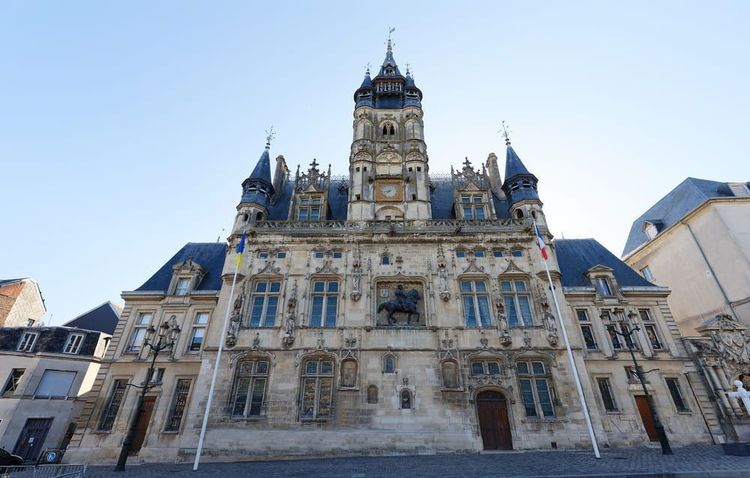
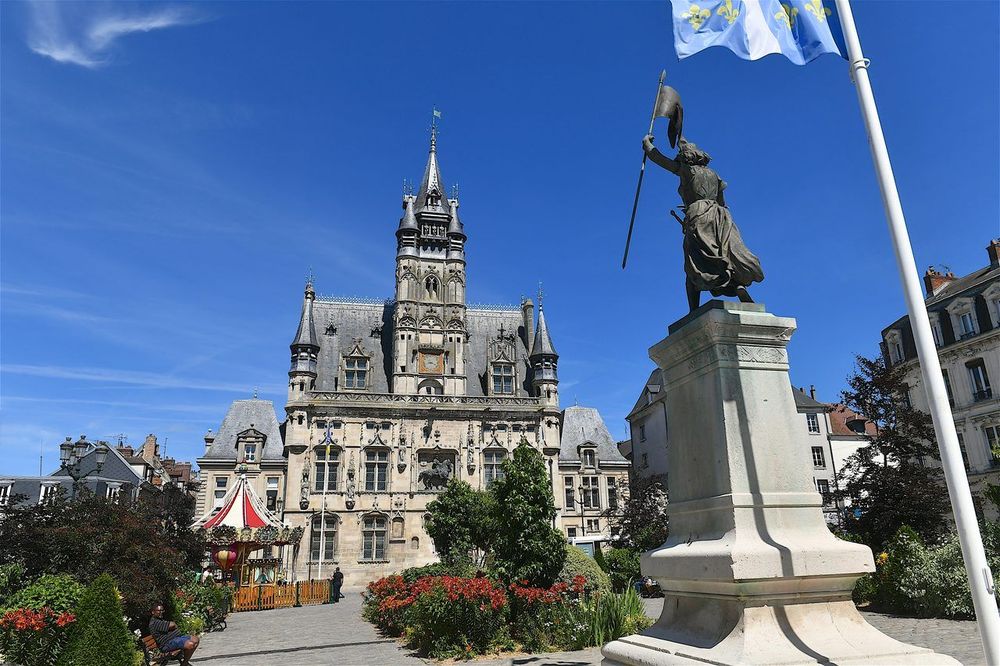
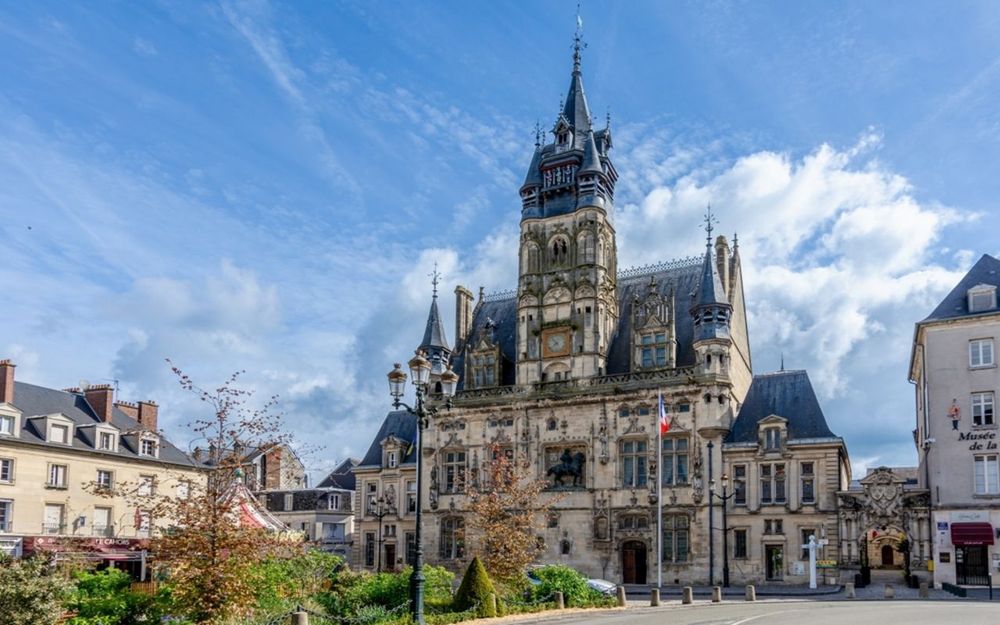
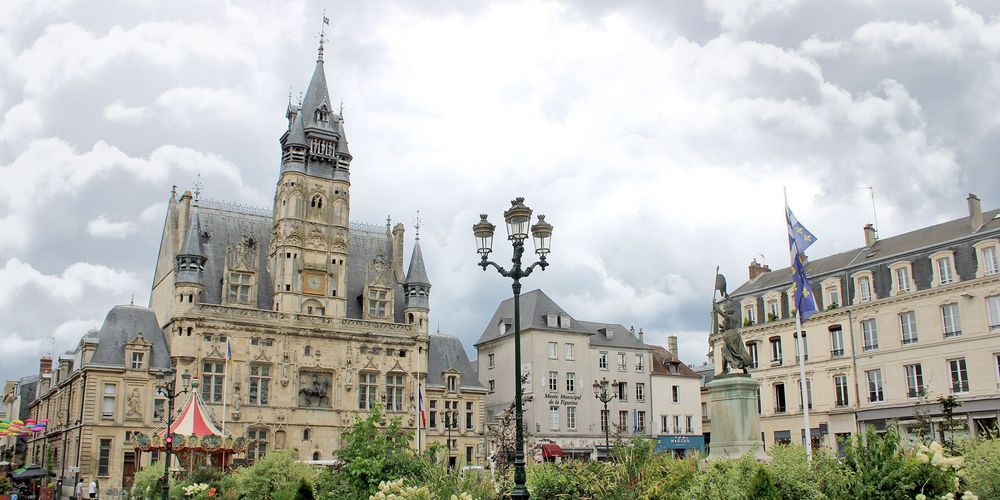
The square is dominated by the Town Hall, built in the Louis XII style at the very start of the 16th century: a carved façade 47 metres high and 24 wide. Its belfry, among the oldest in the region, houses a bell cast in 1303 and a clock fitted as early as 1530, kept company by three playful automatons: Langlois, Flandrin and Lansquenet. Listed by Prosper Mérimée and later restored by Viollet-le-Duc, the building also keeps the memory of the heroine, seized within these walls in 1430.
Free entry
2 - Church of Saint-Pierre des Minimes
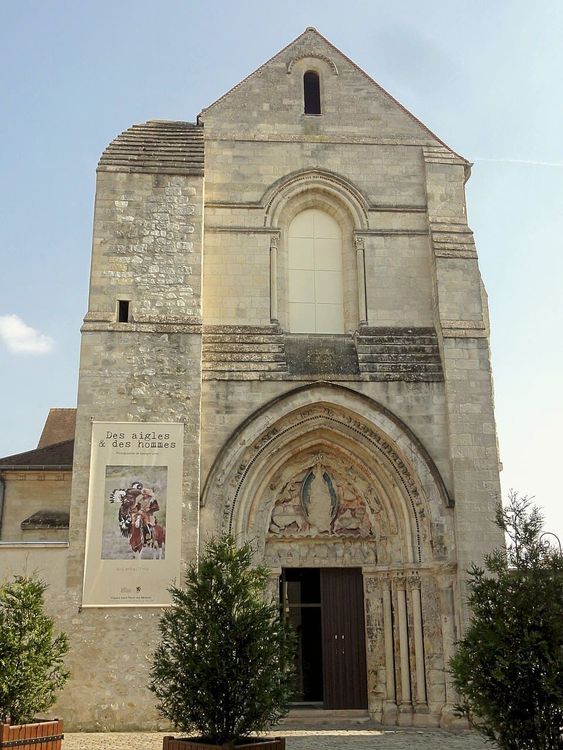
Compiègne's oldest standing building is the modest Church of Saint-Pierre des Minimes, blending Carolingian stonework with 12th-century Romanesque architecture. First a prayer house tied to the farming estate of the Saint-Corneille Abbey, it later passed to the Minims order, whose neighbouring convent now holds a primary school. Looted during the Revolution and long neglected, it was reborn in the 1990s as a free exhibition space where old heritage and contemporary creation meet.
3 - Compiègne Castle
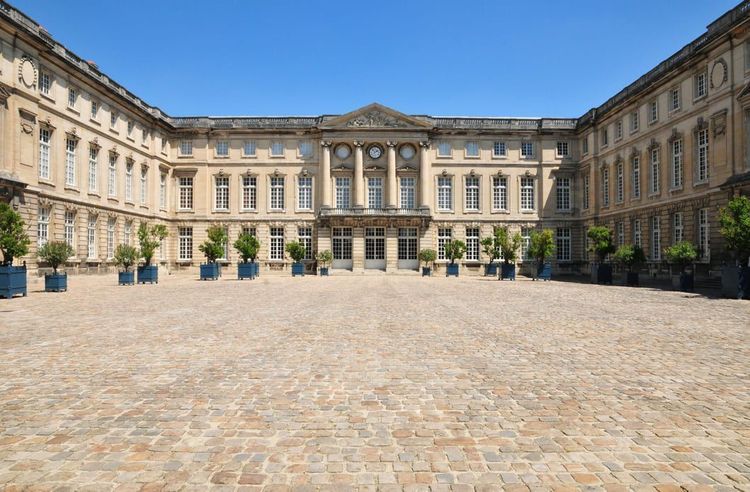
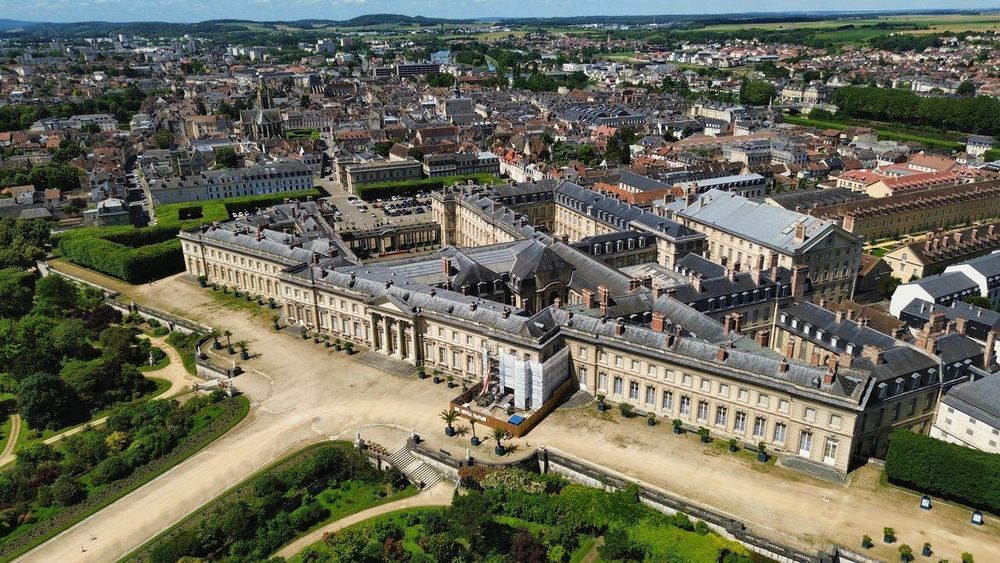
Less famous than Versailles but every bit as lavish, the Palace of Compiègne has hosted kings and emperors since the Middle Ages. Rebuilt in the 18th century, it became Louis XV's favourite hunting residence, then the stage for the Séries hosted by Napoleon III and Empress Eugénie. Inside, visitors find untouched imperial apartments unlike any other, alongside a surprising museum devoted to the history of the automobile.
Paid entry (about €10)
4 - Imperial Theatre
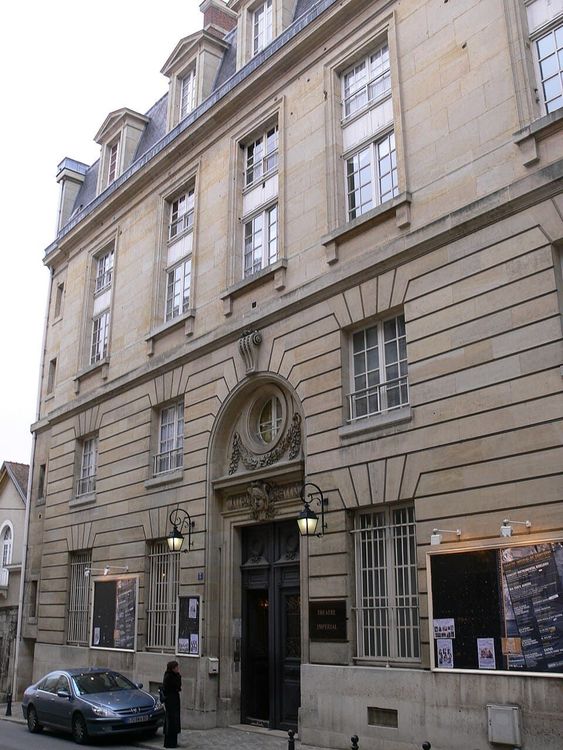
This Italian-style theatre, commissioned by Napoleon III to dazzle his guests, broke ground in 1867, modelled on the Versailles opera house. The war of 1870 stopped the works dead: Gustave Crauk's statues still grace the stage, but the ceiling stayed bare, the commission to painter Delaunay never carried out. Rescued a century later by Pierre Jourdan's association, it reopened in 1991 and now enjoys acoustics rated among the finest in France.
5 - Castle Park
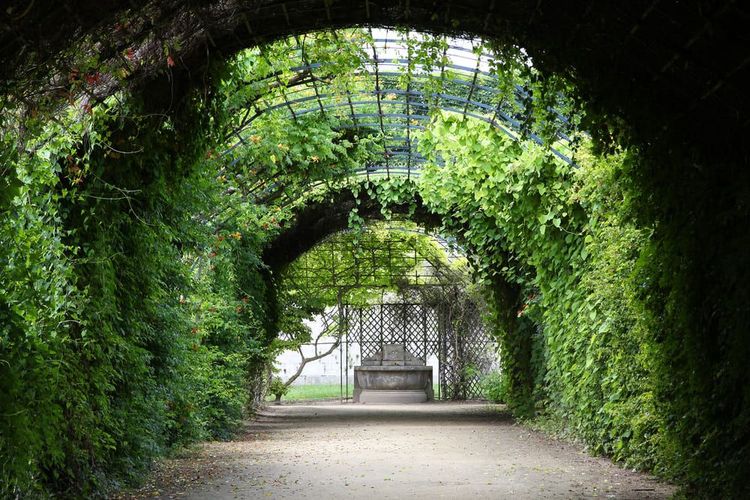
The gardens, first designed in 1752, only took their final shape under Napoleon I, who wanted to link the palace harmoniously to the neighbouring forest. Their proudest feature: the allée des Beaux-Monts, a dead-straight avenue that stretches for miles toward a wooded hilltop. Strolling through the flowerbeds, you'll spot around thirty marble statues inspired by antiquity, and, from late May to mid-June, a rose garden in full bloom.
Free entry
6 - Saint-Jacques Church
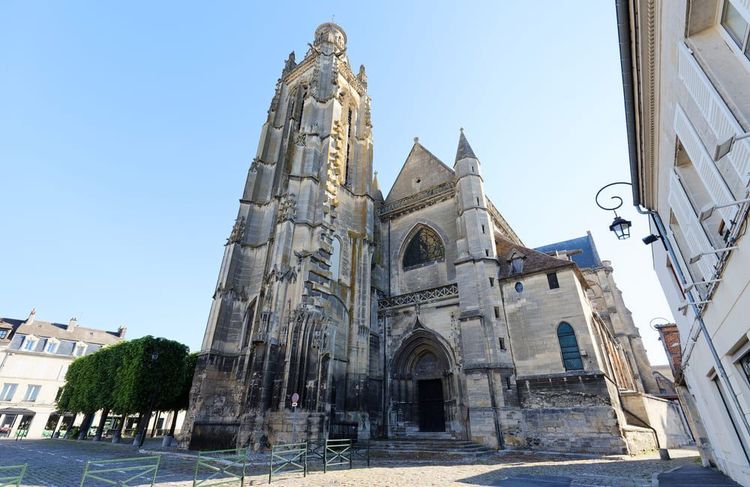
Listed as UNESCO World Heritage for the Compostela pilgrim routes, Saint-Jacques was one of three parishes created in 1199 once Compiègne had grown too big for the Saint-Corneille Abbey alone. Tradition holds that Joan of Arc heard mass here just hours before she was captured, on 23 May 1430. The parish is also tied to the sixteen Carmelite nuns guillotined in 1794 and beatified in 1906. Badly damaged by the 1944 bombings, it rose again before peace itself returned.
Free entry
7 - Monument Guynemer
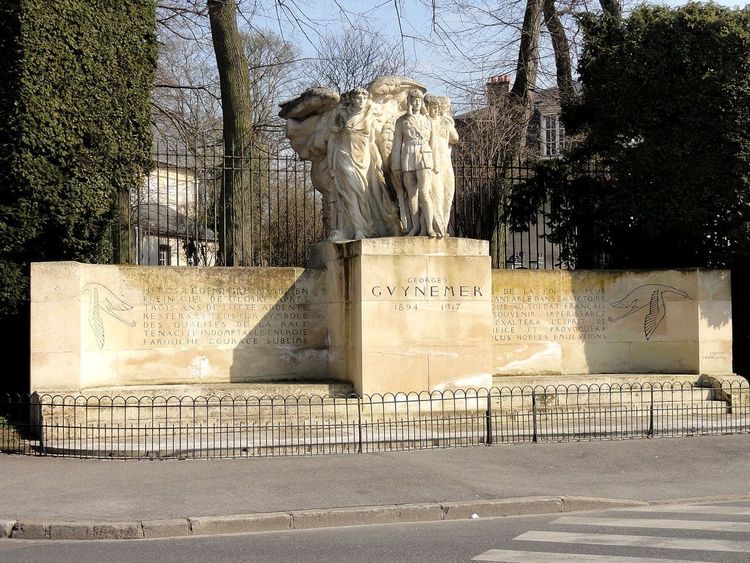
This monument honours Georges Guynemer, a native of Compiègne who became, at just 20, the "ace of aces" of French aviation. Shot down 8 times and surviving every time, he finally went down in flames over Belgium on 11 September 1917, aged only 22; a grieving France immediately pushed for his entry into the Panthéon. Behind the monument stretch the former royal stables of 1735, home to the National Stud until 2016 and once host to the famous Route du Poisson horse race.
Free entry
8 - The Garden of the Ramparts
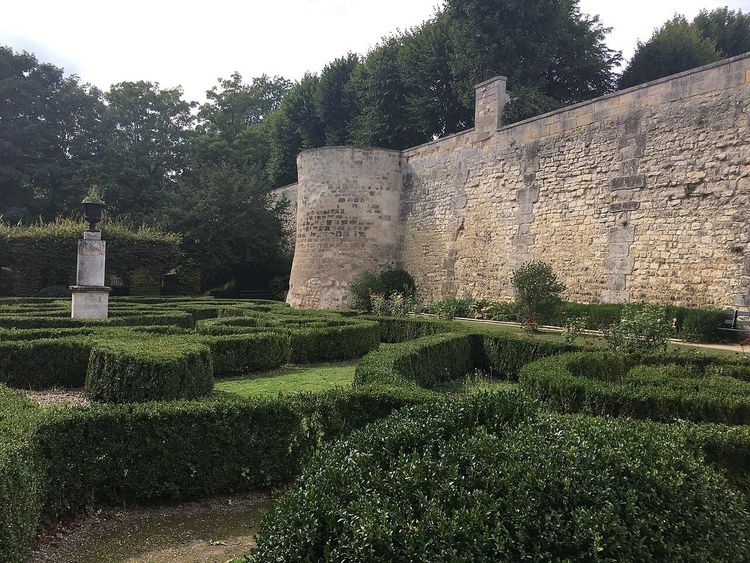
This hidden garden occupies the old medieval moat of the ramparts, once 16 metres wide and 10 deep. The fortifications, extended under the Capetians and reinforced in the 16th and 17th centuries, counted 19 towers before being decommissioned and handed to local residents in 1678. It wasn't until 1910 that landscape designer Ferdinand Bac laid out a boxwood maze of harmonious patterns here, listed as a historic monument since 1951.
Free entry
9 - Saint-Antoine Church
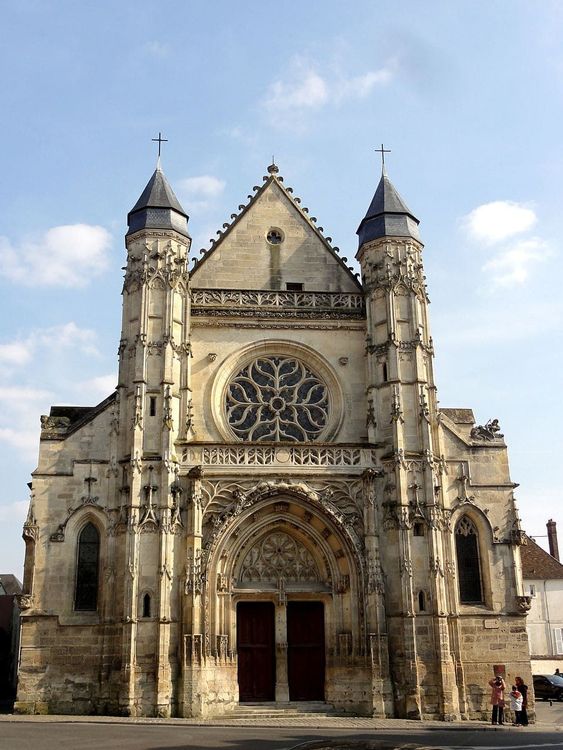
A twin of Saint-Jacques, Saint-Antoine Church was also born from the creation of new parishes in 1199. Its 13th-century Gothic style was reworked in the 16th after the ravages of the Hundred Years' War. During the Terror, its bells were banned and the building rented out to a fur trader before worship resumed. Worse still for its decor: in the 18th century it was stripped of its artworks and its walls whitewashed, a "vandalism" Prosper Mérimée would later denounce, before the building was listed in 1840.
Free entry
10 - Songeons Park
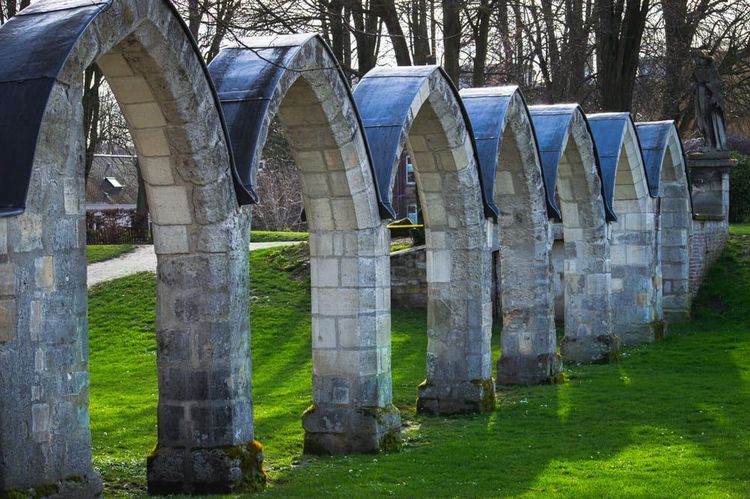
This park surrounds an 18th-century residence that became the Vivenel museum, bequeathed to his home town by architect and collector Antoine Vivenel: nearly 4,000 pieces, spanning from the Stone Age to the mid-1800s. You'll also spot the arcades of a former Jacobin cloister, torn down in the 18th century, and a few graves marking a vanished cemetery. Every year, on the weekend closest to 23 May, the park turns into a lively medieval market with troubadours and jousting shows in honour of Joan of Arc.
Free to see from outside
11 - The Oise River
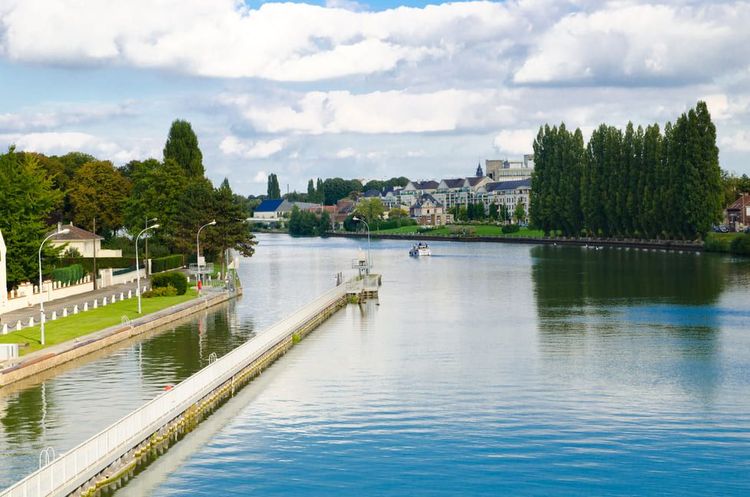
You're walking along the Oise, a river that captivated so many 19th-century painters. Rising in Chimay, Belgium, it runs 287 of its 302 km through French soil before joining the Seine, linking the Paris basin to the north of the country for centuries. Canalised from Compiègne onward, it's also followed by EuroVelo 3, nicknamed the Scandibérique, a cycle route running all the way from Norway to Spain.
Free entry
12 - Joan of Arc Tower
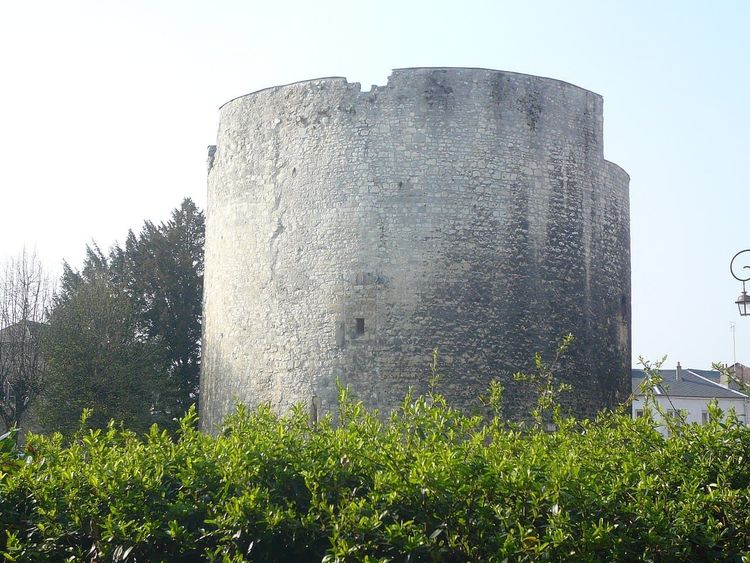
The only surviving piece of the original Capetian castle, this great round tower — the oldest known perfectly circular tower — once guarded the bridge over the Oise. It was here that Joan of Arc, having ridden out with 500 men to defend the besieged town, fell into Burgundian hands on 23 May 1430. Town captain Guillaume de Flavy, later accused in 1455 of letting her fall into enemy hands, watched the scene from its top; historians today reject that charge of treason.
Free entry
13 - Hôtel Dieu
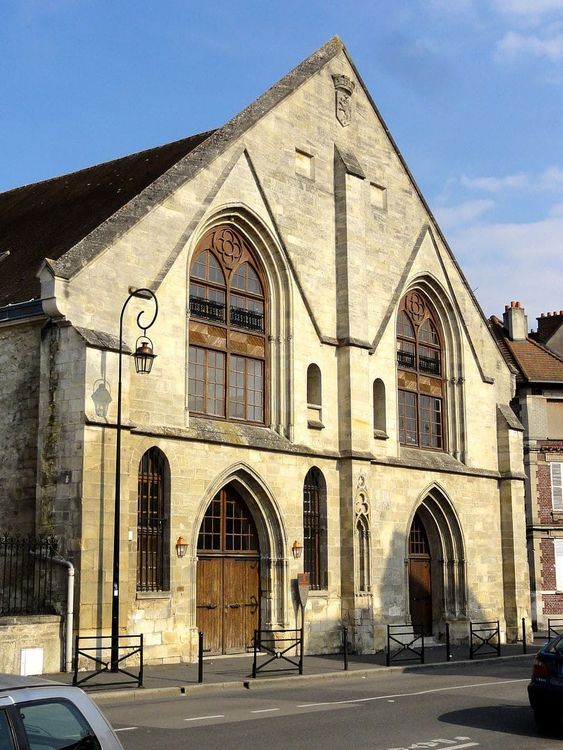
This 12th-century building on the corner of rue Jeanne-d'Arc was Compiègne's Hôtel-Dieu, where the poor, orphans and pilgrims were treated free of charge. Saint Louis, though he didn't found it, showered it with privileges; legend has it that in 1257 he personally carried in the first patient, wrapped in a golden cloth, alongside his brother, the king of Navarre. The old wards, converted in the 19th century, still display fine guild banners.
Free to see from outside
14 - Place du marché aux herbes
This square, likely the oldest in Compiègne, is said to date from 1079, when King Philip Augustus handed its use to the Saint-Corneille Abbey under the name Cour du Roi. A market settled in for centuries afterwards, drawing farmers from across the region. Iron market halls inspired by Baltard, put up in the late 19th century, gave way to concrete halls in the 1950s, then to a shopping centre in 2013: the shape keeps changing, the trading spirit doesn't.
Free entry
15 - Saint-Corneille abbey
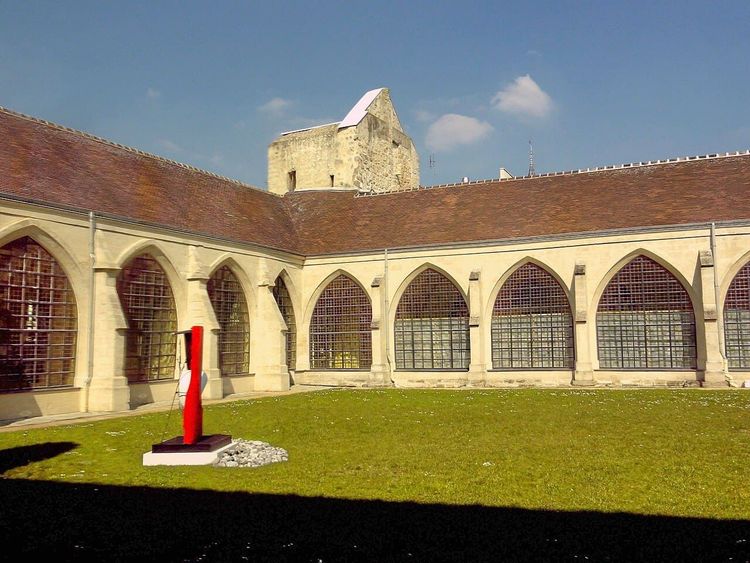
Founded in 877 by Charles the Bald, Charlemagne's grandson, to rival the chapel at Aachen, the Saint-Corneille Abbey witnessed the coronation of Hugh Capet and long kept a shroud that tradition traced back to Charlemagne himself. Looted during the Revolution and later bombed by German forces in 1940, only its Gothic cloister survives today, restored with its 14th-century painted decoration. You'll also find a small museum, a café and the municipal library.
16 - Old Salt Granary
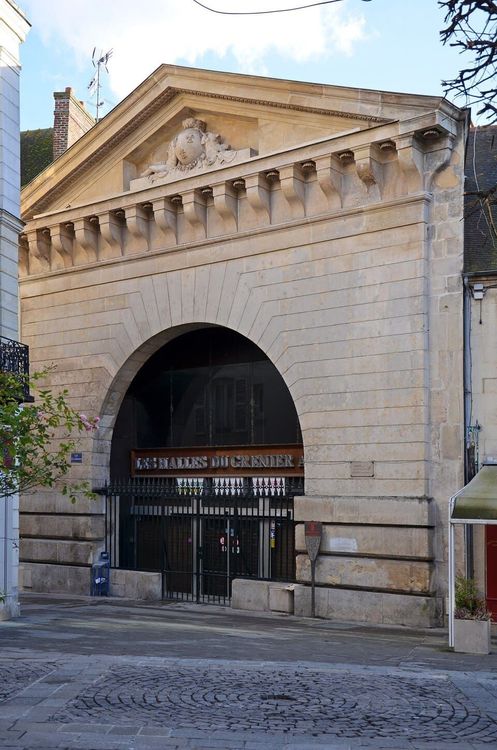
In the heart of the old money-changers' quarter, between Place du Change and Rue des Lombards, this granary stored salt taxed under the gabelle from as early as 1342, a royal levy that once made up 6% of the crown's revenue. Salt, vital for preserving food, was even sometimes used as pay — which is where the word "salary" itself comes from, via the Latin salarium. Turned into a meat then fish market after the Revolution, it was renovated in 1977 into a small covered market.
Free to see from outside
17 - La Vieille Cassine
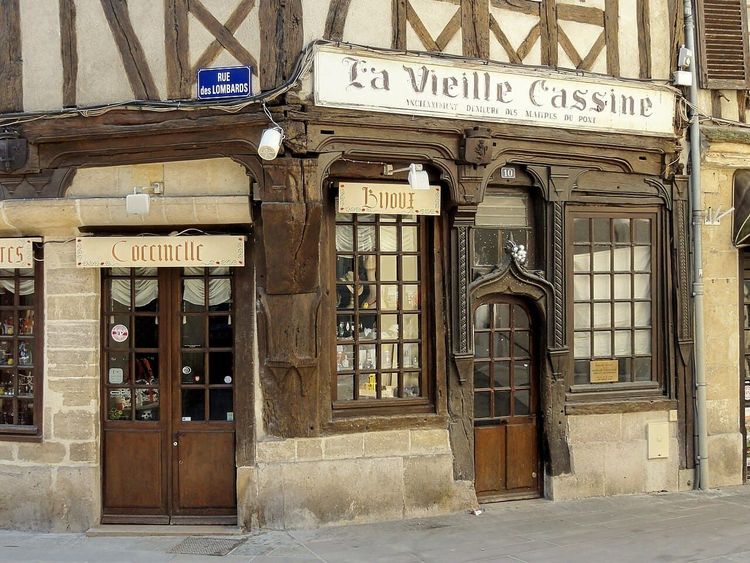
This half-timbered house, one of the oldest in Compiègne, dates from the late 14th or early 15th century. Its name, Cassine, means a rustic dwelling in the Picard dialect. It once housed the maîtres du pont, heads of a guild of pilots tasked with steering boats under the arches, where the currents ran fierce. The trade vanished after a dam was built in 1831, taming the waters; the house's last occupant, a cabinetmaker, later gave it the charm still admired today.
Free to see from outside
What to do in Compiègne in 2 or 3 days?
The 4.5 km loop links 17 stops in 1 h 50, from the imperial castle to the old town. With 2 or 3 days to spare, Compiègne rounds out with its state forest and the Armistice Clearing.
The next day, change scenery completely by heading into the state forest, over 14,000 hectares where Napoleon III once led his guests on hunts. The Beaux-Monts avenue, a straight cut running from the castle up to a hill, is reached by car or by bike, and the forest village of Vieux-Moulin, with its ponds and places to eat, closes out the day. Our 3-day itinerary for visiting Compiègne also covers the racecourse and rides on sturdy Henson horses.
The third day turns to 20th-century history: the Clairière de l'Armistice, at Rethondes, marks the spot where the armistice ending the First World War was signed on 11 November 1918, in Marshal Foch's railway carriage; the one on display today is an identical model from the same series. Further southeast, the free-access Gallo-Roman ruins of Champlieu add a temple, baths and an ancient theatre in the middle of the woods.
Which neighbourhoods does the tour cross?
In one loop, the walk links the imperial quarter to the old Picard town, in the footsteps of kings, Joan of Arc and emperors.
It starts at the Place de l'Hôtel de Ville and its belfry, reaches the imperial castle, the Imperial Theatre and the Castle Park, with its view down the Beaux-Monts avenue (stops 1 to 5).
It then crosses the old town past Saint-Jacques church, where Joan of Arc is said to have prayed before her capture, then past the Garden of the Ramparts and Saint-Antoine church, before following the Oise river to the Joan of Arc Tower and the old Hôtel-Dieu (stops 6 to 13).
The last stretch loops back through the market streets: the almost thousand-year-old Place du Marché-aux-Herbes, the Saint-Corneille abbey, the old salt granary and La Vieille Cassine, one of the town's oldest timber-framed houses (stops 14 to 17).
How much does it cost to visit Compiègne?
Of the 17 stops on the loop, thirteen can be enjoyed without a ticket, most of them freely and a few from the street. The imperial castle is the main paid entry: €10, €8 at the reduced rate, and free for under-26s and on the first Sunday of the month.
The Vivenel museum, in Songeons park, costs €4 to visit, with the same free entry for under-26s and on the first Sunday of the month. As for the Imperial Theatre, it has no simple entrance ticket: you get in through a show or an occasional guided tour.
Information checked in November 2026 and subject to change.
What to do in Compiègne with children?
The state forest makes a good family outing, away from the historic-centre loop.
A treetop adventure course offers routes designed for children among the branches, and a ride on a Henson, a calm, sturdy breed born in the Baie de Somme in the 1970s, suits a forest outing. These activities lie a few kilometres apart: plan a separate trip, by car or by bike, from the town centre.
What should you know before visiting Compiègne?
Two stops on the loop close at a fixed time, which can cut the route short late in the day.
The Castle Park closes at 5 pm in winter, 6 pm in spring and autumn, and 7 pm in summer. The Garden of the Ramparts closes at 5:30 pm from October to April and at 6:30 pm the rest of the year, so it is worth checking the time before lingering there. If you plan to go inside the castle, note that it is closed on Tuesdays.
What to see around Compiègne?
Compiègne works well for day trips, between a nearby castle and farther towns within reach for a day out.
About 15 minutes away by car, the Château de Pierrefonds is worth the detour: begun at the end of the 14th century under Louis I of Orléans, it was only completed in 1885 thanks to restoration work by Viollet-le-Duc. Our pick of activities to do in Compiègne goes into more detail.
For a longer outing, Laon, 60 km away, raises its walled upper town on a rocky promontory, while Amiens, 65 km away, leads from its Gothic cathedral to the canals of the Saint-Leu quarter. Paris is only 72 km off, and Reims, 89 km away, and Épernay, 92 km away, open the door to Champagne and its cellars.
What's on in Compiègne right now?
As the year winds down, one musical date stands out in the heart of Compiègne.
On 17 December, the Imperial Theatre hosts the Christmas concert 'Un Noël anglais', a chance to hear the acoustics of this Italian-style hall, left unfinished for more than a century.
Information checked in November 2026 and subject to change.
Le plein d'inspirations
Explorez le monde en totale liberté, à pied au cœur des villes ou au fil des routes. Nos guides audios transforment chaque destination en une découverte culturelle immersive et unique.
FAQ for visiting Compiègne
When is the best time to visit Compiègne?
The ideal time to discover Compiègne runs from May to September, when the region's modified oceanic climate offers pleasant temperatures around 24°C. June is particularly enchanting for making the most of the state forest and the gardens of the Imperial Palace in full bloom. If you're looking for a more peaceful atmosphere, September is an excellent choice, with golden light that enhances the royal architecture and fewer tourist crowds. Winters remain visitable but are cool and damp, with temperatures ranging between 1°C and 6°C, which can limit longer outdoor walks.
How much time do you need to visit Compiègne?
To fully appreciate this imperial city, ideally plan for two full days. One day lets you discover the essentials: the palace, its historic apartments and the adjoining gardens. With an extra day, you can explore the old town, wander through the history-laden lanes and venture into the majestic state forest. Visitors short on time can concentrate their discovery into one full day by focusing on the palace and the historic centre. The Ryo audioguide offers precisely an optimised route that lets you grasp the essence of Compiègne in just a few hours of narrated walking, ideal for an efficient visit.
How do you get to Compiègne from Paris?
Compiègne is easily accessible from the capital, located about 80 kilometres north of Paris. The train is the most practical option: direct services from the Gare du Nord get you there in generally under an hour. Trains run regularly throughout the day. By car, allow about an hour and a half via the A1 motorway then the N31, depending on traffic. Once there, the historic centre and the main tourist sites are easily reached on foot from the station, making the train particularly advantageous for visitors without a vehicle.
What are the must-sees in Compiègne?
The Palace of Compiègne naturally tops the list of wonders to discover, with its imperial apartments bearing witness to the splendour of Napoleon III and its French-style gardens. The historic centre deserves a careful stroll, notably around the Town Hall and the church of Saint-Jacques. The Armistice Clearing in the forest is a moving place of remembrance. Don't miss the Museum of Historical Figurines and the Antoine Vivenel Museum for their unique collections. The Ryo app guides you through these emblematic sites with captivating audio commentary that reveals the secrets and anecdotes of each place, greatly enriching your visiting experience.
Can you visit Compiègne as a family with children?
Compiègne proves to be a family destination par excellence, offering a perfect balance between culture and nature. Children generally enjoy the tour of the palace with its majestic halls and the Carriage Museum, which displays old horse-drawn carriages and automobiles. The state forest offers many trails suited to little legs, with picnic areas and fun routes. The palace park lets the youngest stretch their legs between two cultural visits. Many restaurants in the town centre offer children's menus, and the peaceful atmosphere of the town guarantees serene walks. The short distances between the main sites make getting around with strollers easy.
Where can you walk in the Compiègne forest?
The state forest of Compiègne, one of the largest in France, offers countless walking opportunities. Les Beaux Monts is a popular starting point with its waymarked trails and remarkable viewpoints. The Puits du Roi crossroads and its star-shaped avenues make for lovely circular walks. For a historic experience, head to the Rethondes clearing where the Armistice of 1918 was signed. The Saint-Pierre ponds provide a soothing setting for more contemplative strolls. Depending on the season, you can observe varied wildlife and admire the changing colours of this centuries-old forest that has inspired so many artists.
What can you do in Compiègne when it rains?
Rainy days don't spoil a visit to Compiègne, thanks to its many indoor activities. The Imperial Palace and its three museums offer hours of discovery in the dry: the historic apartments, the Museum of the Second Empire and the Carriage Museum. The Antoine Vivenel Museum, housed in a fine private mansion, presents fascinating art and archaeology collections. The imperial theatre, when it offers tours or shows, makes for an elegant cultural interlude. The historic cafés of the town centre invite you to linger over gourmet breaks, and several shopping arcades let you wander under cover while discovering local crafts.
Is Compiègne a good destination for a weekend?
Compiègne makes an ideal getaway for a weekend, offering the perfect balance between cultural richness and relaxation in a green setting. Its proximity to Paris lets you make the most of your time on site without losing long hours in transport. A weekend gives you time to explore the palace and its gardens, wander through the historic centre, and venture into the forest for a breath of fresh air. The varied range of accommodation, from charming guesthouses to more contemporary hotels, guarantees a comfortable stay. The many restaurants offer tasty local cuisine to pleasantly extend your evenings after a day of discoveries.
What do you see when visiting the Château de Compiègne?
The palace of Compiègne ranks among the great royal and imperial residences of France, alongside Versailles and Fontainebleau. Rebuilt in the eighteenth century on the orders of Louis XV, it became a favourite retreat under Napoleon I and then Napoleon III: the court spent the autumn here, between hunting in the forest and receptions. The tour leads through the apartments of the Emperor and the Empress, the ballroom gallery and salons refurnished as they once were, before opening onto a park laid out in a long perspective towards the forest.
Two museums extend the visit without leaving the building: the national Carriage Museum, which traces the history of transport from horse-drawn coaches to the first motor cars, and the Second Empire Museum, devoted to court life. The Ryo audio guide offers a dedicated Compiègne route that sets the palace back within the history of the town.
Why is the Armistice Clearing worth visiting?
Laid out in the forest, away from the town centre, the Armistice Clearing is one of the most visited places of remembrance in northern France. It was here, in a dining car converted into an office and parked on a forest track, that the armistice ending the First World War was signed. The same site was chosen by Germany, at the start of the following conflict, to impose the French surrender, and the original carriage later disappeared.
A memorial building now holds a carriage identical to the one used for the signing and displays objects, plaques and stereoscopic views from the period. The tree-lined avenue, the engraved central slab and the surrounding monuments give the place a gravity you feel at once. Bring comfortable shoes: the forest paths around the clearing lend themselves well to a walk straight afterwards.
What are the best things to see in Compiègne and nearby, from Pierrefonds castle to the Imperial Theatre?
Start with the Château de Compiègne, the emperors' residence: allow about an hour and a half for the state apartments, while the park is free. In the centre, the town hall with its Picantins automatons, the ramparts, Saint-Jacques church and the Imperial Theatre, inaugurated in 1991, are all reachable on foot. For museums, choose between the Saint-Corneille Cloister, the Historical Figurine museum and the Carriage museum.
The forest of over 14,000 hectares and the Armistice Clearing round off the visit, as do Pierrefonds castle, 15 minutes away, and the village of Saint-Jean-aux-Bois.
To know everything before you go, read our complete first-time guide to visiting Compiègne and our selection of sights in the surrounding area.
How should you split three days in Compiègne between the palace, the forest and day trips?
On day one, tour the Imperial Palace in about 1.5 hours: €10, free for under-26s and on the first Sunday of the month, closed on Tuesdays. Add the car museum, home to La Jamais Contente of 1899, the rose garden, then the town hall, where the Picantins have struck the hours since 1530. Day two is spent in the forest, between the Allée des Beaux Monts, treetop adventure courses and Vieux-Moulin, with a stop at the Armistice Clearing. On day three, head to Pierrefonds or to Chantilly and Senlis.
Follow the detailed plan in our 3-day Compiègne itinerary.
Vos commentaires, idées et suggestions
Aucun avis pour le moment