Créé par Emilie, le 17 nov. 2026
Votre guide Ryo
Laon, France
The crowned mountain
Parcours audioguidé pour visiter Laon en 1 jour
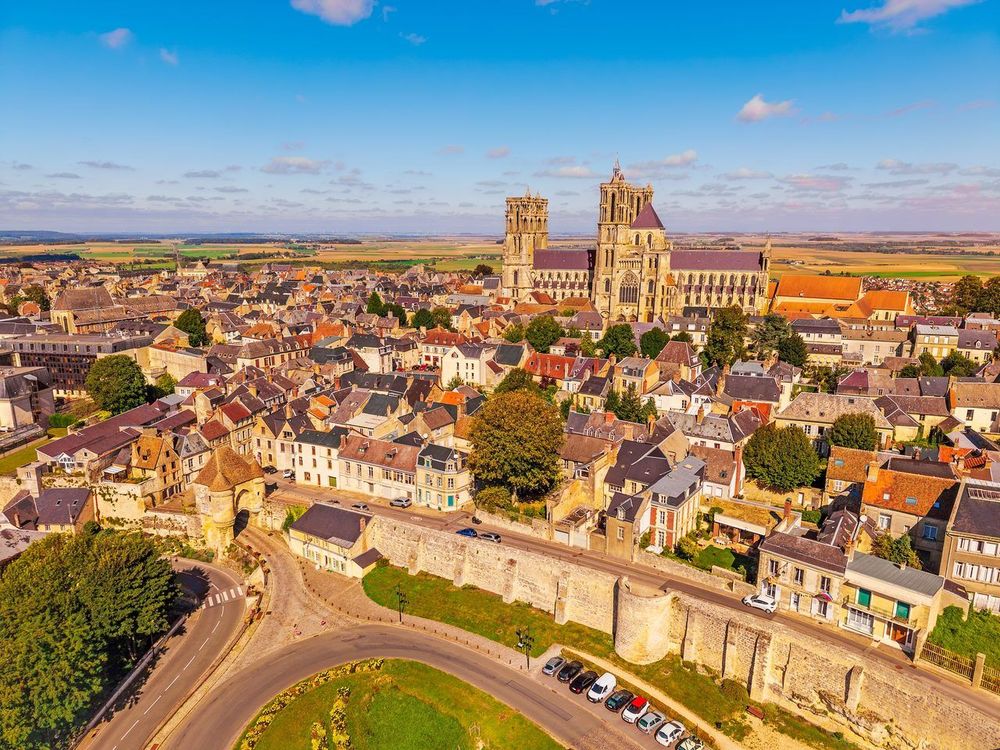
This visit invites you to an immersion in the heart of a thousand-year-old city, perched upon a natural promontory that seems to defy the horizon. Let yourself be struck by the verticality of a city rising above the mists, where carved stone spires pierce the clouds with eternal audacity. Between the strength of the ramparts enclosing the Upper City and the secret of the underground galleries running through its depths, the city reveals a character that is proud, spiritual, and mysterious.
Quand partir à Laon ?
Jan.
5°
12
Feb.
7°
10
March
11°
10
April
15°
9
May
19°
10
June
22°
9
July
25°
8
Aug.
25°
8
Sept.
21°
9
Oct.
15°
11
Nov.
9°
12
Dec.
6°
13
Laon enjoys a modified oceanic climate, characterized by mild summers around 23°C and cool, sometimes foggy winters, fluctuating between 1°C and 6°C. The ideal period runs from May to September to enjoy the upper town and its exceptional panoramic views. The month of June offers the longest days for exploring the medieval heritage, while September provides magnificent low-angle light over the ramparts and historic monuments, while avoiding the more pronounced humidity of late autumn.
Départ conseillé
No need to worry about where to begin! Our tours are designed as a loop, so you can jump in wherever you are. The navigation system and audio-guide will automatically adjust to your location. However, if you happen to be nearby, we do have a preferred starting point: Ardon Gate, on Enguerrand Quarton street
Parking à proximité
Free Parking : Promenade de la couloire
Découvrez 16 lieux d'intérêt pour visiter Laon





What to see in Laon on your 1h40 tour?
This 4.2 km loop takes about 1 hour 40 minutes and links 15 sights across Laon's old town. From the Ardon Gate, the route follows the ramparts to Henri IV's citadel, reaches Place Aubry and Notre-Dame Cathedral, crosses the district around Saint-Martin Abbey, passes through the Soissons Gate, then loops back through cobbled streets and a decorated alley. With the Ryo app in your ears, every gate tells the story of this royal city.
Information checked in November 2026 and subject to change.
1 - Ardon Gate
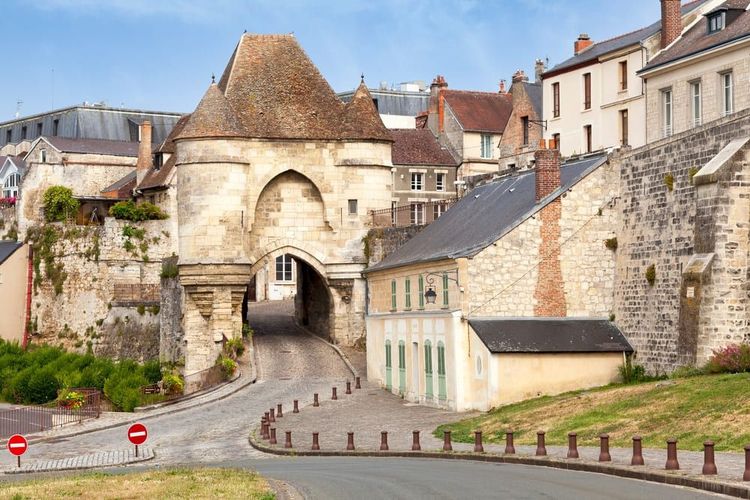
This twin-towered gate, built around an old châtelet, guarded the entrance to the upper town, long a favoured Carolingian residence. An earlier structure already stood here in the 9th century, sturdy enough to help repel a Norman raid in 882. Reworked in the 13th and 14th centuries, it replaced a carved gate pulled down in 1858. A fountain and wash-house still sit at the foot of the nearby steps. Local legend has Roland fleeing through it toward Roncevaux.
Free entry
2 - Chapel of the Templars
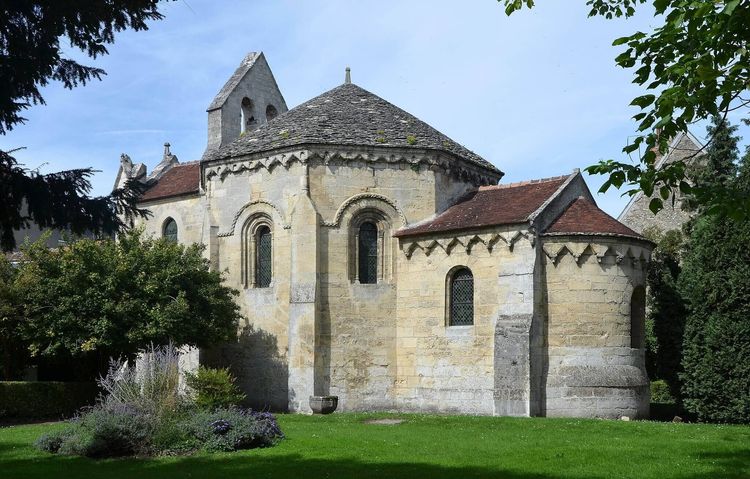
Tucked in the archaeological museum's garden stands an octagonal chapel raised around 1140 by the Templars, who had settled in Laon twelve years earlier. Created to protect pilgrims and later merchants on the Via Francigena, the order pioneered an early banking trick here: money left in Laon could be reclaimed further along from fellow brothers. The choir echoes Jerusalem's Holy Sepulchre. Suppressed in 1312 after a notorious trial, the order left this sanctuary to the Hospitallers; it has been listed since 1846.
Free entry
3 - Citadel gate
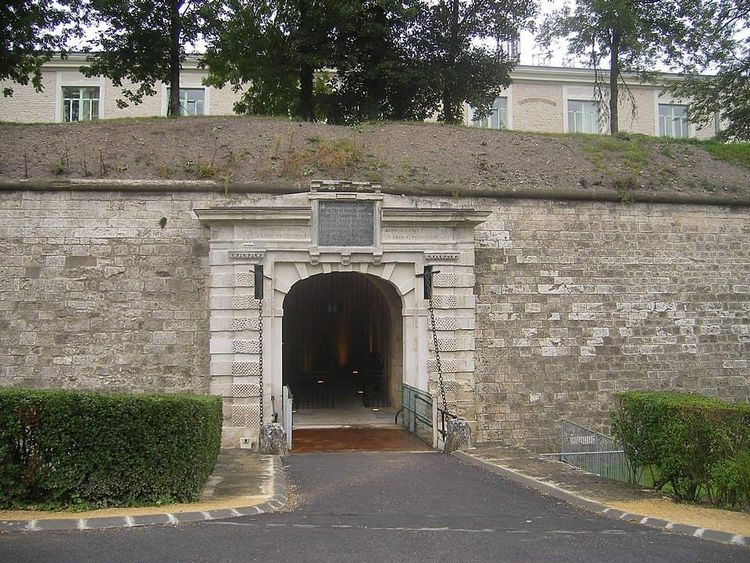
Built in 1595, this gate opened onto Henri IV's citadel, facing the town rather than open country, a sign of distrust toward citizens once loyal to the Catholic League. A moat and drawbridge once guarded the way in. The stronghold regained a military role in the 19th century under Louis-Philippe, amid tension with Prussia. In 1870, after Sedan, a soldier refusing to surrender blew up the powder magazine, killing hundreds of his own comrades. The magazine and underground passages are still visible.
Free entry
4 - Yitzhak Rabin Promenade
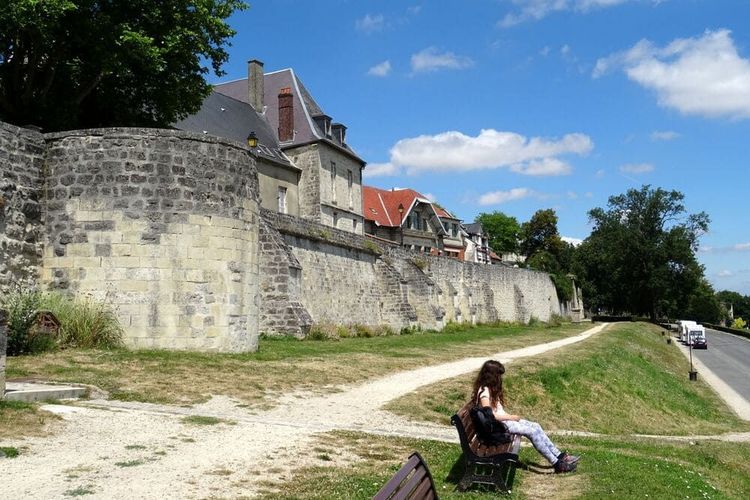
Running along the outer ramparts, this path invites you to picture Laon's earliest days, when a modest Gallic stronghold already crowned the hilltop. The town's name is thought to echo Lugdunum, stronghold of the Celtic god Lug, just as Lyon's does. Among the ramparts' lowest courses, Gallic blocks are still visible, topped later by 11th-century curtain walls in remarkable condition. The path, opening onto a sweeping view over the plain, now bears the name of an Israeli peacemaker.
Free entry
5 - Former Hôtel-Dieu
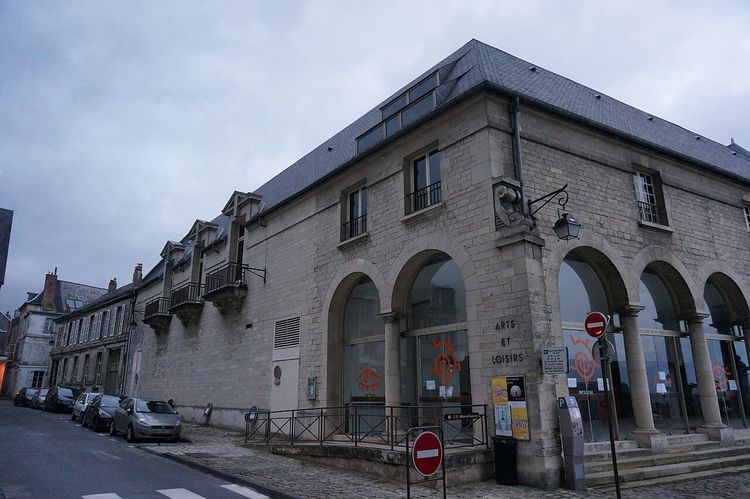
On Place Aubry, opening onto both the cathedral and the Picardy horizon, stands the former Hôtel-Dieu, today the Maison des Arts et Loisirs. Such charitable hospitals, run by religious orders, took in pilgrims, the poor and the sick without distinction. In 1209 the canons bought this house, next to the bishop's palace, to move the institution out of its cramped original site. Attitudes toward poverty shifted, though: once close to grace, from the 16th century it became something the growing crown sought to control.
Free to see from outside
6 - Notre-Dame Cathedral
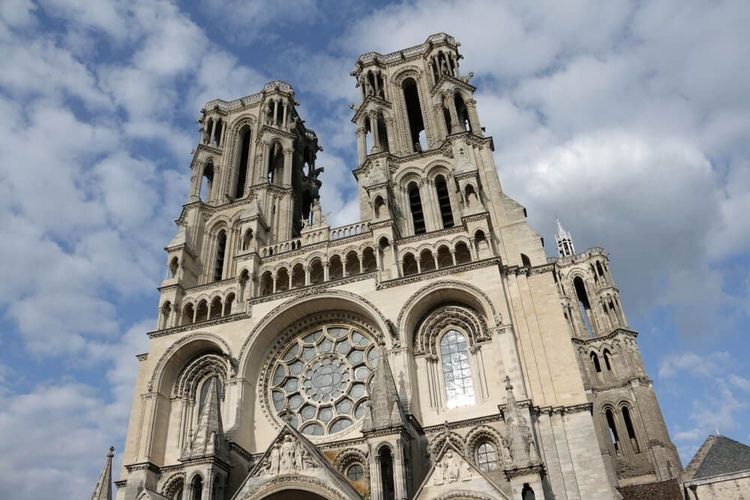
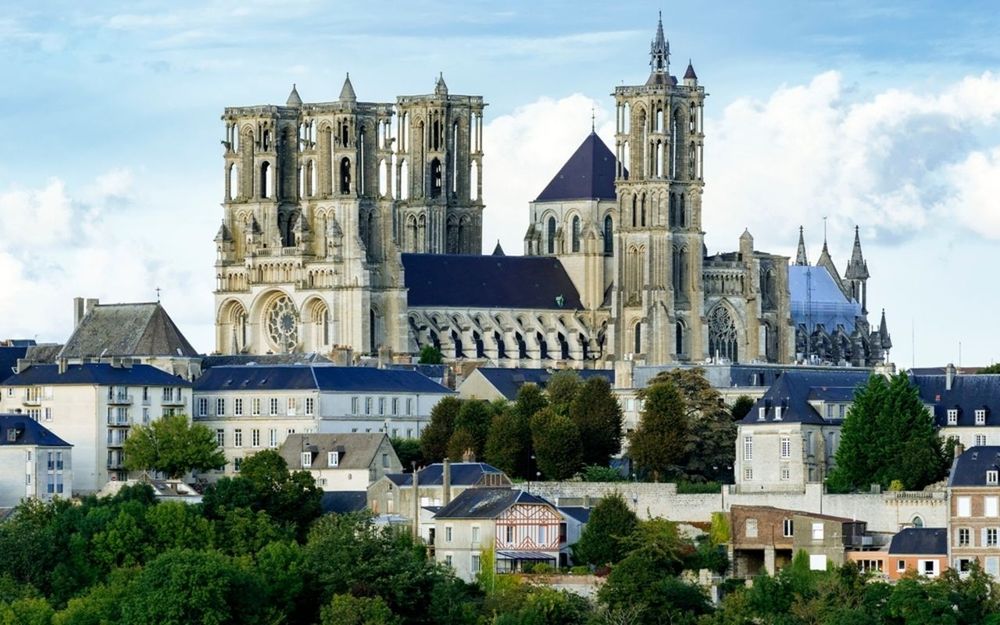
Commissioned by Bishop Gauthier de Mortagne, this cathedral ranks among France's earliest major Gothic projects, even predating Paris's. An older sanctuary, consecrated in 800, is said to have witnessed Charlemagne's birth, whose mother came from Laon. Planned with seven towers, it kept only five. Its lantern tower, rare outside Normandy, floods the interior with unexpected natural light. High above, carved oxen watch over the city, honouring the animals that hauled the stones up the hill.
Free entry
7 - Abélard Fresco
Among the murals scattered through Laon's streets, one honours Abélard, who came to study theology in the city in the 12th century under master Anselme. A brilliant, independent mind, he became one of the great thinkers of the Middle Ages, yet is remembered above all for his passionate bond with Héloïse, one of the few female voices of that era to survive. Painted in 2019 by artist C215, the piece blends scholarly memory with contemporary urban art.
Free entry
8 - Old Town Hall
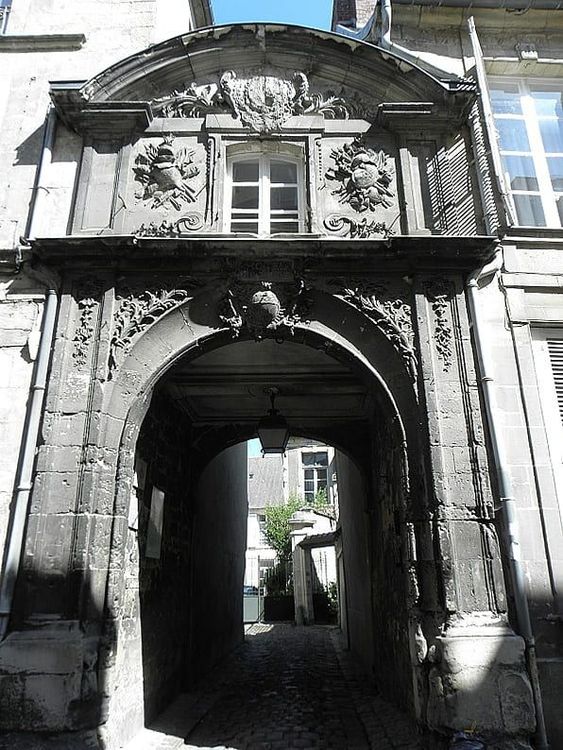
Of a building raised in 1736, only a porch survives, the last trace of Laon's former town hall. Before it stood the provost, appointed by the lord to dispense justice and collect taxes, a role created in the 11th century and later trimmed under a bailiff. Two coats of arms, the kingdom's and the city's, still crown the pediment. Inside the arch, a rusted iron bar recalls old local units of measure, scrapped in 1789 for the metric system.
Free entry
9 - General Leclerc square
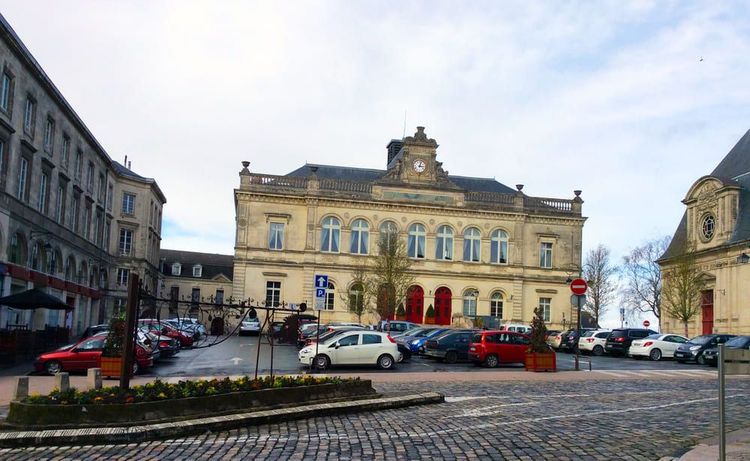
The current town hall, standing since 1831, took the place of a bishop's palace demolished after the 1830 July Revolution, along with a 30-metre tower. The neighbouring church, among the city's oldest, escaped destruction: deconsecrated, it served as a meeting hall and then a theatre until 1965, before becoming a municipal annex. The square bears the name of the general who led the armoured division into liberated Paris in 1944.
Free entry
10 - Petit Saint-Vincent Hotel
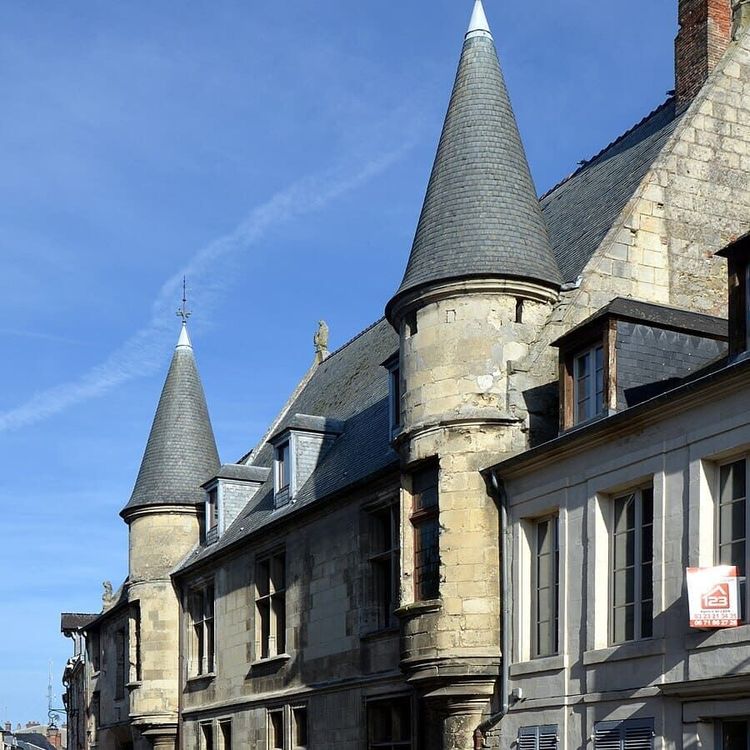
Recognisable by its two street-facing turrets, this 15th-century house belonged to the monks of Saint-Vincent Abbey, who valued a foothold inside the fortified city. It could house visiting guests or serve as a refuge in case of attack. During the Wars of Religion the building became a Catholic League stronghold, before hosting very different gatherings under the Revolution. It now houses a craft-arts centre devoted to exhibitions of skilled makers.
Free to see from outside
11 - Abbey of Saint-Martin
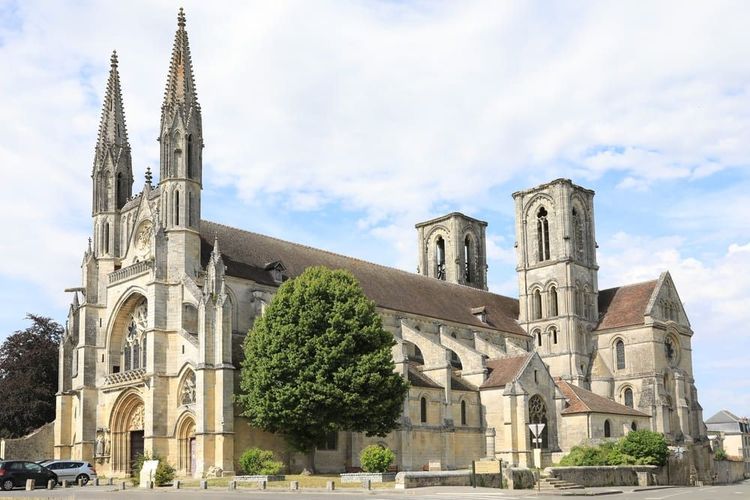
Founded in 1124 when the Bishop of Laon joined forces with Norbert of Xanten, founder of the nearby Prémontré abbey, this abbey welcomed twelve regular canons, enriched by the surrounding vineyards. Its Gothic facade features a radiating window rather than a rose, topped by Saint Martin sharing his cloak with a beggar. The abbot's residence dates from the 17th century, the cloister from the 18th. Turned into a hospital after the Revolution until 1970, it now houses the municipal library.
Free entry
12 - Soissons Gate
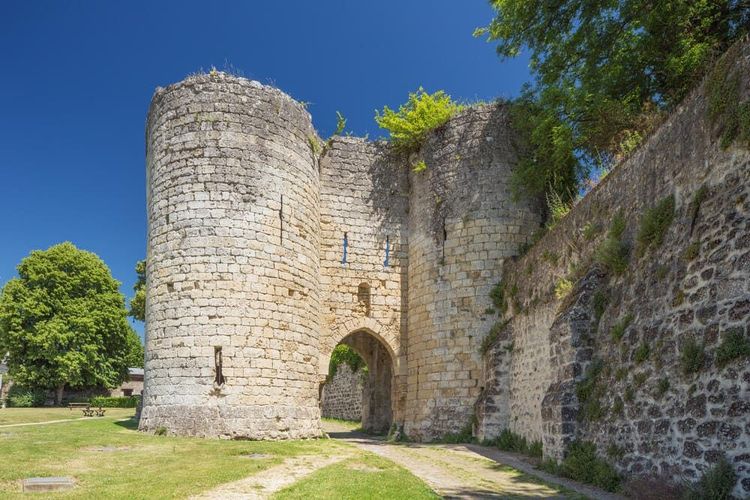
Built in the early 13th century and topped with a guardhouse in 1562, this gate closed off the western access to the medieval town, in the direction it is named after. The collapse of its inner wall now offers a rare cross-section view of how it worked: a vaulted room for the portcullis, a staircase to the machicolations crowning the towers. A few steps away stands the Eve Tower, nicknamed the leaning tower for the tilt it developed soon after being built.
Free entry
13 - Pavés de Laon: The city’s delicacy
The region is full of specialities, from picardy ficelle to leek flamiche, but Laon has its own treat, invented in 2003 to celebrate the city and its cobbled lanes. Beneath a melting meringue shell hides a chocolate praline, shaped into little cubes that echo the stones trodden throughout the walk. You will find them on Rue Chatelaine, a well-earned sweet stop after a day's walk up the city's slopes.
Free entry
14 - Le chemin des dames: The Ladies' Path
From this purpose-built viewpoint, the eye travels far across the Picardy plain to the Chemin des Dames plateau. The road owes its name to a noblewoman said to have had it improved for a visit by Louis XV's daughters, but its memory is bound above all to spring 1917: a French offensive failed there after months of brutal fighting, triggering the army's first mutinies. Less commemorated than Verdun, the plateau was also fought over in 1939-45.
Free entry
15 - Neufliers alley
Over its 50 metres, this unassuming alley has become an open-air gallery thanks to trompe-l'oeil murals by local artist Pierre Grenier, who painted figures who shaped the city's history. At the centre of the composition, a smiling horseman is the painter's own self-portrait, greeting passers-by with a mischievous glance. The whole thing shows Laon's taste for blending local memory with contemporary creation in its most modest corners.
Free entry
What to do in Laon in 2 or 3 days?
The walk fits easily into a first day in Laon: 4.2 km and 15 sights in about 1 hour 40 minutes, looping from Ardon Gate. A second day lets you discover what the upper town hides beneath its cobbles, then what lies around it.
The next morning, head underground: the guided tour “Secrets sous la ville” leads into the tunnels beneath the citadel, booked ahead through the tourist office. The galleries were dug to quarry stone or to take shelter during sieges. The afternoon can be given over to the Chemin des Dames, a major memorial site of the First World War, which our itinerary for visiting Laon in 2 days pairs with this second day, along with tips on where to stay in the upper town.
Which neighbourhoods does the tour cross?
The walk circles the upper town as a loop, from the eastern ramparts to Soissons Gate in the west, by way of the cathedral.
It starts at Ardon Gate, one of the city's old fortified gateways, enters the garden of the archaeological museum for its Chapel of the Templars, passes through the gate of Henri IV's citadel, then steps outside the ramparts to follow Yitzhak Rabin Promenade (stops 1 to 4).
The route then reaches Place Aubry and Notre-Dame Cathedral, one of the earliest great Gothic buildings in France, followed by the fresco of the philosopher Abélard, the porch of the old town hall and General Leclerc square (stops 5 to 9).
The last stretch heads west: it passes the turrets of the Petit Saint-Vincent Hotel, reaches the Abbey of Saint-Martin and goes through Soissons Gate, which guarded the western entrance to the medieval city (stops 10 to 12). The path then climbs back towards the centre along Rue de la République, stops at the viewpoint facing the Chemin des Dames and closes the loop at Neufliers alley, not far from Ardon Gate (stops 13 to 15).
How much does it cost to visit Laon?
None of the walk's 15 stops requires a ticket. Thirteen are freely open, from Ardon Gate to the Abbey of Saint-Martin, and the other two are seen from the street:
- the former Hôtel-Dieu, today the Maison des Arts et Loisirs, on Place Aubry;
- the Petit Saint-Vincent Hotel, once a town house of the monks of Saint-Vincent abbey.
The only possible expense along the way is climbing the cathedral towers, on a guided tour booked in advance only, which costs €7, while the cathedral itself is free to enter.
Information checked in November 2026 and subject to change.
Where to stop for a bite along the tour?
Laon's signature treat bears the name of the streets you walk on: at stop 13, heading up Rue de la République towards the centre, the walk tells the story of the upper town's cobbles, which inspired a local sweet.
Created in 2003, Pavés de Laon are melting praline chocolates coated in meringue and shaped like small paving stones. You'll find them on Rue Chatelaine.
For something savoury, Picardy cooking is best tasted at the table: ficelle picarde, a rolled crêpe filled with ham and mushrooms and baked under a cheese cream, or flamiche aux poireaux, a leek tart in puff pastry.
What should you know before visiting Laon?
Before heading up to the upper town, a few practical and seasonal pointers help avoid disappointment.
The Chapel of the Templars (stop 2) stands in the garden of the art and archaeology museum and keeps the museum's opening hours. Climbing the cathedral towers and going down into the tunnels beneath the citadel are only possible on guided tours run by the tourist office, booked in advance; for the tunnels, arrive 30 minutes before departure.
Winters are cool and sometimes foggy, between 1°C and 6°C, and summers mild, around 23°C. From May to September the upper town makes the most of its panorama: June brings the longest days, September a low-angled light over the ramparts. The hanging decorations of Neufliers alley (stop 15) are mostly put up in summer.
If you come by car, the public car park on Promenade de la Couloire is free.
What to see around Laon?
Around Laon, the memory of the First World War and the towns of Champagne and Picardy extend the visit.
The Chemin des Dames, seen in the distance from the viewpoint at stop 14, is reached by car: the offensive launched by General Nivelle on 16 April 1917 left memorials there, and a dedicated museum opened in the 90s. A guided visit of the site tops our list of the top 5 activities to do in Laon.
Several nearby towns also have their own audio-guided walk. Reims, 45 km away, the martyr city, follows in the footsteps of the kings of France between its cathedral, chalk cellars and Art Deco façades, while Compiègne, an imperial city 60 km away, blends classicism and gardens. Further afield, Épernay, the Champagne capital 63 km away, and Amiens, whose cathedral is a “stone lace”, 102 km away, round off the trip.
What's on in Laon right now?
As the year draws to a close, two Christmas events follow one another in Laon, first in the lower town, then in the upper town.
On 12 December, from 2 pm to 6 pm, the Le Triangle community centre holds its Christmas market in the lower town. The next day, at 4 pm, the vocal ensemble of the Pays de Laon conservatory gives a Christmas concert in the abbey church of Saint-Martin, stop 11 on the walk.
Information checked in November 2026 and subject to change.
Le plein d'inspirations
Explorez le monde en totale liberté, à pied au cœur des villes ou au fil des routes. Nos guides audios transforment chaque destination en une découverte culturelle immersive et unique.
FAQ for visiting Laon
How much time do you need to visit Laon?
To discover the essentials of Laon, plan for a full day. The upper town deserves at least four to five hours to appreciate the Notre-Dame cathedral, walk the ramparts and wander through the medieval lanes. If you wish to explore the underground galleries and visit the museums, allow rather a day and a half. The Ryo audioguide accompanies you on an optimised circuit that lets you cover the major sites in about three hours of narrated walking. History and architecture enthusiasts can easily devote an entire weekend to it, so rich is the heritage and so worthy of a lingering pause are the views over the Picardy plain.
How do you get to the upper town from Laon station?
From the SNCF station located in the lower town, several options are available to reach the perched historic city. The automatic Poma funicular, inaugurated in 1989, is the most original and practical means. This little rail train climbs the slope in a few minutes and drops you off right in the heart of the upper town. Free shuttles also run regularly between the station and the plateau. For the more athletic, the climb on foot up the historic stairs or the paved ramps makes for a fine introduction, even if the effort is considerable with nearly a hundred metres of elevation gain. By car, follow the signs towards the historic town centre.
What are the must-do visits in Laon?
The Notre-Dame cathedral majestically dominates your discovery with its unique lantern towers and its spectacular Gothic facade. The medieval ramparts offer an exceptional panoramic walk over the surrounding countryside, particularly striking at sunset. The canonical quarter preserves remarkable old dwellings, while the Saint-Martin abbey bears witness to the city's monastic past. The fortified gates, notably the Ardon gate, tell the military history of this stronghold. The Ryo audioguide takes you precisely to discover these architectural jewels, revealing their secrets and anecdotes. Don't miss either the episcopal palace and its gardens, as well as the Templars' chapel for a complete immersion in the medieval atmosphere.
Can you visit the underground galleries of Laon and how do you book?
The underground galleries of Laon form a fascinating network of tunnels dug into the limestone hill since the Middle Ages. These cavities served as storehouses, refuges and extraction quarries. Guided tours are generally organised by the tourist office, mainly from April to October. It is strongly recommended to book in advance, especially in summer, as groups are limited for reasons of safety and preservation. The constant temperature hovers around twelve degrees, so remember to bring a warm garment. The visit lasts about an hour and a half and requires good mobility, as some passages are narrow. Reservations are made directly with the Laon tourist office.
What are the culinary specialities of Laon?
The cuisine of Laon draws on Picardy and Champagne traditions. Maroilles cheese, produced in the region, pairs wonderfully with the leek flamiche, that emblematic savoury tart. The restaurants of the upper town often offer Amiens duck pâté and the ficelle picarde, a gratinated crêpe filled with ham and mushrooms. On the sweet side, don't miss the macarons of Amiens and the bêtises de Cambrai sold in the local confectioneries. The artisanal breweries of the surrounding area produce characterful beers that pair perfectly with these specialities. In autumn, game-based dishes take pride of place at the good tables, reflecting the richness of the surrounding forests.
How do you access the towers of Notre-Dame cathedral?
The climb up the towers of Notre-Dame cathedral offers an unforgettable experience with a breathtaking panoramic view. The visits are generally organised by the tourist office or the guide-lecturers, mainly from May to September. The ascent requires good physical condition, as you'll climb several hundred steps in narrow spiral staircases. Groups are limited and prior booking is strongly advised. The visit lets you admire up close the famous stone oxen that adorn the towers, legendary symbols of Laon. On a clear day, the panorama extends to the far reaches of Picardy and Champagne. Check the times and availability directly with the tourist office.
Where can you park for free in Laon?
Several free parking options are available to explore Laon with peace of mind. In the lower town, vast free car parks are located near the station and the departure point of the funicular, an ideal solution for then going up to the upper town. On the plateau, the Couloire car park, close to the southern ramparts, offers numerous free spaces with an open view. The Champ de Foire car park, slightly out of the way but spacious, remains free all year round. On weekdays, you'll generally find free spaces along the boulevards that encircle the upper town. On weekends and public holidays, preferably arrive in the morning to have more choice. Avoid parking in the historic heart, where spaces are rare and often paid.
What can you see around Laon?
The surroundings of Laon abound with heritage and natural treasures. The Vauclair abbey, fifteen kilometres away, impresses with its romantic Cistercian ruins nestled in a setting of greenery. The Chemin des Dames, steeped in history, offers moving memorial circuits in the footsteps of the First World War. Lovers of religious heritage will appreciate the Prémontré abbey, magnificently restored, or the Soissons cathedral. The Saint-Gobain forest offers beautiful hikes and is home to the royal glassworks. Further north, the fortifications of Coucy-le-Château bear witness to medieval military architecture with the most imposing keep in Europe before its destruction. These sites are generally accessible in under thirty minutes' drive from Laon.
When is the best time to visit Laon?
Spring and early autumn are the most pleasant moments: the low light brings out the pale stone of the cathedral, the ramparts can be walked without excessive heat and the upper town stays quiet. Summer works well if you want to take advantage of guided tours and events, which are more frequent during the holidays.
Winter should not be ruled out either: perched on its hill, Laon often takes on the look of an island above the mists of the plain, a sight the locals know well. Simply bring windproof clothing, as the plateau is very exposed, and check the opening times of the monuments, which are generally reduced out of season.
What can you discover along the ramparts of Laon's upper town?
Laon owes its nickname of the crowned mountain to the belt of ramparts that circles its plateau over several kilometres. The path can largely be followed on foot and alternates medieval curtain walls, fortified gates such as the Porte d'Ardon or the Porte de Soissons, and openings onto the Picardy plain stretching as far as the eye can see.
Along the way, the Templars' chapel with its octagonal plan, tucked into the museum garden, the Cuve Saint-Vincent walk laid out in a green little valley and the lanes lined with old houses all make for welcome stops. The Ryo audio guide offers a dedicated Laon route following this thread between ramparts, gates and cathedral.
Which visits can you make in and around Laon, from the cathedral to the Chemin des Dames?
Notre-Dame cathedral, built from around 1150 to 1235, is one of France's earliest Gothic buildings and towers over the whole town. A guided tour of the medieval city reveals its monuments and mansions, while the underground passages, explored with an audio guide, tell a geological story stretching back 40 million years. The Museum of Art and Archaeology, founded in 1861, holds a major Greek collection of 1,700 pieces. Some twenty minutes away by car, the Chemin des Dames recalls the offensive launched by Nivelle on 16 April 1917.
Find all these ideas in our top 5 things to do in Laon.
Vos commentaires, idées et suggestions
Aucun avis pour le moment