Créé par Romane, le 17 nov. 2026
Votre guide Ryo
Reims, France
The martyr city
Parcours audioguidé pour visiter Reims en 1 jour
Exploring Reims on foot means following in the footsteps of the kings of France while discovering the understated elegance of Champagne. From the majestic Reims Cathedral to the historic chalk cellars carved deep underground, and the refined lines of Art Deco façades, the city offers a rich heritage that’s easy to take in at your own pace. Your walk naturally extends toward the great champagne houses and lively terraces, all set within an atmosphere that feels both sophisticated and warmly inviting.
Quand partir à Reims ?
Jan.
5°
12
Feb.
6°
10
March
10°
11
April
13°
10
May
17°
11
June
20°
10
July
23°
9
Aug.
23°
9
Sept.
20°
9
Oct.
15°
11
Nov.
9°
11
Dec.
6°
12
The climate is generally temperate, with winters often cool, even cold, where temperatures generally fluctuate between 0 and 8°C, and moderate summers around 20 to 26°C, with possible but rarely prolonged periods of heat; spring and early autumn represent the most pleasant periods for travel, especially from May to June and from September to early October, when temperatures are mild, the crowds more reasonable and the landscapes particularly green, while summer remains a good option to enjoy a lively atmosphere despite a higher risk of rain.
Départ conseillé
No need to worry about where to begin! Our tours are designed as a loop, so you can jump in where ever you are. The navigation system and audio-guide will automatically adjust to your location. However, if you happen to be nearby, we do have a prefered starting pont: In front of the City Hall
Parking à proximité
City Hall underground car park
In Reims, you can either park your car in a car park or on the street. The Boulingrin car park is a convenient and affordable alternative. You can park on the street, but be mindful of the color-coding: parking is free for 15 minutes, after which it becomes paid parking, with the green zone being the cheapest and the red zone the most expensive. You can pay for your parking spot using a parking meter or the Easy Park mobile app.
À savoir
This tour passes by the cryptoporticus of Reims: access is free but subject to specific days and opening hours. Be sure to check them before starting your visit if you want to explore its interior!
Découvrez 22 lieux d'intérêt pour visiter Reims






What to see in Reims on your 1h40 tour?
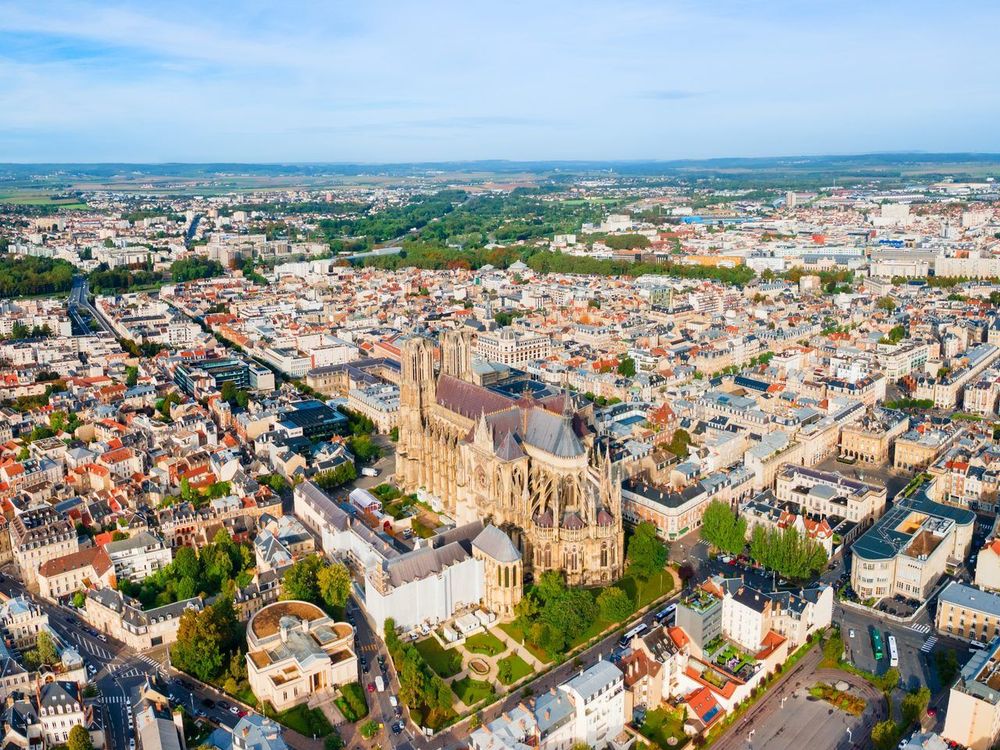
This 4 km loop takes about 1 hour 40 minutes and links 21 sights. From the Boulingrin covered market, it crosses the historic champagne district, skirts the town hall and Place du Forum, pauses at the cathedral and the Tau Palace, climbs Rue Chanzy past the opera house, then reaches Place Drouet d'Erlon and the Promenades before ending at the Mars Gate. With the Ryo app in your ears, every façade or statue tells its own tale, at your own pace.
Information checked in November 2026 and subject to change.
1 - Boulingrin covered market
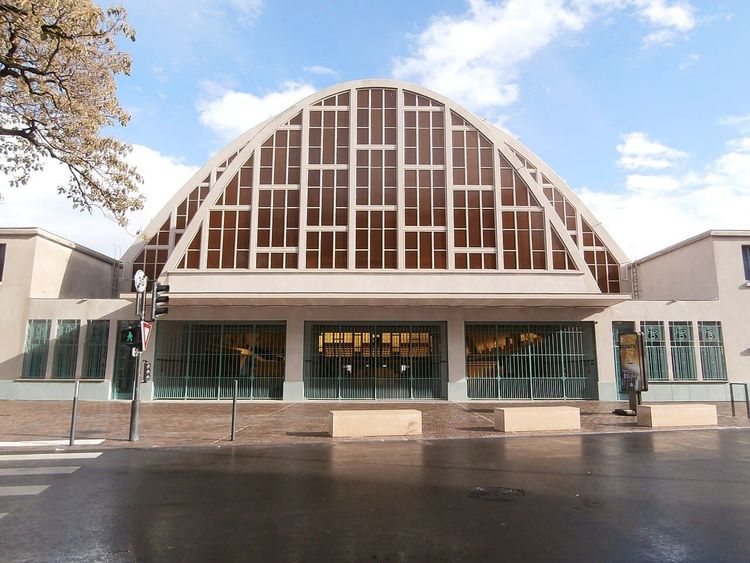
This half-cylinder covered market grew out of an architecture competition launched in 1922, completed five years later under Émile Maigrot and Eugène Freyssinet, whose techniques, highly advanced for the time, symbolised the city's revival after the bombings. Abandoned and later threatened with demolition at the end of the 20th century, it escaped destruction thanks to heritage protection, before being restored and reopened in 2012: today it serves local cured meats, cheeses and regional treats.
Free entry
2 - Veuve Clicquot Ponsardin House
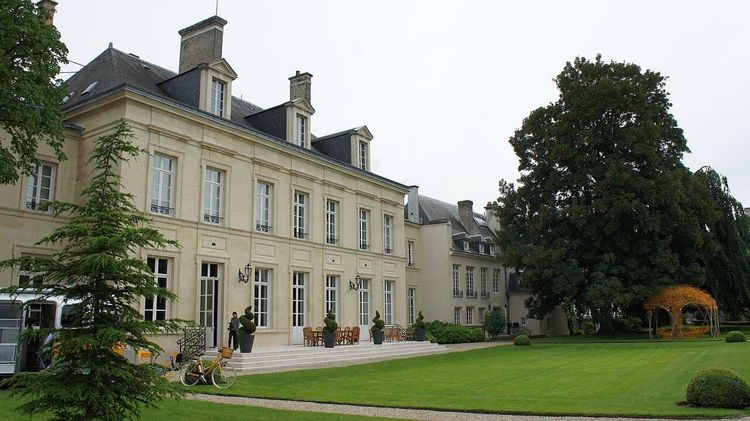
Behind this gate lies the headquarters of a famous champagne house, founded in 1772. A widow, Barbe-Nicole Ponsardin, secured its lasting fame: on her husband's death she took charge of the business at just 27, becoming one of the very first women to run such a house. She devised riddling racks, launched the first vintage champagne and chose the anchor as an emblem, a symbol of hope still seen on the gate today.
Paid entry (about €35)
3 - Muire Pavilion
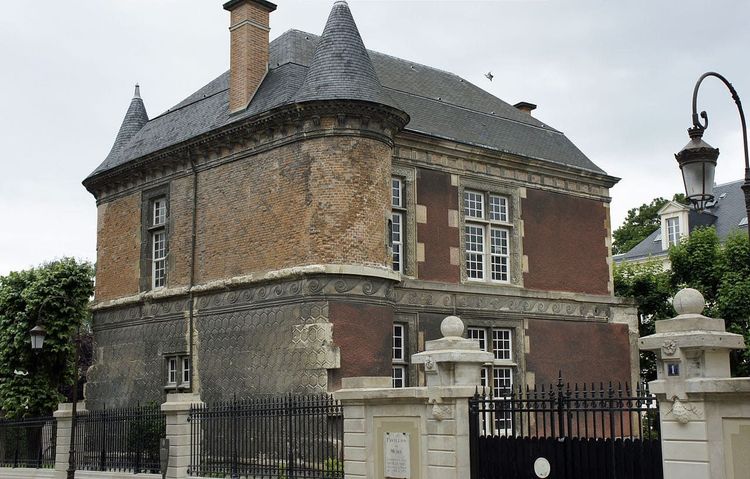
A rare witness to Renaissance architecture in a city largely rebuilt from scratch, this pavilion was erected in 1565 for the local lord. The neighbouring plot, later bought by Madame Clicquot to dig her cellars, passed to her business partner Édouard Werlé: he raised a residence on it in 1840, then, six years on, purchased the pavilion itself to expand his estate. Still owned by the champagne house, it has been protected since 1920.
Free to see from outside
4 - City Hall
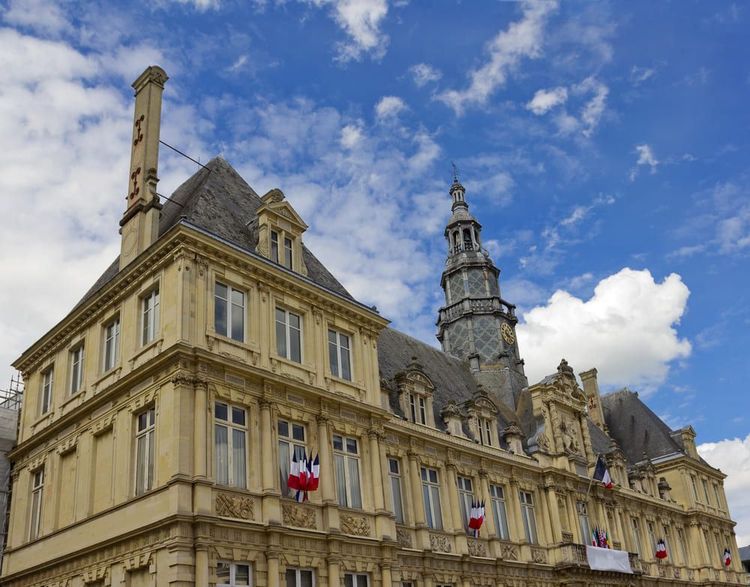
Builders set its foundation stone in 1627, on the very spot where the town council had already been meeting for over a century, but a lack of funds stretched the building work across two and a half centuries, without betraying the original Renaissance design. Gutted by fire during the 1917 bombings, only its façade survived; the rest was rebuilt after the war. It now bears the city's coat of arms and an equestrian statue of the reigning monarch at the time.
Free to see from outside
5 - Tambour Street
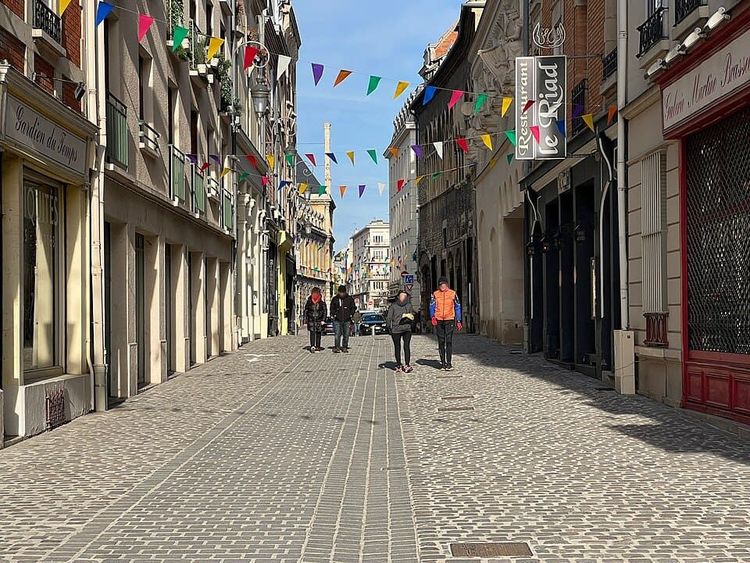
This historic street links the town hall to Place du Forum through a row of old façades. Here stands the Counts of Champagne House, built in the 13th century in gothic style to host sovereigns coming for their coronation, damaged during the Great War then saved and restored by a famous champagne house. Just beyond it rises a faithful copy of the Musicians' House, destroyed in 1914, whose original musician statues can now be seen at the Saint-Rémi museum.
Free entry
6 - Cryptoporticus
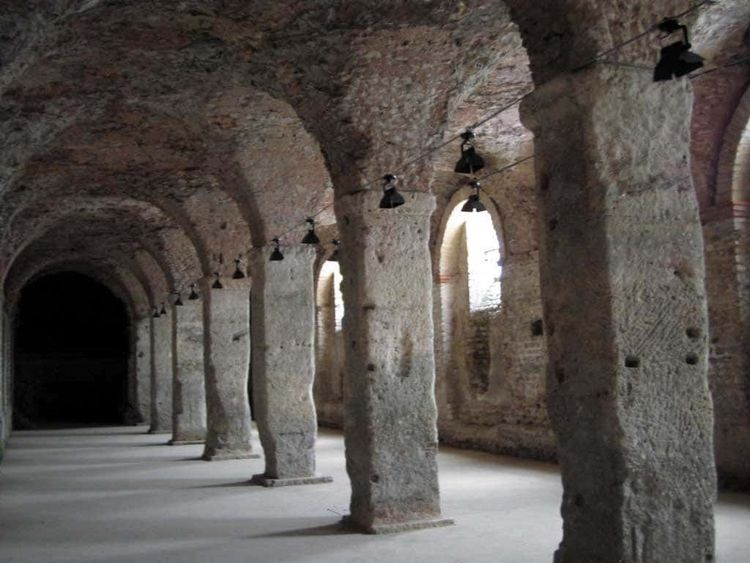
In Roman times, this square held the city's most central role: political and trading matters were settled here. Later becoming the market square, then renamed in 1932, it hides beneath its paving one of the rare vaulted underground galleries known anywhere in the world, likely a storage space dating from the 1st century AD. Uncovered in 1838 during market building work, it was only properly explored after the First World War.
Free entry
7 - Royal Square
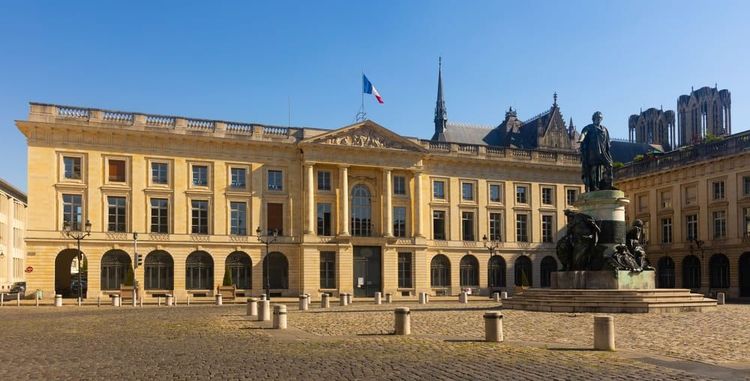
Its near-perfect square layout, framed by arcades in a very distinctive 18th-century style, and the large statue enthroned at its centre leave little doubt about its name. Laid out in 1757 to ease traffic in a district whose streets were then too narrow, even for royal carriages, it took nearly two decades to reach its final form. The current statue, by Pierre Cartellier, replaces one destroyed during the Revolution.
Free entry
8 - Chapter Gate
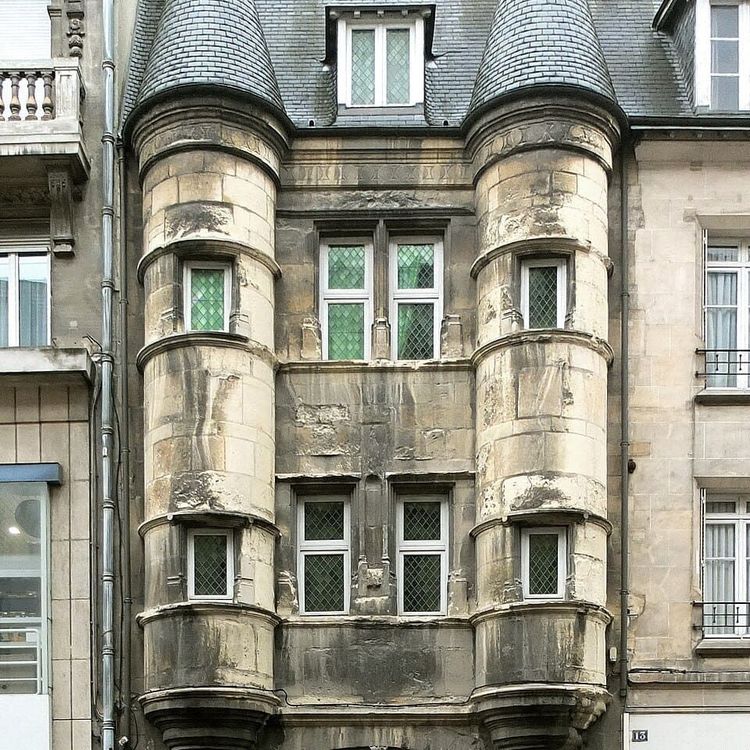
Recognisable by its two turrets, which stand out from the neighbouring buildings, this 16th-century gate once led to a closed courtyard reserved for the canons attached to the cathedral, who settled matters of communal life there. The institution vanished during the Revolution, but the gate survived, damaged by war then rebuilt and even relocated in the 20th century, the last visible trace of that enclosed complex.
Free entry
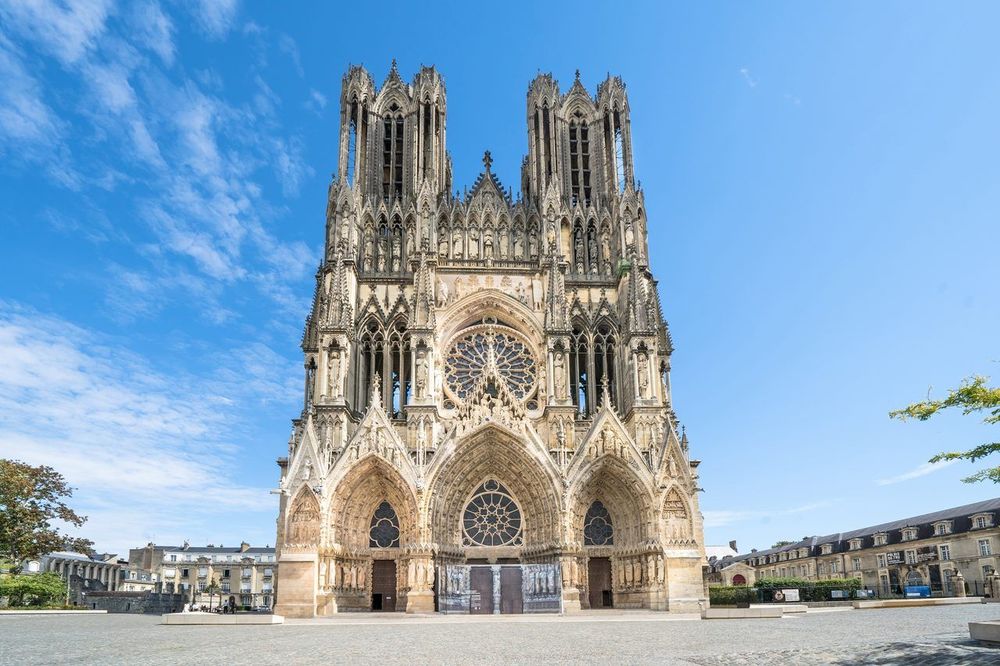
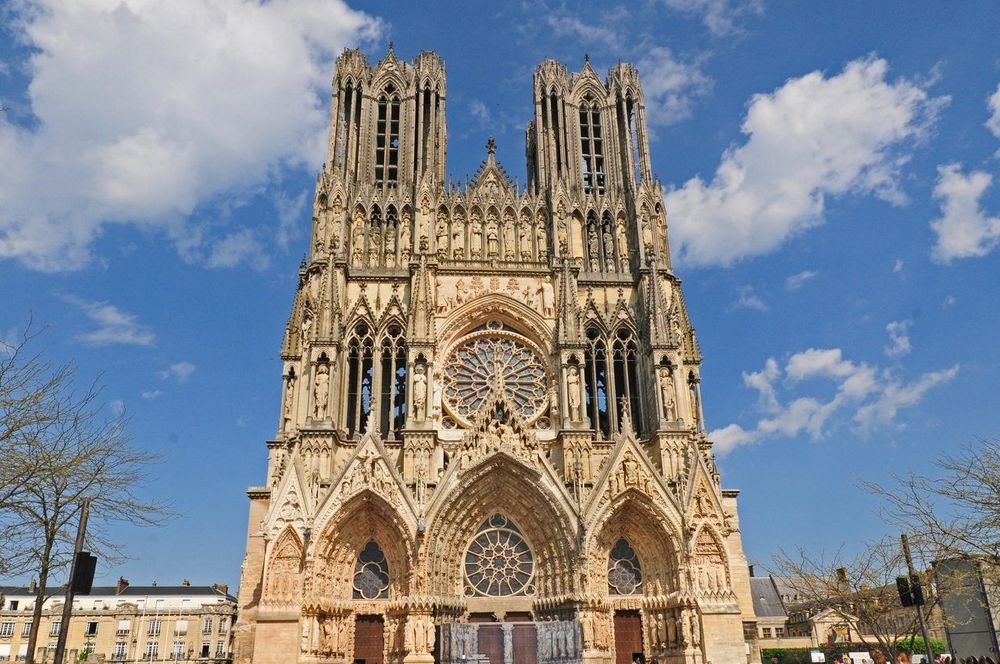
9 - View of the cathedral
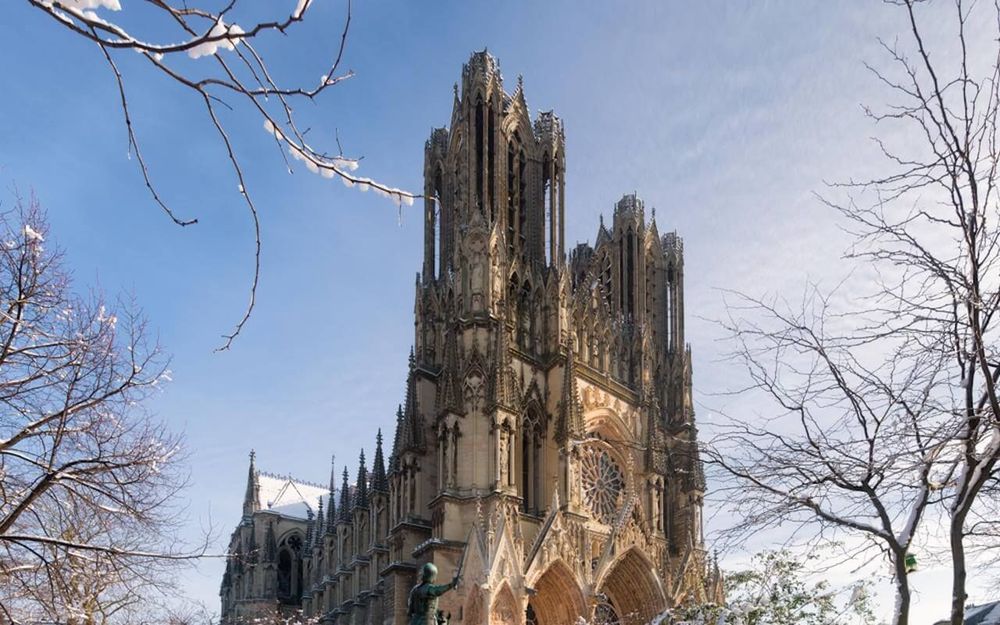
From here, the west front reveals the full richness of its gothic architecture. Its timber roof, destroyed during the Great War, was rebuilt thanks to funding from wealthy American families, using an innovative reinforced-concrete method devised by chief architect Henri Deneux to protect it from fire. Only a handful of original stained-glass windows, including the great rose window, survived the conflict; those added since bear the signature of artists such as Marc Chagall.
Free entry · Best late in the day
10 - Court House
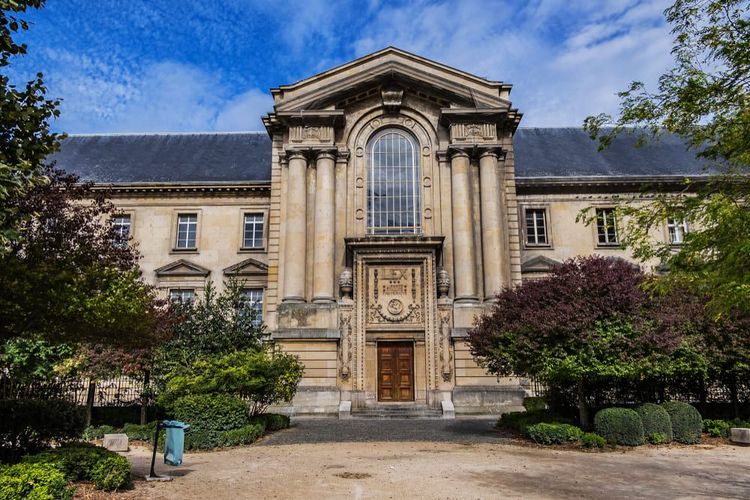
Built on the former site of the Hôtel-Dieu and opened in 1839, this courthouse owes its still-intact façade to architects Auguste Caristie and Nicolas Serrurier; its interior, destroyed during the Great War, was rebuilt in 1928. On the forecourt stands an equestrian statue of Joan of Arc, the work of sculptor Paul Dubois, moved here from the cathedral forecourt in 1938 to face the courthouse.
Free to see from outside
11 - Notre-Dame Cathedral
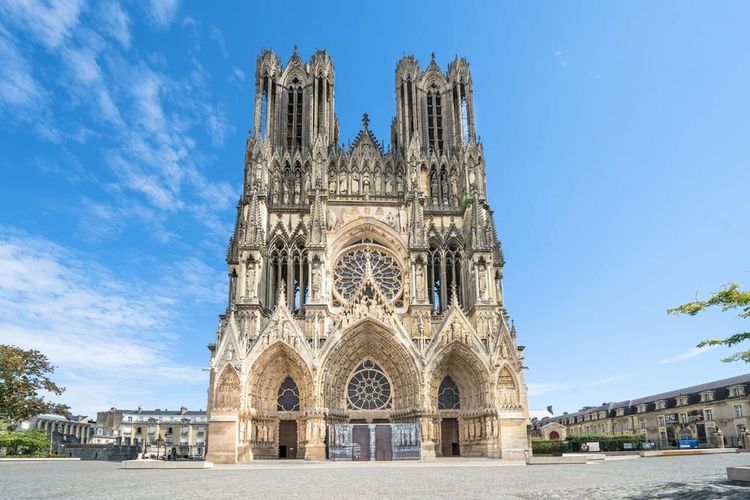
A masterpiece of gothic art, this cathedral boasts towers almost 82 metres high and a rose window symbolising eternity. If it hosted the coronation of 31 kings of France, it is in memory of the baptism, on this very spot, of Clovis, the first Frankish ruler converted to Christianity, at the end of the 5th century. A relic believed to hold the oil from that baptism further sealed the choice. The present building was raised between the 13th and 14th centuries.
Free entry
12 - Tau Palace
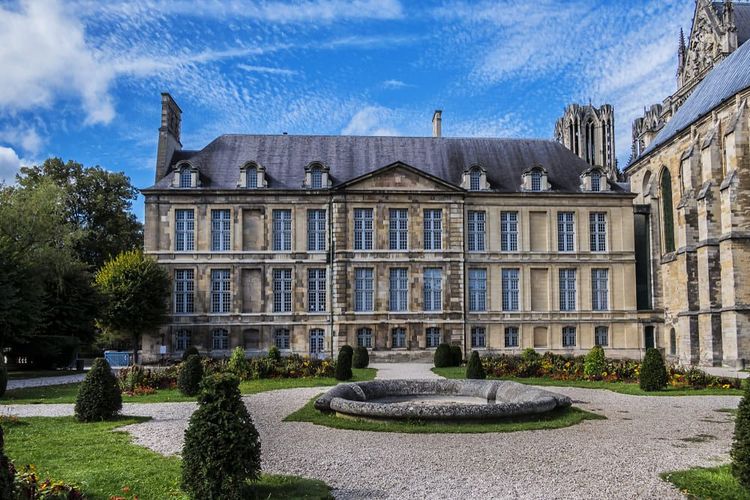
Once home to the city's archbishops, this palace also hosted the kings of France during their coronation, followed by the banquet held afterwards in the Hall of Feasts: the sovereign sat enthroned there, surrounded by twelve great vassals, in a staging that evoked Christ and his apostles, amid hundreds of guests, music and lavish food. An earlier building already stood on this spot as far back as the 5th century, long before taking on that role.
13 - Carnegie Library
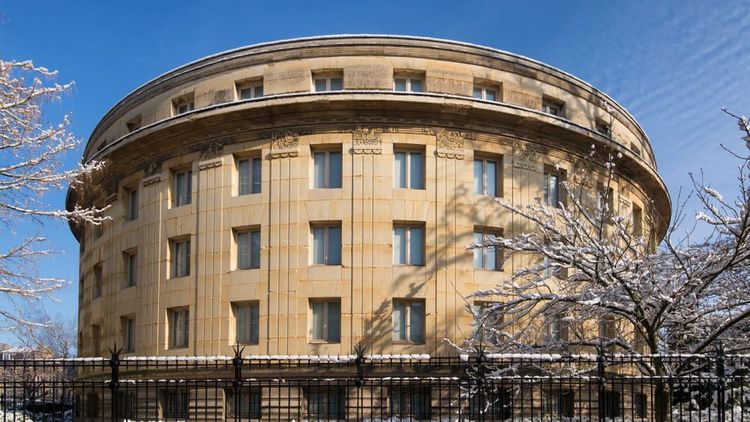
Reims owes its status as France's Art Deco capital to the massive rebuilding effort launched in the 1920s, after three quarters of the city had been devastated by the war. This library, opened in 1928, is a refined example of the style: a sober pediment, discreet plant motifs, geometric lines and a rounded rear. Its name honours the foundation of philanthropist Andrew Carnegie, who largely funded its construction.
Free entry
14 - Sundial
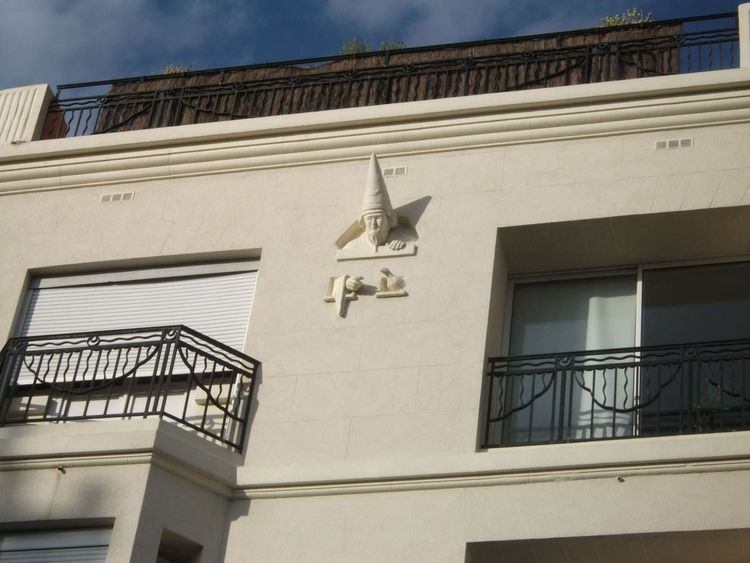
Look up to the top of this house: a head wearing a magician's hat, a hand and a dove surround a sundial, an instrument that told the time from the sun's cast shadow, used since ancient Egypt long before the invention of the clock. This street, one of five in the centre with such a dial, belongs to the Coronation Way, the route future kings followed on their way to be crowned.
Free entry
15 - Opera
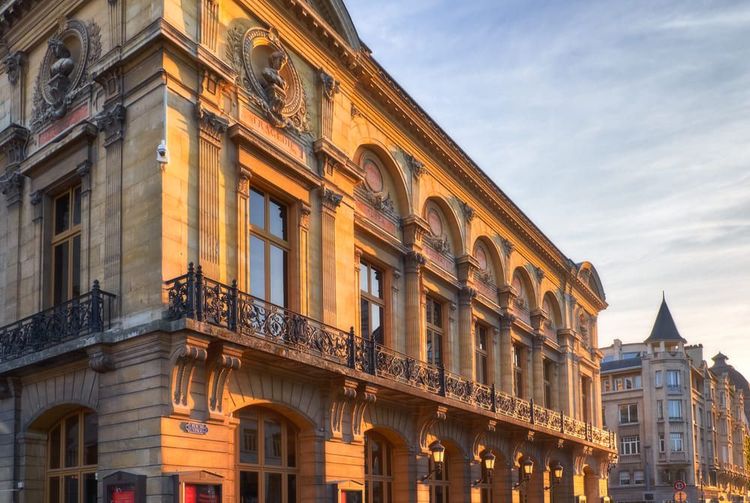
Opened in 1873 to replace a hall that had grown too small, this opera house, chosen through a competition, was designed by Reims-born architect Alphonse Gosset, drawing inspiration from the Palais Garnier. Destroyed by bombing, it was rebuilt exactly as before and reopened in 1931, one of the last buildings to reopen its doors after the conflict. Its Italian-style auditorium, with Art Deco decor, still hosts both great classics and contemporary works today.
Free to see from outside
16 - Vesle Street
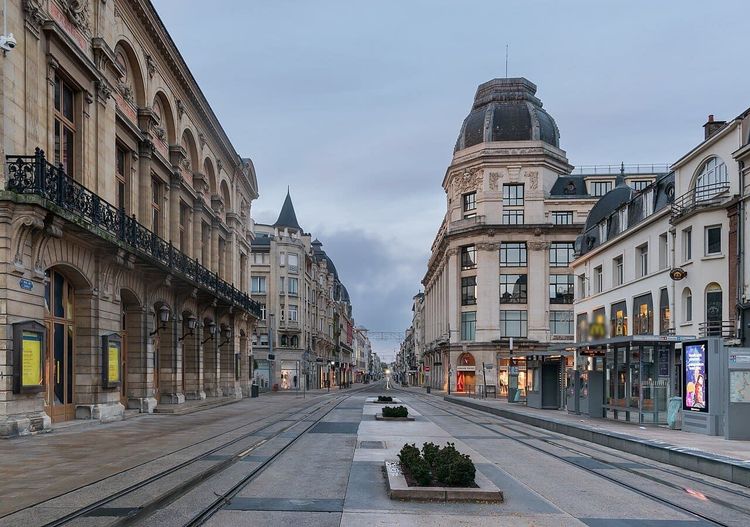
Here you walk the former decumanus maximus, one of the two great axes that structured every Gallo-Roman town, running east to west and crossing at right angles with the cardo, running north to south; their intersection usually housed the forum, the city's economic heart. Without realising it, the modern centre still largely follows this ancient layout. Shops and buildings with Art Deco touches now line this bustling shopping street, among the busiest in the city.
Free entry
17 - Saint-Jacques Church
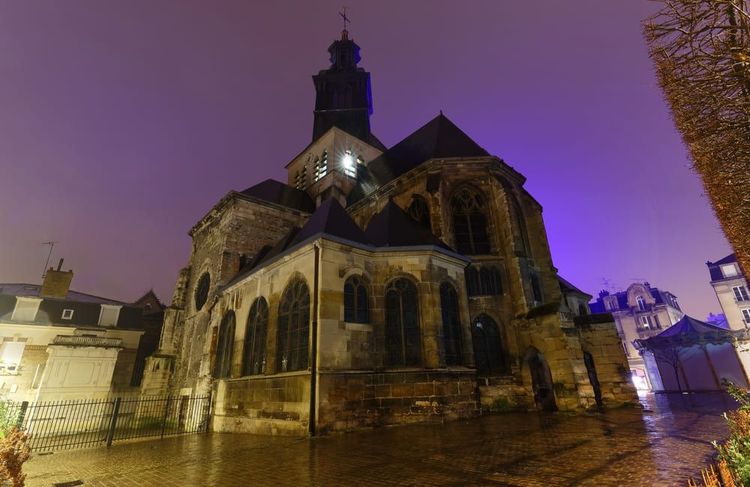
The city's second-oldest church, begun as early as the 12th century, is one of only two medieval churches left standing out of the thirty or so Reims once had before the Revolution. Its staggered construction mixes Romanesque, flamboyant gothic and, in the 16th century, two Renaissance chapels. Henri Deneux, already at work on the cathedral, gave it the same fireproof reinforced-concrete roof after the war, while its modern stained glass was added between the 1960s and 2010.
Free entry
18 - The Drouet d'Erlon square
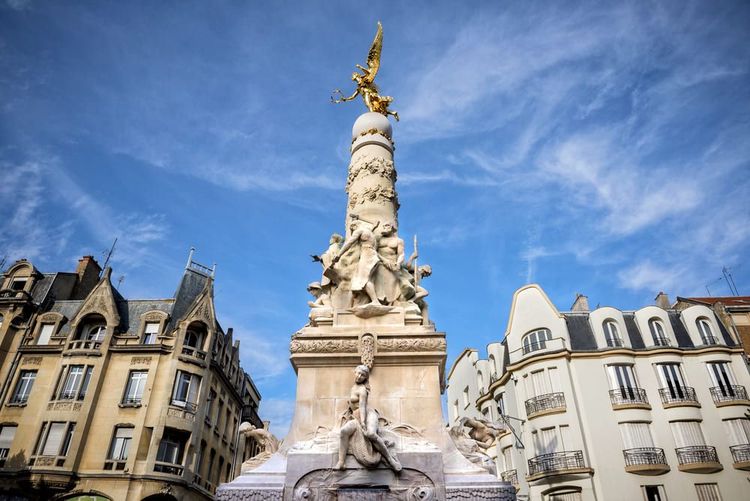
At 400 metres long, this pedestrian square lined with bars and restaurants outstrips the most famous esplanades of Paris, Bordeaux or Lyon. It honours a general of the Revolution who became a Marshal of France, and holds at its centre the Subé fountain, standing 17 metres tall and crowned with a female figure symbolising the city. One of the rare buildings to escape the bombings, it still gathers locals and visitors for yearly events such as the Christmas market.
Free entry
19 - Colbert Square
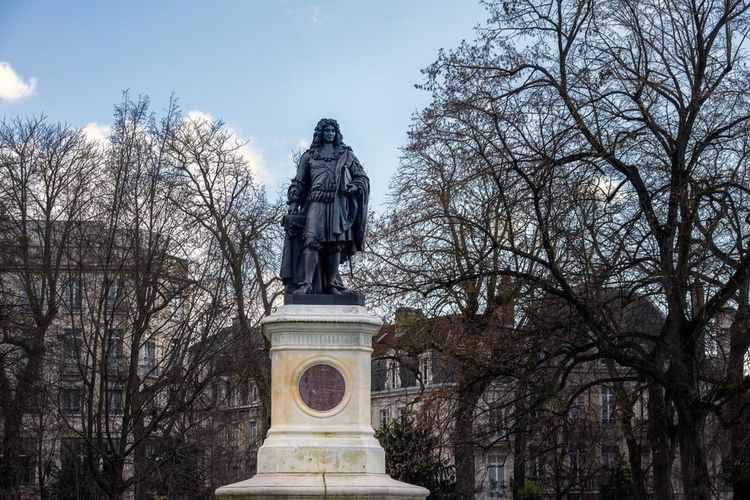
This small English-style garden, laid out in 1828 and redesigned some thirty years later, bears the name of a famous minister of Louis XIV, a key figure in France's 17th-century economic growth, whose bronze statue has stood at its centre since 1860. Ideally placed opposite the station, it bursts into flower beds each spring and offers a welcome green break for travellers and local residents alike.
Free entry
20 - Reims Promenades
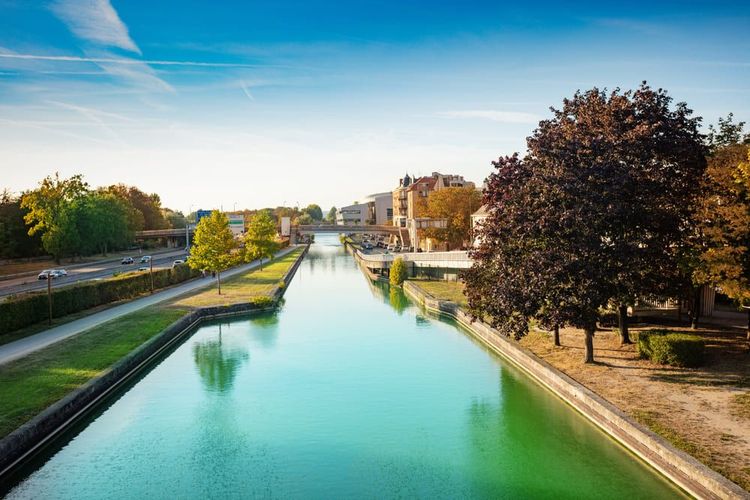
Already a strolling ground in the 18th century, this large park took on its current shape in 2019, on a 3,000 m² esplanade split by Square Colbert into two parts, the Upper and Lower Promenades. A water mirror cools visitors in summer, while a monument honours local victims of Nazi repression and the Resistance. Recently renovated, the space remains a popular spot for family relaxation.
Free entry
21 - Mars Gate
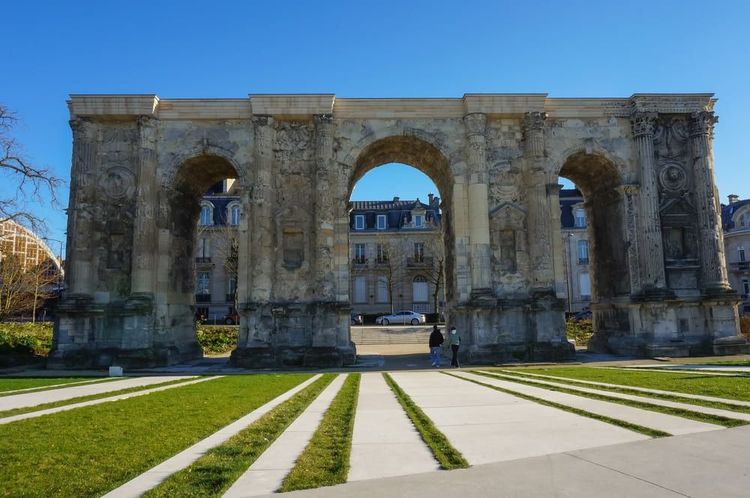
The only one of the city's four ancient gates still standing, back when it was called Durocortorum, this arch is the largest known anywhere in the Roman world, measuring 33 metres long and 12 metres high. Probably built between the 2nd and 3rd centuries, it was incorporated into the ramparts a century later, then into the archbishops' castle in the 13th century, which explains its excellent state of preservation despite the palace's destruction in 1595.
Free entry
What to do in Reims in 2 or 3 days?
The Reims audio-guided walk takes half a day: 4km and 21 stops in about 1h40, from the Boulingrin covered market to the Mars Gate. With two or three days to spare, this city of the coronations reveals more depth, between its chalky underground and the vineyards next door.
The next day, head for the Saint-Remi quarter, 25 minutes' walk from the centre: its basilica, the largest Romanesque church in the region at over 120 metres long, holds the relics of the bishop who baptised Clovis; the neighbouring former abbey houses the Saint-Remi Museum, devoted to the city's history. Together with the cathedral and the Tau Palace, the ensemble is a UNESCO World Heritage Site.
To carry on underground, several champagne houses open their chalk cellars to visitors: our guide to visiting Reims in 2 days helps you split cellars and monuments across the weekend.
A third day is a good excuse to head out to the Faux de Verzy, twisted beech trees said to be unique in the world, about 20km from Reims.
Which neighbourhoods does the tour cross?
In a single loop, the route links the districts that tell Reims' story from antiquity to the roaring twenties.
It starts at the Boulingrin covered market, skirts the historic champagne quarter past the Veuve Clicquot Ponsardin house and the Muire Pavilion, then reaches the City Hall and Rue de Tambour before dropping down to the cryptoporticus, beneath Place du Forum (stops 1 to 6).
Next comes the heart of the coronations: Royal Square and the Chapter Gate lead to the view of the cathedral, then the Court House, Notre-Dame Cathedral itself and the Tau Palace right beside it (stops 7 to 12).
The final stretch begins at the Carnegie Library, an Art Deco gem of the post-war rebuilding, then heads up Rue Chanzy and its sundial to the Opera. It then follows Rue de Vesle, the old Roman decumanus, passes the Church of Saint-Jacques and Place Drouet d'Erlon, then reaches Colbert Square and the Promenades to finish at the Mars Gate (stops 13 to 21).
How much does it cost to visit Reims?
None of the route's 21 stops requires a ticket just to be admired along the way. Fifteen are freely accessible, from Notre-Dame Cathedral to the Boulingrin covered market, and four are only seen from the street: the Muire Pavilion, the City Hall, the Court House and the Opera.
The Veuve Clicquot Ponsardin house doesn't offer free entry: only a guided tour of its cellars, booked through the house itself, can be arranged, at around €35. The Tau Palace, for its part, remains closed for renovation.
Information checked in November 2026 and subject to change.
Where to stop for a bite along the tour?
The Boulingrin covered market (stop 1) gathers the region's flavours on market mornings: dry-cured Ardennes ham, Champagne-style hotpot and cheeses such as chaource or langres, not to mention pink biscuits and almond or raspberry croquignoles.
The route also passes Place Drouet d'Erlon (stop 18), said to be the largest terrace in France, lined with lively bars and restaurants where you can set your bag down between stops.
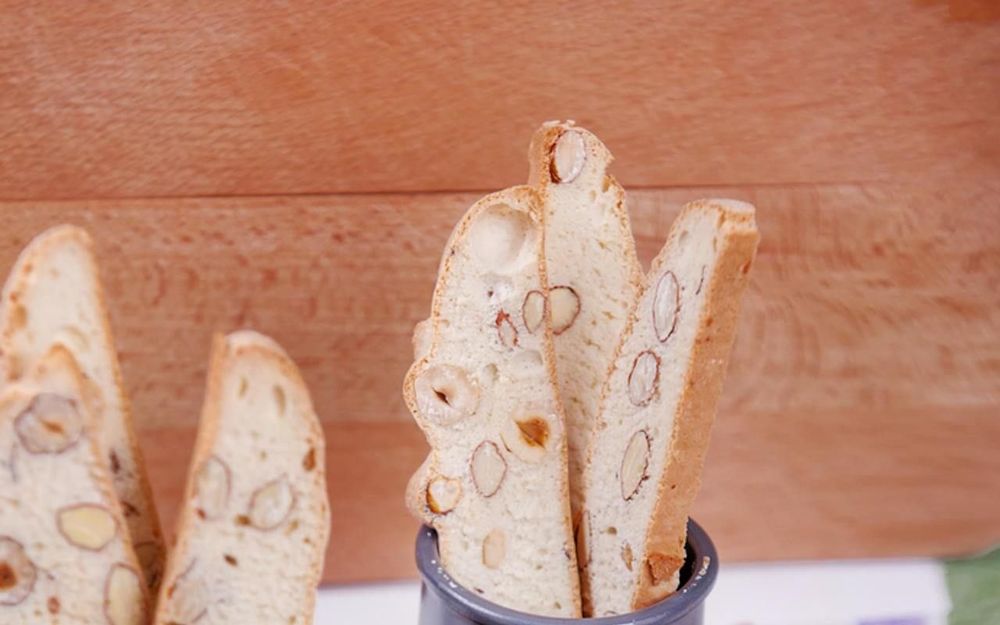
For an edible souvenir, Maison Fossier, founded in 1756, keeps alive the tradition of Reims' pink biscuits, happily dipped into a glass of champagne.
What to do in Reims with children?
The Mars Gate (stop 21) works well for a family outing: kids enjoy counting its three arches and spotting, beneath the vault, the barely visible shapes of Romulus and Remus fed by the she-wolf.
To burn off some energy, the Patte d'Oie park is home to deer and roe deer in an enclosure open to view, with a playground and a skate park right alongside.
What should you know before visiting Reims?
The cryptoporticus (stop 6), free to enter, is closed from November to April and only reopens in May: while closed, only Place du Forum above ground stays open.
The Tau Palace (stop 12) has been closed for renovation since January 2023, with reopening announced for 2027; only its shop stays open in the meantime.
The nave of Notre-Dame Cathedral (stop 11) can be visited freely and for free; climbing the towers, however, is only possible on a paid guided tour and only in the warmer months: check before you come.
What to see around Reims?
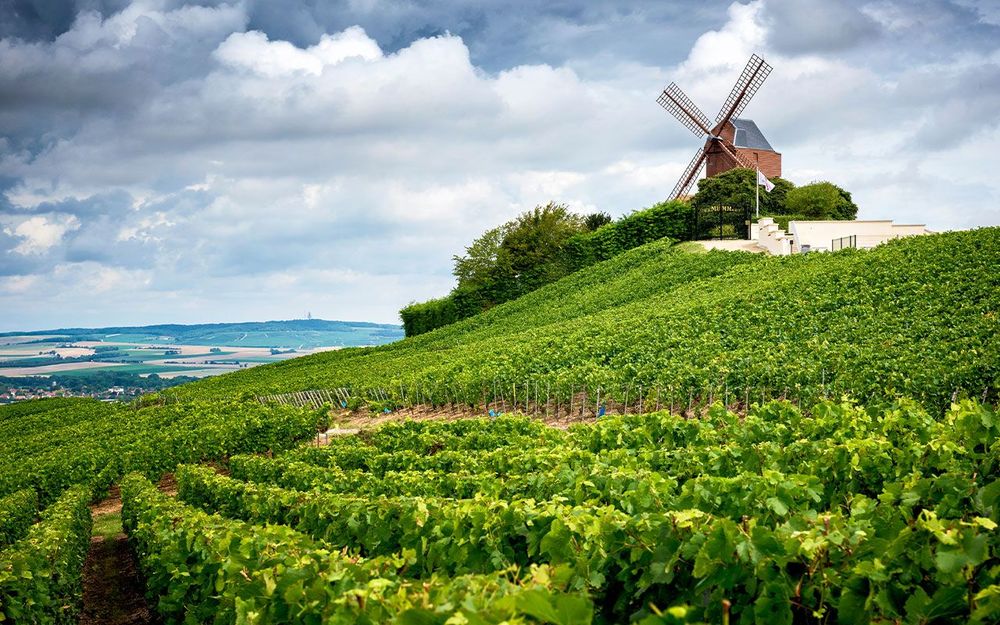
Reims is also a gateway to the neighbouring champagne vineyards. The village of Verzenay owes its silhouette to a lighthouse towering over the Montagne de Reims' sea of vines; now a museum, it offers a 360-degree view over the surrounding hillsides from its 25 metres. Between Reims and Épernay, the village of Hautvillers, where the monk Dom Pérignon perfected the art of blending, is visited around its Saint-Pierre Abbey, with views over the Marne valley. Our pick of the most beautiful villages around Reims lists more of them.
Several neighbouring towns also have their own audio-guided walk: Épernay, 24km away, is the capital of Champagne, among grand houses and prestigious cellars. Laon, 45km away, rises on its fortified outcrop, with ramparts and underground galleries. Further on, Compiègne, 89km away, unfolds its classical vistas and gardens, and Troyes, 107km away, keeps its half-timbered houses and its cathedral's stained glass in a historic centre shaped like a champagne cork.
What's on in Reims right now?
As the year draws to a close, the Christmas and Epiphany Fair brings Reims to life from 5 December to 3 January, on the Chaussée Bocquaine: traditional fairground rides draw young and old alike, with fireworks on the evening of 5 December, a Toy Story parade on 13 December and a Grinch parade on 23 December. Entry is free.
Information checked in November 2026 and subject to change.
Le plein d'inspirations
Explorez le monde en totale liberté, à pied au cœur des villes ou au fil des routes. Nos guides audios transforment chaque destination en une découverte culturelle immersive et unique.










FAQ for visiting Reims
When is the best time to visit Reims?
The ideal time to discover Reims runs from May to June, then from September to early October. You'll then enjoy mild, pleasant temperatures, perfect light for admiring the city's architecture and more moderate tourist crowds. Spring reveals the green vineyards, while autumn offers the spectacle of the grape harvest. Summer remains a good option for a lively atmosphere, even if showers are more frequent. Winters, rather cold with temperatures ranging between zero and eight degrees, suit lovers of a cosy atmosphere and peaceful visits.
How do you get to Reims from Paris?
Reims is easily accessible from Paris thanks to excellent connections. The train is the most practical option, with direct TGV trains from Gare de l'Est that bring you to the heart of the city in just about forty-five minutes. TER trains also provide the link in an hour and a half for a more economical budget. By car, allow about an hour and a half via the A4 motorway. Long-distance buses are an economical alternative with journeys of about two hours. Once there, Reims Centre station places you ideally to explore the city on foot.
How many days do you need to visit Reims?
Two full days is the ideal length of time to properly discover Reims. This time lets you calmly visit Notre-Dame Cathedral, the Palais du Tau and the Saint-Rémi basilica, while devoting half a day to the prestigious Champagne houses. One day is enough to see the essentials if your time is limited, focusing on the historic centre and one cellar. With three days, you'll be able to deepen your discovery by exploring the Art Deco districts, multiplying the tastings and treating yourself to some gourmet breaks in the city's excellent restaurants.
What are the absolute must-sees in Reims?
Notre-Dame Cathedral, a Gothic masterpiece where the kings of France were crowned, is the absolute jewel of Reims. The adjacent Palais du Tau also deserves your attention for its royal treasures. The Saint-Rémi basilica impresses with its Romanesque dimensions and houses the tomb of the patron saint. The great Champagne houses such as Taittinger or Pommery reveal their centuries-old cellars carved into the chalk. The Art Deco district bears witness to the reconstruction after the First World War. The Ryo audioguide accompanies you in the discovery of these wonders with narrated tours that enrich your visit with numerous historical anecdotes.
How do you visit the Champagne cellars in Reims?
The great Champagne houses offer guided tours by reservation, generally available in several languages. Historic cellars such as Taittinger, Veuve Clicquot or Ruinart offer tours of about an hour including the discovery of the underground galleries and a tasting. It is strongly advisable to book in advance, especially in high season. Rates vary depending on the houses and the packages chosen. Some cellars are accessible on foot from the city centre, others require a short bus or taxi ride. For a more intimate experience, turn to independent producers who often offer more personalised visits.
Where can you eat the best local specialities in Reims?
Reims is full of excellent spots for discovering Champagne gastronomy. The traditional brasseries of the city centre serve the famous jambon de Reims and boudin blanc, naturally accompanied by local champagne. Gourmet restaurants showcase regional products such as Champagne truffle or Chaource cheese. The Boulingrin covered market, a historic hall, offers fresh, local products on Wednesday, Friday and Saturday mornings. For a sweet break, try the pink biscuits of Reims, perfect dipped in a glass of champagne. The neighbourhood bistros offer generous, authentic cuisine in a convivial, typically Rémois atmosphere.
Can you visit Reims on foot?
Reims lends itself wonderfully to exploration on foot. The compact historic centre makes it easy to link the cathedral, the museums and the main monuments in just a few minutes' walk. The wide avenues inherited from the reconstruction offer pleasant strolls, notably the Cours Langlet lined with Art Deco façades. The pedestrian streets of the centre invite you to wander between shops and terraces. The Ryo app offers audio-guided itineraries that take you through the various districts, revealing the fascinating history of the coronation city. Even some Champagne houses remain accessible on foot from the centre, making a car unnecessary for most of your stay.
What is there to see around Reims in the Champagne region?
The region around Reims offers magnificent getaways. Epernay, the capital of champagne located half an hour away, is worth the detour for its Avenue de Champagne lined with prestigious houses. The wine villages of the Montagne de Reims such as Verzenay or Bouzy reveal splendid panoramas over the vineyards. The Montagne de Reims regional nature park offers lovely hikes through forests and hillsides. Hautvillers, the birthplace of champagne where Dom Pérignon lived, charms with its flower-filled alleys. Further afield, Châlons-en-Champagne charms with its preserved medieval centre and its canals. These excursions combine ideally with tastings at independent winegrowers for a complete immersion in the Champagne terroir.
Why is Reims cathedral linked to the coronation of the kings of France?
It was in Reims that Clovis is said to have been baptised, a founding episode that tied the city to the French monarchy for centuries. From the Middle Ages onwards, almost every king was crowned here, in a ceremony combining anointing, the handing over of the royal regalia and considerable pomp; the coronation of Charles VII, with Joan of Arc in attendance, remains the most famous of all. The Gothic cathedral still bears the marks of that role: abundant statuary, the smiling angel that became the city's emblem, and stained glass to which Marc Chagall added a contemporary touch. Next door, the Palais du Tau, where kings stayed for the ceremony, displays the treasures and garments connected with it.
Where can you discover Art Deco architecture in Reims?
Badly damaged during the First World War, Reims was rebuilt in the 1920s and 1930s, which left it with one of the richest Art Deco ensembles in France. The Carnegie library, with its mosaic, its glass roof and its ironwork, is the most spectacular showcase, but the style can also be read on the façades of rue de Vesle, around place Drouet-d'Erlon and in the Boulingrin market hall with its daring concrete vault. Garden cities and the stained glass of apartment buildings complete this often discreet heritage, which reveals itself when you look up. The Ryo audio guide offers a route dedicated to Reims that helps you spot these details as you walk.
Where should you stay in Reims on a budget or with the family?
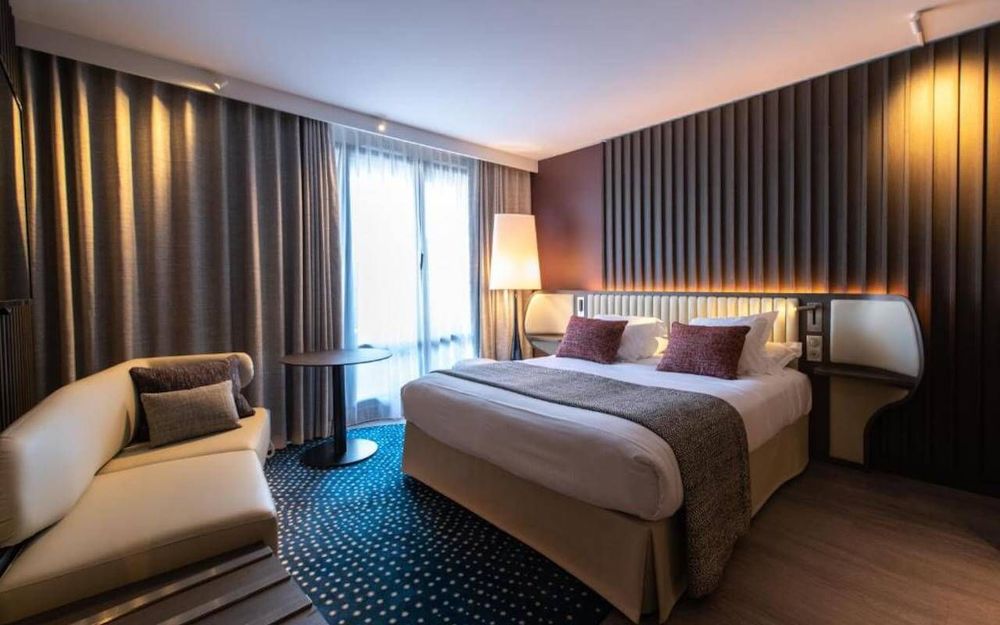
On a tight budget, Appart'City Confort on Rue Ponsardin is one of the cheapest options in the centre, while Séjours et Affaires Clairmarais offers studios 300 metres from the station. Hôtel de la Cathédrale, five minutes' walk from the Palais du Tau, has 17 rooms sleeping up to four. For families, the Campanile Reims Centre Cathédrale offers good value, the Best Western Premier Hôtel de la Paix wins children over with its pool, and the Domaine Les Crayères is a prestigious, château-style address.
Compare the options in our selections of cheap hotels in Reims and the best family hotels in Reims.
Which wine villages of the Montagne de Reims are worth a detour?
Ten to 30 km from Reims, the Champagne tourist route links villages full of character. Verzenay is easy to spot thanks to its 25-metre lighthouse, now a vine and wine museum with a 360° view over the vineyards. Hautvillers, where Dom Pérignon is buried, boasts wrought-iron signs and a dozen tasting cellars. Mailly-Champagne is rated 100% Grand Cru, Ambonnay and Aÿ-Champagne rank among the most prestigious terroirs, while Premier Cru Chigny-les-Roses and Rilly-la-Montagne offer intimate tastings with family growers.
Plan your route with our selection of the most beautiful villages around Reims.
Which Reims specialities should you taste or take home, from pink biscuits to ham?
The pink biscuit, crisp outside and soft inside, is enjoyed with tea or coffee. Reims ham, boned, cooked and then pressed into a terrine, is served with gherkins and fresh bread. Cheese lovers should try the rosace, created in 2015 by a local. On the sweet side, the nonnette with gingerbread and orange marmalade, honey gingerbread and croquignoles are teatime favourites. Potée champenoise brings families together, and the region also produces Rosé des Riceys and Coteaux champenois wines.
Discover all ten must-tries in our top Reims culinary specialities.
What activities can you enjoy in Reims, from heritage to champagne and nature?
Notre-Dame cathedral, a Gothic gem, can be visited for free every day from 7.30 am. Champagne houses such as Vranken-Pommery and Veuve Clicquot Ponsardin open their cellars for guided tours. The Basilica of Saint-Rémi, a UNESCO site, comes with a museum on Gallo-Roman Reims. For fresh air, hike or cycle through the vineyards and the Montagne de Reims regional nature park. Take a break at Maison Fossier, home of the pink biscuit, and end with an evening at the Opera, opened in 1873.
Find these ideas in our top activities to do in Reims.
How much does it cost to visit Reims cathedral and what should you see there?
Entry is free every day from 7.30 am to 7.30 pm, until 7.15 pm on Sundays, except during services. The tourist office runs guided tours at €9 for adults and €4.50 for over-12s. On the facades, admire the Gallery of Kings with its 56 statues and the central portal dedicated to the Virgin: with 2,303 statues, it is the most sculpted Gothic cathedral in France. Inside, the three-level nave and the stained glass, including windows by Marc Chagall, deserve your time.
Plan your visit with our guide to Notre-Dame Cathedral in Reims.
Which itinerary should you follow to visit Reims in 1 or 2 days?
Start early at Notre-Dame cathedral, before 9.30 am, to enjoy the light on the Chagall windows, then move on to the neighbouring Palais du Tau. Ten minutes' walk away, the Porte de Mars, the widest arch in the Roman world at 32 metres, leads on to Place Royale, the Forum cryptoporticus and the café terraces of Place d'Erlon. Save time for a tasting in the chalk cellars, 30 metres underground. With two days, add the Basilica of Saint-Rémi, the Art Deco district and the twisted beech forest near the vineyards.
Follow our step-by-step itinerary to visit Reims in 1 day or our plan to visit Reims in 2 days.
What can you do in Reims with children?
The historic centre can be explored on foot in half a day. At the cathedral, an activity booklet handed out in season turns the search for Chagall windows and gargoyles into a treasure hunt, and the free sound and light show, from June to September, delights young and old. Children count the three arches of the Porte de Mars, then discover the Basilica of Saint-Rémi. For a breather, the Parc de la Patte d'Oie is home to fallow and roe deer, and the Parc de Champagne is ideal for picnics. The planetarium welcomes children from age 4.
Plan your stay with our family guide to Reims with kids.
What can you do for free in Reims over a weekend?
You can spend a whole weekend in Reims without spending a euro. The cathedral nave, with its stained glass by Chagall and Imi Knoebel and the Smiling Angel on the north portal, is free to enter, as is the Basilica of Saint-Remi and its 122-metre Romanesque nave. The Porte de Mars stands in the middle of a roundabout. For Art Deco, walk through the hall of the Carnegie Library and the 1929 Halles du Boulingrin. Add the parks, the exhibitions at Le Cellier and the Régalia show projected onto the cathedral on summer evenings.
Discover all 12 ideas in our guide to free activities in Reims.
Vos commentaires, idées et suggestions
Aucun avis pour le moment