© Shutterstock
 Votre guide Ryo
Visit Reims in 2 Days: Cathedral, Champagne, and Art Deco (2026)
Reims is perfect for a weekend trip, but its story never quite fits in 48 hours. The sacred city of French kings conceals, beneath its UNESCO-listed Gothic facade, over a thousand years of history, while just a few meters below the city center's sidewalks, miles of chalk quarries transform the subsoil into a one-of-a-kind underground cellar. Visiting Reims in 2 days lets you hold that tension between stone and bubbles, between cathedral and Champagne, without ever rushing from one end of the city to the other. The Ryo audio-guided tour of Reims helps you connect these two faces of the city without losing time between stops.
In forty-eight hours, you climb a 13th-century tower still home to colonies of peregrine falcons, descend thirty meters underground into chalk galleries carved since Gallo-Roman times, come across Art Deco facades born from the reconstruction of the 1920s, and close out the weekend in a forest of centuries-old twisted beech trees, just a few kilometers from the vineyards. This guide details hour by hour what to see on Saturday and Sunday, where to have lunch between two cellar visits, and how to split your budget between monuments, tastings, and accommodation.
Day 1: Cathédrale Notre-Dame, Porte de Mars, and the Historic Heart
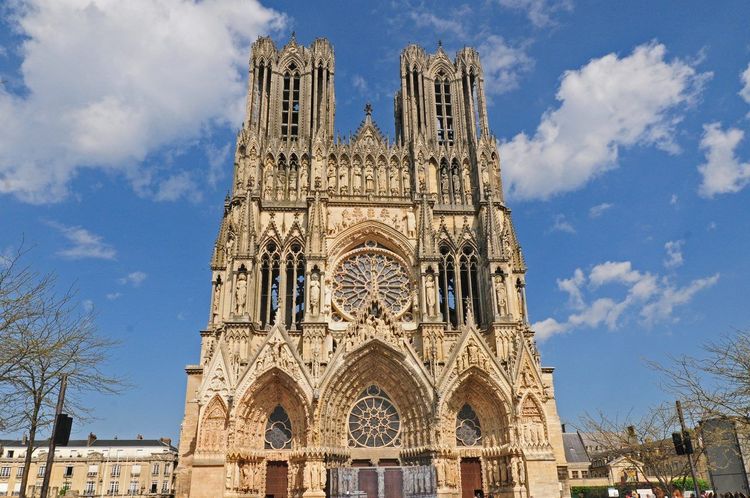
Reims's historic center can be explored on foot in one full day, taking in three monuments that all belong, in their own ways, to UNESCO World Heritage.
Cathédrale Notre-Dame and Porte de Mars
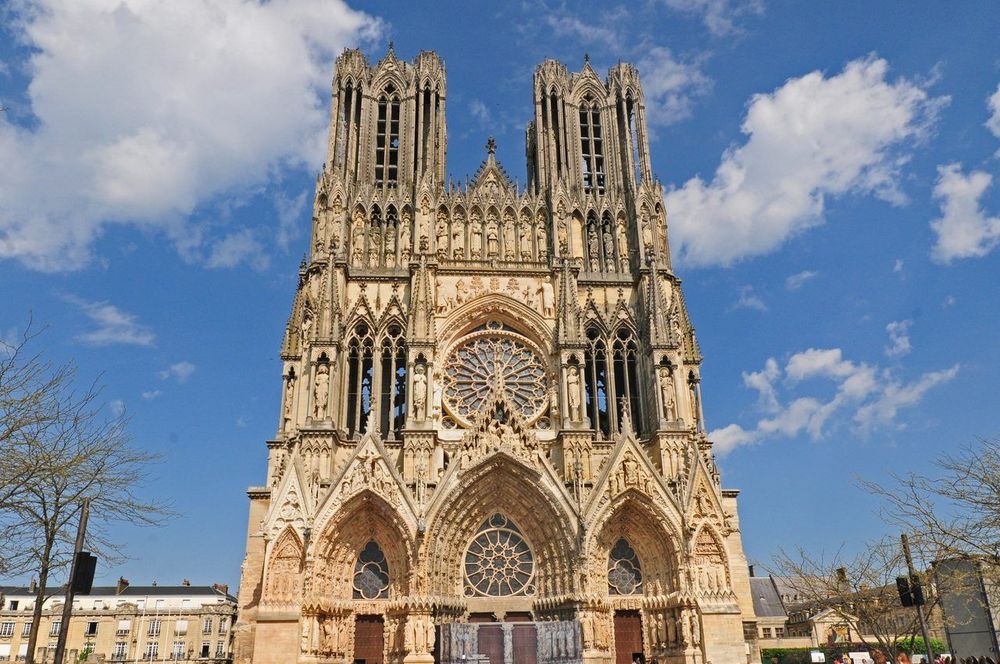
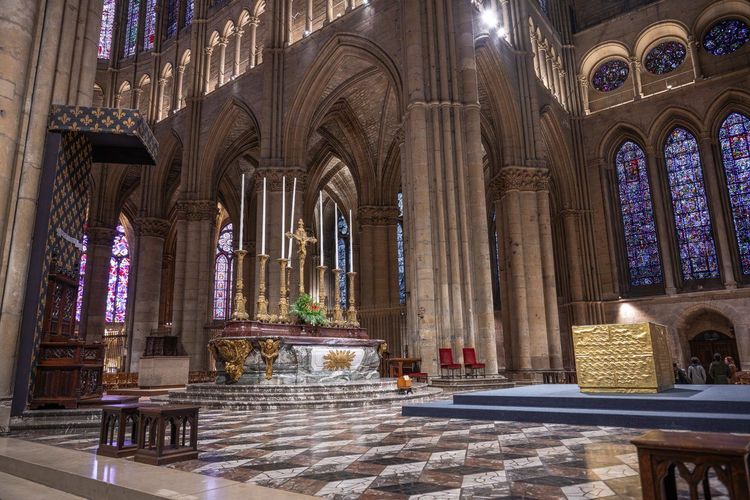
Start with the Cathédrale Notre-Dame de Reims, where the coronations of French kings took place, from the crowning of Louis the Pious in 816 to that of Charles X in 1825, with Napoleon as the sole exception. The building features more than 2,300 statues spread across its facades — a European record — and the western facade still bears the famous Smiling Angel, which has become a symbol of the city since it survived the bombardments of 1914. The interior, rising 38 meters to the vault, is free to visit, but booking a guided tour of the cathedral and its towers (around €10–12, approximately one hour) allows you to climb to the upper sections and discover the post-war reconstructed roof framework, inaccessible on a self-guided visit.
Allow an hour and a half for the full visit including the towers, a little less if you stay at ground level. Morning is the best time to enjoy the raking light on Chagall's stained glass windows, installed in the apse in 1974 and virtually invisible later in the day.
Leaving through the main entrance, head north along Rue de Vesle for ten minutes: the Porte de Mars awaits — a monumental 3rd-century arch and the widest surviving Roman arch in the world at 32 meters wide. It once marked the northern entrance to Durocortorum, the Roman name for Reims, and its still-legible bas-reliefs tell the founding mythology of the city.
If you visit in late morning, large crowds often form between 11am and 1pm, as the Porte de Mars is a natural passage between the train station and the historic center. Try to visit before 10am or after 3pm to enjoy the monument without navigating through tour groups.
The Palais du Tau and the Museum of Coronations
Right next to the cathedral, the Palais du Tau served as the residence of the Archbishops of Reims and the preparation site for royal coronations for nearly a thousand years. It now houses the museum of coronations, completely refurbished during the major restoration campaign completed in 2025, where the cathedral treasury, royal tapestries, and regalia used during the ceremonies are on display. The building is part of the same UNESCO listing as the cathedral and the former Abbaye Saint-Remi, an ensemble recognized in 1991 for its unique role in the history of the French monarchy.
Among the most precious pieces in the treasury is the Talisman of Charlemagne, a gold reliquary traditionally associated with the emperor himself. The neighboring rooms also display the textiles and liturgical ornaments from coronation ceremonies, with embroidery details visible only from a few centimeters away.
The visit takes about one hour and costs around €9.50 for a full-price ticket, with free admission for EU citizens under 26. You will also see original statues removed from the cathedral facade for restoration, replaced on site by copies — a rare chance to view sculptures usually seen from 30 meters up. Book your ticket online at weekends, as the museum's capacity is limited during high season.
Basilique Saint-Rémi and the Former Abbey
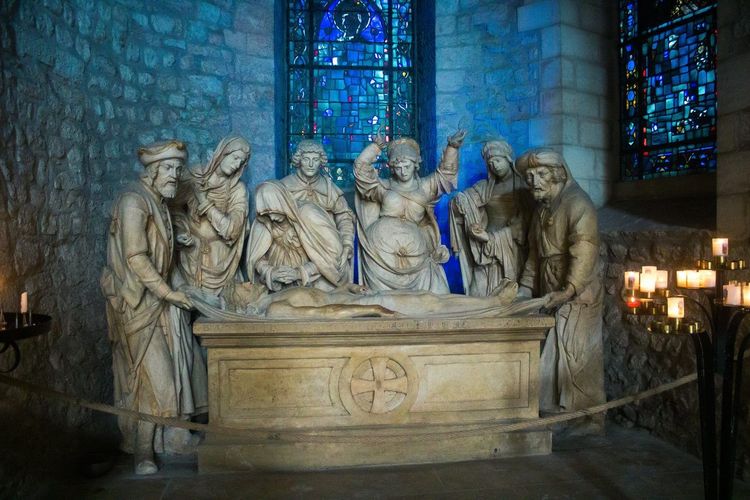
Head next to the southeast of the city center, about a twenty-five-minute walk or a ten-minute tram ride from the center. The Basilique Saint-Rémi is the largest Romanesque church in the region, stretching over 120 meters, and preserves the relics of Saint Remi, the bishop who baptized Clovis. Its nave, darker and older than that of the cathedral, offers a striking contrast: you move from the flamboyant Gothic of the city center to a stripped-back, almost austere Romanesque. The Romanesque sections of the building retain some of the basilica's oldest carved capitals, predating the Gothic choir that surrounds them.
Entry to the basilica is free, making it a great option if you are looking for things to do for free in Reims after a morning of paid visits.
Right next door, the former Abbaye Saint-Remi, the other UNESCO gem in Reims's listing, now houses the Musée Saint-Remi (53 Rue Simon, 51100 Reims, rated 4.6/5 on Google with 979 reviews). It traces the military and archaeological history of the city, from Gallo-Roman remains to the two World Wars, in a particularly well-preserved 17th-century monastic setting.
Allow 45 minutes to one hour for the museum. Like other Reims municipal museums, it charges a modest entry fee of a few euros, with regular free admission days: check the current pricing on the Reims museums website before you visit, as it changes regularly. End the day by wandering through the surrounding neighborhood, more residential and quieter than the historic center, before heading back for dinner near Place Drouet-d'Erlon. To deepen your knowledge of the cathedral before your visit, our Ryo article on visiting the Cathédrale Notre-Dame de Reims covers every element of the portal in detail.
Reims in the Roaring Twenties: Strolling through the Art Deco District
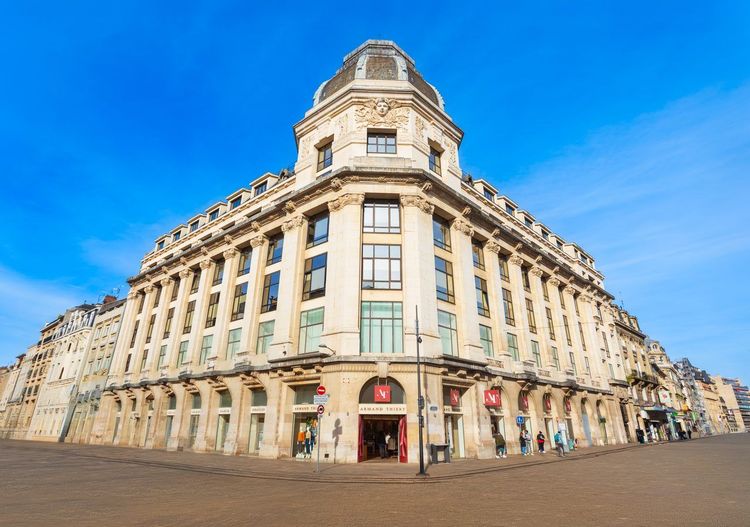
After the packed first day, this detour through Reims's Art Deco district offers a lighter counterpoint: no ticket to book, just facades to admire by looking up.
Iconic Facades and Buildings
Reims has the distinction of having been almost entirely rebuilt after World War I, with around 60% of the city destroyed by the bombardments of 1914–1918. The architects of the reconstruction drew heavily on the emerging Art Deco vocabulary, making Reims one of the French cities best endowed with heritage from the interwar years. In the neighborhoods rebuilt between 1920 and 1930, several hundred buildings still bear the hallmarks of this architectural style, often recognizable by their geometric ironwork and colorful brick friezes.
The circuit focuses on a few streets in central Reims: Rue de Vesle, Rue Carnot, and the area around Place Drouet-d'Erlon are home to most of the remarkable facades. The Halles du Boulingrin, a covered market inaugurated in 1929 with a reinforced concrete vault of then-unprecedented span in France, is one of the most spectacular examples of the genre.
The Bibliothèque Carnegie, funded by the American philanthropist of the same name, blends Art Deco ironwork and colorful stained glass in a facade that many hurried visitors completely overlook.
The Villa Douce (9 Boulevard de la Paix, 51100 Reims, rated 4.6/5 on Google with 22 reviews), built in the 1920s for a wealthy Reims family and now the seat of the university presidency, lines up mosaics, stained glass, and ironwork behind a gate that most visitors walk past without looking up. It can be admired from the boulevard, with its grounds open on certain days.
Joining a Guided Art Deco Tour
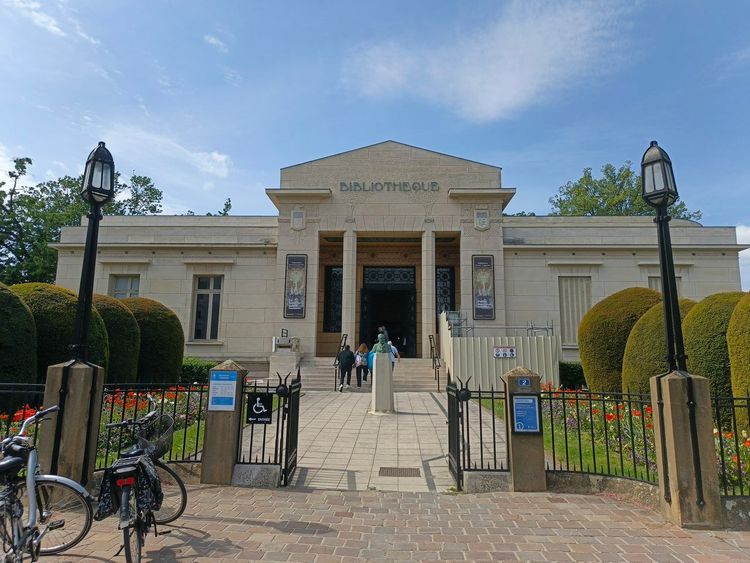
To catch the details you miss on your own, a guided Art Deco tour of Reims, organized by the tourist office, lasts about 1.5 hours and costs around ten euros. The guide deciphers the ironwork, floor mosaics, and geometric friezes typical of this period, often invisible to the untrained eye.
If you are short on time, an alternative is to download a self-guided map and spend 45 minutes at the end of Day 1's morning or at the very end of Day 2, when the raking light brings out the relief of the facades.
Day 2: Discovering the Great Champagne Houses

The second day shifts pace entirely: head down into the chalky subsoil of Reims, itself UNESCO-listed in 2015 as part of the Champagne Hillsides, Houses and Cellars.
Veuve Clicquot, Mumm, and Taittinger: the Must-Visits
The house of Veuve Clicquot is probably the most internationally recognized, carried by the story of Barbe-Nicole Clicquot Ponsardin, who took over the business after her husband's death in 1805 and pioneered the riddling technique on a pupitre rack, still in use today. The standard visit, about 90 minutes, descends into Gallo-Roman chalk quarries originally dug to extract the chalk used to build the city, before ending with a tasting of one or two glasses. Expect to pay €35–45 depending on the package.
A ten-minute walk away, the house of Mumm offers a shorter experience, around 1 hour, centered on its famous Cordon Rouge. The entry fee, around €25–30, often makes it the most accessible starting point for a first encounter with Reims's cellars.
The house of Taittinger has the distinction of occupying the cellars of the former Abbaye Saint-Nicaise, destroyed during the Revolution: visitors literally walk among the remains of a medieval church, several floors underground. The visit, around 45 minutes plus tasting, runs about €30–45 depending on the Champagne served at the end of the tour.
Pommery, Martel, Cazanove, and Joseph Perrier: Alternative Cellars
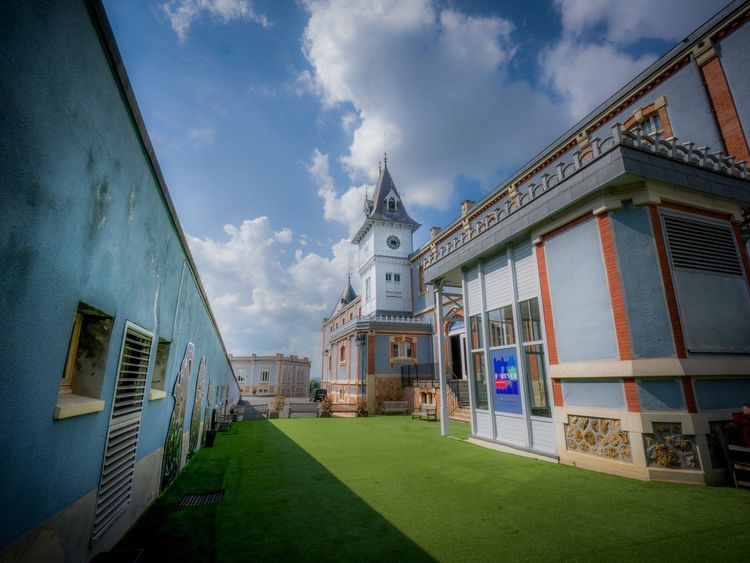
Less crowded than the previous trio, the house of Vranken-Pommery is nevertheless worth a detour for its spectacular Elizabethan architecture, commissioned in the late 19th century by Louise Pommery, and for its 18 kilometers of galleries connected by monumental staircases and punctuated by contemporary artworks. The chalk quarries, listed as a historic monument, are also adorned with bas-reliefs carved in the 19th century — a rare feature among Champagne houses. The standard visit lasts about 1h15 for €25–30.
The house of G.H. Martel & C° (17 Rue des Créneaux, 51100 Reims, rated 4.4/5 on Google with 314 reviews), right in the city center, offers shorter and more flexible packages, often without mandatory booking on weekdays, with prices starting at around €20.
Charles de Cazanove, less well known to the general public but appreciated by enthusiasts for its value for money, rounds off a tour nicely if you have time for a fourth tasting. Finally, a useful note: the Joseph Perrier cellars, often cited among the Champagne houses open to visitors, are actually located in Châlons-en-Champagne, about 45 minutes' drive from Reims. A good option if your stay extends to a third day or if you are combining the visit with a drive along the Champagne Route.
Booking Your Visit and Tasting Smart

With seven potential houses and only one weekend, you need to make choices. Always book online in advance, especially on Saturdays, when morning slots often fill up one to two weeks ahead. Plan to visit no more than two cellars in the same day: each visit lasts between 45 minutes and 1.5 hours, and back-to-back tastings require breaks.
To compare prices: entry-level packages run between €20 and €30, while grand cru or vintage Champagne packages can reach €60–80. Many houses offer combined transport-and-visit packages departing from the city center, useful if you are staying far from the cellars. If you are traveling with family, several houses offer sparkling grape juice for children during the adult tasting, and some cellars have elevators for visitors with reduced mobility or strollers — worth checking when booking.
If you want to go further, the Champagne Route connects Reims to Épernay through the UNESCO-listed hillsides; our Ryo article on visiting Épernay with family outlines a complementary itinerary across several wine villages.
Museums and Cultural Heritage of Reims
Between two cellar visits or in the late afternoon, Reims has several human-scale museums, perfect for a cultural break without dedicating half a day to them.
Musée-Hôtel Le Vergeur
The Musée-Hôtel Le Vergeur occupies a townhouse whose oldest sections date back to the 13th century, reworked during the Renaissance, on the charming Place du Forum — a remnant of the Roman forum of Durocortorum. It houses a collection of Albrecht Dürer engravings and period furniture preserved in an intimate setting, far from the crowds of the major monuments.
Allow 45 minutes for the visit, at around €5–6. It makes a good stop on Sunday morning before heading to the Champagne cellars on foot.
Musée des Beaux-Arts and Other Collections
The Musée des Beaux-Arts de Reims (8 Rue Chanzy, 51100 Reims, rated 4.1/5 on Google with 222 reviews) holds a collection spanning the 16th to the 20th century, with a set of Corot paintings particularly prized by enthusiasts. The museum is the subject of a major relocation project to the former Jesuit college, and its collections are displayed on a rotating basis across exhibitions: check the Reims museums program before visiting, as the open rooms and admission prices vary by season. Entry remains modest, a few euros, with several free admission days throughout the year.
Motor enthusiasts should know that Reims also has a car museum, with several dozen vehicles tracing the history of the automobile from the early 20th century. Less central, it requires a car, bus, or taxi, but rounds out a stay nicely if time allows. For families, the municipal museums regularly run workshops on Wednesdays and during school holidays — a good option if you are traveling with children and looking for a family activity in Reims that goes beyond simply looking at things.
The city center museums are less than ten minutes' walk from one another, making it easy to visit several in a row if you have a full morning rather than just a short break.
Day Trip into the Champagne Vineyards and the Montagne de Reims
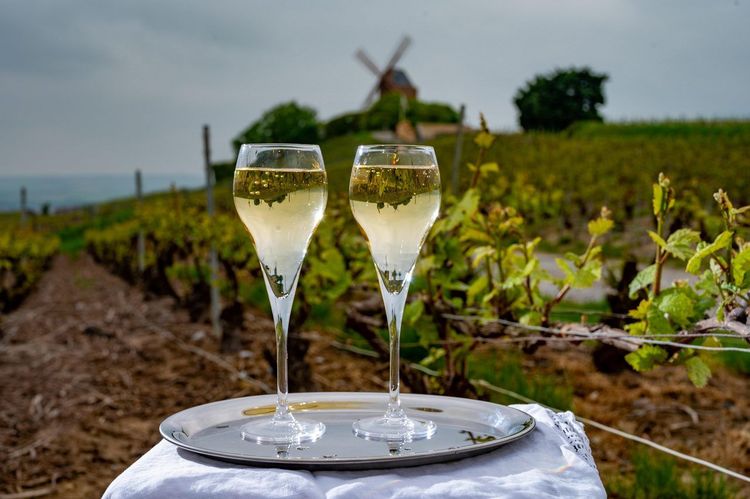
If you have a car and an extra half-day, the Montagne de Reims — the wooded plateau south of the city — deserves a full excursion of its own.
The Verzenay Lighthouse and the Vignotrésor Trail
About a twenty-minute drive from the city center, the Verzenay lighthouse always surprises visitors the first time: a real lighthouse, built in 1909 in the middle of the vineyards, more than 130 kilometers from the nearest sea. It was erected by a Champagne merchant to draw attention to his wines and now serves as a viewpoint and vine museum.
The climb — about a hundred steps — opens onto a 360-degree panorama over the Reims vineyards and the Champagne plain. Allow 30–40 minutes for a few euros, with the museum-plus-lighthouse package staying under ten euros.
At the foot of the lighthouse begins the Vignotrésor trail, an educational path of about 3 kilometers winding through the vine rows and explaining, through panels and interactive games, the grape varieties used in Champagne (pinot noir, pinot meunier, chardonnay) and the winemaker's work through the seasons. Free and family-friendly, it complements the lighthouse visit perfectly.
Despite its name, the Montagne de Reims barely reaches 287 meters: it is less a mountain than a wooded plateau interspersed with vineyards, designated a Regional Natural Park since 1976. The GR14 long-distance footpath crosses it for several dozen kilometers, an option for hikers wishing to explore beyond the viewpoints accessible by car.
The Faux de Verzy Forest
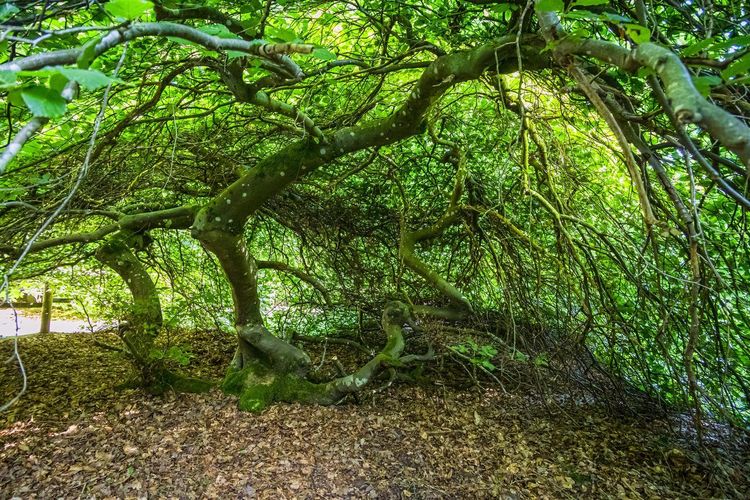
A few kilometers away, the Faux de Verzy forest (Route des Faux, 51380 Verzy, rated 4.6/5 on Google with 1,287 reviews) is home to one of the world's largest concentrations of twisted beech trees — trees with tortured forms and drooping branches that give them an almost supernatural silhouette. Some specimens are over 300 years old. The origin of these contorted shapes remains debated: scientists attribute them to a genetic mutation unique to this beech population, while local tradition prefers the story of monks who cursed the forest in the Middle Ages.
A waymarked discovery trail of about 1.5 kilometers allows you to observe them without causing damage: stay on the paths, as the roots of these fragile trees are particularly sensitive to trampling. Access is free and the site can be visited in 45 minutes to 1 hour.
Without a car, the excursion is still possible by booking a shuttle or tourist tour offered by the Reims tourist office, generally organized in season (April to October), with a stop at the Verzenay lighthouse and another at the Faux de Verzy forest. Allow a full half-day including transport, for a budget of around €35–60 per person depending on the package and included tastings. Many independent winemakers based in villages such as Verzenay, Verzy, or Villers-Allerand offer tastings directly at their estate, often by simple appointment and at more accessible prices than the major houses in Reims city center. To continue exploring the wine region, our Ryo article on the most beautiful villages around Reims lists further stops in the vineyards.
Sites of Memory: Reims and the 1945 Surrender

Reims holds a unique place in 20th-century history: it was here, in a room of the technical college converted into General Eisenhower's headquarters, that the German capitulation was signed on 7 May 1945, ending World War II in Europe. The Musée de la Reddition (12 Rue Franklin Roosevelt, 51100 Reims, rated 4.5/5 on Google with 1,114 reviews) preserves the exact room where the act of capitulation was initialed, with the original wall maps and furniture still in place.
The room, virtually unchanged since 1945, takes only a few minutes to visit but leaves a powerful impression: the military maps pinned to the wall, the period telephones, and the chairs arranged around the signing table give a rare sense of proximity to the event. The museum also periodically hosts guided visits and thematic events around the history of the city at war.
The visit is very short (about 30 minutes), accompanied by an archival film about the events of May 1945, and costs just a few euros at the municipal museum rate. It is a sober counterpoint to the religious monuments and Champagne houses, often overlooked by visitors in a hurry despite being just a few minutes' walk from the train station. In 2025, Reims marked the 80th anniversary of the German surrender with several temporary exhibitions; the permanent room remains open year-round. The audio-guided tour of Reims makes a stop here too, weaving this quieter chapter into the wider walk.
Exploring Reims Another Way: by Bike and through the Parks
If you prefer exploring Reims on foot or by bike rather than chaining paid visits, the city lends itself well to it: the historic center can be covered entirely on foot in half a day, and the bike-sharing service allows you to reach the outlying Champagne cellars without a car. The stations are spread across the city center and up to the main Champagne houses, with pay-per-ride or day-pass options at a few euros — check the network's app before you go.
The Parc de Champagne (Avenue du Général Giraud, 51100 Reims, rated 4.6/5 on Google with 3,694 reviews), laid out in the early 20th century on former chalk quarries, offers a large, gently rolling green space just minutes from the city center, with lawns, sports facilities, and a pleasant view over the city's rooftops.
It is a great spot for a picnic between visits, or to wind down Sunday afternoon before heading home. A cycling route connects the historic center directly to the Parc de Champagne and then to the Pommery cellars — about 20 minutes of easy pedaling, with no significant elevation as Reims city center remains broadly flat.
If you prefer to stay on foot, the full circuit of the historic center — cathedral, Palais du Tau, Art Deco district, and Basilique Saint-Rémi included — amounts to about 8 kilometers of walking over a full day, a useful figure if you want to visit Reims entirely on foot without using public transport. The cycle lanes linking the city center to the outlying Champagne houses also let you combine exercise and tasting without worrying about parking — worth considering if you are traveling as a couple and looking for an activity away from organized groups.
Where to Eat in Reims: Good Addresses and Local Specialties
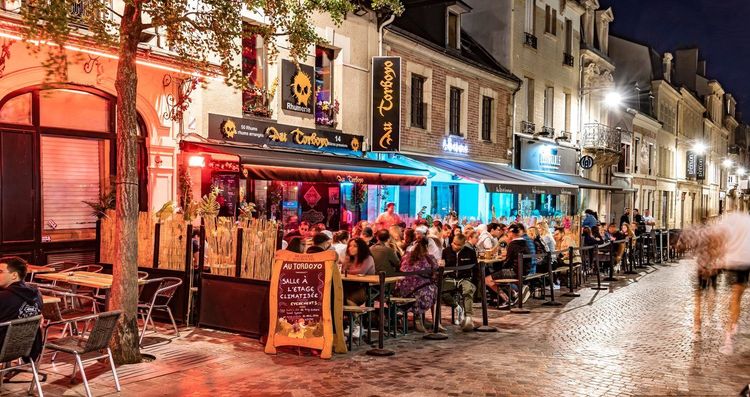
Between visits, the city center is full of options for every budget, from a quick bistro to a Michelin-starred table.
Gastronomic Restaurants and Top Tables (Michelin, Gault&Millau)
For a quick lunch near Place Drouet-d'Erlon, the lively hub of Reims's evening life, several brasseries offer set menus at around €15–20. The Café du Palais, a local institution since 1930, combines an Art Deco interior with generous brasserie cuisine; its stained-glass veranda is worth the visit on its own.
For a quicker and less expensive lunch, several bakeries and tea rooms in the city center offer sandwich-and-dessert deals for around €12, a practical option between two cellar visits when time is short.
For a more refined dinner, Restaurant Racine, a gastronomic table on Boulevard Général Leclerc, offers seasonal cuisine in tasting menus, regularly cited by the Michelin and Gault&Millau guides. The format is a single set menu that must be booked well in advance: check the opening days and the current menu price when booking, as the gap between lunch and dinner pricing is significant.
Reims also has several Michelin-starred addresses and a strong showing in the Gault&Millau guide, often tucked away outside the historic center, within a 10–15-minute drive. Book several weeks ahead for a Saturday dinner, as Reims remains a very popular weekend destination. Between the Café du Palais and a gastronomic table like Racine, expect a price gap of one to four times: the former suits a quick lunch between two cellar visits, the latter is more fitting for a Saturday dinner — the highlight of the stay where you take your time.
The area around Place du Forum has several wine bars where you can taste by the glass the Champagnes of independent growers, often absent from the lists of the major houses. Expect €6–12 a glass depending on the cuvée — a lighter alternative to a full cellar visit if your afternoon is already packed.
Pink Biscuits and Local Specialties to Take Home
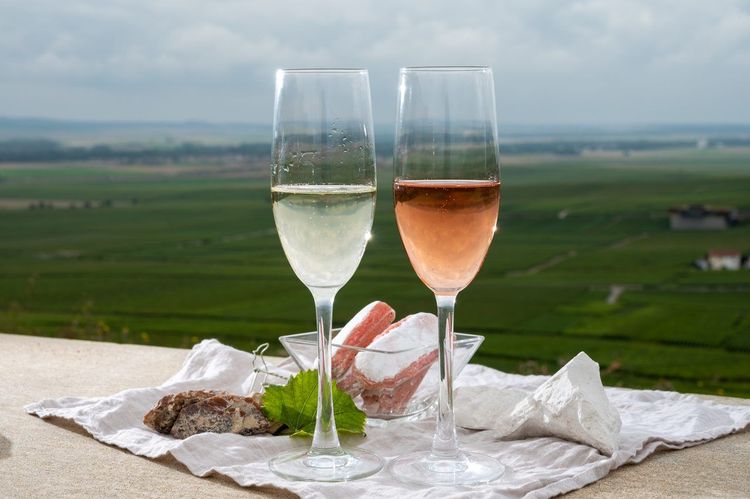
You cannot leave Reims without stopping at Biscuiterie Fossier (25 Cours Jean-Baptiste Langlet, 51100 Reims, rated 4.5/5 on Google with 381 reviews), the historic maker of the biscuit rose de Reims since the 18th century — a sweet rusk traditionally dipped in a glass of Champagne. The recipe has barely changed since its creation: a vanilla-flavored ladyfinger biscuit, dyed pink, originally designed to withstand dunking in Champagne without falling apart.
The city center boutique also sells pain d'épices and marzipan, other lesser-known local specialties. The classic metal tin, available in several sizes, keeps well for several weeks — handy if you are bringing back edible souvenirs from a long journey home.
Other local flavors worth bringing home: a bottle of Champagne bought directly from a cellar, often cheaper than in supermarkets, and Reims mustard, milder than its Dijon cousin. On Saturday mornings, the covered Boulingrin market, under its Art Deco reinforced concrete vault, is worth visiting even without any intention of buying: local producers, fishmongers, and cheesemongers set up their stalls from early morning, a good way to combine breakfast with a heritage experience before tackling the day's visits.
For a more comprehensive overview of culinary addresses, our Ryo article on the culinary specialties of Reims covers around ten other typical products.
Where to Stay in Reims: Our Hotel Selection
Three profiles are enough to cover the main needs for a complete weekend in Reims, from couples seeking romance to families prioritizing space and value.
The Most Central
The Hôtel de la Paix, steps from the cathedral, combines an unbeatable location with an inner garden and pool — rare in the very heart of the city. Some rooms overlook this garden rather than the street, a significant advantage for sleeping peacefully despite the central location, less than five minutes on foot from the cathedral and the Palais du Tau. Expect €120–180 per night depending on the season.
The Best Value for Money
The Best Western Hôtel de la Cathédrale, a few meters from the forecourt, offers simple but well-kept rooms at around €90–110 per night, a solid compromise for a family weekend in Reims without blowing the budget. Breakfast in buffet format is often included in weekend deals, allowing an early start without hunting for an open café in the city center. Its position, five minutes from the forecourt, means you can leave the car in the car park for the entire stay and do everything on foot.
The Most Unique (Art Deco Spirit)
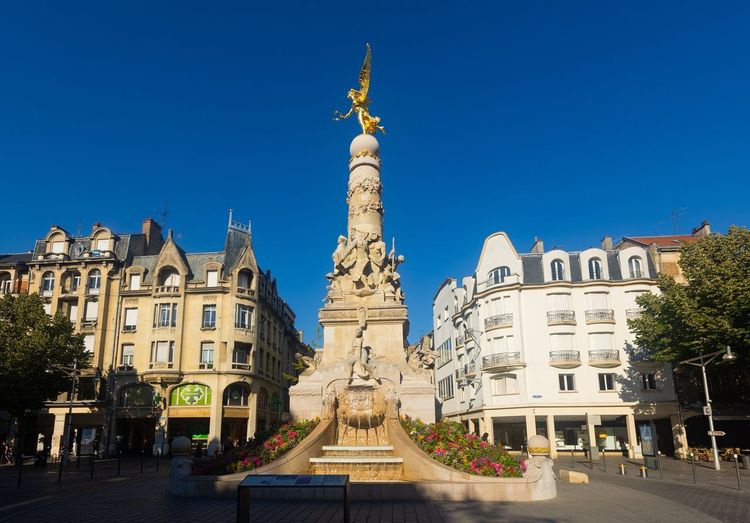
On Place Drouet-d'Erlon, the Grand Hôtel Continental (93 Place Drouet d'Erlon, 51100 Reims, rated 4.4/5 on Google with 389 reviews) occupies a historic building renovated in the spirit of the 1920s, with a facade and communal areas that naturally extend the Art Deco stroll of Day 1. The rooms, spread across several floors served by a period staircase, retain original architectural features including ironwork and stained glass. The hotel bar, opening onto Place Drouet-d'Erlon, is also a good spot for a last drink after dinner. Expect €130–200 per night depending on the period.
Ideally book six to eight weeks in advance for a spring or autumn Saturday, as the best rooms go quickly in a city that remains a highly sought-after weekend destination year-round. For a wider choice to suit your budget or travel group, our Ryo selection of the best family hotels in Reims and our Ryo guide to budget hotels in Reims cover around ten additional options.
Practical Info: Getting There, Budget, and the Best Time for a Weekend in Reims
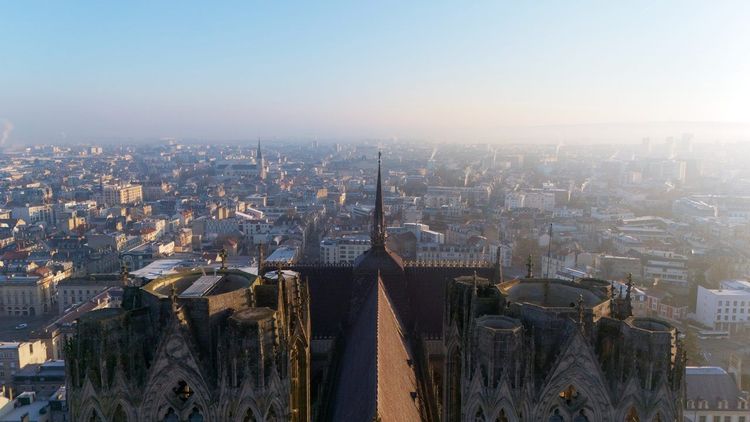
Before you leave, a few practical pointers to avoid unpleasant surprises on arrival.
How to Get to Reims and Get Around
By train, Reims is about 45 minutes from Paris Gare de l'Est by TGV, making it a particularly car-free-friendly weekend destination. By car, allow about 1h30 from Paris via the A4 motorway. There is no airport in Reims serving regular commercial flights: international visitors generally transit through Paris (Roissy Charles-de-Gaulle or Orly), then reach Reims by train or rental car. Allow about 1h45 from Roissy Charles-de-Gaulle airport by road, sometimes a simpler option than traveling back through central Paris.
Once there, the historic center is entirely walkable: the cathedral, the Palais du Tau, and most of the central Champagne houses are within a 20-minute walk of one another. For more outlying cellars (Pommery, Mumm) or to reach the Montagne de Reims, a tram network (two lines) supplements the bus routes, and renting a car or bike becomes useful if you are planning the Verzenay lighthouse excursion.
Where to Park
Reims city center has several covered car parks (Cathédrale, Drouet-d'Erlon, Boulingrin) priced at around €2 per hour, with day passes significantly cheaper than the cumulative hourly rate. If you are staying on the outskirts, opt for a park-and-ride linked to the tram rather than searching for street parking in the historic center on Saturdays, when congestion makes surface parking difficult between 10am and 6pm.
Beyond the city center, parking becomes free in some residential streets a few hundred meters from the cathedral forecourt — worth considering if you are staying for several days and want to avoid daily parking charges. However, do check the blue zone signs, which are common near main roads.
Budget and Best Season
For an all-in weekend in Reims (mid-range accommodation, two cellar visits, meals, and museums), budget between €250 and €400 per person, excluding transport. The breakdown is roughly as follows: €90–180 per hotel night, €25–45 for a cellar visit with tasting, €15–20 for a brasserie lunch, €35+ for a refined dinner, a few euros for a municipal museum. For a family of four, plan more like €700–1,000 in total, adding child-friendly activities and accommodation with two rooms or a family suite. Off-season, in January or February, the same formula often comes in under €250 per person.
Spring (April to June) and early autumn (September) offer the best balance of pleasant weather and moderate crowds. July and August remain very busy despite sometimes heavy surface heat, but the underground cellars stay comfortable even in the height of summer thanks to their constant temperature of around 10–12°C year-round. Crowds peak during the harvest, from late August to mid-September, when the surrounding vineyards are in full swing but city center hotels fill up earlier than usual. Conversely, January and February offer the lowest accommodation rates of the year, sometimes 20–30% below high season prices.
Before you leave, listen to a few episodes of the Ryo audio guide dedicated to Reims: the Ryo audio-guided tour of Reims lets you plan your itinerary in advance and gauge the real distances between each stop.
FAQ
How Much Time Do You Need to Visit Reims?
Two days are enough to cover the essentials: the cathedral, the Palais du Tau, the Basilique Saint-Rémi, and two Champagne houses. With a third day, you can add the Montagne de Reims, the Verzenay lighthouse, and the Faux de Verzy forest, or head to Épernay along the Champagne Route.
How Do You Get to Reims and Get Around Once There?
The TGV from Paris Gare de l'Est takes about 45 minutes, making Reims an easily accessible destination without a car. Once there, the historic center is walkable; the tram and bus network fill in the gaps for reaching outlying cellars or the train station.
Where Can You Park in Reims?
Several covered car parks surround the city center (Cathédrale, Drouet-d'Erlon, Boulingrin), priced at around €2 per hour. On Saturdays between 10am and 6pm, it is better to use a park-and-ride facility linked to the tram rather than looking for a street parking space.
Which Champagne Cellar Should You Visit First during a Weekend in Reims?
For a first visit, Veuve Clicquot or Mumm offer the best balance of renown, reasonable duration, and walkability from the city center. For a more unusual experience, Taittinger impresses with its cellars set within the remains of a medieval abbey.
Can You Explore Reims in 1 Day?
Yes, but by focusing on the essentials: the cathedral and the Palais du Tau in the morning, a single Champagne house in the afternoon. Planning a second day allows you to add the Basilique Saint-Rémi, a museum, and the Art Deco district at a more leisurely pace.
What Can You Do for Free in Reims?
The Basilique Saint-Rémi is free to visit, as is a stroll through the Art Deco district, the Parc de Champagne, the Vignotrésor trail at the foot of the Verzenay lighthouse, and the Faux de Verzy path. The cathedral nave is also free to enter, and the municipal museums offer several free admission days throughout the year.
What Budget Should You Plan for a Weekend in Reims?
Budget between €250 and €400 per person for a weekend covering mid-range accommodation, two Champagne cellar visits, meals, and entry to one or two museums, excluding transport to Reims.
Reims works well as a two-day trip — long enough to do justice to the UNESCO monuments in the city center and the Champagne cellars, without ever feeling rushed. The city's real luxury lies in the rare proximity of religious heritage, 20th-century history, and gastronomy, all concentrated in a walkable city center.
If you want to plan your itinerary before you go, the Ryo audio-guided tour of Reims is the best way to connect these different sites without losing time between stops, listening to the history of each monument on location.