© Shutterstock
 Votre guide Ryo
Visit Reims in 1 Day: the Complete Itinerary Between Royal Coronations and Champagne Houses (2026)
Reims rebuilt itself twice in a century — once after the bombardments of 1914–1918, and again after the following war — and yet the cathedral where the kings of France received their crown, from Louis VIII in 1223 to Charles X in 1825, still dominates the city as though nothing had changed. Visiting Reims in one day is therefore no great challenge: the city fits within a small area, the Cathédrale Notre-Dame is a ten-minute walk from the Palais du Tau and the great Champagne houses, and the tram reaches the Saint-Remi district in a quarter of an hour.
In a well-paced day, you can take in a UNESCO-listed Gothic cathedral, a coronation palace that dressed kings for centuries, two major museums, a tasting in chalk cellars carved 30 metres underground, and an entire neighbourhood rebuilt in the Art Deco style during the 1920s. This guide follows a chronological itinerary, from breakfast to sunset over the vines, with opening times and alternatives if you prefer a later start. The Ryo audio-guided tour of Reims, available directly on your phone, lets you follow this same route without checking your map at every street corner.
The Cathédrale Notre-Dame de Reims and the Palais du Tau: a Morning in the History of Royal Coronations
Arrive before 9:30 am if you want to enjoy the cathedral without the crowds of tour groups that descend in late morning — the raking light also filters better through Chagall's stained-glass windows at that hour. This cathedral-and-palace pairing concentrates over eight centuries of coronation history within a few metres of each other, with no need to move between the two.
The Cathédrale Notre-Dame: Gothic Masterpiece and Site of Royal Coronations
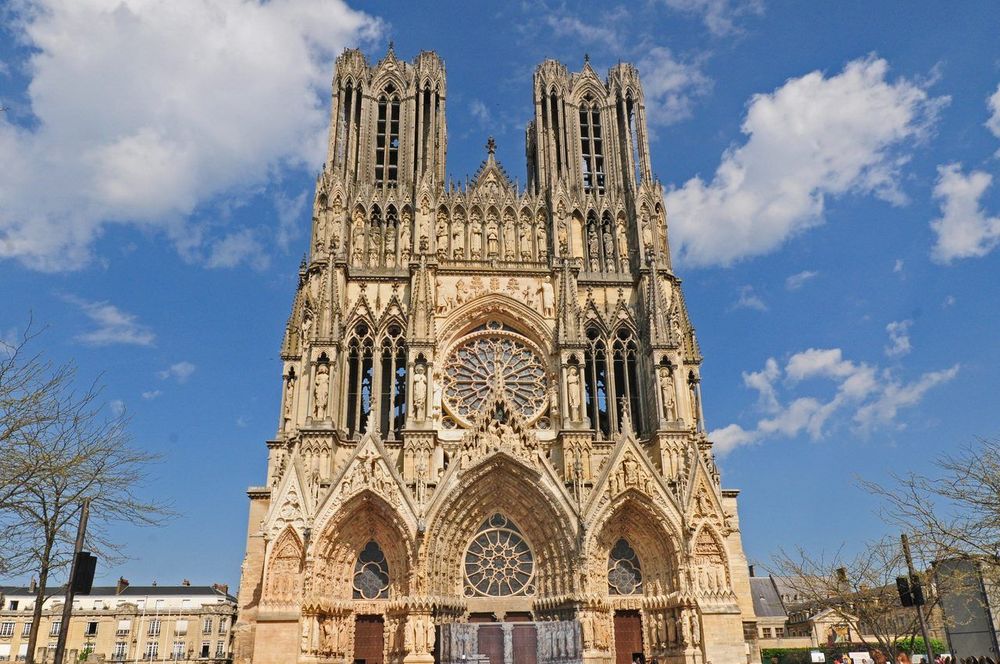
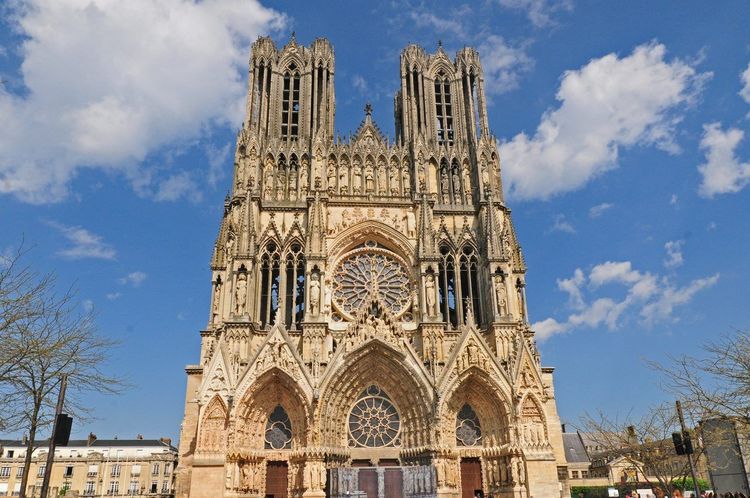
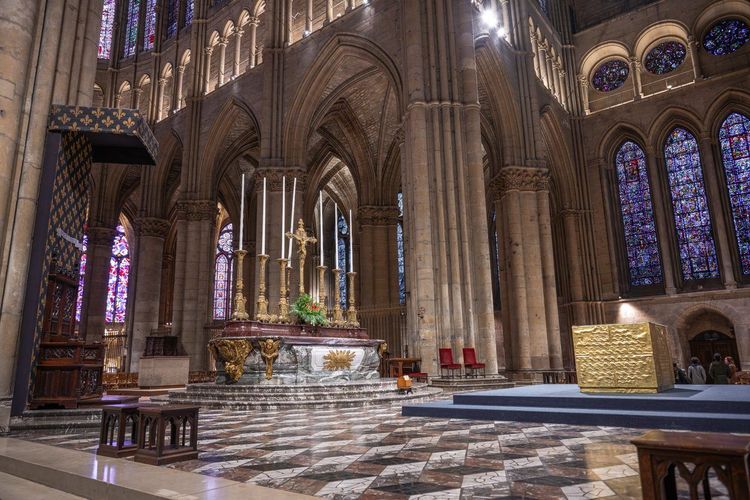
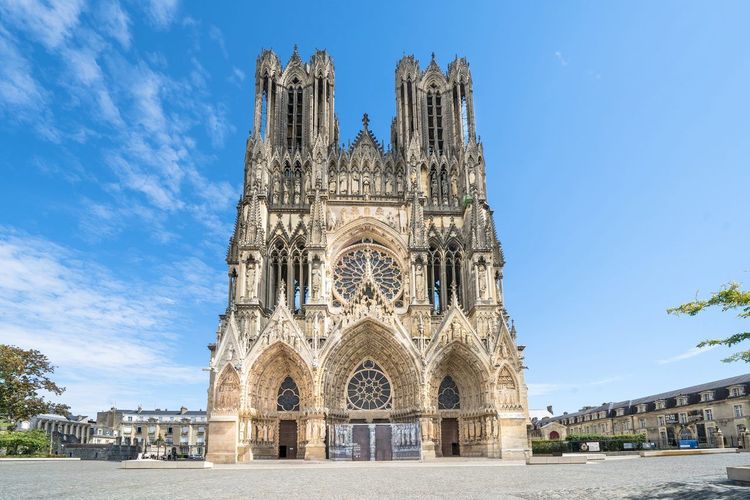
The Cathédrale Notre-Dame de Reims hosted the coronation of 25 kings of France between 1223 and 1825, from Louis VIII to Charles X, making it the most symbolically significant religious building in the country. The monument bears around 2,300 sculpted statues — a figure unmatched by any other Gothic cathedral — including the famous Smiling Angel on the north portal, beheaded during the fire of 1914 and then reassembled stone by stone.
Entry to the nave is free. A guided tour of approximately 1 hour 15 minutes explains the iconographic programme of the Kings' Portal and the history of the coronation ceremony, from the baptism traditionally dated to around 496 to the last coronation in 1825. If you are short on time, a self-guided visit of 30 to 40 minutes is enough to take in the essentials: the three-aisled nave, the Gothic choir, and the contemporary stained-glass windows by Marc Chagall on the apse side, installed in the early 1970s in deep blues that contrast sharply with the medieval glazing. If you prefer an audio experience rather than reading information panels, the Reims audio-guided tour commentary returns to this episode right in front of the Kings' Portal.
During the warmer months and again over the Christmas holiday season, a free video-mapping show projects the original colours of the Gothic façade onto the forecourt after dark. If your day in Reims extends into the evening, returning here is well worth it: the cathedral takes on a completely different appearance, and access remains free with no reservation or ticketing required.
The Palais du Tau: Coronation Treasury and Former Episcopal Palace
Just to the right of the cathedral stands the Palais du Tau, the former archbishops' palace where kings lodged on the eve of their coronation. Listed by UNESCO alongside the cathedral, it now holds the coronation treasury: the Sainte Ampoule reconstituted after its destruction in 1793, fifteenth-century tapestries, and the original statues from the façade, removed for restoration and replaced by copies.
Allow 45 minutes to an hour for a self-guided visit. The palace is closed on Mondays — a detail worth checking before planning your morning slot: it is better to look up the day's opening hours online before you leave than to find the doors shut. The full-price ticket is around 9 to 10 euros, with free entry for under-18s and for 18-to-25-year-olds resident in the European Union. A combined ticket exists with the tower climb at the cathedral, offered only in the warmer months and in limited time slots: if the ascent appeals to you, book as soon as the ticket office opens — it is the only way to see the gargoyles and Reims's sea of rooftops up close. For more background on the monument's history before your visit, our Ryo guide to the Cathédrale Notre-Dame de Reims details the sculpted programme portal by portal.
Place Royale, Place du Forum, and Porte de Mars: the Historic Heart of Reims
From the cathedral forecourt, allow ten minutes on foot to reach this triangle of squares that sums up, by itself, two thousand years of urban history in Reims. The entire loop can be walked without ever leaving the city centre.
The Place Royale and the Porte de Mars: a Gallo-Roman Vestige
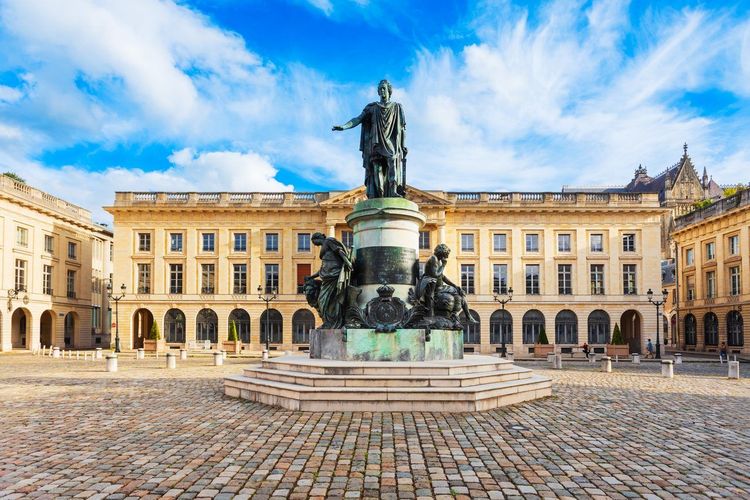
The Place Royale, laid out in the eighteenth century on the model of French royal squares, is centred on a statue of Louis XV surrounded by classical arcaded façades. It long served as the backdrop for the city's official ceremonies and still hosts the Christmas market and major events in Reims today.
Ten minutes away on foot, the Porte de Mars is a third-century Gallo-Roman triumphal arch — the widest in the Roman world at 32 metres across with its three arches. It once marked the northern entrance to the ancient city of Durocortorum, the Roman name for Reims, on the road leading to Trier. Take time to walk up close to the vaults: the heavily eroded bas-reliefs still depict Romulus and Remus as well as the seasonal agricultural labours.
The Place du Forum, Its Cryptoporticus, and the Place d'Erlon
The Place du Forum conceals beneath its cobblestones a rare survival: the Gallo-Roman cryptoporticus, a U-shaped first-century underground gallery that once supported the ancient forum. Access is via a discreet staircase on the square, with lighting that highlights the original masonry. Entry is free, but opening times are generally limited to the warmer season and a few hours per day: check with the tourist office on the morning of your visit rather than making the detour for nothing.
Continuing eastward, the Place d'Erlon (51100 Reims, rated 4.4/5 on Google based on 5,812 reviews) offers a striking contrast with its café terraces, nineteenth-century Subé fountain, and lively atmosphere that continues into the evening. It is the easiest landmark for getting your bearings in Reims: if you are exploring on foot, this square makes an excellent anchor point between the cathedral in the morning and the museums in the afternoon. It also has most of the shaded terraces in the centre, making it ideal for a mid-route break. The audio-guided tour also passes by the Royal Square and the Cryptoporticus, just a few minutes' walk from here.
Lunch Break Made in Reims: Where to Eat Between Visits
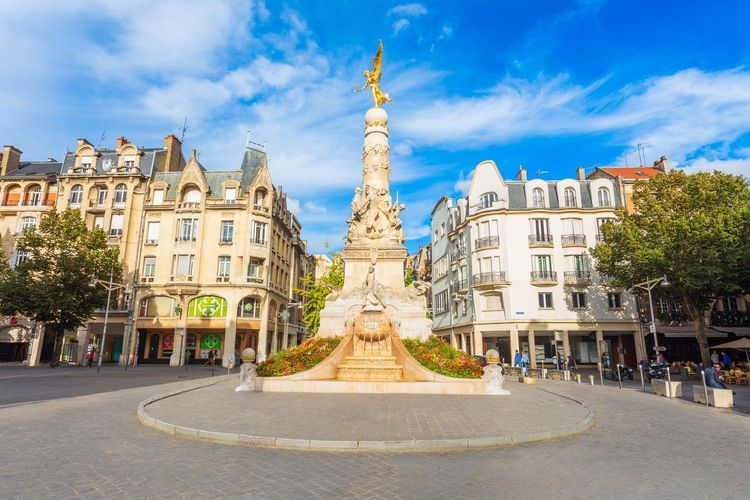
As midday approaches, two options present themselves depending on the time available. Around the Place du Forum and the Place d'Erlon, brasseries and bistros offer quick lunch menus, often served in under 45 minutes — ideal for keeping the afternoon programme intact. Expect to pay 18 to 25 euros for a starter-and-main-course menu on weekdays, slightly more at weekends.
If you want to leave with a culinary souvenir, make a detour to Maison Fossier (25 Cours Jean-Baptiste Langlet, 51100 Reims, rated 4.5/5 on Google based on 381 reviews), France's oldest biscuit maker, founded in 1756 and famous for its pink biscuits from Reims traditionally dipped in a glass of Champagne. The pink biscuit owes its texture to a double baking process — which is the origin of the word biscuit — and its colour to a dye originally added to conceal the specks of vanilla.
For a longer lunch, Reims has several gastronomic restaurants listed in the Michelin and Gault&Millau guides, ranging from chef-run bistros to grand starred tables housed in private mansions in the centre, as well as a network of Relais du Goût-certified restaurants showcasing produce from the Champagne-Ardenne region. Book ahead if you are aiming for a well-known table on a Saturday lunchtime — availability is limited. For edible souvenirs, Reims ham, marc mustard, gingerbread, and filled chocolates sit alongside the unmissable pink biscuits. Our Ryo guide to the culinary specialities of Reims lists more addresses and products to slip into your bag on the way home.
An Afternoon at the Museum: Beaux-Arts, Musée Saint-Remi, and the Former UNESCO Abbey
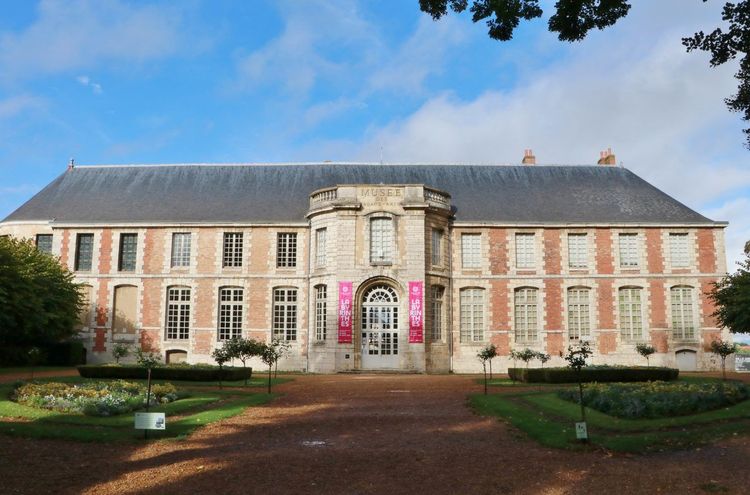
The afternoon calls for a more relaxed pace. Two museum clusters structure Reims: the city centre around the Musée des Beaux-Arts, and the Saint-Remi district, fifteen minutes away by tram, for the basilica and the former abbey.
The Musée des Beaux-Arts de Reims
One detail that saves an unnecessary detour: the Musée des Beaux-Arts de Reims closed its doors to the public in September 2019 for a major renovation and extension project entrusted to the Portuguese firm Aires Mateus, with its reopening announced for 2027 and exhibition space expanded to 3,800 m². Do not plan your afternoon around the Rue Chanzy: in the meantime, the collections — covering eight centuries of painting up to the Impressionists — can only be discovered through temporary exhibitions organised off-site, at other venues around the city.
Two alternatives within ten minutes on foot work perfectly well for this afternoon slot: the Musée-Hôtel Le Vergeur, housed in a half-timbered building on the Place du Forum and known for its series of Dürer engravings, and the Musée de la Reddition, described further along on this page. Allow 1 to 1.5 hours per museum, at a modest entry price, often with free admission for under-18s and free-access slots on certain days of the month.
The Basilica and Former Abbaye Saint-Remi: a UNESCO-Listed Gem
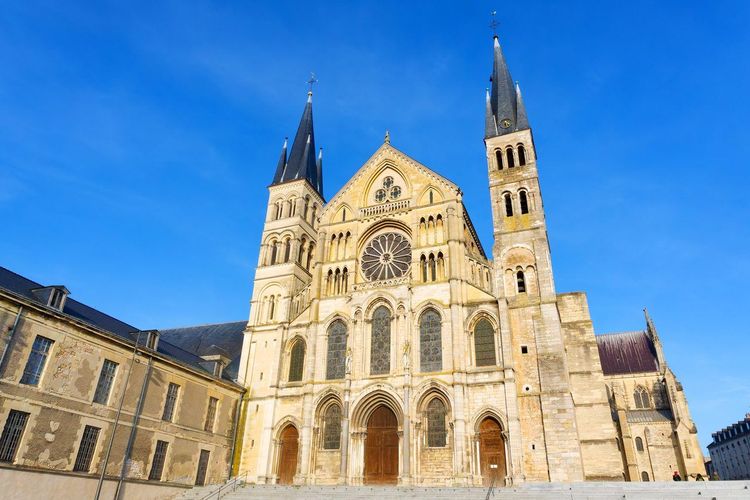
The Basilique Saint-Remi is the oldest religious building still standing in Reims, with an eleventh-century Romanesque nave and a later Gothic choir. It houses the tomb of Saint Remi, the bishop who baptised Clovis around 496 — a founding episode often cited as the symbolic starting point of the link between the French monarchy and Reims. At 122 metres long, it surpasses the cathedral in length, which surprises most visitors who encounter it after the city centre.
Right next door, the former Abbaye Saint-Remi now houses the Musée Saint-Remi (53 Rue Simon, 51100 Reims, rated 4.6/5 on Google based on 979 reviews), which traces the military and archaeological history of Champagne from the Gallo-Roman era to the First World War. The basilica and abbey complex has been listed as a UNESCO World Heritage Site since 1991, alongside the cathedral and the Palais du Tau.
A guided tour of the basilica brings to light details invisible on a first pass, such as the twelfth-century stained-glass windows spared from the 1914 bombardments. Book it the day before if you are visiting during a busy tourist period. In the evening, the basilica also hosts the immersive Luminiscence show, a sound-and-light creation projected onto the Romanesque vaults that traces the history of the city: sessions must be booked online, doors open twenty minutes before the start time, and no late arrivals are admitted — best scheduled at the end of the day if you are spending the night.
Treat Yourself to a Tasting at the Great Champagne Houses

Nothing sums up Reims better than this stop. Beneath the city stretch dozens of kilometres of galleries carved into the chalk, where millions of bottles rest at a constant temperature of around 10 to 12 degrees year-round. The Ryo app also marks a dedicated listening point right in front of the gates of several houses, to complement the visit with historical context.
The Great Iconic Houses (Pommery, Taittinger, Veuve Clicquot, Mumm)
The Maison Pommery offers one of the most spectacular visits, with 18 kilometres of Gallo-Roman chalk cellars decorated with contemporary artworks and 116 steps to descend. This is also where Louise Pommery launched brut Champagne as we know it today in the nineteenth century, in response to the English preference for wines with less added sugar.
The Maison Taittinger occupies the site of a Benedictine abbey destroyed during the Revolution, whose medieval cellars and chalk galleries dating back to Antiquity are still used for ageing. The Maison Veuve Clicquot highlights the story of Barbe-Nicole Ponsardin — the Veuve Clicquot — who took over the house in 1805 and invented the riddling rack, a process still used today to clarify the wine.
The Maison Mumm (34 Rue du Champ de Mars, 51100 Reims, rated 4.6/5 on Google based on 821 reviews) — less spectacular on the cellar side but very accessible for a short visit and located a few minutes' walk from the centre — rounds out a programme well if you only have time for a single tasting.
Visiting the Chalk Cellars and Caves Listed as UNESCO World Heritage

Since 2015, the Champagne hillsides, houses, and cellars have been inscribed on UNESCO's World Heritage List, a recognition that specifically encompasses these Reims underground galleries. Allow between 1 and 1.5 hours for a standard tasting visit, typically priced between 25 and 60 euros depending on the number of vintages offered and the house chosen, with higher prices for prestige cuvée packages.
Two practical details make all the difference: bring a jacket even in the height of summer, as the temperature underground rarely exceeds 12 degrees, and bear in mind that the chalk cellars are reached by stairways, which limits wheelchair access in several houses. Book at least a week in advance in high season, especially at weekends: the most sought-after time slots fill up quickly, particularly during the harvest period at the end of September. If you prefer to explore the neighbourhood independently before your tasting slot, Reims's audio-guided tour covers this area between the houses and the Boulevard Henry Vasnier.
In the Footsteps of Art Deco Reims and the Roaring Twenties
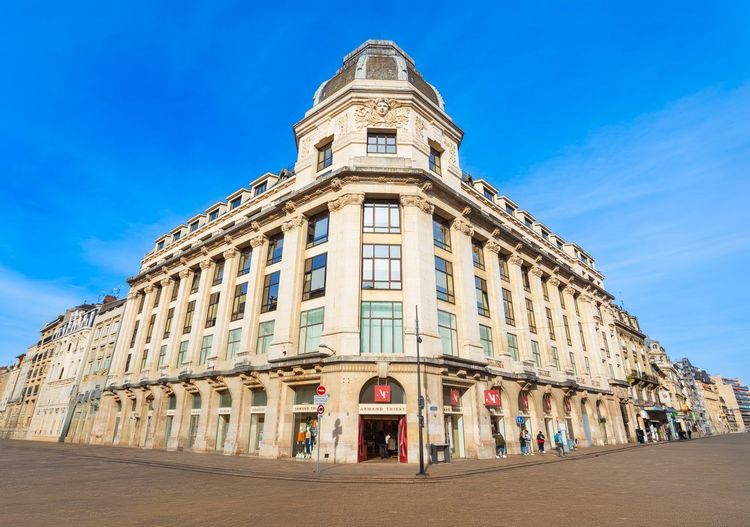
Few French cities carry as distinctive an architectural identity as Reims. Devastated by First World War bombardments that left the vast majority of its buildings damaged or destroyed, the city was rebuilt during the 1920s and 1930s with a stylistic coherence rare for the period.
The Halles du Boulingrin and the Villa Demoiselle
The Halles du Boulingrin, completed in 1929 to designs by architect Émile Maigrot and engineer Eugène Freyssinet, rank among France's earliest examples of a large-span reinforced concrete vault used for a covered market. Restored and reopened, they still host a market several mornings a week — including Saturdays — beneath their characteristic parabolic vault.
The Villa Demoiselle (Chemin de Bonne Semaine, 51100 Reims, rated 4.5/5 on Google based on 830 reviews), built at the very start of the twentieth century for Henry Vasnier, the driving force behind the Maison Pommery, blends Art Nouveau and early Art Deco lines: coloured stained glass, vegetal ironwork, and furniture by cabinet-makers of the Nancy school. It can only be visited on a guided tour, by reservation and in small groups, with a tasting at the end of the visit included in most packages.
An Art Deco Stroll Through the Rebuilt City Centre
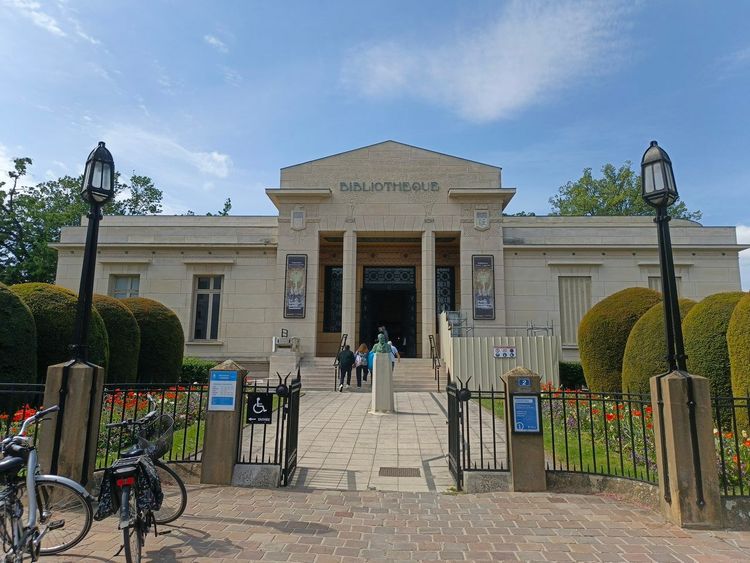
Moving away from the major monuments, a simple stroll through the streets of the rebuilt centre reveals dozens of Art Deco façades — with geometric ironwork, mosaics, and coloured ceramics — along entire streets around the Rue de Vesle and the Boulevard Foch. This reconstruction heritage remains largely overlooked by visitors in a hurry, even though it constitutes one of the most complete Art Deco ensembles in France, to the point of earning Reims the Ville d'art et d'histoire label.
A themed guided tour exists for spotting details invisible to the untrained eye: the decorative vocabulary, the architects who shared the building sites, the choice of materials dictated by the urgency of reconstruction. Allow 1.5 to 2 hours for a complete route, best integrated in the late morning or at the end of the day if your cathedral-and-Champagne programme is already packed. Failing that, two stops are enough to capture the spirit of the Roaring Twenties: the Carnegie Library, funded by the American foundation of the same name and completed in 1928, and the hall of the Caisse d'épargne — two Art Deco interiors freely accessible during opening hours.
A Detour to the Sites of Remembrance of the Great Surrender

Reims holds a singular place in twentieth-century history: it was here, in a classroom converted into Allied headquarters, that the German instrument of surrender was signed on 7 May 1945 at 2:41 in the morning. In 2025, the city celebrated the 80th anniversary of this event with an enhanced commemorative programme, several elements of which have remained on display since.
The Musée de la Reddition (12 Rue Franklin Roosevelt, 51100 Reims, rated 4.5/5 on Google based on 1,114 reviews), housed in this room which has remained almost entirely intact with its period wall maps, allows you to visualise in around twenty minutes the precise moment when the war in Europe came to an end. Entry costs just a few euros, and the museum closes one day a week — worth checking before crossing the city.
If you are more interested in the First World War, the Fort de la Pompelle, a few kilometres east of the city, holds one of the most complete collections of Allied and German military helmets in Europe, in a fort that remained on the front line for four years. Both sites require a trip outside the city centre, best saved for a stay of more than one day if your schedule is tight.
Reims in 1 Day, 2 Days, or More: Which Programme Should You Choose?
In a single day, you can already cover the essentials: the cathedral, the Palais du Tau, the historic centre, one Champagne house, and a museum. This format works well as a stopover on a route towards Alsace or Belgium, or as a day trip from Paris.
If you stay for two days, add an excursion to Épernay and the Avenue de Champagne, or a second tasting house to compare styles between a grand Maison and a more boutique producer. The Art Deco heritage and the sites of remembrance — often sacrificed for lack of time on a one-day programme — also find their natural place on the second day.
Over three days, you can venture as far as the Montagne de Reims, its hilltop villages, and its vineyard hiking trails, with stops at Hautvillers and the Verzenay lighthouse. This is the most comfortable format if you are travelling without a car and prefer to alternate between city and countryside without chasing timetables.
And for a romantic weekend? What to do in Reims as a couple comes down to three ingredients: bubbles, a view over the vines, and short distances. A private tasting deep in a chalk cellar, dinner at a gastronomic restaurant in the centre, then the illuminated cathedral at the end of the evening makes for a day-and-a-half programme with no downtime — and no need to get back in the car.
What to Do Around Reims: an Escape into the Champagne Vineyards
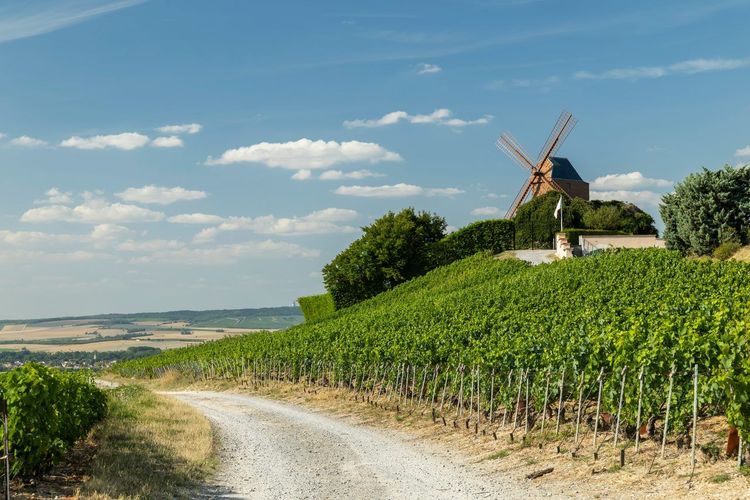
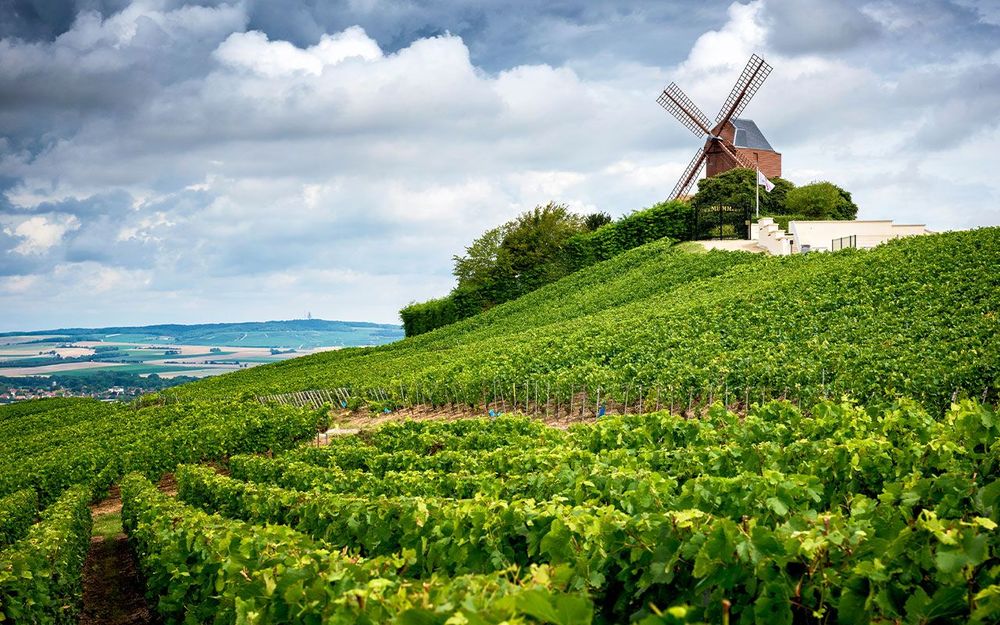
If your schedule allows — at the end of the day or as part of a longer stay — the Champagne vineyards begin literally on the doorstep of Reims.
The Champagne Tourist Route and Épernay
Épernay, about thirty minutes from Reims by train for just a few euros, concentrates along its famous Avenue de Champagne over 100 kilometres of underground galleries belonging to the world's greatest Champagne houses, including Moët & Chandon and De Castellane, whose landmark tower can be visited all the way to the top.
The Champagne Tourist Route, signposted over several hundred kilometres across the region, links the wine villages through vineyards and UNESCO-listed hillsides. A guided van or minibus tour from Reims allows you to cover several villages in half a day without worrying about driving after a tasting — a format worth choosing if your day ends with several glasses.
Hautvillers, the Verzenay Lighthouse, and the Montagne de Reims
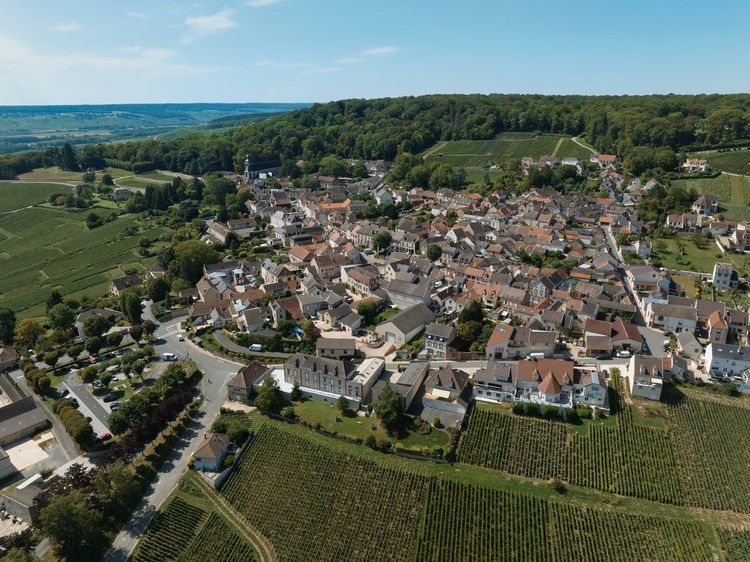
Hautvillers, nicknamed the birthplace of Champagne, is home to the abbey where Benedictine monk Dom Pérignon is said to have perfected the Champagne-making method at the end of the seventeenth century, and where his tombstone can be found. The village, perched above the vines about thirty minutes by road from Reims, is best explored by wandering among its hand-painted wrought-iron shop signs.
The Verzenay lighthouse (Rue du Phare, 51360 Verzenay, rated 4.2/5 on Google based on 1,705 reviews), built in 1909 by a wine merchant to promote his brand, never guided a single vessel: it simply overlooks the sea of vines of the Montagne de Reims, offering a 360-degree panorama from its platform, complemented at its base by a vine museum.
The Montagne de Reims, a classified regional natural park, offers several hiking loops through forests and vineyards, accessible in half a day from Reims if you have a vehicle. The Sentier des Faux de Verzy — a trail through uniquely twisted beech trees found nowhere else in Europe — takes about an hour and is perfectly suited for children. To plan this outing, our Ryo guide to the most beautiful villages around Reims details an itinerary village by village.
How to Get to and Get Around Reims
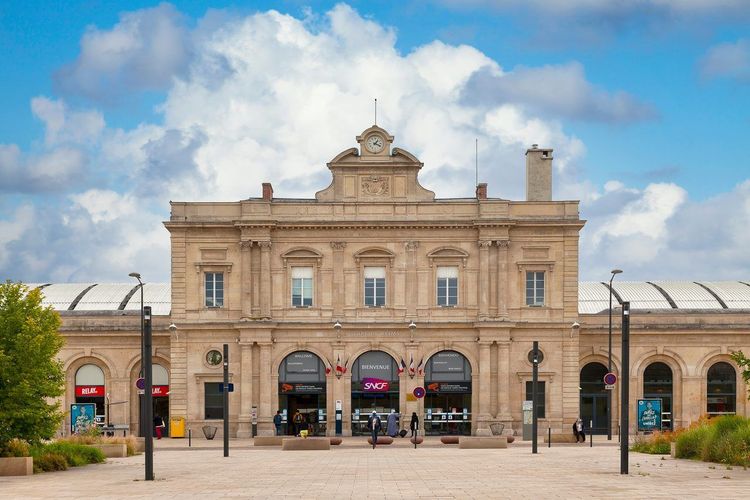
From Paris, the TGV connects Gare de l'Est to Reims-Centre in approximately 45 minutes, making a day trip perfectly feasible without spending the night. By car, allow around 1 hour 30 minutes from Paris via the A4 motorway, with parking generally easier to find on the outskirts of the historic centre than right in the heart of the city. The central station is a five-minute walk from the Place d'Erlon, so you are immediately in the thick of things as soon as you step off the train.
Once there, you have almost no need for motorised transport: the cathedral, the historic centre, and the Place d'Erlon are all within a twenty-minute walk of each other. To reach the Saint-Remi district or some of the more outlying Champagne houses, the two tram lines and the urban bus network complement walking effectively, with single tickets at around 2 euros and a day pass that becomes much better value from the third journey onwards. Bike-share schemes round out the options, handy for reaching the Fort de la Pompelle or the Parc de Champagne in fine weather.
Where to Stay in Reims to Extend Your Visit
If your programme spills over into a second day, or if you would rather leave rested than travel late at night, Reims offers a wide enough range of accommodation for all budgets.
On a tight budget, several functional options are within walking distance of the station — practical if you arrive by train and leave early the next morning. Our Ryo selection of budget hotels in Reims lists several reliable options under 90 euros per night.
In the mid-range and for a family stay, some establishments offer connecting or family rooms in close proximity to the historic centre. Our Ryo top 7 family hotels in Reims details these child-friendly addresses. For a more intimate stay, a handful of charming guesthouses nestled in private mansions in the city centre complement the offer, often just steps from the Place d'Erlon. One scheduling tip: rates rise sharply during the harvest season, major trade fairs, and year-end holiday weekends — periods when it is advisable to book at least a month in advance.
Good to Know Before You Head to Reims
Spring and early autumn remain the most pleasant times to discover the city: mild temperatures, more manageable crowds than in the height of summer, and in autumn, the harvest period at the end of September that brings the surrounding vineyards to life. Winter is still a valid option, with the illuminated cathedral during the festive season having a charm all its own.
Reims is well suited to a family visit: the short distances limit fatigue for younger children, and several sites — from the Musée Saint-Remi to the Halles du Boulingrin — lend themselves to an engaging discovery without complicated bookings. Only Champagne cellar tours generally impose a minimum age, often around 12 or 16 depending on the house, as there is no activity specifically tailored to younger children on site.
On Sundays, most major sites (the cathedral, the Palais du Tau, museums) remain open but often with reduced afternoon hours: check before locking in your time slot, especially for guided tours of Champagne houses, which are less frequent that day. Also ask about the city pass offered by the tourist office, which becomes worthwhile as soon as you combine three paid admissions and a tram journey in the same day. If you prefer to build your own route rather than follow a fixed itinerary, Reims's audio-guided tour offers a flexible trail that you can pause and resume throughout your day.

FAQ
How much time do you need to visit Reims?
One day is enough to cover the essentials: the cathedral, the Palais du Tau, the historic centre, and one Champagne house. Allow two days to add Épernay and an extra museum, and three days to explore the Montagne de Reims and its villages.
What is the best time of year to discover Reims?
Spring and early autumn offer the best balance between pleasant weather and manageable crowds. In late September, the harvest season adds an extra dimension to a visit to the surrounding vineyards.
How do you get around Reims without a car?
The historic centre can be covered entirely on foot in under twenty minutes between the main sites. The two tram lines and the bus network complement walking to reach the Saint-Remi district or the more outlying Champagne houses.
Is Reims a family-friendly city?
Yes: the short distances and concentration of sites limit fatigue for children. Only cellar tours sometimes impose a minimum age, which should be checked directly with the chosen Champagne house.
Do you need to book the cathedral and Champagne house visits in advance?
The cathedral can be visited freely without a reservation for a simple visit, but guided tours must be booked in advance. For Champagne houses, book at least a week ahead in high season, and even further in advance during harvest time.
What should you visit in Reims in under 24 hours if time is really tight?
Prioritise the Cathédrale Notre-Dame, the Palais du Tau, and a single Champagne house with a short tasting. That is enough to capture the identity of the city without rushing from one site to another.
Reims can be explored in a day without ever feeling rushed, provided you follow a logical order: cathedral in the morning, museums in the afternoon, and the chalk cellars at the end of the day. Whether you leave the same evening or continue towards Épernay and the Montagne de Reims, the city holds enough heritage in reserve — from Gothic to the Roaring Twenties — to justify a return visit. To find this entire itinerary as a guided tour, Reims's audio-guided tour remains available offline once downloaded — a practical detail in the underground galleries where mobile reception is poor.