© Shutterstock
 Votre guide Ryo
Visit Laon in 2 Days: Complete Itinerary and Top Picks 2026
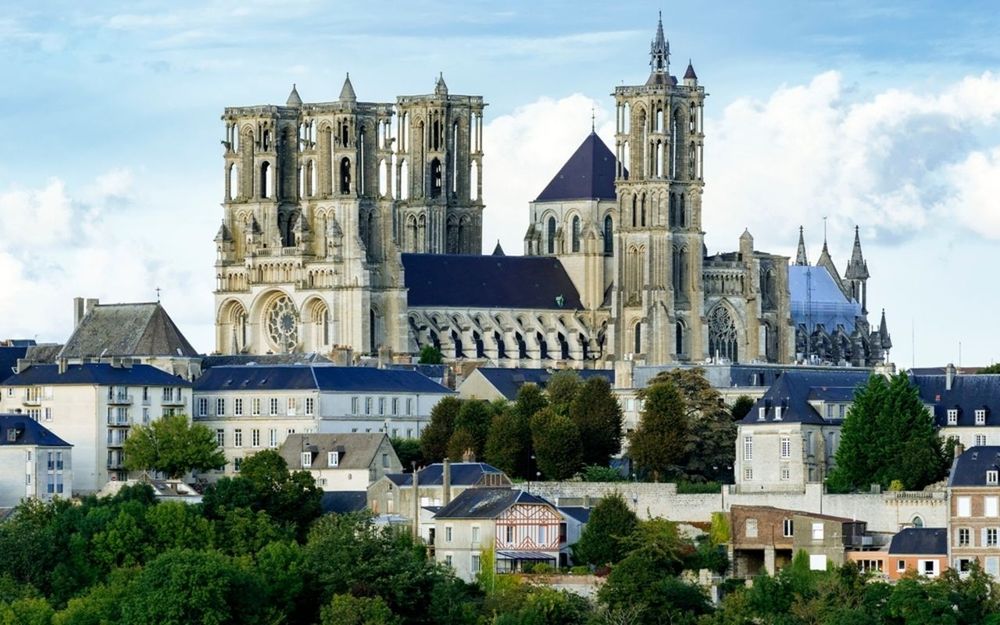
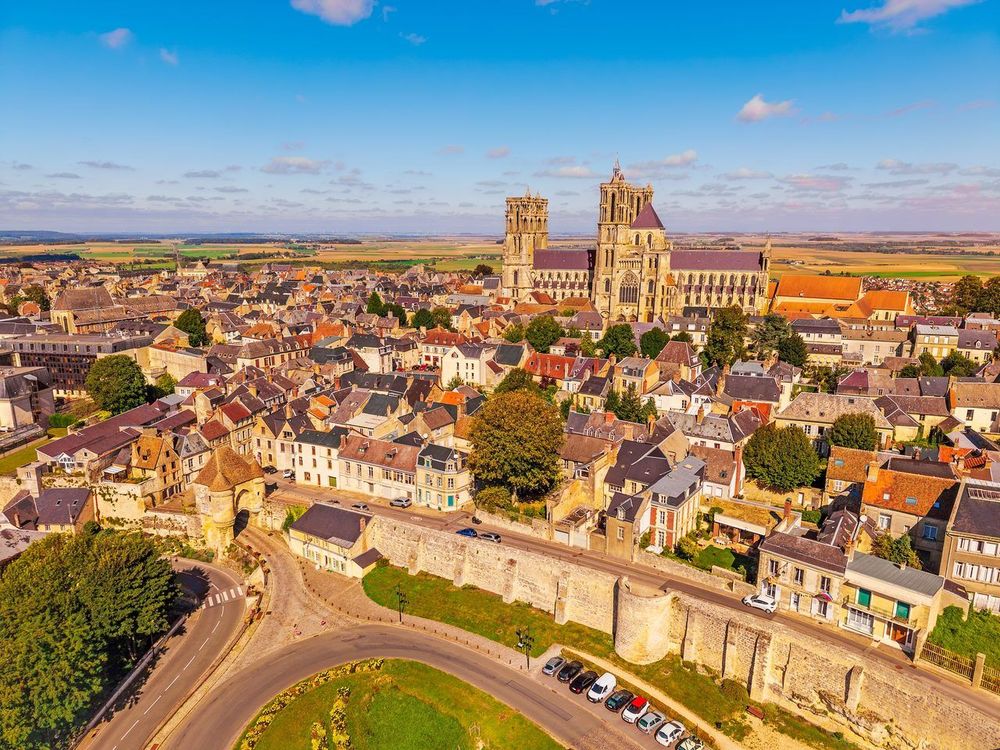
Seen from the road crossing the Aisne plain, Laon appears suddenly: an entire city perched on a hilltop, with cathedral towers rising nearly a hundred metres above the wheat fields. To visit Laon in 2 days, you need to embrace the particular rhythm of an upper town discovered on foot, between ramparts and cobbled lanes, before descending towards the vestiges of the First World War that still mark the surrounding countryside. The locals call it the crowned mountain, and the nickname captures it in a single image: for centuries, people have climbed to reach this city. The Ryo audio guide tour of Laon links the main sites of the historic centre at your own pace, without needing to pull out a map at every crossroads.
This guide sets out a day-by-day itinerary: a cathedral with five towers out of the seven originally planned, where sixteen stone oxen keep watch from high on the facade; a network of tunnels carved beneath the upper town, accessible only on a guided tour; the Chemin des Dames road a short half-hour drive away, one of the most striking memorial sites of the Great War; and a selection of nearby towns, from Soissons to Villers-Cotterêts, for extending the trip beyond the weekend. Enough to fill two full days without ever feeling rushed.
Day 1 in Laon: Notre-Dame Cathedral and the Upper Old Town
Morning: Laon's Notre-Dame Cathedral and Climbing Its Towers
Start at the very top, literally. The Notre-Dame Cathedral of Laon has occupied the highest point of the upper town since the 12th century, and it can be seen from afar: it is what gives Laon its unmistakable silhouette in the Aisne landscape.
Begun in 1155 and largely completed around 1235, it ranks among the first great Gothic building projects, contemporary with Notre-Dame de Paris. The original plan called for seven towers; five were built — two on the facade, two at the ends of the transept, and a lantern tower at the crossing. Look up at the facade towers: sixteen sculpted oxen stand guard there, in tribute to the animals that supposedly hauled the stone blocks to the top of the hill. Many visitors miss them on first glance.
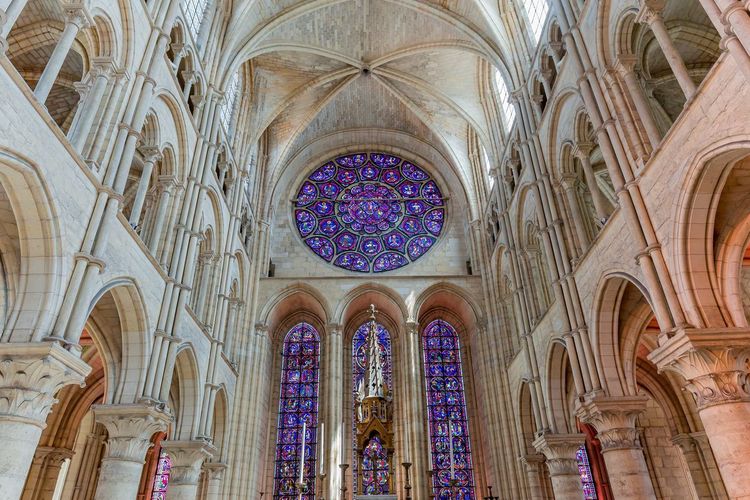
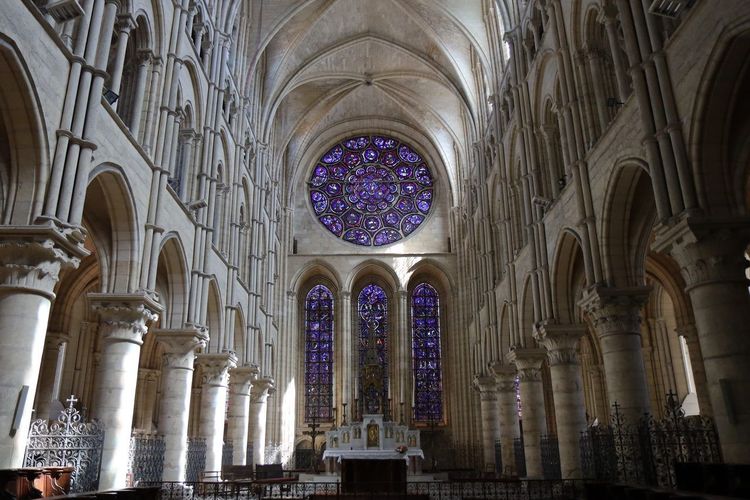
Before going in, take time to study the central portal: its archivolts unfold a Tree of Jesse, the genealogy of Christ surrounded by prophets. Inside, the building stretches over 110 metres and the light shifts throughout the day thanks to the stained-glass windows of Laon's Notre-Dame, several of which date back to the 13th century. The flat east end, unusual for a French cathedral, is pierced by a nine-metre rose window: its colours reach their full depth in the morning, when the rising sun shines through it.
The tower tour of the cathedral is only available through guided tours organised by the tourist office, by reservation and at limited times depending on the season. The spiral staircase is steep, but it opens onto a 360-degree panorama over the plain, with the lower town below and, on a clear day, the Laonnois hills stretching to the horizon. Allow 45 minutes for the full climb, and wear closed shoes: the worn steps become slippery after rain. The Ryo audio guide then takes you from the cathedral to the ramparts in one seamless route, so you don't have to find your way through the old town.
Afternoon: Ramparts, Medieval Lanes, and the Museum of Art and Archaeology
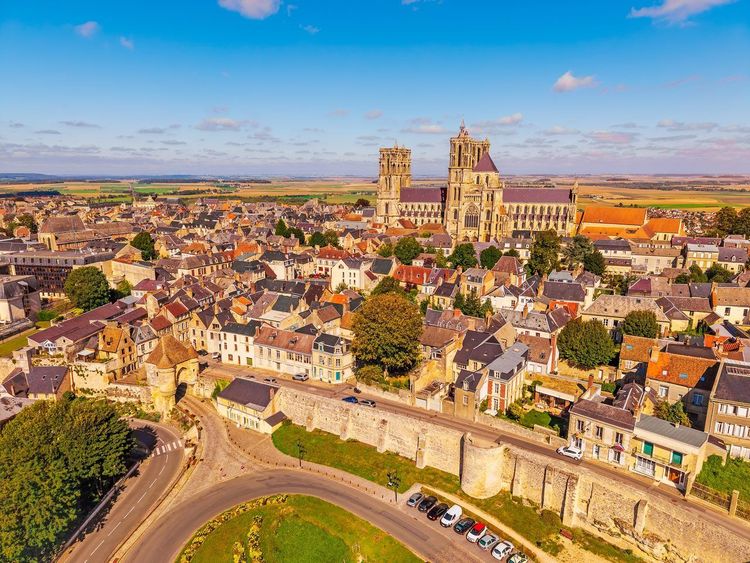
Leaving the cathedral, head towards the ramparts of Laon. The upper town has preserved much of its wall, most of which dates from the mid-14th century, forming one of the largest protected areas in France at 370 hectares. The rampart walk offers views over the countryside at various points that are well worth the stroll.
Then head down into the heart of the old town of Laon, a maze of cobbled lanes where old houses stand alongside 18th-century mansions. The visit to the medieval town centre needs no fixed route: Rue Georges-Ermant, Rue Sérurier, around the town hall — every detour reveals a different facade. Walk as far as the église Saint-Martin at the far end of the hill: this former Gothic abbey church is far quieter than the cathedral. It is also the neighbourhood where strolling and browsing antique shops really comes into its own: for a town of around 24,000 inhabitants, Laon has a surprisingly high number of antique dealers and second-hand bookshops.
Late Afternoon: Exploring the Museum of Art and Archaeology
If you have an hour to spare, the Laon Museum of Art and Archaeology (32 rue Georges Ermant, 02000 Laon, rated 4.6/5 on Google from 145 reviews) is worth the visit. Located on Rue Georges-Ermant, in the former enclosure of the Templars' commandery, it houses one of the most important collections of Greek antiquities in France outside the Louvre: around 1,700 pieces, including painted vases, terracotta figurines, and marble works.
To explore the collections of the Museum of Art and Archaeology, start with the Greek galleries, then move on to the pre-dynastic Egyptian objects (pottery from the Naqada culture) and the painting gallery, which brings together Flemish, Dutch, Italian, and French masters from the 15th to the 19th century. On your way out, take a look at the Chapelle des Templiers, a small 12th-century octagonal building set in the museum garden. Archaeology enthusiasts will also find Gallo-Roman and Merovingian objects unearthed in the Laonnois region, a reminder that the hill has been inhabited since antiquity. Admission is modest, and the visit makes for a quiet pause at the end of the afternoon — less crowded than the cathedral but equally revealing of local history.
End of Day 1: the Cuve Saint-Vincent and a Drink at the Montagne Couronnée
Before dinner, treat yourself to one final viewpoint, different from the one atop the towers. The Cuve Saint-Vincent is a natural valley carved into the side of the hill, between the two branches of the upper town, laid out with gardens and shaded paths. The walk through the Cuve Saint-Vincent offers unexpected views of the city and the cathedral, this time seen from below, which completely changes the perception of the hilltop city.
The walk takes a leisurely half-hour, then you head back up to the plateau to end the day over a beer at the Brasserie de la Montagne Couronnée (Rue Sérurier, 02000 Laon, rated 4.9/5 on Google from 79 reviews), a craft brewery whose name echoes the city's nickname. Check the opening hours before you go: small breweries often keep variable schedules depending on the season.
If you enjoyed this part of the walk, note that it is the subject of a dedicated audio guide sub-tour: the Ryo audio guide tour of the Montagne Couronnée features 15 audio stops over 1h40 and 4.2 km, and passes through the viewpoints of the Cuve Saint-Vincent — a great way to turn this end-of-day stroll into a guided commentary rather than an improvised wander.
Where to Stay in Laon for a 2-Day Visit
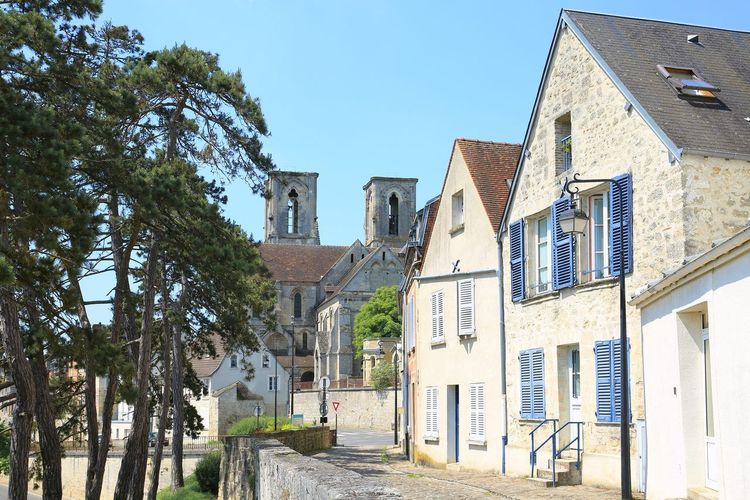
Ideally, stay in the upper town, within walking distance of the cathedral and the ramparts. This is the most convenient option for a two-day stay, even if accommodation options are fewer there than in the lower town.
On the hill, you will mostly find bed and breakfasts set in former canons' houses or private mansions, often with views over the ramparts or a walled garden. It is the most charming choice, but book early: availability is limited, especially on spring and summer weekends and during the town's major events.
For a tighter budget or more availability, the lower town has chain hotels near the station and in the commercial areas on the outskirts. From there, allow around ten minutes by car or bus to reach the historic centre. This is a reasonable option if you are arriving late on the first evening or planning to leave early the next day.
A few rural gîtes and campsites round out the offer in the villages of the Laonnois. These work well if you are planning to continue straight to the Chemin des Dames or the Saint-Gobain forest first thing in the morning without going back through the town centre. One tip: if you are travelling by car, check that your accommodation has a parking space — a real comfort on the narrow streets of the upper town.
Day 2 in Laon: the Citadel's Underground Tunnels and the Chemin des Dames
Morning: Laon's Underground Tunnels, Secrets Beneath the City
Beneath the cobblestones of the upper town lies a network of galleries, quarries, and wells carved out over the centuries — sometimes to extract stone, sometimes to find shelter during sieges. Discovering Laon's underground tunnels requires advance booking through the tourist office: access is only possible on a guided tour called "Secrets sous la ville".
Visiting Laon's underground tunnels reveals a little-known side of the city's history: the citadel's tunnels tell the story of a stronghold that was besieged many times over, and the guide brings to life the successive uses of these galleries. The temperature stays cool year-round — a welcome detail in midsummer. Bring a light layer even in July, and wear shoes that can handle damp conditions: some passages have low ceilings and can be slightly slippery. Before heading down, listen to the audio stop devoted to the sieges of the city: the Ryo audio guide provides the context you will encounter underground, and it is the perfect warm-up before setting off for the Chemin des Dames.
Afternoon: the Chemin des Dames and the Caverne du Dragon
After lunch, drive south. In a short half-hour, you leave the rooftops of Laon behind for an entirely different landscape: the Chemin des Dames, a ridge road that crosses one of the bloodiest battlefields of the First World War, the scene of the Nivelle Offensive in the spring of 1917.
Driving the Chemin des Dames today means passing military cemeteries, monuments dedicated to the regiments that fought here, and fields that have grown back over the trenches, except for a few scars still legible in the ground. Stop at the memorial at Cerny-en-Laonnois, where a chapel and French and German cemeteries stand facing one another.
The Caverne du Dragon (Route de la Caverne du Dragon, 02160 Oulches-la-Vallée-Foulon, rated 4.7/5 on Google from 2,477 reviews), a former stone quarry turned strategic position and now a museum, is the most striking stop on the route.
The underground visit traces, through a staged route, the daily lives of the soldiers who occupied these galleries for months. Allow an hour and a half on site, plus the return journey from Laon, and book ahead in high season.
What to Discover Around Laon
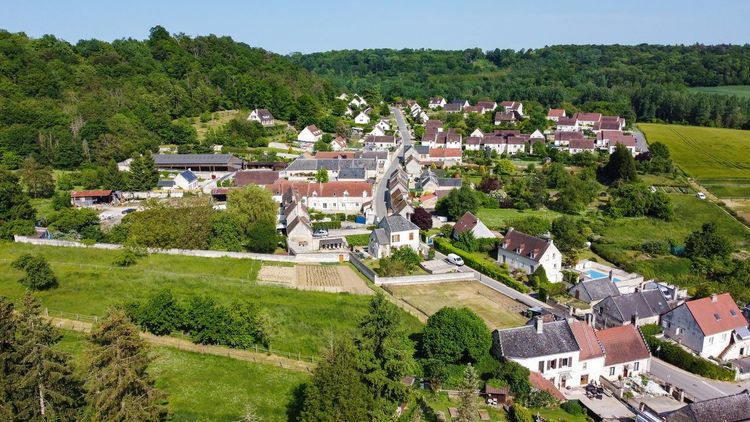
Laon sits at a convenient crossroads for exploring several towns and villages of the Aisne, reachable between half an hour and just over an hour by road. If your stay extends beyond two days, here is where to continue your discoveries.
Soissons and Saint-Quentin are the two nearest towns of comparable size. Soissons, about forty minutes away, preserves the spectacular facade of the Abbaye Saint-Jean-des-Vignes and a Gothic cathedral less famous than Laon's but equally remarkable. Saint-Quentin, further north, captivates with its basilica and its flamboyant town hall, legacies of a prosperous textile past.
To the south, Château-Thierry and La Ferté-Milon make a natural pairing: the first for the ruins of its castle overlooking the Marne valley and the birthplace of Jean de La Fontaine, the second for the unfinished facade of the Château de Louis d'Orléans, built at the end of the 14th century and left as a mere shell behind it — an almost unreal backdrop at sunset. Racine was born in La Ferté-Milon too. Villers-Cotterêts, a little further west, has housed since 2023 the Cité internationale de la langue française, installed in the former royal château — a spectacular conversion well worth an hour's visit.
For a more rural escape, Condé-en-Brie hides a château with 18th-century interiors, open to visitors during certain periods of the year. And Longpont, a tiny village at the edge of the Retz forest, preserves the remains of a Cistercian abbey whose Gothic facade rises unexpectedly among the houses.
Before venturing out to these villages, start with the Ryo audio guide tour of Laon's town centre to make sure you don't miss the heart of the city, then find more ideas in our selection of the best things to do in Laon.
Hiking in the Saint-Gobain State Forest
About twenty kilometres west of Laon lies the Saint-Gobain state forest (Route Forestière, 02410 Saint-Gobain, rated 4.3/5 on Google from 207 reviews), a vast expanse of beech and oak woodland that long supplied the furnaces of the glassworks established in the village at the end of the 17th century — the birthplace of the present-day Saint-Gobain group.
Hiking in the Saint-Gobain state forest suits all tastes: from short loops of an hour around the ponds to longer routes that cross the entire forest. Along the paths, you will also encounter traces of the great abbeys that once populated these woods, such as Prémontré and Saint-Nicolas-aux-Bois. If your two-day programme leaves you a free morning, it is a perfect way to close the trip on a note that is more natural than heritage-focused.
Along the way, stop in the village of Saint-Gobain itself, whose name has travelled the world on the back of the glass industry, and then at Coucy-le-Château, a few kilometres further west. Its medieval walls and the ruins of its keep — once said to be the largest in Europe before its destruction in 1917 — make a perfect complement to a morning in the forest. Bring water and a packed lunch: resupply points are scarce once you are under the trees, and forest tracks become muddy after a few days of rain. For marked loops, the tourist office provides maps suited to all levels, from family walks to full-day hikes.
The Euromédiévales and Laon's Event Calendar
If your dates are flexible, check Laon's event calendar first: the city hosts several events that can turn your visit into something far more lively than a simple heritage tour. The most spectacular is the Euromédiévales, a large medieval gathering that takes over the upper town for a weekend, with dates that vary from one edition to the next.
Reconstructed encampments, craft markets, costumed processions, and shows fill the ramparts and squares of the old town. This Laon festival draws visitors from across the region: book your accommodation several weeks in advance if your stay coincides with these dates. For the rest of the year, the town hosts temporary exhibitions, heritage events, and even horse races at the end of summer. The tourist office calendar remains the best reference for planning your dates.
Getting to and Around Laon
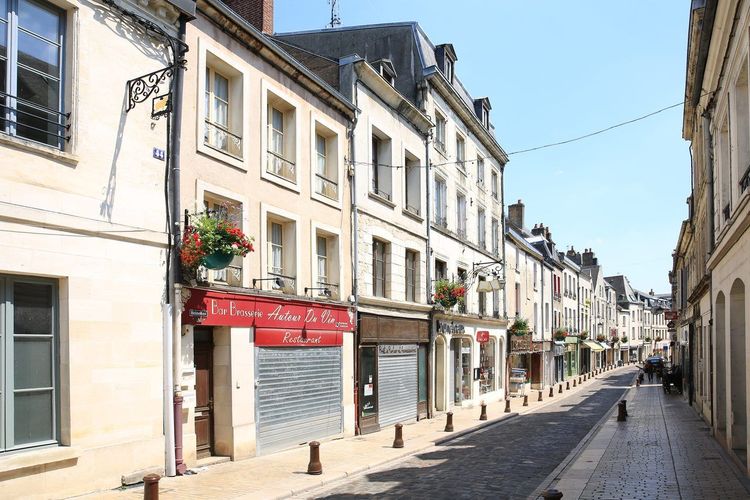
By Train from Paris or Reims
Laon is easy to reach by train: direct TER services connect Paris-Nord in approximately 1h30, and Reims is less than an hour away. The station is in the lower town, which immediately raises a question on arrival: how do you get up to the upper town without exhausting yourself before the visit has even begun?
Getting up to the Upper Town from the Station
Forget the funicular still mentioned in some guides: the Poma 2000, the automated shuttle that linked the station to the historic centre, stopped running on 27 August 2016. Today, two options are available. The city bus serves the upper town from the station in a few minutes. On foot, stairs and ramps climb the hill in about twenty minutes — a fine way to arrive, though less appealing with luggage or in the heat of summer.
By Car and Parking
By car, allow around two hours from Paris via the N2, or the A26 (exit 13) if you are coming from the north or from Reims. Parking in the upper town is limited: use the car parks at the entrance to the plateau rather than circling through the narrow streets of the historic centre, where spaces are scarce and navigation is complicated by the medieval street plan.
Once there, the upper town is entirely walkable, as the distances between the main sites are short. For the Chemin des Dames, the Caverne du Dragon, or the Saint-Gobain forest, a car becomes essential, as public transport to these destinations is very limited.
Budget and Tips for Visiting Laon in 2 Days
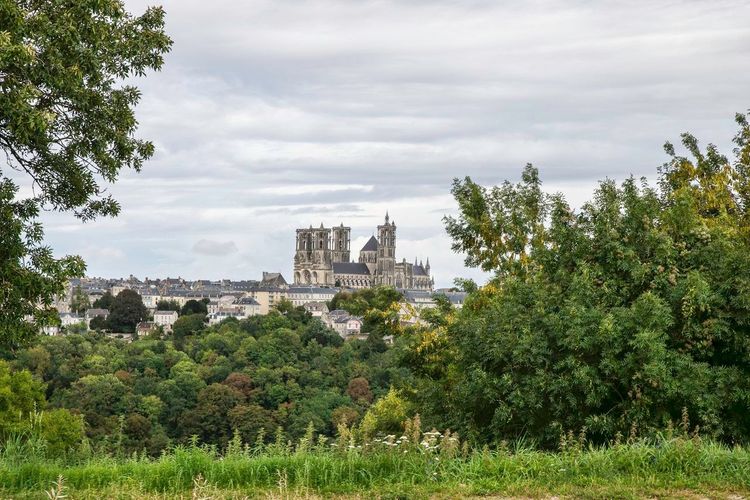
Laon remains an affordable destination for a weekend, noticeably cheaper than Reims. Budget roughly between 100 and 200 euros per person for the entire stay, including accommodation and meals, depending on the standard chosen.
On the attractions side, several must-sees are free: entry to the cathedral, a walk along the ramparts, and a stroll through the Cuve Saint-Vincent. Only the tower climb, the underground tunnel tour, the museum, and the Caverne du Dragon require a ticket, generally ranging from a few euros to around twelve euros each.
For travel tips in Picardy, ask the tourist office about any combined packages covering several guided tours. For meals, the upper town has several simple and affordable addresses away from the cathedral square — a good alternative to the more tourist-oriented restaurants close by. Finally, travelling on weekdays rather than weekends often means lower rates at bed and breakfasts.
When to Visit Laon: the Best Season for a 2-Day Weekend
The best season to visit Laon broadly runs from April to October, when the longer days allow you to combine the upper town and day trips to the Chemin des Dames or the Saint-Gobain forest at a relaxed pace. Spring offers flattering light on the cathedral towers, while autumn dresses the ramparts and the nearby forest in colours that justify the journey in their own right.
Summer is the busiest period, but also the most crowded: book accommodation in the upper town several weeks in advance if your dates fall on a major festival weekend. Winter, by contrast, offers an almost deserted city — ideal if you prefer peace and quiet, provided you are happy with shorter days and less frequent guided tours.
Whatever the season, the Ryo audio guide of the upper town can be listened to year-round, at your own pace, without depending on the schedules of traditional guided tours.

FAQ
How long does it take to visit Laon?
Two full days are enough to see the highlights: the cathedral and its towers, the ramparts, the old town, the underground tunnels, and a trip to the Chemin des Dames. Add half a day if you want to hike in the Saint-Gobain forest or venture to a nearby town like Villers-Cotterêts.
What is the best itinerary for visiting Laon in 2 days?
Spend the first day in the upper town (cathedral, ramparts, old town, museum, Cuve Saint-Vincent) and the second morning in the underground tunnels, then head to the Chemin des Dames and the Caverne du Dragon in the afternoon. This is the most logical order to minimize back-and-forth driving.
Where should I park in Laon to visit the old town?
Use the car parks at the entrance to the upper town rather than street parking, which is scarce in the medieval lanes. If you are staying in the lower town, the city bus or walking up from the station are good alternatives.
Is the Laon funicular still running?
No. The Poma 2000 closed permanently in August 2016. To reach the upper town from the station, take the city bus or climb the stairs up the hill, which takes about twenty minutes.
What budget should I plan for a 2-day weekend in Laon?
Between 100 and 200 euros per person for the entire stay, including accommodation and meals, depending on the type of lodging chosen. The cathedral, the ramparts, and the Cuve Saint-Vincent are free to visit.
Can you visit the Laon underground tunnels without a reservation?
No, access is only possible through the guided tours called "Secrets sous la ville" organised by the tourist office, with limited time slots depending on the season. Book several days in advance, especially in summer.
What is the best time to visit the Chemin des Dames?
Spring and autumn offer the most pleasant conditions for driving the ridge road and visiting the Caverne du Dragon, with fewer crowds than in summer and a raking light that highlights the contours of the old battlefields.
Two days in Laon are enough to understand why this city surprises so many first-time visitors: few destinations in France combine a major Gothic cathedral, a largely preserved medieval wall, history-laden underground tunnels, and a memorial site as moving as the Chemin des Dames, all within 1h30 by train from Paris. Follow the day-by-day itinerary or wander freely through the lanes, but leave time to get a little lost in the upper town. And if you want every facade to tell you its story, start the Ryo audio guide tour of the crowned mountain as soon as you arrive on the hilltop.