






Walk
A Journey Through History
Compiègne, France
Walk
A Journey Through History
Compiègne, France
4.5 km
Distance
1h50
Durée
18
Audios
Loop
Parcours
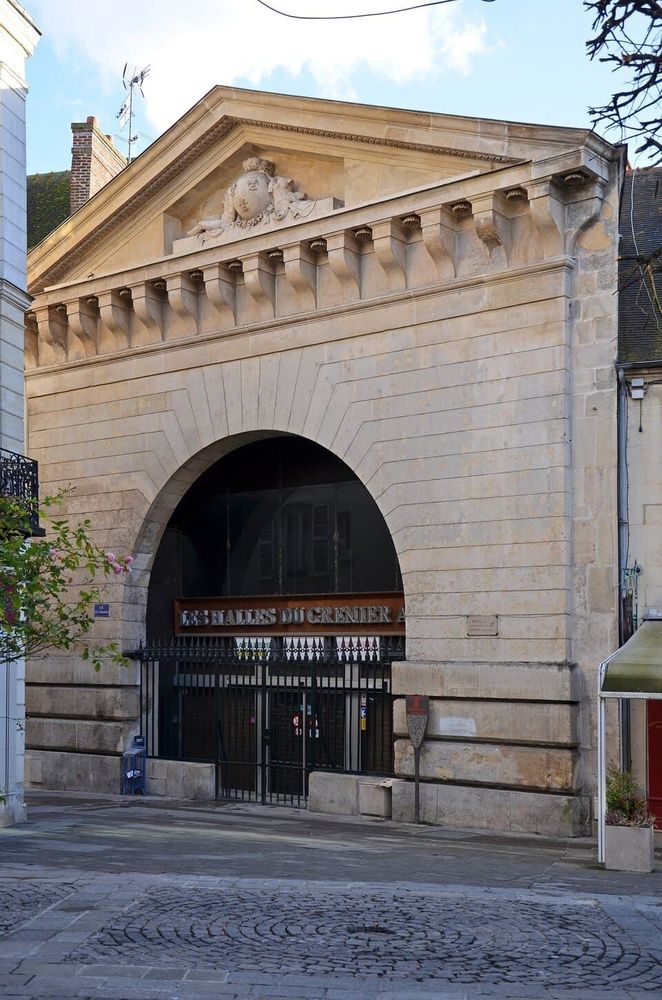
©Pline CC BY-SA 3.0. https://creativecommons.org/licenses/by-sa/3.0/deed.fr
The former salt store is a recently renovated historic building of Compiègne, located in the former banking quarter. The Compiègne audio-guided tour stops here to evoke this building linked to the salt trade and to the place du Change, in the heart of the old town.
The freshly renovated building that you see here is the former salt store of the town. In the Middle Ages, this quarter was that of the banks and the money changers: you are moreover on the place du Change, near the street where these financial activities were exercised. The salt store was an essential building under the Ancien Régime, linked to the gabelle, the famous tax on salt. Salt, a precious and indispensable commodity to preserve food, was stored, controlled and sold in these official stores, where the tax was collected. This institution, often unpopular, played a major role in the finances of the kingdom and the economic life of the towns. The building of Compiègne thus testifies to the fiscal and commercial history of the town, at a time when salt and money were at the heart of trade. Renovated, it has found its place in the urban landscape. A witness of the merchant and fiscal past of the town, the former salt store is an interesting stop of the discovery of Compiègne.
You admire the recently renovated former salt store, in the former banking quarter on the place du Change; linked to the gabelle, the tax on salt, this building served to store, control and sell the salt and to collect the tax, a witness of the merchant and fiscal past of the town. The former salt store is a witness of the heritage of Compiègne. It is a stop to be discovered, to be explored on foot.
The former salt store lies on the place du Change, in the heart of the old town of Compiègne, reachable on foot. You admire its exterior from the square; the interior access follows its own conditions. You discover it during a walk in the centre.
To store, control and sell the salt and to collect the gabelle, the famous tax on salt, under the Ancien Régime; located in the former banking quarter on the place du Change, it testifies to the merchant and fiscal past of the town.
On the place du Change, in the heart of the old town of Compiègne, in the Oise, in France.
Aucun avis pour le moment
