





Walk
A Journey Through History
Compiègne, France
Walk
A Journey Through History
Compiègne, France
4.5 km
Distance
1h50
Durée
18
Audios
Loop
Parcours
©P.poschadel BY-SA 3.0. https://creativecommons.org/licenses/by-sa/3.0/deed.fr
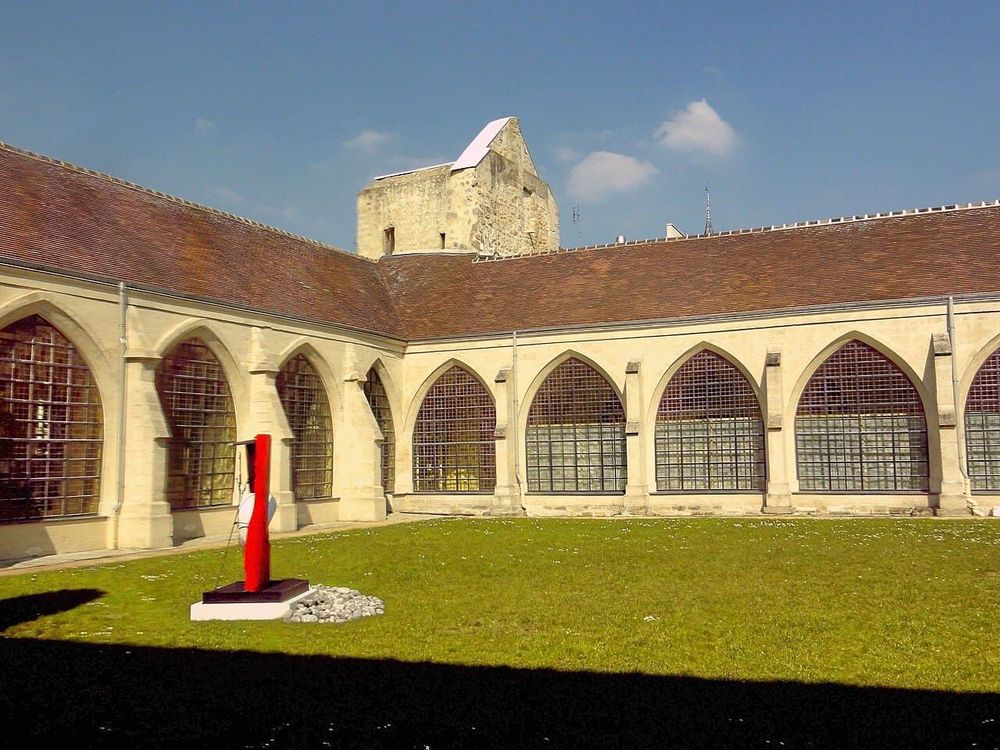
The Abbey of Saint-Corneille is a former royal abbey of Compiègne, founded in the ninth century. The Compiègne audio-guided tour stops here, with respect, to evoke this high spiritual and historic place, linked to the kings of France, of which a fine cloister survives.
The Abbey of Saint-Corneille was one of the most prestigious abbeys of France, intimately linked to royalty. Founded in the ninth century by King Charles the Bald, grandson of Charlemagne, it became a great religious centre and a place of power, where royal coronations were even celebrated. The abbey long kept venerated relics and played an important role in the spiritual and political life of the kingdom, at the time when Compiègne was a residence dear to the Carolingian then Capetian sovereigns. Of this vast monastic ensemble, largely disappeared over the centuries and the upheavals of history, there survives notably a fine cloister, a witness of medieval religious architecture. The vestiges and the preserved buildings today shelter cultural and heritage functions. A witness of the religious splendour and the link between Compiègne and royalty, the Abbey of Saint-Corneille is discovered with respect.
Here you discover, with respect, the former royal abbey founded in the ninth century by Charles the Bald, a great religious centre where royal coronations were celebrated, of which a fine medieval cloister notably survives, a witness of the religious splendour and the link between Compiègne and Carolingian then Capetian royalty. The Abbey of Saint-Corneille is a high place of Compiègne. It is a stop to be discovered with respect.
The Abbey of Saint-Corneille lies in the heart of Compiègne, reachable on foot. The visit of the cloister and the vestiges follows its own hours and conditions, which vary. It is best to check them before coming and to respect the character of the place.
King Charles the Bald, grandson of Charlemagne, in the ninth century; this royal abbey became a great religious centre where royal coronations were celebrated, and a fine medieval cloister notably survives of it.
In the heart of Compiègne, in the Oise, in France.
Aucun avis pour le moment
