







Walk
The capital of Flandres
Lille, France
Walk
The capital of Flandres
Lille, France
6 km
Distance
2h30
Durée
23
Audios
Loop
Parcours
Shutterstock
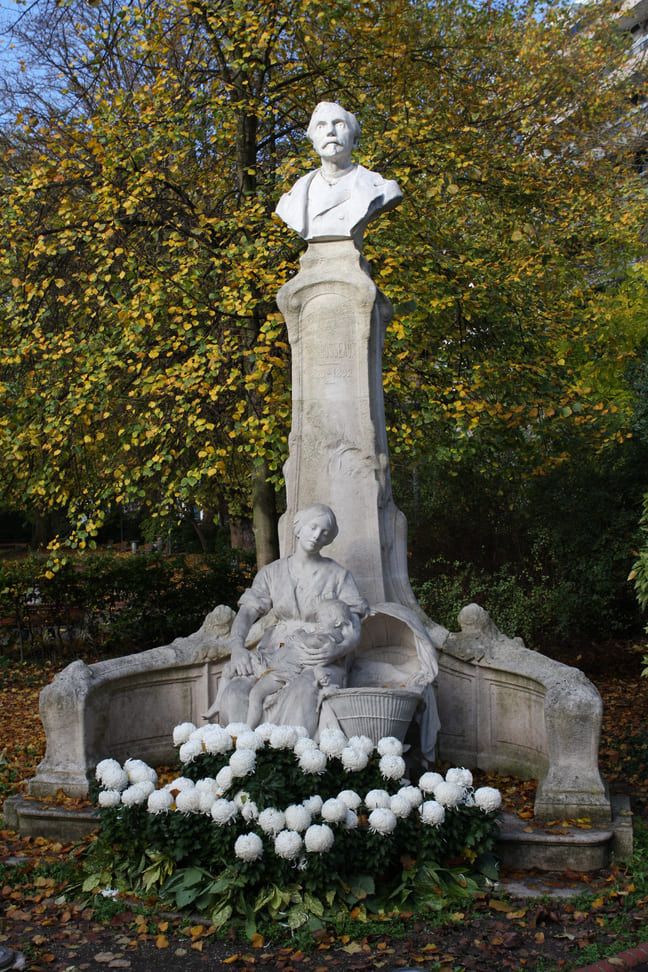
The Lille audio-guided tour has you discover the white statue of a woman carrying a child: a tribute to the song of Le P'tit Quinquin, undoubtedly the first great popular Lille success in history. This lullaby is part of the soul of the city.
Le P'tit Quinquin is a lullaby written in Ch'ti in 1853 by the Lille poet Alexandre Desrousseaux. Its original title, L'Canchon Dormoire, means precisely lullaby. The song tells of a mother trying to put her child to sleep, and its success was such that it became a true popular anthem, deeply rooted in the hearts of the people of Lille and a symbol of the culture of the North.
The statue, all in whiteness, depicts the mother and her child evoked by the song, in a posture full of tenderness. It is one of the affective symbols of Lille, before which the inhabitants like to gather. It is a touching stop that reveals the popular culture and the regional language, Ch'ti, so dear to the hearts of the people of Lille.
The statue of Le P'tit Quinquin is in the centre of Lille, in the public space. It can be contemplated freely at all hours and on the level, along the walk in the city.
A lullaby in Ch'ti written in 1853 by Alexandre Desrousseaux, which became a popular Lille anthem, to which the statue pays tribute.
A mother carrying her child, in tribute to the popular lullaby that gave its name to the statue.
Aucun avis pour le moment
