
Créé par Emilie, le 17 nov. 2026
Votre guide Ryo
Lille, France
The capital of Flandres
Parcours audioguidé pour visiter Lille en 1 jour
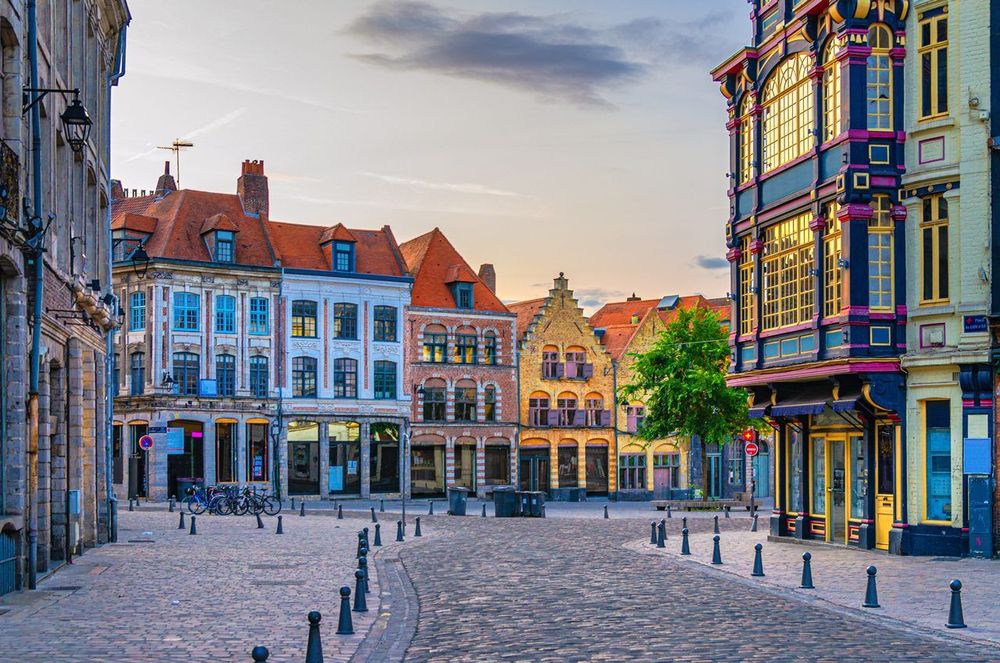
Exploring Lille on foot means stepping into a welcoming city shaped by its rich Flemish heritage. The cobbled streets of Vieux-Lille, with their colorful façades and lively squares, invite you to wander at an easy pace. Along the way, you’ll move between remarkable architecture, renowned museums, friendly estaminets, and the lively energy of a student city, all of which give Lille its distinctive character. Compact yet full of life, it’s perfectly suited to exploring on foot, with plenty of opportunities to pause and enjoy something delicious along the way.
Quand partir à Lille ?
Jan.
6°
14
Feb.
7°
12
March
10°
13
April
13°
12
May
17°
13
June
20°
12
July
23°
11
Aug.
23°
11
Sept.
20°
10
Oct.
15°
13
Nov.
10°
14
Dec.
7°
14
The climate is generally temperate, with winters often cool, even cold, where temperatures generally fluctuate between 0 and 8°C, and moderate summers around 20 to 26°C, with possible but rarely prolonged periods of heat; spring and early autumn represent the most pleasant periods for travel, especially from May to June and from September to early October, when temperatures are mild, the crowds more reasonable and the landscapes particularly green, while summer remains a good option to enjoy a lively atmosphere despite a higher risk of rain.
Départ conseillé
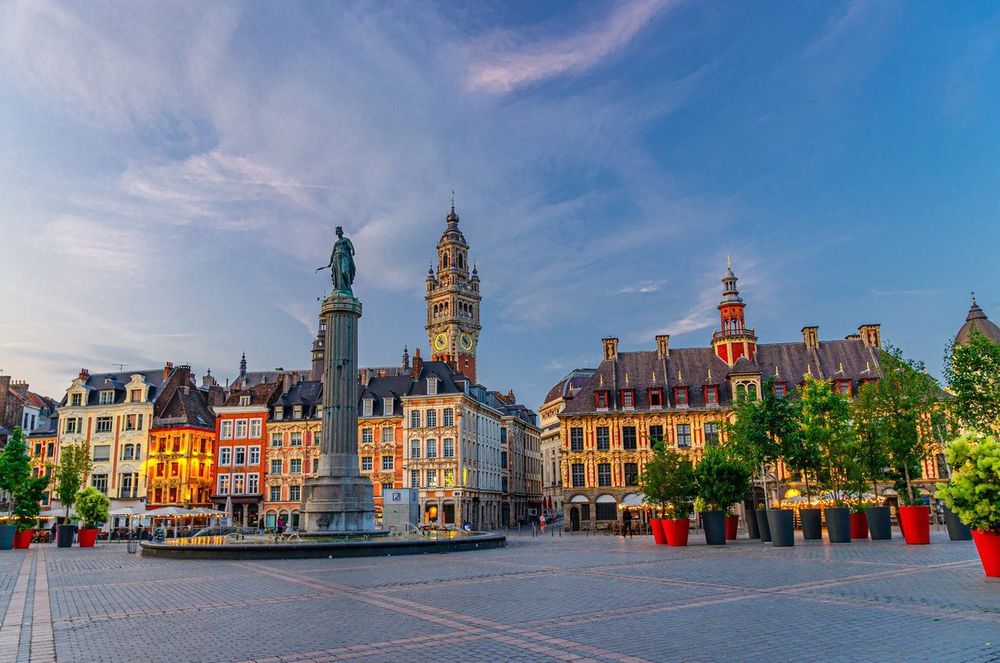
No need to worry about where to begin! Our tours are designed as a loop, so you can jump in wherever you are. The navigation system and audio-guide will automatically adjust to your location. However, if you happen to be nearby, we do have a preferred starting point: Grand-Place
Parking à proximité
Parking Gare Lille Flandres: Passage de la Demi-Lune /68 rue Gustave Delory
For a more economical long-term parking option, you can opt for one of the park and ride facilities that encompass the Lille public transportation network
P+R - Parking Relais ILEVIA Metro Lille Porte des Postes - Pl. Barthélémy Dorez
À savoir
The tour itinerary suggests crossing the old Stock Exchange. This historical monument is open to the public and can be freely visited but is only open from 1 PM to 7 PM from Tuesday to Sunday. If the building is closed when you visit, you just need to go around it to reach the theater square at the back
Découvrez 23 lieux d'intérêt pour visiter Lille





What to see in Lille on your 2h30 tour?
This 6 km loop takes about two and a half hours and links 22 sights. From the Grand Place, it crosses old Lille past the Golden Lion square, Rue de Gand and Notre-Dame-de-la-Treille Cathedral, then follows the Quais de Wault to the Palace of Fine Arts and the Porte de Paris. It passes through Saint-Sauveur before returning past the Rihour Palace and the Méert shop, each square telling the Flemish story of Lille.
Information checked in October 2026 and subject to change.
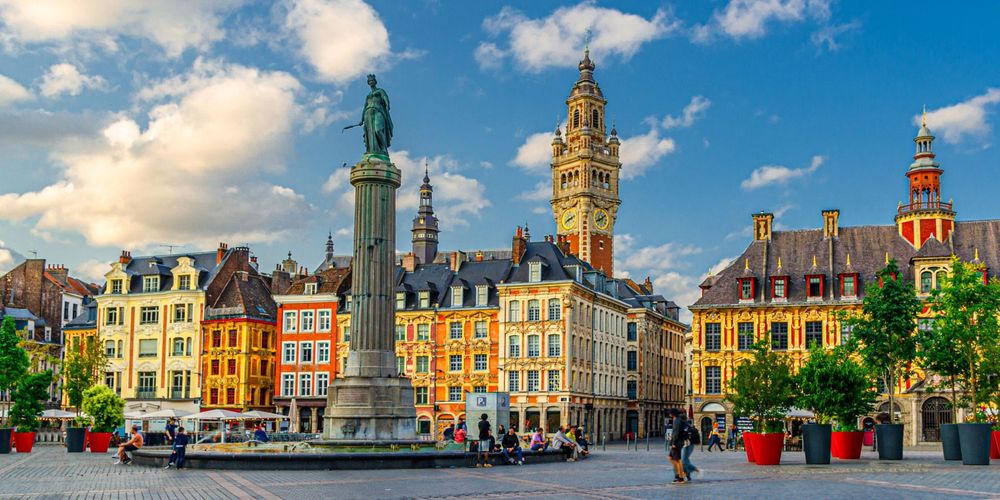
1 - Grand Place
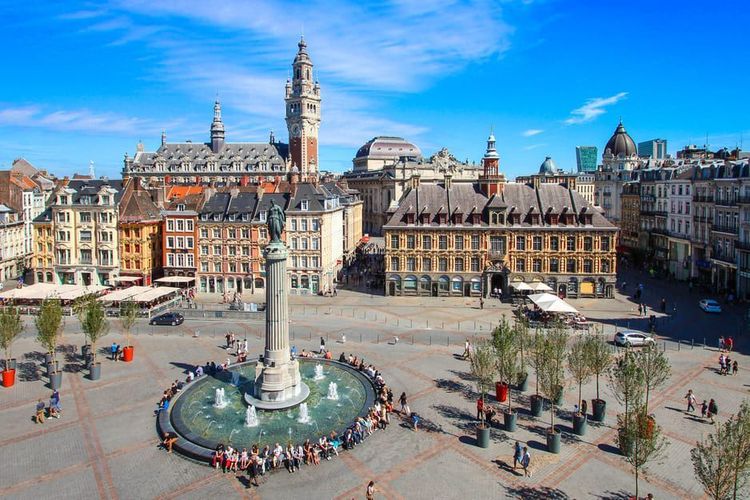
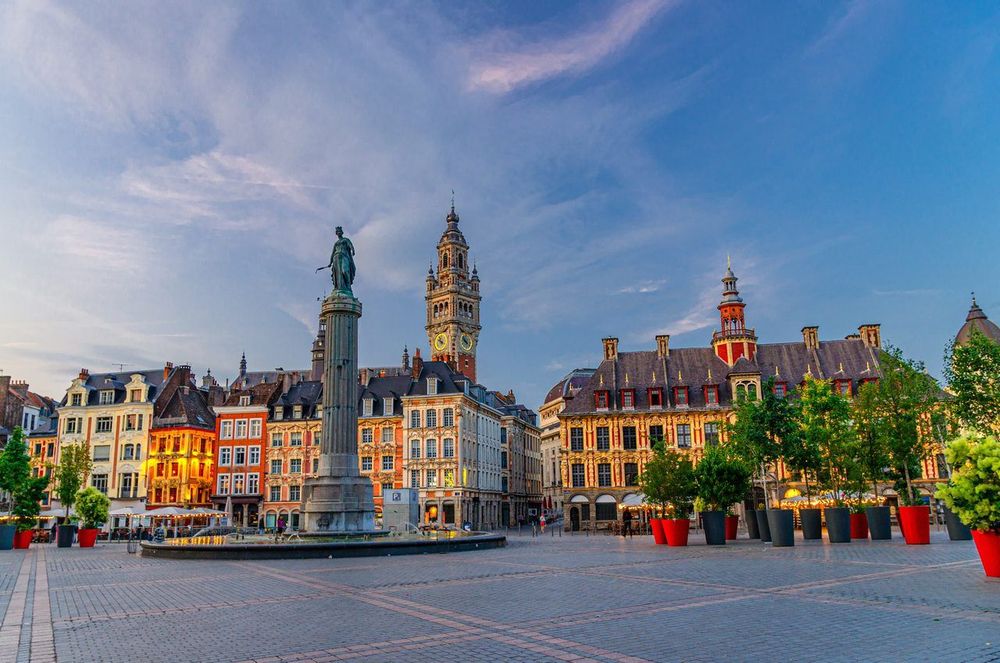
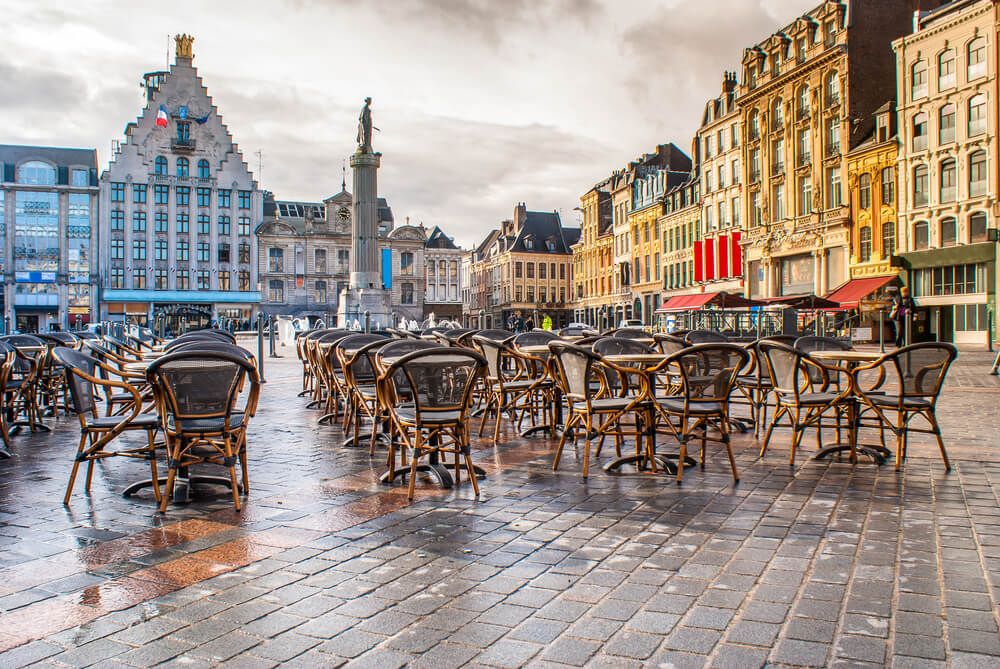
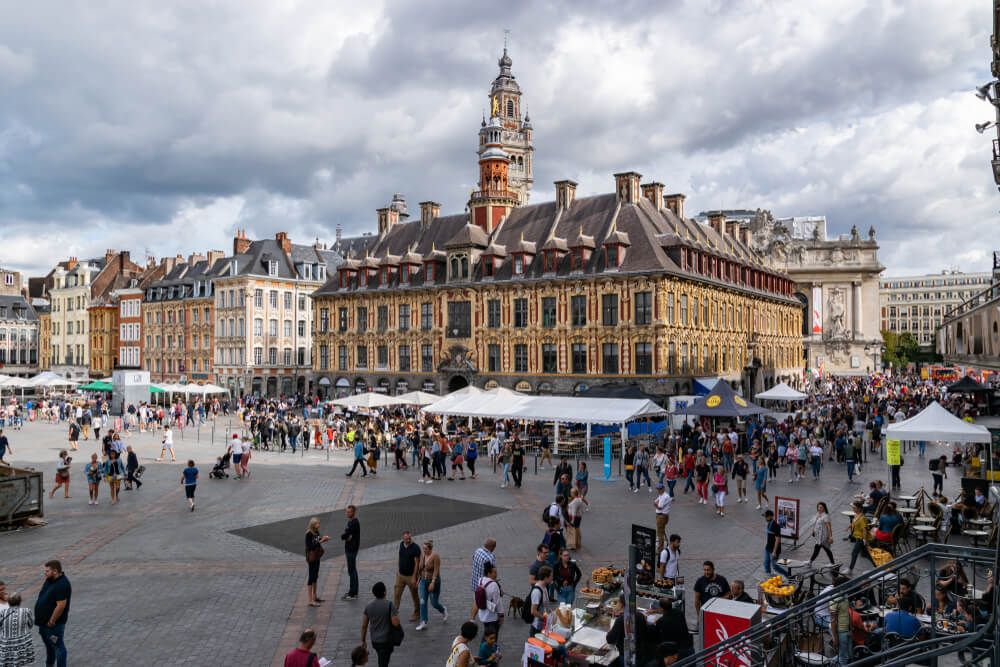
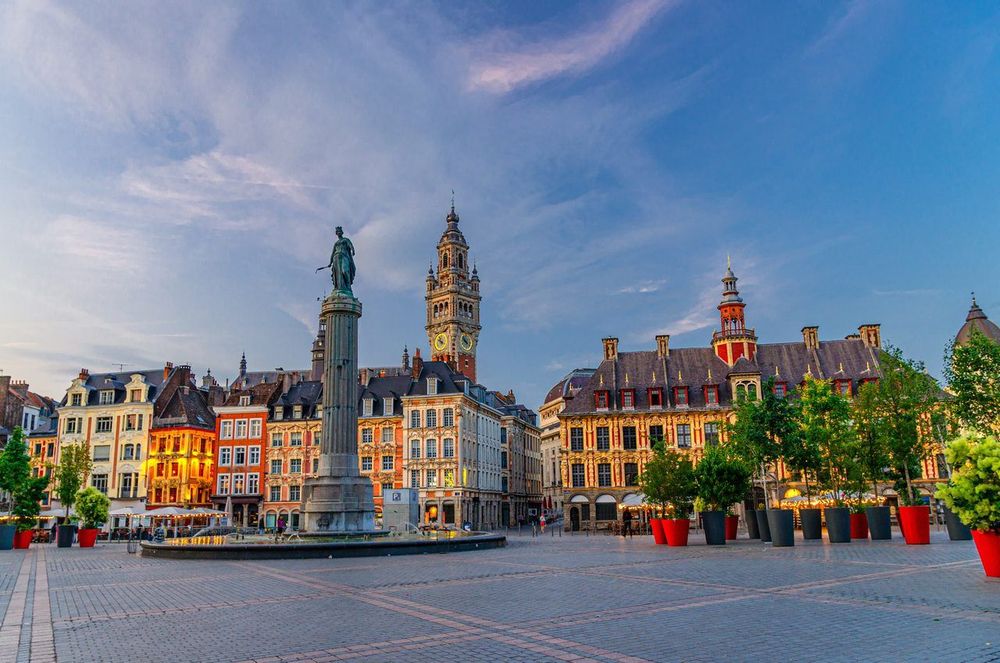
This square officially bears the name of General de Gaulle, born nearby at number 9 Rue Princesse, where his birthplace is now a museum. Ringed by Flemish façades, it owes much of its current fame to another institution: the Furet du Nord, a former fur shop turned bookshop in 1950 by Paul Callens, who kept expanding it until it reached 8,000 square metres, briefly the largest bookshop on earth. It has remained, since medieval times, the favourite meeting point of the people of Lille.
Free entry
2 - La Voix du Nord
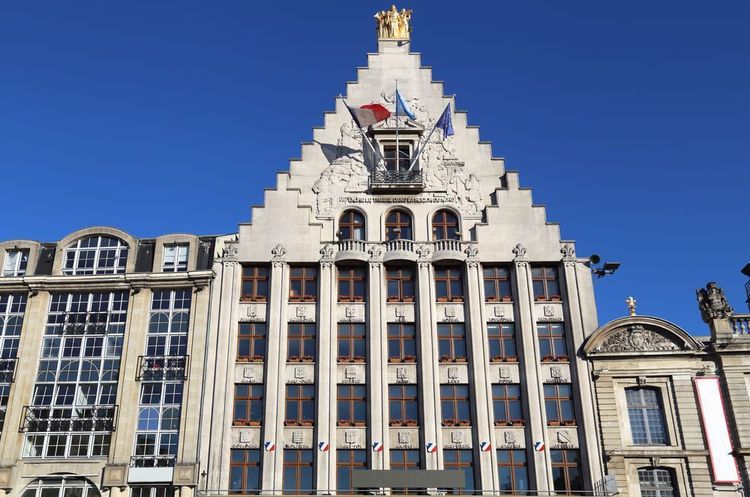
This newspaper was born underground in 1941, driven by a resistance that refused any compromise with the occupier; more than 500 people linked to its newsroom paid for that stand with their freedom, sometimes their lives. The company was only officially founded in 1945, at the Liberation. Atop the building, three gilded Graces personify the old provinces of the North, while a sun above the neighbouring clock recalls Louis XIV's conquest of the city in 1667.
Free to see from outside
3 - Old stock exchange
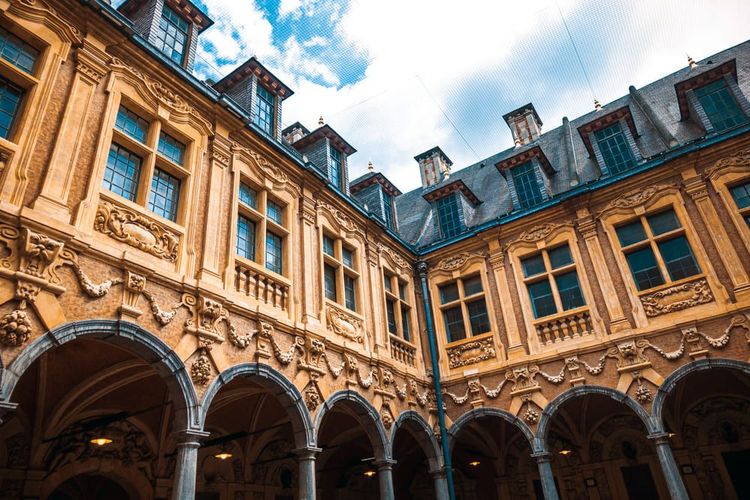
Lille then belonged to the Spanish Netherlands and rivalled Bruges, Ghent or Antwerp in wealth: it was in this context that the city's merchants built themselves this hall in the 17th century to unite their trade. Tellingly, it is Mercury, god of commerce, who sits at its centre rather than a church spire. Twenty-four identical houses frame the inner courtyard, carved with baskets of fruit and lions. Today second-hand booksellers, chess players and occasional tango dancers gather there, beneath the arcades.
Free entry
4 - Opera and Belfry
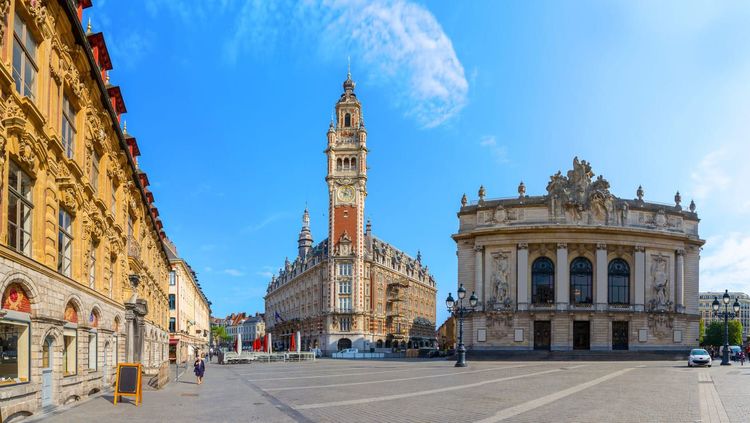
This square brings together two works by the same architect, Louis-Marie Cordonnier: the Opera, with its neoclassical façade unveiled in 1913, and the chamber of commerce belfry, whose carillon chimes the notes of the P'tit Quinquin every hour. Inside the neighbouring building, a glass dome lights up the grand hall. Opposite, the Rang de Beauregard lines up its 17th-century townhouses, and the Maison Morel still carries cannonballs lodged in its façade, a reminder of a Prussian siege still remembered by all.
Free to see from outside
5 - The Golden Lion square
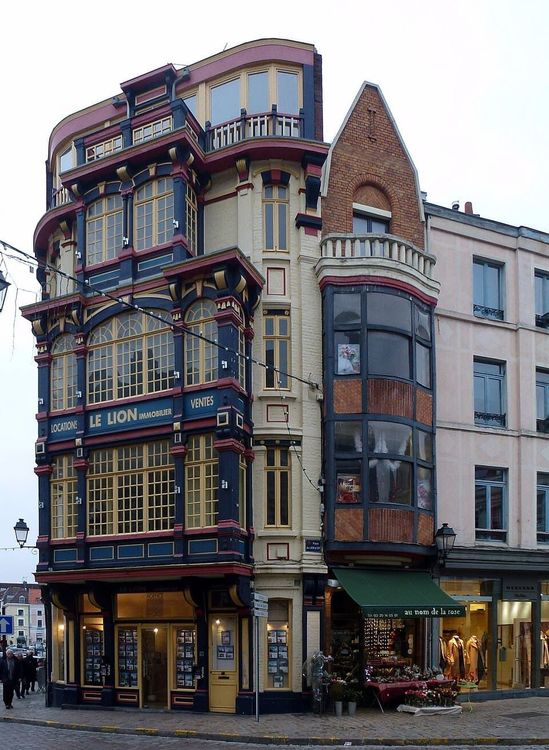
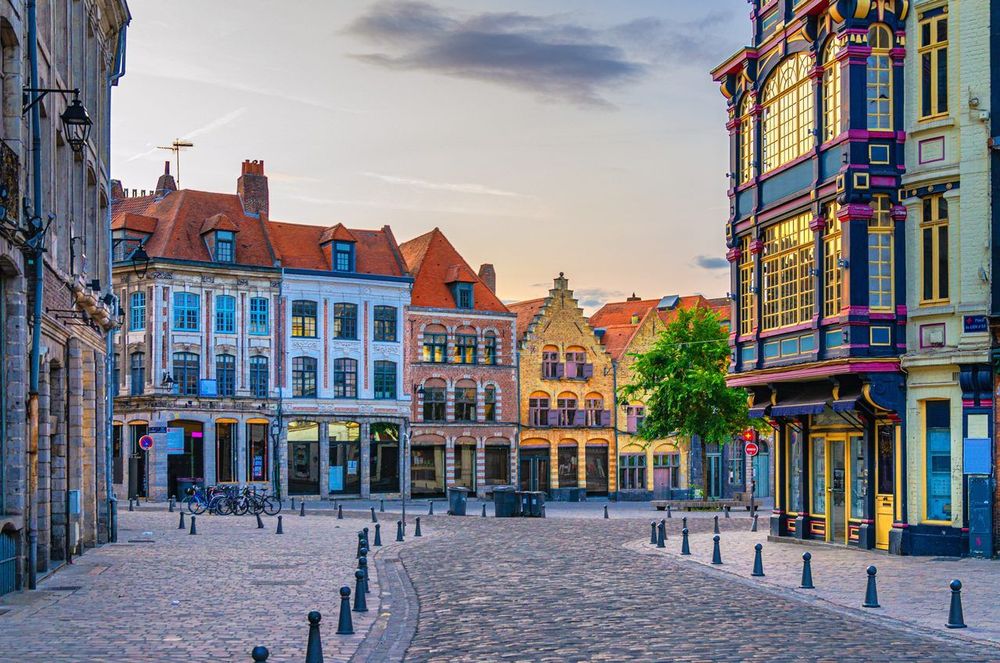
This square takes its name from an old coaching inn, through a playful word story that turned a phrase about sleeping into golden lion over time. On the corner stands a house with a bow window and a blue façade, next to a building so narrow it illustrates the space constraints Lille faced in the 19th century, which pushed houses to rise rather than spread. At number 15, another dwelling has been a protected landmark since 1927.
Free entry
6 - Louise de Bettignie square
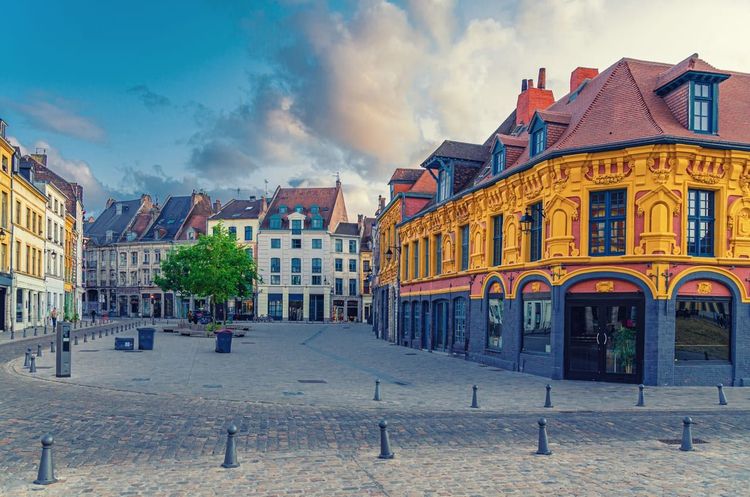
This square honours a woman of extraordinary fate: a spy for British intelligence in the First World War, said to have warned in vain of an offensive at Verdun before being captured and sentenced to forced labour, continuing her fight from her cell. Until 1930, the spot stood at the edge of a busy harbour where goods and boatmen came and went. On the corner, the big two-toned house belonged to a wealthy spice merchant, a sign of the fortunes trade allowed under Spanish rule.
Free entry
7 - Gand street
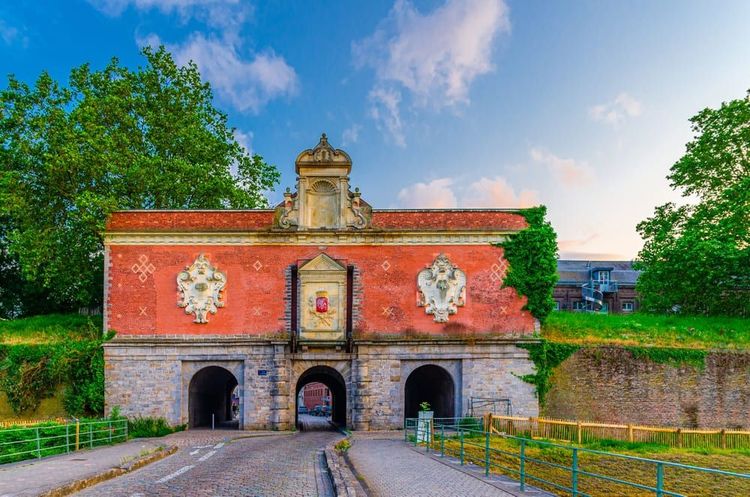
The only gently sloping street in this otherwise flat city, this lane is packed with bars and restaurants and leads to a rare surviving stretch of the Spanish ramparts, the Porte de Gand, which has housed a fine-dining restaurant since 1997. A little further on hides a lane with a rather odd name, drawn from local slang that once described, none too kindly, a woman of loose reputation. Nobody really knows why it was given that name.
Free entry · Best in the evening
8 - Ilot Comtesse garden
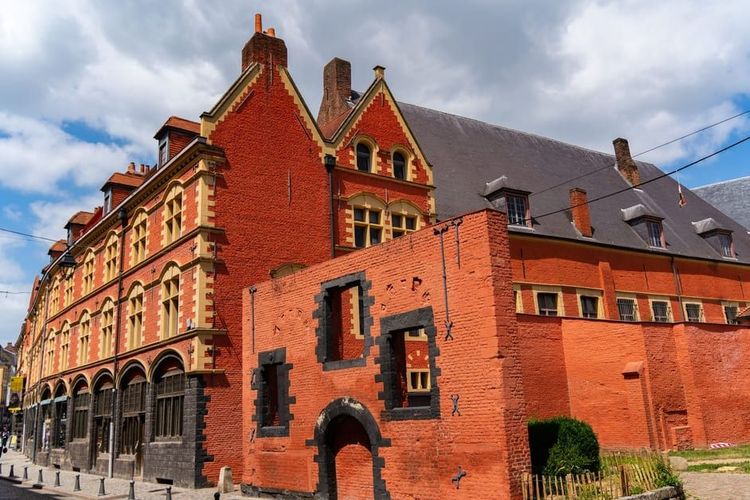
This garden takes its name from Jeanne, Countess of Flanders, the noblewoman who founded a hospital inside her own palace in 1237, even handing over her mills to help fund it. Just outside the park, an odd stretch of wall pierced by a door and windows is all that remains of the Saint-Pierre mill she gave the institution: the date 1649 carved above records its rebuilding after a fire, and a coat of arms on one window honours the duke of Burgundy who then protected the city.
Free entry
9 - Hospice Comtesse
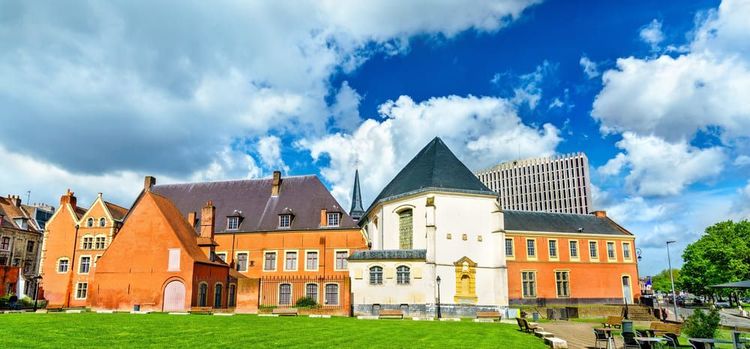
The street you are walking up is the oldest in Lille, its main paved road as far back as the 11th century, taking its current name under Louis XIV. It houses the hospice founded by Jeanne of Flanders, born in 1199, who also founded Marquette Abbey, one of the largest in France. Turned into a museum in 1962, the building brings to life on its ground floor a 17th-century Flemish house, while the upper floor covers local life and the former sick ward now hosts contemporary art.
Paid entry (about €4)
10 - Onions square
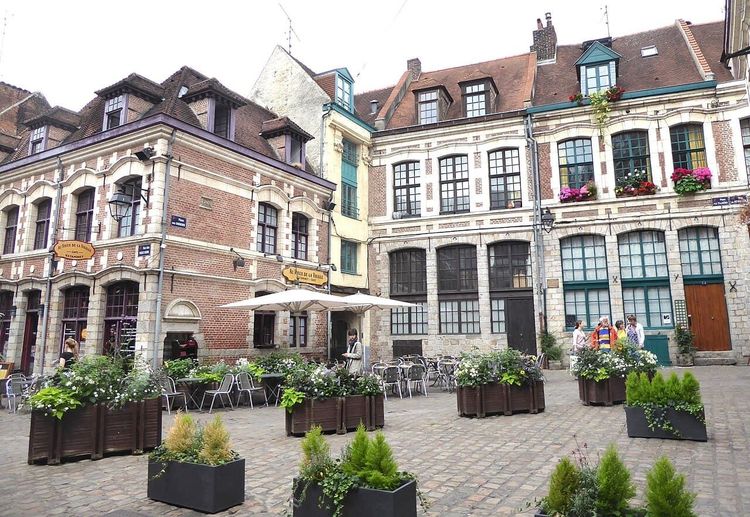
This square's name has nothing to do with a vegetable market: it comes from the Latin dominium, meaning an old keep, gradually distorted into dominion and then into onions. In the 18th century, weavers set up their looms in damp cellars here, before the decline of the textile trade turned the quarter into one of the city's poorest. Listed as a protected heritage area, the square was fully restored to its original look between 1985 and 1990 and now ranks among the most photogenic in old Lille.
Free entry
11 - The little yellow house
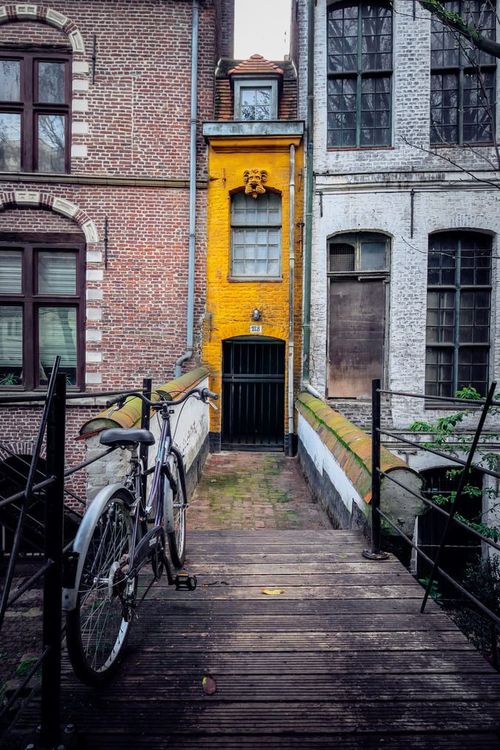
Contrary to legend, this yellow façade is not the smallest house in Lille, but simply a passage linking, since medieval times, two streets of the old quarter. It belongs to a ring of façades arranged around the cathedral, a layout recalling the old feudal mound on which the city was born, once surrounded by the canals of the Deûle, whose dry beds can still be traced in nearby basements. Above the door, a carved face is said to ward off evil spirits.
Free entry
12 - Notre-Dame-de-la-Treille Cathedral
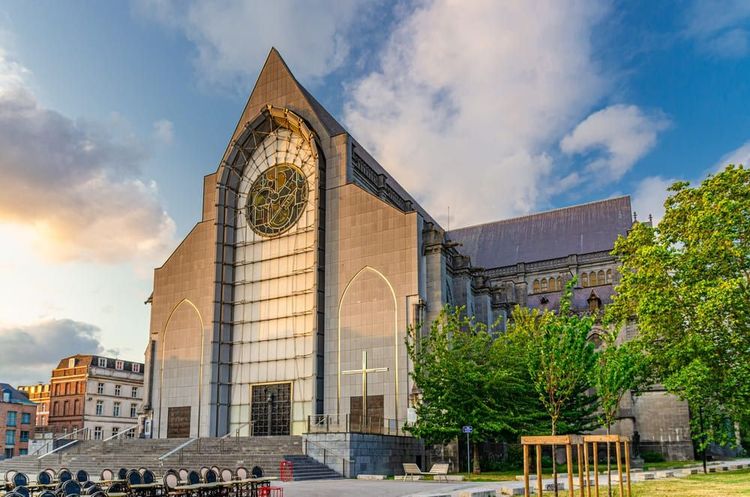
The last cathedral ever built in France, it had its first stone laid in 1854 for an ambitious flamboyant Gothic design, but the building site dragged on for a hundred and forty-five years, slowed by wars and lack of funds. The planned spires were dropped, replaced by a campanile meant to be temporary, which ended up staying despite its tiny foundations. The façade, only finished in 1991, is pierced with translucent marble panels that cast an orange glow inside, and the rose window bears the signature of Ladislas Kijno.
Free entry
13 - Quais de Wault
Before 1750, the Deûle river here held one of Lille's two small trading harbours; as the city grew and the river's flow proved too weak, activity shifted to the more modern Port Vauban, and the site turned into this calm, enclosed basin. Now lined with hotels and handsome houses, it is a pleasant walk popular with students in the evening, who come to catch the last rays of sunlight by the water and photograph the Flemish façades reflected in it.
Free entry · Best in the evening
14 - Le P’tit Quinquin
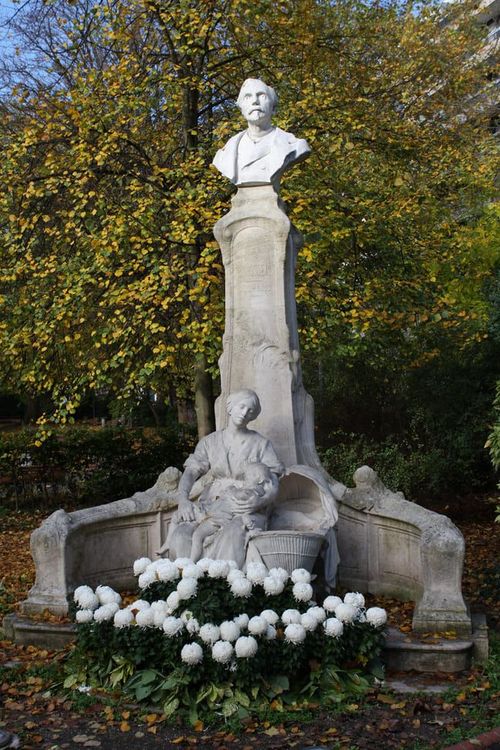
This white statue of a mother and child pays tribute to the P'tit Quinquin, a Ch'ti lullaby that became so popular it was used as a marching song by Northern soldiers heading off to fight Prussia. It can still be heard hourly from the belfry carillon. A darker detail: the sculptor is said to have modelled the lacemaker's face on the death mask of an unknown woman drowned in the Seine. What stands here is only a copy, the original kept safe inside the town hall.
Free entry
15 - Palace of Fine Arts
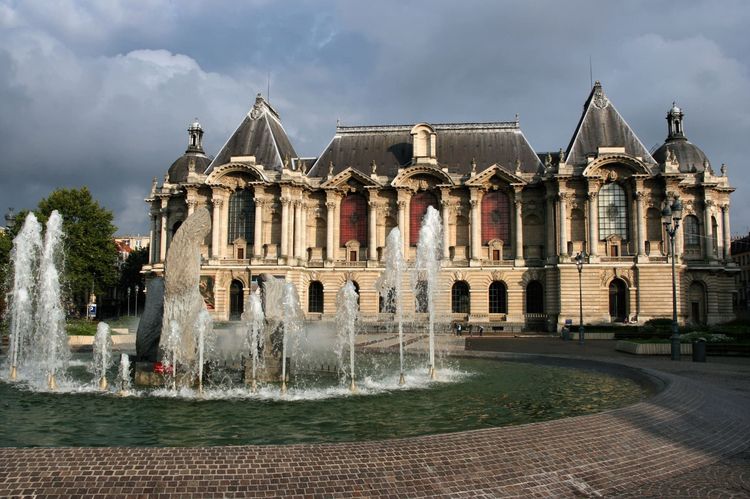
This vast square, bigger even than the Grand Place, was created when Vauban expanded Lille beyond its medieval limits. On one side stands the prefecture, on the other the Palace of Fine Arts, considered the second-largest museum in France after the Louvre: here hang works by Goya, Rubens, Delacroix and Courbet, alongside striking 18th-century scale models of the fortified towns of the North. At its centre, a fountain stands in front of an unusual sunken amphitheatre, reached directly from the metro.
Paid entry (about €7)
16 - Porte de Paris
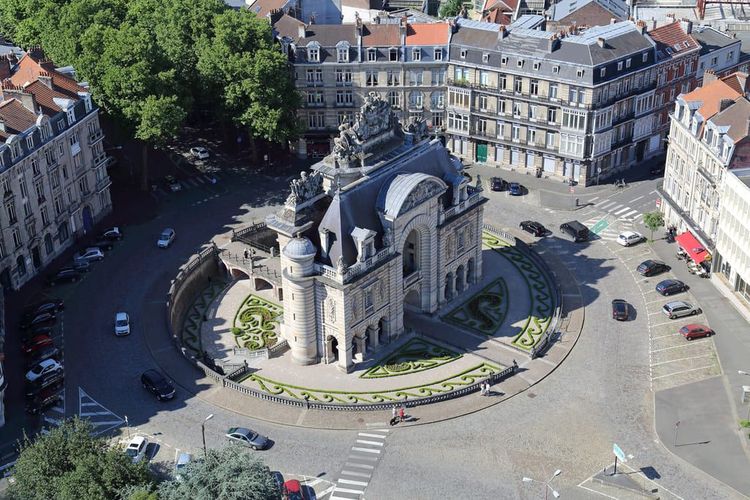
This gate stands on the site of the 13th-century ramparts, where the Porte des Malades once led to a leper house outside the walls. Turned into a triumphal arch to mark Louis XIV's capture of the city, it is decorated with unusual lavishness for a defensive structure: Hercules and Mars flank the passage, while angels sound the Sun King's victory from the top. Nearby hides the smallest boulevard in France, barely a hundred metres long.
Free entry
17 - Town Hall and Belfry
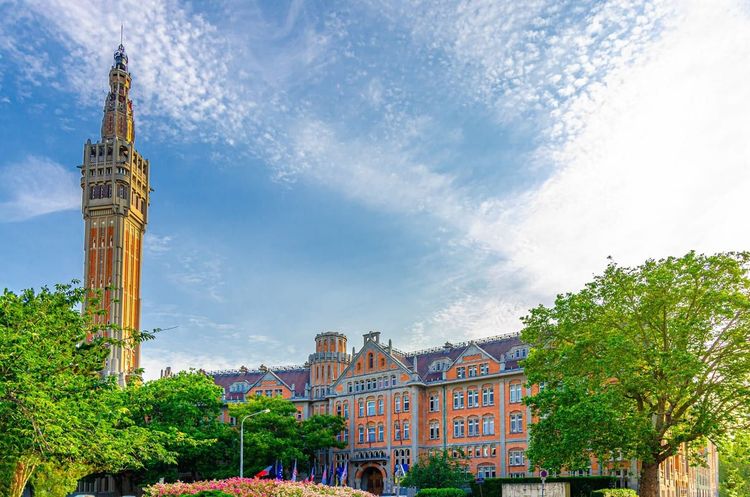
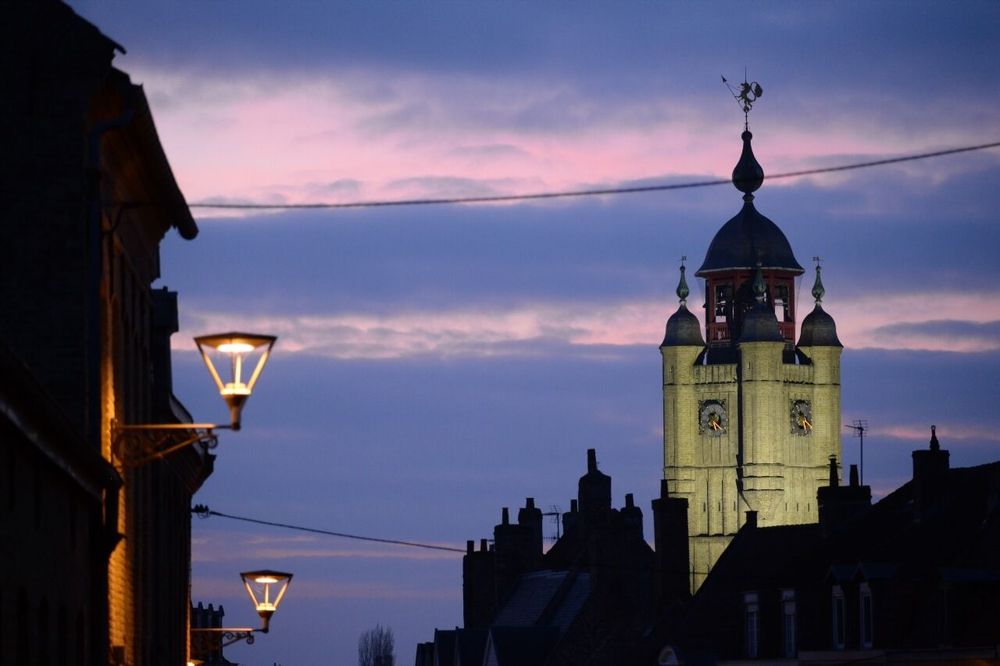
Built in the early 20th century out of concrete, then a fashionable material, this belfry rises 104 metres and is listed as a UNESCO World Heritage site, like every belfry of the North, historic symbols of municipal power facing that of the clergy. At its base keep watch two legendary giants, Lydéric and Phinaert, whose story goes back to the year 620: a fleeing prince is killed by a brigand, and his son, raised in secret, returns twenty years later to avenge his father and found Lille.
Paid entry (about €9) · Allow 40 min
18 - Marchiennes hotel
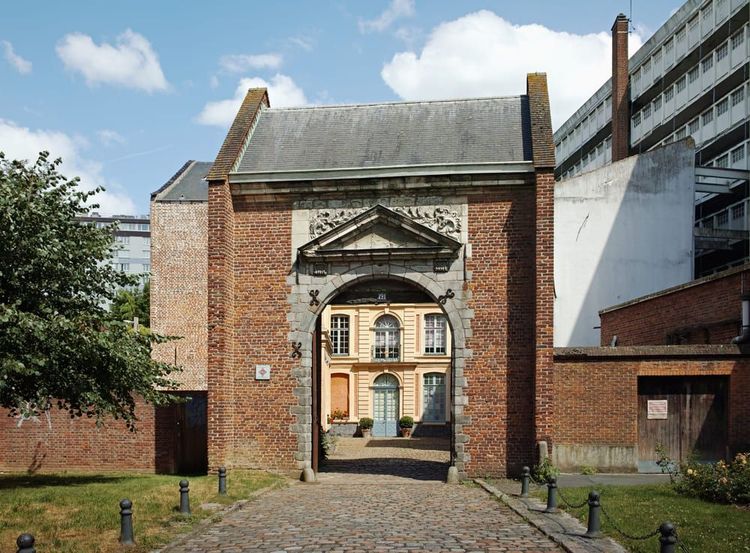
In 1620, the abbot of Marchiennes abbey, some thirty kilometres away, had a refuge built here for his monks passing through the city. Only the original porch survived the centuries and the redevelopment of the district that threatened to tear it down: its owners had it listed in 1958, and it was within these walls that, in 1964, the association for safeguarding old Lille was born. They could not, however, stop the modern buildings that now flank it on both sides.
Free to see from outside
19 - Brigittines street
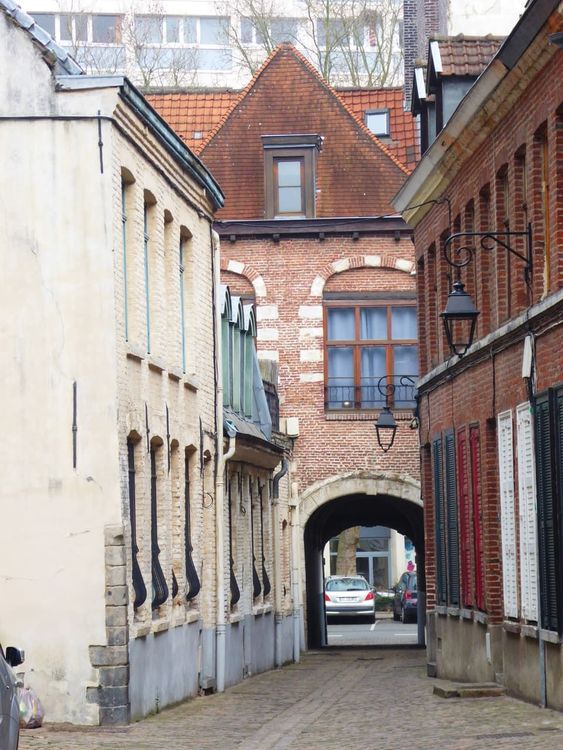
This medieval dead end once led to a convent, the setting for a strange case of possession. As early as 1608, the nuns complained of nighttime noises and voices; by 1612, some began dancing on the altar as if possessed, even knocking down their mother superior. Exorcists concluded the devil was at work, and one of the sisters, after confessing to a pact with him, ended up imprisoned for life rather than executed. The convent is long gone, but the lane keeps its unsettling atmosphere.
Free entry
20 - Saint-Maurice church
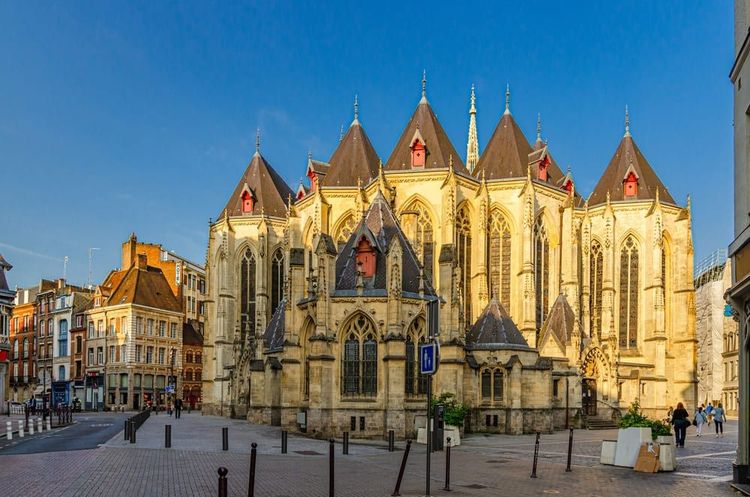
This church could have become Lille's cathedral: begun in the 14th century, it only took on its current look after a long 19th-century restoration, but Notre-Dame-de-la-Treille was ultimately chosen for that role when the diocese was created. It remains a fine example of a hall church, a light structure designed to cope with the marshy soil of Flanders, its naves of equal height flooding the interior with light. Listed as a historic monument since 1840, it deserves a quiet pause.
Free entry
21 - Rihour Palace
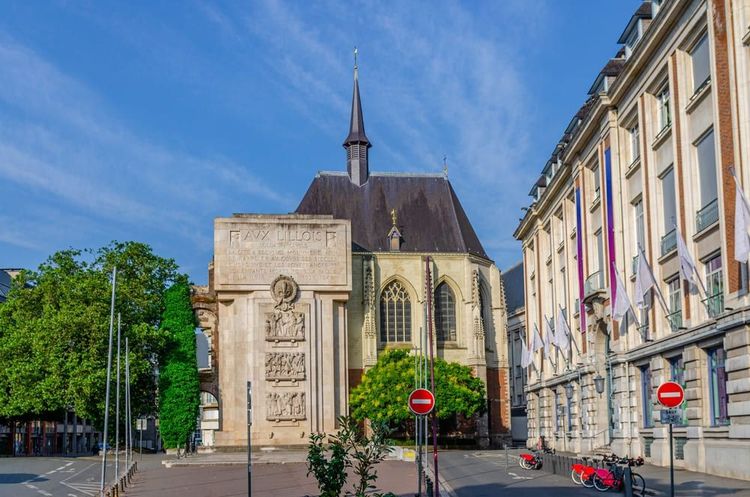
This palace is the only surviving trace of the time when Lille belonged to the dukes of Burgundy, before passing by marriage to the Habsburgs and then to France under Louis XIV. Philippe the Good built a huge complex here for his court, some thousand people, on land that was then open countryside. Left to decay and later ravaged by fires, most of it was torn down in the 19th century to make way for the town hall: only the chapel and guard room survived.
Free entry
22 - Méert
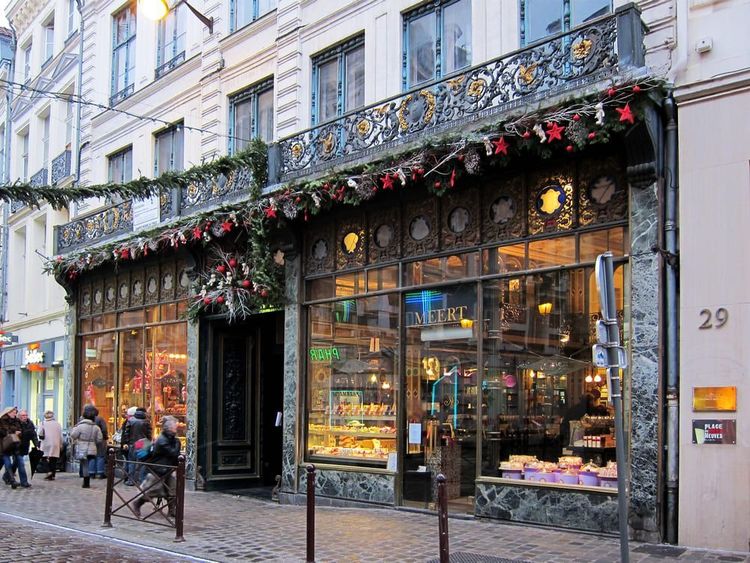
Behind this gilded storefront hides one of the oldest confectioneries still operating in the world, founded in 1761 on Rue Esquermoise. Its distinctive style, all woodwork and gilding, owes much to an art-loving confectioner, who surrounded himself with an architect, a painter and a sculptor as friends. But it was a Belgian businessman, arriving in 1849 after several years in the colonies and a keen expert in cocoa and vanilla, who gave the shop its name and invented the filled waffle that became its signature.
Free entry
What to do in Lille in 2 or 3 days?
A 6 km loop of 22 stops, around 2 hours and 30 minutes long, is enough to take in the essentials of old Lille, from the Grand Place to the Quai du Wault. With 2 or 3 days on hand, the city rewards a slower pace, one district at a time.
The next day, head to the Citadel park, the star-shaped fortress built by Vauban and ringed by more than 60 hectares of woodland, then on to the Quai du Wault, where moored barges and brasserie terraces line the water of the Deûle; the Natural History Museum, just 10 minutes on foot, rounds off the half-day nicely.
Day three opens with the Sunday market at Wazemmes, before a side trip of your choosing outside the city. The full breakdown, opening times and travel times included, is detailed in our guide to visiting Lille in 3 days.
Which neighbourhoods does the tour cross?
The loop strings together districts that each tell a different chapter of Lille's past, from the Flemish trading town to the neighbourhoods born of its later expansion.
It starts at the Grand Place, between the Old Stock Exchange and Théâtre square, the commercial and administrative heart of the city (stops 1 to 4), before working into old Lille past the Golden Lion square, Rue de Gand and the Hospice Comtesse, a maze of cobbled lanes and 17th-century Flemish façades (stops 5 to 12).
The route then follows the Quai du Wault and the Le P'tit Quinquin statue, before reaching République square, overlooked by the Palace of Fine Arts, then the Porte de Paris, a leftover of the 17th-century ramparts (stops 13 to 16). It finally crosses Saint-Sauveur, around the Town Hall and its belfry, up to Saint-Maurice church (stops 17 to 20).
The last stretch heads back toward the centre past the Rihour Palace and Maison Méert, a short walk from the starting point (stops 21 and 22).
How much does it cost to visit Lille?
Of the 22 stops on the route, only three call for a ticket; the other 19 can be visited free of charge, outdoors or through an open door:
- the Hospice Comtesse, a former hospital founded in 1237, for €4;
- the Palace of Fine Arts, one of France's richest collections, for €7;
- the belfry of the Town Hall, whose climb takes about 40 minutes, for €9.
To combine several visits without counting the cost, the Lille City Pass covers 48 hours for €39 and includes public transport, around 20 experiences and one guided tour of your choice. And to keep the day going without spending a cent, our guide to free activities in Lille lists further options.
Information checked in October 2026 and subject to change.
Where to stop for a bite along the tour?
The route passes two addresses well known to locals for a bite: Rue de Gand (stop 7), lined with bars and restaurants that come alive mostly in the evening, and the gilded front of Maison Méert (stop 22), a Lille institution open since 1761.
At Méert, the must-try is the vanilla-filled waffle, the treat Charles de Gaulle used to have delivered to the Élysée Palace. For something heartier, an estaminet in old Lille serves maroilles tart, cheddar-topped welsh or carbonnade simmered in beer: more Northern classics are gathered in our selection of Lille's culinary specialities.
What to do in Lille with children?
Old Lille and its squares work well for a family outing, between spot-the-detail games and dizzying climbs.
On the Grand Place, children run from one gilded gable to the next while you pick out the Voix du Nord building; at the Old Stock Exchange they can hunt for a comic book at the second-hand book market or spot the carved medallions on every house, a game that fills a pause nicely. Climbing to the top of the Town Hall belfry always leaves a mark: the spiral staircase, the bells up close, a view that reaches far on a clear day.
The Notre-Dame-de-la-Treille Cathedral also surprises younger visitors, its marble walls letting an amber light through like a giant stained-glass window, a 20-minute pause before heading back out. For a full programme sorted by age, see our guide to Lille with kids.
What should you know before visiting Lille?
One stop on the route keeps its own opening hours, which can mean a short detour late in the day.
The Old Stock Exchange only opens from 1 pm to 7 pm, Tuesday to Sunday: if its doors are closed when you pass, simply walk around it to reach Théâtre square and pick the route back up. For the lively bars and restaurants of Rue de Gand, evening is the best time to linger.
What to see around Lille?
Lille makes a good base for day trips, between nearby Flemish villages and bigger cities within easy reach by train.
Less than 30 minutes by road, the Prés du Hem leisure area in Armentières offers a first breath of air outside the metropolis. To go further, our selection of excursions around Lille details 12 ideas as far as neighbouring Belgium, and our guide to the most beautiful villages around Lille lists the Flemish towns within 1.5 hours.
Several nearby cities also have their own audio-guided walking tour. Bruges, 64 km away, unwinds its canals and gabled houses in a setting barely touched since the Middle Ages, while Ghent, 66 km away, hides the same fairy-tale charm without Bruges' crowds. Dunkerque, also 66 km away, opens onto wind-swept North Sea beaches, and Brussels, 94 km away, blends European institutions with Art Nouveau elegance.
Le plein d'inspirations
Explorez le monde en totale liberté, à pied au cœur des villes ou au fil des routes. Nos guides audios transforment chaque destination en une découverte culturelle immersive et unique.
FAQ for visiting Lille
When is the best time to visit Lille?
The best time to discover Lille runs from May to June and from September to early October. During these months, you will enjoy mild temperatures and more moderate tourist numbers. Spring offers particularly pleasant green landscapes for strolling along the cobbled streets. Summer remains a good option if you enjoy a lively atmosphere, even though the risk of rain is higher. Winters are cool, with temperatures generally hovering between 0 and 8°C, but the warm atmosphere of the estaminets more than makes up for the chill outside.
How many days do you need to visit Lille?
Two to three days is the ideal length of time to fully appreciate Lille. Over a long weekend, you will have time to wander through Vieux-Lille with its cobbled lanes and colourful facades, to visit the main museums, and to soak up the atmosphere of the lively squares. This length of time also lets you taste the local specialities in the estaminets without rushing. If you have more time, you can further explore the dynamic student districts and perhaps take an excursion into the surrounding area. A one-day stay is still possible but will inevitably limit your discoveries to the must-sees of the historic centre.
How do you get around Lille?
Lille has an efficient public transport network with two automatic metro lines, trams and numerous buses serving the whole metropolitan area. The city centre nevertheless remains very compact and is easily explored on foot, which is in fact the best way to discover the soul of the city. For longer journeys, the V'Lille self-service bike system offers a practical and economical alternative. Taxis and private-hire vehicles are also available. If you arrive by car, favour the park-and-ride facilities on the outskirts connected to the metro, as parking in the city centre can prove complicated.
What are the must-sees in Lille?
Lille's must-sees include the Grand'Place with its magnificent Vieille Bourse, Vieux-Lille and its cobbled lanes lined with colourful Flemish facades, and the Palais des Beaux-Arts, one of the largest museums in France. Do not miss the Cathedral of Notre-Dame-de-la-Treille with its surprisingly modern facade, nor the Rue de la Monnaie for its remarkable architecture. The Place du Théâtre and the Opera house are also worth the detour. The Ryo audioguide accompanies you in discovering these wonders with narrated routes that reveal the fascinating history of the capital of Flanders. The Wazemmes market on Sunday mornings offers an authentic immersion into Lille life.
Where can you eat the local specialities in Lille?
The traditional estaminets of Vieux-Lille are the best places to enjoy Flemish specialities in a convivial atmosphere. There you will savour carbonnade flamande, welsh, potjevleesch or waterzoï in an authentic setting. Rue de Gand and its surroundings are full of these typical establishments where the beer flows freely. For a more contemporary experience, the Wazemmes market hall offers quality local produce. The markets, notably the Sunday one in Wazemmes, also let you taste regional cheeses such as Maroilles. Do not forget to round off your meal with a Lille waffle filled with vergeoise.
How can you visit the Citadel of Lille?
The Citadel of Lille, a masterpiece by Vauban still occupied by the army, can only be visited on special occasions such as the Heritage Days or by booking guided tours organised by the Tourist Office. The slots are generally limited and much in demand, so it is advisable to book well in advance. Outside these periods, you can nevertheless enjoy the surrounding Citadel park, a vast green space ideal for walking or jogging. Lille zoo, located in this park, is a popular family alternative. The outer ramparts remain visible and allow you to appreciate the military architecture of this star-shaped fortification.
Where can you go shopping in Lille?
Lille offers a varied shopping experience between major brands and independent boutiques. Rue Neuve and Rue de Béthune concentrate the main retail chains along lively pedestrian streets. For more originality, explore Vieux-Lille, where designer boutiques, antique dealers and concept stores are tucked away in a charming historic setting. The Euralille shopping centre, close to the station, offers modern and convenient shopping. Market lovers will enjoy the Wazemmes market for its multicultural atmosphere and its unusual finds. Rue de la Grande Chaussée and Rue Esquermoise, for their part, combine upscale boutiques with more affordable brands.
Can you visit Lille on foot?
Lille lends itself perfectly to exploration on foot thanks to its compact centre and its many pedestrian zones. The main sights of interest lie within an easily walkable radius from the Grand'Place. The cobbled lanes of Vieux-Lille naturally invite you to stroll, and this is in fact the best way to appreciate the Flemish architecture and the unique atmosphere of the city. The Ryo audioguide offers optimised itineraries to explore Lille at your own pace, with commentary that enriches your walk. The distances between the various tourist districts remain reasonable, and the many terraces provide pleasant places to pause. Simply bring comfortable shoes to make the most of your urban exploration.
What can you do in and around Lille during a stay?
Start with Old Lille, spared by the bombings: the Grand'Place and its Goddess Column, the Vieille Bourse with its chess players, Place du Lion d'Or and Notre-Dame-de-la-Treille cathedral, whose translucent marble facade filters an amber light. The Palais des Beaux-Arts, free on the first Sunday of the month, and the LaM in Villeneuve-d'Ascq, 10 minutes away by metro, round off the visit. Beyond the city, Arras, the beaches of Dunkirk and Le Touquet, and the Flemish villages of Cassel and Bergues are all within easy reach.
Build your itinerary with our guide to activities in Lille and its surroundings.
Which big festive events should you not miss in Lille?
The Grande Braderie, Europe's largest flea market, gathers around 10,000 exhibitors along 100 km of stalls, with a tasty challenge: beating the record for the pile of mussel shells. Film lovers will enjoy the free European Film Festival, devoted to short films since 1984. In early May, Geek Days bring together more than 30,000 video game fans over a weekend, with a pass to book in advance. And every 1 May, the Louche d'Or soup festival livens up the Wazemmes district with contests, music and food.
Time your trip with our selection of the best events in Lille.
Which cultural day trips can you take from Lille?
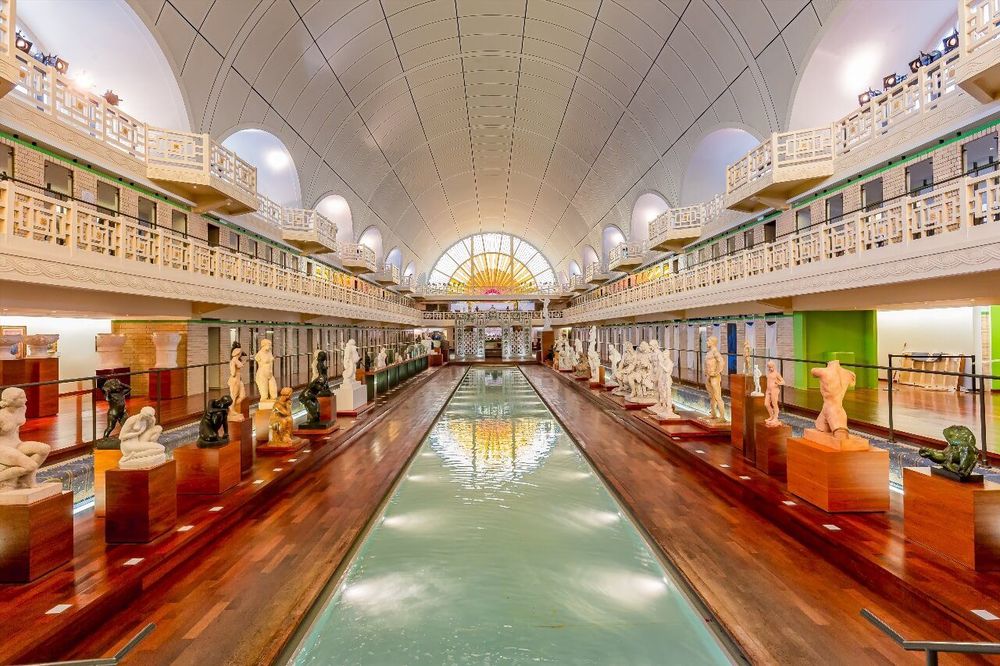
Within 100 km, there is no shortage of ideas. In Roubaix, 12 km away, La Piscine displays its sculptures in a former Art Deco pool (€7, closed on Mondays), close to Mallet-Stevens' Villa Cavrois. In Lens, the Louvre-Lens Gallery of Time is free, and the twin slag heaps of Loos-en-Gohelle, 186 metres high, can be climbed on foot. Arras charms with its two baroque squares and its underground boves, while Dunkirk, Ghent and Kortrijk make for other great days out.
Pick your outing from our 12 day trip ideas around Lille.
Which lovely Flemish villages can you discover within 1.5 hours of Lille?
Bergues, 45 minutes away, saw its belfry made famous by Welcome to the Sticks and is best explored along its Vauban ramparts. Cassel, voted France's favourite village in 2018, overlooks the Flanders hills from 176 metres: on a clear day you can see the English coast. Lesser-known Esquelbecq boasts a moated castle and a Flemish-brick church. Gravelines, a fortified town by the sea, and Montreuil-sur-Mer with its medieval towers complete the selection.
Plan your getaway with our guide to the most beautiful villages around Lille.
Which typical northern dishes should you order in a Lille estaminet?
Lille's cooking is hearty, rich in butter and often made with beer. The unmissable welsh hides beer-soaked bread and ham under a thick layer of melted cheddar. Carbonnade flamande simmers beef in dark beer with gingerbread and brown sugar, while potjevleesch brings together four white meats in jelly. Also try maroilles tart, chicons au gratin (baked endives) and mussels with chips. For something sweet, vergeoise sugar tart and cramique brioche are perfect for an afternoon snack.
See the full list in our top culinary specialities in Lille.
What can families do in Lille's Citadel Park?
Around the pentagonal citadel built by Vauban between 1667 and 1673, the park offers enough for a full day. The zoo, France's fourth most visited, is home to around 500 animals from 110 species, from red pandas to white rhinos. Cita Parc lines up rides, tree-top courses and a little train, open on Wednesday afternoons and weekends. The woods welcome joggers and cyclists along the Deûle, with a 5 km waymarked trail. The citadel itself can be visited on the third Sunday of the month, by reservation and with ID.
Plan your day out with our guide to Lille's Citadel Park.
What can you do in Lille with children?
Lille is a human-scale city that is easy to explore on foot. On the Grand-Place, little ones run around the Goddess Column, then hunt for the medallions on the Vieille Bourse. Climbing the town hall belfry, around 104 metres high, is a lasting memory: book ahead in high season. Notre-Dame de la Treille cathedral, free to enter, amazes with its light. The Palais des Beaux-Arts, free for under-18s, offers activity booklets, and the Natural History Museum impresses with its whale skeleton.
Find all 18 experiences in our guide to Lille with kids.
What can you do for free in Lille over a weekend?
In Lille, you can fill a whole weekend without spending a cent. Wander around Old Lille, along Rue de la Monnaie and Place aux Oignons, looking out for murals on the gable walls, and hunt for the city's smallest house, less than two metres wide, on Rue des Bouchers. The Vieille Bourse courtyard hosts a book market and chess players almost every day. On the first Sunday of the month, the Palais des Beaux-Arts and the municipal museums are free, as is the Citadel zoo.
Discover all 18 tips in our guide to free activities in Lille.
How should you organise three days in Lille, day by day?
Day one is spent on foot in the historic centre: the Grand-Place, the Vieille Bourse and its second-hand book market, the Opera, then the 104-metre belfry of the Hôtel de Ville, best booked at weekends, and the Palais Rihour. Day two pairs a museum in the morning with the Citadel and the banks of the Deûle. On day three, head to the Sunday market in Wazemmes, then take a trip of your choice, such as Croix and its Art Deco villa by Mallet-Stevens. Every day starts on foot from the Grand-Place.
Follow our itinerary for visiting Lille in 3 days.
What is there to do at the Lille Christmas market: chalets, Ferris wheel and where to eat?
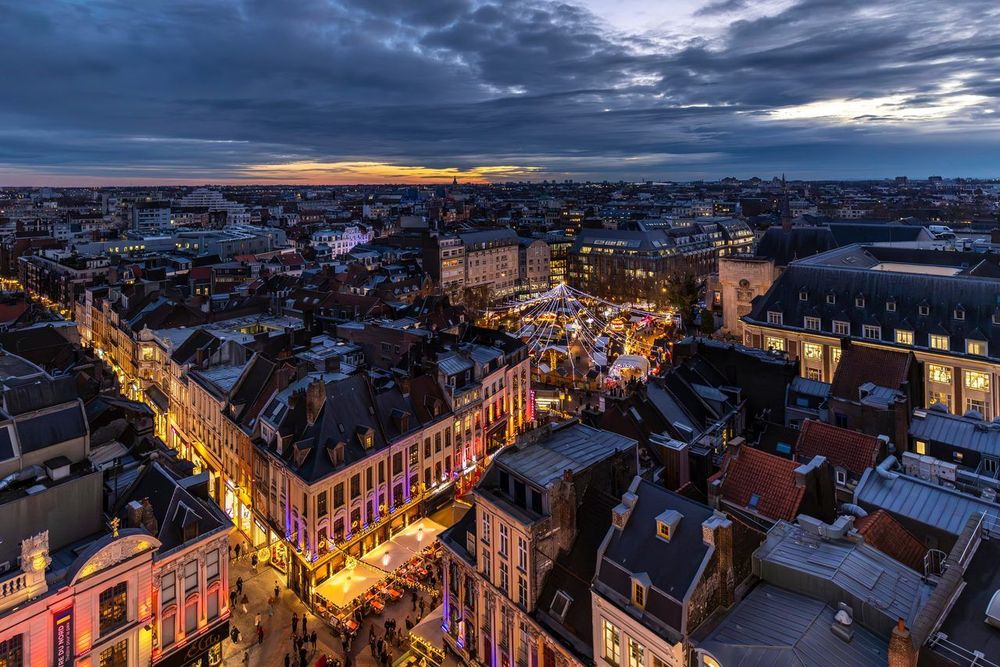
The Christmas Village sets up on Place Rihour with 90 artisan chalets, while the 50-metre Ferris wheel towers over the Grand Place and the vintage Idéal Chenille 1922 ride runs on Place du Théâtre. The announced dates run from 18 November to 30 December, from 11am to 8:30pm Sunday to Thursday and until 10pm on Fridays and Saturdays. At the last edition, a ride cost 7 euros for adults and 5 for children.
Mulled wine, vergeoise-filled waffles and the city-centre lights complete the stroll. Better to avoid Saturday evenings, which are the busiest.
Chalets, prices, photo spots and good addresses: find it all in our complete guide to the Lille Christmas market.
Vos commentaires, idées et suggestions
Aucun avis pour le moment