© Shutterstock
 Votre guide Ryo
Lille with Kids: 18 Experiences to Enjoy as a Family in 2026
A belfry you climb on foot to the top, a zoo nestled within a star-shaped citadel, and a Sunday market where kids demand fries before they've even finished the rounds of the stalls: Lille with children is anything but a slow-paced trip. This Flemish city is explored on a human scale, its distances measured in minutes on foot, and the Ryo audio-guided tour lets you connect the must-sees of the Vieux-Lille without worrying about the route.
In the pages that follow, you will come across a natural history museum where a several-metre whale skeleton holds pride of place, a flea market that draws nearly two million visitors on the first weekend of September, Vauban ramparts transformed into an open-air playground, and villages less than an hour's drive away where time seems to have stood still since the 17th century. Enough to fill a weekend or a full week, without getting back in the car for long stretches.
The Vieux-Lille and the Grand-Place, First Stop of the Stay
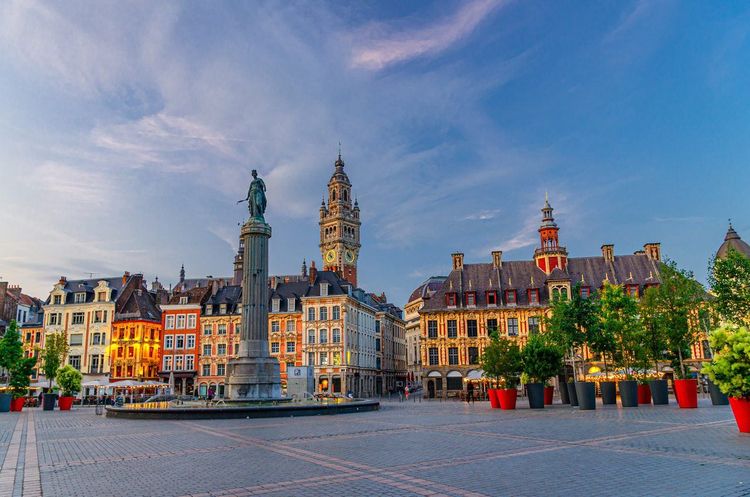
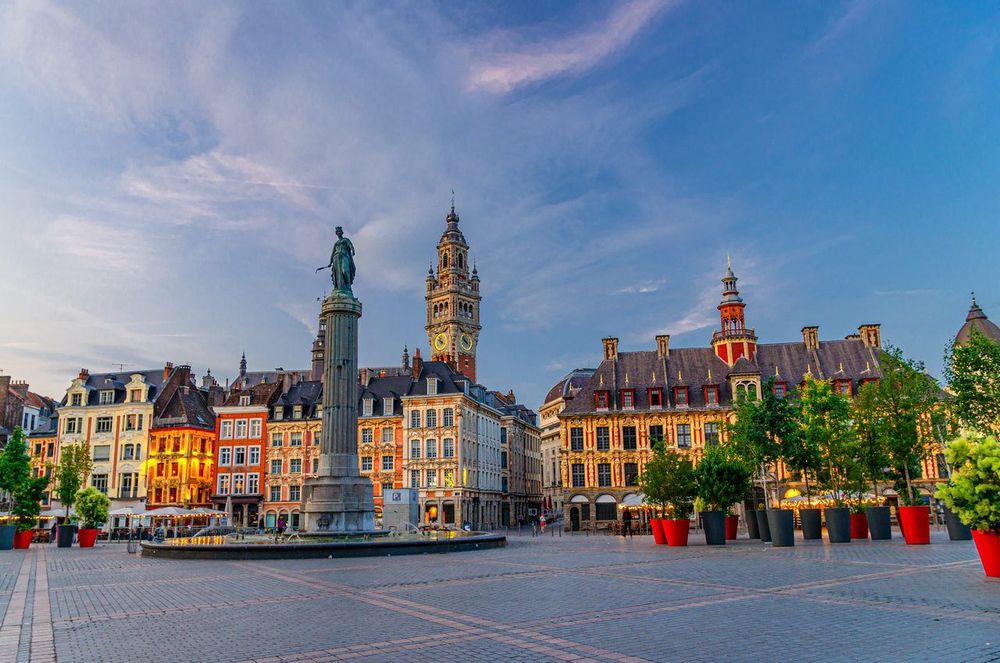
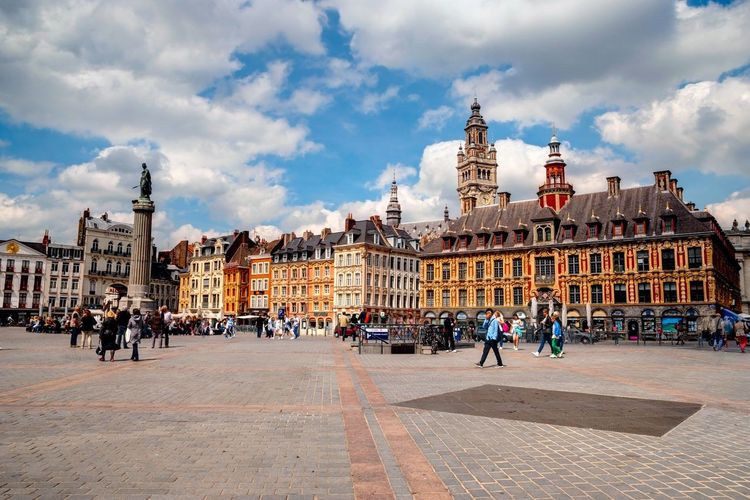
It almost always starts here. The Grand-Place, officially known as Place du Général-de-Gaulle, opens onto golden-gabled Flemish façades and the column of the Goddess, erected in memory of the 1792 siege. The kids run from bench to bench while you spot the former façade of La Voix du Nord, one of the most photographed buildings in the city.
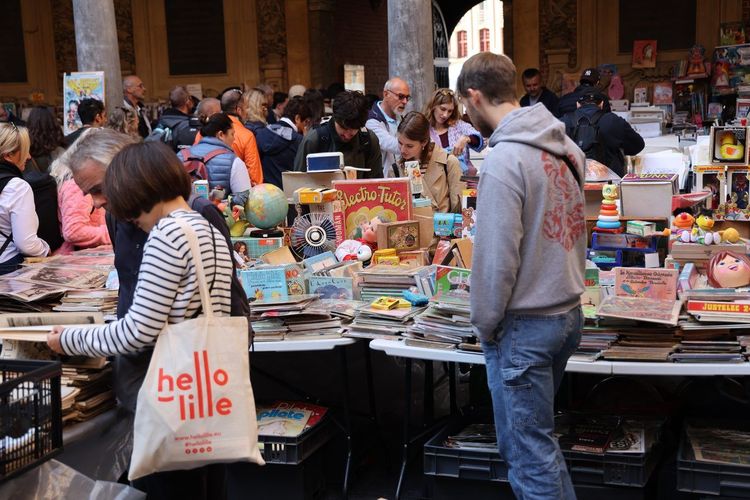
Just steps away, the Vieille Bourse is well worth a detour for its Flemish Renaissance inner courtyard, built between 1652 and 1653 by 24 merchants who shared the costs. Chess players and a second-hand book market can be found there on almost any day: older children can browse for a comic book while you catch your breath over a coffee. Look up at the medallions of scientists and artists adorning each building — a spot-the-detail game that can easily fill a break.
Next, head to the rue de la Monnaie, one of the oldest cobbled streets in the city, lined with 17th-century houses. It leads straight to the birthplace of Charles de Gaulle, though the real draw is the speculoos and waffle shops that fill the street with their scent from early morning. Allow a good hour for this first stretch, longer if a churro vendor captures everyone's attention. Place Rihour and its carousel, just a few steps away, provide a natural transition to the rest of the city centre. Ryo's audio-guided tour continues on to the Grand Place and La Voix du Nord building, just a short walk from Place Rihour.
Climbing to the Top of the Beffroi de l'Hôtel de Ville
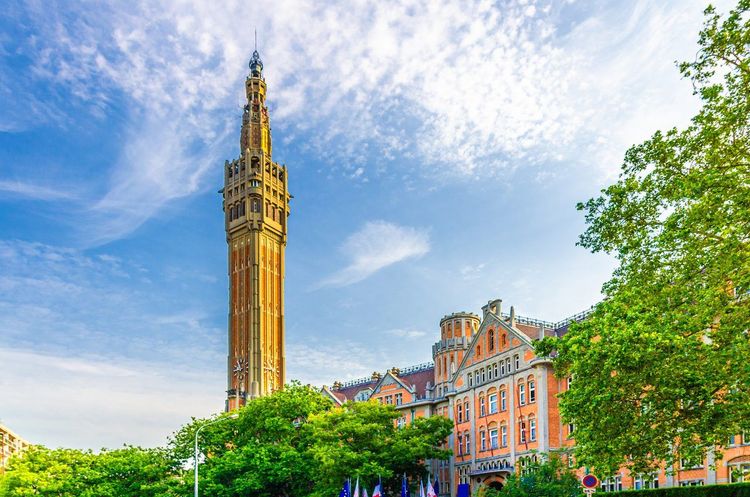
The Beffroi de l'Hôtel de Ville, listed as a UNESCO World Heritage Site as part of the Belfries of Belgium and France, rises to around 104 metres, making it the tallest municipal belfry in the region. A lift followed by a staircase takes you to the top, where the panorama stretches all the way to the mining spoil heaps of the coalfield on a clear day.
For young visitors, the climb itself is already part of the memory: the final spiral steps, the bells seen up close, the city shrinking with each landing. Book your time slot in advance during high season, as visits depart in small groups roughly every twenty minutes. Expect a few euros per adult with free entry for the youngest, and wear closed-toe shoes: the final staircase can be slippery after rain. The belfry closes on certain public holidays, so a quick check of the tourist office calendar will save any unpleasant surprises.
A little storytelling moment that always goes down well: look for the two legendary guardians at the base of the building, Lydéric and Phinaert, tied to the city's founding myth. Tell the story of their medieval duel before the climb, and the view from the top takes on an extra dimension. The belfry itself, completed in the 1930s, crowns a listed Art Deco town hall well worth admiring for its brickwork and long façade alone.
The Cathédrale Notre-Dame de la Treille, an Unusual Pause
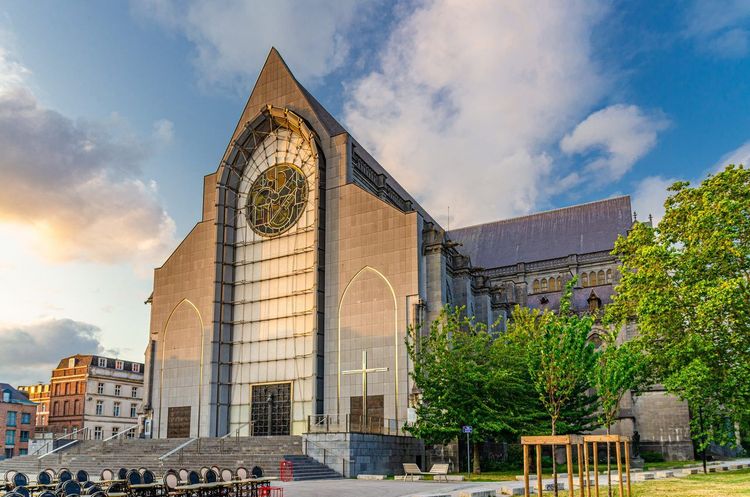
Begun in 1854 and completed only in 1999 with its translucent marble façade, the Cathédrale Notre-Dame de la Treille (Place Gilleson, 59800 Lille, rated 4.4/5 on Google from 7,087 reviews) surprises children with the light that passes through its walls like a giant stained-glass window. Seen from outside, the façade looks almost raw; inside, it glows a warm orange-pink as soon as sunlight hits the stone — an effect few monuments in France can offer.
The interior remains sober, almost silent, a sharp contrast to the bustle of the nearby Grand-Place. Entry is free, making it an easy twenty-minute stop between two livelier visits, just long enough to warm up on a grey day.
The Palais des Beaux-Arts, Art Explained Differently
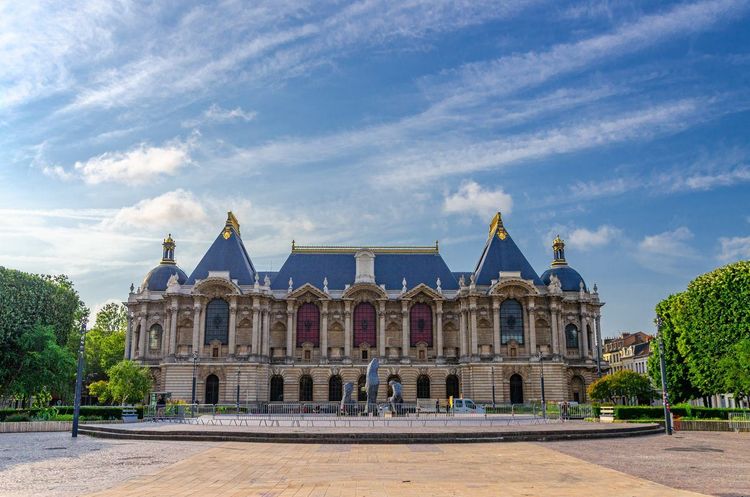
Often cited as the second-largest museum in France after the Louvre in terms of the scope of its collections, the Palais des Beaux-Arts de Lille (Place de la République, 59000 Lille, rated 4.5/5 on Google from 9,164 reviews) sounds daunting on paper but proves surprisingly accessible with young visitors. The rooms dedicated to 17th- and 18th-century relief maps — vast three-dimensional plans of the North's fortified towns — often captivate children far more than the classical paintings hung upstairs.
The museum regularly offers free activity booklets at reception for children aged 6–12, with room-by-room riddles to solve. Allow an hour and a half at a young child's pace, or two hours if teenagers linger in front of Rodin sculptures or Picasso ceramics. Admission is free for under-18s, a detail that makes a real difference over a multi-day stay. The museum closes on Tuesdays, so plan this visit for the beginning or middle of the week. Don't miss the Wicar rooms, a collection of drawings by Old Masters, or the medieval crypt in the basement — often deserted and a hit with fans of hidden corners.
The Muséum d'histoire naturelle and Its Giant Skeletons

Less visited than the Palais des Beaux-Arts, the Muséum d'histoire naturelle de Lille (19 Rue de Bruxelles, 59000 Lille, rated 4.4/5 on Google from 4,197 reviews) has a trump card: a whale skeleton suspended from the ceiling of the main gallery, impossible to miss from the moment you walk in. The entomology collections, with their metallic-sheen beetles and tropical butterflies, also hold the attention of curious young visitors for a long time, as does the geology gallery with its fluorescent minerals.
No reservation is needed most of the time, and the average visit lasts 45 minutes to an hour. It is a solid backup option on rainy days, especially since the museum is only a few minutes' walk from the Palais des Beaux-Arts — the two can easily be combined in the same half-day. Admission prices are modest and free for the youngest children, making it one of the most affordable outings in the city centre.
The Lille Zoo, a Hidden Gem in the Heart of the Citadelle
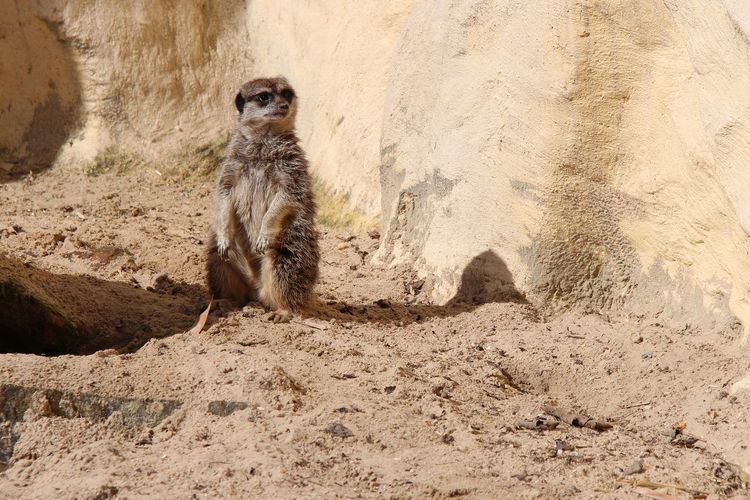
Few major French cities tuck a zoo inside a fortified park. The zoo de Lille (Avenue Mathias Delobel, 59000 Lille, rated 4.1/5 on Google from 10,806 reviews), set within the Parc de la Citadelle since 1950, is home to more than 350 animals from 77 species across just 3.5 hectares — an ideal format for little legs: you can do the full circuit without exhausting anyone.
The vivarium houses reptiles and insects in a tropical atmosphere that contrasts sharply with the Lille climate, while the white-handed gibbons, red pandas, and ring-tailed lemurs draw crowds near the large aviaries. The neighbouring play area provides a breather between enclosures, and several species take part in European breeding programmes — an interesting angle to explain to older children.
On the ticketing side, admission costs around 6 euros per adult and 3 euros for children aged 5–17, with free entry for under-5s and for Lille residents holding the Pass Lille&Moi: the zoo introduced charges in 2017 after decades of free access, worth knowing if older guides told you otherwise. It also closes in winter and generally reopens from March to November, so check the dates before you visit. On busy days, the park car park fills up quickly — arriving by tram or on foot from the city centre is the smarter option.
The Parc de la Citadelle, Nature and Play in the Heart of the City
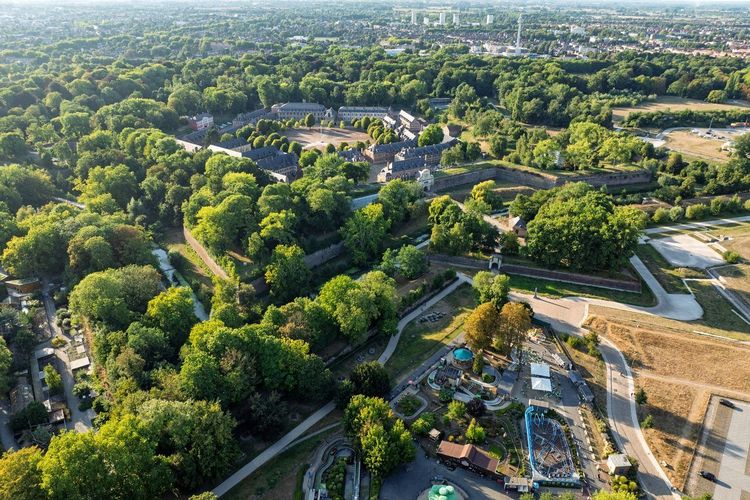
Built by Vauban from 1667, the Citadelle de Lille forms a star-shaped fortress surrounded by a vast wooded park of over 60 hectares, locally nicknamed the "Queen of Citadels". It is one of the only large green spaces in the city centre, and it transforms at weekends into a giant playground for children and adults alike.
You can hire bikes or rosalies here, picnic on the lawns along the banks of the Deûle, and let toddlers loose on the play structures dotted near the zoo. The Ryo audio-guided tour of Lille includes a dedicated stop on these ramparts, with enough context to explain to young visitors why the city was one of the most heavily defended strongholds in the kingdom. Our dedicated article on the Parc de la Citadelle (Avenue du 43e Régiment d'Infanterie, 59000 Lille, rated 4.5/5 on Google from 3,072 reviews) details the best access routes and opening hours by season.
In summer, open-air concerts also draw Lille residents in the evenings, with a huge lawn where the youngest often fall asleep before the last song ends. The park is freely accessible all year round during daylight hours, making it the perfect landing spot when a cultural morning has exhausted everyone's reserves of patience.
The Wazemmes Market, Sunday Immersion and Treats
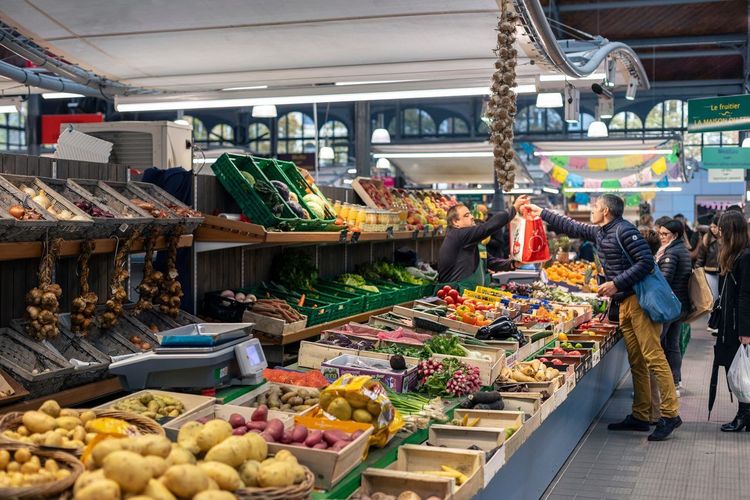
The marché de Wazemmes (Place de la Nouvelle Aventure, 59000 Lille, rated 4.3/5 on Google from 4,443 reviews), set on the Place de la Nouvelle Aventure, spreads its stalls from Tuesday to Sunday but peaks in energy on Sunday mornings. Spices, fresh fish, exotic fruits, and second-hand clothes mingle in a multicultural atmosphere quite unlike anything else in the North.
For children, the appeal lies mostly in the sensory abundance: the colours of the stalls, the traders' calls, the smell of doughnuts fresh out of the fryer. Bring some loose change to taste along the way — a cone of fries here, a sugar waffle there — before continuing into the neighbouring streets. The covered market, open throughout the week, extends the experience under shelter when rain shows up uninvited. The Wazemmes neighbourhood, long a working-class area and now very much alive, then lends itself to an aimless wander between community cafés, independent boutiques, and colourful façades.
The Grande Braderie de Lille, an Extraordinary Event
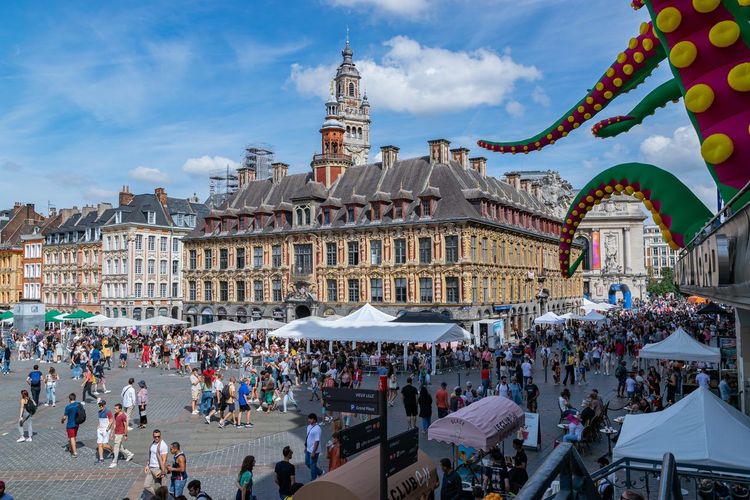
On the first weekend of September, the Braderie de Lille turns the entire city into an open-air flea market, with nearly 100 kilometres of pavements occupied by vendors. It is one of the largest outdoor second-hand markets in Europe, and tradition dictates that restaurant owners pile mussel shells outside their doors to compete for the tallest heap.
With young walkers in tow, it is best to aim for early Saturday morning or to stick to peripheral neighbourhoods like Wazemmes, which are less crowded than the city centre. The crowds can quickly become hard to manage with a pushchair: arrange a fixed meeting point if older children want to explore a few aisles on their own, and note a visible landmark — a belfry or a metro station — to regroup if you get separated.
The Christmas Market, December Magic
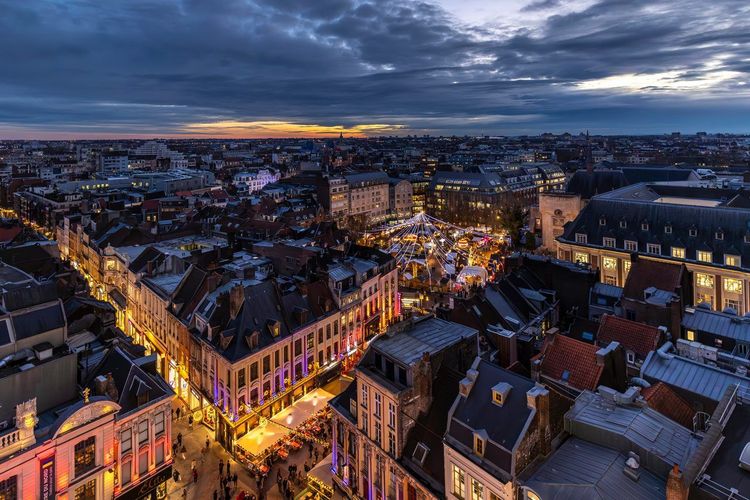
From late November to late December, the Grand-Place and the neighbouring esplanade host the marché de Noël de Lille, complete with a big wheel, a temporary ice rink, and wooden chalets smelling of mulled wine and hot waffles. Fairy lights transform the Flemish façades into a fairy-tale backdrop for the season.
Children make a beeline for the big wheel, which offers a night-time view over the rooftops of the Vieux-Lille, and for the ice rink set up nearby, generally accessible to beginners with penguin-shaped skating aids. Our article on events in Lille lists the exact dates and additional activities programmed each year across the neighbourhoods.
Parks and Squares for a Breather with Toddlers
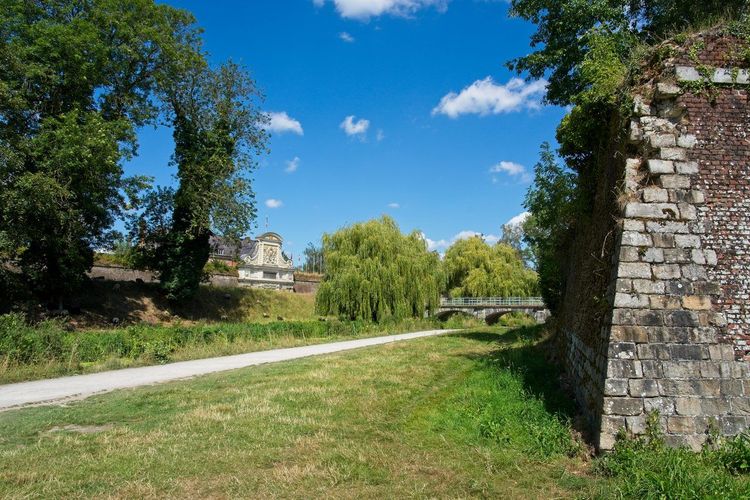
Between visits, Lille is full of small green spaces well suited to younger children. The Jardin Vauban (Boulevard Vauban, 59000 Lille, rated 4.4/5 on Google from 4,117 reviews), on the edge of the Citadelle, offers wide lawns, water features in summer, and enough space for a ball game without bothering anyone. Its puppet theatre, rooted in a long Lille tradition, delights the youngest visitors on certain afternoons.
The Champ de Mars, right in front of the Citadelle, also has play structures and a skatepark popular with teenagers. These two parks combine naturally with a trip to the zoo or a walk along the ramparts, allowing you to alternate cultural activity with quiet time without leaving the neighbourhood.
Shaded benches, drinking fountains, and public toilets are dotted along the route — a detail that matters when travelling with young walkers over a full day.
Street Art and Unusual Walks with Teenagers
The Wazemmes and Fives neighbourhoods are home to the majority of the city's murals, driven in part by the MUR collective, which regularly takes over new gable ends. For a teenager more interested in social media than traditional museums, an impromptu mural hunt often works far better than a conventional guided tour.
A simple downloaded map or a location app is all it takes to turn a one-hour walk into an urban treasure hunt, weaving between large colourful portraits and messages painted on the blank walls of residential buildings. Give everyone a photo challenge — a typically Flemish doorway, a mural, a vintage shop sign — and the walk becomes a spontaneous competition.
Day Trips around Lille: Villages and the Eurostar
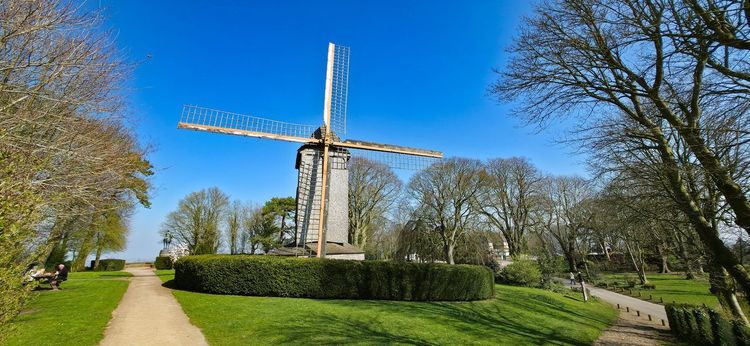
Lille enjoys a rare position in northern Europe: within less than an hour's drive, several villages listed among the most beautiful in France offer a timeless escape. Cassel (59670 Cassel), perched on its hill and known for its giants Reuze Papa and Reuze Maman, can be visited in half a day with its cobbled lanes and restored windmill.
Bergues, the fortified town made famous by the film Bienvenue chez les Ch'tis, and Douai, with its own belfry and municipal giants, round out a solid excursion programme. Our selection of the most beautiful villages around Lille and our guide to day trips around Lille detail journey times and activities suited to every age.
Another option for those who like to think big: Lille-Europe station puts London about 1 hour 20 minutes away by Eurostar, making a full day trip across the Channel entirely feasible. If that appeals for a future stay, our guide to London with kids is already there to help you plan.
A Day at the Seaside: Northern Beaches Less Than an Hour Away
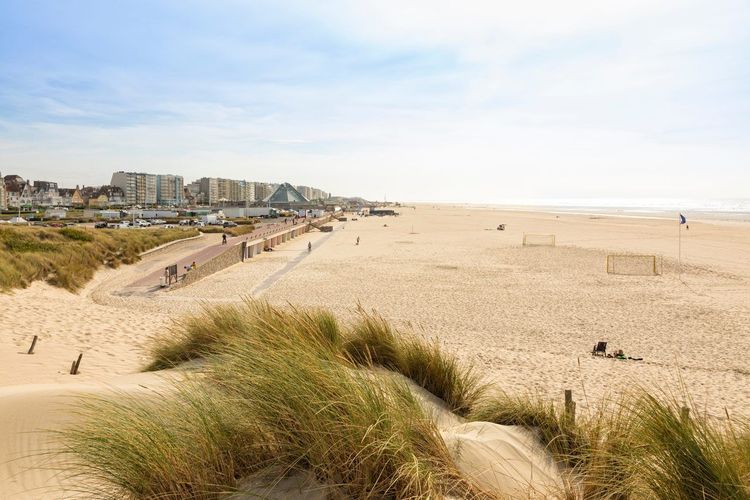
Lille has no beach, but the Côte d'Opale is never far away. Le Touquet-Paris-Plage (62520 Le Touquet-Paris-Plage), just under an hour's drive away, offers a wide, even stretch of sand perfect for land sailing or a simple game of beach tennis.
Malo-les-Bains, the seaside district of Dunkerque with its promenade and fine sandy beach, and Wissant, wilder and facing the cap Blanc-Nez, round out the options depending on the atmosphere you are after. Pack a wetsuit or a windbreaker even in summer: the North wind rarely gives warning. Our article on the beaches of Nord-Pas-de-Calais compares the different resorts by age group and available water activities.
Where to Stay without Overcomplicating Things
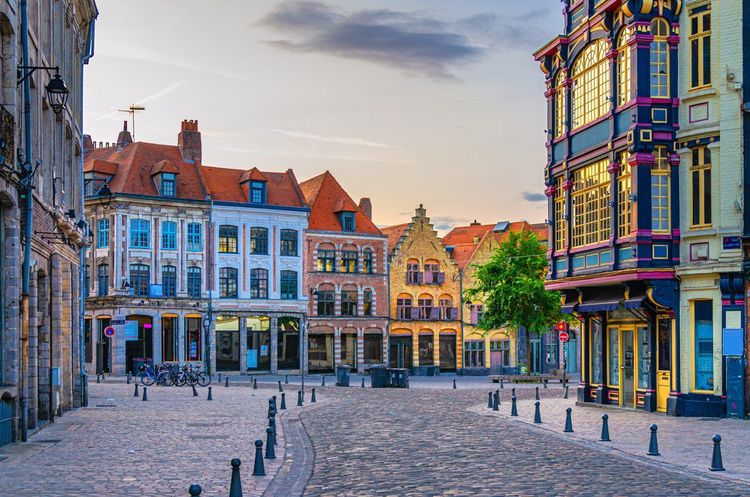
The Vieux-Lille charms with its character and immediate proximity to the Grand-Place, but cobbled streets and accommodation often located on upper floors without lifts can make life tricky with a pushchair. The Euralille district, around the two railway stations, offers more apart-hotels with kitchenettes — a real advantage for making your own breakfast or warming a bottle.
For a stay of several nights, residences with a fitted kitchen noticeably reduce the food budget, bearing in mind that Lille is a city where you walk a great deal. Any booking within a 15-minute walk of the Grand-Place guarantees quick access to most of the sites mentioned above, cutting down on tiring journeys at the end of the day for the youngest members of the group.
The City Pass Lille, the Budget-Saving Tip
The City Pass Lille bundles access to around thirty museums and attractions along with unlimited use of public transport, for a period of 24, 48, or 72 hours. For a stay that combines a museum, the zoo, and the belfry over two days, the savings often comfortably exceed the price of the pass, especially once metro tickets are factored in.
Children under 6 are generally admitted free to most sites, which reduces the calculation to make before purchasing. The pass can be collected at the tourist office on the Grand-Place or bought online — worth sorting the day before so you don't lose time on your first morning.
Getting around Lille without the Stress
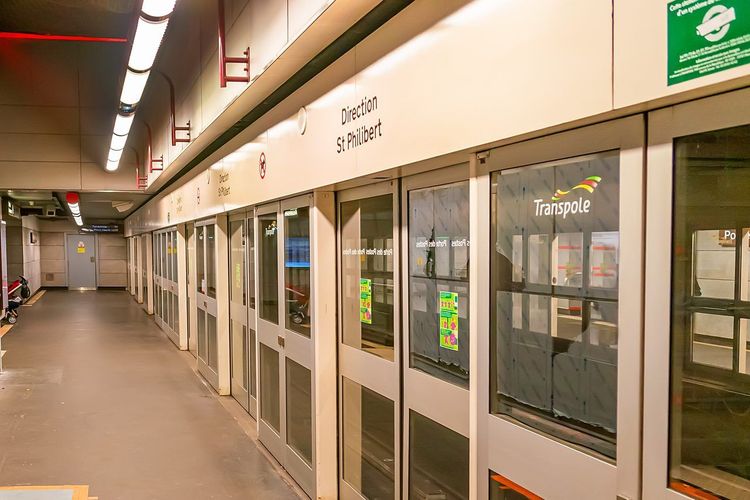
Lille boasts one of the world's first fully automated metro systems, the VAL, which runs without a driver. A detail that changes everything with young passengers: the spot at the front of the first carriage, with its unobstructed view of the tracks, quickly becomes the most sought-after seat on the journey.
The city is also compact: the majority of the sites mentioned in this guide can be reached on foot in under 20 minutes from the Grand-Place. The tram extends the network to outlying towns such as Villeneuve-d'Ascq, useful if you are planning a trip to the LaM or to a leisure centre further out. A rechargeable transport card for the whole group makes coming and going straightforward without needing to buy individual tickets. Most stations are equipped with lifts — a welcome feature with a pushchair — and the network runs late into the evening, including at weekends, giving you plenty of time to linger at the Christmas market without watching the clock.
When to Go and How Much to Budget
Spring and early autumn offer the best weather compromise for combining parks and outdoor walks without enduring winter gloom or summer crowds. September adds a compelling bonus with the Braderie, while December suits a more urban and cultural stay centred on the Christmas market.
On the budget side, allow between 150 and 250 euros per day for four people, covering accommodation and meals but not transport — a figure that drops noticeably thanks to the many freely accessible parks and free museum admission for minors. A cone of fries, a shared waffle, and a picnic at the Citadelle do the rest: Lille is a city to savour without breaking the bank.



FAQ
How many days should you plan to visit Lille with young children?
Two full days are enough to cover the Vieux-Lille, the belfry, a museum, and the zoo. Three to four days leave room for a trip to a nearby village or a day at the seaside.
Is the Lille zoo free?
Not quite anymore: since 2017, admission is charged, around 6 euros per adult and 3 euros for children aged 5–17. It remains free for children under 5 and for Lille residents holding the Pass Lille&Moi. The zoo also closes in winter and generally reopens from March to November.
Which museums are free for minors in Lille?
The Palais des Beaux-Arts and the Muséum d'histoire naturelle offer free admission to under-18s, which significantly reduces the cost of a stay.
What is the best neighborhood to stay in with young travelers?
Euralille and the area around the Grand-Place remain the most practical choices, combining proximity to attractions with easy access to public transport.
What is there to do in Lille on a rainy day?
The Muséum d'histoire naturelle, the Palais des Beaux-Arts, and the zoo's vivarium all offer suitable indoor visits that can be combined depending on the children's ages.
Is Lille suitable for a trip with very young travelers?
The compact city, numerous parks, and free admission at several sites for children under 6 make it a destination well suited to strollers and impromptu naps on a shaded bench.
Can you visit Lille without a car with young children?
Yes, the VAL automatic metro and the tram network cover most needs, including excursions to Villeneuve-d'Ascq or neighboring towns.
Heading to Lille for Your Next Getaway
Between its Flemish squares, its Sunday market, and its timeless neighbouring villages, Lille holds its own comfortably against more obvious destinations. The city lends itself just as well to a quick weekend as to a week-long stay punctuated by excursions to the Côte d'Opale or the Flemish heartland, without ever requiring long journeys.
To plan your visit and connect all these places without losing time between stops, Ryo's audio-guided tour of Lille remains the simplest companion: it whispers the story of the belfry, the ramparts, and the Vieux-Lille in your ear while the children look on wide-eyed.
À lire également