© Shutterstock
 Votre guide Ryo
Day Trips around Lille: 12 Ideas to Escape the City in 2026
Lille may be one of the liveliest cities in northern France, but there comes a time when you feel the urge to get some fresh air, change your surroundings, and slow down. The good news: within a 100 km radius of Lille, the density of destinations is truly exceptional. World-class museums, medieval Belgian cities, slag heaps listed as UNESCO World Heritage Sites, cliffs battered by the English Channel — every day trip around Lille is a discovery in its own right.
This guide covers 12 destinations, from a quick one-hour outing to a full day. In Roubaix, the Art Deco Piscine houses one of the most surprising sculpture collections in France. In Lens, the Louvre-Lens has transformed a former mining site into an internationally renowned museum. In Belgium, less than 30 km away, Gand and Courtrai offer an immersion in Flemish art without a passport. And for those who love the great outdoors, the Côte d'Opale and the Baie de Somme are less than two hours' drive away. To explore Lille itself before heading out, the Ryo audio guide tour of Lille is an ideal starting point — 22 audio stops, 6 km, 2h30 of discovery.
Roubaix: La Piscine and Villa Cavrois
Just 12 km from Lille, Roubaix is often the first stop for curious visitors. You might expect a sleepy industrial city resting on its textile past, yet two sites make Roubaix an outstanding cultural destination.
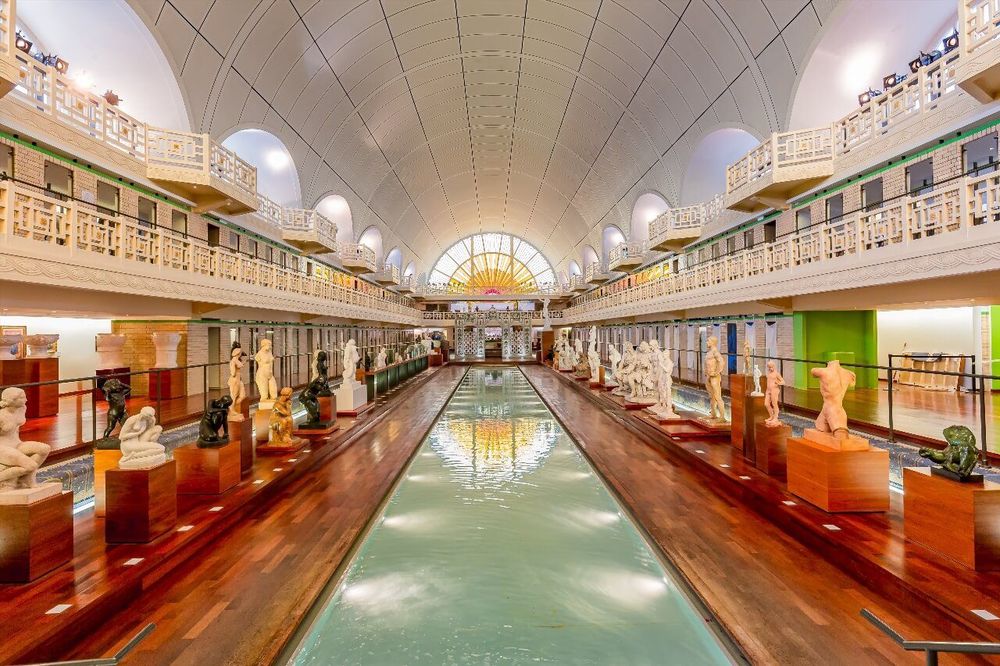
La Piscine de Roubaix is simultaneously a fine arts museum, a decorative arts museum, and a listed Art Deco swimming pool. Built between 1927 and 1932 by architect Albert Baert, it was converted into a museum space between 1994 and 2001 under the direction of Jean-Paul Philippon. What strikes visitors most is the spatial arrangement: the sculpture collections are displayed in the former swimming pool, where swimmers have been replaced by bronzes and marbles. The light filtering through the zenith skylights does the rest. More than 23,000 works are spread across the spaces — paintings, ceramics, textiles, and jewellery.
Admission costs €7 for adults, less for students and under-18s; the museum is closed on Mondays. Allow two to three hours on site, especially if you are interested in the textile section — the archives of northern French haute couture houses are remarkably well presented there.
2 km from La Piscine, the Villa Cavrois (60 Avenue John Fitzgerald Kennedy, 59170 Croix, rated 4.7/5 on Google with 5,384 reviews) is a masterpiece of modernism designed by Robert Mallet-Stevens, built in 1932 for a textile industrialist. The yellow brick façade, the entirely redesigned interiors based on functionalist design principles, and the geometric garden all combine to make this visit a rare architectural experience. The Centre des monuments nationaux carefully restored the villa; it has been open to the public since 2015.
Right next door, the Parc Mallet-Stevens extends the design atmosphere with its tree-lined paths and play areas. A good option to unwind after visiting the villa. Allow a full day for Roubaix by combining both sites.
Lens: the Louvre-Lens and the Mining Basin Slag Heaps
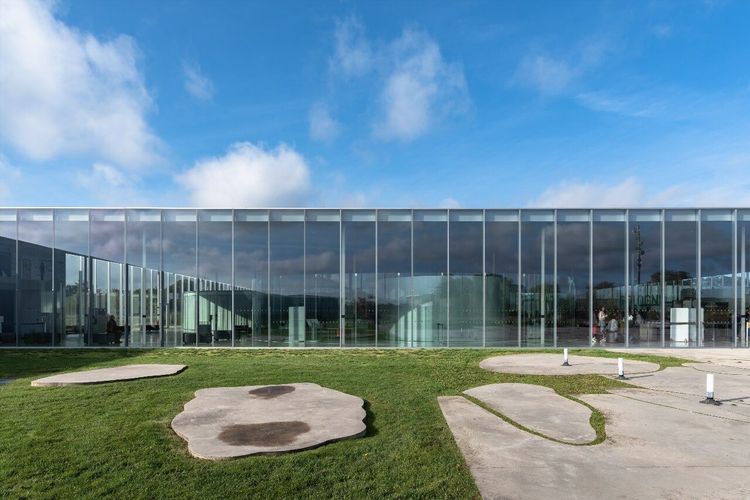
38 km separate Lille from Lens — less than 40 minutes by car, just over an hour by regional train. The city owes its cultural renaissance to a bold decision made in 2004: establishing a branch of the Louvre museum on a former mining site.
The Louvre-Lens opened its doors in December 2012. The building, designed by Japanese firm SANAA, is a long band of glass and aluminium set at ground level between the preserved former industrial halls. Permanent admission to the Galerie du Temps, which presents 205 works in continuous rotation from the Louvre in Paris, is free. Temporary exhibitions are ticketed (between €10 and €13), but they are often exceptional — the programming has been ambitious since opening.
Around the museum, the Parc du Louvre-Lens invites visitors to stroll across the former revegetated slag heaps. The region's slag heaps are also central to another essential site: the Nord-Pas-de-Calais Mining Basin, listed as a UNESCO World Heritage Site in 2012. The twin slag heaps of Loos-en-Gohelle, the tallest in Europe at 186 metres, can be seen from dozens of kilometres around. They can be climbed on foot for a striking panoramic view over the plain.
To round off the day, the Centre Historique Minier de Lewarde (Fosse Delloye, 59287 Lewarde, rated 4.7/5 on Google with 8,246 reviews), about twenty kilometres from Lens, is the largest mining museum in France. Guided tours through reconstructed galleries and preserved period machinery make this a rich, well-documented experience — particularly worthwhile if visiting with children or teenagers.
Arras: the Baroque City of Grand Squares
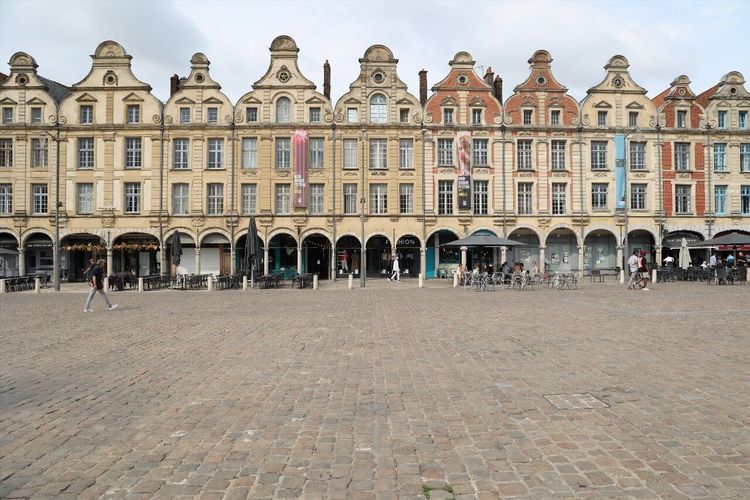
50 km south of Lille, Arras is one of the most coherent destinations in the region. Its twin grand squares, the Grand-Place and the Place des Héros, are unique in France and rank among the finest Flemish Baroque architectural ensembles in Europe. The gabled façades and 345 arcades that line them were entirely rebuilt after the First World War, but with remarkable architectural fidelity.
Beneath these squares, a network of underground passages — the "boves" — stretches over several kilometres. These cellars carved into the chalk as far back as the Middle Ages were used for trade, then served as shelters and military hospitals during the Great War. The guided tour of the boves (ticketed, around €7) descends 8 metres below the square — a striking contrast between the Baroque lightness above and the chalky darkness below.
Arras is also a city of remembrance. The Mémorial de l'Anneau de la Mémoire (Chemin des Étangs, 62153 Notre-Dame-de-Lorette, rated 4.8/5 on Google with 1,316 reviews) at Notre-Dame-de-Lorette, about ten kilometres from Arras, is the largest French military cemetery. The elliptical ring in Corten steel, inaugurated in 2014, bears the engraved names of 576,606 soldiers of 40 nationalities who fell in the region, regardless of nationality, rank, or religion. It is a sober, powerful place that deserves a visit even if only briefly.
For lunch, the brasseries under the arcades of the Grand-Place serve local specialities — Welsh rarebit (cheddar and beer fondue), moules-frites, and regional craft beers. Allow a full day for Arras.
Dunkerque: Harbour, Beach, and History
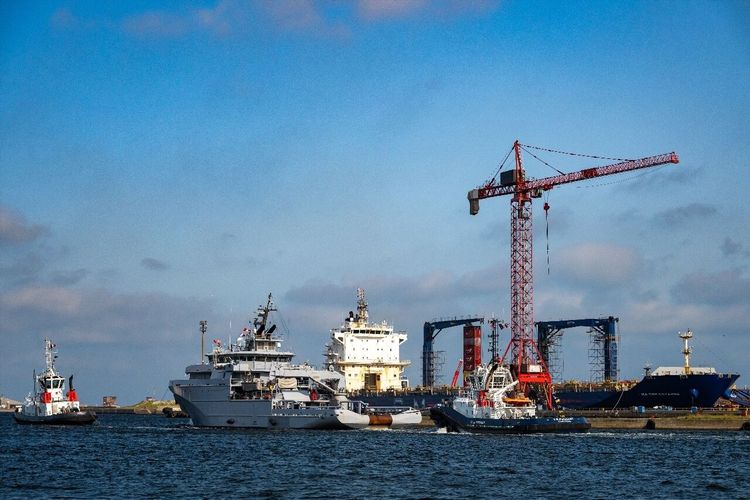
At 75 km from Lille, Dunkerque is a city that surprises. People often arrive with the image of an industrial port and the 1940 evacuation, and leave with something else entirely: a vibrant city open to the sea, home to a remarkable fine arts museum and a carnival that is anything but trivial.
The LAAC (Lieu d'Art et Action Contemporaine) is one of the most singular museums in northern France. Its permanent collection, housed in a 1970s building surrounded by a sculpture garden, covers art from the 1950s to the 1980s. Names such as Karel Appel, Pierre Alechinsky, and Jean Dubuffet sit alongside lesser-known artists — the selection is discerning and the spaces airy.
The Musée Portuaire traces the city's maritime history with ship models and a museum barge moored in the dock. For children, it is often the highlight of the day. And if you want sea air, the beaches of Malo-les-Bains, east of the port, stretch for several kilometres — fairly wild, windy, with a particular quality of light in the late afternoon.
A special mention for the Dunkerque carnival: it takes place between January and March and attracts between 80,000 and 100,000 participants each year. It is one of the largest carnivals in France, older than the one in Nice, and its unique atmosphere — herrings thrown from balconies, brass bands in the streets — is well worth the trip if you are available in winter.
Gand: the Ultimate Flemish Getaway
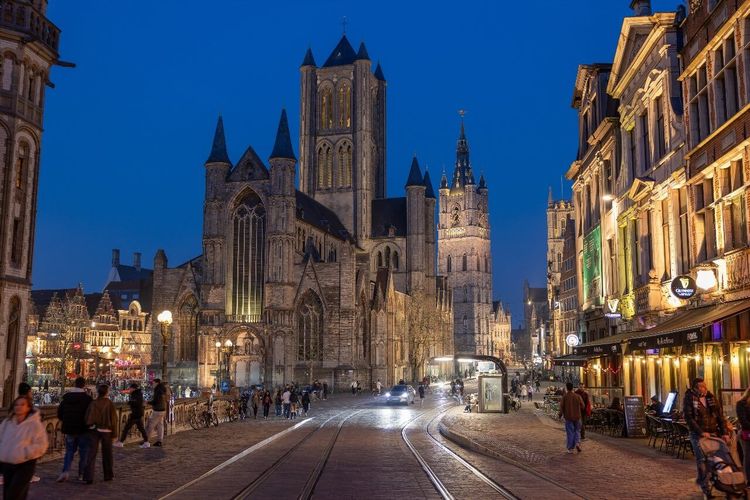
At 56 km from Lille, Gand (Gent in Dutch) is the most complete Belgian destination within reach of Lille. Belgium's third city and the historic seat of the Counts of Flanders, it combines an exceptional medieval heritage, a contemporary arts scene, and an authentic neighbourhood life that escapes the over-tourism of Bruges.
The Château des Comtes de Flandre (Gravensteen) has dominated the historic centre since the 12th century. Its castle silhouette, with its 24 towers, is the symbol of the city. Inside, exhibitions trace the history of the Counts of Flanders and display a collection of torture instruments — a section that greatly amuses children and intrigues adults.
The Cathédrale Saint-Bavon (Sint-Baafsplein 1, 9000 Gent, Belgium, rated 4.7/5 on Google with 14,104 reviews) houses one of the masterpieces of European painting: the Ghent Altarpiece (Adoration of the Mystic Lamb) by Jan and Hubert van Eyck, painted between 1426 and 1432. The polyptych is displayed in a dedicated room with a specially designed lighting system to reveal the details. Admission is ticketed for this specific chapel (around €5), but the rest of the cathedral is free.
To get around Gand, the tram is efficient. But the best way to explore the Graslei and Korenlei quaysides — the two canal banks lined with medieval guildhalls — remains on foot or by boat. 40-minute cruises depart from the Korenlei and allow you to glimpse the hidden courtyards and gardens concealed behind the street-facing façades. Plan a full day, or even an overnight stay to enjoy the gastronomic scene — Gand is renowned for its vegetarian restaurants and its Thursday morning market.
Courtrai (Kortrijk): Belgium at 30 km
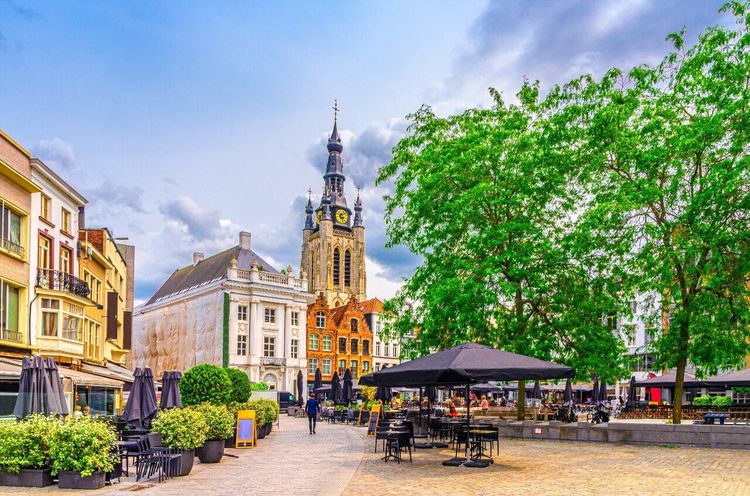
Courtrai, in Dutch Kortrijk, is just 30 km from Lille — less than 30 minutes by car, an hour by train. It is often the first Belgian getaway for people from Lille, and for good reason: the city is compact, well preserved, and its history is closely intertwined with that of the region.
The Battle of the Golden Spurs, fought in 1302, saw Flemish infantry militias defeat the French cavalry — an event that Belgium long celebrated as a symbol of independence. The interactive museum Kortrijk 1302 retraces this history through a collection of goldsmithery, damasks, and immersive reconstructions of the battle; the collection is now presented at the Church of Our Lady, where the Counts' chapel regularly transforms into a sound-and-light show.
The Beffroi de Courtrai (Grote Markt, 8500 Kortrijk, Belgium, rated 4.3/5 on Google with 910 reviews), listed as a UNESCO World Heritage Site alongside the other belfries of Belgium and France, dominates the Grand-Place. From its summit (reached on foot, around 200 steps), the view takes in the Flemish plain and the city's rooftops. The Grand-Place itself is a pleasant spot for a coffee while watching local life unfold — Belgians have a real talent for square-side brasseries.
Courtrai is particularly well suited to a half-day visit: enough to see the essentials, not so much that you feel rushed. Combine it with Gand or Ypres if you want a full day in Belgium.
Ypres: the Paths of Memory
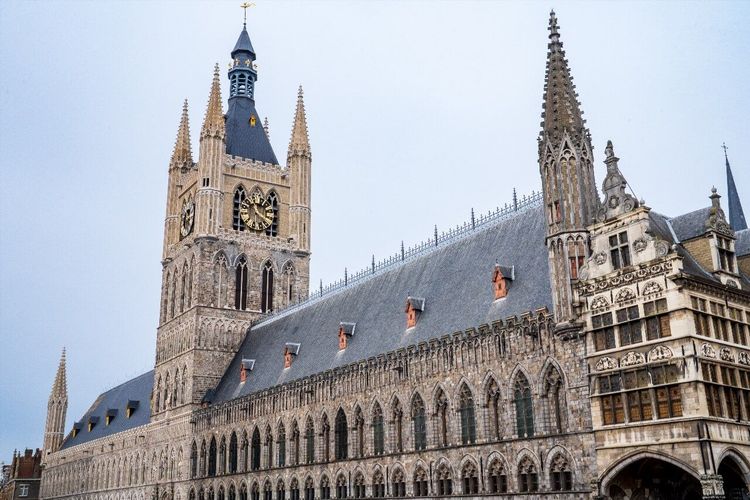
At 60 km from Lille, Ypres (Ieper in Dutch) is a Belgian city that carries a particular historical weight. Entirely destroyed during the First World War — the Yser front ran just a few kilometres from the city for four years — it was rebuilt identically after 1918. What is striking is the quality of that reconstruction: the Cloth Hall and the Cathedral of Saint Martin give the Grand-Place a medieval coherence rarely associated with a city rebuilt in the 20th century.
The In Flanders Fields Museum (Grote Markt 34, 8900 Ieper, Belgium, rated 4.6/5 on Google with 7,690 reviews), housed in the Cloth Hall, is one of the finest Great War museums in Europe. The approach is personal and immersive: each visitor receives a wristband linked to a character (soldier, nurse, civilian) whose fate they follow throughout the visit. Allow a minimum of 2 hours for the visit.
Every evening at 8 pm, the Last Post Ceremony takes place beneath the Menin Gate — since 1928, except during the occupation of 1940–1944. The names of 54,896 Commonwealth soldiers who went missing in the region are engraved on the gate. The ceremony lasts around twenty minutes; it draws dozens of people every evening and remains a moment of striking solemnity.
The surroundings of Ypres are dotted with military cemeteries — more than 150 within a 20 km radius. The walk between Tyne Cot, the largest Commonwealth military cemetery in the world, and the fields of Passchendaele gives a concrete sense of the scale of the conflict.
The Côte d'Opale: Boulogne-sur-Mer and Cap Gris-Nez
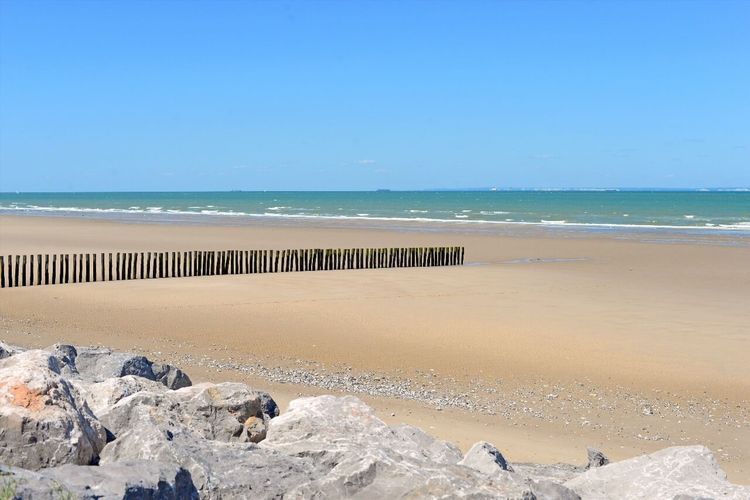
The Côte d'Opale starts less than 100 km from Lille — an hour and fifteen minutes by car. The light there is unique, ranging from pearl grey to blue-green depending on the tides, which explains why Turner, Boudin, and Monet made the journey here. The white chalk cliffs, grassy dunes, and ever-present sea offer a complete change of scenery from the Lille plain.
Boulogne-sur-Mer is the logical entry point. The Ville Haute, a 13th-century fortified enclosure, brings together a cathedral, a belfry, and cobbled streets within a compact perimeter. Below, Nausicaá, the National Sea Centre, is the largest aquarium in Europe with 58,000 animals in its tanks. It is the essential stop with children.
At 25 km north of Boulogne, Cap Gris-Nez (Route du Cap, 62179 Audinghen, rated 4.7/5 on Google with 8.2K reviews) is the point of France closest to England — 33 km separate the French coast from the British coast on a clear day. The coastal path (GR120) follows the cliffs and allows you to watch cargo ships navigating one of the busiest shipping lanes in the world. The cape's lighthouse is still in operation; the surrounding area offers views of the white cliffs of Kent in fine weather. Back in Lille, Ryo's audio-guided tour of the Flanders capital is a good way to round off this stretch along the Côte d'Opale.
For those who wish to extend their stay, the beaches of Nord-Pas-de-Calais provide a complete map of the region's seaside spots, from Wimereux to Dunkerque.
Cassel and the Monts de Flandre
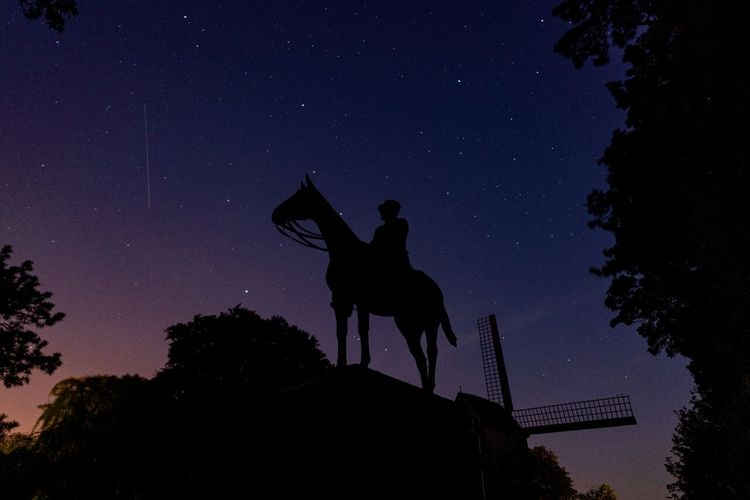
Cassel, 50 km northwest of Lille, was voted "France's Favourite Village" in 2018 and the enthusiasm has not waned since. Perched on an isolated hill rising from the Flemish plain, the Mont Cassel reaches 176 metres — the town offers a 360° panorama over French and Belgian Flanders that comes as a surprise in such a flat landscape.
Cassel's historic centre is pleasant to explore on foot: its cobbled lanes, the Collégiale Notre-Dame, and the Grand-Place surrounded by 17th- and 18th-century Flemish houses form a coherent picture. The Moulin de Cassel (Rue Saint-Nicolas, 59670 Cassel, rated 4.5/5 on Google with 83 reviews), which crowns the hill, is one of the few working windmills in the region.
The surrounding Monts de Flandre — the Mont des Cats, the Mont Noir (where Marguerite Yourcenar lived), the Mont Kokeberg — can be explored by bike or on foot, with waymarked trails accessible to all levels. This area is also known for its brewery abbeys: the beer from the Abbey of Mont des Cats can be enjoyed on site in a serene setting. A half-day in Cassel, completed with a walk in the Monts, makes for a well-balanced outing combining culture and nature.
La Baie de Somme
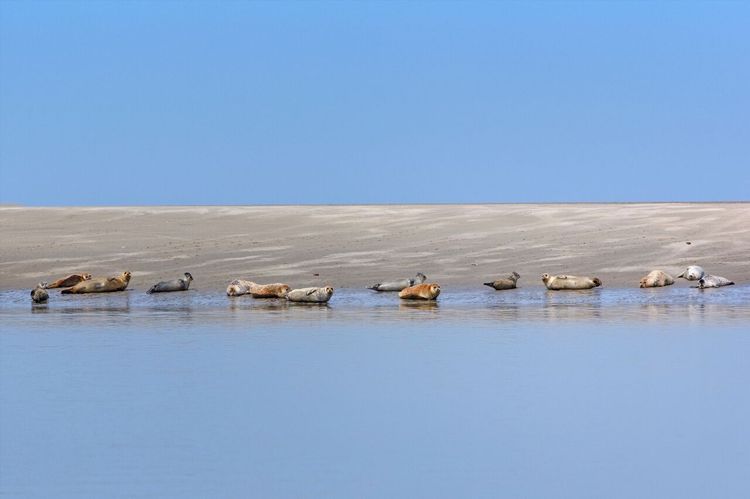
At 130 km southwest of Lille — about 1h30 by road — the Baie de Somme slightly exceeds the 100 km radius, but is well worth the trip for a one- or two-day escape. It is one of the most spectacular natural sites in northern France: a bay of 70 km² whose waters and mudflats change colour and shape with every tide.
The village of Le Crotoy on the northern side of the bay, and Saint-Valery-sur-Somme (80230 Saint-Valery-sur-Somme, rated 4.5/5 on Google with 3.4K reviews) on the southern side, are the two usual anchor points. Saint-Valery retains a medieval upper town with its ramparts, half-timbered houses, and views over the bay. Crossing the bay on foot with a guide is one of the area's signature activities — the incoming tide can be fast, and an accredited guide is mandatory for this hike.
The Réserve naturelle de la Baie de Somme is one of the most important birdwatching sites in Europe. Grey seals and common seals can regularly be spotted on the sandbanks. The Marquenterre, an ornithological park at the entrance to the bay, welcomes hundreds of migratory bird species — ideal in spring and autumn.
For railway enthusiasts, the Chemin de Fer de la Baie de Somme, one of the last steam railways in France, connects Le Crotoy, Noyelles-sur-Mer, and Saint-Valery. A 35-minute journey through the marshes with views over the bay — and one that is accessible to all.
Villages and Walks: Wambrechies, Douai, Montreuil-sur-Mer
Three lesser-known destinations deserve a mention for outings around Lille without having to travel dozens of kilometres.
Wambrechies, just 9 km from Lille, is a typical village of inner Flanders with its 17th-century château and its genever distillery — the only one still operating in the region. A visit to the Claeyssens distillery, listed as a historic monument, offers a rare glimpse into a centuries-old artisan production. The village is ideal for a two-hour bike ride from Lille.
Douai, 35 km south of Lille, is known for its UNESCO-listed belfry and above all for Gayant, its folkloric giant who has paraded every July since 1530. The old town retains fine Flemish façades and the Musée de la Chartreuse, housed in a former abbey, holds a fine collection of paintings from northern France and Flanders.
Montreuil-sur-Mer, 90 km from Lille, has not been by the sea for centuries (the silting up of the Authie pushed the shoreline away), but its Vauban citadel and near-intact ramparts make it one of the best-preserved fortresses in northern France. Victor Hugo stayed here and drew inspiration from it for Les Misérables. Walking the ramparts offers a peaceful view over the plain and the gardens below.
If you would like to discover more villages in the region, the article on the most beautiful villages to visit around Lille lists the best addresses by distance.
How to Organise Your Getaways from Lille
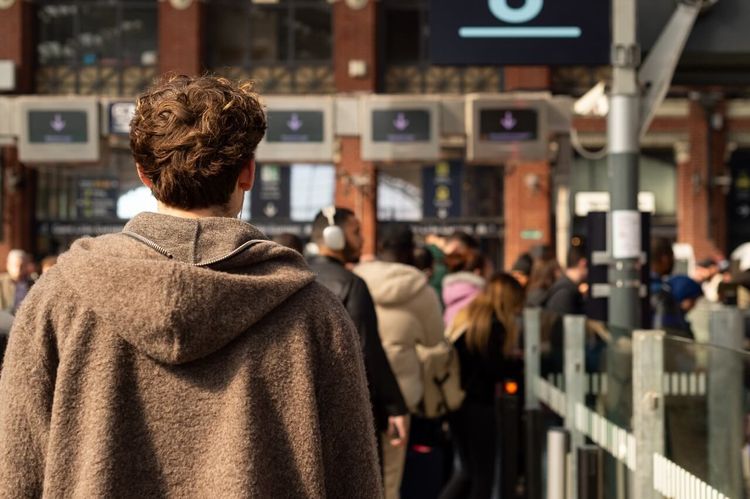
Lille is a remarkably well-connected starting point. The Lille-Europe and Lille-Flandres stations serve TGV, Thalys (now Eurostar), Intercités, and TER trains — you can reach Arras in 25 minutes, Lens in 35 minutes, Boulogne-sur-Mer in 1h15, and Gand in 50 minutes by rail, without changing trains.
For Belgian destinations, the direct Lille–Gand train runs several times a day from Lille-Europe. Courtrai is also reachable without a car from Lille-Flandres. Ypres, however, requires a connection or a car — the city is less well served by rail from Lille.
For coastal destinations (Boulogne, Côte d'Opale, Baie de Somme), a car remains the most practical way to explore the coastline freely. Renting a vehicle for a weekend is often the most flexible solution, especially if you are planning several stops.
If you are planning to start your getaway with Lille itself, the Ryo audio guide of Lille — available here with 23 audio stops and a 6 km route — will let you discover the city before heading out to the surrounding area. It can be downloaded in advance and works offline, making it easy to head straight on to an excursion to Roubaix, Lens, or Arras. For events and outings in Lille ahead of your trip, the article on events in Lille is regularly updated.
FAQ
What is the easiest destination to reach from Lille by public transport?
Roubaix is the most accessible: the Lille metro (line 2) connects Lille directly to Roubaix in 20 minutes from the République-Beaux-Arts station, at a standard urban transport fare. No car needed, no transfers. Arras is also very well served by regional trains from Lille-Flandres (25 min). For Belgium, Gand can be reached by direct train from Lille-Europe in under an hour.
What day trip would you recommend for a family day out with children?
Lens and the Louvre-Lens are the best option: permanent admission is free, the Parc du Louvre-Lens is spacious, and the Centre Historique Minier de Lewarde (20 min away) offers guided tours that children love. Another option: Boulogne-sur-Mer with Nausicaá, the largest aquarium in Europe, though that involves around 1h15 of driving from Lille. La Baie de Somme and the Parc du Marquenterre also work well if your children are interested in wildlife and nature.
Do you need a passport to travel to Belgium from Lille?
No. Belgium is part of the Schengen Area, just like France. A French national identity card is sufficient to cross the border, which is in any case imperceptible — there are no systematic road checks. For non-European nationals, check the Schengen Area entry requirements according to your nationality.
What is the best season to visit the Côte d'Opale?
The Côte d'Opale is beautiful in every season, but it feels different depending on the time of year. In summer (July–August), the beaches are busy and the coastal villages lively — book accommodation early. In spring and autumn, the light is often spectacular, the sites less crowded, and prices lower. In winter, the cliffs and windy beaches have something particularly striking about them — it is the favourite season for photographers and hikers. The sea is suitable for surfing and kitesurfing all year round.
What are the most charming villages to visit around Lille in half a day?
Cassel is the first name that comes to mind — its 360° panorama and Flemish architecture make it a destination in its own right. Wambrechies, just 9 km away, is ideal for a quick bike ride from Lille combined with a visit to the distillery. Montreuil-sur-Mer (90 km) justifies the trip for its intact Vauban ramparts. Hesdin, in the Sept Vallées, is less well known but charming, with its Grand-Place surrounded by Spanish arcades, a vestige of Habsburg rule in the 16th century.
Conclusion
From nearby Roubaix to the Baie de Somme, passing through the Belgian Flandres, the day trips around Lille form a remarkably varied spectrum. World-class museums, coastal landscapes, memories of the Great War, Flemish Baroque architecture, hilltop villages — each destination has its own depth.
Before heading out to explore the surroundings, our Lille audio walking tour offers 23 commented stops to help you get to know your starting city. The other activities in and around Lille complement this guide for those who wish to alternate between city outings and regional excursions.