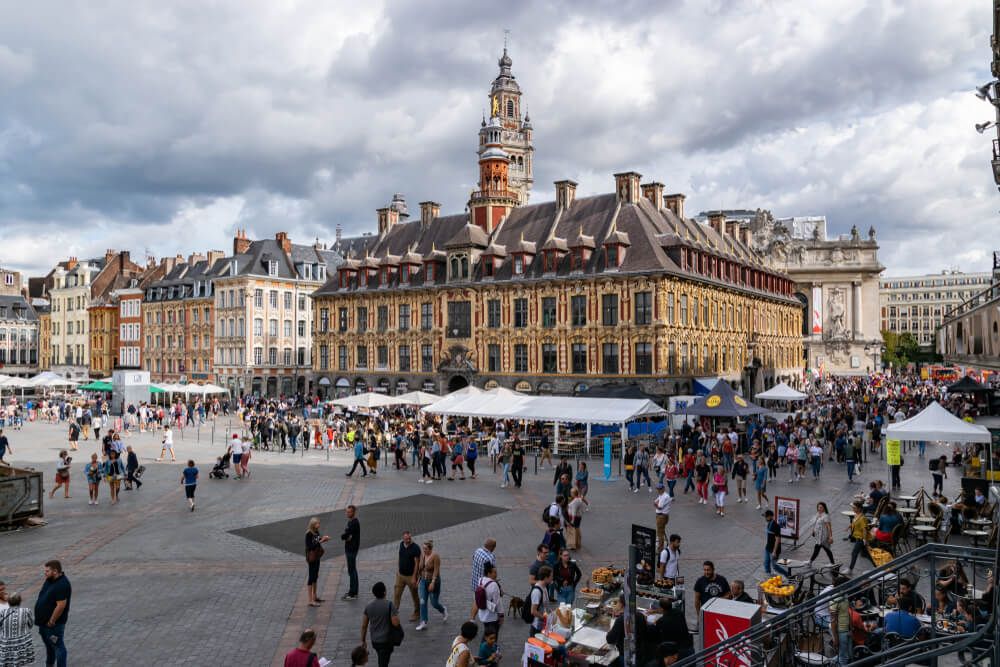
© Shutterstock
 Votre guide Ryo
The Most Beautiful Villages Around Lille: Getaways Within 1h30 (2026)
We tend to reduce the Lille region to its big cities — Douai, Arras, Lens. Yet the most beautiful villages around Lille hide less than an hour and a half from the metropolis: a dozen small towns concentrate what Flanders and Artois have that is most singular — red-brick belfries, Vauban ramparts, cobbled lanes that resist the passage of time and, sometimes, an improbable hill on an otherwise resolutely flat landscape. Bergues made the Flemish countryside famous on the big screen. Cassel was elected France's favourite village. Montreuil-sur-Mer raises its medieval towers 85 km to the south-west. These towns deserve far more than a rushed half-day: they deserve to be explored on foot, taking the time to look up.
This guide takes you to discover these villages, with the must-see spots, distances from the metropolis and tips for organising your getaway for each one. And if you want to explore Lille itself before heading out to discover its surroundings, the Ryo audio-guided tour of Lille takes you through the Grand-Place, the Vieux-Lille and the citadelle in 2h30 — 22 listening points so you miss nothing.
Bergues, the Village That Became a Big-Screen Star
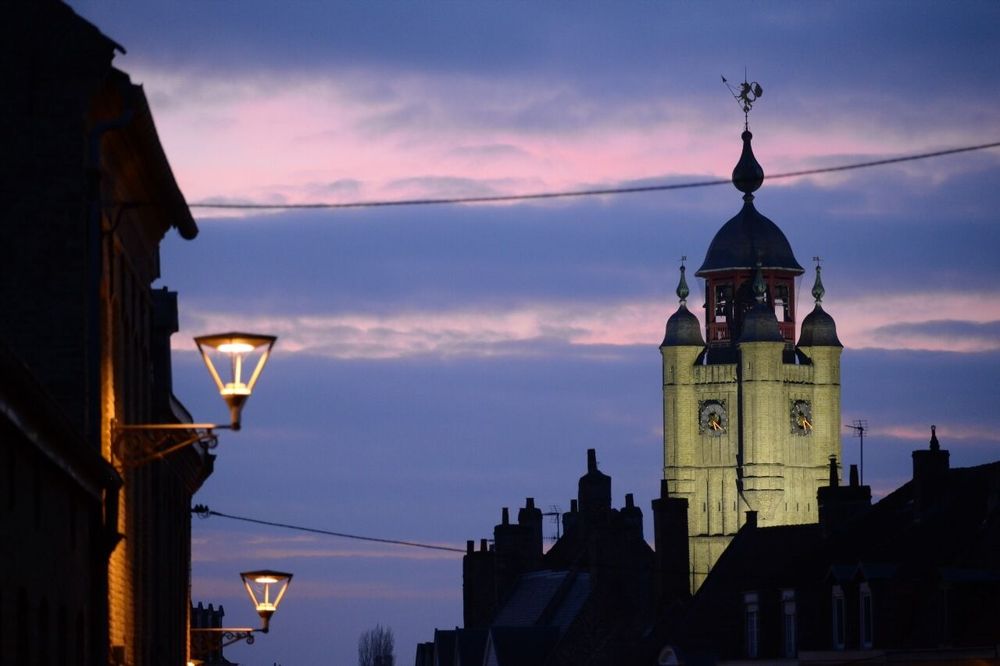
If you have seen Bienvenue chez les Ch'tis, you will immediately recognise the belfry of Bergues the moment you enter the village. This bell tower, whose four turrets were rebuilt in the 16th century, rises to 47 metres and dominates a small town enclosed within its 17th-century ramparts — fortifications designed by Vauban that have survived several wars with remarkable integrity. Bergues is 63 km north-west of Lille, approximately 45 minutes by car via the A25, or just over an hour by public transport via Dunkerque.
The town is surrounded by water: the moats fed by the Colme canal form a green belt that gives the walk along the ramparts a particular atmosphere, almost melancholic in autumn. The Porte de Cassel and the Porte Ferrée are the two medieval gateways still standing. Between the two, the main street is lined with Flemish brick houses with step-gabled façades — the emblematic architectural style of this part of France.
The Musée Municipal de Bergues (Place du Marché au Beurre, 59380 Bergues, rated 4.3/5 on Google from 64 reviews) is worth an hour's visit for its collections of Flemish paintings and film memorabilia. But the best of Bergues happens outside: climb the ramparts at sunset, walk along the moats to the moulin de Bergues — one of the few working mills in the Nord — and finish with a regional beer at the village brewery. On weekdays out of season, you will have the lanes to yourself.
Cassel, Perched on Its Hill in Flanders
You have to pause for a moment when you reach the summit of the hill of Cassel and look around. On a clear day, you can make out the English coastline to the west. Belgium stretches out to the east. It is one of the most spectacular panoramas in the region, and it is 58 km from Lille — fifty minutes by car. Cassel, elected France's favourite village in 2018, fully deserves its reputation.
The village is built on an isolated mount rising to 176 metres — the highest point of the Monts de Flandre and a geological anomaly in an otherwise perfectly horizontal landscape. This commanding position explains its strategic importance through the centuries: Cassel saw Charles V, Louis XIV and First World War generals pass through. The Grand-Place retains its 17th- and 18th-century Flemish houses with brick façades and double-pitched roofs. The moulin de Cassel (Rue du Moulin, 59670 Cassel, rated 4.5/5 on Google from 83 reviews), set on the northern ramparts, is one of the village's emblems.
For walkers, the circuit around the hill along the sunken lanes takes about two hours and offers changing views at every bend. The Musée de Flandre, housed in a townhouse in the centre, presents the artistic and cultural history of inland Flanders with a quality collection. Allow a full day to take it all in, and book a table for lunch — several restaurants in the centre serve Flemish specialities (waterzoï, carbonnade) that you will scarcely find elsewhere in France.
Esquelbecq, a Jewel of Flemish Brick
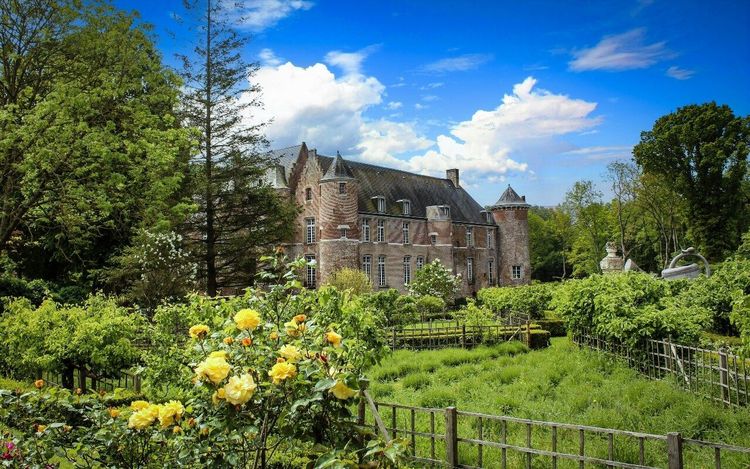
Less well known than Bergues or Cassel, Esquelbecq is nonetheless one of the best-preserved villages in inland Flanders. At 43 km from Lille (around 45 minutes), this village of 2,000 inhabitants boasts a remarkable architectural ensemble centred on its château and church. The château d'Esquelbecq, a fortress built at the end of the 16th century on medieval foundations, stands with its round towers and wide water-filled moats — one of the few fortified châteaux still standing in the Nord.
The village square forms a coherent ensemble with the church of Saint-Folquin (Place du Village, 59470 Esquelbecq, rated 4.6/5 on Google from 49 reviews), built in Flemish brick, and the low houses surrounding it. On Sunday mornings, the local market sets up its stalls here — this is the best moment to experience the authentic life of the village, far from mass tourism. Craft beer enthusiasts will be delighted: the Esquelbecq area is the home of bières de garde, and several farm breweries nearby offer visits and tastings.
The village is also a good base for exploring the surroundings: Wormhout and its windmills, Steenvoorde with its folkloric giant, or the Forêt de Nieppe just a few kilometres away. If you visit in summer, check the calendar of Flemish festivals — the ducasses and giant processions bring these villages to life in a way quite unlike anything else in France.
Gravelines, a Fortified Town by the Sea
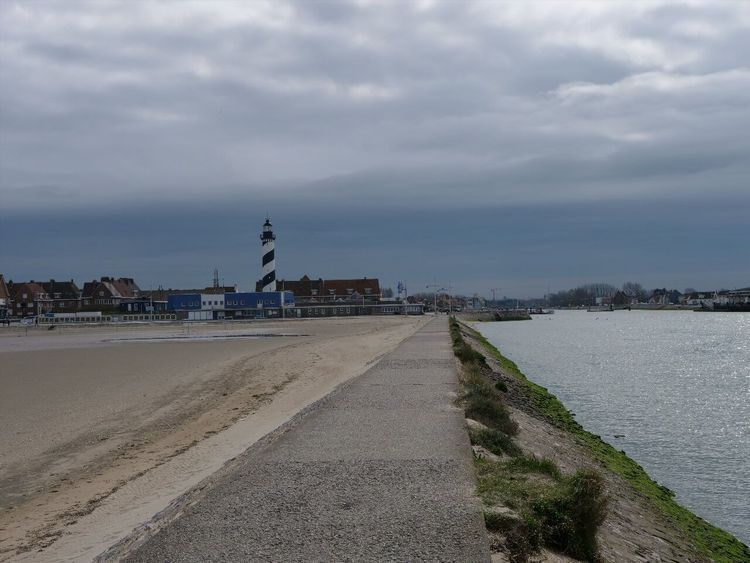
Halfway between Calais and Dunkerque, Gravelines occupies a special place in this tour of Flemish villages: it is a fortified town at the mouth of the Aa, with an active marina and a beach. Allow 68 km from Lille (less than an hour by car) to reach this jewel of 17th-century military architecture.
The fortifications of Gravelines are among the best-preserved examples of Vauban's work in France. The star-shaped citadel, the demi-lunes, the water-filled ditches and the curtain walls form an ensemble that can be visited on foot along a circuit of around 2 km. The arsenal, at the heart of the fortress, today houses a cultural space and a museum of drawing and printmaking — a surprising collection for a town of this size, with works by Picasso, Matisse and Chagall.
The marina at Grand-Fort-Philippe, 2 km away, rounds off the visit nicely: this is where fishermen sell their daily catch directly from the quayside. In summer, the beach at Gravelines-Petit-Fort-Philippe draws Lille families in search of sea air. Combine Gravelines with Bergues on the same outing — the two towns are just 25 minutes apart.
Montreuil-sur-Mer, the Carcassonne of the North
The nickname is deserved. Seen from the ramparts, Montreuil-sur-Mer does indeed look like a medieval fortress perched on a limestone outcrop, surrounded by crenellated walls and round towers. The irony is that it is 85 km from Lille and 12 km from the sea — Montreuil-sur-Mer has not been on the sea since the Canche carved its valley and the land reclaimed the estuary. But the name has stuck, and it will set you on the path to the anachronistic charm that reigns here.
Victor Hugo set a scene from Les Misérables in Montreuil, and Sterne described its ramparts in his Sentimental Journey in the 18th century. The citadelle de Montreuil, built and rebuilt from the 12th to the 17th century, dominates the upper town. The walk around the ramparts (under 1 km) offers views over the Canche valley and the wet meadows of the Marquenterre. Below, the rue du Clape-en-Bas with its half-timbered houses is one of the most photographed streets in Artois.
Montreuil has several quality restaurants, including a former coaching inn converted into a gastronomic table. The neighbouring village of Hesdin, 30 km away, rounds off the excursion nicely with its château and Renaissance town centre.
Bailleul and the Montagne de Flandre
Between Lille and Ypres (Belgium), Bailleul is an often-overlooked stop that nevertheless deserves a visit. The town was entirely rebuilt after the First World War in a careful neo-Flemish style, and paradoxically, it is this reconstruction that gives it its homogeneous charm today. At 29 km from Lille (30 minutes), it is the closest excursion in this guide.
The belfry of Bailleul (15th century, faithfully reconstructed in 1932) dominates the Grand-Place surrounded by Flemish houses with step gables. The Musée Benoit-De-Puydt houses a remarkable collection of French faience and Flemish paintings. But it is above all the surrounding landscape that makes the trip worthwhile: the Montagne de Flandre, with its hills (mont Noir (Saint-Jans-Cappel, 59270 Saint-Jans-Cappel, rated 4.3/5 on Google from 691 reviews), mont Rouge, mont des Cats), offers exceptional walking trails — a bocage landscape that is exceptionally rare in Nord-Pas-de-Calais.
The abbey of Mont des Cats, set at the summit of its namesake hill at 158 metres above sea level, still produces its famous pressed cheese, sold at the abbey shop. Plan a stop there: it is the perfect opportunity to bring back a gourmet souvenir after your walk in the hills. Back in Lille, our audio walking tour of the Flanders capital covers 6 km of the city.
Aire-sur-la-Lys, a Forgotten Medieval Town
At 60 km south-west of Lille, Aire-sur-la-Lys is one of those towns that travel guides regularly overlook yet which would deserve a full chapter of their own. The Collégiale Saint-Pierre is one of the most impressive Gothic churches in the Pas-de-Calais, with its 95-metre façade and bell tower visible for kilometres around. The baroque Grand-Place, lined with 17th- and 18th-century Flemish houses, is considered by art historians to be one of the finest in the region.
The town sits on the banks of the Lys, a tributary of the Scheldt that links French Flanders to Belgium. The Quai des Bateliers, once busy with river traffic, offers a pleasant walk along the water. The Saturday morning market is one of the largest in the Pas-de-Calais — a good reason to time your visit for that day. Aire-sur-la-Lys combines easily with Montreuil-sur-Mer or Saint-Omer (20 km away) for a full day's excursion in Artois.
Wissant and the Villages of the Côte d'Opale
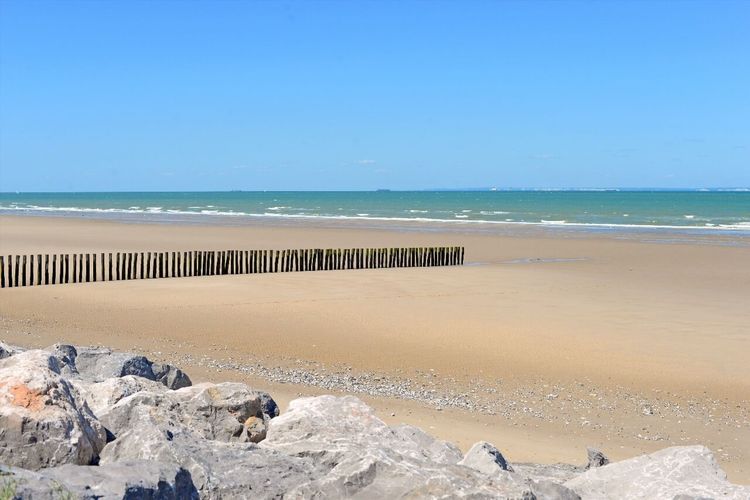
If you are looking for a complete contrast with inland Flanders, head for the Côte d'Opale. At 95 km from Lille (around 1h10 by car), the coast between Calais and Boulogne-sur-Mer reveals a completely different face: chalk cliffs, shifting dunes, white sand beaches battered by the Channel wind. Wissant is the flagship village of this coastal strip, with its seafront preserved from modern development and its old fishermen's houses.
From Wissant, the coastal path climbs towards Cap Blanc-Nez (Route du Cap, 62179 Escalles, rated 4.8/5 on Google from 32 reviews) (134 metres), whose cliffs drop sheer into the Channel — on a clear day, the English coastline is just 35 km away. The site is classified as a Grand Site de France and ranks among the most spectacular landscapes in northern France. Further south, Wimereux is a Belle Époque seaside village whose colourful villas and seafront have been preserved. For the region's beaches, our guide to the beaches of Nord-Pas-de-Calais details the best options.
Surfers and kitesurfers know Wissant well for its wind conditions: the bay is exposed to north-westerly winds that create regular waves. For non-sporting visitors, a stroll along the sea wall and a lunch of moules-frites facing the sea are alone worth the trip from Lille.
Practical Tips for Organising Your Getaways
By car, all these villages are reachable from Lille in under 1h30. Budget a full tank of petrol (or an electric charge) for a Bergues–Esquelbecq–Cassel loop in a day — around 130 km. The A25 towards Dunkerque serves the Flemish sector; the A26 towards Calais opens the door to Gravelines, Montreuil and the Côte d'Opale.
By public transport, options are more limited but do exist. Regional bus lines connect Lille to Bergues (via Dunkerque) and to Cassel (via Hazebrouck). Montreuil-sur-Mer is accessible by train from Lille-Flandres via Étaples-Le Touquet. For the Côte d'Opale, the train to Boulogne-sur-Mer followed by a bus completes the journey to Wissant.
As for the calendar, avoid Sunday afternoons in summer for the most popular villages (Bergues, Cassel, Montreuil). On the other hand, weekday mornings in May–June or September offer ideal conditions: the light is soft, the car parks are free and the shopkeepers have time to talk to you. Giant festivals (Flemish ducasses) generally take place from April to September — check the village programmes before you go, as these events completely transform the local atmosphere.
Before leaving Lille, explore the city itself with the Ryo audio guide of Lille — 22 audio-guided stages through the capital of Flanders, to sharpen your eye before discovering the villages around it.



FAQ
What is the most beautiful village around Lille?
Cassel is often cited as the most beautiful village around Lille, and its election as France's favourite village in 2018 is no stranger to that reputation. Its isolated hill at 176 metres offers unique panoramas over Flanders and the North Sea on clear days. Bergues comes a close second, especially for its cohesive ensemble of ramparts, belfry and Flemish houses. Montreuil-sur-Mer wins over those who prefer medieval architecture and the atmosphere of Artois. The choice depends on your tastes: inland Flanders or Artois, hill or plain, sea or countryside.
How far is Bergues from Lille?
Bergues is 63 km from Lille by road, approximately 45 minutes by car via the A25 depending on traffic. By public transport, allow 1h15 to 1h30 via Dunkerque (train + bus). It is one of the easiest Flemish villages to reach, making it an excellent option for a spontaneous half-day getaway.
Can you visit these villages by public transport from Lille?
It is possible for some of them, but it requires planning. Bergues is accessible via Dunkerque (TER + bus), Cassel via Hazebrouck (TER + shuttle), and Montreuil-sur-Mer via Étaples-Le Touquet (TER). However, Esquelbecq, Bailleul and Aire-sur-la-Lys are difficult to reach without a car. To enjoy several villages in a single day, a car remains essential.
Which village should you choose for a family getaway?
Gravelines and Bergues also appeal to children thanks to the moat walk and the instantly recognisable "movie set" atmosphere. For families who enjoy nature, the hills of the Montagne de Flandre around Bailleul offer easy trails accessible to children from age 4–5.
Are there any listed villages around Lille?
No village in the Lille area appears on the official "Plus Beaux Villages de France" list (an association that certifies more than 180 villages according to strict heritage and population criteria). However, several have equivalent heritage protections: the ramparts of Gravelines and Montreuil-sur-Mer are classified as Historic Monuments, the Grand-Place of Cassel is listed in the National Inventory, and the château d'Esquelbecq holds an MH classification. The official list includes no commune in Hauts-de-France immediately around Lille, but the Flemish villages are equally remarkable in character.
What is the best time to visit the villages around Lille?
Spring (April–June) and autumn (September–October) are the best periods. The light is particularly beautiful on Flemish brick in late October afternoons. In summer, giant festivals and lively markets make the villages very vibrant, but expect some crowds in Bergues and Cassel on July–August weekends. Avoid very windy days on the Côte d'Opale in winter if you feel the cold easily, but the cliffs of Cap Blanc-Nez are spectacular under the heavy November skies.
Conclusion
Around Lille, exceptional villages are plentiful: Cassel on its hill, Bergues within its moats, Montreuil behind its ramparts, Wissant facing the Channel cliffs. These are places that require a little effort — you have to leave the metropolis, take the back roads, stop without a fixed itinerary — but they more than reward the journey.
If you are planning your next getaway from Lille, start by exploring the capital of Flanders itself with Ryo's audio-guided tour of Lille — 23 commented stops to discover the city at its best, before setting out to explore its surroundings. For more excursion ideas, our article on day trips around Lille lists other destinations within easy reach for a weekend.