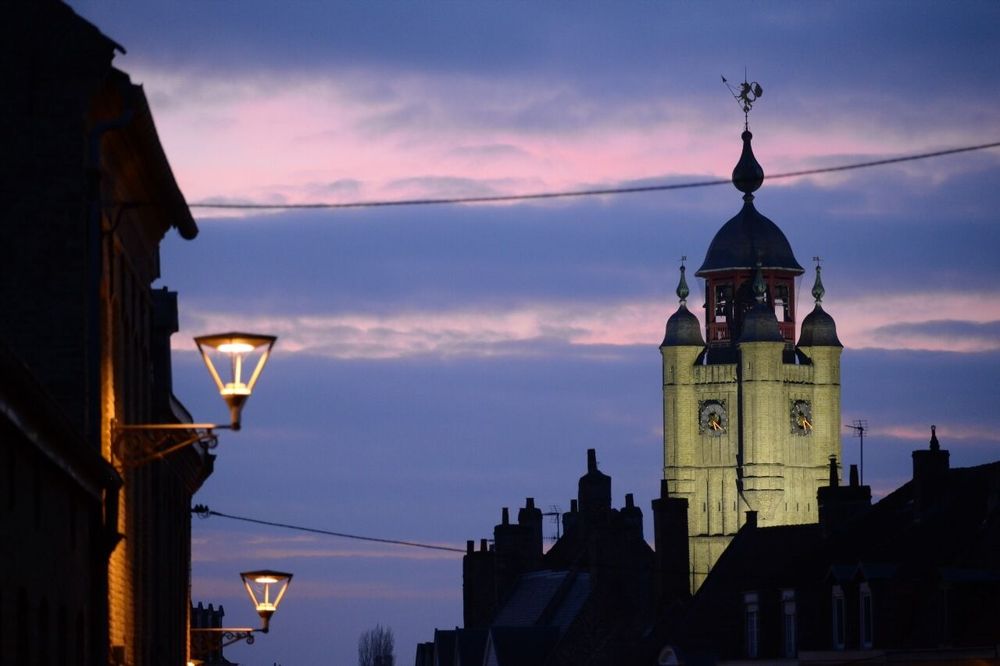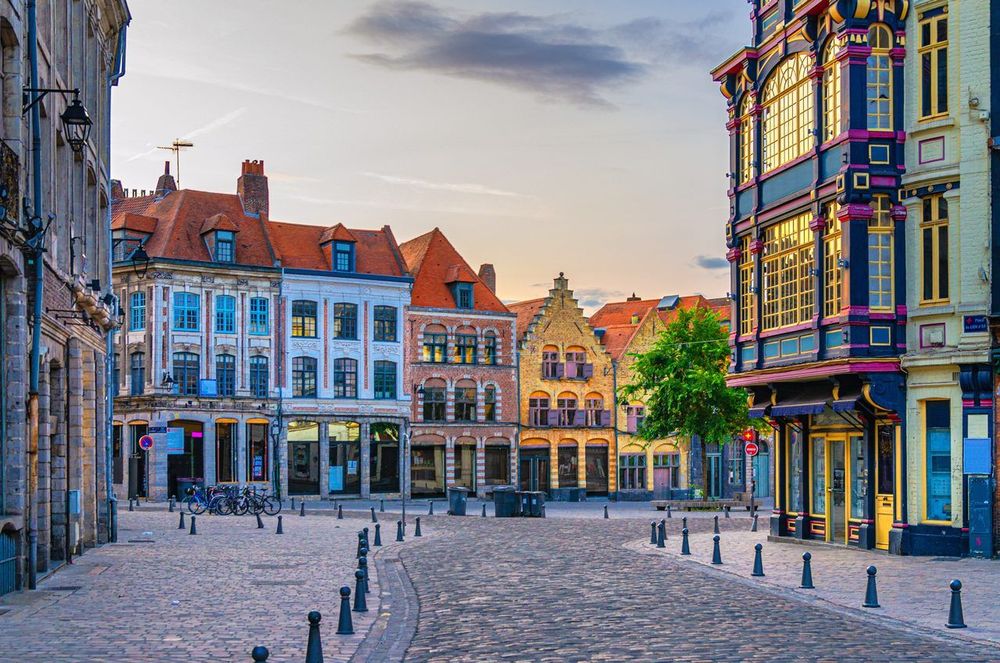
© Shutterstock
 Votre guide Ryo
18 Free Activities in Lille in 2026
In Lille, you can fill an entire weekend without spending a single cent. Between the Flemish facades of Vieux-Lille, Vauban's bastions and the five municipal museums that open their doors one Sunday a month, the capital of Flanders has cultivated an art of discovery that many visitors have yet to find out about. This guide to free activities in Lille 2026 brings together the best addresses, from the historic centre to the popular markets, so you can build a rich stay without exceeding your transport budget, whether you are visiting alone, as a couple, with friends or with family.
You will discover why the zoo installed in the Citadelle attracts nearly 800,000 visitors every year without ever issuing a ticket, how a house less than two metres wide squeezed itself between two buildings in Vieux-Lille, which Sunday of the month opens the Palais des Beaux-Arts to all, and why the Braderie de Lille draws more than two million visitors without any admission fee. To extend the stroll through the cobbled lanes, the Ryo audio-guided tour of Vieux-Lille recounts the architectural details you won't notice on a first pass.
1. Getting Lost in Vieux-Lille and Its Open-Air Street Art
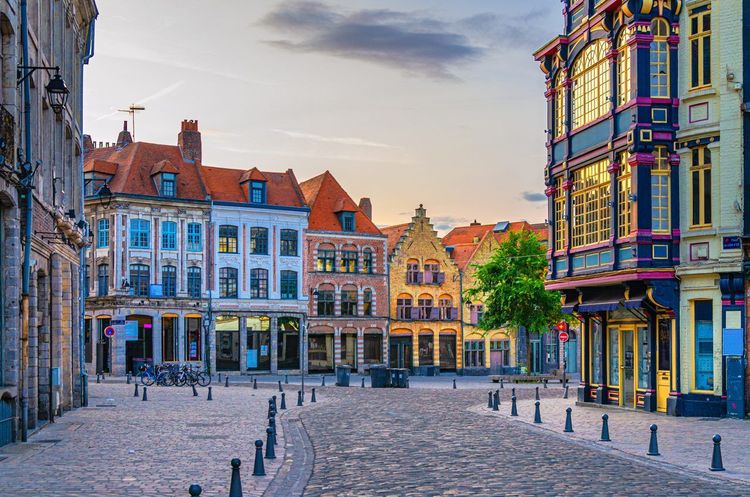
You don't visit Vieux-Lille so much as drift through it, constantly shifting pace: hurrying along Rue Basse, you slow down on Rue de la Monnaie (Rue de la Monnaie, 59800 Lille, rated 4.6/5 on Google with 1.2K reviews) in front of the 17th-century brick and white-stone facades. This neighbourhood, spared by the bombing of both World Wars, concentrates the bulk of the city's Flemish heritage: scrolled dormers, carved carriage gates, inner courtyards glimpsed through the occasional open door. Wandering here demands nothing but time, as much of it as you choose to give. Vieux-Lille alone concentrates several of the most photogenic free activities in Lille.
The Rue de la Monnaie, the former mint of the County of Flanders, lines up some of the most photographed facades in the city. A little further on, the Place aux Oignons takes its name from the medieval market once held there and clusters together gabled houses so tightly packed they seem to lean on one another.
In recent years the neighbourhood has also welcomed murals scattered across courtyards and certain blank gable ends, the result of a municipal programme to bring life to blind facades. It is impossible to catalogue them all: they change, overlap, and sometimes disappear under a fresh coat of render. The game is precisely to look up between two bric-a-brac shops and spot the current ones. Allow an hour and a half for a full tour of the neighbourhood at a leisurely pace, two hours if you stop at every antique-shop window.
The more curious will push on to the few courées still visible from the public road, those inner alleyways that in the 19th century housed Lille's textile workers, today converted into upmarket dwellings. They are not visited like a museum, but their layout can be glimpsed through certain half-open archways on Rue des Tours or Rue de Gand. To enjoy the neighbourhood without the terrace crowds, come early on Saturday morning, when shopkeepers are raising their shutters and the raking light still catches the brick facades.
2. Hunting Down the Smallest House in Lille
Tucked between two grand buildings lies a wall you might mistake for a simple passageway: it is the smallest house in Lille (Rue des Bouchers, 59800 Lille, rated 4.4/5 on Google with 14 reviews), a facade less than two metres wide wedged into the urban fabric of Vieux-Lille. Local legend has it that it was built on an unsellable plot, too narrow to interest any ordinary buyer, and snapped up for next to nothing by a stubborn resident.
No sign marks the spot: finding it is part of the game, somewhere between two shop fronts on Rue des Bouchers.
3. Admiring the Grand-Place and the Vieille Bourse
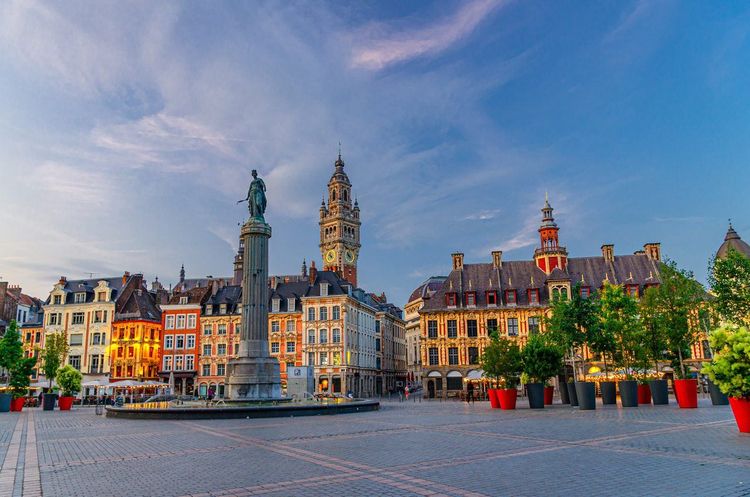
The Grand-Place, officially the Place du Général-de-Gaulle, serves as a reference point for anyone who gets lost in the centre. At its heart stands the Colonne de la Déesse, erected to commemorate the city's resistance during the Austrian siege of 1792, a year's worth of supplies held out through the stubbornness of the people of Lille rather than any outside relief.
On one side of the square stands the Vieille Bourse, a Flemish Renaissance building constructed in 1652 for the city's merchants. Twenty-four identical facades frame a cobbled inner courtyard, decorated with sculpted garlands and medallions depicting mythological figures. You can enter the courtyard freely during opening hours, no reservation required.
To understand the hidden symbols on each facade, it helps to have the explanations to hand: the Ryo audio guide details the building's mercantile history and the purpose of each room.
4. Browsing the Book Market at the Vieille Bourse
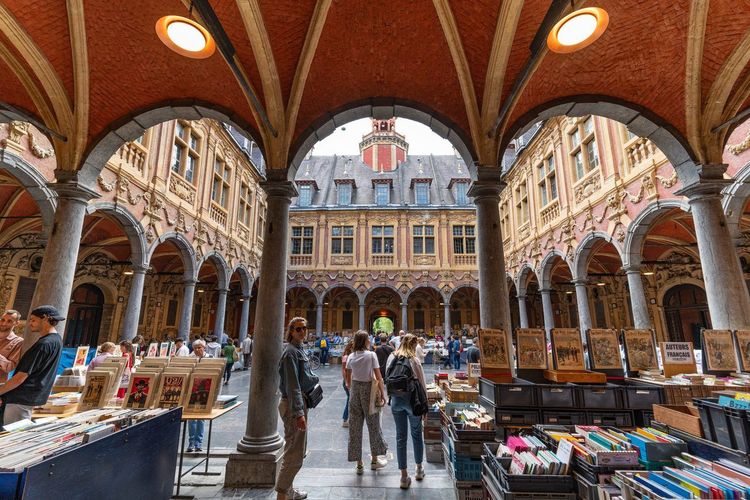
Under the courtyard's arcades, a market for secondhand books and records sets up almost every day, run by independent booksellers. Old postcards, sheet music, mismatched novels and vinyl records pile up on trestle tables, with no obligation to buy. Regulars come less to find a specific item than for the rummage itself, a ritual that has been going on for decades. Chess players, meanwhile, colonise the neighbouring tables on sunny afternoons, ready to take on any challenger who passes by.
5. Visiting the Palais des Beaux-Arts on the First Sunday of the Month
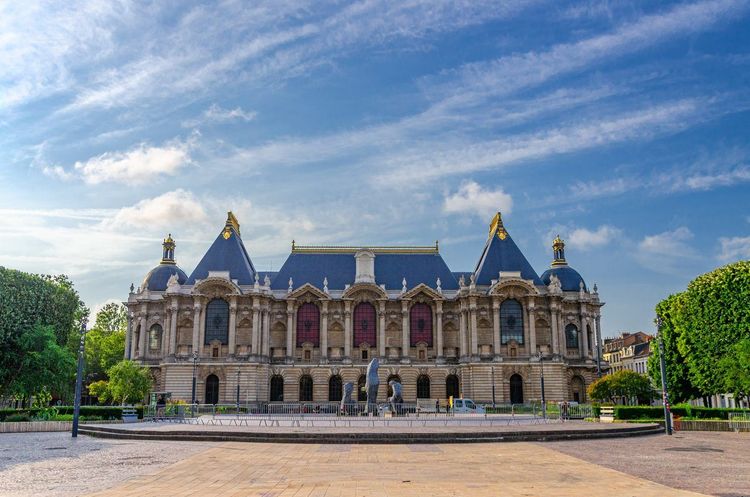
It is impossible to discuss free activities in Lille without starting with its municipal museums. The Palais des Beaux-Arts de Lille (Place de la République, 59000 Lille, rated 4.5/5 on Google with 9,168 reviews) is, by the size of its collections, the second largest museum in France after the Louvre. Its galleries bring together paintings by Rubens, Goya, Monet and Courbet, as well as a collection of relief maps of fortified cities from the 17th century, including that of Lille itself, comparable to those held at the Invalides.
This heritage opens to everyone on the first Sunday of each month. The rule applies not only to the Palais des Beaux-Arts: it extends to all the city's municipal museums, which means that in theory you can visit several collections on the same Sunday. It is still worth checking the calendar on the museums' website before locking in your visit, as certain dates vary depending on exhibitions.
Residents of Lille, Hellemmes and Lomme benefit from an even more generous arrangement: access to the permanent collections remains open to them year-round simply by showing proof of address. For all other visitors, targeting that first Sunday of the month remains the best option.
The building itself is worth the detour: a neoclassical facade completed in 1892, a zenith skylight flooding the Flemish painting galleries with natural light, and a grand staircase worthy of a ministry. The relief-map room, often overlooked in favour of the old masters, conceals some fifteen scale models of fortified cities commissioned under Louis XIV in preparation for military campaigns: every bastion, every moat is distinguishable at a scale that gives you vertigo.
Plan to arrive as soon as it opens: the monthly free admission draws large crowds, and queues grow quickly after 11 a.m. Allow a good two hours to cover the permanent collections without rushing, more if a temporary exhibition is added to the itinerary (which remains ticketed even on that Sunday). The museum entrance has a free cloakroom and step-free access for pushchairs, making it a straightforward addition to an already busy day.
6. Exploring the Citadelle de Lille, Its Woods and Its Zoo
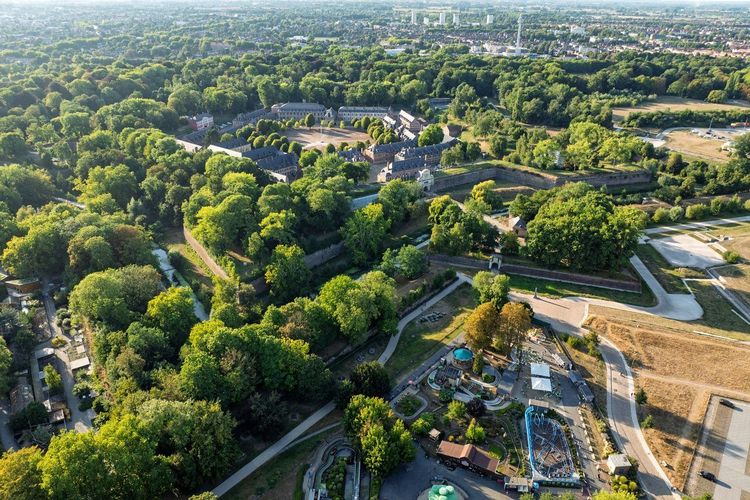
Among the free activities in Lille, the Citadelle zoo holds a special place, but the site is worth visiting first and foremost for its fortress. Vauban never concealed his ambition: the Citadelle de Lille, completed in 1670, is still considered one of the best-preserved fortifications in Europe, built in the shape of a five-bastion star across more than 60 hectares. The interior, still occupied by the military, is only open during organised and ticketed time slots, but the outer glacis, the moats and the peripheral ramparts remain open to everyone year-round, on foot or by bike.
Surrounding the fortress stretches the Bois de Boulogne de Lille, a vast urban forest crossed by bridle paths, a lake and several play areas. It is the green lung favoured by the people of Lille for running, picnicking or simply escaping the summer heat of the city centre. The large trees, planted in the 19th century, form a continuous canopy that noticeably lowers the perceived temperature on sweltering days.
At the heart of this woodland lies the Zoo de Lille (Avenue Mathias Delobel, 59800 Lille, rated 4.1/5 on Google with 10,810 reviews), open 365 days a year with no admission fee whatsoever, a rare policy in France where most urban zoos charge a ticket. Its residents, spread across several hectares, include monkeys, tropical birds and various mammals housed in landscaped enclosures. The zoo has belonged to the city since 1950 and operates on a municipal model that explains this open-access policy, funded by the local authority's budget rather than by ticket sales.
The zoo fills up on certain sunny weekends: the city then limits entry to time slots bookable online, a precaution that beats a one-hour wait in the sun with children. Booking the evening before is usually enough to secure a morning slot, which is less busy than the afternoon.
To combine all three visits in a single outing, allow a full half-day: one hour to walk the outer ramparts, two hours for the zoo, and as much time as you like to wander through the woods. The Ryo audio-guided tour dedicated to the Citadelle covers the history of each bastion one by one, useful for making sense of the moats you walk alongside without any bearings. For access, the République Beaux-Arts metro station drops you right at the edge of the park, fifteen minutes on foot from the zoo: no need to hunt for a parking space in the city centre on a busy Sunday.
7. Admiring the City's Monumental Gates: Porte de Paris and Porte de Gand
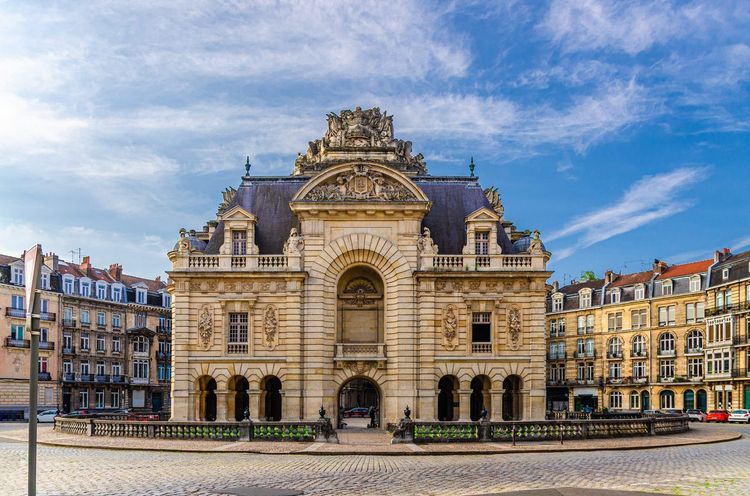
A few hundred metres apart stand two gates that tell two different stories of Lille. The Porte de Paris, a triumphal arch built from 1685, celebrates Louis XIV's capture of the city: its bas-reliefs depict Hercules slaying the Hydra, a barely veiled allegory of the military victory over the Spanish Netherlands. It long served as the city's official entrance before being cut off by 20th-century urban redevelopment, today marooned in the middle of a roundabout.
In contrast, the Porte de Gand, older and more austere, retains the defensive appearance of an early 17th-century postern, built in brick and white stone, without the triumphal pomp of its neighbour.
Both can be viewed from the street in five minutes each, but they gain from being seen together in order to grasp the contrast between a fortress city and a city of power.
8. Strolling through the Cimetière de l'Est, an Open-Air Museum
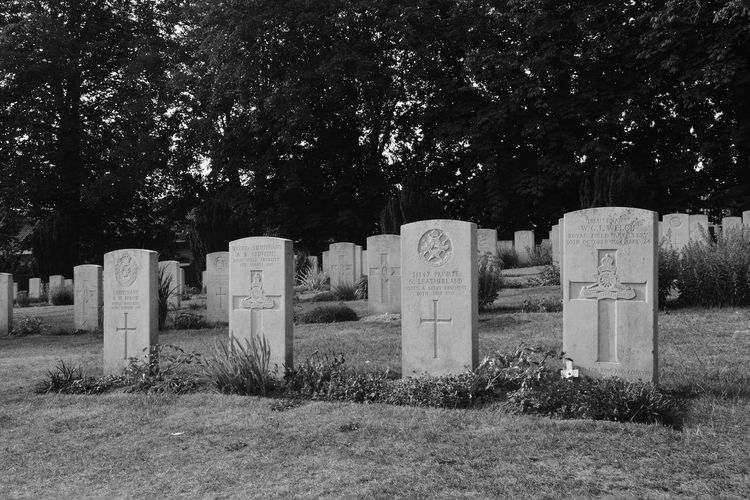
A cemetery never features in standard tourist brochures, yet the Cimetière de l'Est (Avenue Foch, 59800 Lille, rated 4.2/5 on Google with 72 reviews) deserves an hour's visit for its profusion of 19th-century funerary chapels, sculpted by the same workshops that adorned the private mansions of Vieux-Lille. Some tombs rival public monuments: broken columns, weeping angels, neo-Gothic mausoleums, all lined up along avenues shaded by century-old lime trees.
You will come across the graves of the industrialists and notables of Lille who built the city's textile fortune in the 19th century, some as carefully tended as public monuments, others almost anonymous unless you actively search for the name carved in stone.
Entry is free during opening hours, without any oppressive supervision: you can wander as you would in a garden, sketchbook or camera in hand, as long as you respect the silence of the place.
9. Joining an Outdoor Yoga Class on Sunday

Every Sunday morning, weather permitting, a community collective organises an outdoor yoga session in a city-centre park, usually in the Jardin Vauban or on the Citadelle esplanade depending on the season. No prior registration, no mat required: the principle is based on a free donation and welcoming all levels, from complete beginners to experienced practitioners. Times and the exact location circulate mainly via the social media accounts of local sports associations, worth checking the week before.
10. Borrowing Books, CDs and Games from the Municipal Media Libraries
The network of Lille's media libraries comprises around ten branches spread across the neighbourhoods, including the Médiathèque Jean-Lévy (32-34 Rue Edouard Delesalle, 59800 Lille, rated 4.2/5 on Google with 207 reviews), the largest, which holds an archive collection dating back to the 15th century alongside its current holdings. A membership, free for residents of the metropolitan area, gives access to books of course, but also to CDs, DVDs, sheet music, board games and even e-readers to borrow depending on the branch.
Beyond lending, these spaces offer heated work areas in winter and air-conditioned ones in summer, a simple resource for anyone looking for a quiet spot without any obligation to spend, unlike a café. Some branches also host temporary exhibitions and author talks, posted on the welcome boards and the city's website, useful to check before or after Ryo's audio-guided tour of Lille, the capital of Flandres.
11. Making the Most of the Year's Big Popular Events
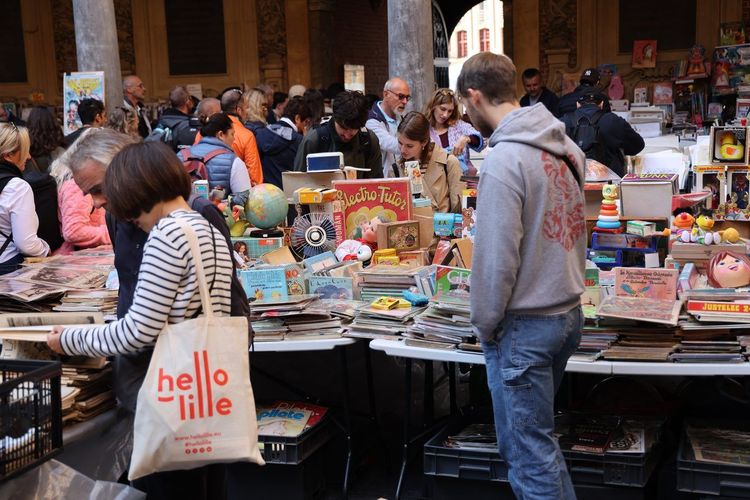
Lille's calendar is packed with free activities throughout the year. The most spectacular is the Braderie de Lille, held on the first weekend of September since the 12th century, originally reserved for servants who were allowed to resell their employers' clothing once a year. Today, more than two million visitors take over a hundred kilometres of pavements turned into a giant car-boot sale, without any admission fee ever being charged, whether you come to browse or to sell.
Lille3000, the cultural festival supported by the city since 2004, regularly installs monumental works open to all in public spaces: giant dragons, inflatable structures, projections on building facades. Some exhibitions remain ticketed, but the outdoor installations, often the most spectacular for photography, can always be admired free of charge.
The Fête de la Musique, on 21 June, turns every neighbourhood into an impromptu stage, from amateur groups to more seasoned outfits, with no ticketing anywhere in the city. In winter, the Christmas market on the Grand-Place is free to explore: only the food stalls and fairground rides are ticketed, while wandering between the stands remains open to everyone.
The Journées Européennes du Patrimoine, in mid-September, open without reservation places normally closed to the public: the prefecture, the town hall, and certain private mansions in Vieux-Lille lend their reception rooms for the occasion. The Nuit Européenne des Musées, in May, extends evening opening hours for collections, including those that are normally ticketed, without any charge.
The Ryo article dedicated to events in Lille lets you align your stay with one of these events rather than arriving to find the city in a quiet period out of season.
12. Following the Deûle on Foot or by Bike All the Way to Belgium
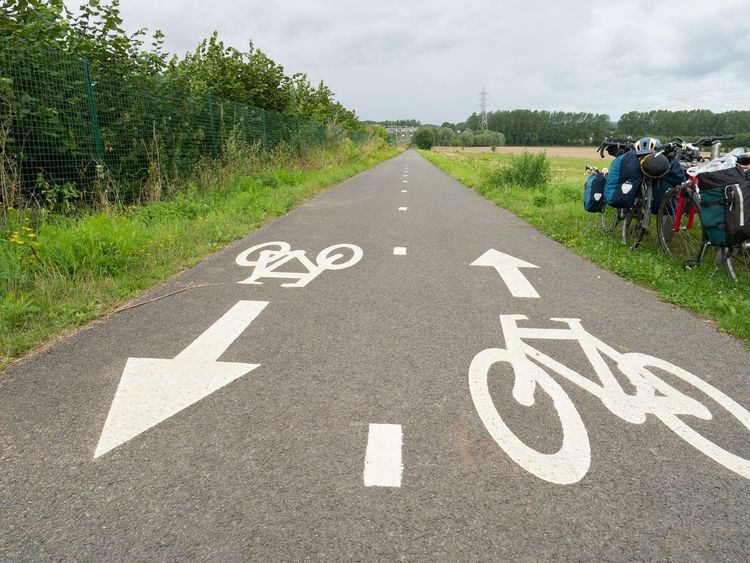
The Véloroute de la Deûle follows the river for several dozen kilometres, from the centre of Lille to the Belgian border, passing through Wambrechies and its gin distilleries. The route, almost entirely separated from motor traffic, alternates between rehabilitated industrial quaysides, moored barges and bucolic stretches lined with poplar trees.
You don't need to cover the entire route to enjoy it: the stretch between the Pont de Fives and the centre of Wambrechies, around twelve kilometres, can be completed in an hour and a half by bike, with a possible stop to watch the leisure barges moored at the harbour.
Those who prefer walking will find shorter marked loops, particularly around the Parc de la Deûle in Marquette-lez-Lille, where wooden footbridges cross restored wetlands. Swans and grey herons are more visible at dawn than in the middle of the afternoon.
Canalised as early as the 17th century to open Lille up to the sea, the Deûle long carried the coal and textiles that built the metropolitan area's industrial fortune. The brick warehouses still lining certain quays, today converted into lofts or gyms, bear witness to an activity that vanished in the 1970s. Riding the cycle route is, without quite realising it, a way of crossing a century of industrial history in fast forward, port by port.
The metropolitan area's bike-share service offers the first quarter of an hour free with each rental, enough to reach the start of the cycle route from the city centre without going through a traditional hire agency. Do bring a helmet and lights if you set off in the late afternoon: some stretches pass through poorly lit areas beyond Wambrechies, especially approaching the border.
13. Unwinding in the Jardin Vauban
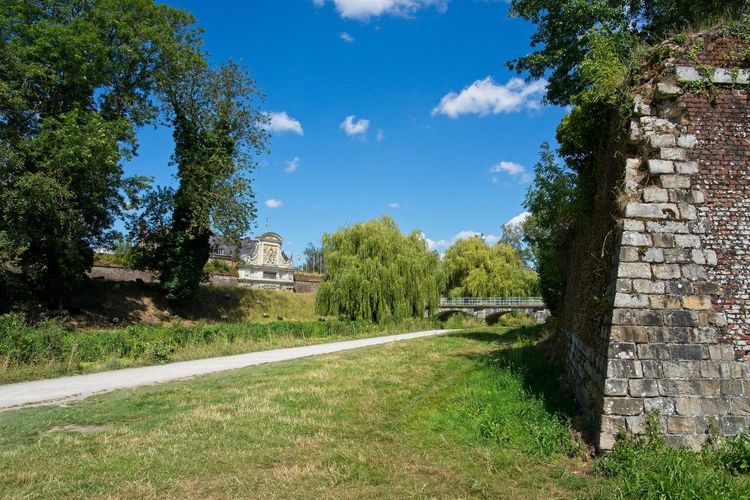
The Jardin Vauban (Boulevard Vauban, 59000 Lille, rated 4.4/5 on Google with 4,117 reviews), laid out in the English style in 1865 along the old rampart, alternates rolling lawns, century-old copses and a bandstand that still hosts summer concerts. Its lake, populated by ducks and a few sizeable carp, can be circumnavigated in around twenty minutes on foot.
The pedal boats that ply the pond on fine days remain ticketed, but the bulk of the park, its lawns, its pathways and its generous summer shade, can be enjoyed without spending a cent. Students from the nearby Catholic university settle on the grass in numbers at the first sign of good weather, spread between two university buildings on Boulevard Vauban, while couples often meet there at the end of the afternoon for an impromptu picnic.
A flower market sets up on certain Sunday mornings at the boulevard entrance, with no direct connection to the park but close enough to extend the walk.
14. Discovering the Glasshouses of the Jardin des Plantes
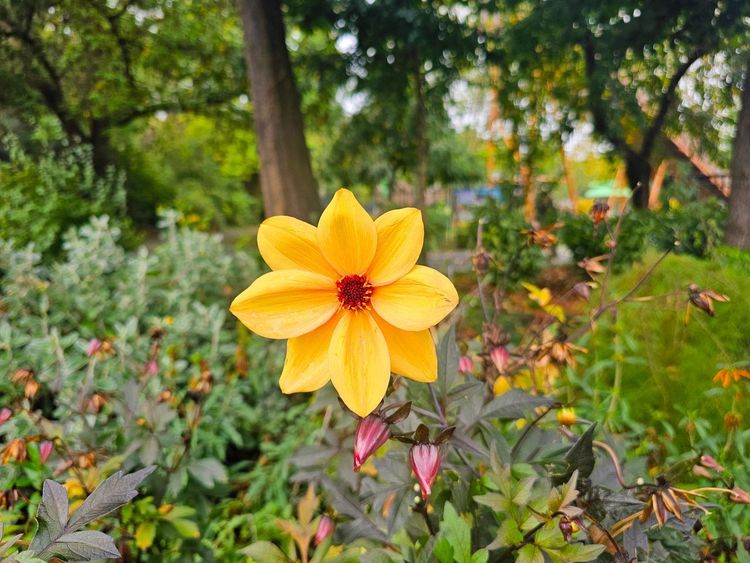
Less well known than the Jardin Vauban, the Jardin des Plantes de Lille (40 Boulevard Jean-Baptiste Lebas, 59000 Lille, rated 4.3/5 on Google with 2,161 reviews) holds a botanical collection focused on medicinal plants and endangered species of northern France. Its glasshouses, open during the park's opening hours, shelter modest but well-tended tropical collections, maintained by the city's services.
The benches set in the shade of the glasshouses make it a pleasant break between two visits in the city centre, away from the tourist flow of Vieux-Lille.
15. Shopping the Wazemmes Market on Sunday Morning
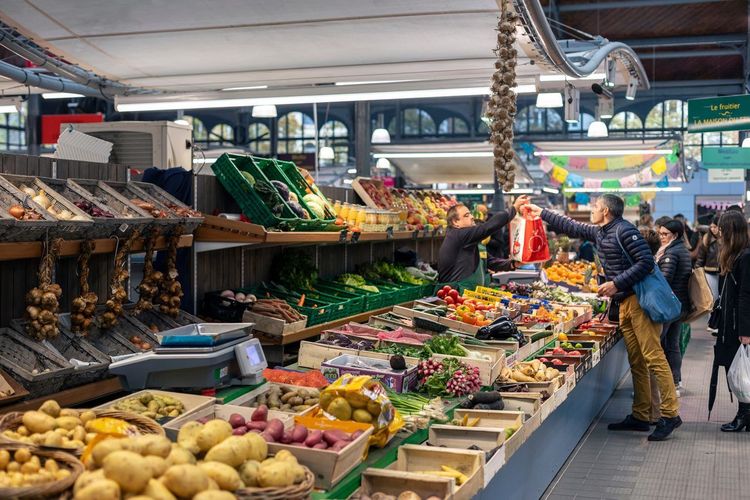
It is hard to find, among the free activities in Lille, a more lively morning than a Sunday in Wazemmes. The Wazemmes market, every Sunday morning, spreads across several streets around the Halle of the same name and brings together stalls selling everything from fruit and vegetables to textiles, spices and secondhand crockery. Its reputation extends well beyond Lille: you will find residents from across the metropolitan area drawn by the prices and by the mix of communities that have given the neighbourhood its character for decades.
Entering, moving between the stalls and chatting with the traders costs nothing: only buying something requires any money. The Halle de Wazemmes (Place Nouvelle Aventure, 59000 Lille, rated 4.5/5 on Google with 175 reviews), a renovated 19th-century iron market hall, is worth a visit even without any intention of buying, for its architecture and the spice aromas that fill it from the moment you step inside.
To explore the neighbourhood further after the market, the Ryo audio-guided tour of Lille offers an itinerary that extends the walk towards the neighbouring shopping streets.
16. Seeking Out the Murals of the Moulins Neighbourhood
The Moulins neighbourhood, a former textile stronghold south of the centre, has over recent years been covered in murals created as part of urban renewal programmes. Giant portraits of residents, tributes to local figures and abstract compositions cover entire gable ends, transforming previously anonymous facades into an open-air gallery, particularly popular with teenagers looking for original photos.
Unlike in Vieux-Lille where street art hides in discreet corners, in Moulins it is displayed on a large scale, visible from the street without any searching. The Rue d'Isly and the surrounding streets concentrate the highest density of works in the neighbourhood.
The neighbourhood remains less touristy than the historic centre, making it a refreshing walk for anyone who has already explored Vieux-Lille several times and is looking for a different side of the city.
17. Heading to the Louvre-Lens, Permanent Collection Free for All
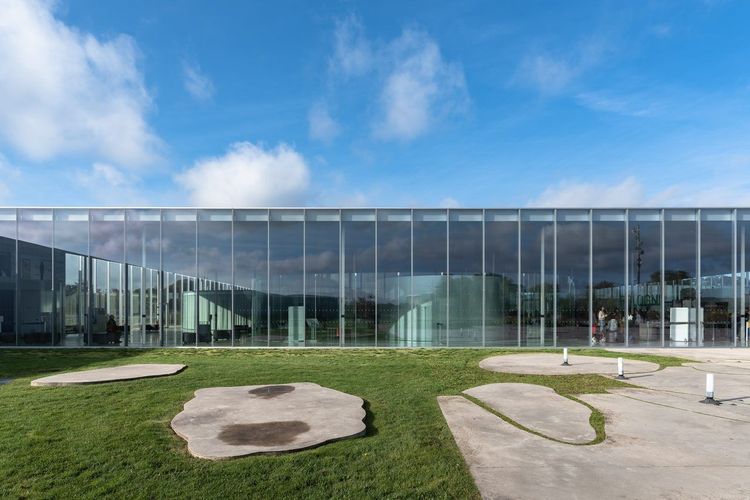
35 minutes by train from Lille-Flandres, the Louvre-Lens (99 Rue Paul Bert, 62300 Lens, rated 4.5/5 on Google with 11,605 reviews) has applied since its opening in 2012 a policy that is rare among France's great museums: access to its permanent collection, the Galerie du Temps, is free to everyone year-round. Only the temporary exhibitions, held in a separate wing, remain ticketed.
The Galerie du Temps lines up more than 200 works on loan from the Louvre in Paris, from Egyptian antiquities to 19th-century paintings, presented in chronological order rather than by the closed-off departments of the historic Louvre. This approach, designed for a non-specialist audience, allows you to take in twenty centuries of art history at a single glance, from Mesopotamia to Delacroix.
The building itself, designed by Japanese architects SANAA, plays on transparency: polished aluminium facades that reflect the surrounding park, low-ceilinged rooms bathed in diffuse natural light. The Louvre-Lens park, some twenty hectares laid out on the former surface works of a coal mine, is also free to visit, neighbouring slag heaps included for those who extend the outing on foot.
Allow a full day for the return trip from Lille, making the most of the museum: a single train journey to Lens takes around 35 minutes, then fifteen minutes on foot or by bus from the station brings you to the museum entrance. Booking a time slot online, at no extra cost, avoids sometimes lengthy queues on busy weekends, particularly during northern school holidays.
The museum closes on Tuesdays, like most major French institutions: checking this before planning a day trip from Lille avoids the disappointment of a wasted return journey. Families will particularly appreciate the educational space in the glass pavilion, where introductory workshops are sometimes offered on Wednesdays and during school holidays, on registration at the reception desk.
The twin slag heaps of Loos-en-Gohelle, listed as a UNESCO World Heritage Site as part of the Nord-Pas de Calais Mining Basin, are around twenty minutes by road from the museum and can be climbed for a panoramic view over the entire former coalfield. Enough to turn a simple museum visit into a full excursion through the mining history of the North, before a last coffee at Lens station to absorb this plunge into twenty centuries of art.
18. Venturing Out to the Jardin Portugais, a Curiosity 30 Minutes from Lille
About thirty minutes by road south of Lille lies the Jardin Portugais, a stone-and-terrace construction built by Portuguese troops stationed in the region during the First World War. The Portuguese Expeditionary Corps, engaged alongside the Allies on the Flanders front, left behind this dry-stone structure, combining staircases and small basins, as a tangible reminder of a presence now largely forgotten by the wider public.
The place remains little known: no major tourist sign points to it from the road, and footfall is mostly limited to local village residents passing through on a walk. Entry is free, with no set opening hours or admission charge.
This outing pairs well with a broader loop through the northern countryside: meadows, isolated farms, small brick church towers that are a reminder that the Lille metropolitan area remains, just a few kilometres from its urban centre, a largely rural region.



FAQ
Which day do Lille's museums open free of charge?
On the first Sunday of each month, all municipal museums, including the Palais des Beaux-Arts, open their permanent collections to everyone. Residents of Lille, Hellemmes and Lomme can access them year-round with proof of address. It is best to check the calendar on the museums' website before making the trip.
Is Lille's zoo accessible free of charge for everyone?
Yes: unlike many French zoos, Lille's zoo charges no admission fee, whether you are a local resident or a passing visitor. The only constraint on busy days is booking a time slot online, also at no extra cost.
Which free activities in Lille are best for families?
The Citadelle zoo, the Bois de Boulogne with its play areas, and the Wazemmes market on Sunday mornings are all well suited to children. The municipal media libraries, with their youth spaces and games available to borrow, can easily round out a full day without any spending.
What can you do for free in Lille on a Sunday?
A Sunday easily combines the Wazemmes market in the morning, a municipal museum open to all on the first Sunday of the month, and then a stroll through the Bois de Boulogne or the Jardin Vauban in the afternoon. The Braderie, for its part, takes up an entire Sunday in September.
How much time should you plan for a weekend in Lille with no activity budget?
Two days are enough to take in Vieux-Lille, the Citadelle, the zoo and a municipal museum if the calendar falls on the right Sunday. Adding Louvre-Lens or a cycling loop along the Deûle calls for a third day to avoid rushing.
Are there any unusual free activities in Lille?
Hunting down the city's smallest house, exploring the murals in the Moulins neighbourhood and visiting the Jardin Portugais thirty minutes away by road all take you off the beaten track. None of them feature on standard tourist circuits, which makes them more personal discoveries.
Is the Louvre-Lens park free to visit?
No, the roughly twenty-hectare park surrounding the museum is free to explore, as is the permanent collection displayed in the Galerie du Temps. Only the museum's temporary exhibitions remain ticketed, with a separate admission charge.
Lille needs no large budget to be explored. Between the facades of Vieux-Lille, the zoo installed in the Citadelle since 1950, the five municipal museums open one Sunday a month and the Louvre-Lens Galerie du Temps thirty-five minutes away by train, the list gathered here more than covers enough to fill several weekends without ever reaching for a bank card to pay an entrance fee.
Bear in mind that some of these experiences depend on a specific day or proof of address: checking opening times before locking in a tight itinerary avoids the disappointment of a closed museum or a fully booked zoo. Everything else, walking the cobbled streets, Sunday markets, parks and the September Braderie, requires neither reservation nor any conditions, just the desire to get out and walk. To go further than these free activities in Lille, the Ryo audio-guided tour of Lille guides you step by step through the historic centre, with the anecdotes and reference points that a simple paper map so often lacks.