© Shutterstock
 Votre guide Ryo
Hauts-de-France: 22 Must-See Highlights to Discover in 2026
What to do in Hauts-de-France? The question comes up again and again, and it is hard to know where to begin given how much the region has to offer. Hauts-de-France brings together very different territories: a misty coastline where cliffs plunge into the English Channel, agricultural plains dotted with medieval belfries, industrial cities reinvented as cultural hubs, royal forests and war memorials of rare emotional power. To enter the region through its grandest door, the Ryo audio guide of Lille covers 22 stops across 6 km through the Vieille Bourse, the lanes of the Vieux-Lille and Vauban's Citadelle — a perfect way to soak up Flemish architecture before exploring the wider region.
What you will find here goes far beyond the usual clichés. A Gothic cathedral so immense that its 200,000 m³ of interior volume make it the largest in France. A steel ring bearing the 579,606 names of soldiers killed in Flanders during the Great War, every nationality mixed together in strict alphabetical order. An aquarium holding 17 million litres of water, the largest in Europe. A village of 100 inhabitants engulfed in roses. And estaminets where carbonade has been simmering for centuries. From the North Sea to the forests of the Oise, Hauts-de-France offers 22 good reasons to linger longer than planned.
1. Amiens Cathedral Notre-Dame
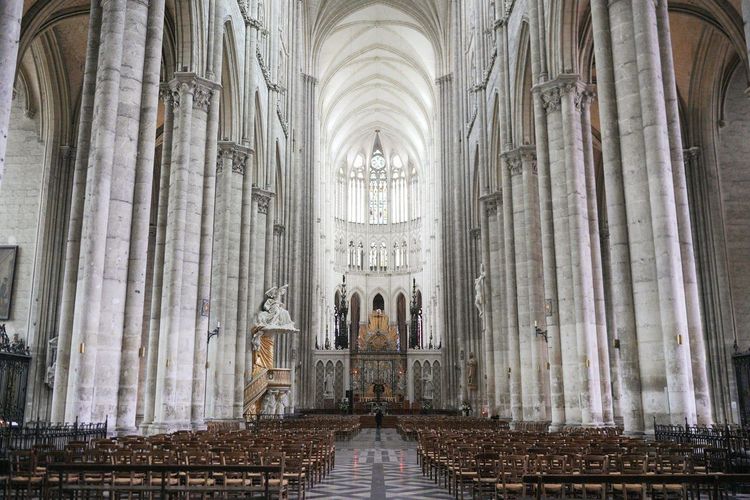
The Amiens Cathedral Notre-Dame (Place Notre-Dame, 80000 Amiens, rated 4.8/5 on Google with 17,476 reviews) is one of the rare buildings that justifies a journey on its own. Listed as a UNESCO World Heritage Site since 1981, it is the largest Gothic cathedral in France by interior volume: 200,000 m³ of stone, glass and wood, with a vault height of 42.3 metres. Paris, Reims, Chartres — all are surpassed on this measure.
Construction began in 1220, two years after the fire that destroyed the previous cathedral, and the main body of the building was completed in around fifty years — an extraordinary pace for a medieval construction project. The west façade, with its three sculpted portals and 3,000 figures in bas-relief, is one of the most complete lessons in biblical iconography in French Gothic art. Study it carefully before going inside.
Inside, the surprises accumulate. The octagonal floor labyrinth dates from the 13th century and served as a symbolic penitential path. The 'weeping angel', tucked into the ambulatory, is a sculpture so moving that it has inspired novels and travellers' accounts for two centuries. The choir with its 15th-century carved wooden stalls — 3,700 figures in total — demands that you sit down and take your time.
The sound and light show 'La Cathédrale en Couleurs', staged each spring and autumn, restores the lost medieval polychromy to the façade: the sculptures regain their original hues of amber, blue and gold during the nocturnal projections. Two cathedrals for the price of one. To explore Amiens further — the hortillonnages, the Saint-Leu district, the Picardy Museum — the Ryo audio-guided tour of Amiens offers 28 audio tracks along a 6.3 km route from the cathedral to the banks of the Somme.
2. Lille, the Capital of Flanders
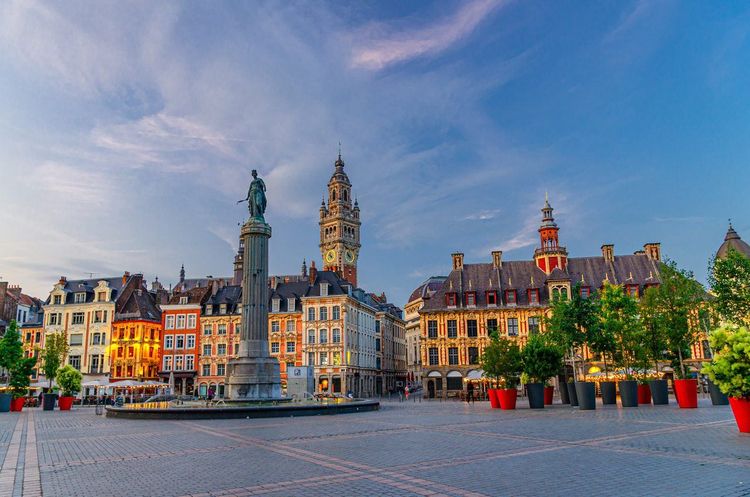
Lille is one of those cities you think you know, yet it surprises you on every visit. France's second cultural hub after Paris according to several rankings, it has a strongly Flemish identity: red brick, white limestone, gabled façades and drainpipes carved into animal heads. The historic core revolves around the Grand-Place (officially Place du Général-de-Gaulle) and its 17th- and 19th-century buildings.
The Vieille Bourse de Lille, built between 1652 and 1653, is one of the finest Flemish buildings in France. Its inner courtyard has been home to booksellers and chess players for decades. Just behind it, the Rue de la Monnaie and the adjoining streets of the Vieux-Lille hide cobbled courtyards, artisan ice cream shops installed in former convents and independent boutiques that define the neighbourhood's reputation. Further south, Vauban's Citadelle (built in 1668, still army property but partially open) surrounds the Parc de la Citadelle, 65 hectares of green space in the heart of the city.
The Braderie de Lille, held on the first weekend of September, is one of Europe's largest flea markets: 10,000 stallholders lining 200 km of streets for 30 consecutive hours. The tradition of eating moules-frites during the Braderie is an immovable ritual — restaurants pile their empty shells on the pavement until morning. The Wazemmes market (every Sunday morning) is the region's most vibrant, with its colourful covered halls and products from around the world.
To go further in your exploration of Lille, the Ryo articles on the most beautiful villages around Lille and things to do in Lille and its surroundings offer additional ideas to help structure your stay.
3. The Côte d'Opale
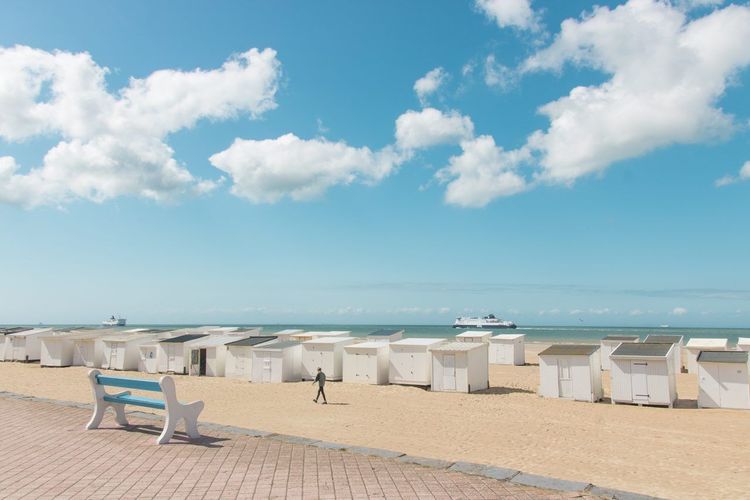
Its name is a meteorological metaphor. 'Opale' refers to that otherworldly light — pearlescent white, grey-green, deep blue depending on the time of day — that the North Sea takes on with the changing seasons and winds. The Côte d'Opale stretches for around 120 kilometres from Calais to Berck, with landscapes of cliffs, dunes and wind-swept meadows that are anything but dull.
The highlights are the two headlands. Cap Blanc-Nez (Route du Cap Blanc-Nez, 62250 Escalles, rated 4.8/5 on Google with 32 reviews) rises to 134 metres and on a clear day lets you make out the white cliffs of Dover just 32 kilometres away — the strange sensation of seeing another country skimming the water. Cap Gris-Nez, a few kilometres to the south, is the point on the French mainland closest to the British coast. The road between the two headlands follows grassy ridges dotted with Second World War blockhouses: a landscape that is at once moving and magnificent.
Between the two headlands, Wissant is the village of wind-sport enthusiasts: surfing, sand yachting, kitesurfing and windsurfing coexist on its sweeping arc of beach, one of the most spectacular on the coastline. Wimereux retains its colourful half-timbered houses and its chequered seafront promenade, ideal for an off-season stroll. And Le Touquet-Paris-Plage, further south, holds its rank as a chic seaside resort: its pine forest (the largest coastal forest in the north), its listed Art Deco villas and its casino create a setting straight out of a 1930s novel.
The coast also lends itself to hiking: the GR120 long-distance trail runs the entire length of the Hauts-de-France coastline, from the northern edge of the Baie de Somme to the Belgian border. For birdwatchers, the wetlands of Marquenterre host dozens of migratory species in autumn. The Ryo article on the beaches of Nord-Pas-de-Calais gives practical tips for planning a day on the coast depending on the weather and season.
4. The Baie de Somme
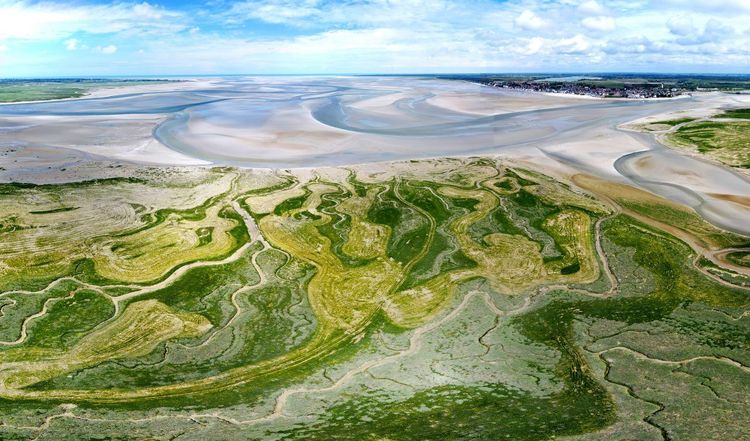
The Baie de Somme (Quai Lejoille, 80550 Le Crotoy, rated 4.4/5 on Google with 618 reviews) is one of those destinations that reveals a different face with every season. In summer, the salt marshes turn green and seals bask on the sandbanks. In autumn, greylag geese migrate in their hundreds of thousands in formation above the marshes. In winter, the raking light at low tide colours the mudflats a shade of orange that justifies the journey on its own.
The seals are the central attraction. Two species cohabit on the sandbanks of Le Hourdel and the Pointe du Grouin: the grey seal and the common seal. Counts regularly record 500 to 600 individuals across the two sites. Boat trips organised from Le Hourdel and Saint-Valery allow visitors to approach the colonies at a regulated distance — the bay is a Ramsar site, and operators are subject to strict safety distance rules.
The circuit around the bay divides naturally between two shores. On the north side, Le Crotoy is the only Picardy coastal village facing the rising sun. Jules Verne owned a house there and completed several novels on its shores. On the south side, Saint-Valery-sur-Somme retains its 11th-century medieval ramparts, its inner canal and its captains' houses in brick and flint. Between the two, the Chemin de fer de la Baie de Somme, a century-old steam railway in service since 1887, links the two villages along the marshes in 25 minutes, with regular photo stops when the light is beautiful.
For walkers, the riverside path along the Somme between Saint-Valery and Noyelles-sur-Mer (around 8 km, flat) offers the best view of the bay at high tide. Cyclists will find the Véloscénie (Paris–Mont-Saint-Michel cycle route), which crosses the region and passes close to the bay.
5. Nausicaá in Boulogne-sur-Mer
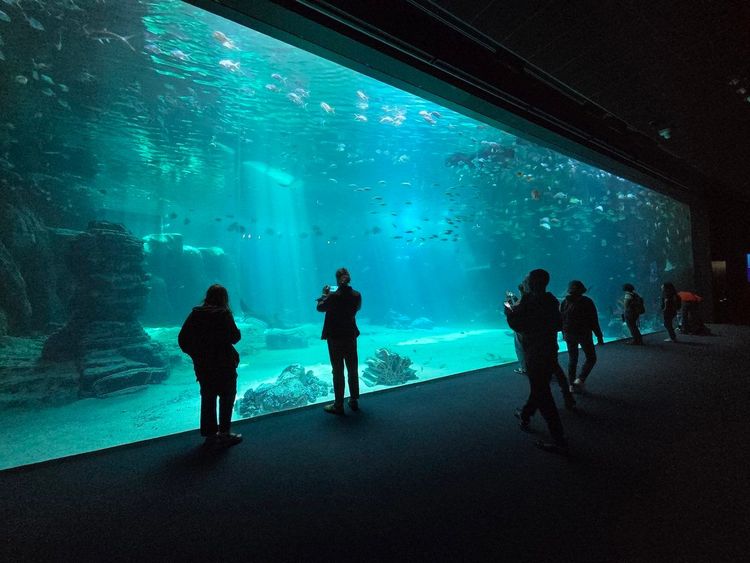
Perched above the English Channel in Boulogne-sur-Mer, Nausicaá (Boulevard Sainte-Beuve, 62200 Boulogne-sur-Mer, rated 4.4/5 on Google with 45,703 reviews) is no ordinary aquarium. A state-recognised national centre of the sea, it is Europe's largest aquarium with 58,000 marine animals spread across 17 million litres of water. Opened in 1991, it was substantially expanded in 2018 to incorporate themes of marine conservation and climate change.
The most impressive attraction remains the great open-sea tank, accessible via a panoramic underwater tunnel. The 2018 renovation also added aquatic meditation rooms, a dedicated zone on responsible fishing and touch pools with small sharks. Allow 3 to 4 hours for the full route, longer with children. Book online during the summer period — queues at the ticket desk can exceed an hour.
Boulogne is more than just Nausicaá. The medieval Haute-Ville, still encircled by intact 13th-century ramparts, is worth an extra hour with its basilica and local shops. The port is also France's leading fishing port — restaurants around the harbour serve whiting and skate landed that very morning.
6. Dunkerque, the City of Jean Bart
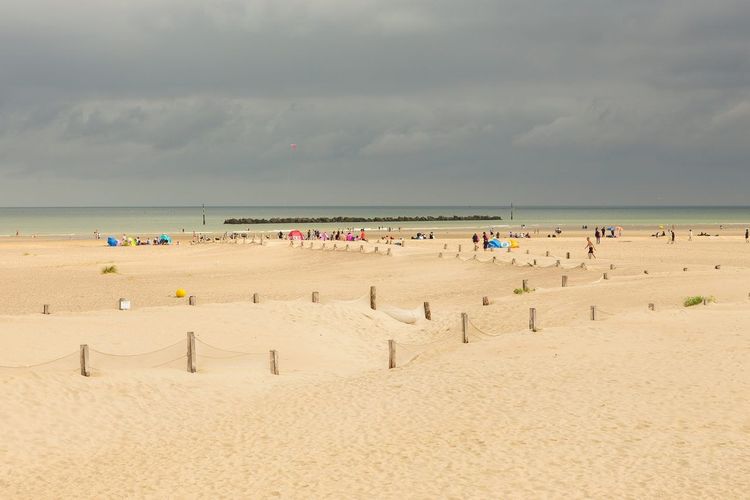
Dunkerque is a city in permanent transformation. An industrial port (France's third busiest by traffic), it has seen its dock districts reinvented as cultural and leisure spaces. The Malo-les-Bains beach, its seaside neighbourhood, stretches for 13 kilometres — an unexpected coastline for a city with such a resolutely industrial identity.
The city's presiding figure is Jean Bart, a privateer born in Dunkerque in 1650, ennobled by Louis XIV in person after saving France from the famine of 1694 by capturing a Dutch fleet laden with Baltic grain. His bronze statue has stood on the square bearing his name since 1845. To explore the privateer's city, the audio-guided tour of Dunkerque — La Cité de Jean Bart offers 23 audio tracks across 7.8 km and 3 hours 10 minutes of walking.
The Dunkerque Carnival remains the city's most celebrated event. From January to March, the entire city tips into a popular festival lasting several weeks: costumed and painted bands parade through the streets singing local anthems, while the harengades (smoked herrings thrown from the town hall balcony) create joyful scrambles on the Grand-Place. More than 150,000 people take part each year in a carnival that perpetuates 17th-century traditions. Nothing like Rio, and every bit as intense in its own way.
7. The Louvre-Lens Museum
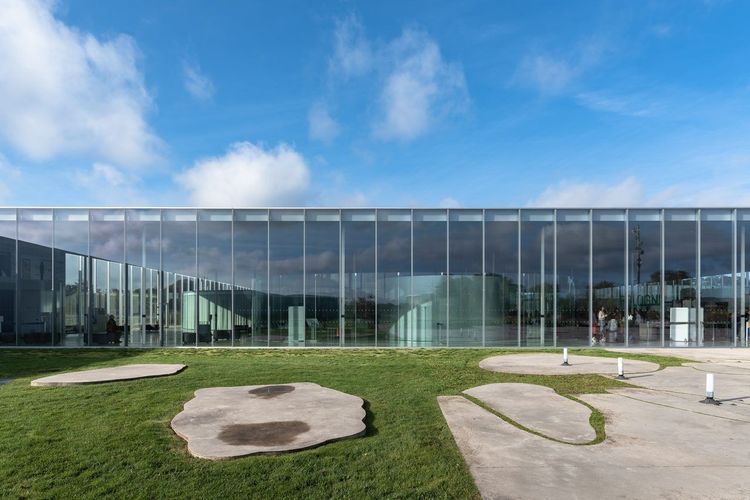
In December 2012, the Louvre made a bold wager: opening a permanent outpost in the former mining town of Lens. The bet paid off. The Louvre-Lens Museum (99 Rue Paul Bert, 62300 Lens, rated 4.5/5 on Google with 11,561 reviews) is now one of the most visited museums in France outside Paris, housed in a building designed by SANAA (Japanese architects) in aluminium and glass, deliberately horizontal in contrast to the vertical slag heaps that surround it.
The Galerie du Temps is the heart of the museum: a 120-metre corridor in which works from all civilisations and all eras coexist on a single chronological timeline. A Greek warrior stands beside an Egyptian bronze from the New Kingdom; a Flemish tapestry enters into dialogue with an Achaemenid Persian ceramic. The idea is simple and powerful: art as a continuum of humanity, with no hierarchy between cultures.
Access to the Galerie du Temps is paid (at a modest rate), but the temporary exhibitions in the Pavillon de Verre are free every day. Under-18s enter the entire museum free of charge. From Lille, Lens is 30 minutes away by train — an ideal day trip. From Paris, the TGV takes 50 minutes.
8. The Ring of Memory at Notre-Dame-de-Lorette
On the hill of Notre-Dame-de-Lorette in Artois, a memorial of radical design has stood since November 2014. The Ring of Memory (Route Nationale, 62153 Ablain-Saint-Nazaire, rated 4.8/5 on Google with 1,327 reviews) is an elliptical steel ring with a 328-metre perimeter, upon which the names of 579,606 soldiers killed in the battles of Artois and Flanders during the First World War are engraved in gold lettering. They are listed not by nationality, not by rank, but strictly in alphabetical order.
This deliberate choice by architect Philippe Prost is the memorial's central message: a French soldier stands alongside a German or British soldier according to the first letter of their surname. War had inflamed nationalism; the ring erases it. Adjoining the memorial, the Notre-Dame-de-Lorette national cemetery is the largest French military cemetery in the world, with 40,000 white graves aligned across the hillside in a silence that weighs upon you.
Entry is free and the visit is self-guided. Within a 30-kilometre radius, other Great War sites merit a stop: the Canadian memorial at Vimy with its reconstructed trenches, the Historial de la Grande Guerre in Péronne, and the Somme memorial at Thiepval (the British memorial dedicated to the 72,000 soldiers with no known grave). Hauts-de-France contains one of the densest and least-visited concentrations of memorial heritage in Europe.
9. Flemish Gastronomy
Hauts-de-France eats hot, hearty and with beer. Carbonade flamande, beef simmered for hours in dark beer with onions and gingerbread, is the queen of northern tables, served with thick-cut fries over which the sauce melts. Ficelle picarde, a crêpe filled with ham, mushrooms and béchamel then gratinated in the oven, comes from Amiens and appears on almost every brasserie menu in the region.
The Dunkerque area has its own treasure: potjevleesch, a cold terrine of four meats (rabbit, poultry, veal and pork) set in their own jelly, served sliced with fries and mustard. Maroilles, a soft washed-rind cheese produced in the Avesnois since the Middle Ages, divides opinion because of its smell, but its flavour is surprisingly mild for those who dare to venture past the olfactory barrier. It also features in flamiches (northern-style tarts) and cream sauces.
Beer underpins all of this cuisine. Dozens of craft breweries supply the estaminets: Ch'ti, Jenlain, 3 Monts from Saint-Sylvestre-Cappel, Goudale. Sweet specialities complete the picture: Lille sugar waffles, bêtises de Cambrai (mint-flavoured boiled sweets born of a confectioner's apprentice's mistake), Valenciennes gingerbread and roasted chicory, a coffee substitute during wartime that has since become a proudly claimed local product. Some Lille grocers still sell it in whole roasted grains to grind at home.
10. The Calais Belfry and the Burghers of Calais
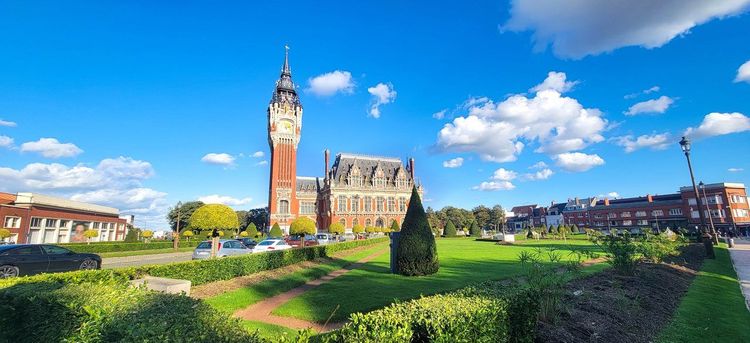
Calais is a transit city for millions of travellers who take the ferry or the Eurotunnel without ever stopping. Yet the historic centre is well worth a proper visit. The Calais belfry, whose earliest traces date from the 13th century, dominates the old quarter with its tower of brick and sandstone. Listed as a UNESCO World Heritage Site alongside the other northern belfries, it can be visited for access to a panoramic view over the port and the Strait of Dover.
Opposite the Museum of Fine Arts and Lace, Rodin's Monument to the Burghers of Calais (Place de l'Hôtel de Ville, 62100 Calais, rated 4.6/5 on Google with 1,788 reviews) is one of the most moving public sculptures in France. Created between 1884 and 1889, it commemorates an episode from the Hundred Years' War: in 1347, six Calais notables agreed to surrender themselves barefoot, with a rope around their necks, to Edward III of England so that their besieged city might be spared. Rodin deliberately chose to depict them at ground level rather than on a pedestal, so that the visitor comes face to face with their heroic resignation.
For a complete route through the city's streets, from the port to the lesser-known central districts, the Ryo audio guide of Calais covers 24 audio tracks across 5.6 km.
11. Chantilly and Its Château
Chantilly holds a special place in the heritage of Hauts-de-France. Its château, a 19th-century reconstruction by the Duke of Aumale on the foundations of the former Palais du Grand Condé, houses the musée Condé: the richest private art collection in France after the Louvre. It contains paintings by Raphael, Fra Angelico, Poussin, Ingres and many remarkable Flemish works. The centrepiece is an illuminated 15th-century manuscript considered among the most precious medieval works in the world: the Très Riches Heures du Duc de Berry.
The originality of the musée Condé stems from a condition imposed by the duke at his death: the collections could neither be dispersed nor rearranged. They are therefore displayed exactly as he himself ordered them during his lifetime — a museum that is also the intimate portrait of a 19th-century man and his passions.
The Grandes Écuries, built in the 18th century for 240 horses by a prince who believed in his own equine reincarnation, now house the Musée du Cheval and equestrian displays. Around the château, the park partly designed by Le Nôtre offers formal gardens, cascades and English-style lakes. In June, the Chantilly racecourse (built in 1834) hosts the Prix de Diane and the Prix du Jockey Club, two of France's greatest horse races. From Paris-Nord, Chantilly is 25 minutes away by RER D.
12. The Palais des Beaux-Arts in Lille
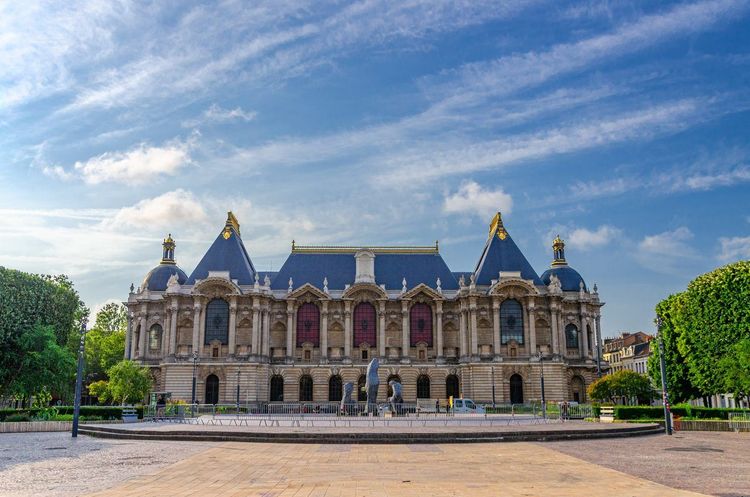
The Palais des Beaux-Arts de Lille (Place de la République, 59000 Lille, rated 4.5/5 on Google with 9,124 reviews) is the second most important fine arts museum in France by the scope of its collections, behind the Louvre. The late 19th-century neoclassical building on the Place de la République holds more than 4,000 works: 17th-century Flemish and Dutch paintings (Rubens, Van Dyck, Jordaens, Rembrandt), sculptures by Rodin, ceramics, antiquities and an exceptional room devoted to scale relief maps.
These scale relief maps are a unique attraction in France: 18 military scale models at a scale of 1:600, commissioned by Louis XIV to visualise his fortified towns — Calais, Dunkerque, Saint-Omer and Aire-sur-la-Lys as they appeared in the 17th century, rendered with a precision that allows you to read every street. Entry to the permanent collections is free on the first Sunday of each month. Allow 3 hours for a thorough visit.
13. The Belfries, Symbols of Civic Freedom
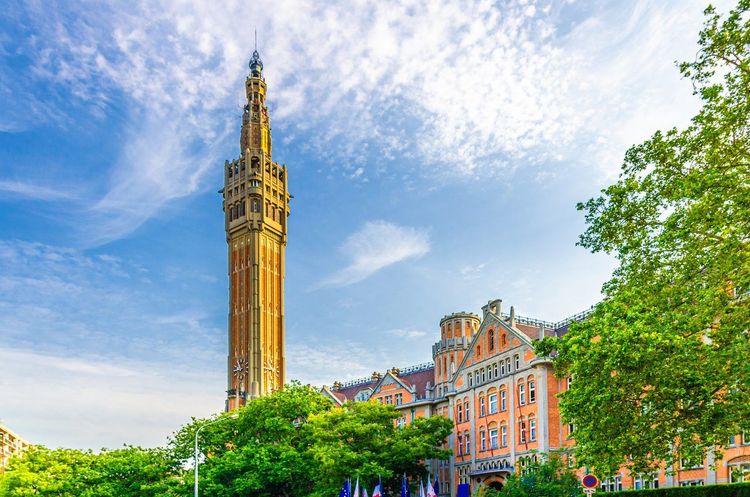
Belfries are to this region what church spires are to Brittany: the architectural expression of an identity. These medieval civic towers symbolised the autonomy of towns against feudal authority — they housed the municipal charter, the communal seal and the bell that governed the rhythm of city life. In 2005, UNESCO inscribed 23 belfries of Belgium and France on the World Heritage List, several of which are in Hauts-de-France.
The belfry of Arras deserves a special mention. Rebuilt to its exact original specifications after its destruction in 1914, it towers over two of the finest Flemish squares in France — the Grand-Place and the Place des Héros — with their rows of Baroque gabled houses reconstructed during the 1920s. The fact that this entire district is a faithful copy completed in under ten years is itself a feat of architecture. Arras is worth half a day, ideally combined with a visit to the boves: the underground galleries carved beneath the city, used as Allied barracks during the Great War. And with Lille just up the line, our audio-guided tour of the Flemish capital runs to 23 stops.
14. Compiègne and Its Imperial Château
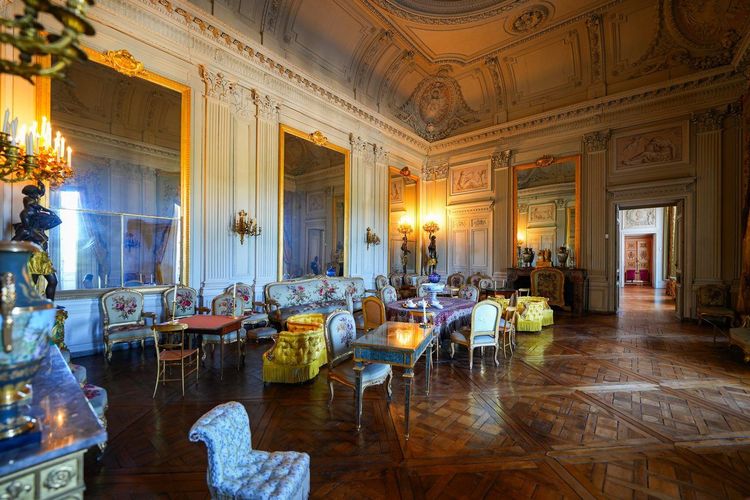
Compiègne has several faces. The imperial château, the favourite summer residence of Napoleon III and Empress Eugénie, is one of France's three great royal palaces alongside Versailles and Fontainebleau, yet receives a fraction of their visitors. The imperial apartments retain their intact Second Empire décor: draperies, gilded furniture, porcelain collections and a room dedicated to state carriages.
The château's park opens onto the Forêt domaniale de Compiègne: 14,500 hectares of royal forest with dozens of riding trails and avenues stretching as far as Pierrefonds (whose neo-medieval château by Viollet-le-Duc is well worth a detour). It is in this forest that the Armistice Clearing is found, a place laden with a double history.
Some 8 kilometres from the centre, in the Rethondes clearing, two defining acts of the 20th century took place at the same location. On 11 November 1918, in Marshal Foch's dining car, German plenipotentiaries signed the armistice. On 22 June 1940, Adolf Hitler imposed France's surrender at the same spot, in an identical carriage retrieved from the nearby museum for the occasion — a devastating act of symbolic staging. A rebuilt museum allows visitors to understand both armistices and the relationship between them.
The Ryo audio guide of Compiègne offers 17 audio tracks across 4.5 km through the historic city, from the château to the Flamboyant Gothic town hall and through the lanes of the old town.
15. The Scarpe-Escaut Regional Nature Park
Founded in 1968, the Scarpe-Escaut Regional Nature Park is the oldest regional nature park in France. It covers 43,700 hectares in a territory stretching between Valenciennes and Douai — an area long shaped by mining and textile industry that is gradually reclaiming its natural equilibrium.
Peat bogs, flood meadows, deciduous forests and former mining subsidence areas transformed into lakes form a rich mosaic of habitats. The Raismes-Saint-Amand-Wallers forest (5,000 hectares of century-old oak and beech stands) is the park's main forested space. Guided outings organised by the park house — covering geology, nocturnal wildlife and industrial history — offer an original way to discover these complex and little-visited landscapes.
16. Pit No. 9-9 bis and the World Mining Basin
In 2012, the Nord-Pas-de-Calais mining basin was inscribed on the UNESCO World Heritage List. It is not a single monument but a cultural landscape 120 kilometres long, encompassing 109 elements: pit heads, winding towers, workers' housing estates, slag heaps and administrative buildings. One of the most accessible entry points is Pit No. 9-9 bis in Oignies, whose installations have been converted into a music venue and cultural centre.
The Centre Historique Minier de Lewarde (Route de l'Argiles, 59287 Lewarde, rated 4.7/5 on Google with 8,291 reviews) (near Douai), housed in the buildings of the former Fosse Delloye, remains the most comprehensive visitor site: descent into reconstructed underground galleries with a miner's helmet and lamp, a permanent exhibition and guided tours led by former miners. To grasp the scale of the landscape, the twin slag heap at Loos-en-Gohelle rises to 186 metres — the tallest slag heap in Europe — with free access to the summit and a panoramic view across the entire Artois plain.
17. The Familistère de Guise
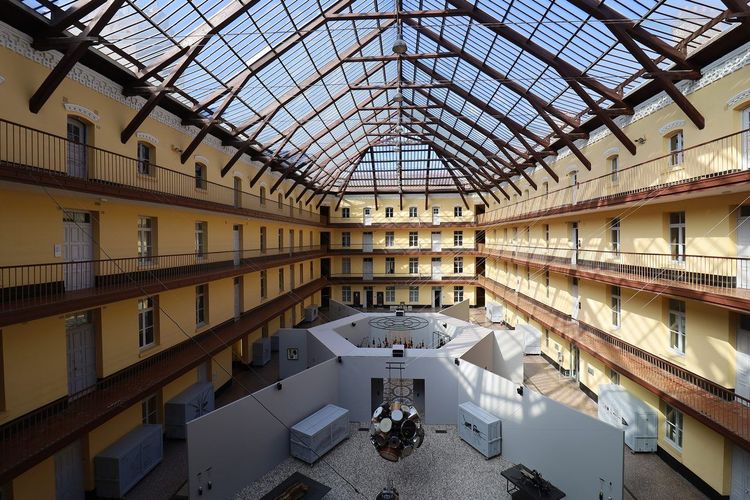
In Guise, in the Aisne, Jean-Baptiste André Godin began building a social utopia in stone and cast iron from 1859 onwards. The Familistère de Guise, also known as the Palais social, is a complex of workers' collective housing equipped with children's nurseries, a secular school, a theatre and public baths. A city within a city, conceived by a humanist industrialist who wanted his workers to live in dignified conditions.
Still partially inhabited today as an eco-district, the Familistère can be visited independently or on a guided tour. The museum traces the history of Godin and his cast-iron stove factory, which became the collective property of its workers at his death. An architectural curiosity and a reflection on labour, capital and social utopia — well off the beaten tourist track.
18. Laon, the Crowned Mountain
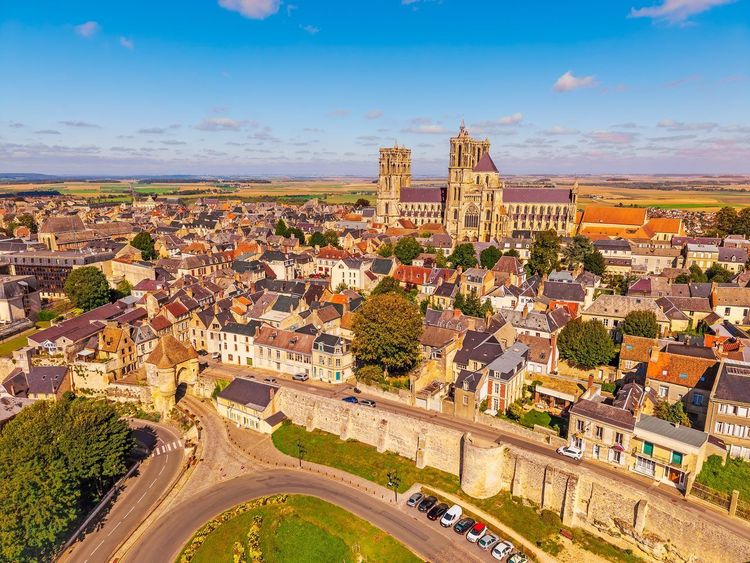
Laon perches high. The historic city occupies a rocky spur that rises 100 metres above the Aisne plain — a defensive position that makes it one of the best-preserved medieval cities in northern France. From the lower station, a bus shuttle climbs to the upper town (the Poma funicular, out of service since 2016, no longer runs), then you explore on foot a historic centre that is almost entirely intact.
The Laon Cathedral Notre-Dame, built between 1155 and 1235, is one of the first Gothic cathedrals in France, predating Notre-Dame de Paris. Its two square towers are adorned with sixteen stone oxen, a tribute to the oxen that hauled building materials up the hill during construction. The interior has a luminous sobriety — no gold, no late Baroque — and its north rose window ranks among the finest Romanesque stained glass in France.
Beneath the city run the creutes: medieval and early modern galleries carved into the chalk, used as cellars, wartime shelters and hiding places. Guided tours descend into them regularly. From the ramparts of the upper town, the view across the Aisne plain stretches up to 50 kilometres on a clear day. To explore Laon at your own pace, the audio walking tour of Laon — La Montagne Couronnée covers 15 audio tracks across 4.2 km.
19. Gerberoy, the Village of a Thousand Roses
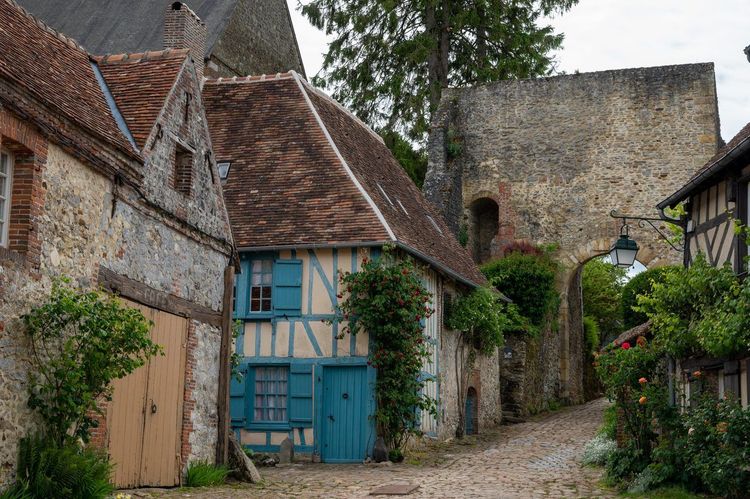
Gerberoy (Place Henri Le Sidaner, 60380 Gerberoy, rated 4.7/5 on Google with 2,000 reviews) has 100 inhabitants and on some days in June perhaps as many visitors. This village in the Oise, listed among the Most Beautiful Villages of France, owes its fame to the century-old rose bushes that smother every façade at the start of summer. The painter Henri Le Sidaner settled there at the end of the 19th century, planted the first rose bushes and created a garden that served as his open-air studio for decades.
In June, the cobbled lanes and half-timbered houses disappear beneath the roses. For the rest of the year, the village retains its medieval charm, its partially restored ramparts and Le Sidaner's house-museum. The Rose Festival is traditionally held on the third Sunday of June. One to two hours is enough to tour the village, but the setting justifies a stop even if you are just passing through.
20. The Matisse Museum in Le Cateau-Cambrésis
Henri Matisse was born in Le Cateau-Cambrésis in 1869, in this small town in the Cambrésis on the Belgian border. The Musée Matisse has been established there since 1952, created during the painter's own lifetime in the rooms of the Palais Fénelon. It houses the third largest Matisse collection in the world by number of works, after the Musée Matisse in Nice and the Centre Pompidou in Paris.
Cut-paper gouaches, ink drawings, bronze sculptures and textile works make up a rich panorama of the painter's career. The room of late cut-paper gouaches is particularly rare: few museums in the world hold as many in a single location. Allow 1.5 to 2 hours for a thorough visit. Le Cateau-Cambrésis is 30 minutes from Valenciennes and one hour from Lille by car.
21. The Giants and Carnivals of the North
Processional giants are an institution of Hauts-de-France inscribed on UNESCO's Intangible Cultural Heritage list. More than 450 giants are recorded across the region — figures of wood and wicker carried aloft by carnival societies perpetuating traditions several centuries old. Some giants have names, families and stories that everyone in their town knows by heart.
In Douai, the giants Gayant and his wife (first recorded in 1530) parade every first weekend of July, followed by 80,000 people on the Sunday. In Cassel, on the Flemish hill, the giant Reuze Papa comes out at Easter and in September, the occasion for a popular village-wide celebration. In Bailleul, the Mardi Gras carnival in February is one of the most authentic in the north, with its floats and carnival societies singing in Flemish dialect. The ducasses (traditional village fairs) punctuate the summer from village to village across the entire region.
22. The Estaminets of the North
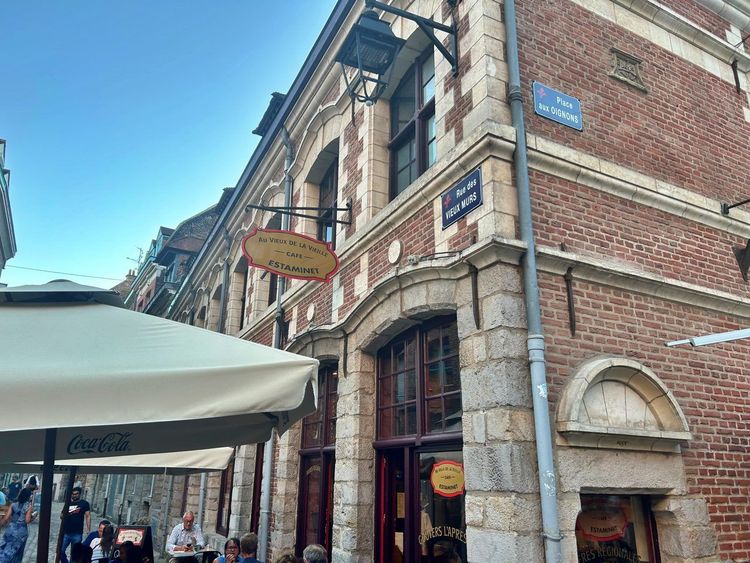
You cannot leave Hauts-de-France without spending at least one evening in an estaminet. These Flemish taverns, specific to northern France and Belgian Flanders, combine an old-fashioned atmosphere (walls covered in sepia photographs, wood panelling, subdued lighting) with hearty food and traditional games: billard nicolet, frog game, skittles. Nothing is staged — it is simply what these places have always been.
On the menu: carbonade flamande, rabbit with gueuze beer, welsh (toast melted with cheddar and dark beer), cold potjevleesch with fries. And plenty of local draught beer. The finest Lille estaminets — L'Estaminet du Vieux de la Vieille (23 Rue de Gand, 59000 Lille, rated 4.5/5 on Google with 8,201 reviews), le Mémère Pauline — are fully booked on Friday evenings. Those in Cassel and Bailleul in the Flemish interior are less crowded but every bit as convincing. A perfect evening to close a stay in Hauts-de-France.



FAQ
What is the most beautiful city to visit in Hauts-de-France?
Lille is the richest city culturally, with its Flemish architecture, its Palais des Beaux-Arts and its lively neighbourhood life. But Amiens (extraordinary Gothic cathedral), Arras (reconstructed Baroque squares), Laon (perched medieval city) and Chantilly (château and musée Condé) are equally valid alternatives depending on your interests.
What is there to do in Hauts-de-France with family?
Nausicaá in Boulogne-sur-Mer is the flagship family attraction, Europe's largest aquarium with 58,000 animals. The Baie de Somme steam railway delights children of all ages. Louvre-Lens offers family workshops and free entry for under-18s. Watching seals from a boat in the Baie de Somme remains a memorable experience.
When should you visit Hauts-de-France?
Spring (April–June) is ideal. Autumn brings the migration of greylag geese over the Baie de Somme and the full estaminet season. Winter should not be ruled out: the Dunkerque Carnival runs from January to March, and Lille's Christmas Market is among the liveliest in northern France.
What is free in Hauts-de-France?
The Ring of Memory at Notre-Dame-de-Lorette is entirely free. Amiens Cathedral is freely accessible (the light show is paid). The Palais des Beaux-Arts in Lille opens its permanent collections for free on the first Sunday of each month. Louvre-Lens is free for under-18s, with free temporary exhibitions for all in the Pavillon de Verre.
How do you get around Hauts-de-France without a car?
Lille, Amiens, Arras, Calais, Dunkerque and Compiègne are well connected by train from Paris and between each other by TER regional trains. Lens is 30 minutes from Lille. Chantilly is 25 minutes from Paris-Nord by RER D. For the Côte d'Opale and the Baie de Somme, a bicycle or car rental remains the most practical option for linking the headlands and villages.
What is the culinary speciality of Hauts-de-France?
Carbonade flamande, ficelle picarde from Amiens, potjevleesch from Dunkerque, maroilles from the Avesnois and moules-frites form the pillars of northern cuisine. Craft beer is a must, with breweries such as Ch'ti, Jenlain and 3 Monts. Everything is best enjoyed in an estaminet, the essential address for any visit to the region.
Conclusion
Hauts-de-France is not a region you pass through — or only for those who have not yet discovered a reason to stop. From the Gothic grandeur of Amiens to the social utopia of Guise, from the opal cliffs of the coast to the Great War memorials, the region offers experiences that are hard to find gathered together elsewhere in France. What makes it even more endearing is the sense that many of its treasures remain little visited. If you searched for things to do in Hauts-de-France without quite knowing what to expect, you now have more than enough to fill a long weekend or an entire week.
To build your itinerary step by step and explore each city with a guide in your ear, the audio-guided tour of Amiens is an excellent starting point from the south of the region. The Ryo app also covers Lille, Calais, Laon, Dunkerque and Compiègne — six commented routes for crossing Hauts-de-France from city to city, at whatever pace suits you.
À lire également