© Shutterstock
 Votre guide Ryo
Activities in Lille and Surroundings: The Complete 2026 Guide
Looking for activities in Lille and surroundings means accepting to discover a city that reveals itself differently from most major French metropolises: no single monument that sums it all up, but a fabric of Flemish architecture, cobbled lanes and lively markets that demands you actually walk through it. The Place du Général de Gaulle stands alongside century-old estaminets, and behind the belfry's façade lies a city that is resolutely alive, two hours from Paris and 35 minutes from Brussels. To begin exploring, the 22 audio stops of the Ryo audio guide tour of Lille cover 6 km through the city centre and the Vieux-Lille — an effective way to set history in motion from the very first hour.
This guide covers the activities in Lille and its surroundings that are genuinely worth the trip in 2026: the Cathédrale Notre-Dame-de-la-Treille whose translucent façade filters a uniquely amber light, the collections of the Palais des Beaux-Arts — France's second museum in terms of the significance of its holdings — day trips to Arras and its baroque squares, the beaches of Dunkerque and Le Touquet reachable in under an hour, and Flemish villages like Cassel or Bergues that even many northerners have yet to explore.
The Vieux-Lille and the Historic Centre
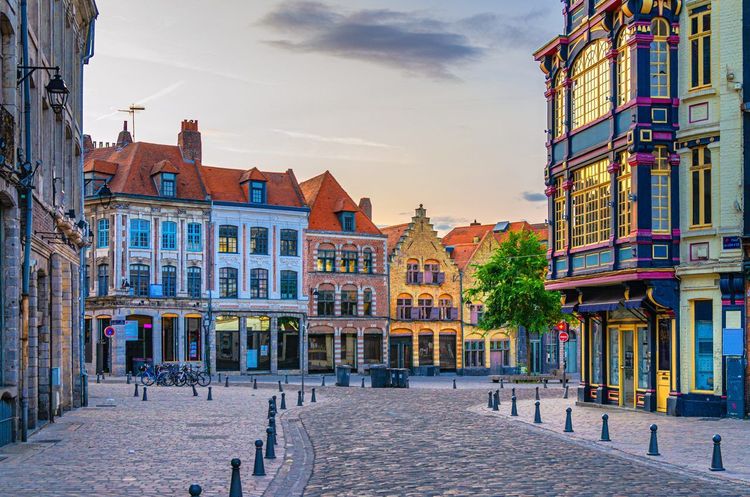
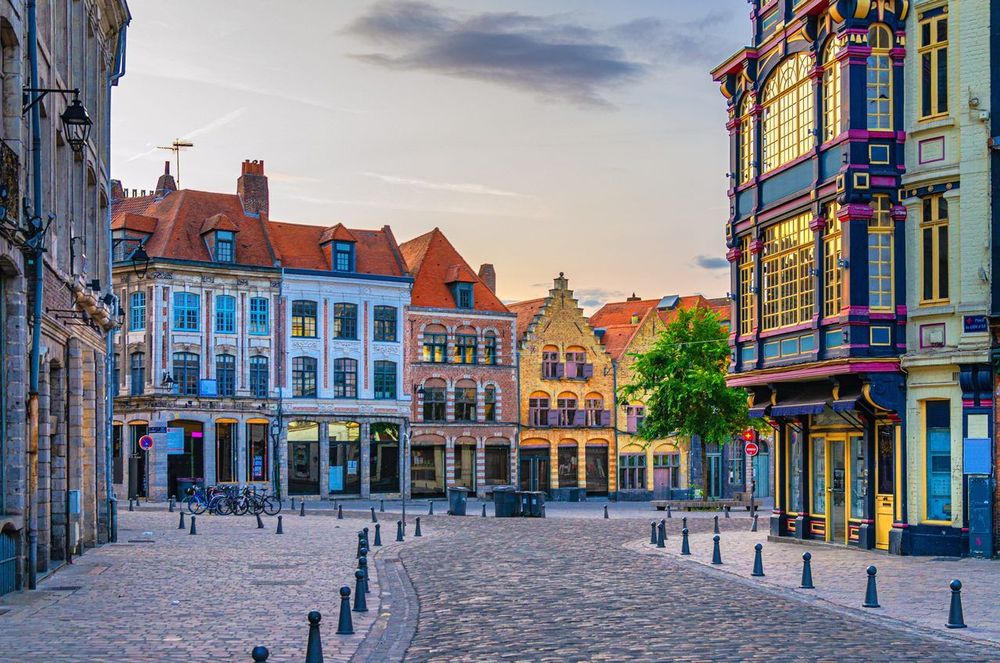
The Vieux-Lille is one of the best-preserved historic centres in northern France. Its narrow streets, paved with pink sandstone, its Flemish brick façades in tones of honey and ochre, its inner courtyards hidden behind carriage gates — there is an atmosphere here that is part Belgian and part deeply northern French, one found nowhere else in the country.
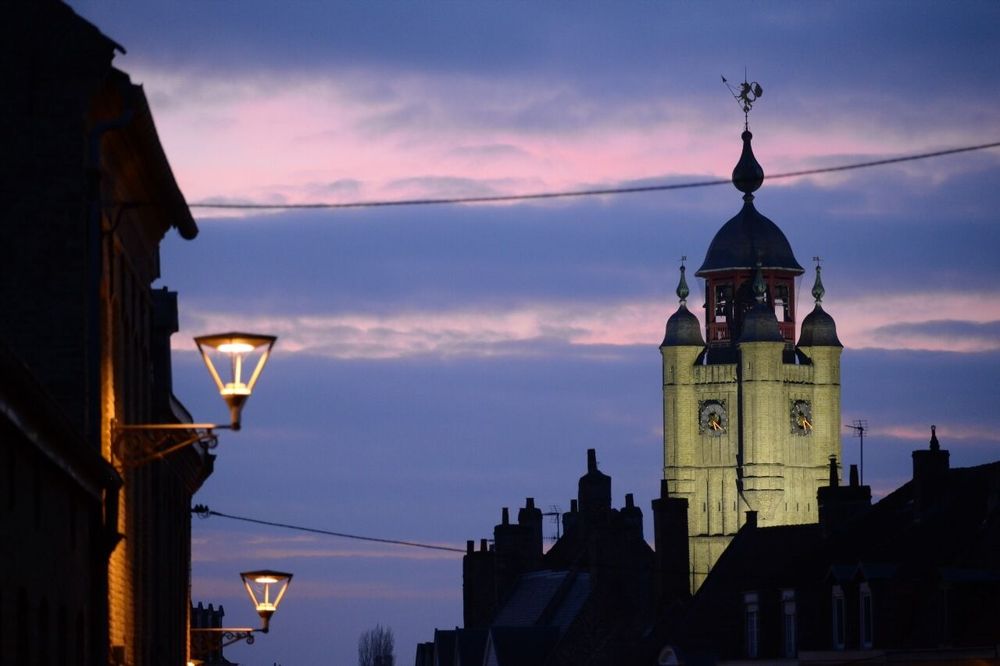
The Place du Général de Gaulle, known to locals as the Grand'Place, is the heart of the city. Dominated by the column of the Goddess, it is surrounded by 17th- and 19th-century buildings, of which the baroque façade of the former Stock Exchange is the most spectacular. The belfry of the Chamber of Commerce, rising to 76 metres, has been a UNESCO World Heritage Site since 2005 — one of 56 Franco-Belgian belfries listed together.
The Vieille Bourse deserves a lengthy stop. Built between 1652 and 1653 by Julien Destrée, it houses twenty-four identical townhouses arranged around an inner courtyard where chess players have gathered every afternoon for decades. Entry is free, and the gallery regularly hosts book markets and temporary exhibitions. It is one of the rare places in France where everyday life and 17th-century heritage share the same space without barriers or admission fees.
A few steps to the north, the Vieux-Lille proper begins on the Rue de la Monnaie and Rue Basse. This neighbourhood, spared by the bombing of the Second World War, concentrates the bulk of 17th-century Flemish architecture. The Place du Lion d'Or is one of the most beautiful small squares in the North: surrounded by step-gabled houses, it opens onto several lanes descending towards the old ramparts. Visiting Lille for the first time? The Ryo audio guide of Lille offers a 6 km itinerary designed to miss none of these corners — 22 commented stops from the belfry to the Vieux-Lille.
The Cathédrale Notre-Dame-de-la-Treille is a special case in French architecture. Begun in 1854, it was only completed in 1999, and the contemporary translucent marble façade designed by Pierre-Louis Carlier long divided the people of Lille. Today it is one of the city's most astonishing sights: light filters through the central panel like through alabaster, casting an amber hue on the nave columns on sunny mornings.
The Porte de Paris, erected in 1692 by Simon Vollant to celebrate Louis XIV's conquest of Lille, is the only remaining vestige of the old royal ramparts in the city centre. It faces the Hôtel de Ville and its 104-metre belfry, built in the 1920s in a neo-Flemish style that stands in sharp contrast to the austerity of town halls elsewhere in France.
For those who want to go further, the Citadelle de Lille, a pentagonal military fortification designed by Vauban in 1667 and still active as a barracks, can be visited in groups during guided tours organised by the Tourist Office. All around it, the park bearing its name extends over more than 60 hectares, making it the largest green space in the city centre. The Grand'Place and the Porte de Paris are both stops on our 23-stop audio-guided tour of the Flemish capital.
The Major Museums of Lille
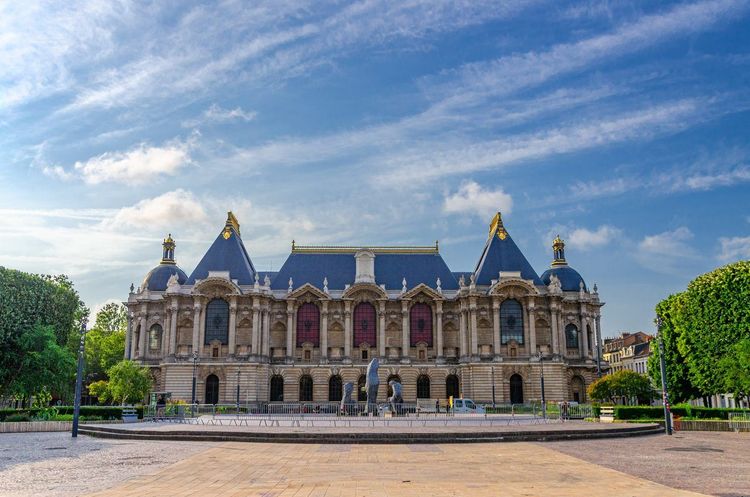
The Palais des Beaux-Arts de Lille is the second fine arts museum in France after the Louvre in terms of the significance of its collections. More than 4,000 works displayed across three levels: Flemish and Dutch paintings from the 15th to the 18th century, sculptures by Rodin and Claudel, ceramics, and an exceptional collection of relief maps of fortified cities commissioned by Louis XIV. The collection of Rubens, Jordaens and Van Dyck is one of the most comprehensive outside Belgium. Admission is free on the first Sunday of the month, and the museum is often less crowded than one might expect.
The Musée de l'Hospice Comtesse occupies a former hospice founded in 1237 by Jeanne de Constantinople, Countess of Flanders. Carefully restored, it preserves an exceptionally well-kept 17th-century sick ward, a baroque chapel, and collections of regional decorative arts — faience, light oak furniture, silverware. It is one of the most moving museums in the city, far from the crowds of the Palais des Beaux-Arts, and one that tells a social history that larger museums often overlook.
The Musée d'Histoire Naturelle de Lille (19 Rue de Bruxelles, 59000 Lille, rated 4.4/5 on Google from 4,198 reviews) impresses as much for its building as for its collections: a late 19th-century zoology gallery with its old-fashioned display cases, cetacean skeletons suspended from the ceiling, and botanical herbaria that Parisian museums have often renovated but which Lille has chosen to preserve in their original state. Guaranteed to impress children — and nostalgic adults.
In Villeneuve-d'Ascq, 10 minutes from Lille by metro, the LaM (Lille Métropole Museum of Modern Art, Contemporary Art and Outsider Art) offers one of the most distinctive permanent collections in northern France. Alongside works by Braque, Léger and Modigliani, an entire space is dedicated to outsider art — creations by self-taught artists or those outside institutional circuits — which proves to be the museum's finest surprise. The open-air sculpture park is freely accessible without a ticket.
Parks, Nature and the Outdoors in Lille
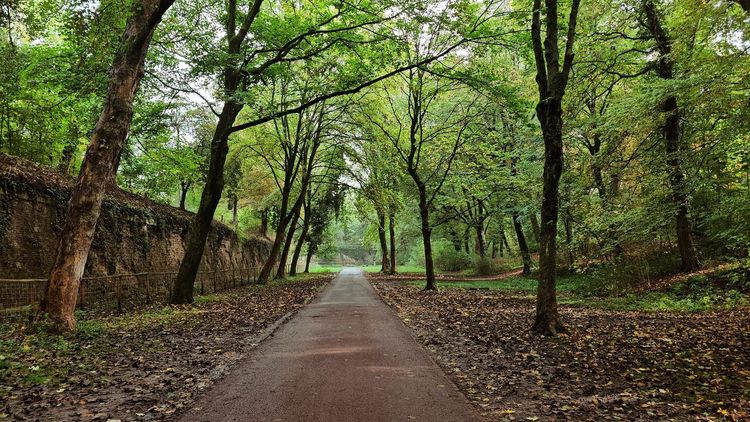
Lille is often perceived as a dense and industrious city, but it boasts remarkable green spaces less than 20 minutes from the centre. The Parc de la Citadelle extends over some sixty hectares around the Vauban pentagon: shaded avenues of century-old linden trees, ponds, a municipal zoo and meadows where locals picnic at the first sign of sunshine. The loop around the ramparts is approximately 4 km, easily walkable or cyclable.
Our dedicated article on the Parc de la Citadelle de Lille details the zoo's opening hours, access routes from each neighbourhood and the best itineraries depending on the season.
The Zoo de Lille, integrated into the Parc de la Citadelle, is home to around 70 animal species including white rhinoceroses, giraffes, lions and flamingos. Long entirely free, it now charges admission (€12 full price, €8 for ages 3–12, free for under-3s), but entry remains free on the first Sunday of each month, and year-round for residents of Lille, Lomme and Hellemmes holding the Pass Lille & moi. It is closed on Tuesdays and shuts for winter, generally from mid-November to mid-February.
The Jardin Vauban, designed by Jean-Pierre Barillet-Deschamps in 1863, is Lille's oldest public park. Its 8 hectares of English-style landscaping — streams, artificial waterfalls, a bandstand and open lawns — make it a peaceful strolling spot 10 minutes' walk from the Grand'Place. Families appreciate its playground and summer outdoor café.
In Villeneuve-d'Ascq, the Parc du Héron (Rue Roger Salengro, 59650 Villeneuve-d'Ascq, rated 4.5/5 on Google from 6,460 reviews) offers 170 hectares of nature around a quarry lake. Cycling paths connect this park to the V'Lille network (the metropolitan area's bike-share scheme), and in summer the water sports centre offers sailing, kayaking and supervised swimming. It is the favourite destination of Lille families in fine weather, often quieter than the Citadelle at weekends.
Unusual Activities and Original Experiences
Lille offers far more than classic heritage visits. In recent years the city has developed a varied range of experiences, from urban kayaking to secret cellars and brewing workshops.
Kayaking on the Deûle lets you see Lille from a rarely taken angle: that of the canals that once ran throughout the metropolitan area. Several operators offer two-hour outings departing from the Quai de l'Université, passing through historic locks. Ideal between May and September, when the evening light on the water makes up for the northern chill.
Escape rooms have proliferated in the city centre since 2018, and Lille now has more than twenty venues. Among the most highly regarded: Escape Hunt Lille, housed in a private mansion in the Vieux-Lille, offers immersive scenarios in carefully designed sets. The standard duration is 60 minutes for groups of 2 to 6 people, and the Flemish-themed rooms are regularly cited among the best in the region.
The Tri Postal (Avenue Willy Brandt, 59777 Euralille, rated 4.3/5 on Google from 1,707 reviews) is an extraordinary cultural venue: a former 7,000 m² postal sorting station converted into an exhibition and events space. The Grande Braderie de l'Art, held there each autumn, offers works by contemporary artists at accessible prices — an original way to bring back a souvenir from Lille that won't gather dust in a drawer.
Thrill-seekers can opt for indoor karting available at several venues across the metropolitan area, or head to Mégaparc in Englos (15 minutes by car), an indoor leisure park that comes into its own when the northern sky turns grey. Indoor climbing, giant trampolines, laser tag and bowling all coexist under 14,000 m² of covered space.
The Brasserie du Pavé (Lille) and several microbreweries in Roubaix and Tourcoing offer tours of their facilities with tastings — an introduction to the craft beers of the North, where the Flemish brewing tradition is still very much alive. Allow 1.5 hours for a guided tour with tasting, usually on Saturday mornings by reservation.
For evening walks, several associations organise themed guided tours of the Vieux-Lille by torchlight or candlelight, particularly around Halloween and the festive season. Another way to approach a heritage you thought you already knew.
Food and Drink: Estaminets and the Wazemmes Market
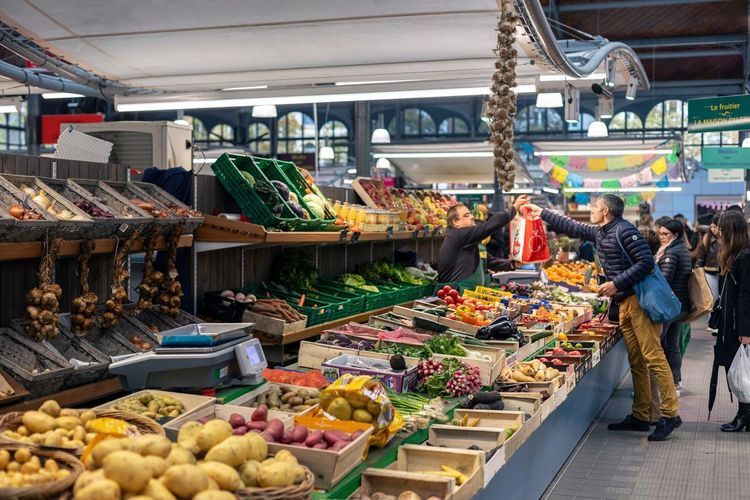
Lille's cuisine is a cuisine of character, shaped by Flemish and Belgian influences: beef carbonnade braised in dark beer, welsh rarebit (melted cheddar and beer gratin), hochepot (a stew of meats and autumn vegetables), ficelles picardes and waffles filled with vergeoise sugar. To discover it in its natural setting, the estaminets — traditional brasseries of the North — are the appropriate backdrop.
The Estaminet Au Vieux de la Vieille, on the Rue des Vieux-Murs, is one of the most authentic addresses in the Vieux-Lille. Period décor (antique toys, ironwork, objects collected over decades), old-fashioned service and a short but effective menu: the welsh rarebit served here with a Picon bière is a local institution. Reservations are advised on Friday and Saturday evenings.
The Marché de Wazemmes (Place de la Nouvelle Aventure, 59000 Lille, rated 4.3/5 on Google from 4,434 reviews), held on Sunday mornings at the Place de la Nouvelle Aventure, is one of the liveliest and most multicultural markets in France. Stalls of northern cheeses, Malagasy and Senegalese grocers, Flemish polder market gardeners, halal butchers, second-hand bookshops — the market spills onto the surrounding pavements and extends into café terraces. Arrive before 9 a.m. to see the producers setting up; stay until 1 p.m. for the end-of-market atmosphere.
The Halles de Wazemmes adjoin the market and house artisans and grocers on weekdays. This is where you find the freshest maroilles in the region — the emblematic northern cheese, powerfully aromatic yet surprisingly mild when young. A tasting on the spot with a slice of country bread costs less than €3.
For more, our guide to the culinary specialities of Lille details every unmissable dish with the best addresses by neighbourhood.
Culture, Shows and Nightlife
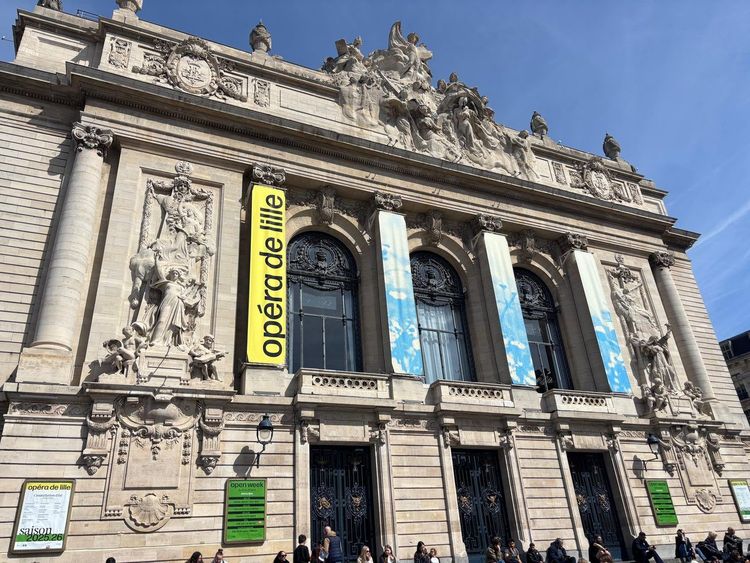
The Opéra de Lille, a listed historic monument, is one of the finest lyric venues in the North. Its neoclassical façade on the Place du Théâtre and its Italian-style interior (1,160 seats) host operas, ballets and symphony concerts. The 2025–2026 programme is packed, with several new productions and collaborations with European stages. Ticket prices remain noticeably lower than the major Parisian houses — one more reason to go.
The Orchestre National de Lille performs mainly at the Nouveau Siècle, a 1,800-seat hall in the city centre, and regularly gives concerts beyond its walls — in parks, outlying neighbourhoods and municipalities across the metropolitan area, often at very affordable prices or free of charge.
In Roubaix, La Condition Publique (14 Place du Général Faidherbe, 59100 Roubaix, rated 4.5/5 on Google from 1,598 reviews) is a singular cultural space: a former 19th-century wool conditioning factory converted into a multidisciplinary venue. Contemporary art exhibitions, concerts, workshops and creative markets fill a dense programme, often at modest prices. The building's industrial architecture alone is worth the trip from Lille (20 minutes by metro).
For live music, Le Splendid in Lille is a benchmark venue for contemporary music: pop, hip-hop, electronic and rock, with a capacity of around 900 and a national and international programme throughout the year. Student nights animate the Solférino neighbourhood and the Rue Masséna at weekends. To keep up with Lille events in 2026, our calendar is updated every week.
Day Trips Around Lille
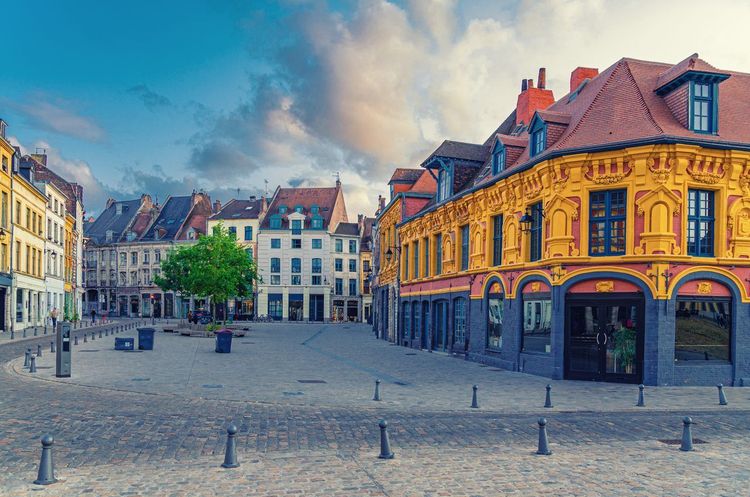
Much of Lille's appeal comes from its geographical position: in less than an hour by car or train, you can reach half a dozen towns and sites that each have their own distinct character. It is the "and surroundings" in the title that deserves to be truly explored, and what sets a stay in Lille apart from a weekend in any other French metropolis.
Arras (50 km to the south, 45 min by train from Lille-Flandres) is probably the most beautiful destination in the surrounding area. Its Grand'Place and Place des Héros, framed by golden step-gabled Flemish façades, form one of the largest baroque ensembles in France, instantly recognisable by the arcaded ground floors of the buildings. Beneath the square, the Boves — medieval cellars carved into the chalk, used as shelters during both world wars — can be visited on a one-hour guided circuit. The Musée des Beaux-Arts d'Arras, housed in a former 18th-century Benedictine abbey, merits an additional half hour.
Lens (38 km, 30 min by car) has been home since 2012 to the Louvre-Lens, the provincial branch of the Parisian museum. The mirror-aluminium building designed by Kazuyo Sejima (SANAA) makes a striking statement in the post-industrial landscape of the mining basin. The Galerie du Temps — a 205-metre corridor where 200 works span Antiquity to the 19th century in chronological order — is one of the most impressive museum settings in France, and admission to the permanent gallery is free all year round.
Roubaix (15 km, 20 min by metro) is often underestimated, yet it is home to one of the most astonishing museums in the North: La Piscine, the André Diligent Museum of Art and Industry. Housed in a fully restored 1920s Art Deco swimming pool, it displays collections of sculpture, textile design and fine arts around the original swimming basin — a setting unlike anything else in France.
Douai (35 km, 30 min by train) boasts the largest carillon in France — 62 bells in its UNESCO-listed belfry — and a historic centre crossed by the Scarpe river that gives it the feel of a quiet Flemish market town. Saturday-morning carillon concerts and belfry tours are rare experiences.
Cassel (60 km, 50 min by car) is a gem of the inner Flanders: a medieval market town perched on a 176-metre hill commanding a 360-degree view over the Flemish plain. Its Grand-Place, its working windmill (one of the few Flemish mills still used to grind flour) and its 18th-century brick houses make it one of the most charming small towns in the North. The panorama from Mont Cassel (Place du Général de Gaulle, 59670 Cassel, rated 4.5/5 on Google from 1,736 reviews) stretches as far as the English coast on a clear day.
Bergues (45 km, 35 min by car), made famous by the film Bienvenue chez les Ch'tis, has managed to make the most of its fame without being overwhelmed by it. Its intact Vauban ramparts, brick lanes and UNESCO-listed belfry can be visited at a leisurely pace in two hours. The town is small, but every stone tells several centuries of border history.
For a complete programme, our guide to day trips around Lille lists 12 destinations sorted by distance and type of landscape. For more rural addresses, the most beautiful villages to visit around Lille rounds out this overview with hamlets off the beaten track.
Northern Beaches Within 1 Hour of Lille
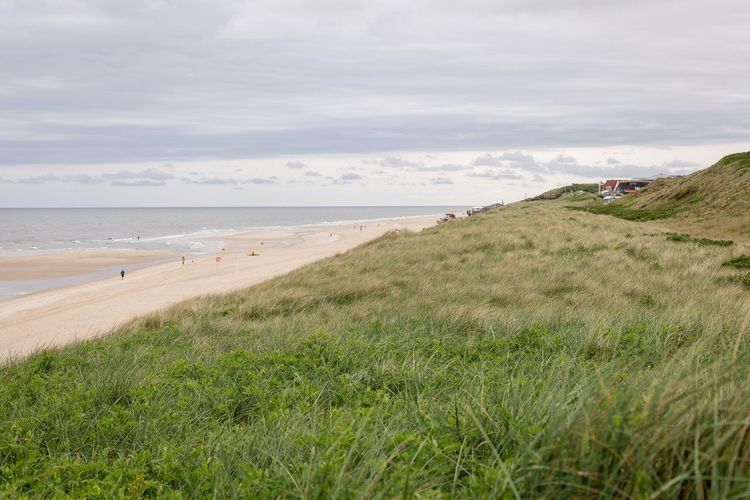
The North Sea is less than an hour from Lille, and the region's beaches often surprise first-time visitors: wide, windy, ideal for sand yachting and coastal hiking, they have neither Mediterranean softness nor Atlantic glamour — they have their own character, raw and luminous when the sun breaks through.
Dunkerque (80 km, 1 h by car or TER train) is the largest town on the northern coast. Its seafront between the beach at Malo-les-Bains and the Digue des Alliés offers 3 km of fine sand, a lively promenade and a busy marina. The Musée Dunkerque 1940 Opération Dynamo recounts the evacuation of Allied troops in May–June 1940 with striking documentary precision — one of the most poignant war memory museums in the North.
Bray-Dunes (90 km, 1 h 10), on the Belgian border, is the most expansive and peaceful beach on the coastline: 3 km of dunes inhabited only by a few wooden beach huts in summer. It is the address for families seeking space without crowds.
Le Touquet-Paris-Plage (120 km, 1 h 20) is the most prestigious seaside resort in the North, frequented since the Belle Époque by the Parisian bourgeoisie and British aristocrats who crossed the Channel. Its Anglo-Norman villas nestled among pine trees, its casino and its 12 km beach make it a destination apart — more sophisticated than its neighbours, with a hotel and dining offer to match.
Berck-sur-Mer (115 km, 1 h 15) is known for its International Kite Festival (late April), which draws tens of thousands of visitors over a few days. Outside the festival, the 12 km beach and the dunes of the Baie d'Authie offer one of the finest coastal walks in the North — 2 to 3 hours depending on your pace, with views of the grey seals that colonise the sandbars at low tide.
Our article on the beaches of Nord-Pas-de-Calais details each resort with the water sports available and weather tips to maximise your chances of sunshine.
Lille with a Family: Activities for All Ages
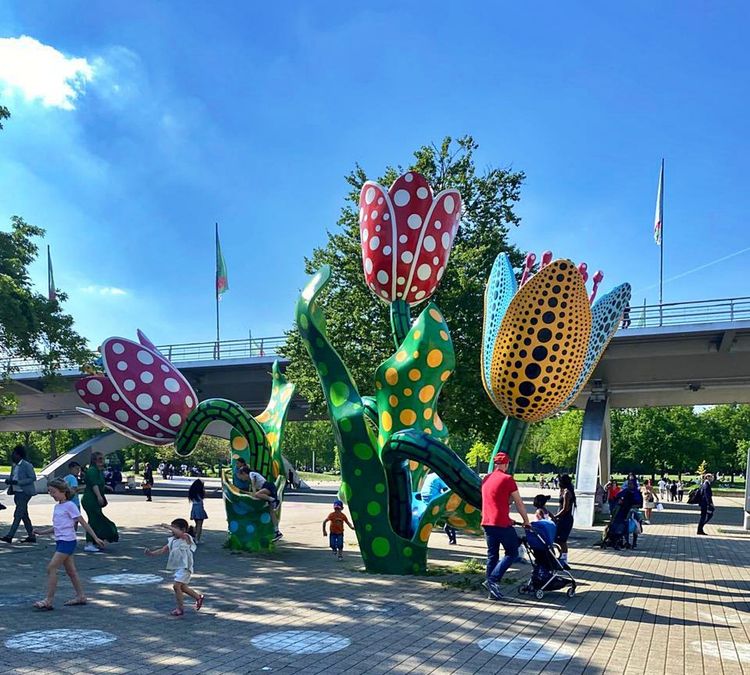
Lille is a surprisingly family-friendly city. Its museums free on the first Sunday of the month, its zoo at a low price (and free on that same Sunday) and its generous parks make it an accessible destination for all budgets with children, without compromising on the quality of visits.
For rainy-day outings, Méga Parc in Englos (15 min by car from Lille) is the go-to address: indoor climbing, giant trampolines, laser tag, bowling and ball pools — 14,000 m² of covered entertainment that has saved many a northern weekend.
The Planétarium de Villeneuve-d'Ascq, integrated into the Forum des Sciences, offers 45-minute shows on the night sky, accessible from age 6. Prices are very modest (under €5 per person), and Wednesday afternoon sessions are particularly well suited to primary-school-age children.
Teenagers enjoy the ice rink at Wasquehal (20 minutes from Lille) for year-round public skating sessions, with skate hire on site. In summer, the Parc du Héron in Villeneuve-d'Ascq takes over with its water sports centre and family cycling paths around the lake.
A full family day, ideally on the first Sunday of the month, can combine a morning at the Citadelle zoo (free that day), a picnic in the park, an afternoon at the Palais des Beaux-Arts (free on the first Sunday of the month), and an end-of-day stroll through the Vieux-Lille for a vanilla-filled waffle from one of the many artisan shops on the Rue Esquermoise. By targeting this free Sunday, the day comes to less than €20 per family, meals included.
Practical Information: When to Come, Getting Around and Planning Your Stay
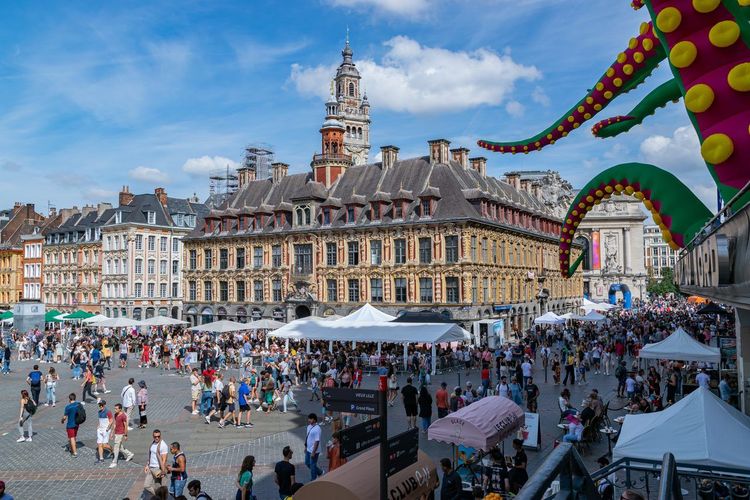
When to visit? Spring (May–June) offers the best conditions in Lille: temperatures between 15 and 22 °C, long days and lively terraces. Autumn (September–October) is also pleasant. The Braderie de Lille, on the first weekend of September, draws 2 million visitors in 48 hours — a trip that needs to be planned several months in advance to find reasonably priced accommodation.
Getting around. The Ilévia network (two lines of VAL automated metro, tram and bus) covers the entire metropolitan area. The 10-journey ticket (approximately €18) is the most economical option for a two-day stay. The V'Lille bike-share scheme (€1/h) complements public transport well for the Vieux-Lille and the parks. Roubaix and Tourcoing are reachable by metro (35 min from Lille-Centre) without a car.
To explore Lille on an audio-guided tour at your own pace, the Ryo app is available on iOS and Android — 23 commented stops over 6 km, no human guide required and no set timetable.
For day trips to Arras, Lens or Bergues, TER SNCF trains serve Arras in 45 min and Dunkerque in 1 h 15 from Lille-Flandres. A car remains more practical for villages like Cassel or the beaches of Le Touquet.
Budget. Lille is less expensive than Paris: allow €30 to €50 per person per day (excluding accommodation) for visits, meals and transport. National museums offer reduced rates for European under-26s, and several museums in the metropolitan area are free on the first Sunday of the month.
FAQ
What is the best time to visit Lille?
Spring (May–June) is the most pleasant time: mild temperatures, open terraces and a wealth of cultural events. Autumn (September–October) is also recommended, with the Braderie de Lille as the highlight on the first weekend of September. If you are targeting that weekend, book accommodation and restaurants several months in advance — the city welcomes 2 million visitors in 48 hours and prices soar. The Lille winter is cold but lively, with Christmas markets and numerous cultural events across the metropolitan area.
Are there free activities in Lille?
Many. The Zoo de Lille and the Palais des Beaux-Arts are both free on the first Sunday of the month (the zoo is also free year-round for residents of Lille, Lomme and Hellemmes who hold the Pass Lille & moi). Strolling through the Vieux-Lille, the Parc de la Citadelle, the Jardin Vauban and the Wazemmes market on Sunday morning cost nothing. 38 km from Lille, the Louvre-Lens offers its permanent gallery free of charge all year round — a collection of rare quality with entirely free access.
What to do in Lille when it rains?
The Palais des Beaux-Arts easily fills half a day, as does the Musée de l'Hospice Comtesse or the LaM in Villeneuve-d'Ascq. The Vieille Bourse houses a covered market and its interior galleries. The escape rooms in the Vieux-Lille and cooking workshops in city-centre culinary schools work in any weather. A 15-minute drive away, Méga Parc in Englos offers 14,000 m² of indoor entertainment, ideal for families.
How do you get around Lille and its surroundings?
The Ilévia network (VAL automated metro, tram, bus) covers the Lille metropolitan area. The metro reaches Roubaix and Tourcoing in 35 minutes from Lille-Centre without a car. For longer excursions, TER SNCF trains serve Arras in 45 min, Lens in 30 min and Dunkerque in 1 h 15 from Lille-Flandres. A car remains practical for Flemish villages (Cassel, Bergues) and seaside resorts (Le Touquet, Berck).
Which places around Lille are worth a day trip?
Five destinations stand out. Arras (45 min by train) for its baroque squares and the underground Boves. Lens (30 min by car) for the Louvre-Lens and its free permanent admission. Roubaix (20 min by metro) for the La Piscine museum and its unique Art Deco architecture. Cassel (50 min by car) for the 360° view from the hill and its working windmill. Bergues (35 min by car) for its intact Vauban ramparts and its authentic Flemish market-town atmosphere.
How long do you need to visit Lille?
A two-day weekend is enough to cover the historic centre (Vieux-Lille, Grand'Place, Palais des Beaux-Arts) and an evening in an estaminet. Three days allow you to add a day trip to Arras or Roubaix and take your time wandering the Wazemmes market. To explore the beaches of the North, the Flemish villages and the Louvre-Lens, plan for 4 to 5 days or spread your visit across several trips — Lille is connected to Paris in 1 h by TGV, making it a convenient base for back-and-forth visits. On a short weekend, our audio walking tour links the Grand'Place to the Hospice Comtesse in a single loop.
Going Further
Lille resists quick descriptions. It is not a city of spectacular monuments or cinematic skylines — it is a city of texture, of Flemish brick details, generous tables and a cultural scene that has little to envy of France's great metropolises. And around it, within a one-hour radius, unfold landscapes and towns that complete the picture: the vast plains of the mining basin traversed by the Louvre-Lens, the Flemish polders descending towards Bergues and Dunkerque, the dunes of Le Touquet and the baroque squares of Arras.
To discover the must-sees of the Hauts-de-France beyond Lille, our regional selection covers the major sites across the entire region. And to explore the centre of Lille at your own pace, the Ryo audio guide tour of Lille offers 22 commented stops over 6 km — from the belfry of the Chamber of Commerce to the lanes of the Vieux-Lille — available directly on your phone, with no reservation or set timetable required.
À lire également