
Créé par Romane, le 17 nov. 2026
Votre guide Ryo
Dunkirk, France
The City of Jean Bart
Parcours audioguidé pour visiter Dunkerque en 1 jour
This visit invites you to an immersion between sky and sea, in the heart of a city that has made the horizon its most beautiful avenue. Let yourself be carried by the energy of a city that rebuilt itself with boldness, blending traditional red brick with contemporary lines facing the harbor. Between the vastness of the fine sandy beaches swept by the wind and the conviviality of the maritime districts, the city reveals a resilient, festive, and deeply generous character. An exploration on foot, balancing water reflections and the spirit of the carnival, to capture the full soul of a Flemish sentinel looking proudly toward the open sea.
Quand partir à Dunkerque ?
Jan.
7°
12
Feb.
10°
9
March
10°
9
April
12°
8
May
15°
9
June
18°
8
July
21°
8
Aug.
21°
9
Sept.
19°
10
Oct.
15°
12
Nov.
11°
13
Dec.
8°
13
Dunkirk enjoys a distinct oceanic climate, with cool and breezy summers around 21°C and temperate but humid winters fluctuating between 3°C and 8°C. The ideal period runs from June to September to enjoy Malo-les-Bains beach and boat trips. However, the month of February is unique for experiencing the excitement of its famous carnival, while summer offers invigorating sea air and spectacular Northern light over the Flanders dunes.
Départ conseillé
No need to worry about where to begin! Our tours are designed as a loop, so you can jump in wherever you are. The navigation system and audio-guide will automatically adjust to your location. However, if you happen to be nearby, we do have a preferred starting point: On Lucien Lefol bridge
Parking à proximité
Digue des Alliés car park – Place Paul Asseman
In Dunkirk, you can choose between paid street parking in the city centre, paid underground car parks, or free parking spots located a bit further out. The car park we recommend is free and just a few steps from the beach and the start of the tour. If you opt for paid on-street parking, don’t forget to use a parking meter or the PaybyPhone mobile app!
Découvrez 23 lieux d'intérêt pour visiter Dunkerque








What to see in Dunkerque on your 3h10 tour?
This 7.8 km loop takes about 3 h 10 and links 21 sights. From the Sculpture Garden, it crosses the historic centre between the Town Hall, the belfry and Saint-Eloi church, runs along the marina basins to the Grand Large district, reaches the memorial sites of 1940, then heads for the lighthouse and the dike as far as Malo-les-Bains beach. With the Ryo app in your ears, every stop tells of the sea, the war and the carnival that make up Dunkirk's soul.
Information checked in November 2026 and subject to change.
1 - Jardin des Sculptures
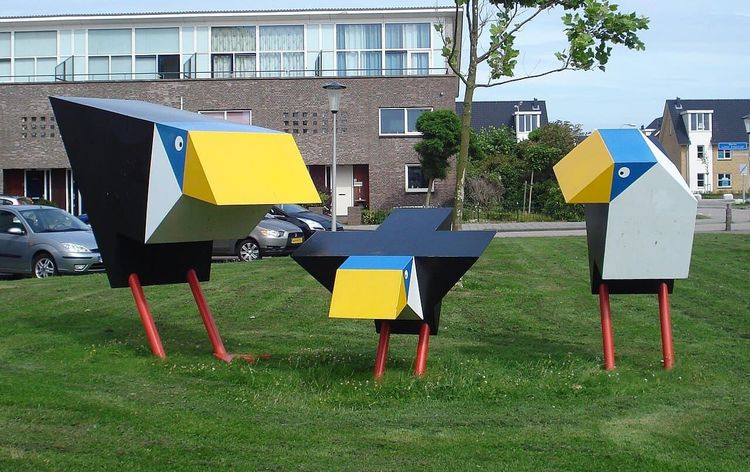
This contemporary garden surrounds the LAAC, a museum opened in 1982 to house the collection assembled by Gilbert Delaine: more than 2,000 works from the postwar years to the 1980s, paintings, sculptures and photographs shown in a playful way. All around, the park itself becomes an open-air gallery, where sometimes surprising pieces mingle with plants and ponds. An artistic stroll, a stone's throw from the harbour, as relaxing as it is unexpected.
Free entry
2 - Leughenaer Tower
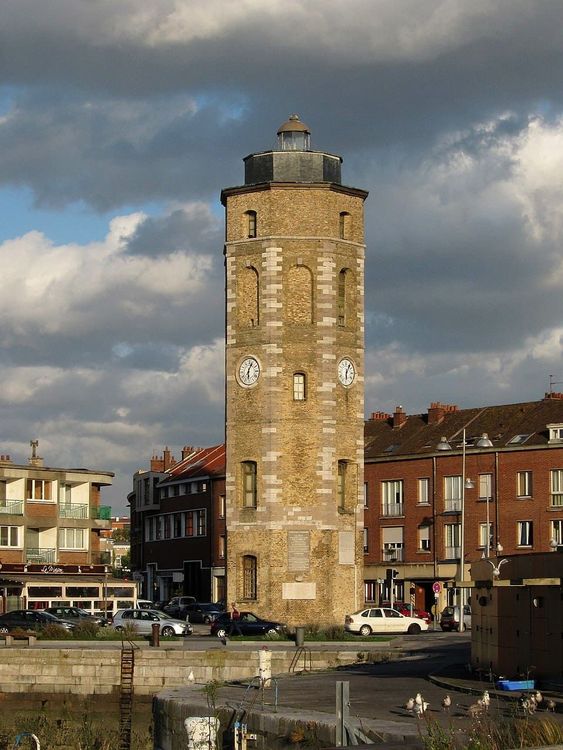
Dunkirk's oldest surviving building, this octagonal 15th-century tower once guarded one of the town gates before becoming a lighthouse once the ramparts came down. Its name is said to come from a Flemish word for liar, one legend claiming false signals lured ships here to be looted, another blaming a wind-battered clock that never told the right time. Listed as a historic monument since 1995, it still stands near the fishmongers' stalls by the harbour.
Free to see from outside
3 - Port of Dunkirk

France's third port, this one was in the 11th century just a small herring-fishing harbour, and it took until the 14th century to grow through trade with England and Holland. Almost abandoned after wars and the Revolution, it revived from 1822 onward, was saved from planned demolition in the First World War by General Foch, then razed by bombs in the Second. Rebuilt, it now ranks first in the region for river traffic and has committed to a greener way of operating.
Free entry
4 - Viewpoint from the Commerce Basin
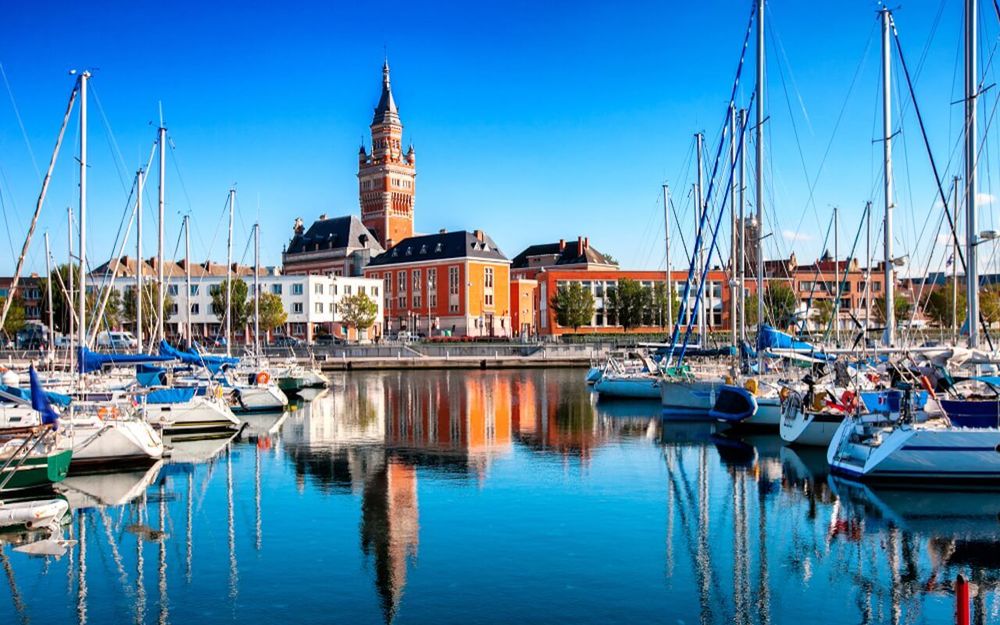
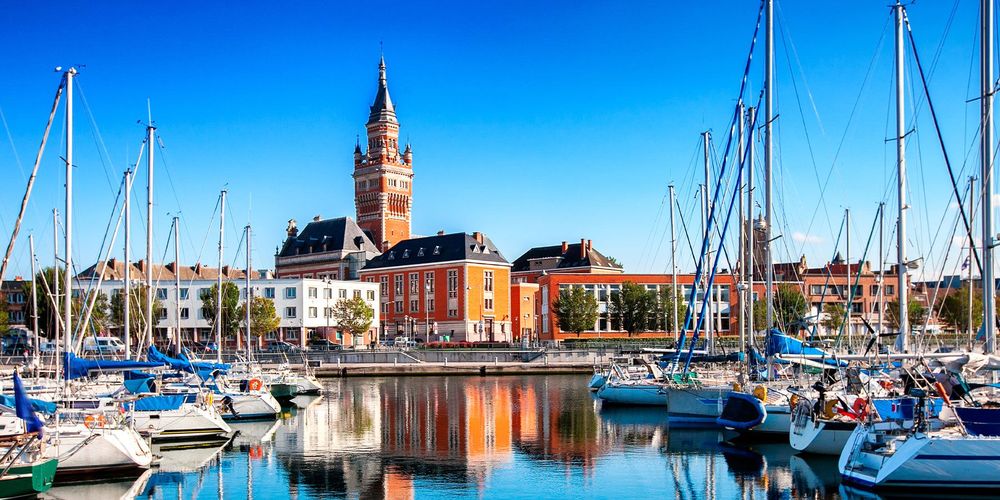
Right in the city centre, this basin gathers a fleet of sailboats and motor boats, in a setting that has become one of Dunkirk's most recognisable images. From the quays, masts and hulls stand out against the colourful red, yellow and orange façades of the local houses, in a harmony typical of northern port towns. A simple spot, yet one that sums up the maritime identity of the city.
Free entry
5 - Dunkirk’s Town Hall
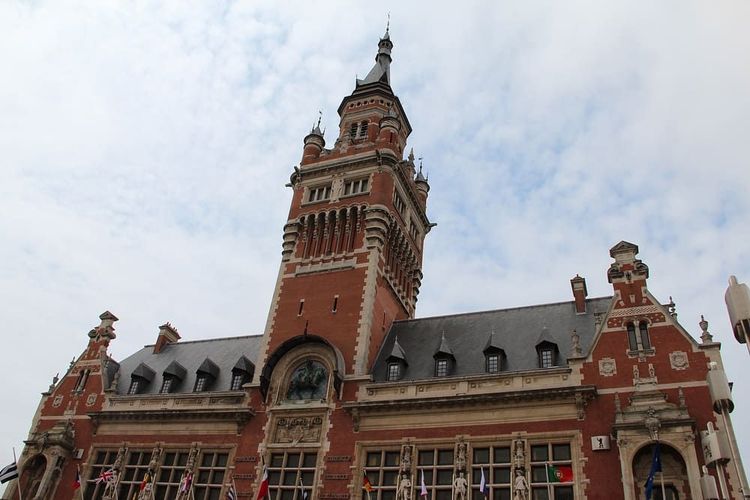
Built between 1897 and 1901 in Flemish Renaissance style by Lille architect Louis-Marie Cordonnier, this building stands on the site of an earlier town hall dating back to 1233. Its 75-metre belfry, the second in the city after Saint-Eloi's, is listed as a UNESCO World Heritage site. On the façade, an equestrian statue of Louis XIV recalls his 1662 purchase of Dunkirk from the English, while inside, a stained-glass window by Félix Gaudin celebrates the triumphant return of the privateer Jean Bart.
Free to see from outside
6 - Dunkirk Belfry

A watchtower built in the 1200s, this belfry became the bell tower of Saint-Eloi church in 1450, before a fire and then a lack of funds left the two monuments forever separated by a street. Rising 58 metres and protected since 1840, it rings out through fifty bells, the main one honouring Jean Bart. Like its cousins across the North and Belgium, it once symbolised a city's wealth and civic freedoms; you can still climb it for a view over the port and the beaches.
Paid entry (about €5)
7 - Saint-Eloi Church
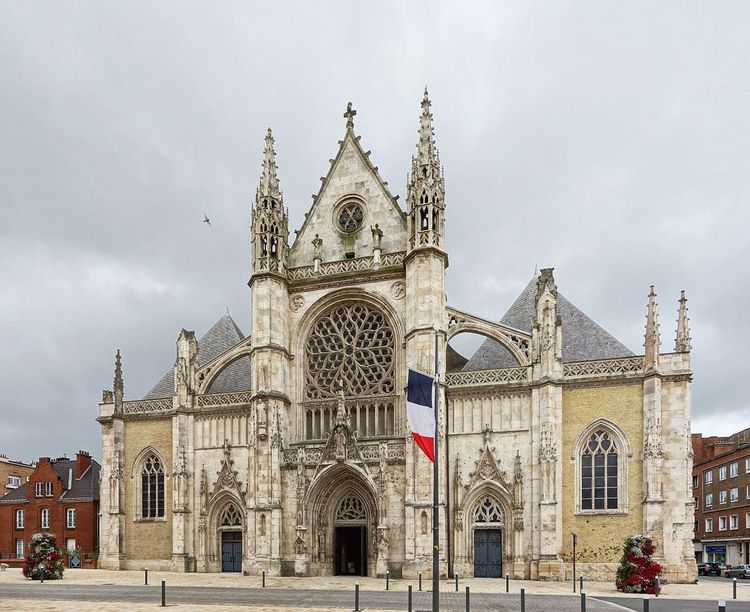
Built in flamboyant Gothic style in the 16th century, this church lost its original bell tower, now the neighbouring belfry, during a rebuilding left unfinished for lack of funds after a fire. Its 1894 façade still bears bullet marks from 20th-century conflicts. Nicknamed the cathedral of the sands, it keeps in its choir the tomb of the privateer Jean Bart, the city's most famous hero.
Free entry
8 - Jean Bart Square
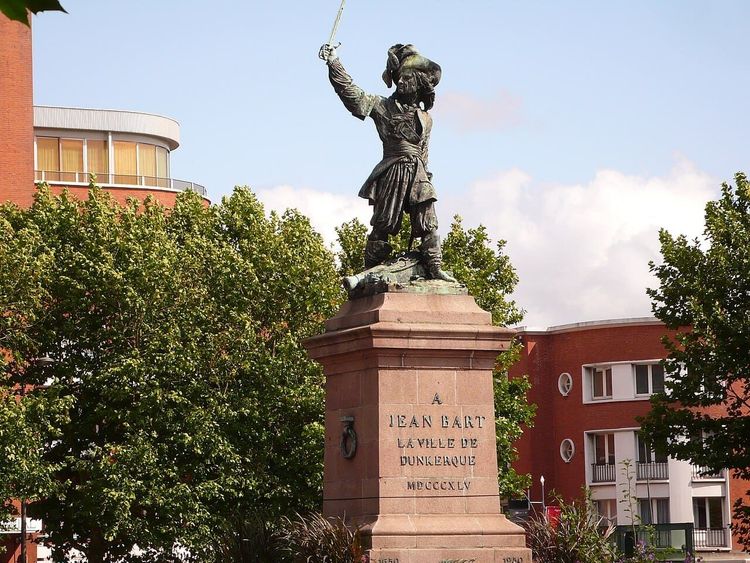
This square, once called Royale before taking the name of Dunkirk's most famous privateer, has carried since 1845 a bronze statue of Jean Bart, sword raised to the sky. The work, by David d'Angers, honours the man who, after bringing back a grain convoy that saved France from famine in the 17th century, was knighted by Louis XIV and became commander of the local navy. Now surrounded by café terraces and shops, it remains the city centre's unmissable landmark.
Free entry
9 - Marina Basin and Commerce Basin
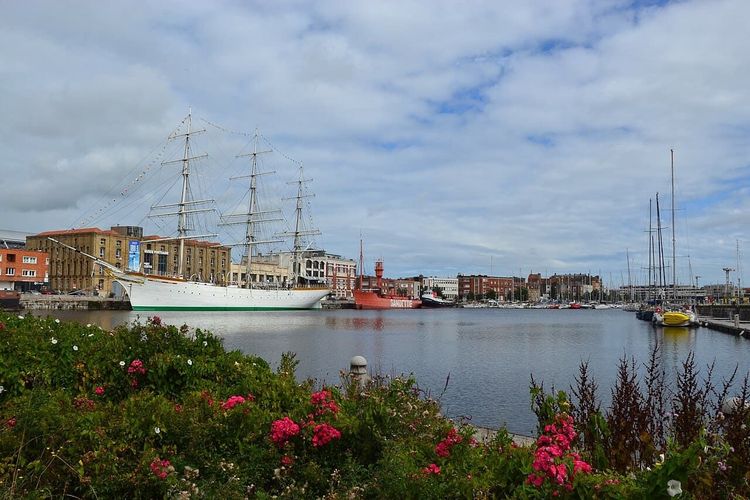
These two marina basins, one with room for 170 boats, the other for 140, once stood in a 19th-century district of shipyards and maritime trading companies. Today they host shops, university buildings and the Port Museum, just steps from the station and the Pôle Marine. Between moored sailboats and downtown façades, this area captures Dunkirk's dual identity, torn between working the sea and simply enjoying it.
Free entry
10 - The Duchesse Anne
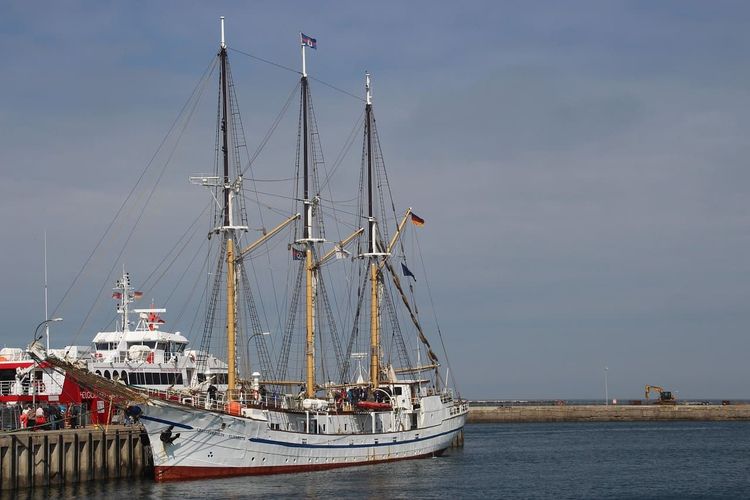
Launched in 1901 under the German flag, this square-rigged three-master, the last of its kind preserved in France, was handed over to the country as war reparations and renamed in honour of the Duchess of Brittany, later Queen of France. A former training ship and then a sailors' hostel in Brest, it has been moored in Dunkirk since 1981 and listed as a historic monument. Visiting it means walking the decks and cabins of a ship with more than a century of history behind it.
Paid entry (about €10)
11 - Port Museum
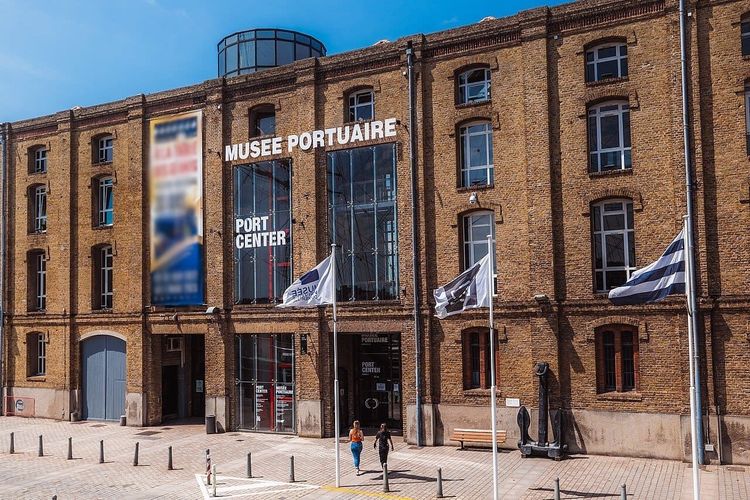
Housed since 1992 in a former tobacco warehouse in the Citadelle district, this museum traces four centuries of port history through models, tools and photographs of maritime trades. The visit then continues straight onto the water, where three ships await exploration, led by the Duchesse Anne. A complete stop for understanding how the harbour shaped the identity of the whole city.
Paid entry (about €8)
12 - Marinas
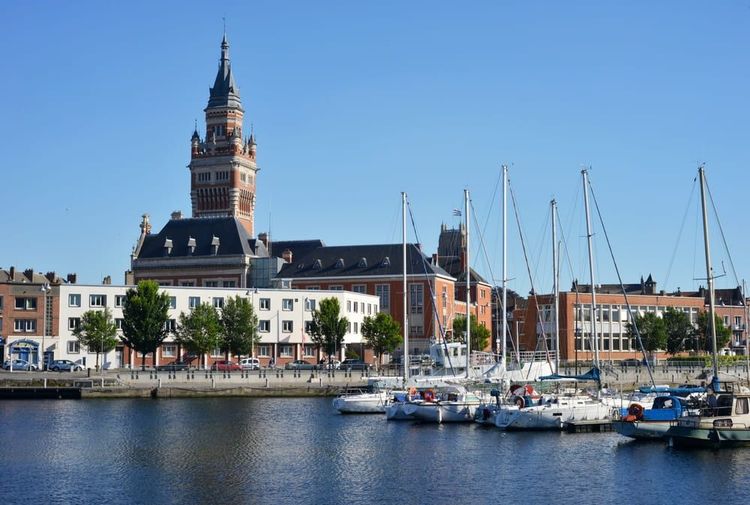
With more than 650 berths spread across three basins, including the Grand Large one open day and night, Dunkirk has become a favourite stopover for boaters from across northern Europe, just a short sail from Belgium. Around 2,000 sailors call in here every year, taking advantage of the nearby historic centre to explore the city or catch its carnival. A success story that contrasts sharply with the port's modest beginnings as a simple fishermen's shelter.
Free entry
13 - Dunkirk Gables
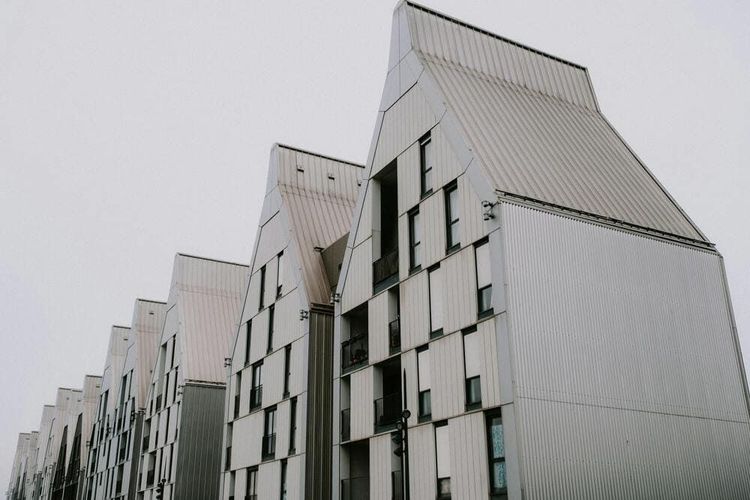
On the site of former shipyards left completely derelict, the Grand Large district saw the rise of these triangular buildings nicknamed the Gables, inspired by the traditional Flemish houses of Belgium. Bold and somewhat surprising, this architecture mainly provided homes for hundreds of families in an area close to the beach and the marinas. A modern way of bringing new life to a place steeped in industrial history.
Free entry
14 - Monument to Georges Guynemer
A legendary First World War pilot, Georges Guynemer had already survived eight crashes when he disappeared on a mission over Belgium on 11 September 1917, aged just 22, after 53 air combat victories. This monument, replacing an earlier one destroyed in 1941, bears his motto Face up, later adopted by the French Air Force. A figure declared a national hero a month after his death, honoured here on the seafront.
Free entry
15 - Museum 1940 Operation Dynamo
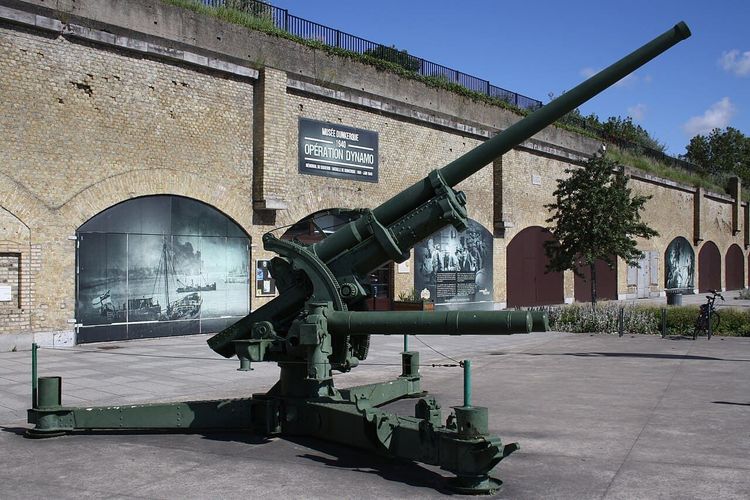
Almost 90 percent of Dunkirk's buildings were destroyed during the Second World War, largely because of Operation Dynamo: over a few days in May and June 1940, more than 1,400 British boats evacuated 340,000 soldiers trapped on the beaches, after the invasion of the Netherlands, Luxembourg and Belgium. Located near the East jetty, right where the events unfolded, the museum retraces one of the largest rescue operations in military history.
Paid entry (about €8)
16 - The Hourglass
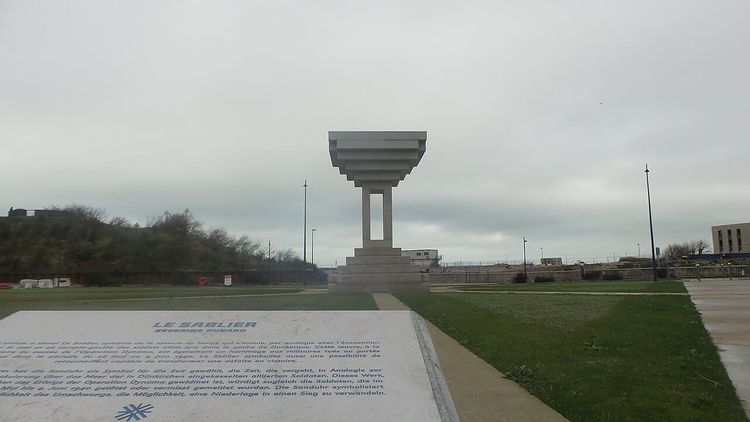
Standing at the north-western tip of the Grand Large, this giant hourglass, a work by Lille artist Séverine Hubard revealed the same year Christopher Nolan's war film hit cinemas, evokes the suspended time of soldiers waiting on the sand during the Operation Dynamo evacuation. Its shape, which can always be turned over, also suggests that defeat can be reversed into victory. A public commission blending contemporary art with the duty of remembrance, facing the sea.
Free entry
17 - Dunkirk Carnival
Born in the 17th century as a farewell party organised by shipowners for sailors heading off to fish for months at sea, Dunkirk's carnival now draws up to 50,000 people a day around Shrove Tuesday. Makeshift costumes called clet'ches and colourful umbrellas parade in bandes to the sound of fifes, all the way to the Town Hall, where the mayor traditionally throws smoked herrings into the crowd. More a lived experience than a show, it sums up the whole popular spirit of the city.
Free entry
18 - Viewpoint of Dunkirk Lighthouse
The Risban lighthouse, the sixth tallest in France at 63 metres, has watched over the harbour entrance since 1843, built on the ruins of a Vauban fort after an earlier 17th-century lighthouse was swept away by a storm. Listed as a historic monument, it can only be climbed on certain dates, but its silhouette can be admired at any time from the nearby quays, framed against the sea horizon.
Free to see from outside
19 - Blockhaus
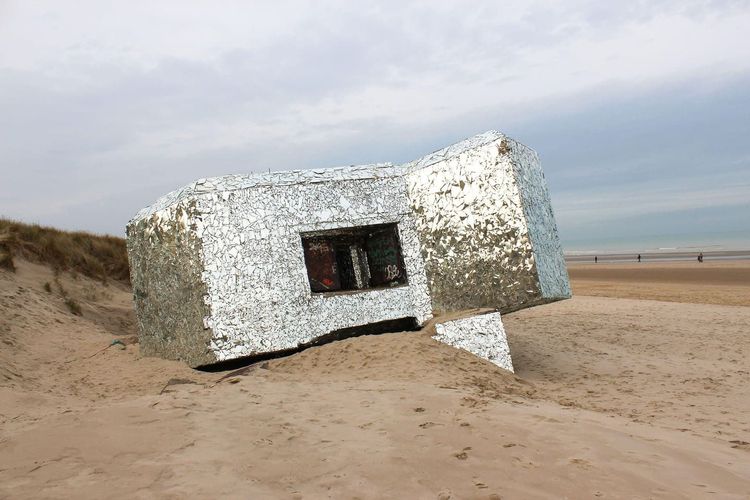
Among the roughly 12,000 bunkers built along the Atlantic coast by the German occupiers, this one was part of the Atlantic Wall, designed to prevent any Allied landing. Made of thick reinforced concrete able to withstand bombing, these shelters still line the Dunkirk coastline, some hidden behind seafront villas to escape detection at the time. A stark relic, yet a telling one from one of the region's darkest periods.
Free entry
20 - Outlet Canal Dike
Raised in 1876 against the fury of the sea, this dike has the shore and its North Sea waves on one flank, a canal built to drain the hinterland's waters on the other. Reinforced several times against storms, it now offers a walk much loved by locals, with sea spray on one side and the calm of the canal on the other. A quiet structure, yet one that says everything about Dunkirk's ongoing tug of war with the elements.
Free entry
21 - Malo-les-Bains Beach
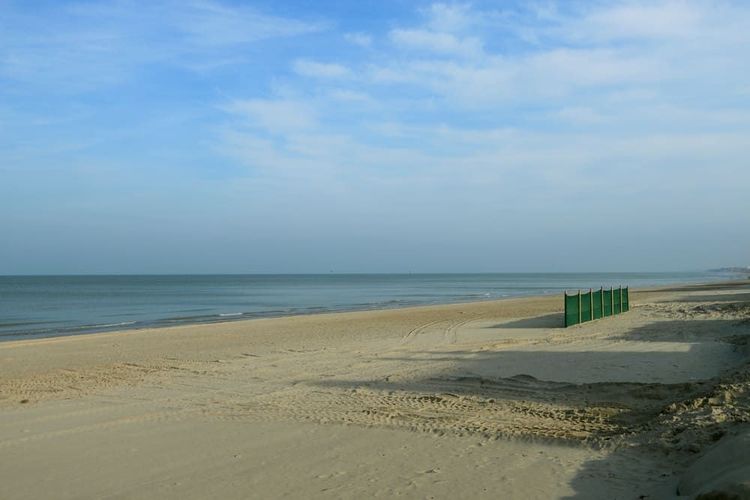
The name of this beach comes from a former town, absorbed into Dunkirk in 1970, whose Belle Epoque villas still line the dike, a reminder of the early years of seaside holidays. Bars, ice-cream stands and café terraces have settled in, making it locals' favourite spot to unwind, just steps from the centre. A fitting way to end the walk, feet in the sand facing the North Sea.
Free entry
Which neighbourhoods does the tour cross?
Setting off from the Sculpture Garden, the loop runs from the rebuilt centre to the harbour basins, then to the seafront, telling the story of Dunkirk's maritime past, its wars and its carnival along the way.
From the Sculpture Garden, near the seafront, the trail skirts the Leughenaer Tower, reaches the harbour and its quays, then enters the town centre: the Town Hall, the belfry and Saint-Éloi church follow one another as far as Jean Bart square (stops 1 to 8).
It then drops down to the Marina and Commerce basins, where sailboats and pleasure craft moor, passes the Duchesse Anne and the Port Museum, and reaches the triangular houses of the Gâbles, in the Grand Large district (stops 9 to 13).
The final stretch lines up the memorial sites, from the monument to the airman Georges Guynemer to the 1940 Operation Dynamo Museum and the Hourglass (stops 14 to 16). The commentary then turns to the carnival, before a viewpoint over the Risban lighthouse, a blockhouse and the Allies' dike, between the outlet canal and the North Sea, as far as Malo-les-Bains beach (stops 17 to 21).
What to see in Dunkerque in 2 hours?
If time is short, focus on Dunkirk's historic heart: stops 4 to 8 sit within a few hundred metres of each other and follow on without a detour.
From the viewpoint over the Commerce basin, head to the Town Hall and its Flemish Renaissance façade, then climb the belfry for a panorama over the city of Jean Bart. Saint-Éloi church, close by, leads on to Jean Bart square, where the privateer's statue looks out over cafés and shops.
How much does it cost to visit Dunkerque?
Of the 21 stops on the route, 14 are free to walk into, from the Sculpture Garden to Malo-les-Bains beach; three others, the Leughenaer Tower, the Town Hall and the viewpoint over the Risban lighthouse, can only be admired from the outside. The other four charge admission:
- the belfry and its panoramic terrace (€5);
- the Duchesse Anne, the tall ship moored near the Port Museum (€9.50);
- the Port Museum itself (€8.50);
- the 1940 Operation Dynamo Museum (€8).
To visit several sites, a joint ticket covering the Port Museum and the 1940 Operation Dynamo Museum costs €10 and is valid for one day; a €17 pass, valid for 7 days, combines the Port Museum, the moored boats, including the Duchesse Anne, and the climb up the Risban lighthouse.
Information checked in November 2026 and subject to change.
Where to stop for a bite along the tour?
Two stops stand out for a break along the way. Around the marina basins, Pôle Marine lines up shops and restaurants facing the water; at the end of the loop, the Malo-les-Bains seafront is lined with bars and restaurants, joined in the warmer months by ice-cream sellers.
What to do in Dunkerque with children?
With children, the route begins and ends with two stops that are easy to enjoy as a family.
The Sculpture Garden surrounds the LAAC, a contemporary art museum whose playful, interactive tour appeals to young and old alike; the garden's sculptures can be explored freely all around. At the end of the loop, Malo-les-Bains beach is good for swimming in the warmer months, depending on lifeguard cover, and its flat promenade for a stroll in any season.
What should you know before visiting Dunkerque?
Several paid stops keep limited opening hours, worth checking before planning the loop.
The Duchesse Anne is open on Saturdays and Sundays from 2 pm to 5:30 pm; the climb up the Risban lighthouse, meanwhile, only opens on Sunday mornings, between 10 am and 12:30 pm. At the belfry, the terrace can close in strong wind, with the last climb 30 minutes before closing time; the ticket office at the 1940 Operation Dynamo Museum closes an hour before the museum itself.
The carnival livens up the town for several months and peaks in the week of Shrove Tuesday: people join in dressed up, old clothes pieced together into a “clet'che” with a multicoloured umbrella. As for the weather, Malo-les-Bains beach and boat trips are best enjoyed from June to September, while the mild but damp winter ranges between 3 and 8°C.
What to see around Dunkerque?
Dunkirk also makes a good base for exploring Flanders and the coast, on both sides of the Belgian border.
38 km away, Calais pairs its monumental Flemish town hall with Rodin's Burghers of Calais and a seafront where ferries drift past. 62 km away, Bruges unfolds its medieval canals and gabled houses, and 66 km away, Lille combines Flemish heritage with a lively student atmosphere in the lanes of Vieux-Lille.
Further on, Le Touquet-Paris-Plage, 80 km away, draws on its wide beaches and dunes, while Ghent, 94 km away, keeps its fairytale canals and guild houses for those with a little more time.
What's on in Dunkerque right now?
As the year draws to a close, Dunkirk has two dates worth marking.
On 6 December, the Father Christmas Run brings runners and walkers together on Place Ferdinand Schipman, with 5 km and 10 km courses for adults and shorter races for children, in a musical atmosphere around hot chocolate. On 17 December, the Paul Garein Big Band and the Archetti string ensemble give a Christmas concert at the Dunkirk Casino.
Information checked in November 2026 and subject to change.
Le plein d'inspirations
Explorez le monde en totale liberté, à pied au cœur des villes ou au fil des routes. Nos guides audios transforment chaque destination en une découverte culturelle immersive et unique.
FAQ for visiting Dunkirk
When is the best time to visit Dunkirk?
The ideal time to discover Dunkirk runs from June to September, when temperatures hover around 21°C and you can make the most of the fine sandy beaches of Malo-les-Bains. Summer reveals an exceptional northern light over the dunes of Flanders and offers bracing sea air perfect for walks. February, however, remains a unique moment with the famous carnival that turns the city into an explosion of colour and festivities. Winters stay mild, ranging between 3°C and 8°C, but wetter. The oceanic climate brings steady winds that are part of the charm of this seafaring city facing the open water.
How much time do you need to visit Dunkirk?
A weekend of two to three days lets you comfortably discover the essentials of Dunkirk. In a full day, you can explore the historic centre, stroll around the harbour and enjoy the beach at Malo-les-Bains. With two days, you will have time to delve deeper into the maritime museums, venture into the neighbourhoods with their russet brick and savour the atmosphere of the seafront cafés. If you have three days or more, you can also explore the surroundings, notably the dunes of Flanders, or take an excursion to the memorial sites of Operation Dynamo. The city is a pleasure to explore on foot, letting you soak up its unique maritime atmosphere.
How do you get around Dunkirk?
Dunkirk is best explored on foot, especially the compact city centre and the historic neighbourhoods. The city has an excellent free bus network, a remarkable feature that greatly eases travel between the different neighbourhoods and out to the beach. The lines serve all the tourist points of interest regularly. For cycling enthusiasts, well-laid-out bike paths let you ride along the coast and easily reach Malo-les-Bains. Bike rental is available in several places. If you arrive by car, you will generally find parking spaces without difficulty, with several free or reasonably priced car parks near the centre and the beach.
What are the absolute must-sees in Dunkirk?
Dunkirk reveals its treasures between maritime heritage and contemporary architecture. The harbour, the true lifeblood of the city, deserves a long walk to admire the ships and grasp the soul of this city turned towards the sea. The Saint-Éloi belfry, a UNESCO site, offers a sweeping view over the horizon. The Port Museum plunges you into local maritime history, while the FRAC displays contemporary art in a spectacular building. The beach at Malo-les-Bains invites you to stroll along its lively seawall lined with colourful bathing cabins. Do not miss the Excentric quarter with its fishermen's houses. The Ryo audioguide accompanies you on this discovery with a narrated tour that reveals the secrets of the city of Jean Bart.
What can you do in Dunkirk as a family with children?
Dunkirk proves especially welcoming for families. The beach at Malo-les-Bains offers an ideal playground with its fine sand, its beach clubs in summer and its safe promenade. Children generally love visiting the Port Museum, where they can climb aboard real boats. The aquarium offers a fun way to discover the local marine life. In fine weather, the Fort Aventures park combines play areas and treetop adventure courses suited to all ages. Bike rides along the coast remain accessible even for the youngest thanks to the flat, safe cycle paths. The Ryo audioguide offers commentary tailored to capture children's attention while keeping parents interested during your tour of the city.
When does the Dunkirk carnival take place?
The Dunkirk carnival generally takes place from January to March, with its climax during the days of feasting before Ash Wednesday. This centuries-old tradition turns the city into an enormous popular celebration where the people of Dunkirk, in costume and make-up, parade to the sound of fifes and drums. The carnival bands roam the streets in a frenzied atmosphere, throwing smoked herrings from the balconies. Each neighbourhood organises its own balls and gatherings during this period. The main event remains the Trois Joyeuses, three consecutive Sundays of intense festivities. This unique celebration draws thousands of visitors who come to experience this authentic event, where Dunkirk's generosity and conviviality find full expression in an atmosphere of collective jubilation.
Can you go swimming in Dunkirk?
Absolutely, swimming is entirely possible and enjoyable in Dunkirk, particularly on the beach at Malo-les-Bains. This vast expanse of fine sand stretches over several kilometres and offers supervised bathing areas in summer. The water stays cool even at the height of the season, generally ranging between 16°C and 19°C, which does not stop enthusiasts from enjoying the pleasures of the North Sea. The beach holds the Blue Flag, guaranteeing the quality of the water and facilities. Conditions are ideal for families, with a gentle slope and lifeguard stations. The bravest even practise winter bathing, a bracing local tradition. Remember that the tides affect the bathing conditions.
Where can you sample local specialities in Dunkirk?
Dunkirk's flavours are discovered in the traditional estaminets and the harbour restaurants where fresh fish reigns supreme. Local specialities include fish waterzoï, a typical comforting dish, and the not-to-be-missed moules-frites. Smoked herring, the emblem of the carnival, is enjoyed at the local fishmongers. The city-centre brasseries serve regional beers alongside potjevleesch, a tasty Flemish terrine. For those with a sweet tooth, the filled Dunkirk waffles are found in the artisan pâtisseries. The market on Place du Marché aux Herbes, particularly lively on Saturday mornings, lets you sample regional produce. The bistros of the Citadelle quarter offer an authentic setting to savour these delights in a convivial, quintessentially ch'ti atmosphere.
What is there to see in Malo-les-Bains, Dunkirk's seaside district?
Malo-les-Bains is the former seaside resort that became a district of Dunkirk, and it is arguably the most enjoyable walk in town. The long promenade runs beside a broad stretch of pale sand where land yachts race at low tide and kites fill the sky as soon as the wind picks up. Just behind, the streets have kept handsome Belle Époque villas, with colourful façades, wooden bay windows and their original ceramic tiles.
The district is alive all year round, between promenade cafés, the bandstand, gardens and small shops. Heading east, you can walk on to the Leffrinckoucke dunes along the coastal path, a completely different landscape only minutes from the centre. The Ryo audio guide offers a dedicated Dunkirk route linking the old town to the seafront and telling the story behind each stop.
Where can you see contemporary art in Dunkirk?
Dunkirk has built itself a genuine reputation in contemporary art. The LAAC, Lieu d'art et action contemporaine, shows a post-war collection that is especially strong on the 1950s to the 1980s, in a white ceramic-clad building surrounded by a sculpture garden sloping down towards the sea. It is a pleasant place to wander even if you are no expert, if only for the garden and the view.
A little further on, the FRAC Grand Large occupies a striking building on the seafront, a translucent twin of a former shipbuilding hall; it hosts temporary exhibitions and offers a fine viewpoint from its upper levels. The Grand Large district and the old shipyard halls regularly host installations and works in public space, extending the visit into the open air.
What can you do in Dunkirk, between the memory of Operation Dynamo and its maritime heritage?
A tour of about two hours retraces the Battle of Dunkirk and Operation Dynamo, the evacuation carried out from 26 May to 3 June 1940. The 58-metre Saint-Éloi belfry, a UNESCO World Heritage site, offers a 360-degree view over the beach, the town and the port. The Maritime and Port Museum spreads 1,600 m² of exhibits across four centuries of history, with three boats and a lighthouse: allow 2.5 to 3 hours. Round things off with Malo-les-Bains beach, the nearby aquarium and Saint-Éloi church, home to the tomb of the privateer Jean Bart.
Find all these ideas in our top 6 things to do in Dunkirk.
Vos commentaires, idées et suggestions
Aucun avis pour le moment