© Shutterstock
 Votre guide Ryo
Lille Christmas Market 2026: The Complete Guide to the Chalets, the Big Wheel and the Best Places to Go
The Lille Christmas market is first of all a signal: as soon as the first garlands light up above Place Rihour, Lille's winter shifts into its liveliest season. For six weeks, the city centre swaps its café terraces for 90 wooden chalets, a 50-metre Big Wheel and wafts of mulled wine that drift all the way into the alleys of Vieux Lille. Before strolling around, the Ryo audio-guided tour of Lille tells you in 22 audios and 2h30 the Flemish history of the streets you will cross between two mulled wines.
This guide gathers everything you need to know before happily getting lost there: the 2026 dates and opening hours, how the attractions are spread between Place Rihour, the Grand Place and Place du Théâtre, the exact price of a Big Wheel ride, where to eat a waffle without queuing for twenty minutes and where to sleep without breaking the bank. We also add what few guides really detail: what there is to see right nearby when your legs need a break, the best photo spots, the opinion of regulars, and the other Christmas villages in the region, from Roubaix to Bruges.
Dates and Opening Hours of the Lille Christmas Market 2026
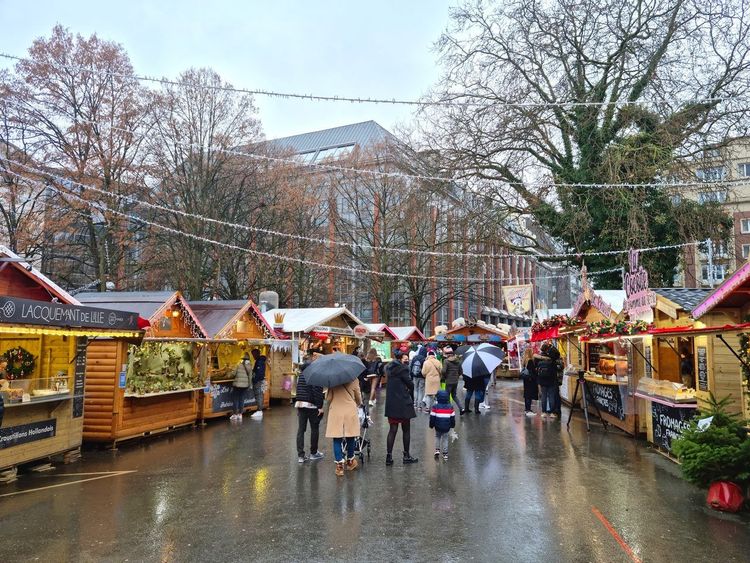
For the 2026 edition, the Christmas Village on Place Rihour is announced from Wednesday 18 November to Wednesday 30 December. These dates remain indicative until the city has made them official, but they follow the usual calendar: opening the week before the last weekend of November, closing just before New Year's Eve.
The opening hours, for their part, are stable from one year to the next:
- Sunday to Thursday: 11am to 8:30pm;
- Friday and Saturday: 11am to 10pm;
- 24 December: early closing at 6pm;
- 25 December: closed.
The Big Wheel, operated separately, stays on a little longer: it runs until midnight and generally remains in place until mid-January, well after the chalets are dismantled. As for what's new, each edition renews part of the exhibitors and the theme of the decorations; the detailed programme is published in early November, so remember to check it before planning your weekend.
One point of caution: the Big Wheel and the Christmas Village do not have the same organiser, so their opening dates may differ by a few days. If you are mainly coming for the view from the gondola, check both calendars. And if you prefer atmosphere to shopping, know that the last evenings, between Christmas and 30 December, are often calmer: the gift shopping is done, local families have left the city and mostly visitors who came for the atmosphere remain.
Where Is the Lille Christmas Market: The City Centre Squares
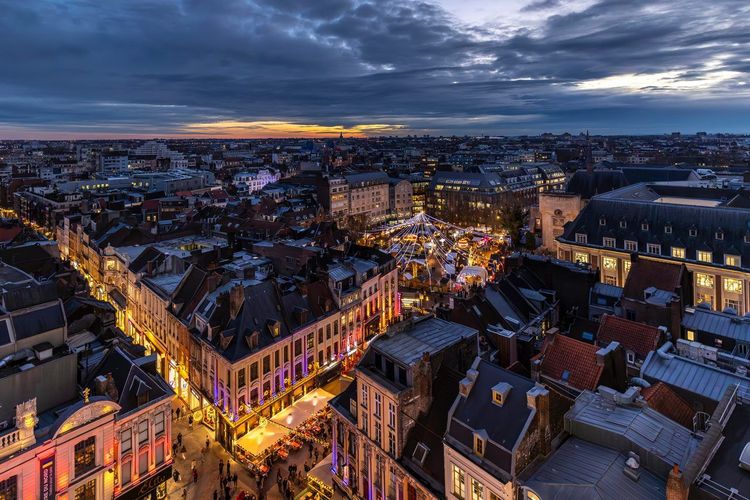
The chalets are grouped on a single square, but the festivities spill over onto three sites in the historic centre, two or three minutes apart on foot. You move from one atmosphere to another without leaving the pedestrian heart of the city, between Flemish façades and cobblestones glistening with winter rain.
Place Rihour and the Grand Place, Historic Heart of the Market
The Place Rihour (Place Rihour, 59000 Lille, rated 4.5/5 on Google from 3.2K reviews) hosts the Christmas Village itself: 90 wooden chalets lined up around the Palais Rihour, a 15th-century Gothic relic built for the Dukes of Burgundy. It is the natural entry point if you arrive by metro, as the Rihour station leads directly to the first stalls. At the entrance on rue de la Vieille Comédie, the small carousel Le Petit Quinquin, a nod to the famous Lille lullaby, attracts families.
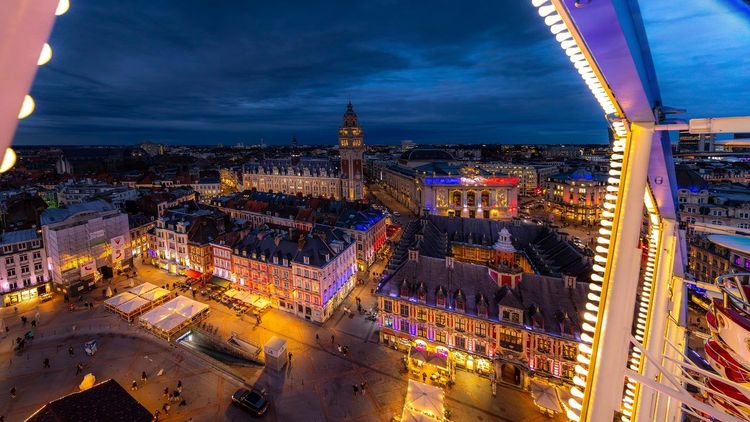
Just a few steps away, the Grand Place (officially place du Général-de-Gaulle) takes on the look of a postcard at nightfall: an illuminated 18-metre fir tree stands next to the Big Wheel, and the sculpted façade of the Vieille Bourse serves as the backdrop for most of the photos published in December. This is where the crowd is densest, especially on Saturday evenings.
Place du Théâtre and Its Entertainment
Continuing towards the Opéra, the Place du Théâtre closes the loop with a more retro atmosphere: L'Idéal Chenille 1922, an almost century-old ride with undulating cars, spins young and old alike. Right next door, the courtyard of the Vieille Bourse hosts its second-hand booksellers all year round, a perfect stop to find an old illustrated book to give as a gift.
As you will have understood, three squares complement each other: chalets and gifts at Rihour, the tree and Big Wheel on the Grand Place, a vintage carousel on Place du Théâtre. To visualise this sequence before heading there, the Ryo audio-guided tour of Lille crosses precisely these three squares over 6 km, with an audio stop dedicated to each, from the Palais Rihour to the Vieille Bourse.
The Chalets, Crafts and Exhibitors
With its 90 chalets, the Lille Christmas Village ranks behind Arras (150) and Amiens (120) among the major events in Hauts-de-France. The selection favours makers over generic stalls: blown glass, pottery, jewellery, and wooden or fabric decorations sit side by side from one chalet to the next.
The exhibitors partly change every year, but certain types of stalls return systematically. Decorations take up a good part of the aisles: blown baubles, santons, handmade garlands and small wooden nativity scenes. Next come textile and leather crafts, often produced by workshops in the North, then the food stalls selling takeaway jams, gingerbread and regional beers in gift boxes.
If you come looking for gifts to slip under the tree rather than just for a stroll, budget generously: prices range from a few euros for a bauble or a bag of biscuits to several dozen euros for a craft piece. The regulars' advice: come on a weekday, in the middle of the afternoon, to chat with the artisans without the weekend crush.
Some exhibitors give live demonstrations, glassblower or wood turner, which turns shopping into an almost museum-like moment. Keep an eye on the board at the entrance to the village: it shows the times of the day's demonstrations and workshops.
A few benchmarks so you don't leave empty-handed. Hand-painted blown-glass baubles are generally found for 10 to 30 euros each; santons and small wooden figures for 5 to 25 euros; designer jewellery starts at around 20 euros. On the food side, a box of regional Christmas beers or a jar of artisanal jam remains an easy gift to carry if you are going home by train. Finally, remember to bring a sturdy bag: the aisles are narrow and bulky parcels quickly become a nuisance in the middle of the crowd.
The Lille Big Wheel: Hours, Prices and View of the City
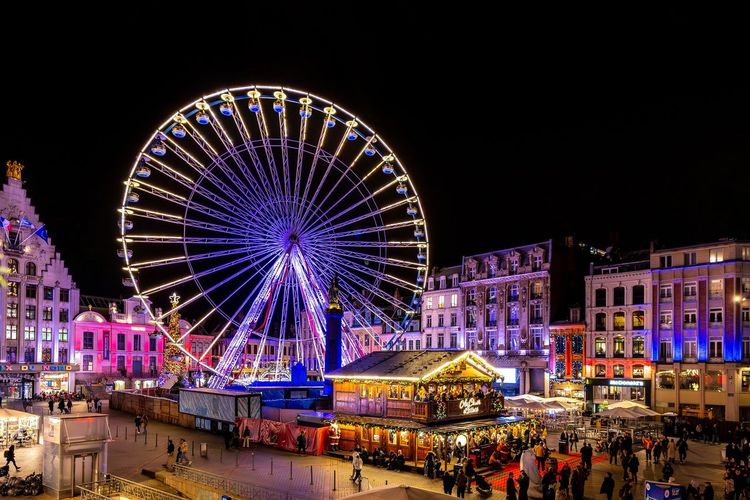
Visible from afar as soon as you approach the centre, the Big Wheel (Place du Général-de-Gaulle, 59800 Lille, rated 4.3/5 on Google from 137 reviews) on the Grand Place has become one of the symbols of the Lille festive season. It reaches 50 metres and has 36 enclosed gondolas, sheltered from the wind, a detail that matters in December.
Big Wheel Hours and Prices
During the last edition, the wheel ran from 12pm to midnight on weekdays and from 10am to midnight on weekends and during the Christmas holidays, from late November until mid-January. The ride cost 7 euros for an adult and 5 euros for a child under 1.40 m. The 2026 prices should remain in that range. Payment is made at the ticket office set up at the foot of the attraction.
The View of Lille from the Gondola
A ride lasts a few minutes, plenty of time to enjoy the 360° panorama: beyond the rooftops of Vieux Lille, in clear weather you can make out the belfry of the Town Hall and, further away, the wooded mass of the Citadelle. At night, it is mostly the garlands of the three squares that draw a luminous map of the city.
The ideal moment? Nightfall, between 4:45pm and 6pm in December: the blue of the sky blends with the first lights, a far better photo result than in broad daylight. Avoid Saturday evening, when the wait easily exceeds thirty minutes. And to wait smartly in the queue, start the stop that the Ryo audio-guided tour of Lille dedicates to the Grand Place: the story of the Goddess perched on her column and of the Austrian siege of 1792 takes on a different flavour when you have it right before your eyes.
Entertainment, Parades and Light Shows
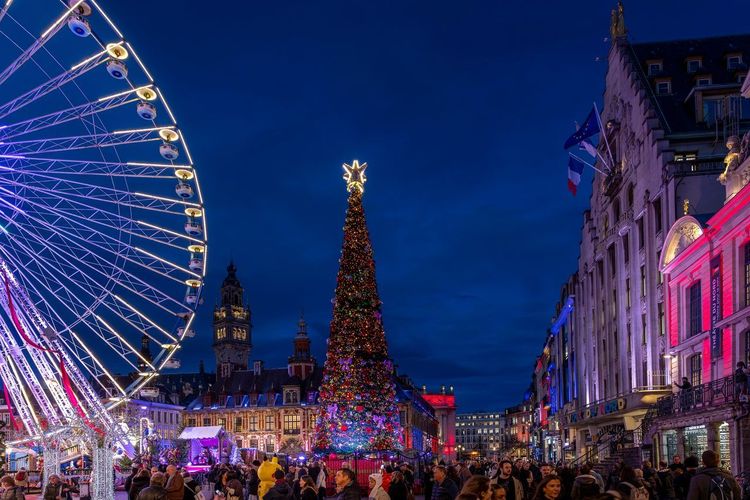
The chalets are only part of the programme: from mid-November to the end of December, Lille's evenings are organised around a common thread, light.
Parades and Night Processions
On weekends, musical and luminous processions link the squares of the centre: illuminated stilt walkers, brass bands and costumed characters create spontaneous gatherings as they pass. On Wednesday afternoons, it's the children's turn with creative workshops, face-painting stands and sometimes a visit from Santa Claus. The times change from one week to the next; check the programme displayed at the village or published online by the organisers. If you are travelling with family, our article on Lille with children complements these outing ideas for the rest of the stay.
Illuminations and Christmas Decorations
Beyond the parades, the whole hypercentre is decked out in lights: rue Faidherbe, rue de Béthune, rue Neuve and the surroundings of the Opéra extend the walk beyond the three squares. The shop windows of Vieux Lille compete in creativity every year. The best time slot to enjoy them without the crowd remains Monday or Tuesday evening, when the lights are on but the streets are half empty. It is also the ideal moment to listen to the Ryo audio-guided tour while walking: the stories about the Flemish merchants' houses take on another dimension in the half-light lit by the garlands.
Where to Eat: Specialities and Treat Breaks near the Market
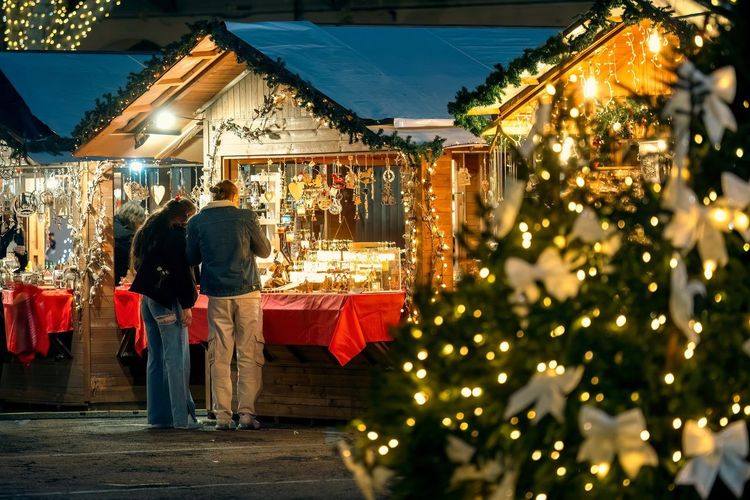
It's impossible to resist the smells of cinnamon and hot sugar. Between the food chalets and the cafés of the centre, you will be spoilt for choice.
Mulled Wine, Waffles and Specialities of the North
Mulled wine remains the must-have, served in several dedicated chalets, often with a non-alcoholic version (hot spiced apple juice) for children. Waffles are eaten while walking, but above all try the waffle filled with vergeoise, thin, oval and sticky, the true Lille speciality. Among the other flavours of the North: gingerbread, speculoos, maroilles tartines and Christmas beers brewed in the region, which appear on menus from November.
Cafés and Tea Rooms near the Market
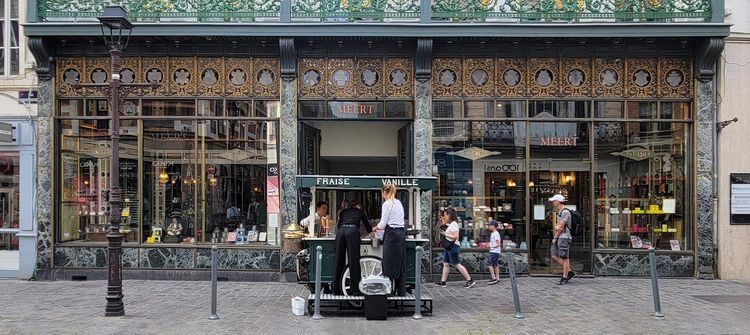
For a sit-down break, Vieux Lille offers a string of cafés and tea rooms ten minutes' walk from the chalets. The most famous address remains the Méert pastry shop, rue Esquermoise, founded in the 18th century and renowned for its Madagascar vanilla waffles: expect a queue in the late afternoon on weekends. To avoid it, try instead the adjacent little streets, rue de la Clef or rue Basse, which are less busy. To extend the discovery, the Ryo article on Lille's culinary specialities details the city's emblematic dishes, from welsh to potjevleesch.
Getting There: Parking, Transport and How to Come
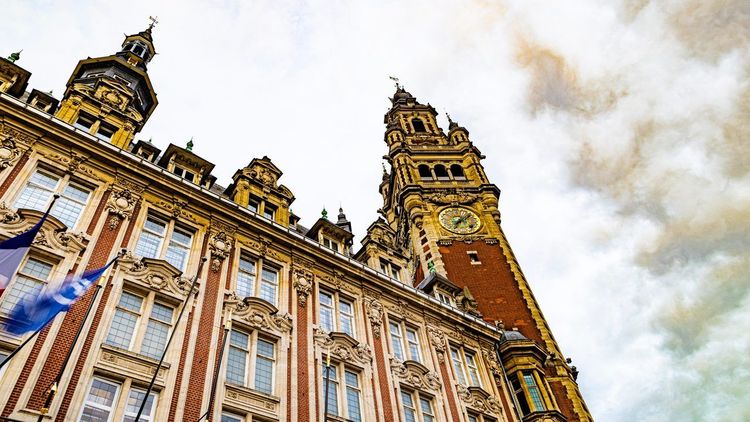
Once in the centre, everything is done on foot. You still have to get there without losing an hour in traffic jams.
Coming by Metro, Tram and Bus
The metro remains the most efficient way: the Rihour station (line 1) drops you directly on the Christmas Village square. Lille-Flandres station, served by TER trains and some TGVs, is less than a ten-minute walk from the Grand Place; Lille-Europe, where the Eurostar and international TGVs stop, is a quarter of an hour away. The tramway to Roubaix and Tourcoing and the bus lines complete the Ilévia network if you are staying on the outskirts.
From Paris, the TGV links the Gare du Nord to Lille in a little over an hour, which makes a day return entirely realistic. From Brussels, allow about 35 minutes by TGV and a little over an hour by regular train; from London, the Eurostar takes about 1h20 to Lille-Europe. If you come from the metropolitan area, a single metro ticket is enough to reach Rihour, but the Day Pass quickly becomes worthwhile if you plan to make multiple trips back to your hotel or to Roubaix.
Parking near the City Centre
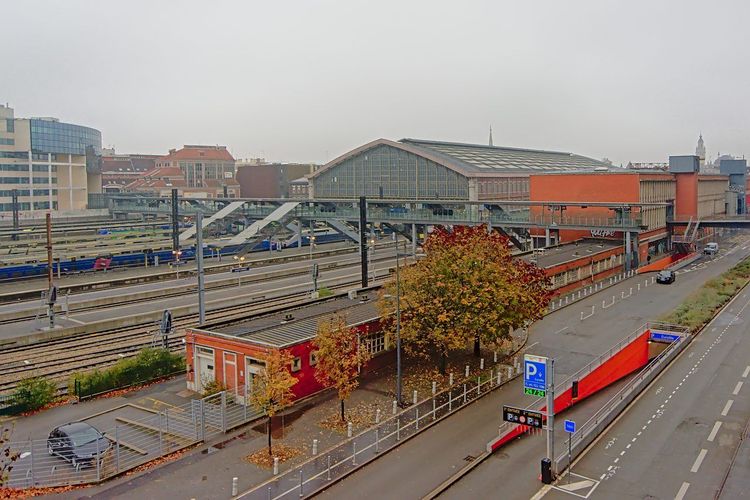
By car, head straight for an underground car park: those at Lille-Flandres station, Lille-Europe or Euralille surround the historic centre. Street parking is rare and expensive in December. Another economical option: the park-and-ride car parks at the end of the metro line, then a few stops to Rihour. And if you insist on parking as close as possible, arrive before 11am on weekends; after lunch, the hunt for a space becomes frankly tiresome.
Where to Sleep in Lille during the Christmas Market
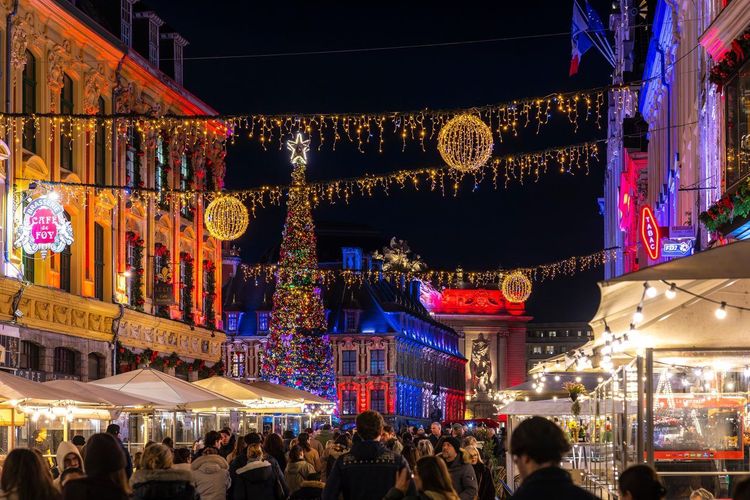
December pushes up hotel occupancy in the centre: book early, ideally from October for weekends.
Hotels in Vieux Lille and the Historic Centre
Staying in Vieux Lille or around the Grand Place lets you reach the chalets on foot in a few minutes and go back to warm up between two walks. It is the most in-demand area: boutique hotels set in former Flemish mansions charge markedly higher rates than on the outskirts, especially on Saturdays. For a short stay, proximity often makes up for the price gap. As a guide, a three-star hotel in the centre rarely goes for less than 120 to 150 euros a night on a December Saturday, compared with 80 to 100 euros on weekdays. Rental apartments in the Flemish houses of Vieux Lille are an attractive alternative for families, with the advantage of a kitchen for the evenings when you no longer feel like going back out into the cold.
Good Deals and Budget Accommodation
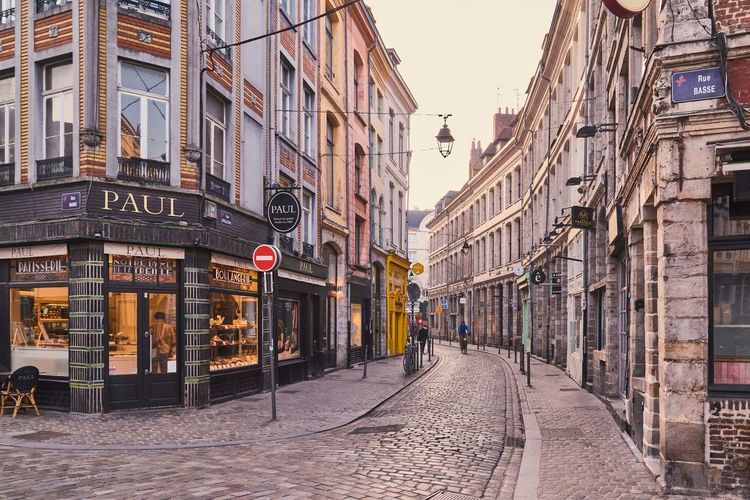
For gentler rates, look towards Wazemmes, the station district or Euralille: ten to fifteen minutes' walk or two metro stops are enough to reach the centre. On the other hand, avoid hotels on the edge of the ring road or in commercial zones far from the metro, where every return trip becomes an expedition. Prices drop markedly from Sunday to Thursday: if your dates are flexible, that is the best plan. Before heading home, treat yourself to a last night-time loop with the short version of the Ryo audio-guided tour, centred on Vieux Lille: the cobbled streets are particularly photogenic once the chalets have closed.
What to See and Do around the Christmas Market
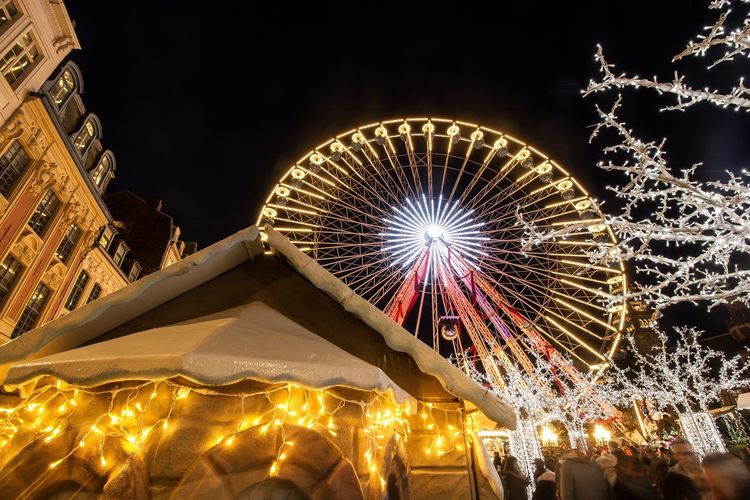
Once you have explored the chalets, Lille still has enough to fill an entire day without leaving the centre. It is often the best way to make the most of a weekend on site.
Strolling through Vieux Lille
A few streets from the Grand Place, Vieux Lille unfolds its brick and white-stone façades, its cobbled streets and its independent boutiques, a striking contrast with the bustle of the chalets. The Rue de la Monnaie, one of the oldest in the city, sums up this charm: 17th-century façades, designer boutiques and, at the end, the entrance to the Hospice Comtesse.
To explore this district other than at random, the short version of the Ryo audio-guided tour, centred on Vieux Lille, takes you from façade to façade with audio stops on the courées, the gabled houses and the merchant history of the Flemish city.
Museums and Heritage in the City Centre
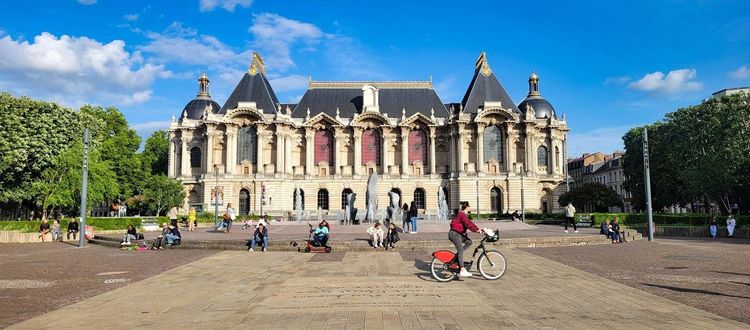
The Palais des Beaux-Arts de Lille, one of the richest museums in France after the Louvre, is about ten minutes' walk from the Grand Place. One or two hours is enough to warm up in front of Rubens, Goya or the relief maps of the fortified cities of the North.
The belfry of the Town Hall, listed as a UNESCO World Heritage site along with the other belfries of Belgium and France, rises to 104 metres: climbing it offers, in clear weather, an unobstructed view as far as Belgium.
Even closer to the chalets, the Hospice Comtesse, a former hospital founded in the 13th century in the heart of Vieux Lille, is worth the detour for its infirmary ward and its reconstructed Flemish interiors: a one-hour visit, ideal when rain sets in. For a complete overview of the city's collections, the Ryo article on Lille's museums details the options according to your wishes and your time.
The Citadelle of Lille, a Nature Break
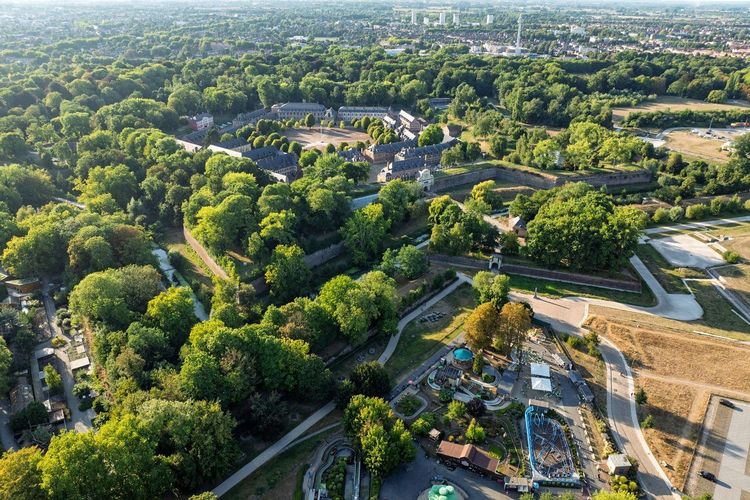
Need some fresh air after hours among chalets and shops? The Citadelle de Lille (Avenue du Bois, 59000 Lille, rated 4.3/5 on Google from 859 reviews), a star-shaped fortification designed by Vauban in the 17th century, is surrounded by a large wooded park about twenty minutes' walk from the centre. Its paths and canals offer a real contrast with the effervescence of the Grand Place.
In December, the park keeps a special charm: the bare trees reveal the brick ramparts and bastions, invisible in summer under the foliage, and Lille joggers cross paths there with families who have come to feed the ducks along the Deûle canal. The small free zoo at the entrance to the woods remains open for part of the winter, a good argument if you are travelling with children tired of the chalets. Just bring shoes that can cope with mud: the paths are often soaked after the seasonal rains.
Allow one to one and a half hours to walk around it. The Ryo article dedicated to the Citadelle park details the access points and the best viewpoints.
The Other Christmas Markets
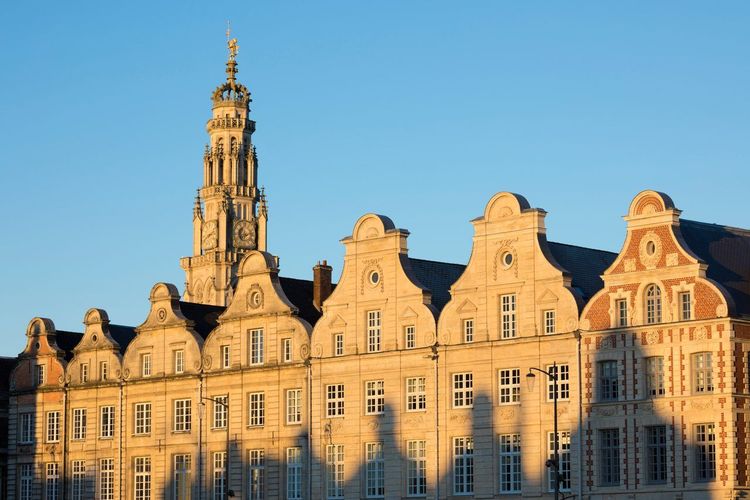
Accessible by metro, Roubaix organises a sustainable Christmas market on the forecourt of the La Piscine museum: about sixty zero-waste, handmade and second-hand exhibitors, open only on December weekends. Further afield, Arras hosts the largest gathering in Hauts-de-France: about 150 chalets and a 35-metre Big Wheel on the Grand-Place, lined with Baroque arcades unique in the North, 45 minutes away by TER. Béthune, half an hour away by train, completes the list with a human-sized market around its belfry. The Ryo article on excursions around Lille lists other outing ideas within the same radius.
Getaways to Belgium and Germany (Bruges, Ghent, Brussels, Antwerp, Aachen)
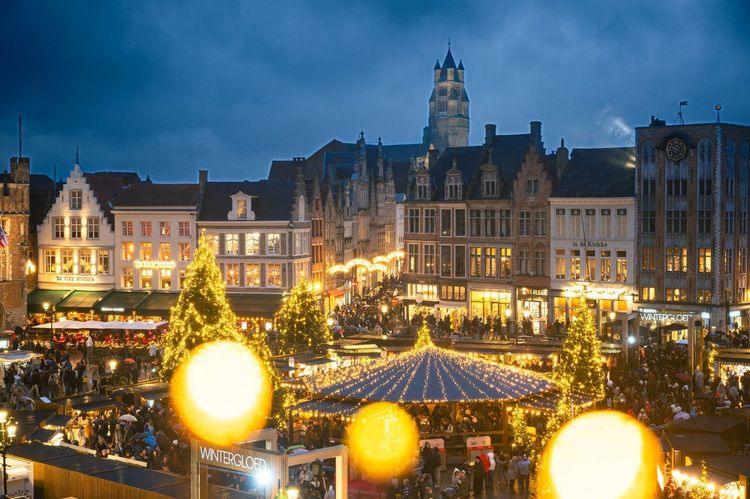
Belgium is only an hour away by train, which opens up access to several of the most beautiful markets in Europe. Bruges and its canals, Ghent and its chalets around Saint Bavo's Cathedral, or Brussels with its sound and light show on the Grand-Place, are easily visited in a day. Antwerp adds a more urban and design-oriented touch. Aachen, in Germany, charms with its market packed around Charlemagne's cathedral, but allow about three hours of travel: it is better to devote two days to it. To stay on the French side while changing scenery, the most beautiful villages around Lille offer a more rural alternative.
Practical Tips to Enjoy the Lille Christmas Market
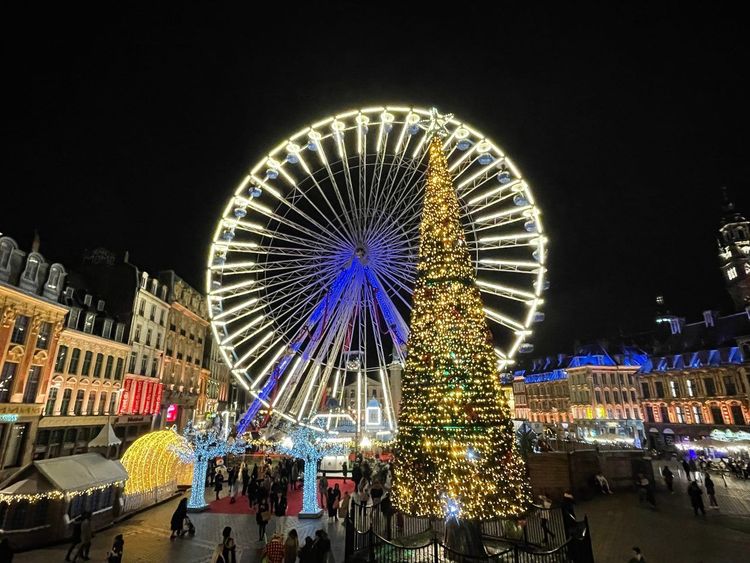
Admission to the Christmas Village is entirely free: only the Big Wheel and the rides are paid, which lets you stroll freely around the three squares with no minimum budget.
To avoid the crowd, aim for weekdays, between 11am and 3pm: the aisles are free-flowing and the photos easy to frame. Saturday evening remains the absolute peak, best left to those looking precisely for that dense, festive atmosphere. Bring warm clothes and comfortable shoes, as you quickly walk several kilometres in the afternoon. Carry a little cash: some small chalets refuse cards for small amounts. Finally, the two weekends before Christmas see the highest crowds; a visit in early December offers the best compromise between atmosphere and comfort.
The Best Photo Spots
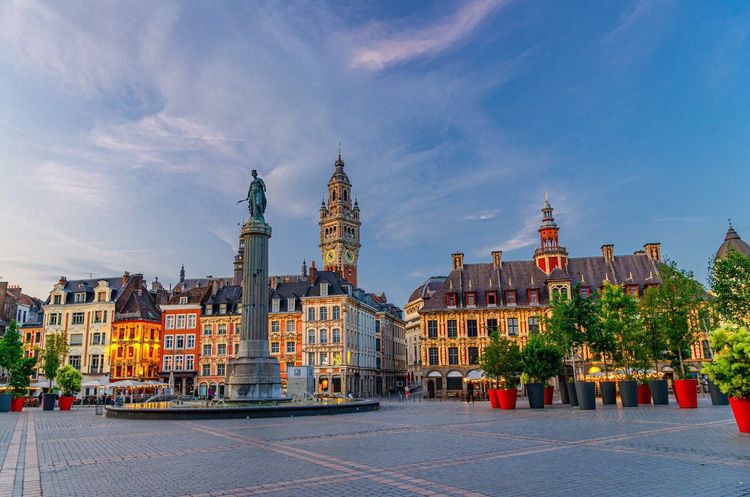
Four framings recur in every photo gallery of the Lille Christmas market. The first: the Grand Place tree with the Vieille Bourse in the background, at blue hour. The second: the Big Wheel photographed from the corner of rue Esquermoise, which frames it between the façades. The third: the aisles of Place Rihour seen from the steps of the Palais Rihour, from a slightly high angle. The last, more insider: Place du Théâtre and L'Idéal Chenille in front of the illuminated Opéra, late in the evening when the square empties.
A Christmas Weekend in Lille: Sample Itinerary
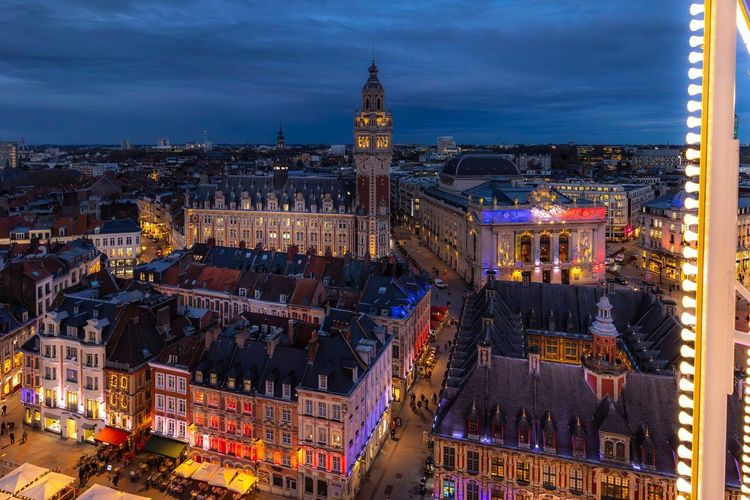
Have two days? On Saturday, arrive in late morning, have a welsh for lunch in an estaminet in Vieux Lille, then explore the chalets of Place Rihour in early afternoon, before the crowd. Ride the Big Wheel at blue hour, then let yourself be carried along by the luminous parades and a last mulled wine on the Grand Place. On Sunday morning, enjoy the calm to visit the Palais des Beaux-Arts or the Hospice Comtesse, take a waffle break at Méert, then finish with a walk at the Citadelle or a loop in Vieux Lille, headphones on, before catching the train. If you have a third day, add an excursion to Arras or Bruges: both are easily reached by train from Lille.
What Visitors Say
Reviews of the Lille Christmas market converge on several points. On the positive side: the architectural setting, judged among the most beautiful in France, the Big Wheel and the proximity to Belgium. On the negative side: the weekend crowd, sometimes stifling in the narrow aisles of Place Rihour, and a chalet offering judged more modest than that of Arras or Strasbourg. The regulars' consensus: don't come only for the chalets, but for the whole package, Vieux Lille, illuminations and getaways included.



FAQ
What are the dates of the Lille Christmas market in 2026?
The Christmas Village on Place Rihour is announced from 18 November to 30 December 2026 (indicative dates). It is open from 11am to 8:30pm Sunday to Thursday and until 10pm on Friday and Saturday, closes at 6pm on 24 December and stays closed on the 25th.
Is admission to the Lille Christmas market paid?
No, access to the village and the squares in the city centre is free. Only the Big Wheel and the rides, such as L'Idéal Chenille on Place du Théâtre, are paid.
How much does a ride on the Big Wheel in Lille cost?
During the last edition, the ride cost 7 euros for an adult and 5 euros for a child under 1.40 m. The wheel runs until midnight and stays in place until mid-January.
Where can I park to go to the Lille Christmas market?
The underground car parks at Lille-Flandres, Lille-Europe and Euralille are the most convenient, a few minutes' walk from the centre. The metro park-and-ride car parks are the most economical option.
How do I get to the Lille Christmas market by public transport?
The Rihour metro station, on line 1, leads directly to the Christmas Village. Lille-Flandres station is less than a ten-minute walk from the Grand Place.
What is the nearest Christmas market to Lille?
The sustainable Christmas market in Roubaix, on the forecourt of La Piscine, is about twenty minutes away by metro, but it only opens on weekends. Arras, the largest in the region, is 45 minutes away by TER regional train.
How much time should I allow to visit the Lille Christmas market?
Two to three hours is enough to walk around the three squares, stop at a few chalets and take a ride on the Big Wheel. Add half a day if you also want to stroll around Vieux Lille or visit a museum.
Conclusion
Between the chalets of Place Rihour, the Grand Place tree and the vintage carousel on Place du Théâtre, Lille lends itself as well to a quick getaway as to a full weekend extended by Vieux Lille or the Citadelle. Whether you come for a shopping afternoon or to string together several Christmas villages in the region, the best way to make these streets your own is still to walk them at your own pace. That is precisely what the Ryo audio-guided tour of Lille offers: 22 audio stops over 6 km to extend your visit to the chalets with a guided walk in the capital of Flanders.
À lire également