





Walk
Capital of Porcelain
Limoges, France
Walk
Capital of Porcelain
Limoges, France
5.8 km
Distance
2h30
Durée
28
Audios
Loop
Parcours
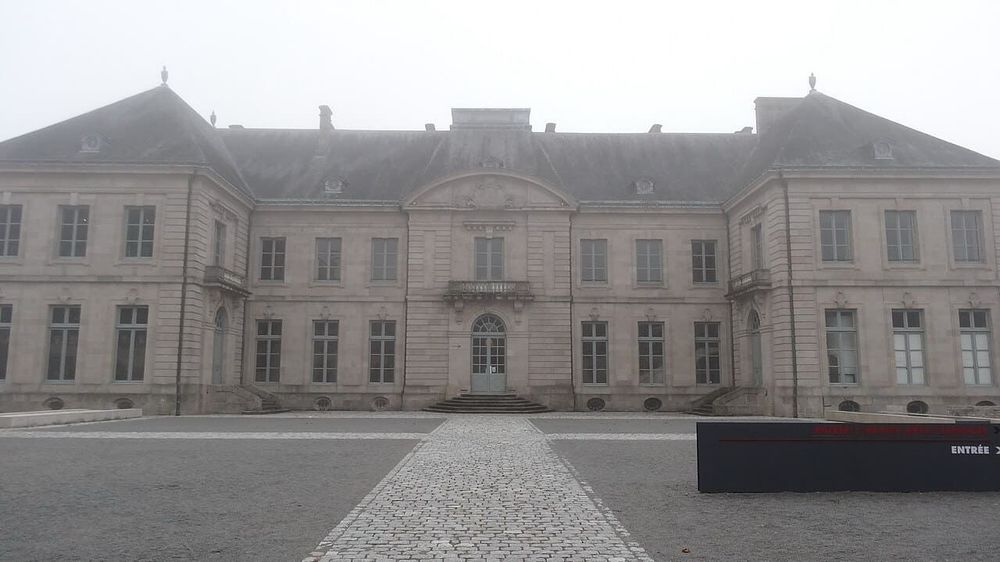
©Sergey Prokopenko CC BY-SA 3.0. <https://creativecommons.org/licenses/by-sa/3.0/deed.fr>via Wikipedia Commons
The Museum of Fine Arts of Limoges is installed in the former episcopal palace, next to the cathedral. The Limoges audio-guided tour stops here to evoke this fine setting of heritage, famous for its collection of Limoges enamels and its Egyptian antiquities, in an exceptional setting.
You are in the courtyard of the Museum of Fine Arts, installed in the building that stands in front of us. It is in fact the former episcopal palace of the town, built here, next to the cathedral, that was the residence of the bishops of Limoges. This fine building of the eighteenth century, elegant and classical, surrounded by terraced gardens that descend towards the Vienne, offers an exceptional setting to the museum. The collections of the Museum of Fine Arts of Limoges are rich and varied. Its pride is undoubtedly its collection of Limoges enamels, one of the most important of the world: the town was indeed, from the Middle Ages, a great centre of production of these enamels painted on copper, of an exceptional beauty and finesse, that made its renown well before the porcelain. The museum also presents remarkable Egyptian antiquities, paintings, sculptures and collections of archaeology and fine arts retracing the history of the town and the region. A place of culture and heritage in a prestigious setting, it is one of the finest museums of Limoges. A major museum and a setting of the enamels, the Museum of Fine Arts is a fine stop of the discovery of the town.
Here you discover the museum installed in the former episcopal palace of the eighteenth century, next to the cathedral, surrounded by terraced gardens descending towards the Vienne; it is famous for its collection of Limoges enamels, one of the most important of the world, these enamels painted on copper that made the renown of the town from the Middle Ages, and also presents remarkable Egyptian antiquities. The Museum of Fine Arts is a setting of the enamels in Limoges. It is a fine stop, to be explored on foot.
The Museum of Fine Arts lies in the former episcopal palace, next to the cathedral, in the heart of Limoges, reachable on foot. The visit follows its own hours and conditions, which vary according to the season, and entry may be paid. The gardens of the Évêché that surround it are in free access. It is best to check the arrangements before coming.
Its pride is its collection of Limoges enamels, one of the most important of the world, these enamels painted on copper that made the renown of the town from the Middle Ages; the museum also presents remarkable Egyptian antiquities, paintings, sculptures and collections of archaeology and fine arts, in the former episcopal palace next to the cathedral.
In the former episcopal palace, next to the cathedral, in the heart of Limoges, in France.
Aucun avis pour le moment