




Walk
The City of Painters
Collioure, France
Walk
The City of Painters
Collioure, France
3 km
Distance
1h30
Durée
22
Audios
Loop
Parcours
Shutterstock
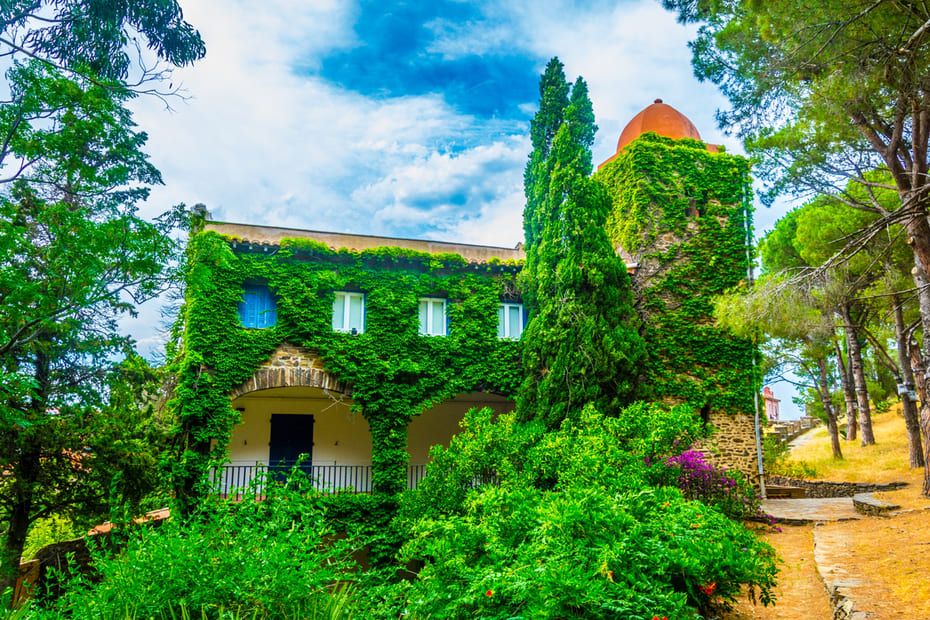
Set in the elegant Villa Pams, a nineteenth-century bourgeois mansion, the Museum of Modern Art of Collioure carries on the artistic heritage of the city of painters. Balanced volumes, fine natural light and the surrounding Mediterranean garden make it a peaceful setting, away from the bustle of the harbour. The Collioure audio-guided tour leads here those who want to understand how the town turned its light into an artistic vocation.
The villa was built by Jules Pams, a wealthy Catalan politician and patron, and once overlooked terraced gardens. Bought by the municipality in the 1980s, it became the Museum of Modern Art of Collioure. Its collections were first formed through gifts from artists, among them names linked to the town and its creative aura, and they continue to tell the deep bond between Collioure and twentieth-century art.
The museum shows a collection of modern art and stages temporary exhibitions that dialogue with the artistic history of Collioure and of exile. The visit pleasantly continues into the adjoining Mediterranean garden, dotted with local species and viewpoints over the bay. It is one of the few places in town where, in calm, you can take the measure of all that the light of Collioure inspired in artists.
The museum is in Collioure, in the former Villa Pams, reachable on foot from the centre and surrounded by the Pams garden. It is generally open all year, morning and afternoon, with a weekly closure on Tuesdays in low season and closures on the main public holidays; as hours and prices may change, it is advisable to check them before visiting. The site includes sloping outdoor areas, to be taken into account by visitors with reduced mobility.
A collection of modern art, formed notably through gifts from artists, and temporary exhibitions linked to the artistic history of Collioure, in the setting of the former Villa Pams and its garden.
The museum is generally open all year, morning and afternoon, with a closure on Tuesdays in low season and on certain public holidays; as hours and prices may vary, check them before coming.
Yes, the museum is surrounded by the Pams garden, a terraced Mediterranean park that extends the visit and offers fine views over the bay of Collioure.
Aucun avis pour le moment
