





Walk
Off to explore the Basque Country
Bayonne, France
Walk
Off to explore the Basque Country
Bayonne, France
3.4 km
Distance
1h20
Durée
23
Audios
Loop
Parcours
Shutterstock
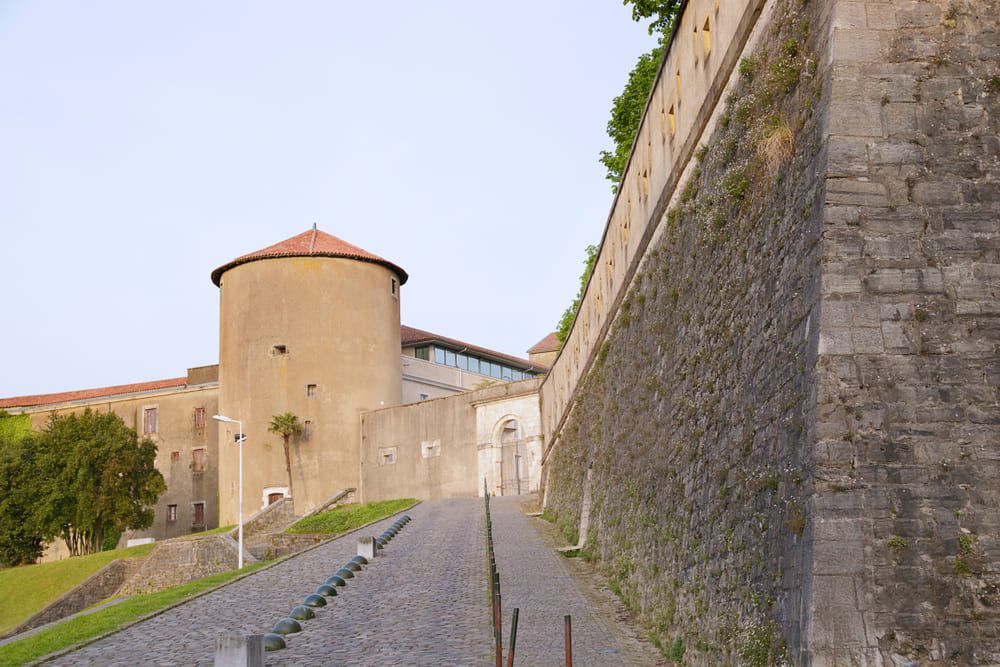
A stop on the Bayonne audio-guided tour, the Chateau-Neuf has a history closely linked to that of the city. In 1152, Aquitaine, the region of Bayonne, became English through the marriage of the Duchess of Aquitaine to King Henry II Plantagenet, and remained so for three centuries.
In 1451, with the end of the Hundred Years' War, the French retook Aquitaine. But the threat remained, English and Spanish alike, and the city had to be protected. The Chateau-Neuf was therefore built on the orders of Charles VII, on the ramparts of the former English wall. In the sixteenth century, the wars of religion led to its reinforcement, like the fortifications.
In the seventeenth century, Vauban, sent by Louis XIV, further reinforced the city and enlarged the castle, which served as a barracks until the 1980s. One can see its two round towers, standing facing the city to affirm the power of the kingdom of France. Listed as a historic monument, it bears witness to Bayonne's defensive past.
The Chateau-Neuf is in the Petit Bayonne district. Listed as a historic monument, it can be viewed from outside; access conditions should be checked depending on the season.
To protect Bayonne from English and Spanish threats, on the orders of Charles VII after 1451.
Sent by Louis XIV in the seventeenth century, he reinforced the city and enlarged the castle.
Aucun avis pour le moment
