

Walk
From the Bay of Biscay to the Gulf of Lion
Pau, France
Walk
From the Bay of Biscay to the Gulf of Lion
Pau, France
4 km
Distance
1h40
Durée
19
Audios
Loop
Parcours
Shutterstock
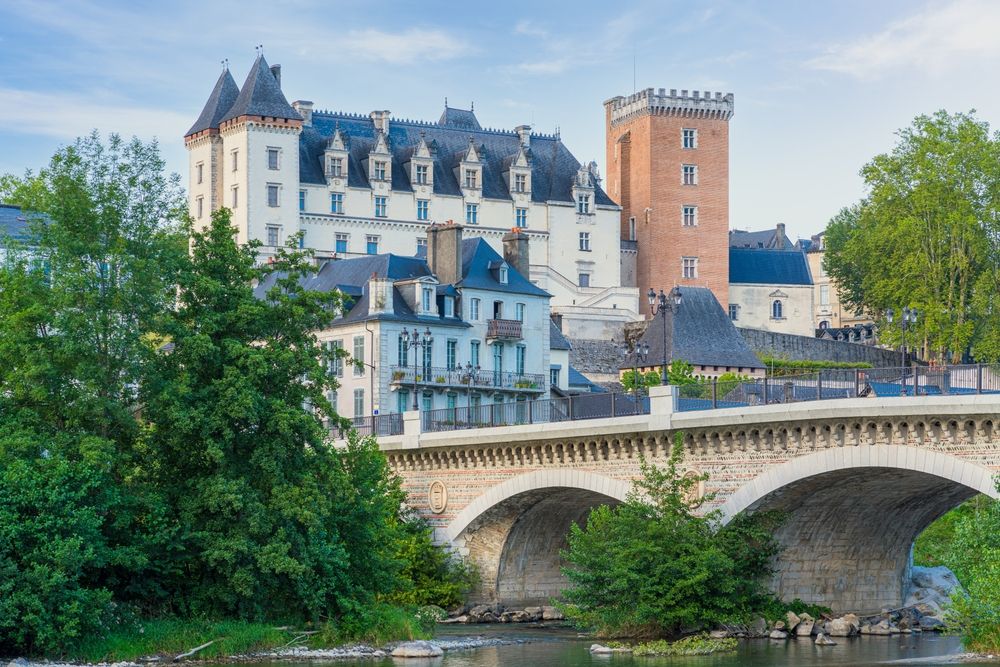
The Château de Pau is the most emblematic monument of the town, a Renaissance palace and the birthplace of Henri IV. The Pau audio-guided tour stops here to evoke this historic jewel, the cradle of the town and a witness of its royal past.
Here you have finally arrived at the fine Château de Pau. Before being this magnificent Renaissance palace, the castle was a simple fortification, erected in the Middle Ages to watch over and protect the valley of the gave. Over the centuries, the viscounts of Béarn then the sovereigns of Navarre transformed it into an elegant residence. It is here that, in 1553, Henri de Navarre, the future king Henri IV, was born, of whom is preciously kept, it is said, the tortoise shell that would have served as his cradle. Embellished in the Renaissance then restored in the nineteenth century under Louis-Philippe and Napoleon III, the castle today shelters a national museum, with its royal apartments, its tapestries and its rich furniture. Dominating the town and the gave, the Château de Pau is the historic heart and the symbol of the Béarn town.
You admire the magnificent Renaissance palace, a former medieval fortification transformed into the residence of the sovereigns of Navarre, the birthplace of Henri IV in 1553, with the famous tortoise shell of his cradle, its royal apartments, its tapestries and its national museum. The castle is the historic heart and the symbol of Pau. It is a must-see stop, to be explored on foot.
The Château de Pau lies in the heart of the town, dominating the gave, reachable on foot. You admire its exterior and the gardens freely; the visit of the royal apartments and the national museum follows its own hours and conditions, which vary with the season. It is best to check the arrangements before coming.
Henri de Navarre, the future king Henri IV, was born there in 1553; the tortoise shell that would have served as his cradle is kept there, it is said. This Renaissance palace was first a medieval fortification.
In the heart of Pau, dominating the gave, in France.
Aucun avis pour le moment