





Walk
Père Lachaise : The Cemetery of the East
Paris, France
Walk
Père Lachaise : The Cemetery of the East
Paris, France
2.9 km
Distance
1h20
Durée
22
Audios
Loop
Parcours
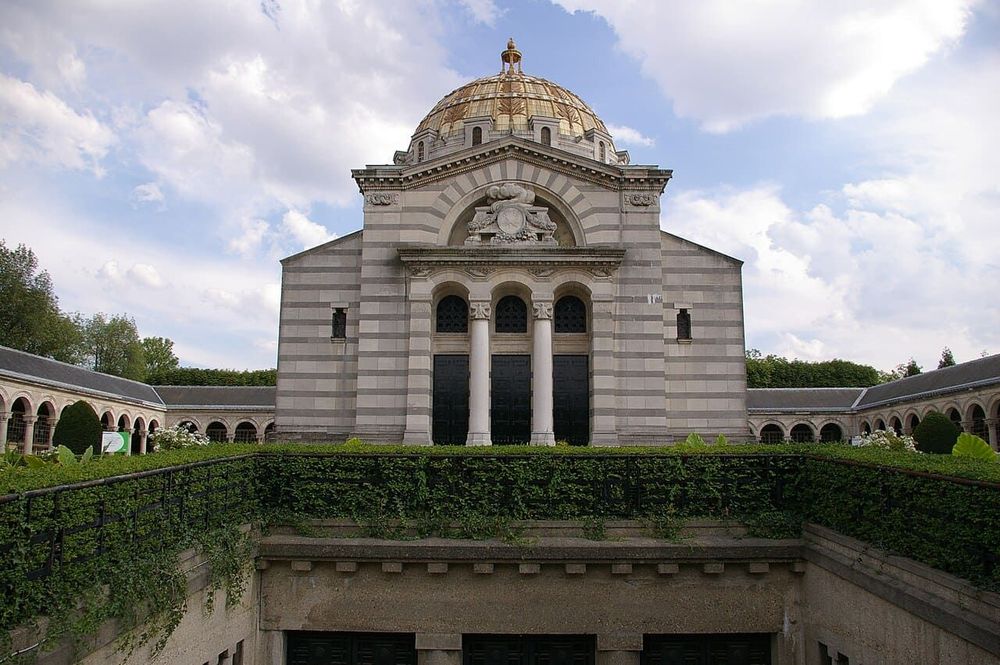
©Christopher Lancaster CC BY-SA 2.0. <https://creativecommons.org/licenses/by-sa/3.0/deed.fr>via Wikipedia Commons
The crematorium and its columbarium occupy a central place in the heart of the Père-Lachaise cemetery, in the twentieth arrondissement of Paris. The Père-Lachaise audio-guided tour stops here, with respect, to evoke this building, a place of memory and contemplation.
In the heart of Père-Lachaise, the cemetery where so many figures who marked the history of France rest, the crematorium stands out by its architecture and its dome. Built at the end of the nineteenth century, it was one of the first in France. It is surrounded by a columbarium, where the urns are kept. A place of contemplation, it is part of the history and the heritage of this famous Parisian cemetery.
You admire the architecture of the crematorium, its dome and the columbarium that surrounds it, in an atmosphere of contemplation, in the heart of Père-Lachaise. The building testifies to the history of the cemetery. It is a stop for visitors sensitive to heritage and memory, to be walked with respect.
The crematorium lies in the heart of the Père-Lachaise cemetery, in the twentieth arrondissement of Paris, reachable on foot. The cemetery is a public place whose access is generally free, during opening hours that vary with the season. It is above all a place of contemplation: it is best to behave there with calm and respect.
It is the crematorium and its columbarium, built at the end of the nineteenth century in the heart of the Père-Lachaise cemetery, one of the first in France.
In the heart of the Père-Lachaise cemetery, in the twentieth arrondissement of Paris.
Aucun avis pour le moment
