





Walk
The Phoenix City of the Atlantic
Royan, France
Walk
The Phoenix City of the Atlantic
Royan, France
3.2 km
Distance
1h30
Durée
17
Audios
Loop
Parcours
Shutterstock
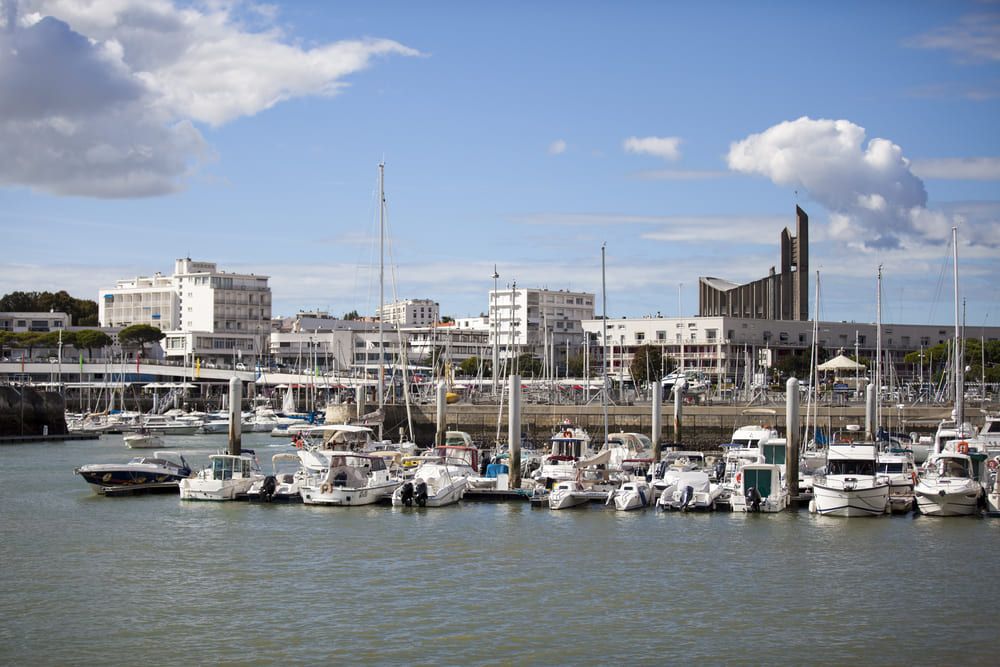
The port of Royan is one of the most emblematic ports of the French Atlantic coast. Blending pleasure boating and fishing, it is a lively place of life, whose history goes back to the Middle Ages. The Royan audio-guided tour stops here to evoke this history-laden port, inseparable from the maritime identity of the city.
The history of the port of Royan goes back to the Middle Ages, when the first sailors discovered the advantages of this site on the Gironde estuary. Having become a great marina of the Atlantic coast, it today offers more than a thousand berths and welcomes both pleasure boats and fishing boats. A living heart of the city, it combines maritime tradition and tourist activity.
Here you admire the ballet of the boats, the pontoons, the fishing boats and the views of the estuary and the seafront. The port is also a lively place to stroll, lined with shops and restaurants. It is a lively and must-see stop, where you feel all the maritime soul of Royan, between pleasure boating, fishing and tourism.
The port of Royan lies in the heart of the city, near the Congress Palace and the Foncillon beach, reachable on foot. The quays are public spaces freely accessible; the shops, restaurants and port services have their own hours. On the level along the water, the port is easily explored on foot.
It is a great marina of the Atlantic coast, with more than a thousand berths, which also welcomes fishing boats.
Its history goes back to the Middle Ages; it has become one of the great pleasure and fishing ports of the French Atlantic coast.
Aucun avis pour le moment
