





Walk
The Plantagenet City
Le Mans, France
Walk
The Plantagenet City
Le Mans, France
2 km
Distance
1h00
Durée
21
Audios
Loop
Parcours
Shutterstock
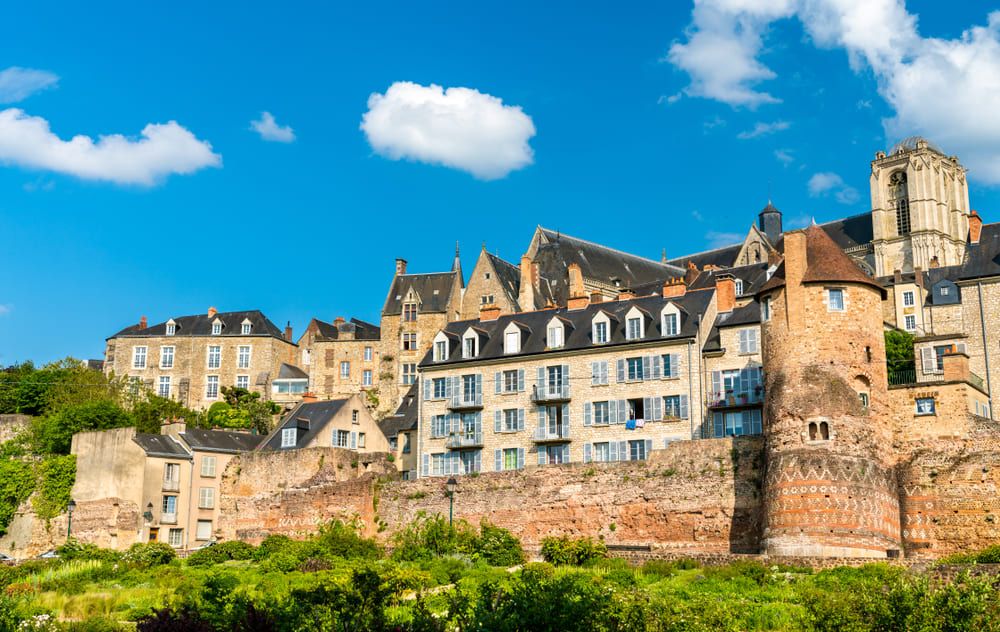
The Roman wall of Le Mans is one of the best-preserved treasures of old Le Mans, among the best-preserved ancient ramparts of Europe. The Le Mans audio-guided tour stops here to evoke this massive wall built at the end of the third century to protect the city of Vindunum from invasions, famous for its unique polychromy, with its semi-circular towers and its red brick motifs.
On the left, here you are facing one of the best-kept treasures of old Le Mans: its impressive Roman wall. It is there, massive and silent, but if you prick up your ears, perhaps you will hear the footsteps of the legionaries who once walked its ramparts resound. Built at the very end of the third century, this wall was not there to look pretty: it was a direct response to the threats that weighed on the Western Roman Empire, then weakened and vulnerable. Le Mans, or Vindunum as it was called, was a flourishing city but defenceless against the barbarian invasions. It was necessary to act quickly and strongly: a thick and high stone wall, girding the whole hill. Imagine the Gallo-Roman workers at work, piling up the blocks, inserting regular layers of red bricks and erecting semi-circular towers every twenty or thirty metres. The result is striking: more than a kilometre long, the wall is distinguished by its polychromy unique in France, where light stones and geometric motifs of pink bricks alternate, forming true decorations. It is what makes it one of the best-preserved Roman walls of Europe, classified as a historic monument. It still surrounds the heart of the city, today called the Plantagenet City, and testifies to the ancient grandeur of Le Mans. An ancient wall and a polychrome treasure, the Roman wall is a fine stop of the discovery of Le Mans.
Here you discover one of the best-preserved ancient ramparts of Europe, a massive wall more than a kilometre long built at the end of the third century to protect the city of Vindunum from invasions; punctuated with semi-circular towers, it is distinguished by its polychromy unique in France, where light stones and geometric motifs of pink bricks alternate. The Roman wall girds the Plantagenet City of Le Mans. It is a fine stop, to be explored on foot.
The Roman wall girds the Plantagenet City, in old Le Mans, reachable on foot, notably from the quays of the Sarthe and the gardens below. It is a monument in free access that you admire from the outside; panels and guided tours detail its history. You discover it during a walk around the old town.
Because it is one of the best-preserved Roman walls of Europe, more than a kilometre long, built at the end of the third century to protect the city of Vindunum from invasions; it is distinguished by its polychromy unique in France, where light stones and geometric motifs of pink bricks alternate, and its semi-circular towers, and still girds the Plantagenet City.
Around the Plantagenet City, in old Le Mans, in France.
Aucun avis pour le moment
