






Walk
All hands on deck !
Saint-Malo, France
Walk
All hands on deck !
Saint-Malo, France
6.6 km
Distance
2h45
Durée
30
Audios
Loop
Parcours
Shutterstock
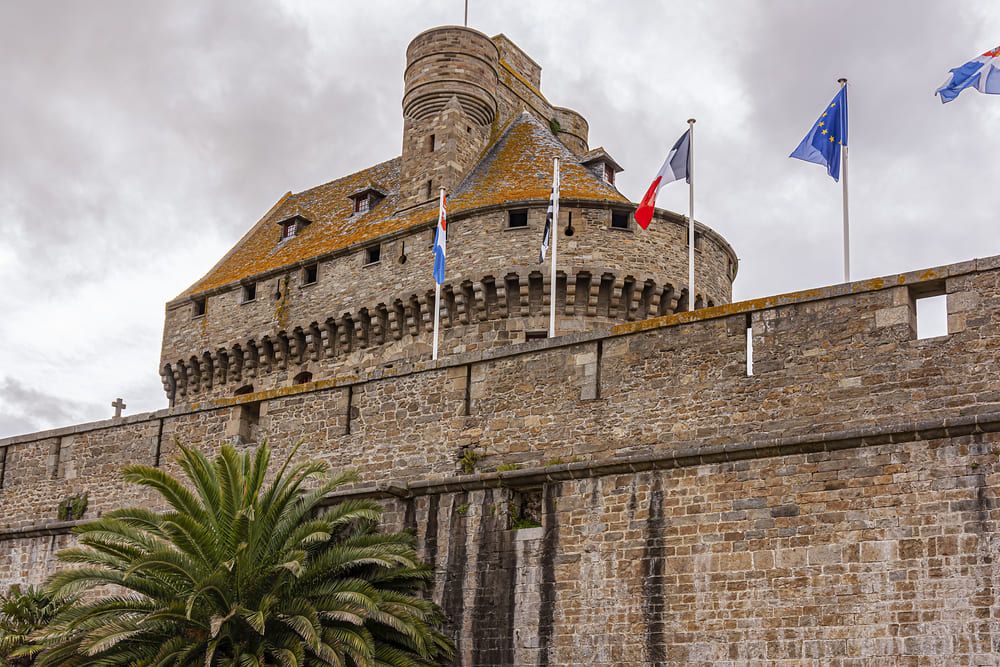
The castle of Saint-Malo watches over the entrance of the walled town, at Place Chateaubriand. The Saint-Malo audio-guided tour stops here to evoke this fortress, a witness of the history of the corsair city and the seat of the town hall.
The castle of Saint-Malo was raised and reinforced by the dukes of Brittany, including Duchess Anne, to assert their authority over the city. Composed of a great keep and towers, including the famous Quic-en-Groigne, it dominates the entrance of the walled town. It today houses the town hall and a museum devoted to the history of Saint-Malo, its corsairs and its navigators.
You admire the great keep, the towers, including the Quic-en-Groigne, and the city history museum housed in the castle. The fortress tells the corsair and maritime past of Saint-Malo. It is a major stop for lovers of history and heritage, at the entrance of the walled city.
The castle of Saint-Malo lies at the entrance of the walled city, on Place Chateaubriand, reachable on foot. The exterior can be freely admired; housing the town hall and a museum, access to the museum spaces has a fee and follows its own hours, which vary with the season. It is best to check the arrangements before coming.
The town hall and a museum devoted to the history of the city, its corsairs and its navigators; it includes a great keep and towers, including the Quic-en-Groigne.
At the entrance of Saint-Malo intra-muros, on Place Chateaubriand.
Aucun avis pour le moment
