





Walk
The Key to Brittany
Guérande, France
Walk
The Key to Brittany
Guérande, France
1 km
Distance
1h00
Durée
15
Audios
Loop
Parcours
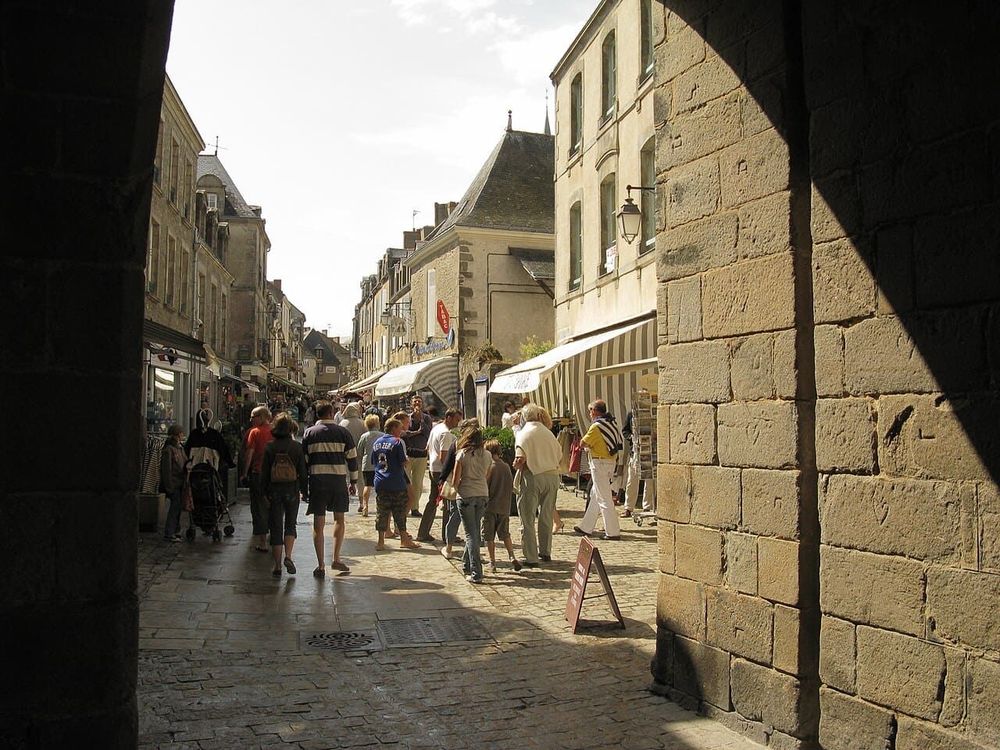
©Demeester BY-SA 3.0 <https://creativecommons.org/licenses/by-sa/3.0/deed.fr>via Wikipedia Commons
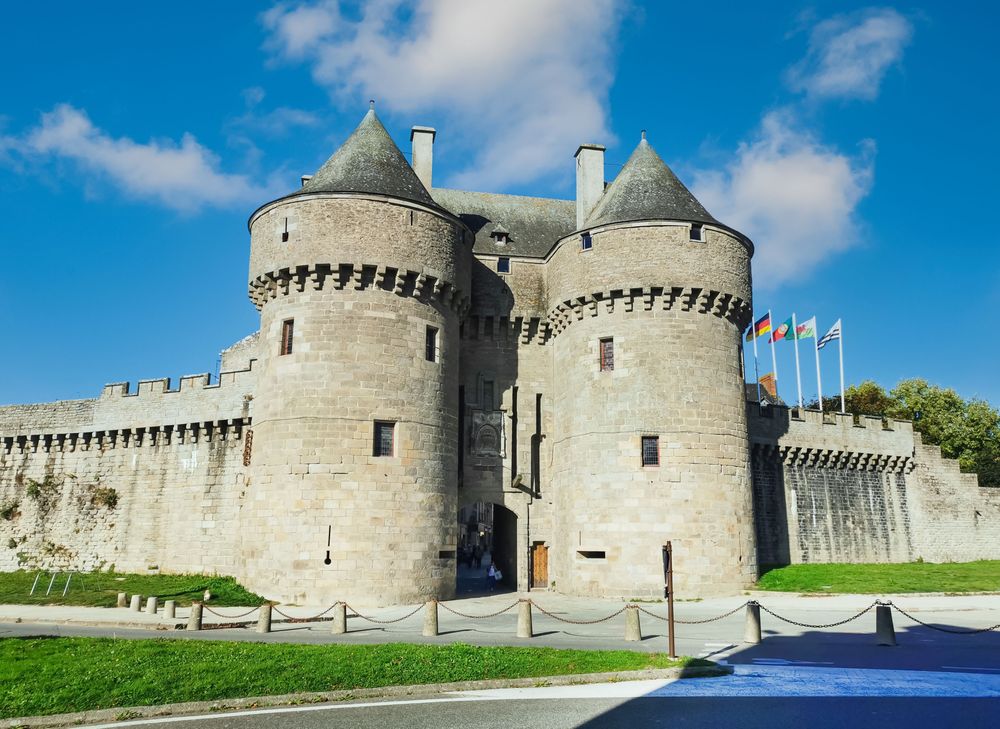
After passing through the Porte Saint-Michel, you’re now inside Guérande’s medieval old town, walking along Rue Saint-Michel, the main shopping street that leads straight to the Collegiate Church of Saint-Aubin. Behind you, you can picture the governor’s grand apartments in the upper floors of the gate. This has been a busy thoroughfare since medieval times, once known as the “Grand Rue,” and its cobblestones and timber-framed houses will make you feel as though you’ve stepped back in time.
What’s unusual about Guérande is that we have very few historical references to the town before the 13th century. The Collegiate Church of Saint-Aubin is first mentioned in 854, but the existence of a true medieval settlement isn’t confirmed until 1206, and much of what came before remains a mystery. What we do know is that part of the town’s ramparts date from the 14th century, a time marked by one of the region’s defining events: the War of the Breton Succession.
Back then, Brittany was an independent duchy, ruled by its dukes as sovereigns. When Duke John III died without a direct heir in 1341, the big question was: who would take the throne? Two claimants emerged, Joan of Penthièvre, his niece, married to Charles of Blois and backed by France, and John of Montfort, the duke’s half-brother, supported by England.
The French peerage decided in favor of Charles of Blois, while the townspeople here supported John of Montfort. This all unfolded at the start of the Hundred Years’ War between France and England, and Brittany’s strategic location made it too important for either side to relinquish. For years, the rivals fought over the duchy, with battles, captures, and shifting control.
In 1364, Charles of Blois was killed at the Battle of Auray, leaving John of Montfort victorious. The following year, the Treaty of Guérande was signed here, officially recognizing him as Duke of Brittany and ending the war. The duchy kept its independence, and while it acknowledged the French king by offering military support and allowing occasional royal interference, it remained largely self-governing, minting its own coins, collecting its own taxes, and running its own parliament and institutions.
That autonomy, much like in Burgundy or Provence, preserved Brittany’s distinct traditions and identity. By the late 15th century, though, France began tightening its grip, not through war, but through political marriages. Duchess Anne of Brittany was wed, first to King Charles VIII of France, then to his successor, Louis XII.
Her daughter, heir to the duchy, was also married off to the future King Francis I, who gradually integrated Brittany into the French crown. In 1532, the Estates of Brittany signed an edict making the duchy a French province, though they retained some control over taxes, their parliament, and certain judicial matters. Even so, Breton customs and traditions endured, and you can still feel them strongly here today.
Guérande played a pivotal role in this history, it was the site of both peace treaties that ended the succession war. It’s partly because of those conflicts that John of Montfort fortified the town so heavily. Fast forward to 1941, when the Vichy regime redrew France’s regional boundaries, separating Loire-Atlantique from Brittany to bring Nantes closer to Angers.
When modern administrative regions were established in 1956, Loire-Atlantique became part of the Pays de la Loire instead of Brittany, a decision that still sparks debate. Historically Breton at heart, Guérande has kept its traditions alive and remains deeply rooted in Brittany’s identity. Let’s keep walking, you’re about to see more of it for yourself.
Aucun avis pour le moment
