






Créé par Romane, le 17 nov. 2026
Votre guide Ryo
Guérande, France
The Key to Brittany
Parcours audioguidé pour visiter Guérande en 1 jour
Surrounded by remarkably well-preserved ramparts, Guérande is a medieval town with a rich Breton heritage. With its cobbled streets and renowned salt marshes, it blends history, character, and culinary traditions.
Quand partir à Guérande ?
Jan.
8°
12
Feb.
9°
10
March
11°
10
April
13°
10
May
16°
9
June
19°
7
July
22°
6
Aug.
22°
7
Sept.
20°
8
Oct.
16°
10
Nov.
12°
12
Dec.
9°
12
The climate in Guérande is oceanic, with mild winters, generally between 5 and 12°C, and temperate summers, most often ranging from 20 to 26°C, with variations linked to sea winds; the best times to visit are typically from April to June and then from September to October, when temperatures are pleasant, the light is particularly beautiful over the salt marshes, and visitor numbers are lower, offering ideal conditions to explore the medieval town, the marshes, and the coastline in a more peaceful atmosphere.
Départ conseillé
We design our tours as loops so you can easily start the visit from the point closest to you, and the guidance will adjust automatically. If you are nearby, we recommend an ideal starting point: Porte Saint-Michel
Parking à proximité
During the peak summer season: Athanor Parking, Avenue Anne de Bretagne.
Outside of July and August: Remparts Parking, Chemin du Guesny.
There are several parking options in Guérande: inside the medieval city walls, Balzac Parking is underground, free, and closes at night—be sure to check the opening hours. If you prefer a parking lot that stays open at all times, you can try Saint-Jean, an outdoor lot with a few spaces. During the high tourist season, it’s best to avoid driving inside the walls. You can then use the free Bel Air, Gaudinais, or the largest, Athanor, which offers 300 spaces. Outside the summer season, you can also park for free at Remparts, Marhallé, Sainte-Anne, and Kerbenet, as well as along the boulevards of Abreuvoir, Midi, Dinkelsbühl, and Nord. These spots are, however, paid in July and August. Other parking spaces in the rest of the town are generally paid or regulated by a parking disc.
Découvrez 15 lieux d'intérêt pour visiter Guérande



What to see in Guérande on your 1h tour?
This 1 km loop takes about 1 hour and links 14 sights at the heart of Guérande's medieval old town. From the Saint-Michel gate, it follows the main shopping street to the collegiate church, crosses Place du Pilori and the mansions of the Tricot quarter, slips briefly outside the ramparts, then returns past the Saillé gate and Place Saint-Jean towards the salt marshes at the edge of town. With the Ryo app in your ears, every gate and every cobblestone tells Brittany's story.
Information checked in November 2026 and subject to change.
1 - Saint-Michel Gate
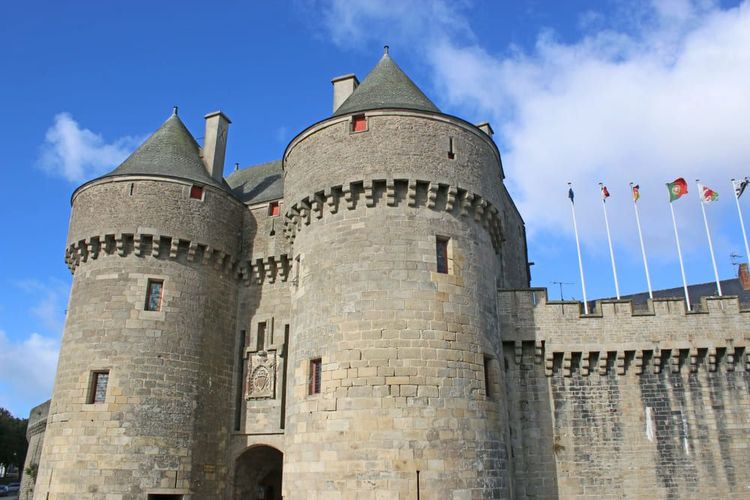
Guérande greets visitors through its grandest gateway, the natural starting point for this walk. Raised in the 14th century under Brittany's duke, it later served as the governor's home, a Revolutionary jail, then town offices until 1954. Gun ports and arrow slits reveal its military past, while its 24-metre summit once doubled as a lookout. The gate now houses a museum devoted to the town's story.
Free to see from outside
2 - Saint-Michel Street
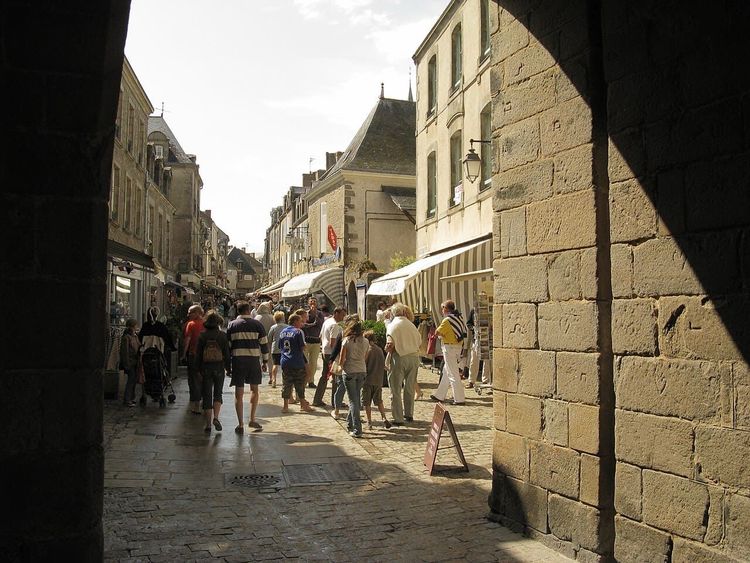
This shopping street, once called the Grand Rue, runs straight to the Collegiate Church. Little is recorded about the town before the 13th century, beyond a settlement confirmed in 1206. Yet it was here that a defining chapter of the duchy unfolded: a succession dispute between rival claimants to the Breton throne, fought from 1341 to 1365 and settled by the Treaty of Guérande. Breton at heart, the town has officially belonged to the Pays de la Loire region since 1956.
Free entry
3 - Old Market Square
Just off the main street, a cobbled square recalls a wheat market active from the 14th century, long gone along with the cemetery it once bordered. The Maison du Sénéchal, dating to the 17th century, honours a royal officer once responsible for local justice. Tradition holds that novelist Balzac lodged on this square, drawing inspiration here for his book released in 1839.
Free entry
4 - Guérande Market Halls
On Place Saint-Aubin, tall glass bays and wrought-iron grilles mark the covered market, erected in the early 20th century where an older hall once stood. Open Wednesday and Saturday mornings, it gathers the region's flavours: hand-harvested salt and its delicate fleur de sel, samphire from the marshes, shellfish from the coast, beef raised in the nearby Brière park, and sweet treats like salted-butter caramels or local lollipops in dozens of flavours.
Free entry
5 - Saint-Aubin Collegiate Church

The city's main church, listed as a historic monument since 1840, has weathered countless trials: a Romanesque sanctuary once stood where today's flamboyant Gothic nave rises, rebuilt after the town was sacked in 1342 and later restored following repeated storm damage. Named after an Angevin bishop turned patron saint, it keeps a treasury of goldsmith's work and vestments in the Marguerite chapel, alongside the legend of a knight sent from the heavens.
Free entry
6 - Pilori Square
This quiet square takes its name from a punishment long gone: the pillory, a post where offenders faced jeers, thrown objects and sometimes blows for crimes such as theft or perjury, a practice that spread across France from the 12th century onward. A 14th-century well sits nearby, alongside a pale-blue timber house whose upper floor juts over the street, facing a stone dwelling marked by a mysterious carved head.
Free entry
7 - Prevoté Manor
Tucked behind a red gate, this 16th-century manor once housed the provost, the officer in charge of running the town and dispensing justice, typically chosen from its wealthiest families. Restored in the 19th century, the home remains private, but step back a little and you'll spot its stair tower, a dormer window and a glimpse of the courtyard beyond, a rare surviving example of Guérande's noble housing.
Free to see from outside
8 - Chapel of Our Lady of the White
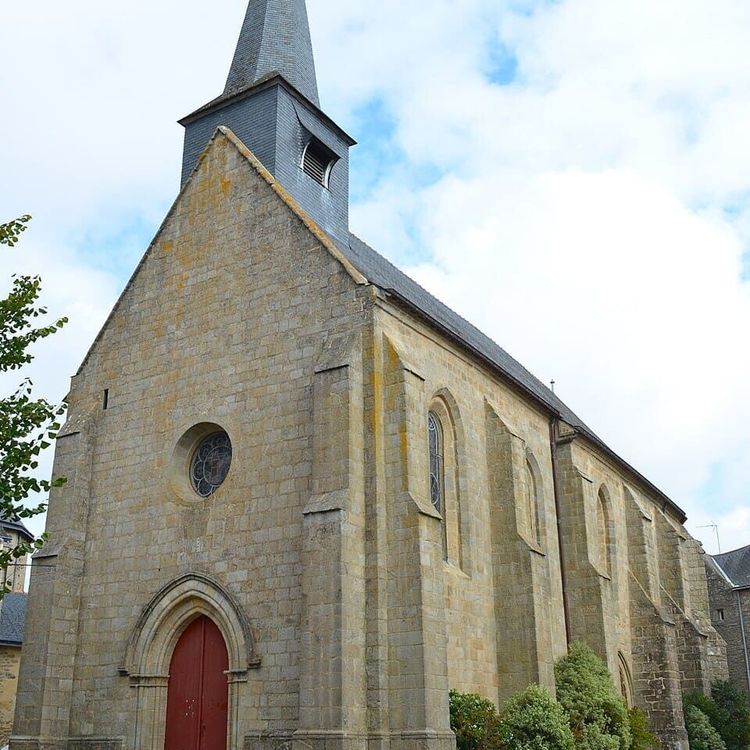
One of eight buildings in the city listed as a historic monument, this chapel likely dates to 1348, replacing an earlier sanctuary destroyed when the town was sacked. Commissioned by Duke John of Montfort and dedicated to the Virgin for her purity, it may have hosted a second peace agreement in 1381. Sold off and turned into storage after the Revolution, it escaped demolition thanks to a priest who bought it back in 1853.
Free entry
9 - Hôtel du Tricot
Behind its own red gate stands one of the finest private mansions in the city, raised by local lords toward the end of the 16th century. Its L-shaped layout, typical of the region, reflects the refinement of the period's architecture. Now a guesthouse, the building only reveals its interior to travellers who spend the night; from the street, you can only guess at its elegant proportions.
Free to see from outside
10 - Poterne du Tricot
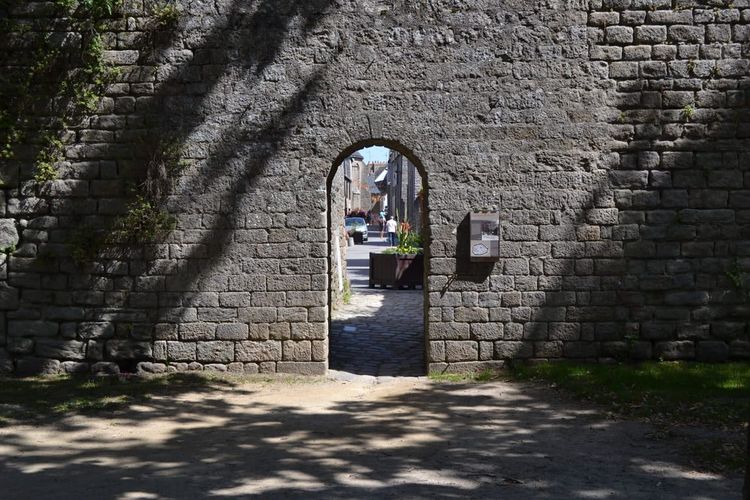
This small opening in the ramparts shares its name with the neighbouring mansion and street. Unlike the grand gates, a postern let residents slip in and out unseen by any attacker, always a narrow arch rather than a monumental structure. This one dates only from 1854, though an earlier version likely stood here before. Beyond it, the nearby wall, rebuilt after the Revolution using stone from regional roadside crosses, owes its nickname to that curious origin.
Free entry
11 - Porte de Saillé
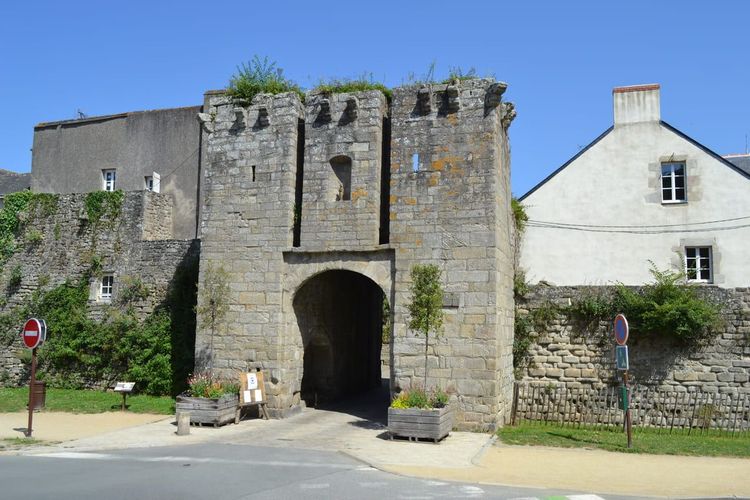
This listed gate marks the city's southern entrance and takes its name from the nearby village it faces. Built in the 16th century during calmer times, it never carried the defensive weight of its Saint-Michel cousin, though a few arrow slits remain. A niche above the passage shelters a small statue of the Virgin. Restored several times over, it completes the set of four fortified gates still standing.
Free entry
12 - Museum of Dolls and Antique Toys

This building long housed one of France's last doll museums, founded in 1998 when a former local tourism official set out to save a collection under threat. More than three hundred pieces, dressed in their own original outfits and crafted by specialist artisans, recreated scenes from another era, from Parisian drawing rooms to childhood settings. Drawing thousands of visitors every year for two decades, the place closed for good after a fire next door, and its collection has since been scattered.
Free to see from outside
13 - Place Saint-Jean
On this square stands a hospital so old that its founding date remains uncertain. Run by religious staff, it once cared for the sick, the poor and passing pilgrims, before becoming state property in 1796 and then a military hospital. Replaced in the mid-19th century by a newer facility, the building later served as a school. Restored, it now holds offices and occasionally opens its doors for temporary exhibitions.
Free entry
14 - Marais salants de Guérande
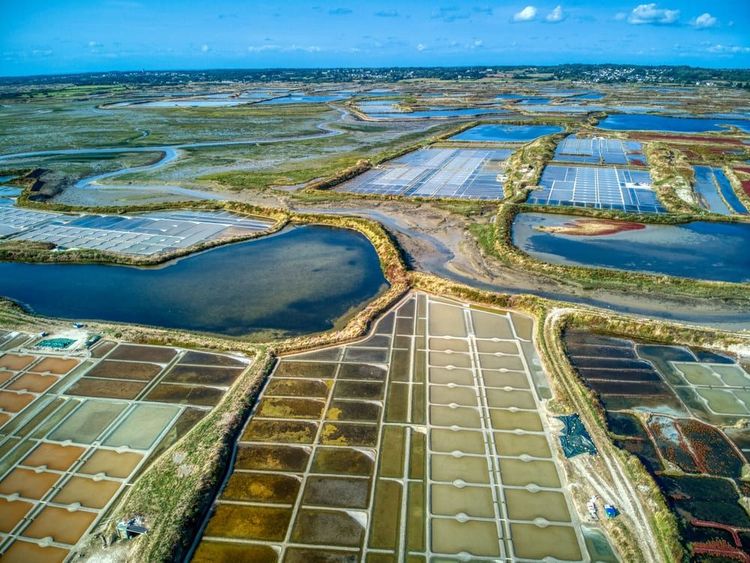
Just outside the city walls stretch the marshes behind its worldwide fame: the only French sea salt to carry the Label Rouge, harvested here as far back as the Iron Age. Monks shaped the evaporation basins in the 10th century, giving the marshes the look they still have. Long a precious commodity, this salt even gave us the word "salary", and was once taxed under a levy that stood until 1790. Salt workers still follow the tides, the wind and the sun today.
Free entry
Which neighbourhoods does the tour cross?
The audio-guided walk forms a loop at the heart of the fortified medieval town, between gates, squares and market. It starts at the Saint-Michel gate and follows the shopping street of the same name to the Old Market Square, the market halls on Place Saint-Aubin and the neighbouring collegiate church (stops 1 to 5), then opens onto Pilori Square, with its well and its jettied house (stop 6).
The route then heads to the western side of the town, where the Prévôté manor, the Notre-Dame-la-Blanche chapel and the Hôtel du Tricot, now a guest house, follow one another (stops 7 to 9), before briefly stepping outside the ramparts through the Tricot postern to follow the calvary curtain wall to the Saillé gate, the town's southern entrance (stops 10 and 11).
It then comes back inside the walls, passes the former Doll Museum and reaches Place Saint-Jean, where the old hospital stands (stops 12 and 13). The loop ends not far from the starting point with the story of the salt marshes, which stretch out beyond the town (stop 14).
How much does it cost to visit Guérande?
Entry to the medieval town is free, and none of the 14 stops requires a ticket to be discovered along the way. Ten can be visited or admired freely, from the Old Market Square to the Saillé gate, and four can only be seen from the street:
- the Saint-Michel gate, whose museum, like access to part of the ramparts, charges a fee not published online;
- the Prévôté manor, a private building glimpsed from the gateway;
- the Hôtel du Tricot, now a guest house, whose interior is only open to guests staying there;
- the former Museum of Dolls and Antique Toys, closed since 2017.
To find out the museum's price, it is best to call the tourist office; optional guided tours of the salt marshes with a salt worker are also booked by phone, with no price published online.
Information checked in November 2026 and subject to change.
Where to stop for a bite along the tour?
The route makes a gourmet stop at the Guérande market halls (stop 4), on Place Saint-Aubin, open only on Wednesday and Saturday mornings.
The first thing to bring back is Guérande salt, plain or with herbs, and its fleur de sel, more delicate, hand-harvested in summer.
The stalls also offer samphire, a salt-marsh plant to try in salad or omelette, oysters, mussels and sardines from the coast, as well as Brière beef, raised in the neighbouring nature park.
To finish on a sweet note, pick up a bag of salted-butter caramels or Niniches, local lollipops that come in more than 50 flavours.
What to do in Guérande with children?
The medieval town works well for a family outing, between a playful trail and a mystery game.
At the Saint-Michel gate (stop 1), the Guérande museum offers a dedicated children's trail, alongside regular guided tours. Until 3 January 2027, several weekends also feature a team mystery game, “Mystère à la porte Saint-Michel”, open from age 7 and for 2 to 6 players, priced at €9 per adult and €7 per child.
What should you know before visiting Guérande?
A few practical pointers before exploring the medieval town of Guérande.
The Saint-Aubin collegiate church and the Notre-Dame-la-Blanche chapel are best visited during the day, quietly and respecting services, with hours that vary by season. The same goes for the museum at the Saint-Michel gate: check its opening days before planning to go in.
The Museum of Dolls and Antique Toys (stop 12), closed since 2017 after a fire in nearby buildings, can no longer be visited: only the building itself can be seen from the street.
In high season, it is best to avoid driving inside the ramparts and to use an outer car park such as Athanor, which offers 300 spaces.
What to see around Guérande?
Guérande is also a starting point for other towns best explored on foot, each with its own audio-guided route.
18 km away, Saint-Nazaire reveals its submarine base and shipyards, while 44 km away, Vannes preserves a medieval town of half-timbered façades that opens onto its harbour at the foot of the Saint-Vincent gate.
At the tip of its peninsula, Quiberon, 55 km away, contrasts the cliffs of its Côte Sauvage with the wide beaches of its bay, and Auray, 56 km away, keeps the charm of the Saint-Goustan harbour. A little further, 57 km away, Carnac is world-famous for its thousands of standing stones.
67 km away, Nantes blends the Dukes of Brittany castle with the Loire quays. Lastly, in the Morbihan, Hennebont and its ramparts, 83 km away, and Lorient, the city of six harbours, 84 km away, also have their own route.
What's on in Guérande right now?
Before the year is out, two events bring the medieval town to life.
From 28 November to 20 December, the Guérande museum, at the Saint-Michel gate, offers a sensory exhibition on building with raw earth, open in time slots on weekends and some weekdays; visitors can touch and handle the material.
On four evenings, 22, 23, 29 and 30 December, a guided 1.5-hour night tour sets off from the tourist office to discover the illuminated town, including the ramparts and the collegiate church's stained glass, with a hot drink included; it costs €11 per adult.
Information checked in November 2026 and subject to change.
Le plein d'inspirations
Explorez le monde en totale liberté, à pied au cœur des villes ou au fil des routes. Nos guides audios transforment chaque destination en une découverte culturelle immersive et unique.





FAQ for visiting Guérande
When is the best time to visit Guérande?
The ideal time to discover Guérande runs from April to June, and then from September to October. During these months, you will enjoy mild, pleasant temperatures, perfect for strolling through the medieval lanes and exploring the salt marshes. The light is particularly beautiful over the salt pans at these times of year, offering magnificent landscapes. Tourist numbers are also more moderate than in the height of summer, letting you visit in a more peaceful atmosphere. Winters remain mild thanks to the oceanic climate, but the days are shorter. Summer can be very busy, especially in July and August, even though temperatures generally stay pleasant, ranging between 20 and 26°C.
Can you wander freely through the salt marshes of Guérande?
The salt marshes of Guérande are private working areas, so you cannot wander freely everywhere. However, many public paths run alongside the salt pans and allow you to admire this unique landscape. Guided tours are regularly offered by the salt workers themselves, who will explain their ancestral trade and the salt harvest. Some salt houses also organise discovery trails. For a self-guided, enriched exploration of the marshes with commentary on their history and how they work, the Ryo audioguide offers a dedicated itinerary. Always respect private property and working areas to help preserve this living heritage.
How long do you need to visit Guérande?
For a first look at Guérande, allow at least half a day. This will give you time to walk through the medieval town, go around the ramparts and stroll along the cobbled lanes. If you also want to explore the salt marshes and perhaps visit a museum, a full day will be more comfortable. History and heritage enthusiasts will appreciate devoting two days to delve deeper into their visit, discover the surrounding area such as La Baule or Le Croisic, and take the time to savour the local specialities. The Ryo audioguide helps you make the most of your time with a guided tour that covers the town's must-sees in a few hours.
How do you get onto the ramparts of Guérande?
The ramparts of Guérande can be accessed free of charge through several historic gates set around the town. The Porte Saint-Michel, the main entrance to the north, is the most impressive and today houses a museum. You can climb onto the ramparts by various staircases, notably near this gate or by the Tour Sainte-Anne. The parapet walk is only partly open to the public for safety reasons, but the open sections offer superb views over the town and the surrounding area. The walk at the foot of the ramparts is about 1.5 kilometres and lets you admire these remarkably well-preserved medieval fortifications. Some access points may be temporarily closed depending on restoration work.
Where can you buy authentic Guérande salt?
To buy genuine Guérande salt, favour direct sales points at the salt workers' or in local cooperatives. La Maison des Paludiers, located near the marshes, offers a wide range of salts with the assurance of their authenticity and origin. In the medieval town, several specialist shops sell certified salt, notably around the Collégiale Saint-Aubin. Local markets are also excellent places to meet the producers directly. Beware of counterfeits and always check for the PGI (Protected Geographical Indication) label, which guarantees the origin. Prices vary according to the type of salt, with fleur de sel being the most precious and expensive.
Is the medieval town accessible to people with reduced mobility?
Accessibility in the medieval town of Guérande remains limited because of its historic character. The cobbled, sometimes uneven streets and certain slopes can pose difficulties for wheelchair users or people with reduced mobility. However, efforts are being made to improve access: some shops and restaurants have adapted entrances, and the main thoroughfares are generally easier to navigate. The tourist office can provide you with a map indicating the most accessible routes and the equipped establishments. It is advisable to opt for an accompanied visit if possible. The ramparts are unfortunately not accessible to wheelchairs, but you can enjoy lovely views from the foot of the fortifications.
Where can you park easily near the medieval town?
Several free car parks are available around the ramparts of Guérande. The Sainte-Anne car park, located near the gate of the same name, is one of the most convenient for reaching the historic centre quickly. The Abreuvoir car park, on the south side, also offers plenty of spaces. In high season, these car parks can fill up quickly, especially in the middle of the day. Arriving early in the morning or late in the afternoon makes parking much easier. Paid parking spaces are available on certain boulevards outside the ramparts, usually with a limited duration. For motorhomes, dedicated areas are set up on the outskirts. Avoid trying to park within the medieval walls, as access there is very restricted.
What can you visit for free in Guérande?
Guérande offers many free visiting options that will delight every budget. Strolling through the medieval town and around the ramparts is entirely free, letting you admire the preserved architecture and the unique atmosphere of the place. The Collégiale Saint-Aubin, a magnificent Gothic church, can be visited free of charge and is truly worth the detour. The public paths running alongside the salt marshes offer spectacular landscapes at no cost. The traditional market, particularly lively, is an authentic experience not to be missed. To enrich your discovery with historical anecdotes and detailed explanations about all these free sites, the Ryo audioguide offers a guided tour that turns your walk into a true journey through time.
What is there to see in the medieval town of Guérande?
The walled town is best discovered from its ramparts, which have survived almost intact and are pierced by four fortified gates. The most imposing of them, the Porte Saint-Michel, once housed the governor and now holds a museum devoted to the history of the town. Inside the walls, the collegiate church of Saint-Aubin catches the eye with its outdoor stone pulpit, its carved capitals and its colourful stained glass.
Around it radiate cobbled lanes lined with half-timbered houses, the Place du Vieux Marché, the covered market hall and many shops selling salt, biscuits and local crafts. The old town is easy to cover on foot, with no need to get back into the car. The Ryo audio guide offers a dedicated Guérande route that links these stops and tells the story of the town's merchant past.
What can you do in Guérande with children?
The salt marshes remain the most memorable activity for younger visitors: several salt workers and visitor centres run guided walks explaining how salt is made, how the fleur de sel is harvested and which wildlife lives around the pans, often rounded off with a horse-drawn carriage or little tourist train ride between the basins.
In town, the Porte Saint-Michel offers a playful trail designed for families, and climbing onto the wall walk never fails to delight children, with its views down over the rooftops and the moat. The market hall and the biscuit shops make for an easy treat, and the nearby peninsula lets you finish the day with a beach or a nature outing, depending on the weather.
Vos commentaires, idées et suggestions
Aucun avis pour le moment
