
Créé par Camille, le 16 nov. 2026
Votre guide Ryo
Lorient, France
The City of Six Harbors
Parcours audioguidé pour visiter Lorient en 1 jour
Located in Morbihan, Lorient is a vibrant coastal city founded in the 17th century with the rise of the French East India Company. Shaped by modernist reconstruction after the Second World War, it now blends traces of the past with contemporary creativity. Nicknamed the “City of Six Ports,” Lorient lives to the rhythm of the ocean, maritime activities, and a lively Breton cultural scene.
Quand partir à Lorient ?
Jan.
10°
11
Feb.
10°
8
March
12°
8
April
14°
7
May
17°
7
June
20°
6
July
22°
5
Aug.
22°
5
Sept.
20°
7
Oct.
17°
10
Nov.
13°
10
Dec.
10°
11
Lorient enjoys a temperate oceanic climate, strongly influenced by the Atlantic Ocean and the harbour. Summers are mild and pleasant, without excessive heat, while winters remain particularly mild but windy. Rainfall is frequent throughout the year, bringing invigorating sea air and bright spells between passing clouds—perfect for enjoying the fresh ocean spray.
Départ conseillé
We design our routes as loops, allowing you to start the tour easily from the point closest to you. The navigation will adjust automatically. If you are nearby, we recommend the ideal starting point: Place Alsace-Lorraine.
Parking à proximité
Parking spaces, Rue Jean le Coutaller, 56100 Lorient Car park, Place Pierre Guéguen, 56100 Lorient
For easy parking during your visit, head to the areas around Les Halles de Merville or the Moustoir complex, where you will find plenty of spaces close to the main shopping district and major cultural attractions. Place Pierre Guégan is also an excellent option for parking in a quieter area while remaining just a short walk from the city centre.
Découvrez 24 lieux d'intérêt pour visiter Lorient


What to see in Lorient on your 1h50 tour?
This 4.5 km loop takes about 1 hour 50 minutes and links 23 sights. From Place Alsace-Lorraine, in the rebuilt centre, it reaches the Enclos du Port and Faouëdic hill, follows the harbour quays to Lorient La Base, then loops back past Halles de Merville towards the town hall and Stade du Moustoir. With the Ryo app in your ears, every façade tells the story of a city born twice, from the East India Company to the Reconstruction.
Information checked in November 2026 and subject to change.
1 - Place Alsace-Lorraine
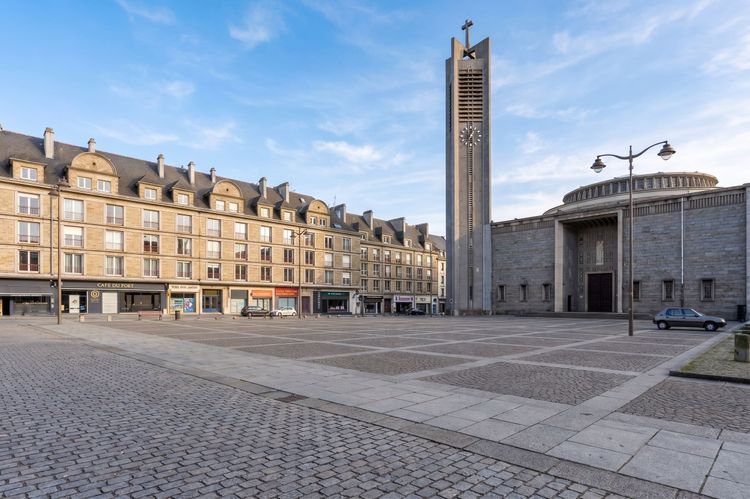
The walk opens on this busy shopping square, which gives no hint of more than two centuries of turbulent history. Born as Place Royale under the old monarchy, it carried seven names before becoming, in 1872, Place Alsace-Lorraine, a political gesture toward the provinces lost to Germany. Beneath the cobbles lies an air-raid shelter built in 1941, where hundreds of people took refuge during the 1943 raids that flattened the town, later rebuilt from 1950.
Free entry
2 - Notre-Dame-de-Victoire Church
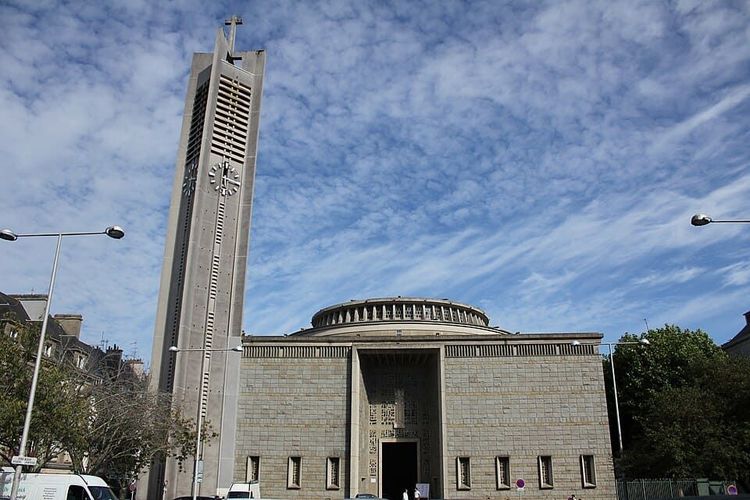
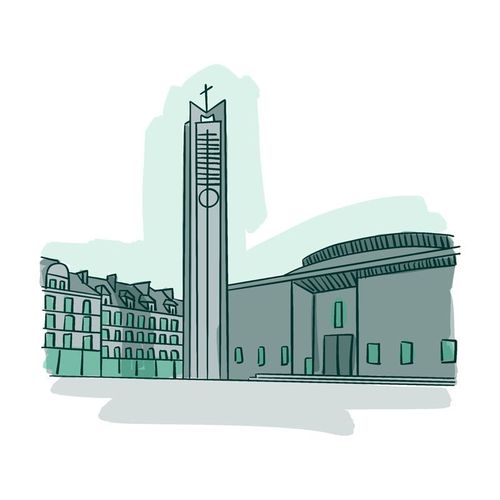
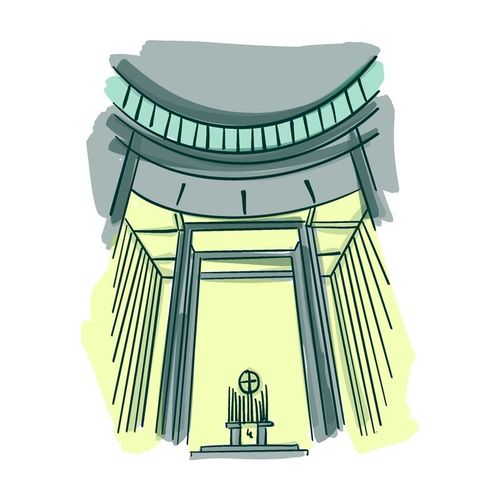
This block of raw concrete houses Notre-Dame-de-Victoire church, dear to locals: its 19th-century Marian statue came through the bombing without a scratch. That devotion traces back to 1746, when the British fleet threatened the town; residents prayed and the enemy withdrew, giving rise to this cult. The interior rewards a visit for its bold volume: look up at the star carved beneath the dome, more than forty metres overhead.
Free entry
3 - Saint Remi and the Roll of Fabric
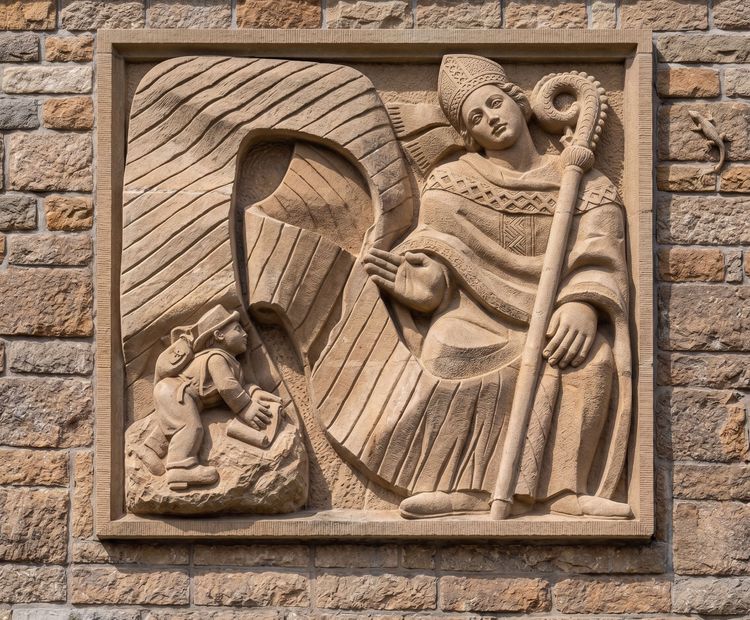
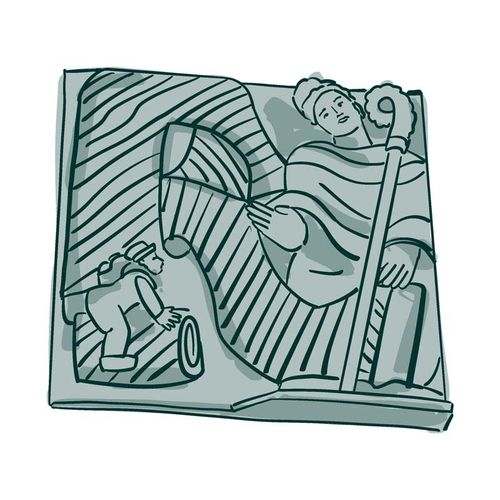
Look up, before leaving the square, at the first floor of the building across from you: this 1951 bas-relief depicts Saint Remi, patron of cloth makers, identifiable by his mitre and crozier. Beside him, a smaller figure bent over a roll of fabric evokes a textile worker. The choice is no religious coincidence: from 1922, this corner hosted the Saint-Rémy department store, destroyed with the rest of the neighbourhood. The sculptor thus linked prewar Lorient to the rebuilt city.
Free entry
4 - A Witness to the Prewar Era
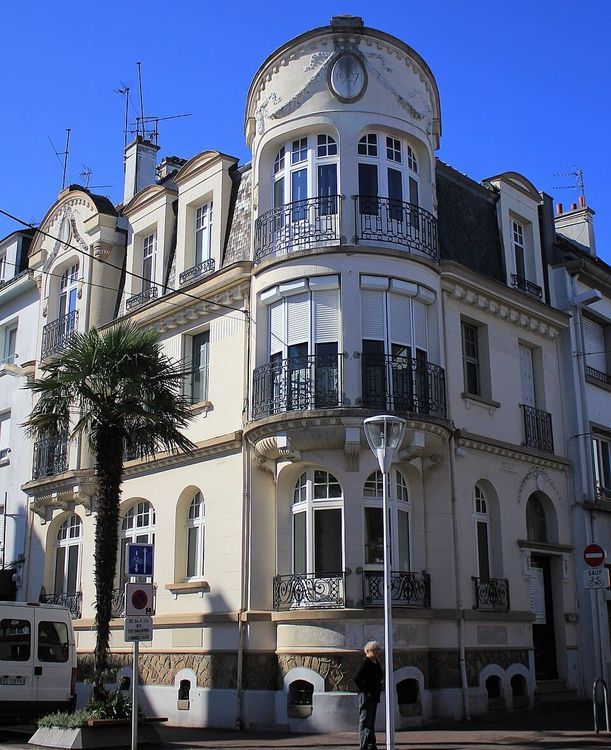
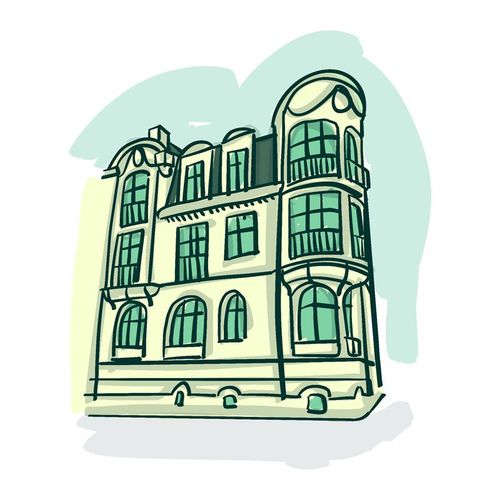
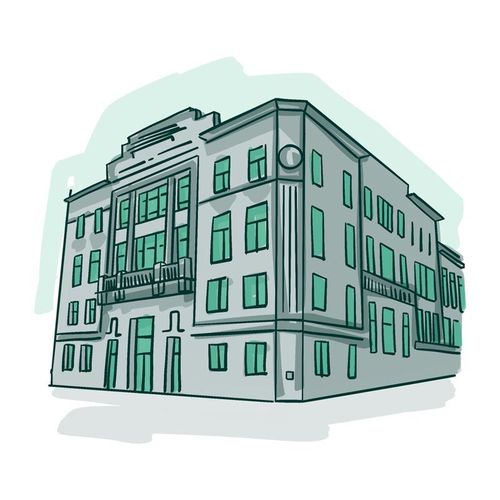
Where Rue Paul-Bert meets Rue de Liège stands an exception in Lorient's landscape: a building that has stood since 1926, a survivor of the interwar years amid a city almost entirely rebuilt. Its façade blends Belle Époque and Art Deco, anchored by a corner turret running the full height, with semicircular black wrought-iron balconies and a carved cornice listed on Brittany's heritage register. Dreamed of since childhood by a local entrepreneur, it regained its glow in the 2020s.
Free to see from outside
5 - Portrait of Pam Grier
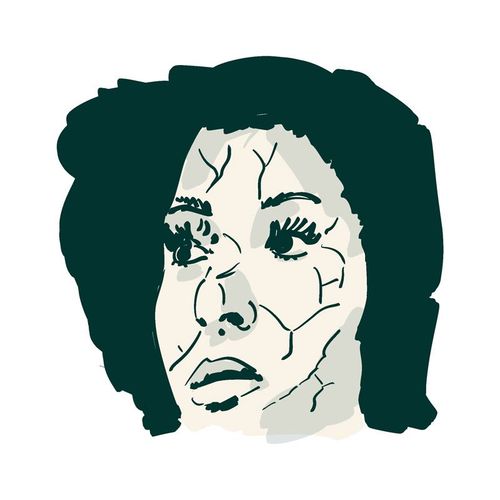
On your right, the underground entrance of a shopping centre reveals a piece by Raf Urban, a stencil artist from France, born in 1971 and recognised from London to New York. His layered technique brings out faces carrying a message of tolerance. The one watching you here is Pam Grier, an actress born in 1949, earning a 1970s nickname tied to blaxploitation cinema through cult films, before being brought back into the spotlight by Quentin Tarantino in 1997, honouring a pioneer of Black cinema.
Free entry
6 - Lorient War Memorial
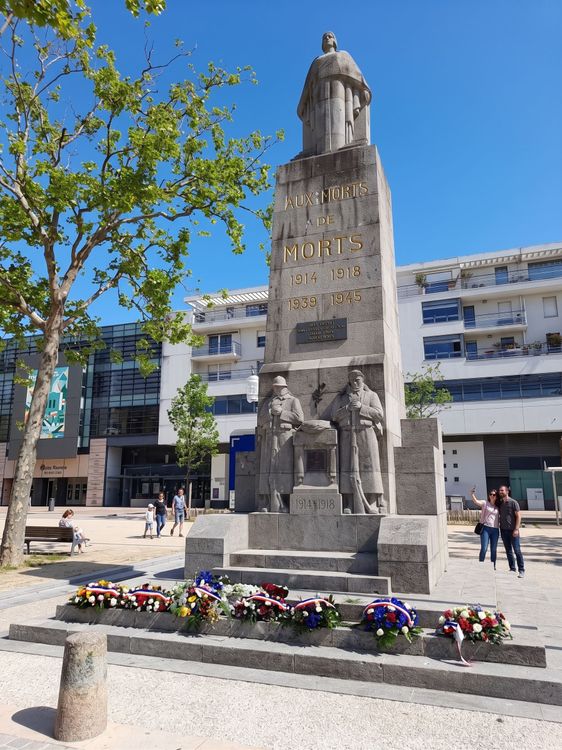
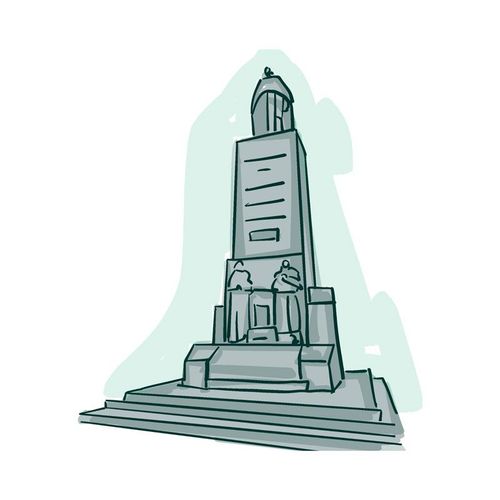
This granite stele, raised in 1932, had a stormy birth. From 1923, a committee and war veterans clashed over which figures to carve, so fiercely that the mayor cut off funding and delayed the unveiling by five years. The soldier and sailor carved at its base finally won out. Unusually for France, no names appear here: a sealed cavity holds a book of remembrance. Relocated several times, the monument reached its present square in 1961.
Free entry
7 - “Pirates” on the Wall
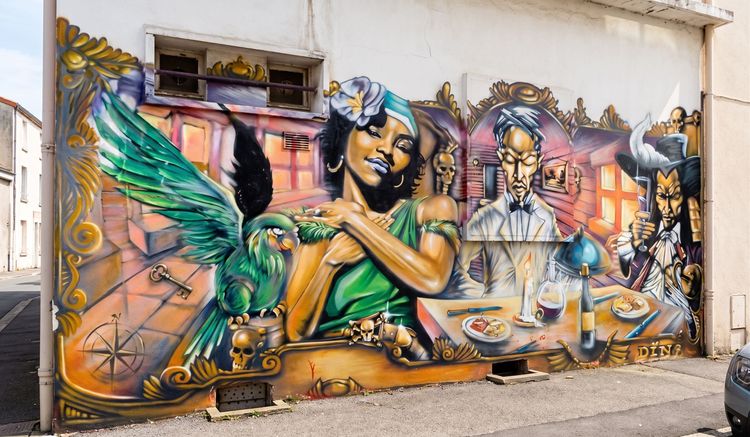
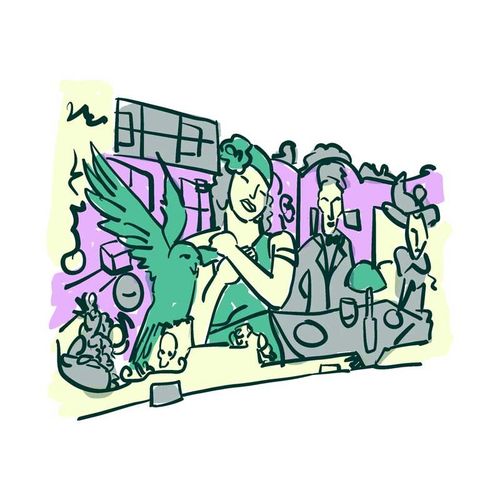
You could easily walk past it, yet this wall titled Pirates sums up Lorient's maritime imagination. It is signed Dino, co-founder in 2001 of the Moker Crew collective that turned the city into a recognised hub for urban art. On this stretch of wall, a self-assured female pirate stands beside an odd butler, a colourful parrot and Captain Hook, reinvented amid local harbours and sea spray. The artist thus offers a salty interlude in the heart of a rebuilt district.
Free entry
8 - The History of Lorient
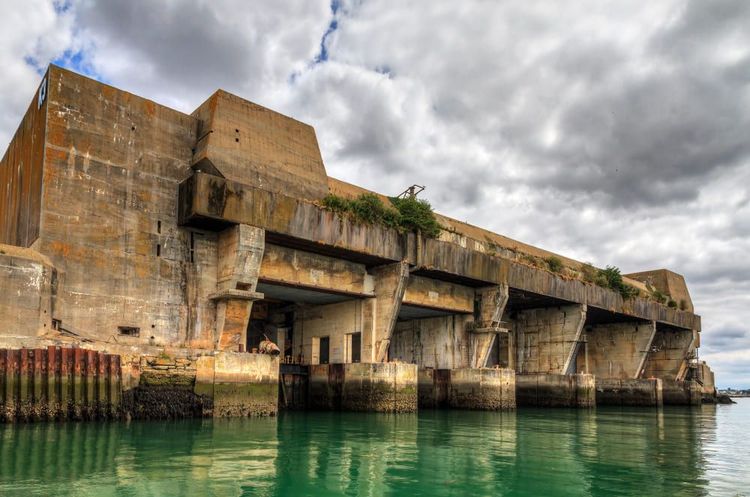
Nothing destined this peninsula along the Scorff for such a fate, until Louis XIV made it, in 1666, the single trading port granted to the French East India Company. A century of trade pushed the population to twenty thousand, after which the Royal Navy took over the site in 1778 to build the Arsenal. That strategic role turned fatal in 1943: unable to destroy the German submarine base at Keroman, the Allies flattened the town instead, whose surrender only came in May 1945.
Free entry
9 - Hotel Gabriel
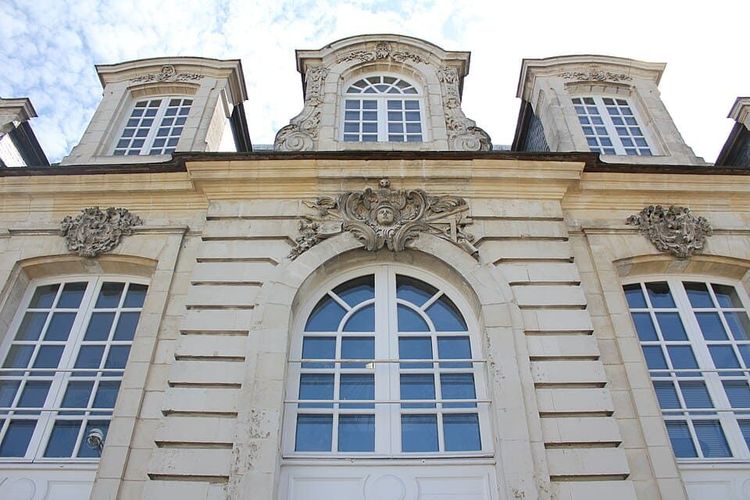
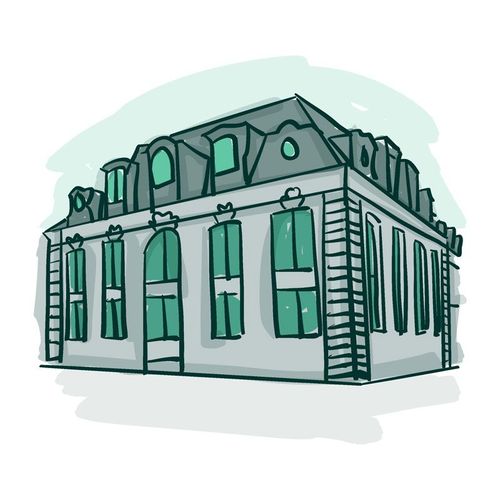
Welcome to the Enclos du Port, Lorient's historic heart. Hotel Gabriel, designed in 1731, was meant to host the grand auctions of the French East India Company. Short on time before 1734, its central block was never built, leaving two symmetrical pavilions in granite, pale limestone and slate. Above the central bays, carved masks depict Hermes and an Athena surrounded by scientific instruments, a first in French classical art. A site of auctions and the slave trade, it now opens onto a 16-hectare garden.
Free entry
10 - La Tour de la Découverte et les moulins
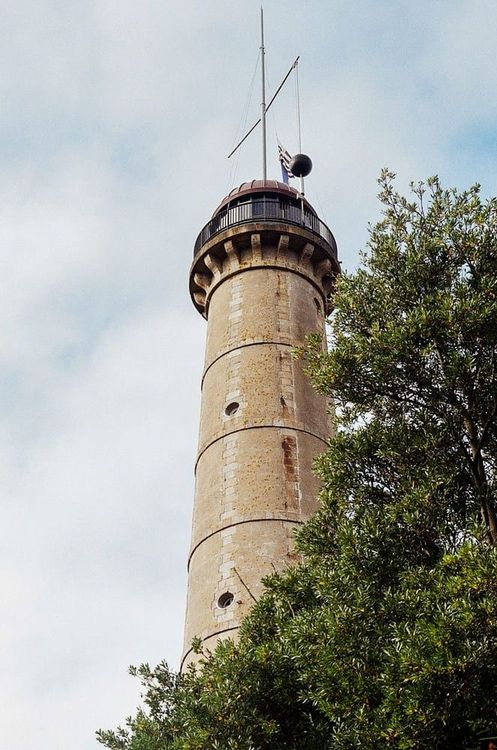
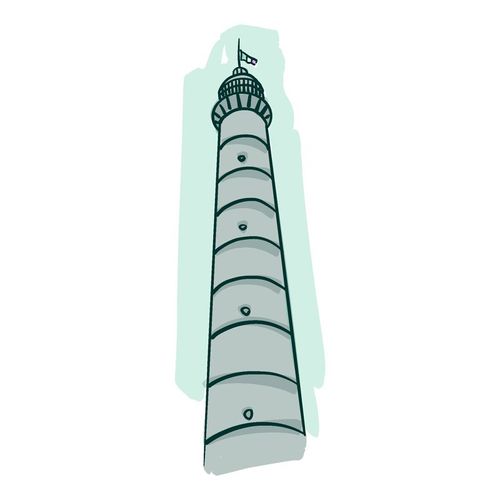
Three stone silhouettes rise on Faouëdic hill: the Tour de la Découverte, standing 38 metres tall, and two former windmills. Despite its lantern, the tower was never a lighthouse: raised during the 1740s, it watched for ships returning from Asia and for smuggling around the island of Groix. Struck by lightning three times, it was fitted with one of Europe's first lightning rods. The neighbouring windmills, meanwhile, ground the grain for sea biscuits, hardy enough to keep for two years.
Free to see from outside
11 - The Water Reservoir
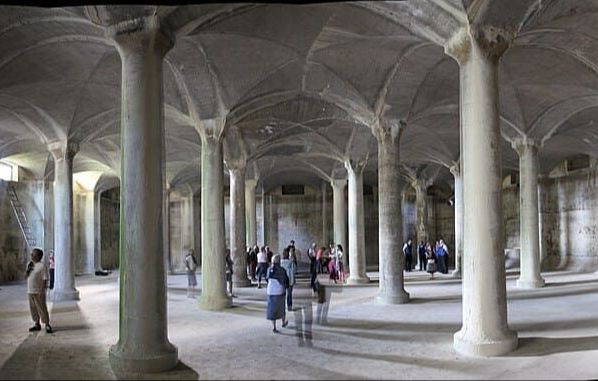
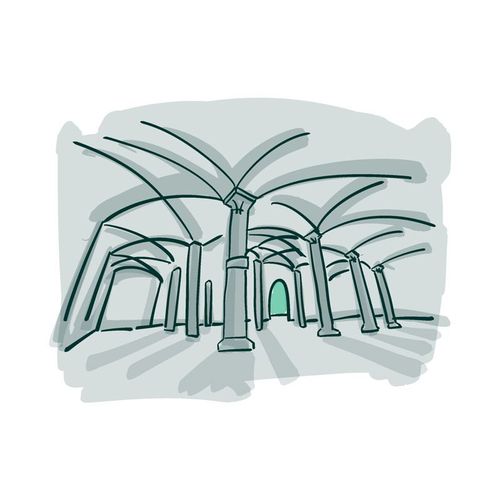
Beneath this grass-covered roof hides a little-known secret: the Navy's former freshwater reservoir, approved in 1874 to supply crews and barracks at a major military port. Descending into its depths reveals a crypt-like scene: sixteen concrete pillars holding up magnificent groin vaults, with a capacity of more than three thousand cubic metres. For nearly seventy years, this structure distributed pressurised water throughout the Enclos, once as strategic as salt or spices.
Paid entry
12 - Péristyle Point
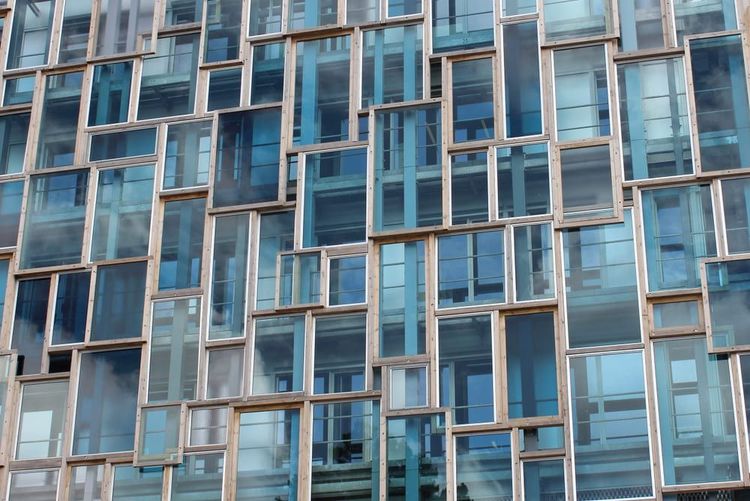
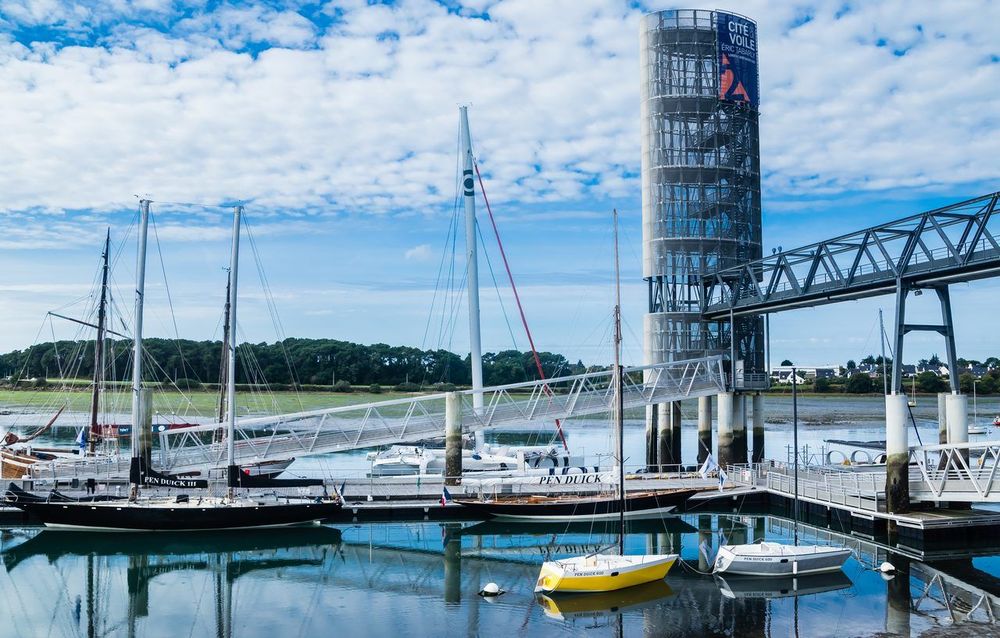
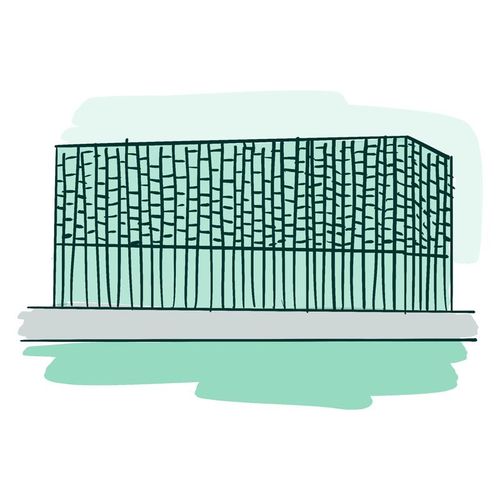
By the water, the Scorff estuary widens toward the marina, though it's further south that Lorient La Base hosts the giants of offshore racing. The place is impossible to mention without Éric Tabarly, an unknown officer when he completed the Atlantic crossing in 1964 in 27 days aboard Pen Duick II, smashing the British record. Opposite, the Maison de l'Agglomération, built in 2014 on the exact spot where the city was founded, wears a blue glass skin inspired by the sea.
Free entry
13 - The Origins of Lorient
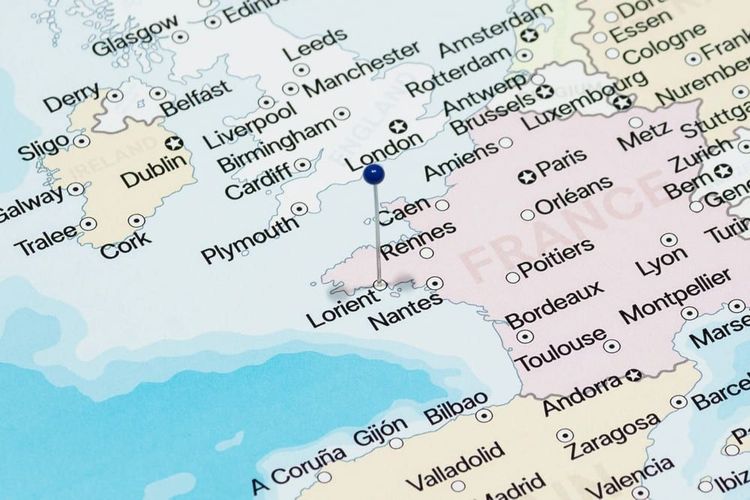
Lorient was long nicknamed the City of Five Ports, referring to its commercial port founded in 1666, its arsenal, the Keroman fishing port opened in 1927, its ferry terminal and its marina; the growth of Lorient La Base now pushes that tally to six, even seven. The city's very name comes from a ship, the Soleil d'Orient, the first large vessel launched from the yards: workers took to saying they were heading to L'Orient, and the name stuck.
Free entry
14 - Figurehead by Jacques Raoult
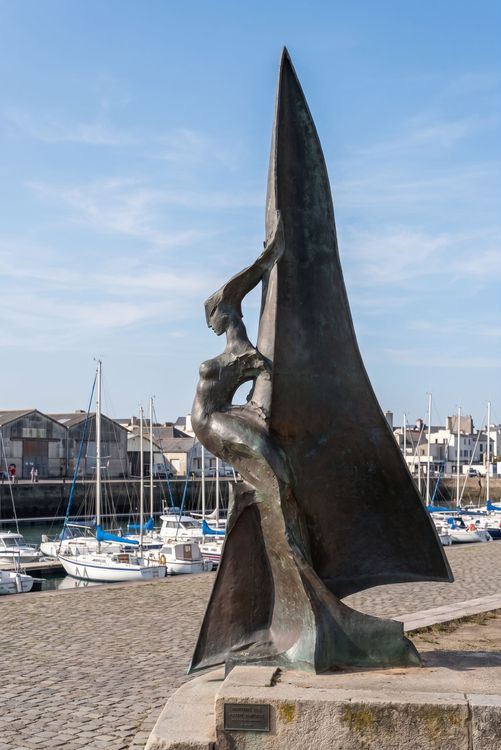
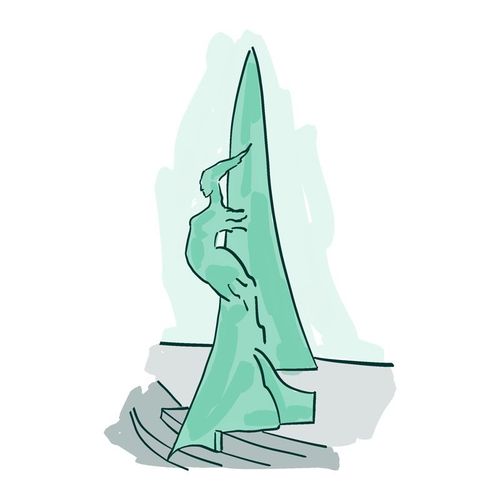
Near the waterbus terminal for Locmiquélic stands a four-metre bronze statue, simply named Figurehead. Created in 1988, it was raised to mark the completion of a large-scale redevelopment of the quays, an area long scarred by old German bunkers only demolished in 1982. Turning its back on dry land and the 18th-century buildings behind it, the figure symbolically faces into wind and tide, linking the memory of the great sailing ships to the drive of a modern city.
Free entry
15 - The Chamber of Commerce and Industry
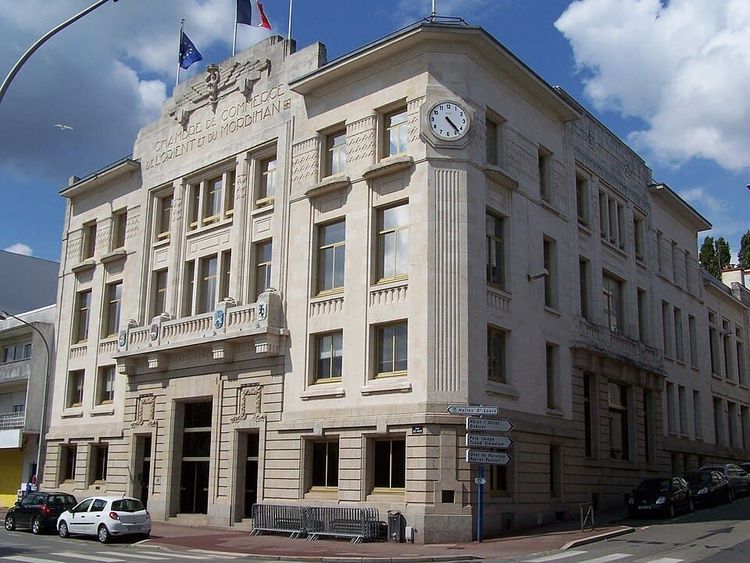
At 21 Quai des Indes, the Chamber of Commerce stands out for a local rarity: it survived, almost intact, the 1943 bombing raids. The institution, founded by decree under Napoleon I in 1807, had spent a century dreaming of headquarters worthy of its economic role; it got them in the 1930s, in a strict, geometric Art Deco style. Breton granite below, pale limestone above, the façade is adorned with fluted pillars and a caduceus, the symbol of Hermes, god of commerce.
Free to see from outside
16 - XXL Mural
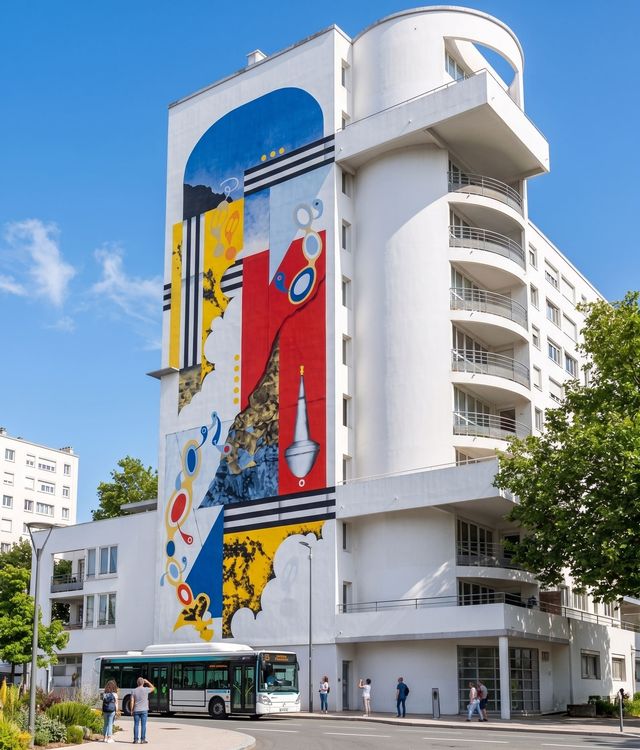
Brace yourself for a change of scale: painted in 2023 across an area the size of a vertical tennis court, this abstract mural grew from a collaboration between two figures of the Breton street-art scene. Chosen after a call for projects from the city, the duo spent ten days working from a lift. Beneath bright tones echoing the Bauhaus spirit, black-and-white bands nod to the Breton flag, while the shapes hide references to granite, wind and the sea horizon of Morbihan.
Free entry
17 - The Palais des Congrès and Breton Legends
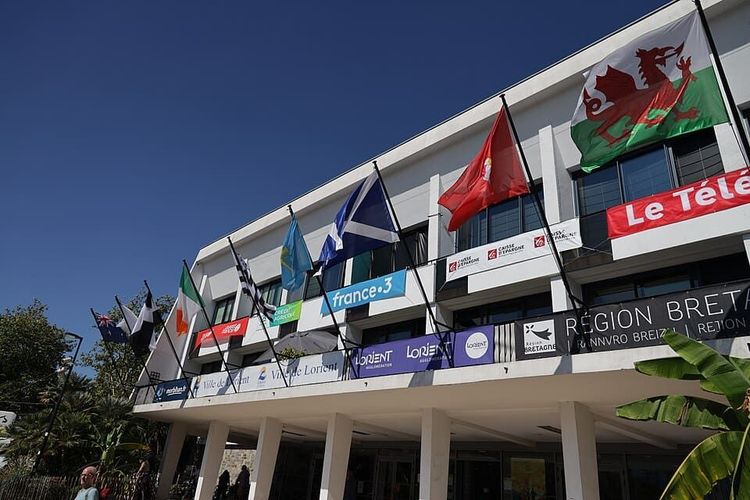
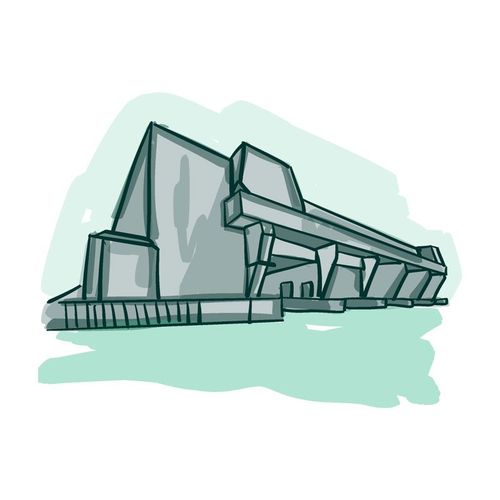
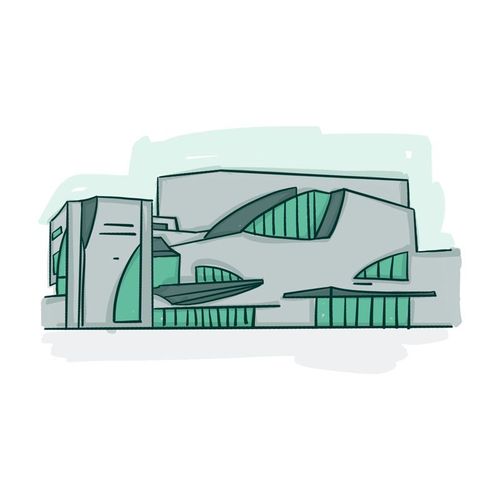
This vessel of concrete and glass, built in the 1960s on a filled-in former basin, is nothing like a haunted castle. But facing the harbour, the mood shifts: the Breton sea has always been a world inhabited by spirits, where Morganes, water fairies, once lured sailors with their song. People also feared the passing of the Ankou, the grim embodiment of death whose creaking cart was said to foretell a coming funeral, instilling a deep respect for untamed forces.
Free to see from outside
18 - The Lorient Interceltic Festival
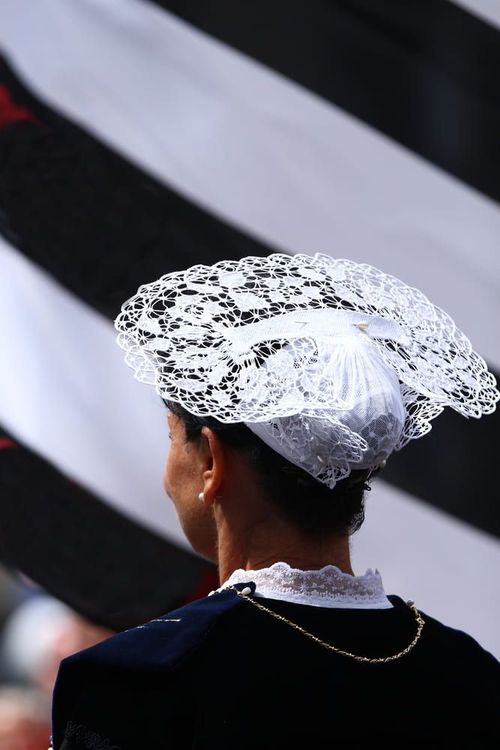
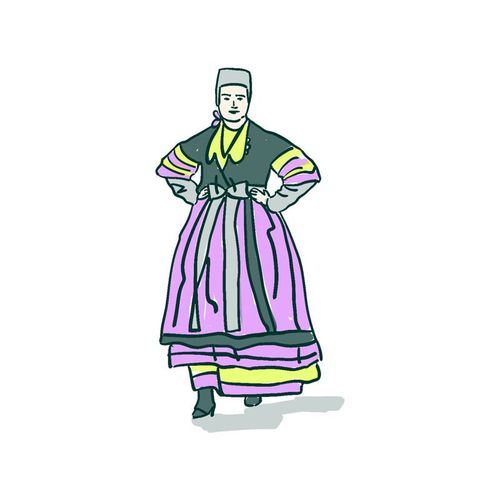
Jules-Ferry Park is the festive heart of the city: every August, it becomes the hub of the Interceltic Festival, drawing upwards of 5,000 performers from every Celtic nation, from Brittany to Galicia. Pavilions from each country are set up here, craft markets fill the paths, and visitors can discover the festoù-noz, a dance where people move in circles to the sound of a bagad, an ensemble of bagpipes and drums. Both the dances and costumes are listed as intangible heritage.
Free entry
19 - Halles de Merville
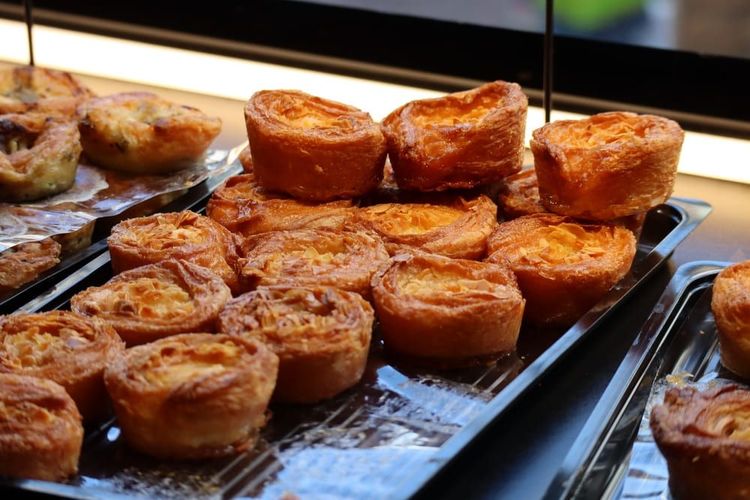
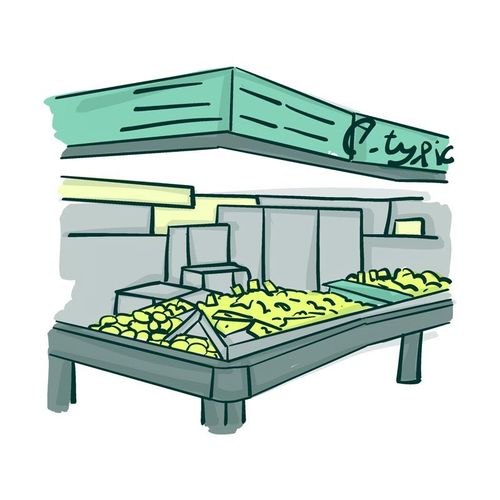
From Tuesday through Sunday morning, seventy traders bring Halles de Merville to life, a genuine culinary journey through Morbihan. Fishmongers here lay out catches from France's fifth-largest fishing port, perfect for sampling cotriade, a fish stew simmered with potatoes, or oysters from the Étel ria. From inland comes the genuine andouille of Guémené, and for those with a sweet tooth, prune far breton, salted-butter kouign-amann or buckwheat galettes, best paired with cider or traditional chouchen.
Free entry
20 - Lorient City Hall
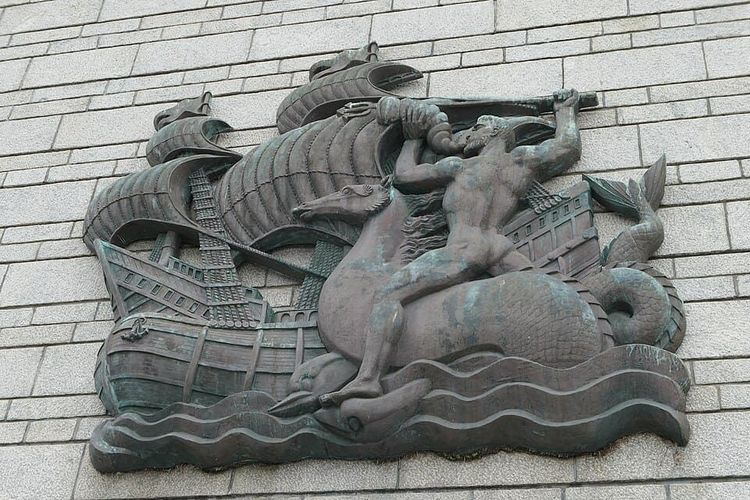
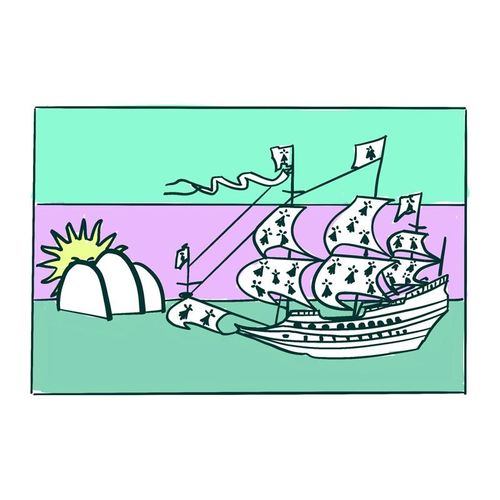
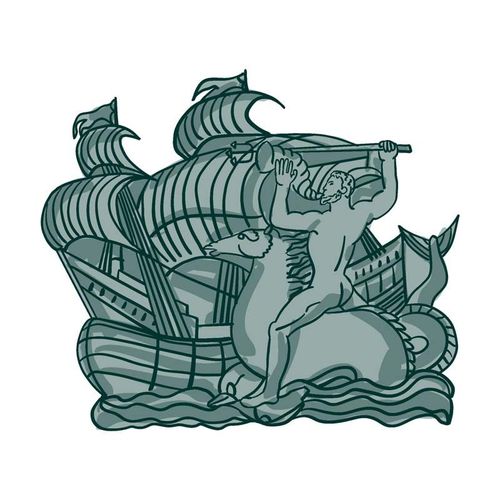
The present-day City Hall, completed in July 1960, replaced the one destroyed by fire in 1943: the administration had to make do for fifteen years in a former school before the city council chose, in 1955, to move the headquarters here. The building is divided into two sections, and the southern wing bears the city's coat of arms: Neptune, trident in hand, guiding a three-masted ship that recalls the 1666 founding. The basement conceals a former German bunker, now an archive store.
Free to see from outside
21 - The Grand Theatre and Stade du Moustoir
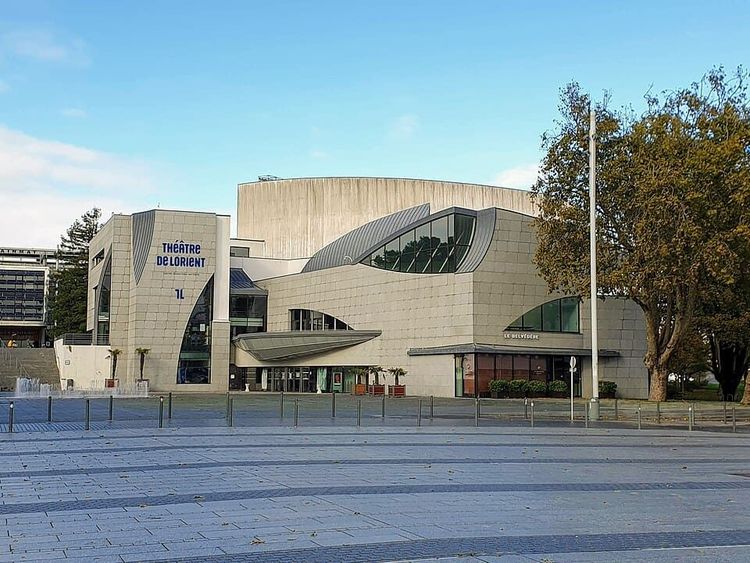
Two major landmarks frame this square: the Grand Theatre, designed by Henri Gaudin and completed in 2003, with its 1,000-plus-seat auditorium blending metal and reconstituted granite; and, just a few metres away, Stade du Moustoir, raised from the ruins after the war and opened in 1957, the historic home of FC Lorient, nicknamed the Merlus in tribute to the fishermen of Keroman. Each August, its nearly 17,000 seats also host the Grande Parade des Nations Celtes of the Interceltic Festival.
Free to see from outside
22 - The “Stilts” Building
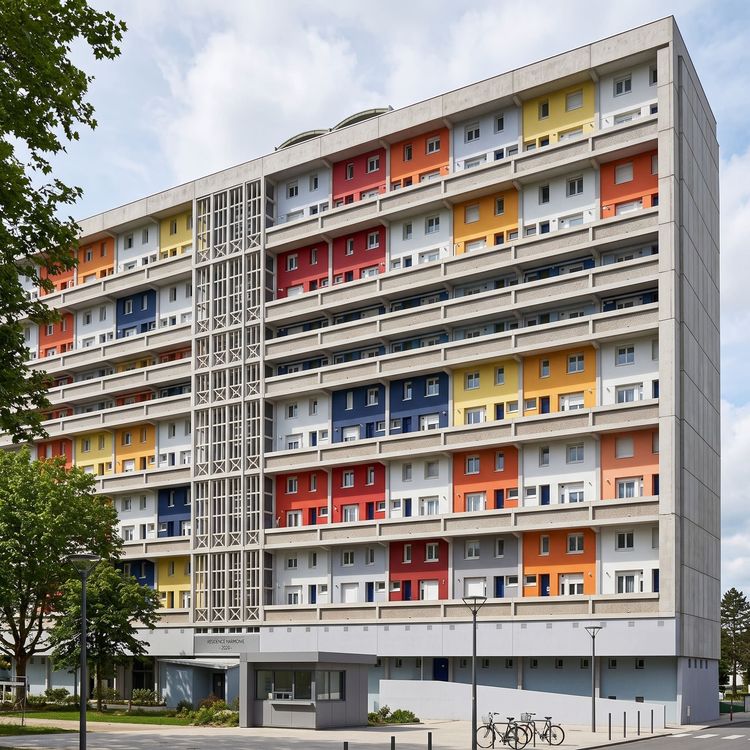
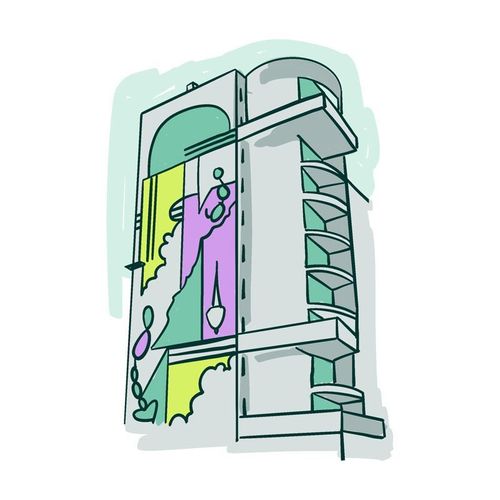
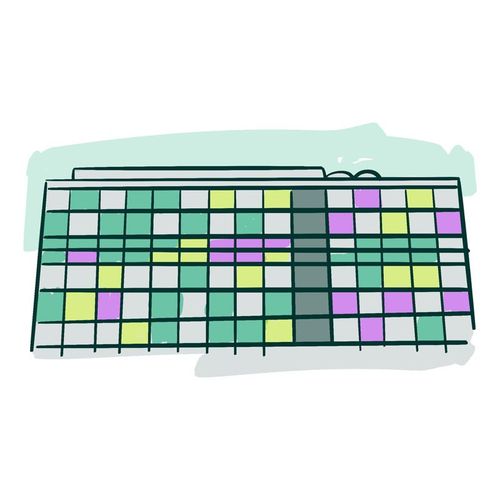
At the end of the street rises a forty-five-metre concrete giant, nicknamed the Stilts. Built in the 1960s by an avowed admirer of Le Corbusier, it adapts to Lorient's scale the vocabulary of Marseille's Cité Radieuse: through-duplex flats, south-facing loggias and a rooftop terrace conceived as shared space. Its most striking feature remains its elevation on tall concrete stilts, which frees the ground along two-thirds of its length, repainted between 2017 and 2021.
Free entry
23 - Hippolyte Bisson
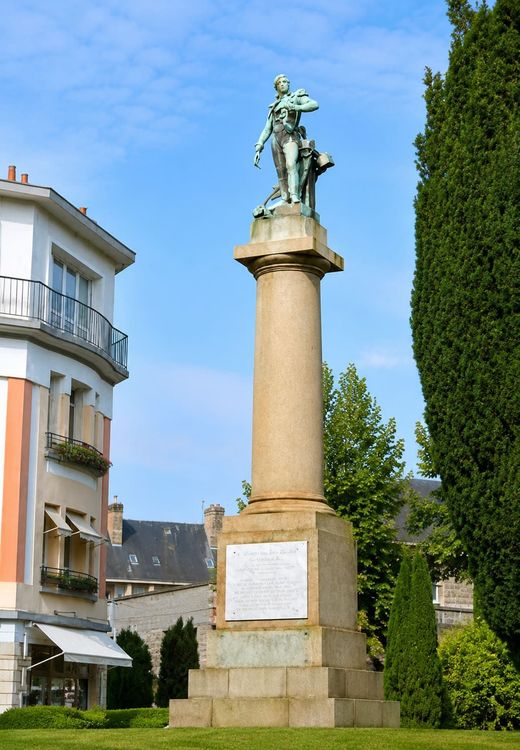
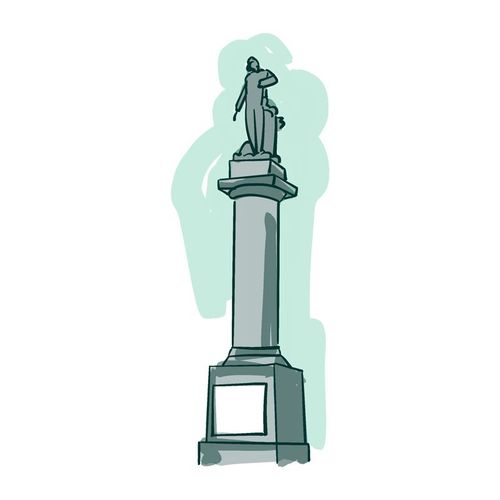
The walk ends beneath the gaze of Hippolyte-Magloire Bisson, perched ten metres up on his pedestal, a lit fuse in hand. This young Breton sailor commanded a ship surrounded by pirates in the Aegean Sea in 1827; rather than surrender, he had his crew evacuate and set fire to the gunpowder, perishing along with his attackers. Unveiled in 1833, the statue narrowly escaped the melting down imposed during the Occupation, hidden by firefighters until the Liberation, then moved here in 1953.
Free entry
What to do in Lorient in 2 or 3 days?
The 4.5 km loop takes about 1 hour 50 minutes, from the rebuilt centre to the Enclos du Port, which leaves plenty to fill a whole weekend around the harbour.
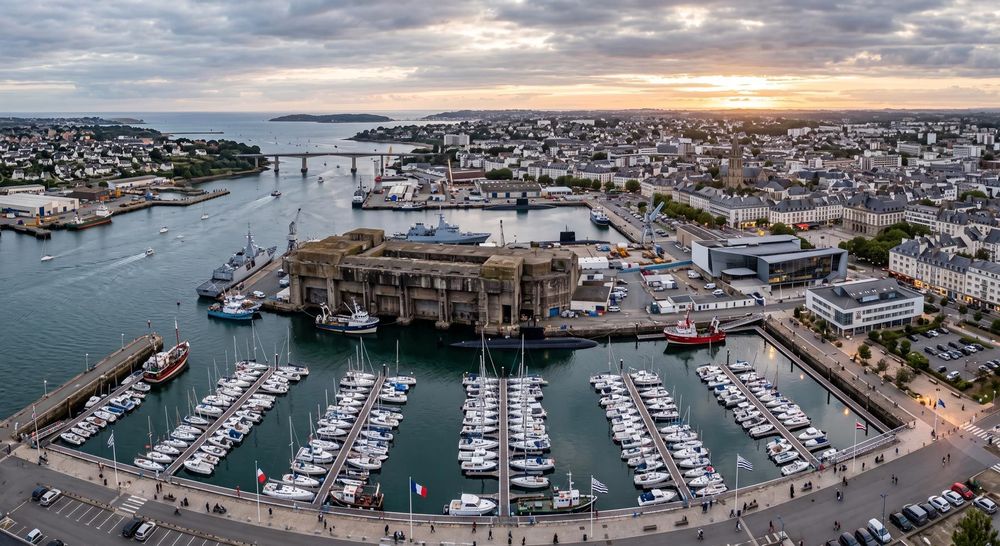
The next day, head to Lorient La Base, where three blocks of reinforced concrete poured by the Germans between 1941 and 1943 now house the Éric Tabarly sailing museum, with its simulators and introduction to reading the wind. Nearby, the Flore submarine, decommissioned in 1989 and opened to the public in 2010, takes about 1 hour 15 minutes to visit. The Tour des Vents rounds off the day: from its 38 metres, the view takes in the base and the harbour.
The third day belongs to the sea: take the 45-minute boat to the island of Groix and cycle out to the Grands Sables beach. On the way back, a detour to the Port-Louis citadel leads to the museum of the French East India Company, housed there since 1984, which tells the trading story behind Lorient, founded in 1666. Our guide to a weekend in Lorient sets out this plan, including budget and transport.
Which neighbourhoods does the tour cross?
The start of the loop stays in the centre rebuilt on a grid after the 1943 bombings, around Place Alsace-Lorraine.
Here come Notre-Dame-de-Victoire church, the Saint-Remi relief, a building that survived from the interwar years, a stencil piece by Raf Urban, the war memorial and the “Pirates” street art, before a detour into the story of the city's founding (stops 1 to 8).
The loop then reaches the Enclos du Port, Lorient's historic heart, and the Faouëdic hill: the Hôtel Gabriel, the Tour de la Découverte and its mills, the underground water tank, the Péristyle point facing the yachts, then the chamber of commerce and a giant mural, before the convention centre and the park that hosts the Interceltic Festival each summer (stops 9 to 18).
The way back passes the Halles de Merville market, the town hall rebuilt in 1960, the Grand Théâtre with its national drama status, the stadium next door at Moustoir, the Échasses building and the statue of Hippolyte Bisson, close to the starting point (stops 19 to 23).
How much does it cost to visit Lorient?
Of the 23 stops on the route, 16 are free to enter and 6 more can be admired from the outside, from the building that survived from the interwar years to the Moustoir stadium.
Only the underground water tank requires a ticket: it can only be entered on the “Enclos du Port” guided tour, which also opens up the inside of the Hôtel Gabriel and the Tour de la Découverte (an hour and a half, €7 full price, €4 for ages 12 to 25, free under 12).
The civil defence shelter under Place Alsace-Lorraine, a memorial to the destroyed city, can likewise only be visited on a guided tour, during some school holidays: €7 full price for an hour and a half.
Information checked in November 2026 and subject to change.
Where to stop for a bite along the tour?
On the way back, the Halles de Merville market (stop 19) is the obvious place for a food break.
From Tuesday to Sunday morning, 70 traders and producers set up stalls there, fishmongers above all, since Lorient remains France's 5th fishing port. It is the place to try cotriade, a fish stew once cooked by Morbihan sailors. In the evening, fish is best eaten down by the fishing port, followed by a last drink on a terrace facing the pontoons.
What to do in Lorient with children?
The Éric Tabarly sailing museum works particularly well for a family outing.
On site, children try out sailing simulators and learn to read the wind, enough to grasp quickly how a sail is trimmed. The boldest can then come down from the Tour des Vents on a 350-metre zip line above the water. For some fresh air, the crossing to the island of Groix can carry on with a bike ride to the Grands Sables beach.
What should you know before visiting Lorient?
Two things are worth planning for before you go.
In early August, during the 10 days of the Interceltic Festival, the streets of the centre become pedestrian-only and finding a room at short notice gets hard; plenty of the events cost nothing, though, starting with the parades and some of the daytime concerts.
Around the Enclos du port, the Hôtel Gabriel's garden stays open to view from outside at any time, but its guided tours and those of the water tank and the Tour de la Découverte run seasonally, with a meeting point that changes on 1 July: best to check the times before coming.
What to see around Lorient?
Lorient also opens the door to eight other audio-guided routes, from Cornouaille to the Loire estuary.
Just 9 km away, Hennebont keeps its ramparts and industrial past on the banks of the Blavet. Carnac, 28 km away, pairs thousands of standing stones with long sandy beaches. Auray, 30 km away, charms with the Saint-Goustan harbour and its timber-framed houses. And Quiberon, 35 km away, sets its wild west coast against the calm waters of its bay to the east.
Further out, Vannes, 46 km away, keeps its ramparts lined with flower gardens and the half-timbered façades of the cathedral quarter. Quimper, 62 km away, nestles where the Odet meets the Steïr, beneath the spires of its cathedral. Guérande, 84 km away, is ringed by ramparts and salt marshes, and Saint-Nazaire, 102 km away, has turned its submarine base into a cultural venue.
What's on in Lorient right now?
This time of year, the “Lorient 360 ans” series of themed guided tours takes in the centre, the neighbourhoods and the former submarine base.
- On 29 November at 3 pm, “Ni vu ni connu, les secrets de la Miséricorde” sets off from rue Colbert for a 45-minute paid tour.
- On 13 December at 2:30 pm, “De Kervénanec à Bois-du-Château” starts outside the Salle de la Balise for a 2-hour paid walk.
- On 27 December at 3 pm, a paid tour in Breton tells the story of the submarine base's conversion, starting from the Cité de la Voile forecourt.
- On 21 and 28 December at 3 pm, the civil defence shelter under Place Alsace-Lorraine opens for a guided visit of an hour and a half, €7 full price.
Information checked in November 2026 and subject to change.
Le plein d'inspirations
Explorez le monde en totale liberté, à pied au cœur des villes ou au fil des routes. Nos guides audios transforment chaque destination en une découverte culturelle immersive et unique.










FAQ for visiting Lorient
What can you do in Lorient over a 48-hour weekend?
Lorient is easy to explore in two days. Spend Saturday on the ports and Lorient La Base: the Éric Tabarly Sailing City (about 2 hours), the Flore submarine (about 1h15) and the 38-metre Tour des Vents, which overlooks the harbour.
On Sunday, take the 45-minute boat trip to the island of Groix and cycle to the Grands Sables beach. Budget between €150 and €250 per person, including accommodation and meals, but not admission fees or the ferry. The Halles de Merville market and the city's ports round off the plan.
Itinerary, budget and good addresses: find it all in our guide to a weekend in Lorient.
Vos commentaires, idées et suggestions
Aucun avis pour le moment