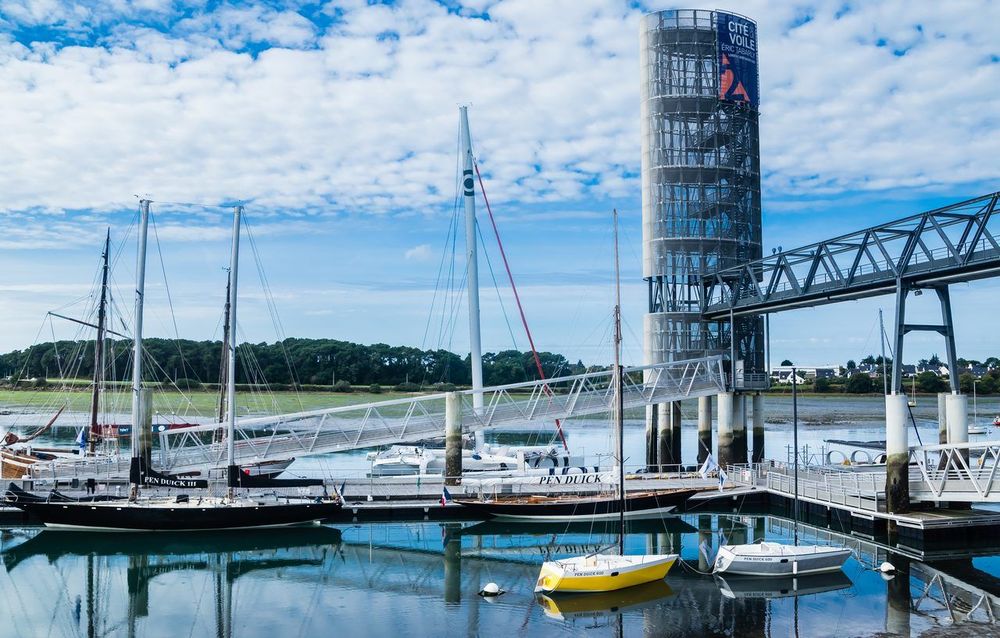
© Shutterstock
 Votre guide Ryo
Weekend in Lorient 2026: The City of 6 Ports, the Tabarly Sailing Center and Groix Island
A weekend in Lorient often begins with the siren of a trawler returning to the fishing port, while just a few hundred meters away, ocean racing yachts sleep under tarps waiting for the next Vendée Globe. It is this layering of worlds, fishing, competitive sailing, a former German submarine base, that makes the city denser than it appears on a map. Lorient was destroyed by nearly 90% in 1943 and then rebuilt within a few years: its checkerboard center, its market halls and its wide, straight avenues tell this story without you having to look for it. To connect these layers on foot, from the marina to the Keroman base, the Ryo audio-guided tour of Lorient serves as your guiding thread.
In 48 hours, you can go down into a Cold War submarine moored at the quay, climb to the top of a 38-meter tower standing in the middle of the former base, board a boat for an island of schist and white sand 45 minutes away, then end the evening on a harbor terrace. Between the Halles de Merville, the Moustoir stadium and the greenways that run off into the Morbihan countryside, this guide details how to fill two days without rushing or missing the essentials: itinerary, budget, accommodation and transport included.
A Weekend in Lorient: How to Plan Your 48 Hours
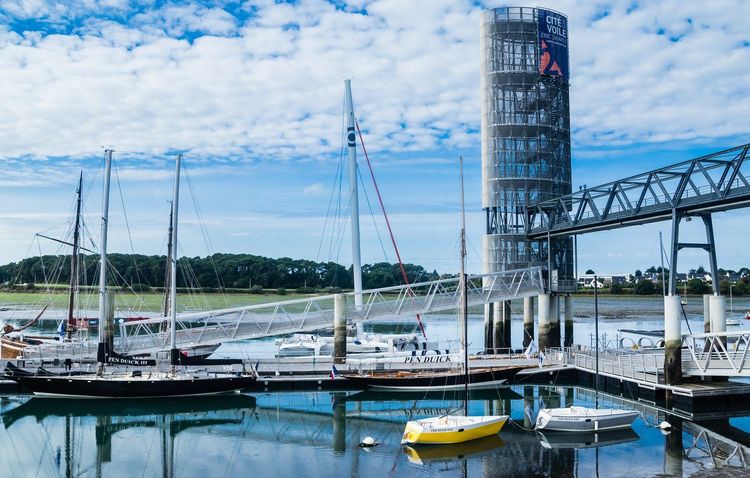
Two days are enough to frame the essentials of Lorient, provided you accept making choices. Saturday suits the ports and Lorient La Base, where the Cité de la Voile Éric Tabarly and the Flore submarine easily take up a morning and the start of the afternoon. Groix Island requires a full half-day, crossing included: it is better to schedule it on Sunday, leaving early, to enjoy several hours on site before returning.
Here is a framework that works well:
- Saturday morning: market at the Halles de Merville, then a stroll along the marina to Keroman.
- Saturday afternoon: Cité de la Voile, Flore submarine, climb up the Tour des Vents.
- Saturday evening: fish dinner by the fishing port, a drink on a terrace facing the pontoons.
- Sunday morning: boat to Groix, bike ride to the Grands Sables.
- Sunday afternoon: return to the mainland, detour via the Port-Louis citadel or a walk on the coastal path at Larmor-Plage.
As for budget, expect between €150 and €250 per person for the weekend, including standard accommodation and meals, plus admission to Lorient La Base and the crossing to Groix. If you keep only one landmark to structure Saturday, take the Ryo audio guide: it links the sites of the center and the quays, you pause for lunch and resume listening where you left off.
Lorient, the City of 6 Ports
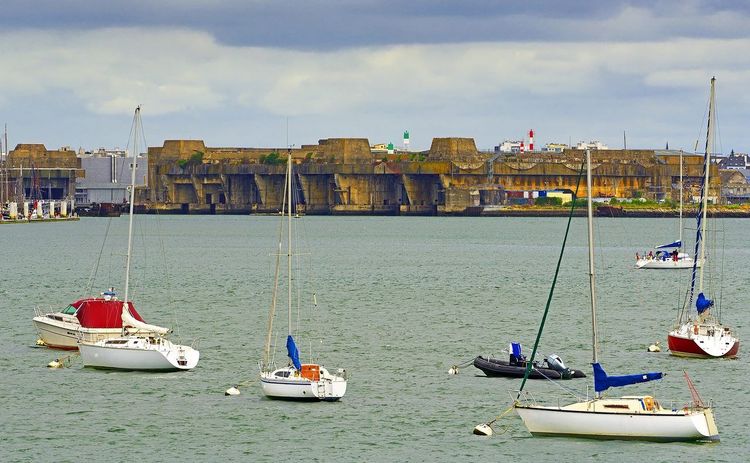
Depending on who is counting, you will be told that Lorient has 5 ports, sometimes 6. The figure of 6 becomes obvious once you add the ocean racing hub to the historic basins, and that is what strikes you on arrival: instead of a single port organized around one quay, the city spreads its maritime activities across several basins that do not look alike and are not visited in the same way.
The fishing port, at Keroman, remains one of the largest in France: the fish auction runs from dawn, and guided visits are offered by the tourist office to watch the fish being sold before breakfast. A little further on, the commercial port loads and unloads grain, timber and materials. Less photogenic, it explains why Lorient remains a city of dockworkers as much as of boaters.
The marina, split between the city center and Kernevel, shelters a good part of the sailboats that make the city's sporting reputation. The passenger port handles the connections to Groix and Port-Louis, while the military port, largely closed to the public, is a reminder that Lorient was a strategic base long before being a weekend destination. The ocean racing hub, finally, brings together the teams preparing for the Vendée Globe and the Route du Rhum steps from the quays open to visitors.
Want to understand how these basins were layered on top of one another since the city's founding in the 17th century? It is one of the common threads of the Ryo audio-guided tour, which recounts on foot the transition from the East India Company trading post to the arsenal, then to the modern fishing port.
The Cité de la Voile Éric Tabarly and the Flore Submarine
It is impossible to understand Lorient without going through Keroman. Between 1941 and 1943, the Germans poured three immense blocks of reinforced concrete there, intended to shelter their submarines from Allied bombing. These gray masses, still visible from the quay, now form Lorient La Base, one of the most unique sites on the Atlantic coast.
The Cité de la Voile Éric Tabarly (Lorient La Base, 56100 Lorient, rated 4.4/5 on Google from 4,304 reviews) is set at the foot of the blocks, in a glass and metal building designed by Jacques Ferrier. The exhibition traces the sailor's life and explains how Lorient became one of the cradles of ocean racing: you try simulators, you learn to read the wind, and children grasp in an hour what a sail adjustment is. Allow a good two hours for the visit.
Right next door, the Flore submarine (S645), decommissioned in 1989 and turned into a museum in 2010, is one of the four submarines open to visitors in France. The visit lasts about 1h15, in limited groups: passageways, control room, engine room, everything has been left as it was. You come away with a far more concrete idea of life on board during the Cold War than any documentary could give you.
Two towers complete the site. The Davis tower, a former escape simulator for submariners, houses the Pays de Lorient submarine museum. The Tour des Vents, 38 meters high, offers a panorama over the base and the harbor, and those with a strong stomach can come back down via a 350-meter zip line over the water.
It is on this district that the Ryo audio-guided tour of Lorient lingers the longest, with several consecutive audio stops devoted to the submarine base and the Flore submarine: enough to arrive in front of the blocks already knowing what you are looking at.
The Festival Interceltique de Lorient, the Unmissable Event
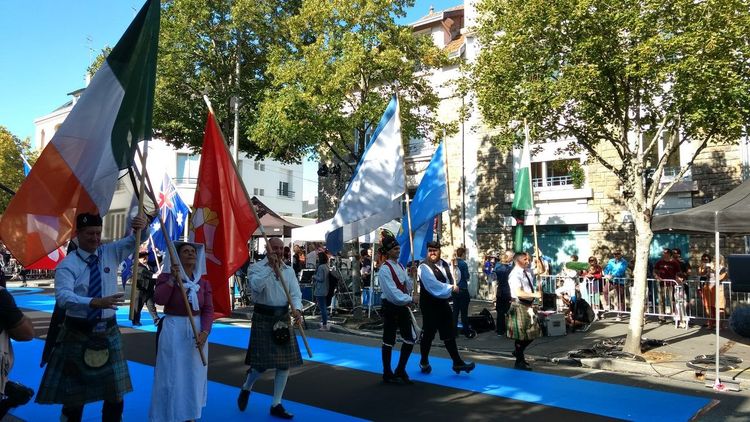
For ten days, every early August, Lorient changes scale. Created in 1971, the Festival Interceltique brings together Celtic cultures from around the world, Brittany, Scotland, Ireland, Galicia, Asturias, Wales, as well as the communities of Acadia and Cape Breton, and attracts more than 750,000 festivalgoers over the whole edition. In 2026, the 55th edition was held from July 31 to August 9. Bagad parades in the center, open-air concerts and fest-noz on the quays turn the city into an open-air dance.
If your weekend falls during this period, two things change radically: accommodation must be booked months in advance and the streets of the center become pedestrianized. Many events remain free, notably the parades and some of the daytime concerts. Outside the festival, Lorient returns to a quiet rhythm, appreciable if you prefer to avoid crowds.
Museums, Theater and Cultural Scene in Lorient
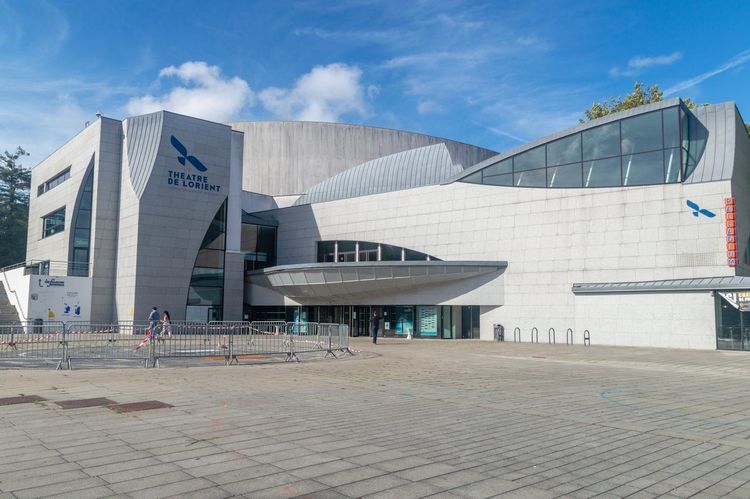
The rebuilt center, often judged austere at first glance, hides a cultural life concentrated within a few hundred meters. The Théâtre de Lorient, a national drama center, has occupied since 2003 a Grand Théâtre designed by Henri Gaudin, with a hall of more than 1,000 seats and a demanding program of theater, dance and music. Close by, the Galerie du Faouëdic, a municipal gallery, hosts five to six contemporary art exhibitions a year.
For older history, you need to cross the harbor. The East India Company Museum (Citadelle de Port-Louis, 56290 Port-Louis, rated 4.6/5 on Google from 1,730 reviews), the museum of the city of Lorient, has been housed since 1984 in the Port-Louis citadel, which you reach by small boat from the center. Porcelain, sea charts and models tell the commercial epic that gave the city its name, founded in 1666 as an armament port toward "the Orient." The ticket also gives access to the neighboring National Navy Museum.
As for contemporary outings, L'Hydrophone, located at Lorient La Base, programs contemporary music concerts all year round, while the Cinéville provides the fallback evening in case of rain. The Ryo audio guide stops in front of the theater, long enough to tell how this entirely razed district was redesigned as a grid in less than ten years.
Groix Island, the Boat Escape off Lorient
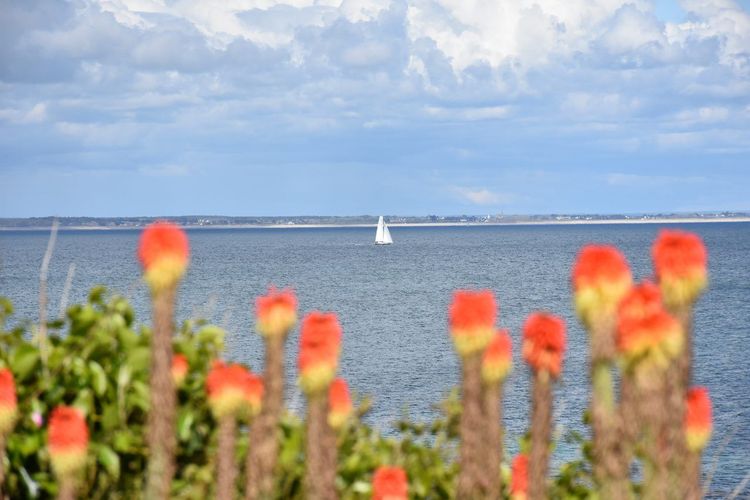
The crossing lasts only 45 minutes, and yet it completely changes the tone of your stay.
BreizhGo Océane boats leave all year round from the Lorient ferry terminal (2 rue Gilles Gahinet, 56100 Lorient, rated 4.1/5 on Google from 113 reviews), rue Gilles Gahinet, between the marina and the fishing port. Sailings are frequent in season, more spread out in winter: check the time of the last return before boarding. The ferry takes cars, but only by reservation, and you will hardly need one: the island is easily explored by bike (rental at the landing stage), by shuttle or on foot.
Groix appears to fit in a rectangle of about 8 km by 3, but time passes differently there: schist cliffs to the north, the Grands Sables beach to the east, one of the rare convex beaches in Europe, discreet coves on the south side, and the port of Port-Tudy where a few boats recall the island's past as a major tuna port. Allow half a day for an overview by bike, a full day if you want to swim and have lunch on site.
In high season, book your crossing in advance: weekend sailings quickly fill up from July.
Hiking and Greenways Around Lorient
Lorient is not just a city of quays. Several routes start from the center and take you into the countryside without getting back in the car. The greenway running along the Scorff, to the north, can be done on foot or by bike on flat terrain, with possible stops for a picnic facing the river.
On the sea side, the coastal path to Larmor-Plage runs along the dunes and coves for about ten kilometers, easy to split into two sections. On Sunday in late morning, before the return train, it is the ideal option to finish with wind and horizon rather than concrete façades. The Lorient Bretagne Sud tourist office hands out detailed maps of these routes.
Sailing, Cruises and Water Sports in Lorient
With an ocean racing hub based permanently here, Lorient could not offer sailing as an option. Kerguelen Sports Océan, in the heart of the Kerguelen ocean park in Larmor-Plage, ten minutes from the center, gives access to a sandy beach facing Groix: catamaran, dinghy, windsurfing, wingfoil, kayak or paddle, with instructors for beginners.
Several companies also offer one- or two-hour outings aboard cruising sailboats, sometimes former racing boats, to sail along the harbor and see the ports from the water. It is the most direct way to understand why the city claims a sailing tradition that few French destinations can match.
On land, the Moustoir stadium (Allée Guy Mollet, 56100 Lorient, rated 4.3/5 on Google from 2,994 reviews), home of FC Lorient, and the nearby Moustoir aquatic center complete the city's sporting identity if you want to fit in a match or a swimming session. Along the marina, the Ryo audio-guided tour devotes a stop precisely to this ocean racing culture that shaped the district.
Lorient with Family, as a Couple or for an Offbeat Weekend
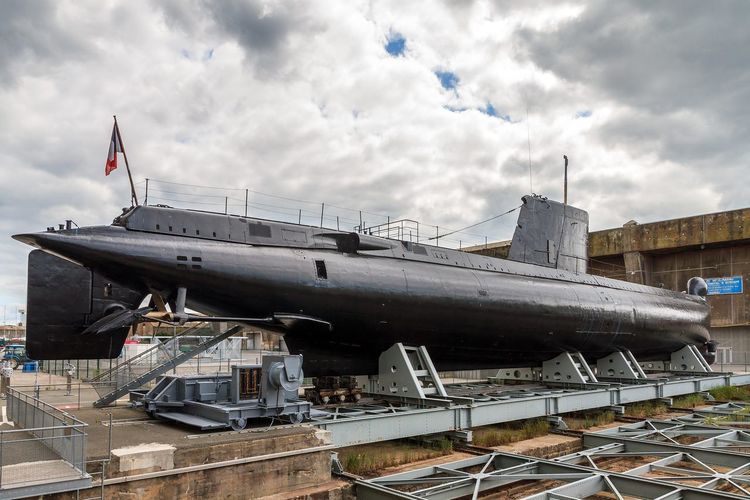
The same sites read very differently depending on who is with you. With family, the Flore submarine and the Cité de la Voile work well with children from 6-7 years old, old enough to appreciate the narrow passageways without feeling trapped; Groix by bike completes the outdoor program.
As a couple, bet on late afternoon at the top of the Tour des Vents, then a fish dinner by the port: few cities offer such a contrast between military concrete and seaside gentleness in a single evening.
For an offbeat angle, the zip line over the harbor, the early-morning visit to the fish auction and the coves of Groix clearly step off the beaten path. Whatever your duo or your tribe, listening on your own to the audio-guided tour adapts to everyone's pace, with as many pauses as needed.
Where to Eat and Enjoy the Terraces in Lorient
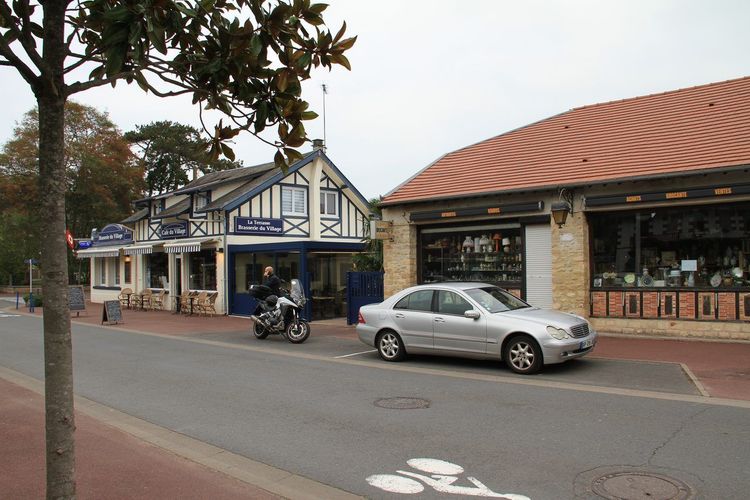
The Halles de Merville (Rue Paul Bert, 56100 Lorient, rated 4.4/5 on Google from 2,569 reviews), the covered market of the center, remain the best introduction to local products: oysters from the harbor, still-warm kouign-amann and takeaway seafood platters make up the essence of Saturday morning.
For a more relaxed lunch, the places around the fishing port rely on the day's catch, announced on the slate. Crêperies remain a safe bet throughout the center, buckwheat galette and farmhouse cider included, for a quick meal between two visits.
In the evening, the terraces lining the marina enjoy beautiful light between April and September. Book the day before in high season, as the best tables are full from 7:30 pm. Prices remain generally gentler than in Vannes or La Rochelle for comparable freshness.
Shopping and Good Addresses in Lorient
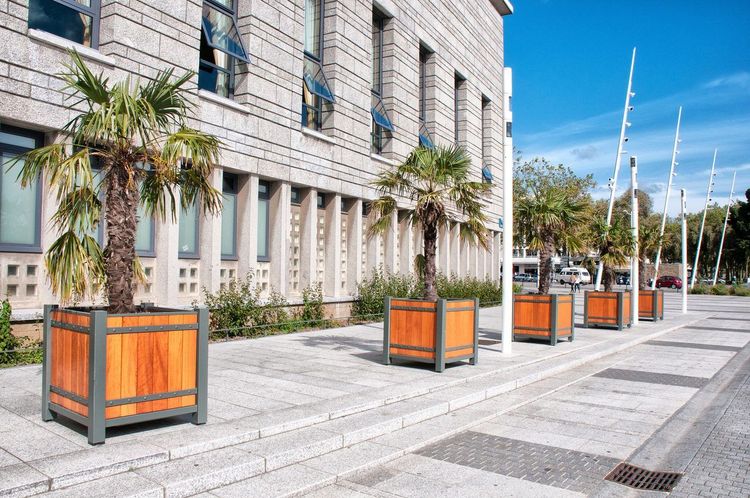
The rebuilt center concentrates most of the shops in a grid of streets that you can walk in an hour. Biscuit shops, cider cellars and sardine and tuna canneries make good compact souvenirs.
Need an oilskin jacket if the weather turns? The chandlery shops near the marina, used to a clientele of regatta sailors, often have a more specialized selection than a large sports store.
Where to Stay in Lorient
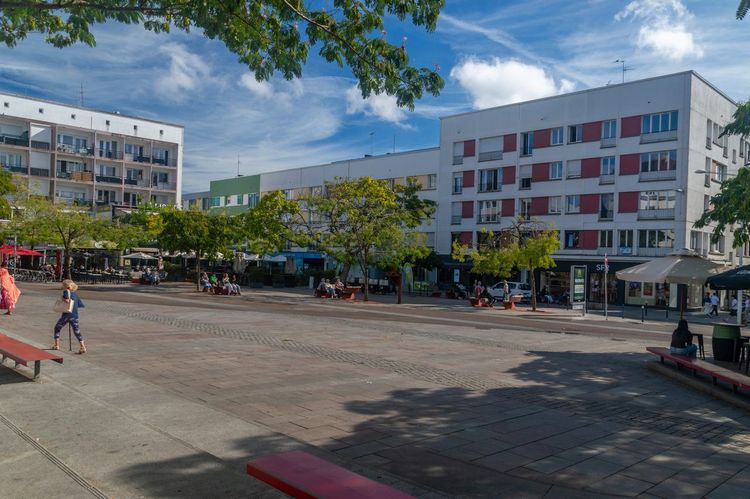
Staying in the rebuilt center puts everything within walking distance and makes arriving by train without a car easier: several standard-category hotels are located near the station and the market halls, practical for a short weekend.
The districts near the marina often offer a view over the water, in exchange for a slightly longer walk to the center; a good compromise if you prefer calm in the evening.
To extend the experience, a night on Groix changes the whole program: guesthouses and small hotels in the village book up quickly in summer, but you enjoy the island once the day visitors have left. And if you plan to follow the Ryo audio-guided tour from Saturday morning, staying within ten minutes' walk of the marina simplifies the start.
Evening Outings and Afterwork Tips
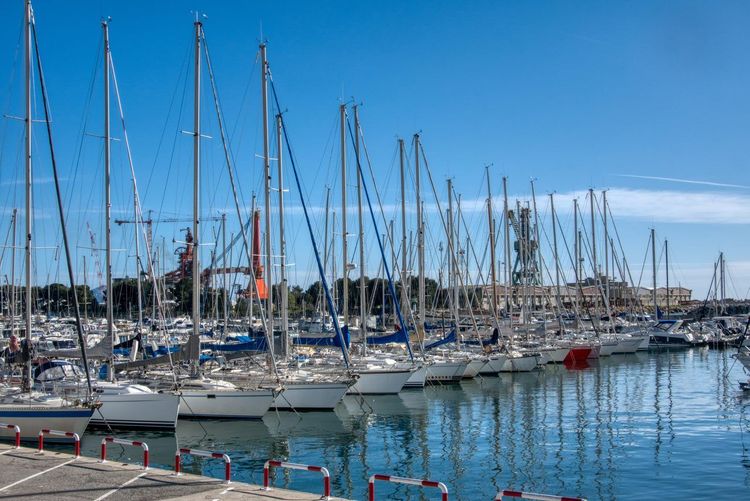
On Friday evenings, several bars at the marina serve aperitifs facing the pontoons, often with oysters or local platters. The atmosphere remains relaxed rather than festive, in the image of a city of sailors.
For a livelier evening, the rue du Colonel Muller area concentrates cocktail bars and late-opening pubs, frequented by students as well as visiting crews. In summer, acoustic concerts spring up on terraces: ask on site or at the tourist office.
How to Get to and Around Lorient
By train, Lorient can be reached on a direct TGV from Paris-Montparnasse in a little over three hours, fast enough for a weekend without a car. From Rennes or Nantes, allow between 1h30 and 2h depending on connections. The station drops you a few minutes' walk from the center and the Halles de Merville.
By car, the RN165 expressway links Lorient to Nantes and Vannes, then to Quimper. On site, the center can be explored almost entirely on foot, with the main sites (ports, Lorient La Base, theater) located within a radius of 2 to 3 km. Urban network buses and the maritime shuttles to Port-Louis are a useful complement.
By motorhome, several equipped areas exist on the outskirts, notably toward Larmor-Plage and Lanester; avoid the rebuilt center with a long vehicle. In your bag, pack a windbreaker and closed shoes even in summer, as the wind over the harbor changes mood quickly, and a waterproof bag if Groix is on the program.



FAQ
How many days do you need to visit Lorient?
Two full days are enough to cover the ports, Lorient La Base and half a day on Groix. To add Port-Louis, the greenways or a night on the island, plan for three days instead.
What budget should you plan for a weekend in Lorient?
Expect to spend between €150 and €250 per person for two days, including standard accommodation and meals, excluding admission to Lorient La Base and the crossing to Groix.
How do you get to Lorient from Paris or Rennes?
From Paris-Montparnasse, the direct TGV takes a little over three hours. From Rennes, allow 1h30 to 2h depending on connections, with a train station a few minutes' walk from the center.
Do you need a car to visit Lorient for a weekend?
No: the center, the ports and the Cité de la Voile can all be explored on foot, and Groix is easily explored by bike. A car is mainly useful for venturing out to the coast and the countryside.
What is the best time for a weekend in Lorient?
Spring and early autumn offer a good balance between mild weather and reasonable crowds. In early August, the Festival Interceltique completely changes the atmosphere and requires booking very far in advance.
How do you get to Groix Island from Lorient?
BreizhGo Océane boats leave from the ferry terminal on rue Gilles Gahinet for a crossing of about 45 minutes. Cars are only taken on board by reservation.
What is there to see in Lorient when it rains?
The Cité de la Voile, the Flore submarine, the Davis tower, the East India Company Museum in Port-Louis and the Cinéville easily fill a weekend indoors. The Halles de Merville remain a good dry stop.
A weekend in Lorient is not just a list of monuments: it is a city that lives off the water in all its forms, fishing, trade, pleasure boating, ocean racing, and that keeps in the concrete of Keroman the memory of a war that its rebuilt center has not forgotten. Two days are enough to grasp the essentials, three to truly breathe, especially if Groix joins the program on Sunday.
To move from one port to the next without looking for your way and to hear the history of each quay as you walk along it, start the Ryo audio-guided tour of Lorient: your two days then take the form of a continuous story, from the fish auction to the last terrace.