





Walk
The City of Six Harbors
Lorient, France
Walk
The City of Six Harbors
Lorient, France
4.5 km
Distance
1h50
Durée
24
Audios
Loop
Parcours
Shutterstock
To understand Lorient’s extraordinary destiny, we need to return to its founding in 1666. Nothing about this peninsula along the Scorff suggested that it would one day become a major city. What changed everything was the determination of King Louis XIV and his minister, Colbert.
That year, the Crown chose the site as the sole port of the French East India Company. For the next century, Lorient prospered with the arrival of exotic silks, spices, and printed cotton fabrics from distant trading posts. Its population grew from just a few hundred residents to around 20,000 by 1730.
A new era began after the East India Company was dissolved. In 1778, the French Royal Navy took over the facilities and established the Arsenal, transforming Lorient into one of France’s leading shipbuilding centers. During the 19th century, the shipyard embraced the Industrial Revolution, adapting first to steam power and then to metal construction.
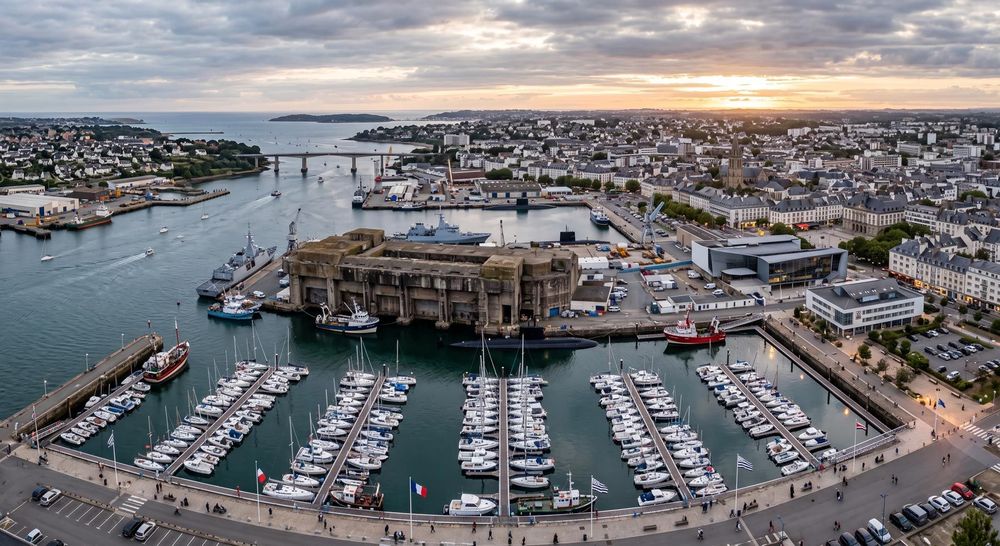
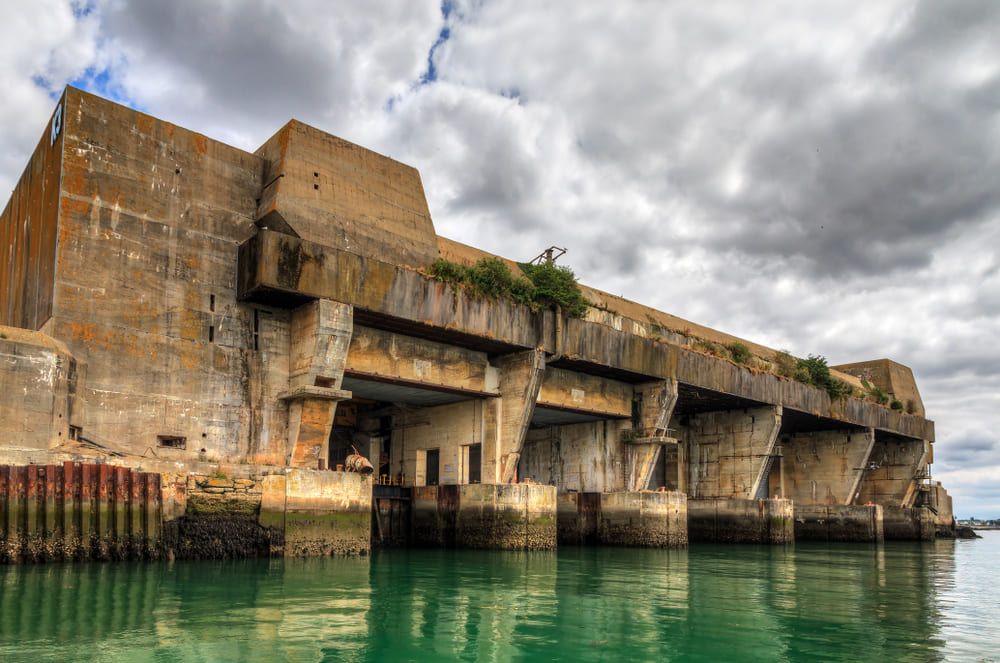
By the early 20th century, it was building major battleships such as the Courbet. Yet Lorient’s strategic importance would ultimately seal its fate during World War II. German Admiral Karl Dönitz, commander-in-chief of the Third Reich’s submarine fleet, chose the Keroman Peninsula as his headquarters and ordered the construction of a vast reinforced-concrete fortress.
From what the Allies called the “gray wolves’ den,” Dönitz directed German submarine operations across the Atlantic. Faced with this deadly threat, Allied aircraft first attempted to destroy the bunkers. But their reinforced-concrete roofs were more than 1.5 meters (5 feet) thick, making the armored submarine pens completely impervious to the conventional bombs available at the time.
In January 1943, Allied leaders adopted a devastating new military doctrine: area bombing. The logic was cold and calculated. Since the submarine base itself could not be destroyed, the city that supported it would have to be leveled.
Homes, water networks, rail lines, and supply depots were targeted to paralyze the daily lives of the crews and workers. Lorient became the first testing ground for this strategy. This explains why the tour has mentioned several times that Lorient was almost completely destroyed.
Yet despite the devastation, the concrete fortress held firm, and submarines continued to dock there. The stronghold did not finally surrender until May 10, 1945. After that, almost everything had to be rebuilt.
Aucun avis pour le moment
