
Créé par Camille, le 16 nov. 2026
Votre guide Ryo
Hennebont, France
Between Fire and the River
Parcours audioguidé pour visiter Hennebont en 1 jour
Located in Morbihan, on the banks of the Blavet and just a few kilometres from Lorient, Hennebont is a Breton town with a rich medieval and industrial heritage. Known for its ramparts, fortified towers and imposing basilica, it also preserves the memory of its former ironworks and a strong equestrian tradition through its National Stud. With its lively weekly market and riverside walks, Hennebont offers a peaceful, authentic atmosphere that is deeply rooted in Brittany.
Quand partir à Hennebont ?
Jan.
10°
14
Feb.
10°
12
March
13°
11
April
15°
11
May
18°
10
June
21°
8
July
23°
8
Aug.
23°
8
Sept.
21°
8
Oct.
17°
13
Nov.
13°
14
Dec.
10°
14
Hennebont has a mild oceanic climate, influenced by its proximity to the Atlantic. Summers are generally pleasant and mild, without excessive heat, while winters remain relatively moderate, although they are often wet and windy. Rainfall is spread throughout the year, with the skies sometimes clearing quickly between showers. You should therefore bring a waterproof jacket, even in summer. But don’t worry: Brittany’s changeable weather also brings beautiful bright days, perfect for a walk along the Blavet.
Départ conseillé
We design our routes as loops so you can easily start the tour from the point closest to you. The navigation will adjust automatically. If you are nearby, we recommend the ideal starting point: Hennebont Town Hall.
Parking à proximité
Car park, Place du Général de Gaulle, 56700 Hennebont Ville Close car park, Rue de la Prison, 56700 Hennebont
To make parking easier during your visit, we recommend the free car park at Place du Général-de-Gaulle. It is larger, usually offers more available spaces, and is only a few minutes’ walk from the historic centre. If you would prefer to park right next to the Ville Close, you can also try the small free car park on Rue de la Prison, located very close to the Broërec’h Towers. Please note, however, that the number of spaces there is much more limited.
À savoir
To visit Hennebont comfortably, bring a good pair of walking shoes and a lightweight waterproof jacket. On Thursday mornings, the large market brings the whole town centre to life, from the ramparts to the basilica. It is a great opportunity to experience the local atmosphere, but parking can be more difficult at that time, especially around Place du Général-de-Gaulle.
Découvrez 16 lieux d'intérêt pour visiter Hennebont



What to see in Hennebont on your 1h tour?
This 2 km loop takes about an hour and links 15 sights. From the town hall and Place Foch it reaches the Notre-Dame-de-Paradis basilica, crosses the fortified old town to the Broërec'h towers and the Tour des Carmes, follows the Blavet to the Forges footbridge, then opens onto Bois-du-Duc and the National Stud before closing the loop. With the Ryo app in your ears, ramparts, Breton legends and an industrial past unfold step by step.
Information checked in November 2026 and subject to change.
1 - Hennebont Town Hall
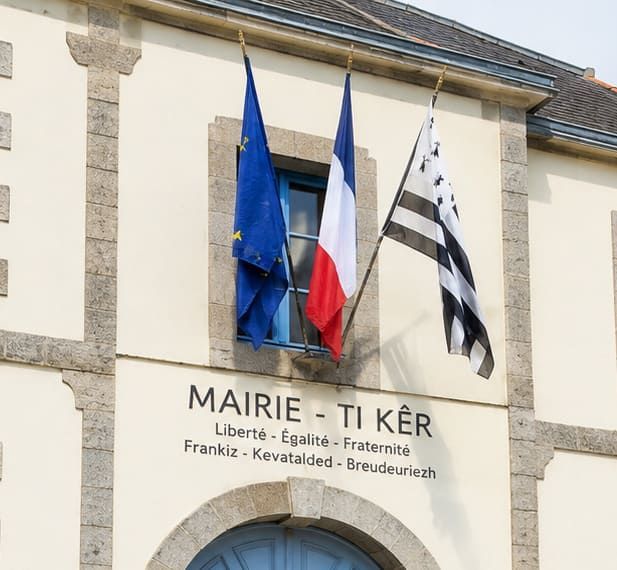
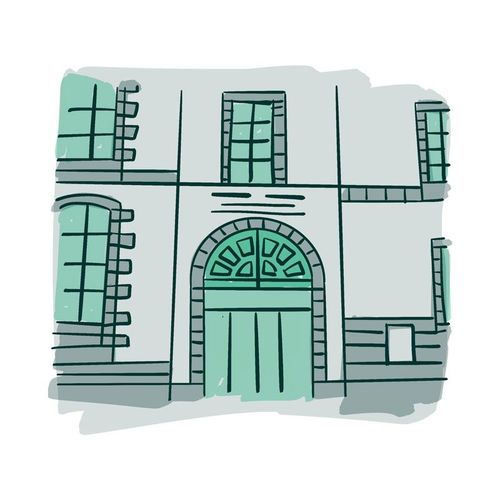
Facing you on Place Foch stands the town hall, known locally as the ti-kêr, literally the house of the town. Its look of an 18th-century residence is no accident: the building is actually a merger of three former private mansions. Its bilingual pediment carries the Breton version of the French republican motto, a fitting symbol since civil records here are still drawn up in both languages, and a wedding can even be celebrated in Breton.
Free entry
2 - Notre-Dame-de-Paradis Basilica
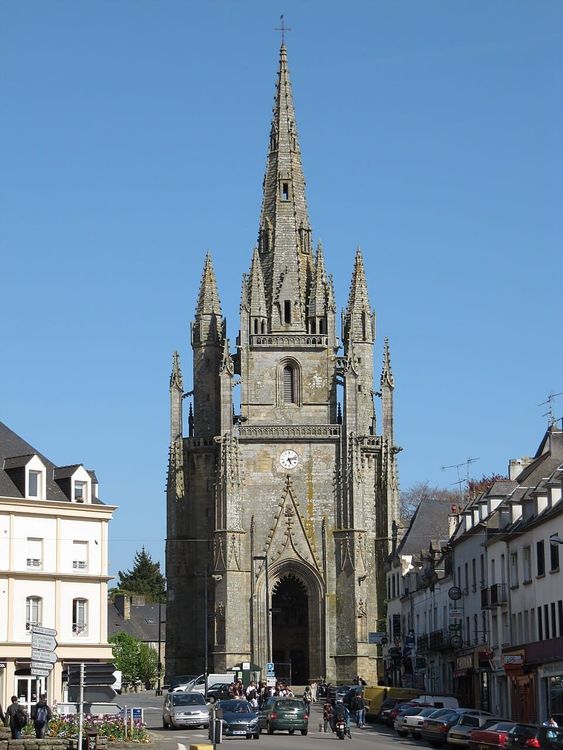
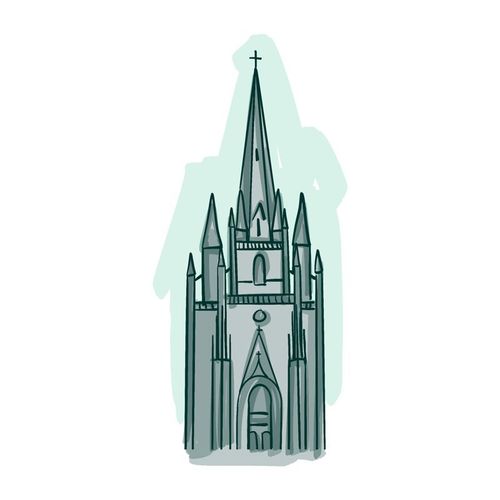
Its 65-metre spire towers over the whole town and once guided sailors navigating the nearby coast. The story starts in 1507 with a visit from Anne of Brittany, which gave momentum to building a sanctuary worthy of the name, a project led not by an architect but by the village blacksmith. Inside, bright stained glass replaces windows shattered by the 1944 bombings, and a statue of the Virgin recalls a vow made by townspeople struck by an epidemic.
Free entry
3 - Hôtel de Kerret
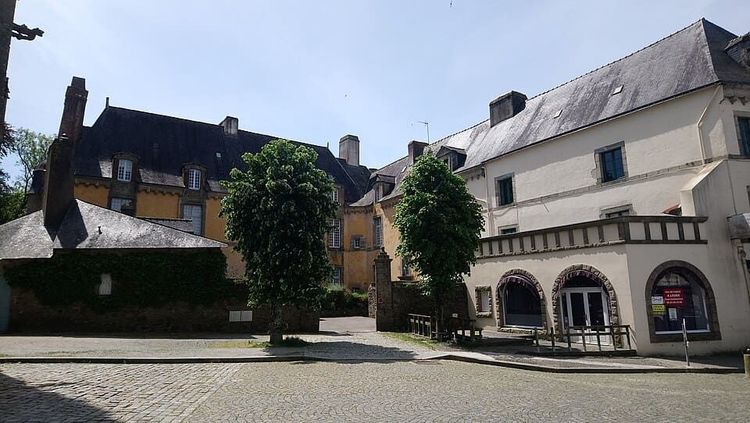
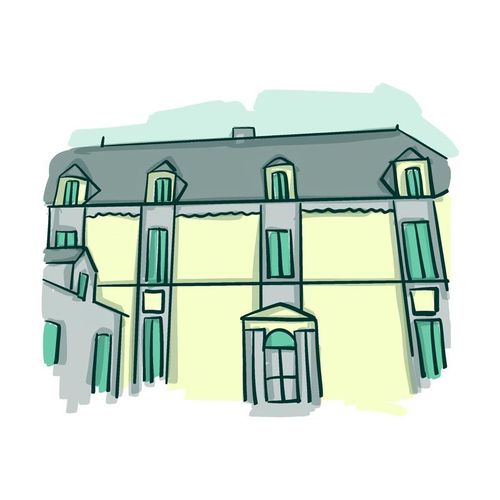
Right beside the basilica, this handsome townhouse reflects the growth of the district around 1660, when leading families all wanted a foothold near Paradis Hill. It changed hands several times before taking, in the 19th century, the name it still carries. Look at the cornice: it playfully mimics the defensive openings of a medieval castle, a purely decorative flourish on an otherwise civilian residence, protected since 1939 and remarkably untouched by the bombings.
Free to see from outside
4 - Hennebont Market
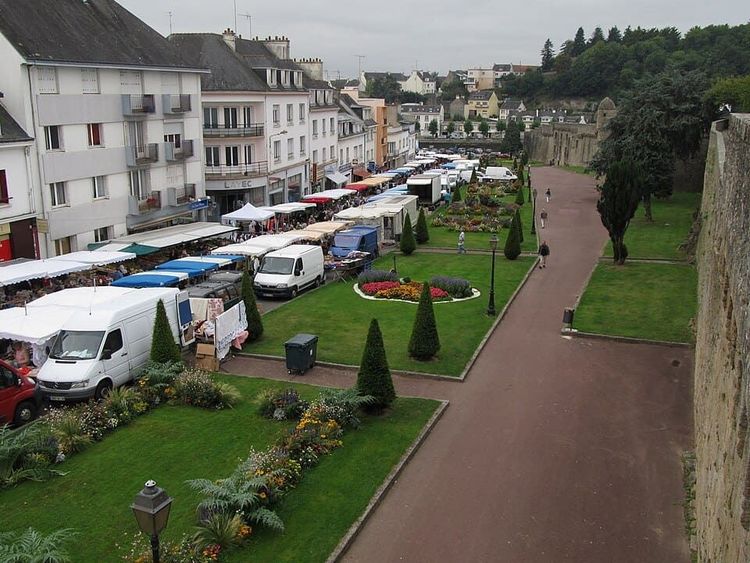
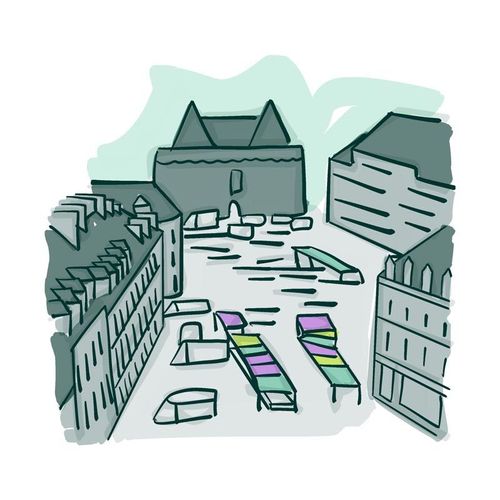
On Thursday mornings, Place Foch hosts the largest market in Morbihan, a tradition born around the year 1000 with the first bridge thrown across the Blavet. Once split into small specialised stalls behind the ramparts, it has since spread well beyond them over the centuries. Buying rules were once quite strict, and an old local record already boasted that the butter made here was the best in the whole region. Today, savoury crepes and local produce still draw the crowds.
Free entry · Best in the morning
5 - The Puits Ferré
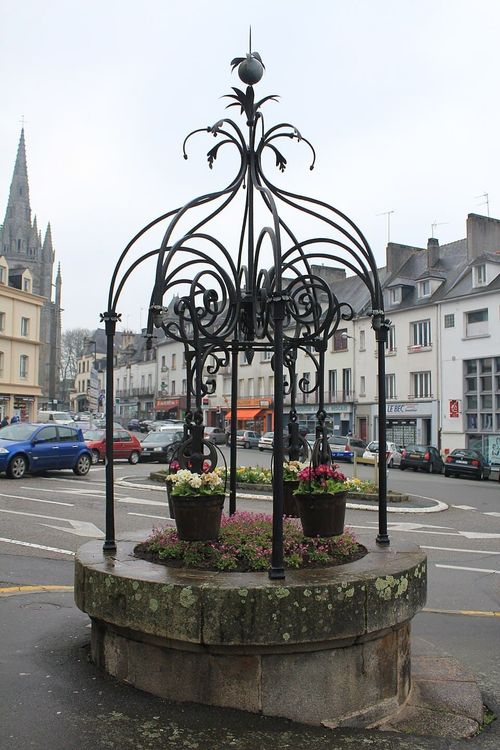
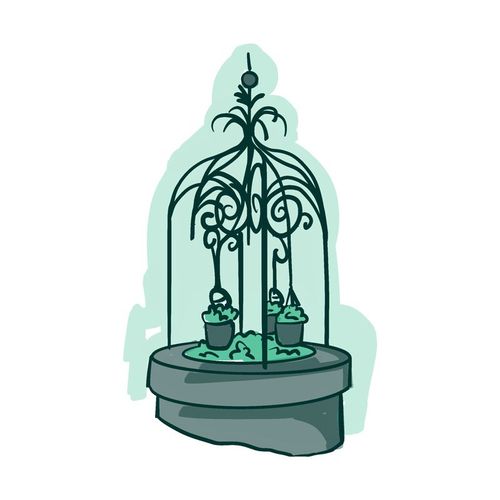
Easy to walk past, this modest well dug in 1623 still has plenty of stories to tell about everyday life long ago. Paid for by local residents at a time when the town was spreading beyond its walls, it also doubled as a daily meeting point for sharing neighbourhood news. Its current name comes from an 1825 restoration, which added pulleys and ironwork. Water remained free here until 1907, when meters were installed to curb waste.
Free entry
6 - Jeanne la Flamme
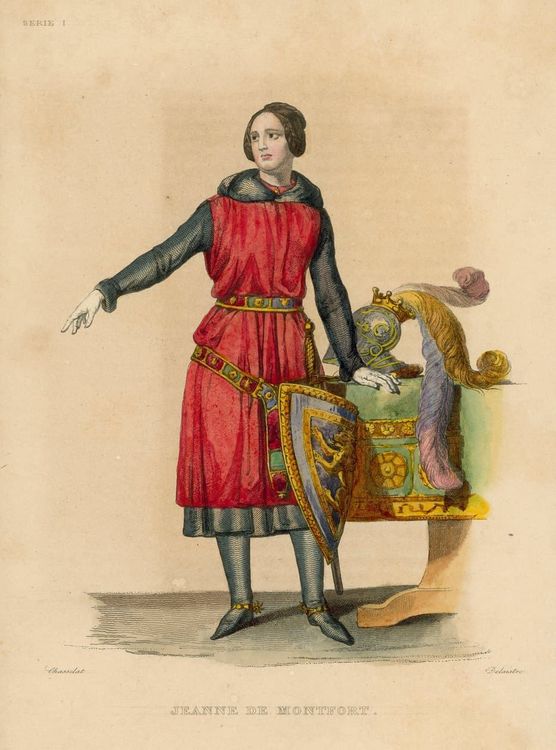
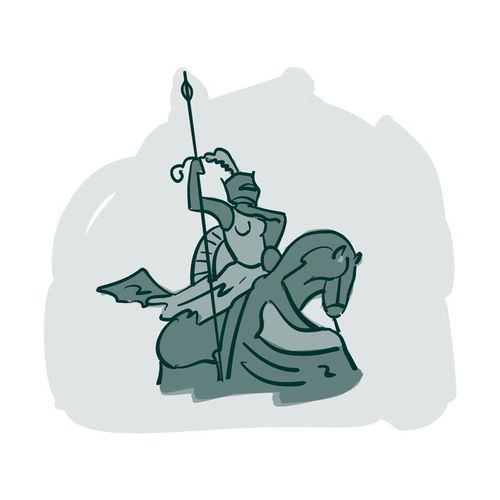
Part of Hennebont's legend belongs to a woman: Joanna of Flanders, nicknamed Joan the Flame. In 1342, during the Breton War of Succession, she defended the besieged town alone while her husband sat imprisoned. Spotting the enemy camp left unguarded, she slipped out at night with a band of riders and set it ablaze, before riding to Auray for reinforcements. The episode is still remembered today, lending its name to a bridge in town and bringing the local medieval festival to life.
Free entry
7 - The Cannons of the Blavet
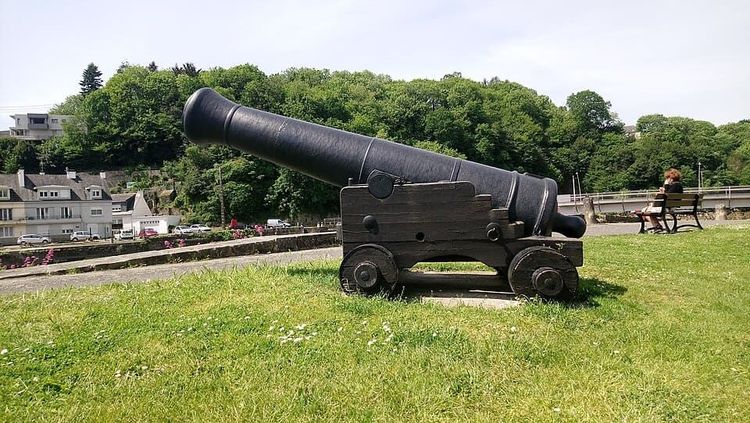
Here the fortified town meets the Blavet, a river whose port long powered the local economy. Three massive cannons, each over 3 metres long, now line the quay, though their story takes an odd turn: with no real link to any nearby fort, they were brought from another site and only installed here in 2001, rescued from the scrapyard and mounted on wooden carriages. Before that, they likely served as plain mooring posts, as the rust marks near their tops still suggest.
Free entry
8 - The Forges Footbridge
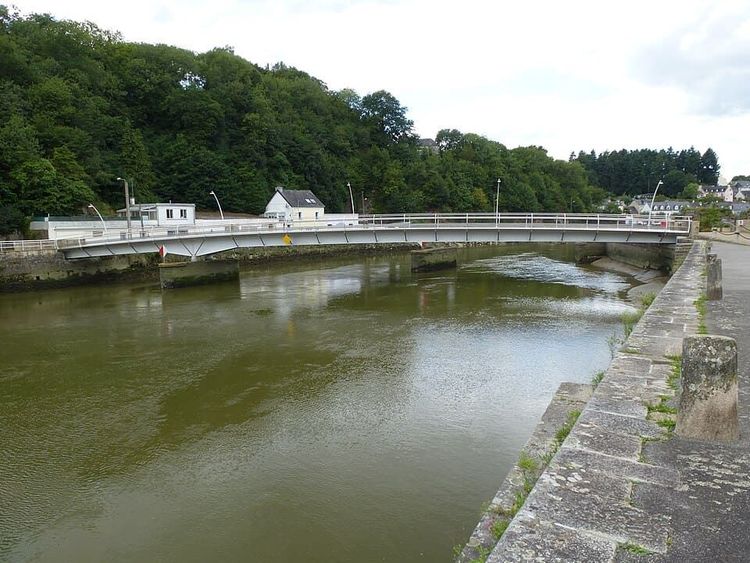
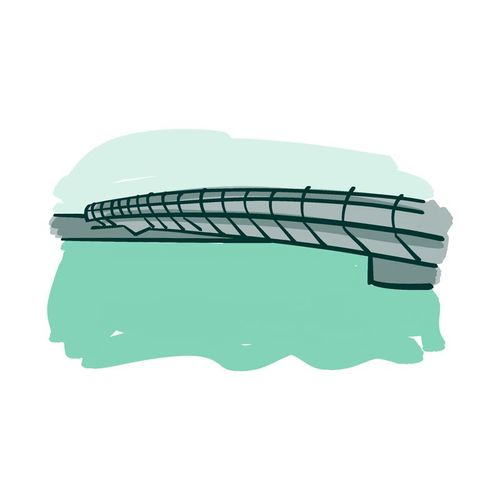
This modern footbridge, opened in 2007 in place of an iron bridge from 1921, links the medieval town to the working-class district that grew up across the river. In 1860, two brothers built a factory there specialising in tinplate for Breton canneries, which at its peak employed up to 3,000 people. Strikes, solidarity and industrial know-how shaped local identity for a century, before the furnaces shut down for good in 1966. An ecomuseum now keeps that industrial memory alive.
Free entry
9 - Saint-Nicolas Tower
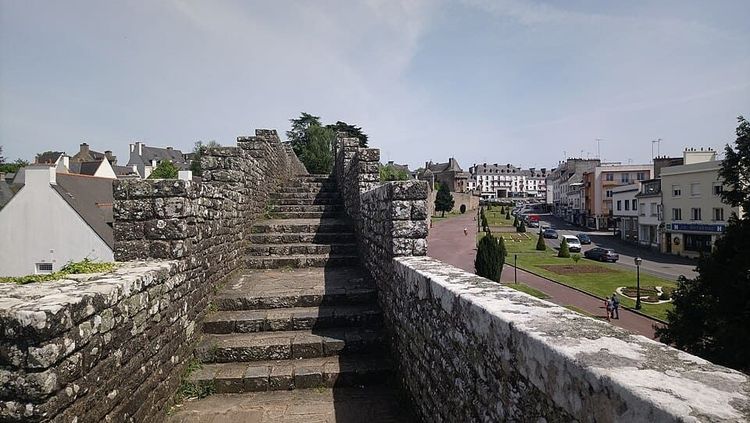
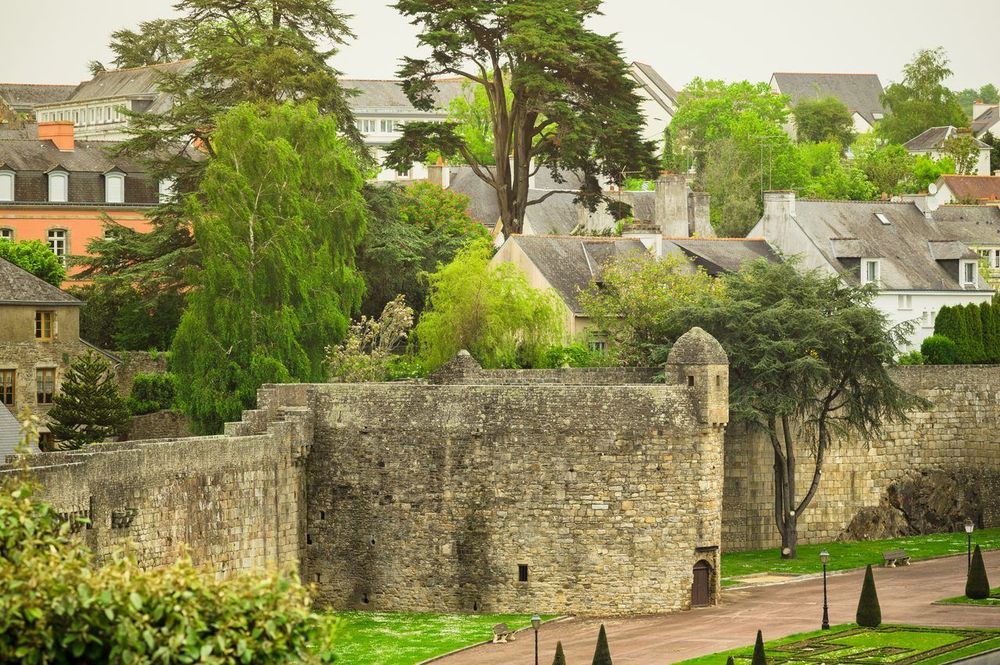
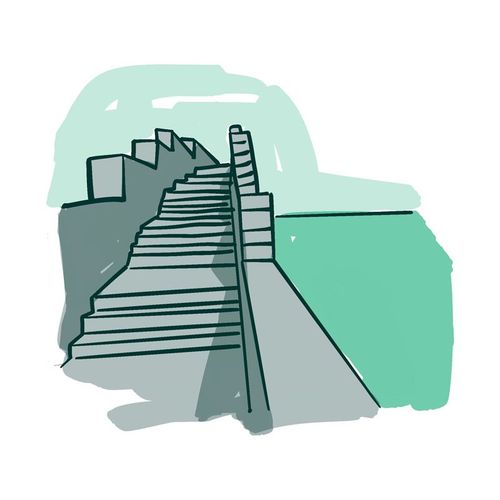
Hennebont holds the second-longest set of ramparts in Morbihan, behind Vannes, built at the end of the 13th century on the orders of the Duke of Brittany. Long hidden by houses leaning against the stone, the fortifications only regained their former glory in the 20th century. You are standing on Saint-Nicolas Tower, built at the end of the 15th century to withstand early artillery: its walls reach 7 metres thick, a solid shield against the cannon fire of the day.
Free entry
10 - The Broërec’h Towers
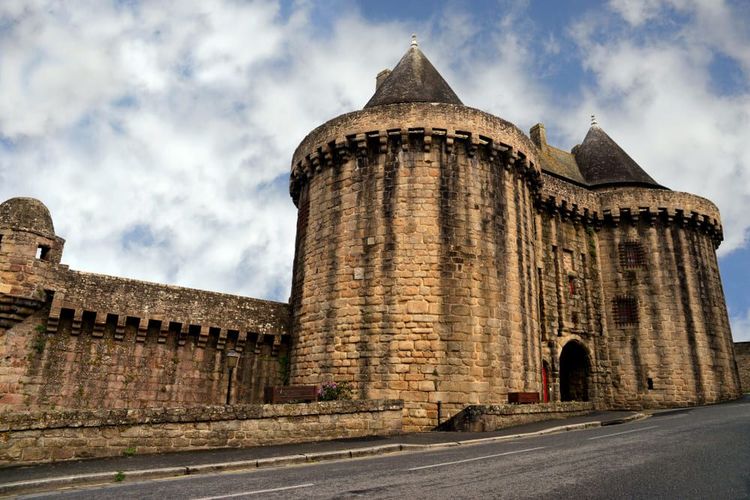
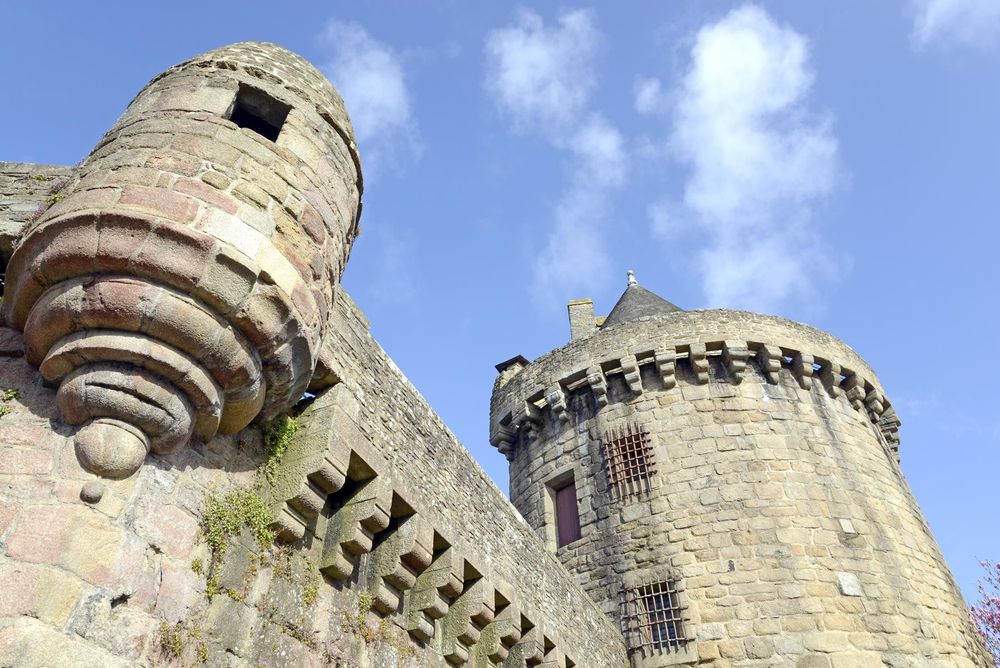
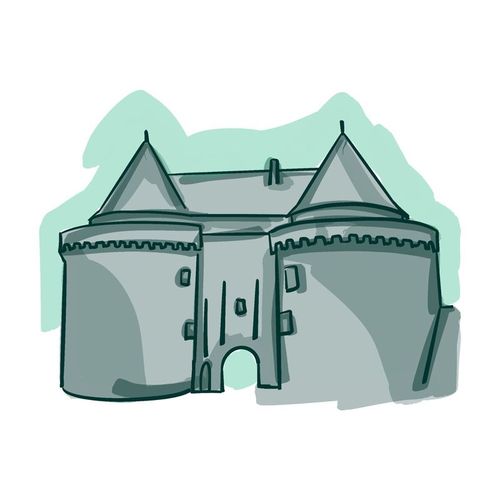
These two massive towers frame the eastern entrance to the old town, once guarding the road to Vannes behind a drawbridge and a patrol walk. Once the wars moved on, the gate lost its military role and became a prison, lending its name to a nearby street. The notorious outlaw Marion du Faouët, a feared gang leader of the 18th century, was locked up here after her arrest. Today the towers house a museum of costumes, faience and local history, spread across ten rooms.
Paid entry (about €6)
11 - The Tour des Carmes
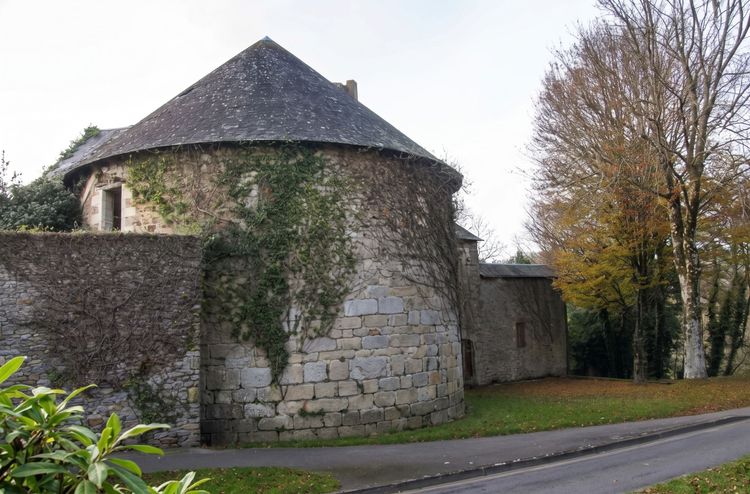
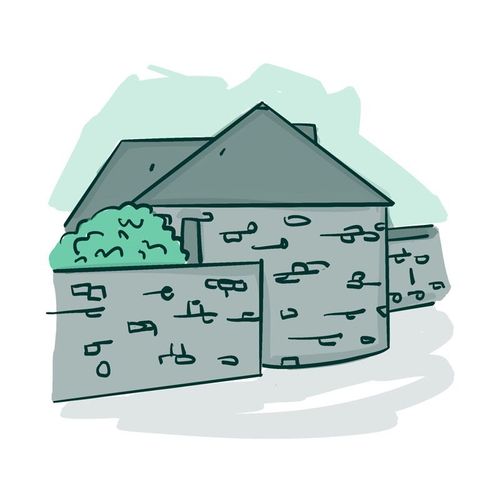
At the northern corner of the old town stands the Tour des Carmes, built on the highest ground in the city to watch over the whole Blavet valley. It takes its name from a nearby convent founded around 1384 by Duke John IV. More than a third of its height now lies underground, hiding former medieval firing chambers. Privately owned despite its protected status, it went through hard years after being abandoned in 2004, a reminder that even a listed monument stays fragile.
Free to see from outside
12 - Bois-du-Duc
This viewpoint offers one of the finest outlooks over the Blavet valley, whose waters rise and fall with the tides, proof that the sea is not far away. The landscape you see today, with its locks and quays, is the result of major canalisation works carried out in the 19th century on a once-wild river. But this green corner hides an even older story: it was once a hunting ground favoured by the Dukes of Brittany, who gave it its name.
Free entry
13 - Hennebont’s Medieval Festival
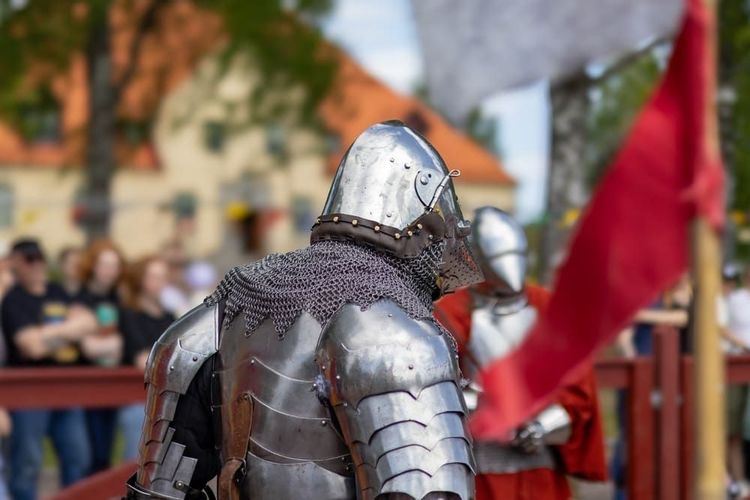
Every two years, Hennebont transforms into a living medieval stage, helped along by a setting that does half the work already: ramparts, fortified gates and an old town centre. Camps, craftspeople, musicians and costumed combat fill the streets, and visitors themselves are encouraged to dress up. Traditional crafts take pride of place, as do the much-anticipated equestrian shows. For its 30th edition, the event gathered over a hundred craftspeople and thousands of visitors keen to relive a slice of history.
14 - Hennebont National Stud
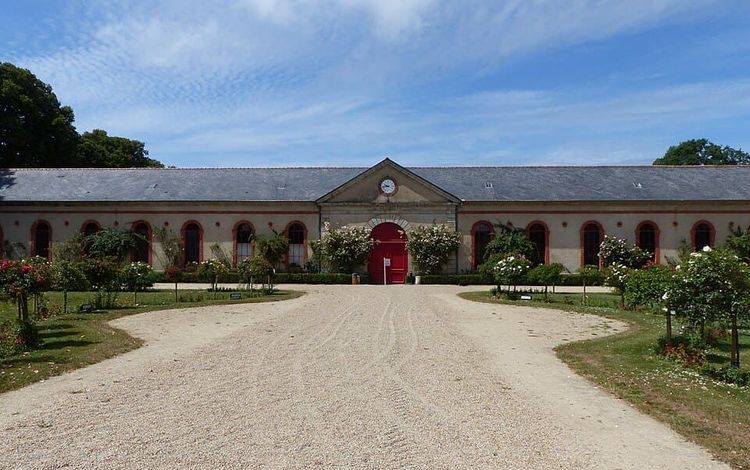
The horse reigns supreme over this vast 23-hectare estate, home to 32 buildings dating from the 19th century, built on land that once belonged to an old abbey. The State transferred the Langonnet stud here in 1857 to select the finest stallions for the army and for farming, cradle of the famous Breton draft horse. A pioneer, the estate became the first stud farm in France to open a museum-style visit to the public, with historic stables, a working forge and a busy performance hall.
Paid entry (about €19)
15 - Hennebont War Memorial
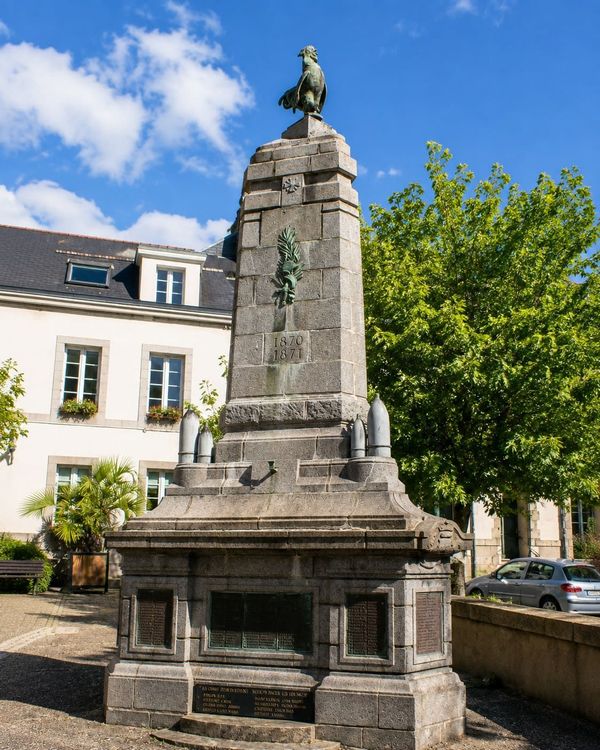
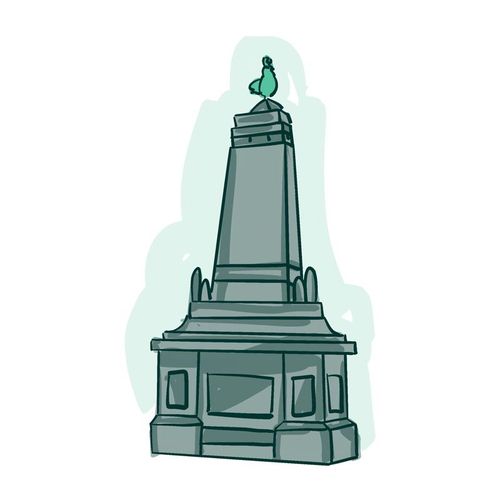
This granite obelisk, unveiled in September 1921, tells a story of collective effort: more than 65% of its funding came from the townspeople themselves. Blending republican, military and religious symbols, it lists 340 local men lost in the Great War. At the very top, a bronze rooster met with a curious mishap under the Occupation, German troops demanding the removal of the helmet it proudly stood on. Moved several times as the square was redeveloped, it now seems to have found its permanent spot.
Free entry
What to do in Hennebont in 2 or 3 days?
One hour is enough to cover the essentials of central Hennebont on this walk: 2 km and 15 sights, from Place Foch to the National Stud by way of the Ville Close ramparts. With 2 or 3 days on hand, the banks of the Blavet and the surrounding area reward a slower visit.
The next day, continue along the Blavet: the towpath follows the river upstream, flat and shaded in places, passing old quays and locks that recall the barge traffic of the past. It suits walking as much as cycling, and the day then carries on at the Kerbihan botanical park. Our guide to visiting Hennebont in 2 days covers the whole programme, from the ramparts to the riverbanks.
Which neighbourhoods does the tour cross?
In one loop of 2 km, the walk crosses the districts that shaped Hennebont, from the civic heart to the fortified town, before climbing towards the national stud's grounds.
It starts on Place Foch, lined by the town hall, the Notre-Dame-de-Paradis basilica and the Hôtel de Kerret; the big Thursday market fills the same square, near the old ironbound well (stops 1 to 5).
Heading west, the route reaches the Blavet, its quayside cannons and the Forges footbridge, then climbs back along the Ville Close ramparts past the Saint-Nicolas tower and the Broërec'h towers (stops 6 to 10).
At the northern corner of the Ville Close, the Tour des Carmes and the Bois-du-Duc viewpoint overlook the Blavet valley. The commentary then turns to the medieval festival before reaching the National Stud, and the war memorial closes the loop just steps from the starting point (stops 11 to 15).
How much does it cost to visit Hennebont?
The walk has 15 stops. Ten are open to visit freely, from the town hall to the Bois-du-Duc viewpoint; the Hôtel de Kerret and the privately owned Tour des Carmes are seen only from the street; another is a story stop devoted to the biennial medieval festival. The last two require a ticket:
- the Broërec'h towers museum (stop 10), open from June to September, for €6;
- the national stud (stop 14), whose entry fee runs around €19 once it reopens to the public.
Information checked in November 2026 and subject to change.
Where to stop for a bite along the tour?
The walk's one food stop opens only one day a week: Hennebont market (stop 4), every Thursday morning on Place Foch.
This market dates back to the Middle Ages, and one local record even credited Hennebont with “the best butter in all of Brittany”. Today, the stalls smell of galette-saucisse and seafood, alongside other local treats.
What should you know before visiting Hennebont?
The Thursday morning market brings the whole town centre to life, from the ramparts to the basilica: the local atmosphere is at its liveliest, but parking becomes harder to find, especially around Place du Général-de-Gaulle.
Two stops follow a tighter calendar. The Broërec'h towers museum (stop 10) only opens from June to September; outside that period, only the fortified gate and its towers remain visible from the street. The national stud (stop 14) is not welcoming visitors for now either: it is due to reopen to the public in the coming weeks for an end-of-year show.
The town's oceanic climate brings rain all year round: a light waterproof jacket is a useful companion to good walking shoes.
What to see around Hennebont?
Hennebont is not on its own: several nearby towns can also be explored on foot with an audio-guided walk, between 9 and 100 km away as the crow flies.
At 9 km, Lorient is the city of six harbours, rebuilt after the Second World War. A little further on, Auray, at 27 km, hides the port of Saint-Goustan, and Carnac, at 29 km, lines up its prehistoric standing stones between village and beach. At 38 km, Quiberon sits at the tip of a peninsula, between wild cliffs and a sheltered bay.
Further still, Vannes, at 42 km, unfolds its flower-decked ramparts and half-timbered houses, and Quimper, at 65 km, mixes timber-framed façades and faience ware where the Odet meets the Steïr. Guérande, at 83 km, pairs remarkably well-preserved ramparts with renowned salt marshes, and Saint-Nazaire, at 100 km, combines shipyards with a submarine base turned cultural venue.
What's on in Hennebont right now?
At this time of year, Hennebont's big event takes place at the National Stud.
From 19 to 31 December, except on the 25th, it hosts Rhapsodie, an equestrian and circus show bringing together 8 performers and around fifteen horses around the cycles of nature, at 2:30 pm and 5 pm (5 pm only on the 24th and 31st).
Information checked in November 2026 and subject to change.
Le plein d'inspirations
Explorez le monde en totale liberté, à pied au cœur des villes ou au fil des routes. Nos guides audios transforment chaque destination en une découverte culturelle immersive et unique.










FAQ for visiting Hennebont
What should I see and do in Hennebont in two days if I enjoy history and nature?
On day one, explore the 13th-century medieval town: its ramparts, the Broërec towers and the 1342 siege told through Jeanne la Flamme. Continue with the Notre-Dame-de-Paradis basilica, then the national stud farm, founded in 1857, and its equestrian shows.
On day two, follow the Blavet along the towpath, on foot or by bike, before strolling through the Kerbihan botanical park. If you visit on a Thursday, the town-centre market is one of the most renowned in Brittany.
Find the detailed itinerary, practical tips and good addresses in our guide: visiting Hennebont in 2 days.
Vos commentaires, idées et suggestions
Aucun avis pour le moment