© Shutterstock
 Votre guide Ryo
Visiting Hennebont in 2 Days: Medieval Town, National Stud Farm and the Banks of the Blavet (2026)
At low tide, the Blavet reveals its muddy banks beneath Hennebont's ramparts, and the smell of seaweed mingles with the hay rising from the nearby stud farm. Visiting Hennebont in 2 days means moving, within a few hundred metres, from a 13th-century walled town to one of the most visited national stud farms in France, then to a towpath that follows the river for miles. Few Breton towns pack so many settings into such a small area, and the itinerary requires accepting a real change of pace between morning and afternoon: cobbled lanes and watchtowers on the medieval side, walks along the water or between the draught horses' stalls on the nature side. The Ryo audio-guided tour of Hennebont accompanies precisely this change of scenery, with stops that pass both the Broërec gate and the marina.
This guide details a programme over two full days: the ramparts and the Broërec gate on the first morning, the Notre-Dame-de-Paradis basilica right afterwards, then the national stud farm and its equestrian shows in the late afternoon. The second day heads to the Blavet and its towpath, before moving on to the Kerbihan botanical park and, if you happen to be there on a Thursday, the Hennebont market, one of the most renowned in Brittany. We also add the practical questions most sites leave aside: where to stay locally, how to get here from Lorient or Vannes, and which season is best to enjoy the town.
Day 1: Hennebont's Medieval Town, Ramparts and Broërec Towers
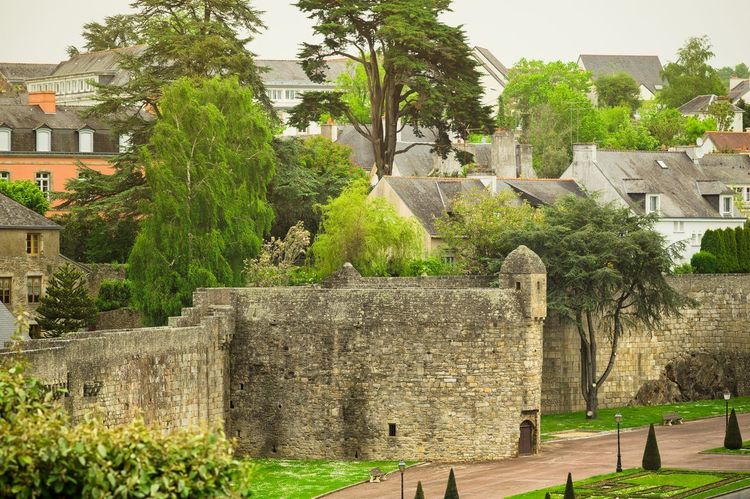
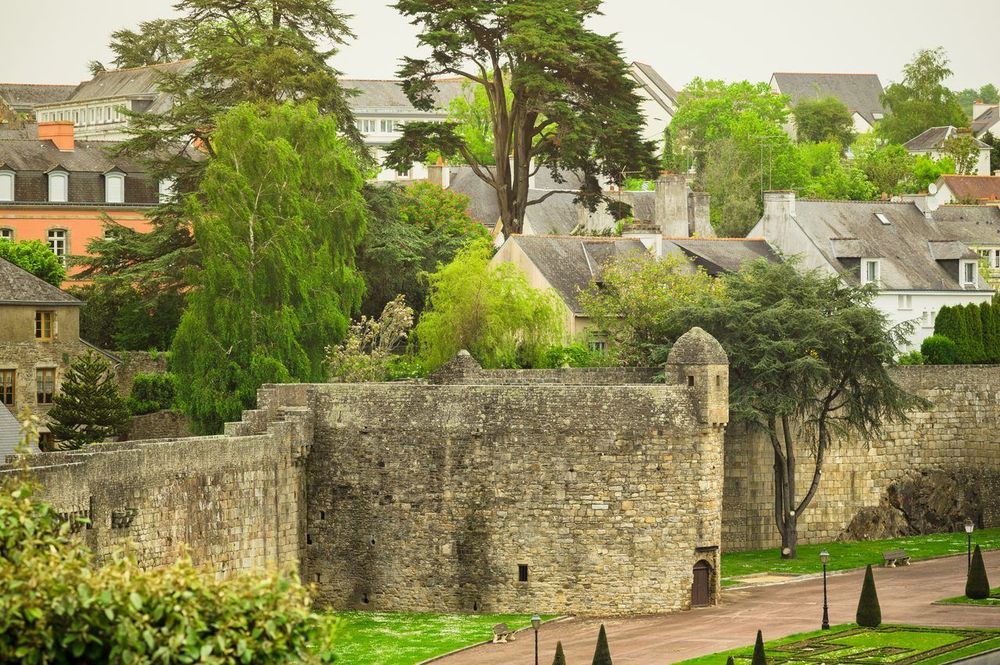
The visit begins where the town took on its current look: the walled town, built in the late 13th century under the Duke of Brittany John I the Red, on the left bank of the Blavet. The very name Hennebont is said to come from the Breton "Hen-Pont", the road of the bridge, proof that everything here revolves around crossing the river. This fortified core withstood one of the most notable sieges of the War of the Breton Succession, in 1342, when Joanna of Flanders, nicknamed Jeanne la Flamme, defended the town against the troops of Charles of Blois. You will hear this episode told in front of the very gates that witnessed it, in the first stops of the Ryo audio tour, which helps you visualise the old defensive layout before tackling the details of the ramparts.
The Hennebont ramparts still encircle part of the historic centre, over about a kilometre, with a partially walkable wall walk that offers an open view of the Blavet and the slate roofs. It is the only urban enclosure in the Lorient area and the second in the Morbihan after Vannes. Besieged several times in the 14th and 16th centuries, the walls have kept several flanking towers. Allow a little under an hour to walk around them, stopping at the viewpoints over the river.
As you approach the wall walk on the Blavet side, look for the arrow slits still visible in the granite. Some sections of the wall have been restored, others have kept their raw appearance, which gives the route an almost archaeological feel in places.
The Broërec towers (Place de la Porte Broërec, 56700 Hennebont, rated 4.4/5 on Google from 132 reviews), two large towers flanking the main gate of the walled town, are the symbol of Hennebont. They long housed a small museum devoted to the history of the town and life behind the walls. Opening hours inside are limited outside the summer season: check with the tourist office before going, although the façade and the passage beneath the gate are worth the detour anyway.
Hennebont in the Middle Ages is above all a story of strategic position: a chokepoint on the Blavet, the town controlled the passage between the inland areas and the roadstead, long before the founding of Lorient in 1666. The town changed hands several times during the War of Succession, between supporters of John of Montfort and Charles of Blois. This dual identity, military stronghold and river port, explains why the line of the ramparts still follows the contours of the old town rather than those of the modern urban area.
To enjoy the medieval town without the crowds, arrive very early in the morning, when the light still skims the stones and the lanes are practically deserted. Cafés in the centre generally open around 9am, which leaves a good hour of calm to explore the ramparts and alleyways.
Allow half a day for the whole medieval town. This leaves time, in late morning, to reach the Notre-Dame-de-Paradis basilica a few minutes' walk away, before devoting the afternoon to the national stud farm.
Notre-Dame-de-Paradis Basilica, Gothic Jewel of the Historic Centre
A stone's throw from the ramparts, the Notre-Dame-de-Paradis basilica (Place du Maréchal Foch, 56700 Hennebont, rated 4.5/5 on Google from 30 reviews) asserts its flamboyant Gothic silhouette on Place du Maréchal-Foch. Its first stone was laid in 1514, at the initiative of residents who wanted a chapel dedicated to Our Lady, and the church, still unfinished, was consecrated as early as 1524. Raised to the rank of minor basilica in 1913, it owes its bell-tower porch of nearly 65 metres to the boldness of the 16th-century builders: it remains visible from almost every point on the ramparts.
On 6 August 1944, a bombing destroyed a large part of the town. The basilica survived almost miraculously, but its stained-glass windows were remade after the war, notably by master glassmaker Max Ingrand, whose vivid colours you can admire from the nave. Stop on the forecourt with the Ryo audio guide: one stop there tells the story of that August night and the reconstruction of the town that followed.
The interior deserves a ten to fifteen minute pause, for the height of the nave and the calm that contrasts with the bustle of the town centre just outside. Entry is free during the day, which makes it an easy stop to slip between two more intensive visits.
Day 1 (Late Afternoon): Hennebont National Stud Farm and Its Equestrian Shows
A complete change of scenery for the end of the day: head to the Hennebont national stud farm (Rue Victor Hugo, 56700 Hennebont, rated 4.4/5 on Google from 1,224 reviews), created in 1857 on the lands of the former Cistercian abbey of La Joie, on the edge of the Blavet. It was part of the network of stud farms tasked with developing the breeding of the Breton draught horse, a robust breed used for agriculture as well as for artillery.
The equestrian shows at the stud farm bring together draught horses, Breton postier horses and sometimes antique carriages, in a staging that mixes technical demonstration with local history. The programme varies by season: summer has the most performances, while the rest of the year favours tours of the stables and more occasional presentations. Check the day's programme at reception before setting your schedule.
Immersing yourself in the equestrian world at the Hennebont national stud farm also means meeting Breton draught horses in their stalls, recognisable by their chestnut or roan coats and their massive build. They long ploughed the fields of the Morbihan before the tractor replaced them, and the stud farm remains one of the few places where you can observe them this closely outside agricultural shows.
The buildings themselves are worth a look: stone stables arranged around a central courtyard, a tree-lined avenue, and a staged visitor route that blends the world of the horse with a nod to fairground art.
Between stops in front of the stalls, launch the Ryo audio guide: one stop tells the story of the Breton draught horse and its role in the local rural economy, perfect for a self-guided visit outside show times.
Access to the site is paid: expect around €13 to €15 for an adult depending on the option, a reduced rate for children and free admission for under-3s. Allow an hour and a half to two hours on site if you attend a demonstration, and a good hour for a self-guided visit. The site is stroller-accessible along most of the route.
Day 2: The Blavet and the Towpath, on Foot or by Bike
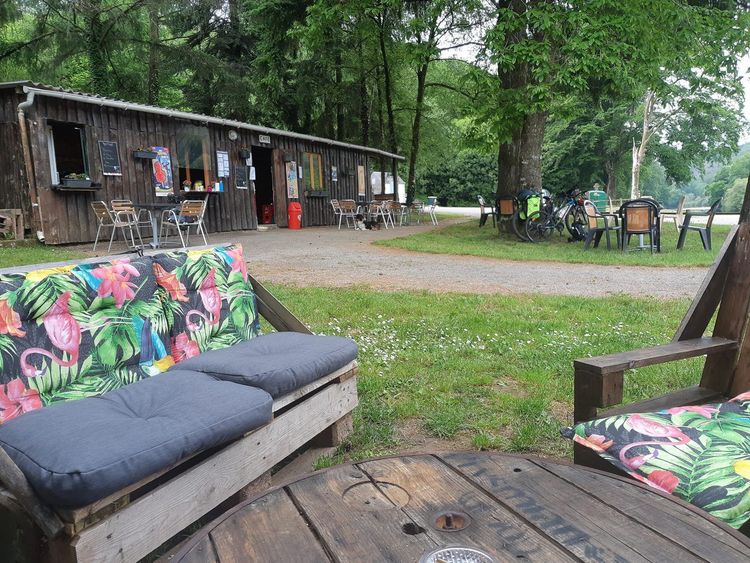
Second day, a completely different atmosphere: head to the banks of the Blavet, the river that made Hennebont's commercial fortune. Canalised as far as Pontivy, it long served to transport timber and goods between the inland areas and the Lorient roadstead.
The towpath runs upstream along the bank, flat and shaded in places, and is suitable for both walking and cycling. Old quays and locks punctuate the route, witnesses to the boating activity that once animated these banks when barges came up loaded with timber or coal. Taking to the green on Hennebont's towpath means swapping the stones of the medieval town for a setting of willows and reeds, just minutes from the town centre.
The marina is the most convenient starting point, with a car park nearby and a few benches. Depending on the time, you will come across anglers, joggers and families on bikes, in a much calmer atmosphere than the historic centre.
The river has its share of discreet wildlife: grey herons standing in the reeds, sometimes a kingfisher skimming the water early in the morning. Photography enthusiasts will find here a quiet counterpoint to the previous day's architectural shots.
Before setting off, keep your earphones handy: several stops on the Ryo audio tour revisit the boating history of the Blavet and the port past of the quays.
For a short walk, allow 30 to 40 minutes round trip to the first open viewpoint over the river. Keen walkers will go on for an hour and a half before turning back. By bike, the developed section is easily ridden, which leaves time to resume sightseeing in the early afternoon.
Kerbihan Botanical Park, a Green Break in Town
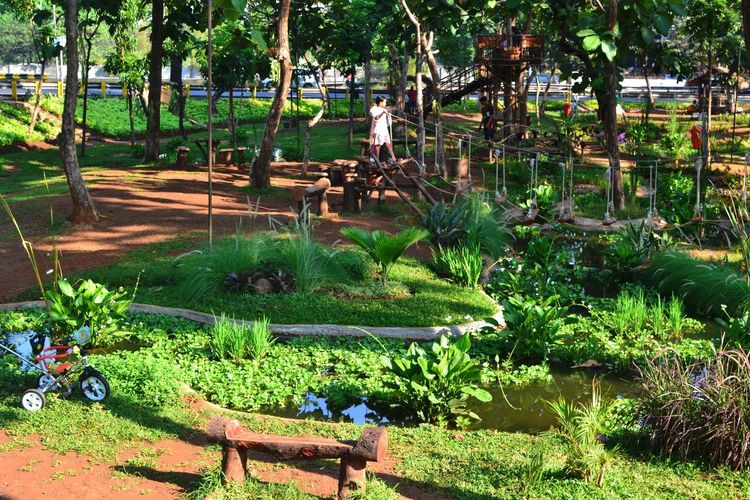
A few minutes' walk from the centre, the Kerbihan botanical park (Rue Gérard Philipe, 56700 Hennebont, rated 4.3/5 on Google from 1,108 reviews) spreads over about ten hectares a municipal arboretum of around 130 tree species from around the world and some 400 varieties of shrubs. Centuries-old conifers, bamboos, waterfalls, a stream and a pond make up a neo-romantic garden that is astonishingly exotic for a town of this size.
The park is ideal for a picnic or a break in the shade between two stops, with benches scattered along the paths. Entry is free every day and the main paths are stroller-friendly, a valuable asset for families.
Hennebont Market, One of the Largest in Brittany
If your stay falls on a Thursday, don't miss the Hennebont market (Place du Maréchal Foch, 56700 Hennebont, rated 4.5/5 on Google from 37 reviews), one of the most renowned in the Lorient area for several centuries and regularly cited among the largest in Brittany. It takes over the town centre on Thursday mornings, around Place du Maréchal-Foch, and attracts both local residents and passing visitors.
The stalls mix Breton farm produce, fish from the roadstead, cheeses and non-food stands along several streets of the historic centre. Its success stems from the town's position, at the crossroads of the routes linking Lorient, Vannes and the centre of the Morbihan: producers and customers sometimes come from far away for this weekly event. Arrive before 10am to get around without too much elbowing.
If your visit doesn't coincide with a Thursday, fall back on the food shops in the town centre for a comparable glimpse on a smaller scale.
Where to Stay in Hennebont for a 2-Day Weekend
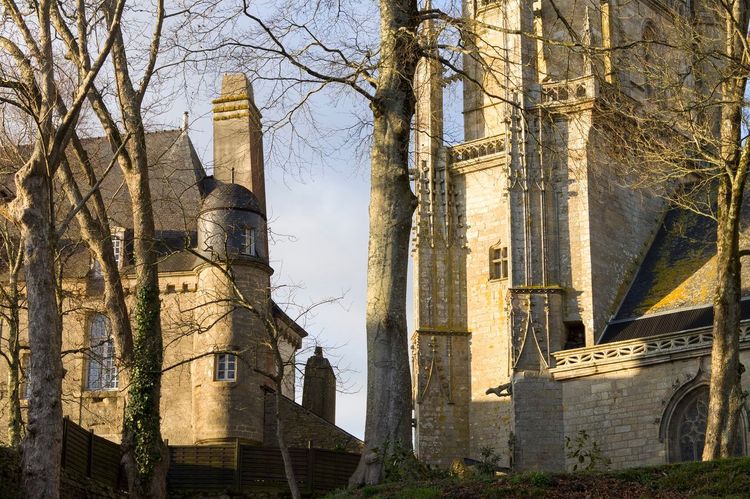
For a two-day stay, the choice of accommodation depends mostly on the pace you want to give the visit. Staying in the historic centre, near the ramparts and the basilica, lets you do everything on foot and enjoy the lanes early in the morning.
The banks of the Blavet, on the marina side, offer a calmer alternative, with a few guesthouses and rentals that bank on the river view. A good option if the second day's nature programme weighs more in your priorities.
Outside the centre, the surrounding countryside has several gîtes and guesthouses in renovated old farms, 10 to 15 minutes by car. It is the most suitable choice if you are travelling by car and looking for peace in the evening.
You can also stay in Lorient, about ten minutes away by train or a quarter of an hour by car. The hotel offering is wider there, but you will lose the quiet evenings and mornings in Hennebont.
Whatever the neighbourhood, book early if your visit coincides with the medieval festival in late July: availability is limited for a town of this size.
How to Get to and Around Hennebont
By train, Hennebont station is served by TER trains on the Lorient-Auray-Vannes line, less than ten minutes from Lorient. It is the simplest option if you don't want to deal with parking in the town centre.
By car, Hennebont can be reached from Lorient in a quarter of an hour or from Vannes in 40 to 45 minutes via the N165 expressway. From Rennes or Nantes, allow roughly 1h45 and 1h45 to 2h of driving respectively.
Parking is concentrated around the historic centre, with several car parks near the ramparts, often free or at a moderate rate. The stud farm has its own car park, useful for going straight on to the equestrian visit. On Thursday mornings, market day, arrive early: crowds rise noticeably.
Once there, the town centre can be explored entirely on foot: the medieval town, the basilica and the shopping streets fit within a compact area. The stud farm, the towpath and Kerbihan park require only a few more minutes of walking, and a few local bus lines complete the offering.
When to Visit Hennebont: Medieval Festival and Best Season
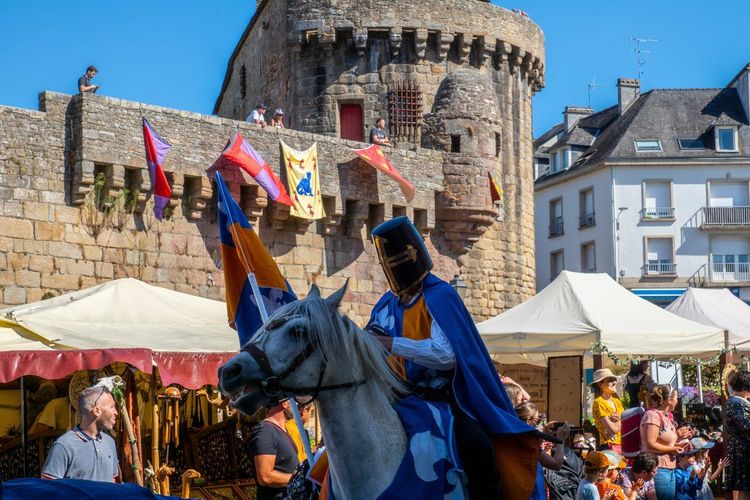
Hennebont's medieval festival transforms the historic centre and the Poterie site every summer into a medieval village: encampments, artisans' market, jousts, costumed parades and fire shows. The 2026 edition, the thirtieth, was held on 25 and 26 July with more than 130 exhibitors and nearly 30,000 visitors expected. It is the most spectacular time to discover the town, but also the busiest, and the centre is then closed to cars.
Outside the festival, the medieval atmosphere remains within earshot: the stops of the Ryo audio-guided tour devoted to the ramparts and the Broërec gate put every stone back in its context, whether you come in July or in November.
Spring and early autumn remain the most pleasant periods: fewer people than in high summer, often mild Breton weather and still generous opening hours at the national stud farm.
Summer remains a valid option for the more frequent equestrian shows and long evenings by the Blavet. Just bring a light jacket: Breton weather can change within a few hours, even in July.
Experiencing Hennebont also means smaller, more discreet events: activities around the Thursday market, temporary exhibitions, or summer evenings when the marina quays fill with strollers.

FAQ
How long does it take to visit Hennebont?
Two days are enough to cover the essentials: the medieval town and the basilica on the first morning, the national stud farm in the late afternoon, then the Blavet, the Kerbihan botanical park and the market on the second day. A single day is possible if you focus on the historic centre and the stud farm, but you would miss the walk along the towpath.
What to see in Hennebont in 2 days?
The must-sees are the ramparts and the Broërec towers, the Notre-Dame-de-Paradis basilica, the Hennebont national stud farm and its equestrian world, the Blavet towpath, the Kerbihan botanical park and the Thursday market.
Is the Hennebont national stud farm paid?
Yes. Expect to pay around €13 to €15 for an adult, with a reduced rate for children and free admission for under-3s. Prices vary depending on the option (visit, show): check on site or with the stud farm before you come.
Where to park in Hennebont?
Several car parks are located right next to the historic centre and the ramparts, and the national stud farm has its own car park. On Thursday mornings, market day, traffic around the town centre increases noticeably.
Is Hennebont a good town for families?
Yes: children love the national stud farm, the Kerbihan botanical park and the towpath are easy to walk with a stroller, and the short distances between sites avoid tiring journeys.
What is the best time to visit Hennebont?
Spring and early autumn offer the best compromise between mild weather and low crowds. Summer remains appealing for the equestrian shows and the medieval festival in late July, provided you accept more people in the historic centre.
In Summary
Two days are enough in Hennebont to go from a 13th-century walled town to a historic stud farm, then to a river lined with towpaths, without ever getting back in the car between stops. It is this diversity of settings within such a compact area that sets the town apart from other stops in the Morbihan.
To connect these places through their stories, download the Ryo audio-guided tour of Hennebont: you listen at your own pace, between the ramparts, the basilica and the national stud farm, with no booking or set schedule.