
Créé par Emilie, le 16 nov. 2026
Votre guide Ryo
Auray, France
A Town With Two Faces
@Shutterstock
Parcours audioguidé pour visiter Auray en 1 jour
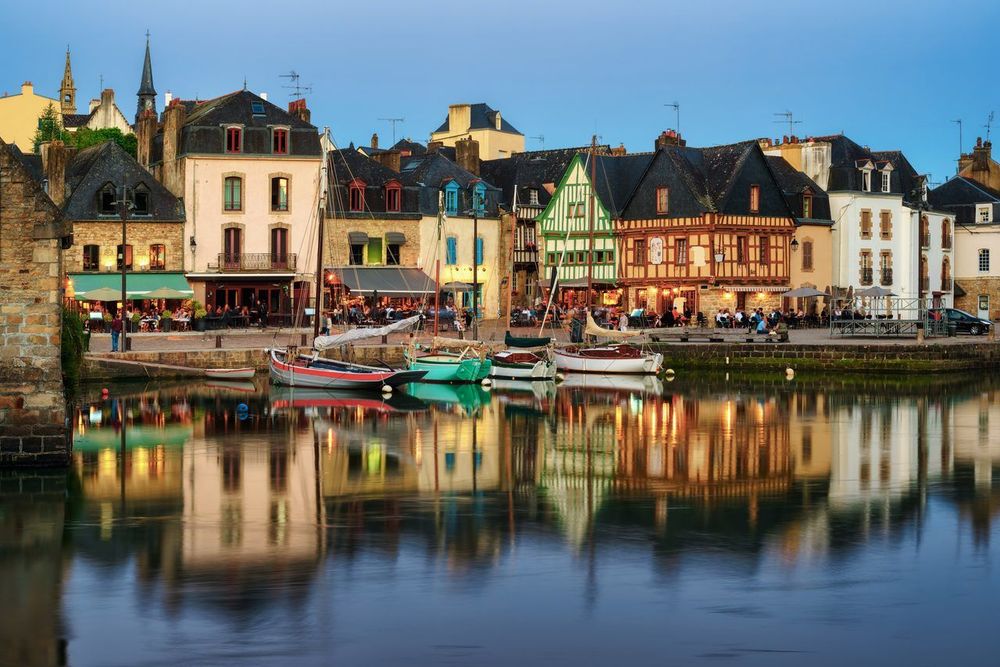
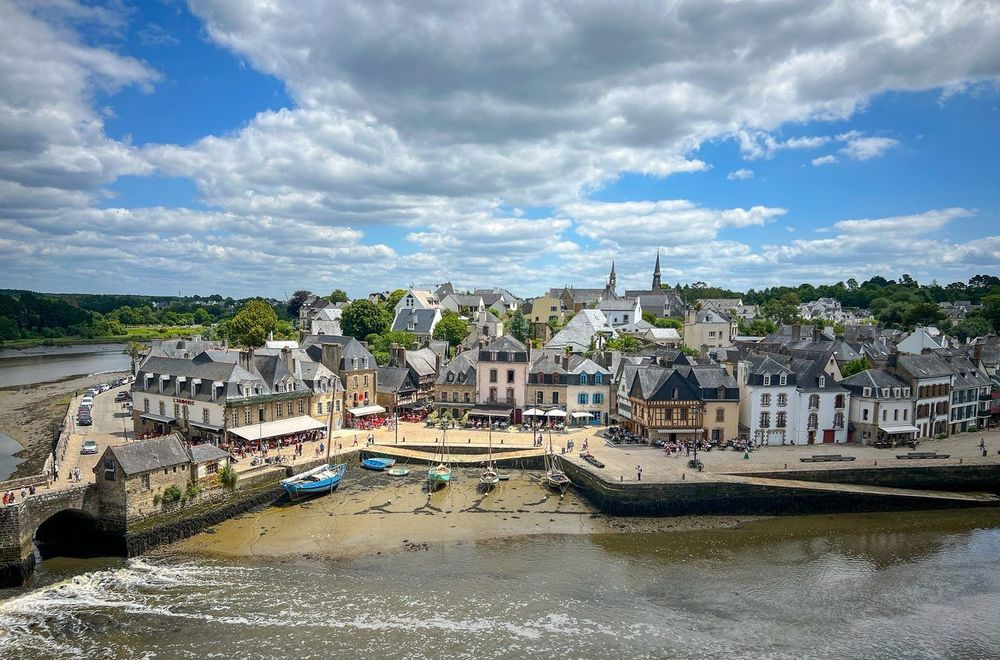
Nestled at the end of an inlet in the Gulf of Morbihan, Auray charms visitors with its historic centre, half-timbered houses and the picturesque port of Saint-Goustan. With its lively quays, shops, galleries and tempting places to eat, the town is perfect for a leisurely stroll. It is also an ideal base for exploring Carnac, the Quiberon Peninsula and the beautiful landscapes of the Gulf of Morbihan.
Quand partir à Auray ?
Jan.
9°
14
Feb.
10°
12
March
12°
11
April
15°
11
May
18°
10
June
21°
8
July
23°
8
Aug.
23°
8
Sept.
21°
9
Oct.
17°
13
Nov.
13°
14
Dec.
10°
14
Auray enjoys a mild oceanic climate, with pleasant summers, winters that are rarely harsh, and the chance of showers throughout the year. From spring to early autumn, the weather is especially well suited to strolling through the historic centre and along the harbour. Summer is livelier, while spring and the shoulder season offer a quieter and often very pleasant atmosphere. Just remember to keep a waterproof jacket handy!
Départ conseillé
Our tours are designed as loops, so you can easily start your visit from whichever point is closest to you; the guidance will adjust automatically. If you’re nearby, we recommend an ideal starting point: Place Saint-Sauveur in Saint-Goustan.
Parking à proximité
For easy access to the starting point of the tour, we recommend the free Saint-Goustan car park on Chemin de Bellevue, about a ten-minute walk from the harbour. If it is full, you can also park at Place du Loch or near the Chapelle du Saint-Esprit, then continue to the route on foot.
À savoir
In summer, Saint-Goustan can get particularly busy, so it’s best to arrive in the morning and avoid looking for a parking space directly along the quays, where the streets are narrow. Take extra care on Monday mornings too: the large market takes over part of the town centre and makes parking more difficult until early afternoon. In blue zones, remember to display your parking disc.
Découvrez 19 lieux d'intérêt pour visiter Auray


What to see in Auray on your 1h tour?
This 2.4 km loop takes about 1 hour and links 18 sights. From Place Saint-Sauveur it follows Saint-Goustan harbour to its bridge of the same name, climbs Rue du Château toward the town hall and Saint-Gildas church, then drops back past fine timber-framed houses and the Rampes du Loch, over the ruins of the ducal castle. With the Ryo app in your ears, every quay, legend and old stone tells Auray's maritime story, at your own pace.
Information checked in November 2026 and subject to change.
1 - Place Saint-Sauveur
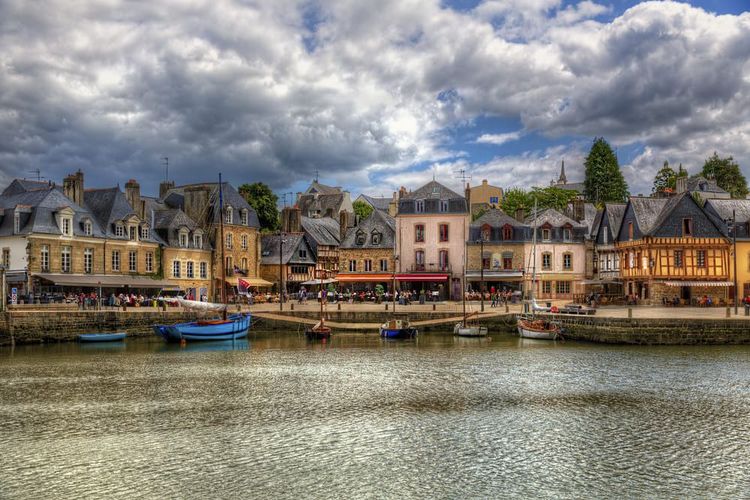
This is the heart of Saint-Goustan, Auray's best-loved quarter, said to take its name from a young Cornish man in local legend. Captured by pirates and later left for dead on an island, he reportedly survived thanks to a never-ending fish before becoming a monk and protector of sailors. For centuries this riverside quarter stayed a modest farming hamlet with no proper quay. Everything changed in the 17th century, when a first quay finally gave the square its shape.
Free entry
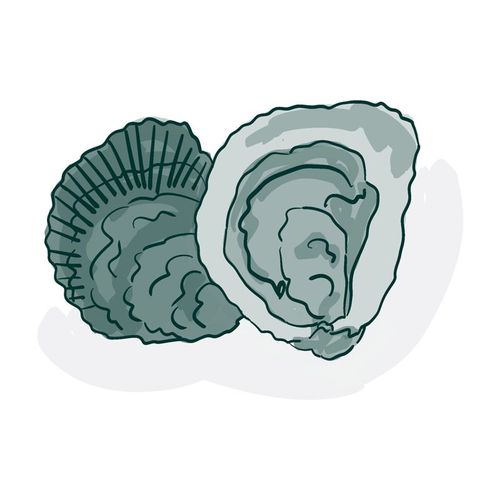
2 - The Oysters of the Auray River
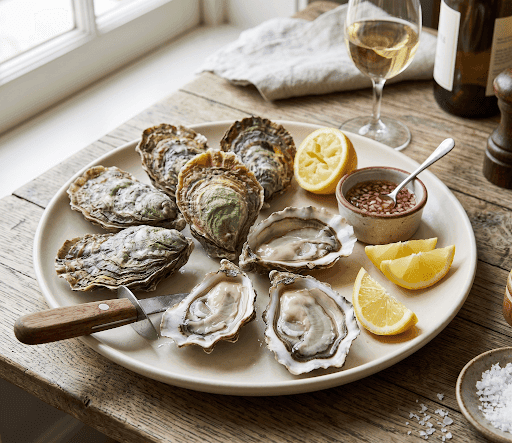
The Auray river long fed its people through a native flat oyster, quite unlike the cupped variety sold almost everywhere today: rounder shell, almost circular, and far less domed. Fishermen once gathered it straight from natural beds by towing a dredge behind their boat, a tightly controlled fishery that lasted into the mid-20th century. Part of the catch then travelled to other oyster rivers to fatten and gain flavour before sale. A tasty bite of local maritime history.
Free entry
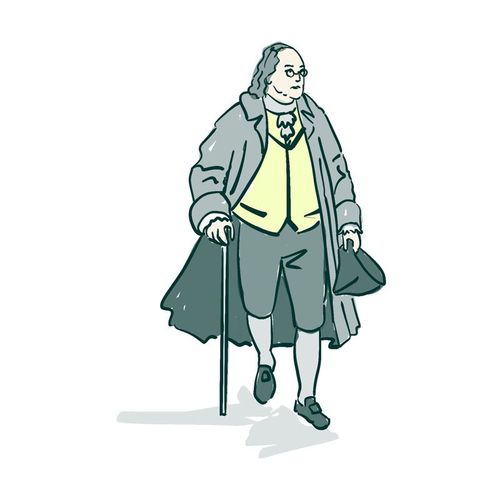
3 - Benjamin Franklin Arrives

It was here, at Saint-Goustan, that Benjamin Franklin first set foot on French soil, one December day in 1776, after contrary winds kept his ship from reaching Nantes as planned. Sent by the young United States to win Louis XVI's support against Britain, he had sailed from Philadelphia a month earlier with his two grandsons. His welcome was unexpected: instead of diplomats, he met ordinary Breton farmers. His mission would still lead, two years on, to the alliance that helped secure American independence.
Free entry
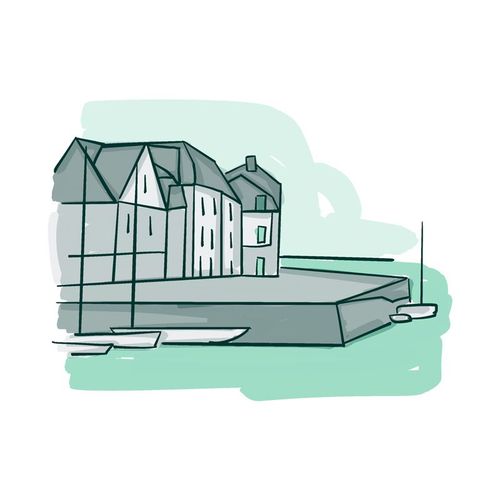
4 - The Port of Saint-Goustan
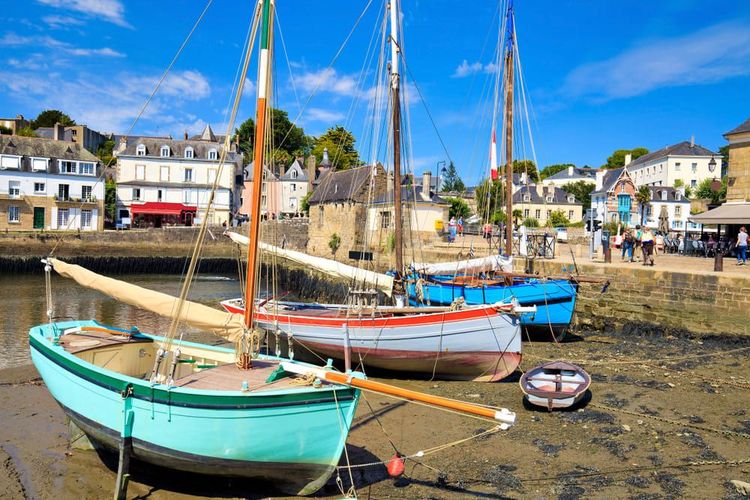
Looking at these pleasure boats, it is hard to picture Saint-Goustan as one of Brittany's busiest harbours, carried by wine and grain trade to its golden age across the 16th and 17th centuries. Ships brought in wine, salt or iron, and left loaded with grain and local cloth. The rise of Lorient, then better roads and the railway, slowly pulled trade away. The once working-class quarter has since become the most sought-after corner of Auray.
Free entry
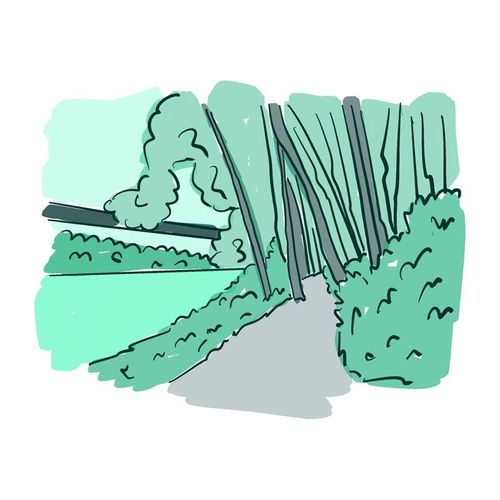
5 - Stanguy Promenade
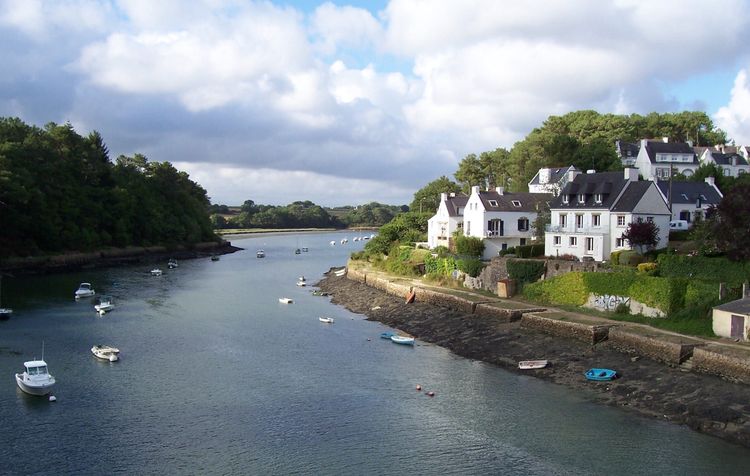
At the far end of Quai Franklin, the Stanguy walk carries the stroll further along the water, past boats and the strange scenery of a ria, an old river valley flooded by the sea, with winding channels, mudflats and tiny islets shaped by the tides. Those with energy left can keep going on the coastal trail all the way to Le Bono, a small, charming harbour not far from Auray, for a longer taste of walking by the water.
Free entry
6 - Saint-Sauveur Church and Notre-Dame-de-Lourdes Chapel
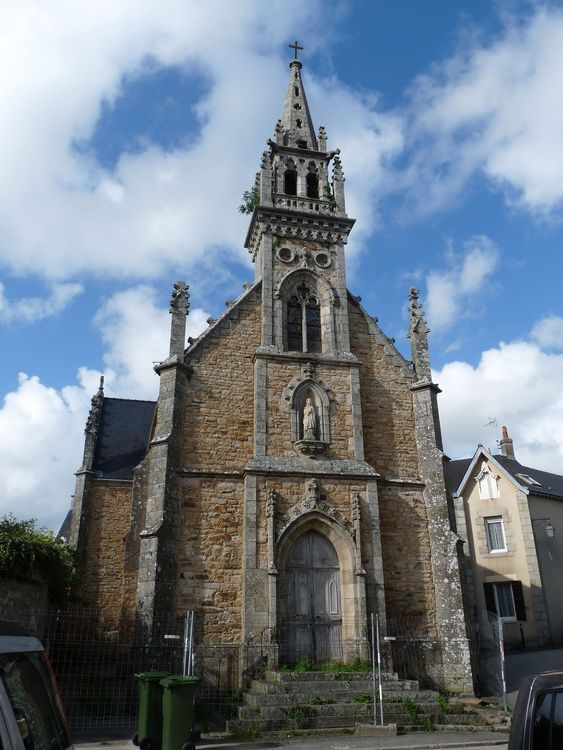
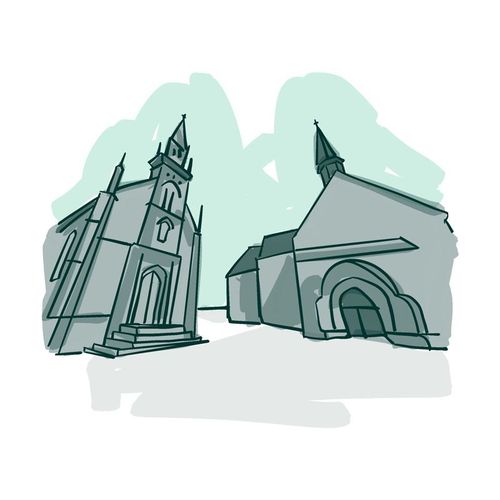
Two bell towers stand almost side by side, from very different eras. Saint-Sauveur church, the older one, has watched over the quarter since the 15th century, though largely rebuilt after an 1886 fire that spared only its porch. Inside hangs a striking ship ex-voto, among the largest of its kind in Brittany. The neighbouring chapel, raised at the close of the 19th century in a Neo-Gothic style echoing Lourdes, reflects the fervour stirred by the reported 1858 apparitions.
Free entry
Everything about Saint-Sauveur church and the Notre-Dame-de-Lourdes chapel
7 - Rue Neuve
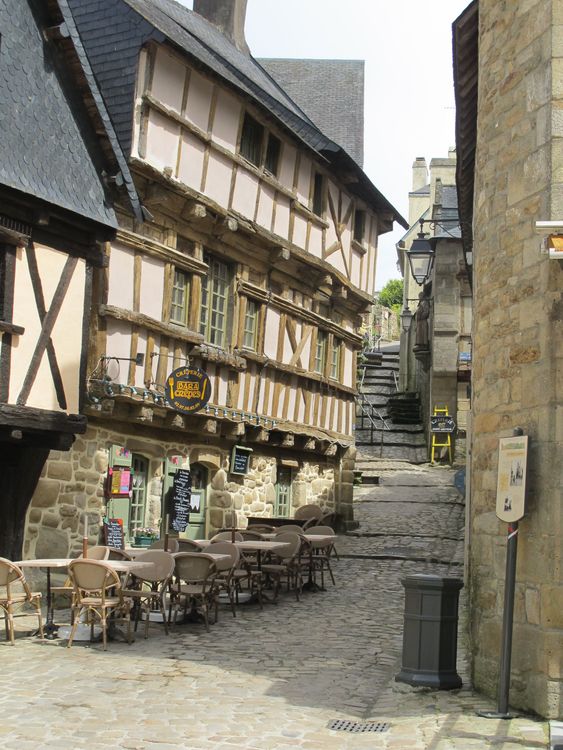
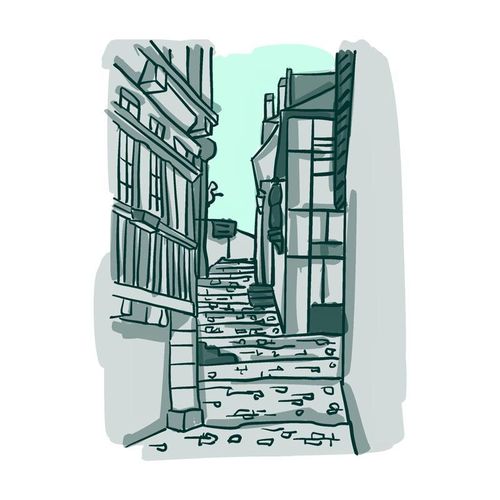
Despite its name, this lane was actually cut in the 16th century. Barely 1.9 metres separate the wheel guards set at the foot of the walls to shield the facades from passing carts. Narrow as it was, the lane still carried a large share of traffic heading south through Brittany. Oversized carts scraped marks into the stone that remain visible today. Things got so bad that in 1749 several houses were pulled down to open a wider route, Quai-Neuf.
Free entry
8 - Bridge of Saint-Goustan
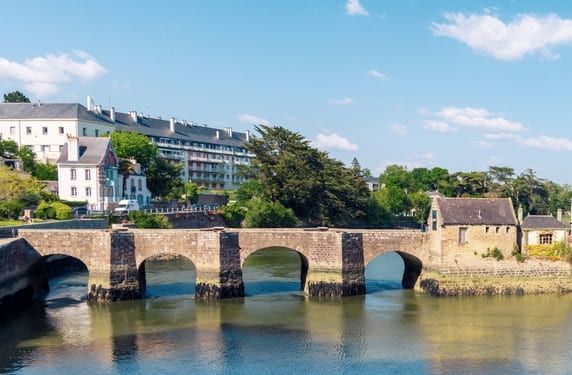
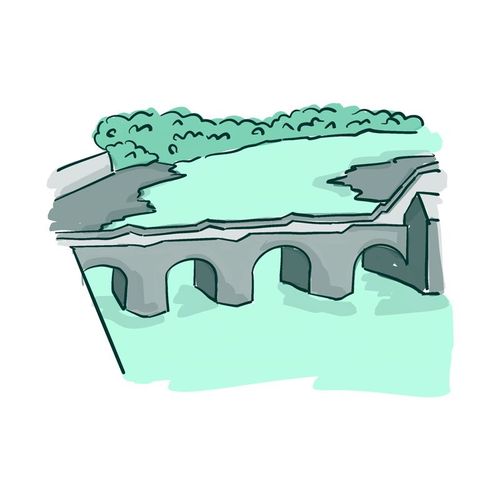
This bridge links the upper town to the harbour in a few steps, carrying more than seven centuries of crossings beneath its arches. Before it was built, first recorded in the late 13th century, crossing meant a ford or a ferry depending on the tide. Reshaped many times since, it took its present form in 1752, with four basket-handle arches whose pointed piers split the current. Stagecoaches from Vannes used it until 1865, when a new crossing offered a gentler route.
Free entry
9 - Rue du Château
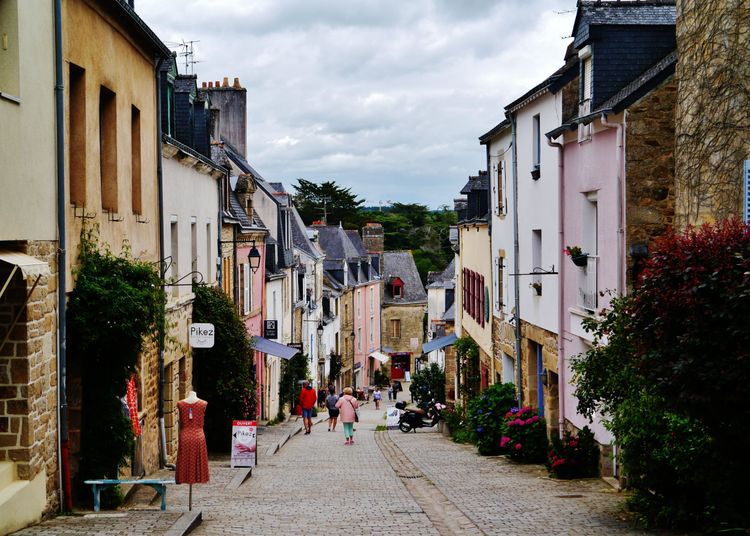
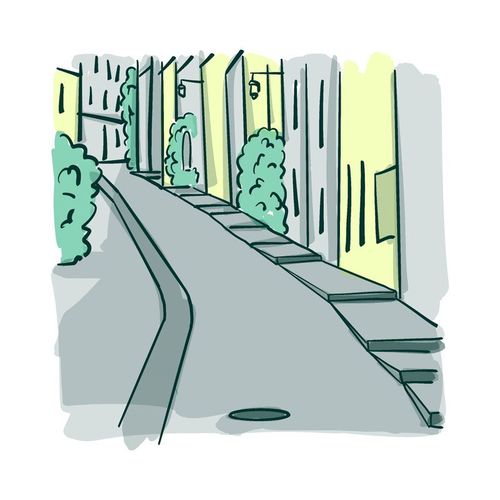
Laid out in 1560 over the old moat that once ringed the fortress to the north, this sloping street gradually swapped military defences for houses, taking its present name a century on. Facades mix stone and timber framing, with jutting upper floors and carved beams. One bears a carved inscription dated 1608, signed by its first owners. Shops, galleries and workshops now line this climb, which still keeps alive the memory of a vanished castle.
Free entry
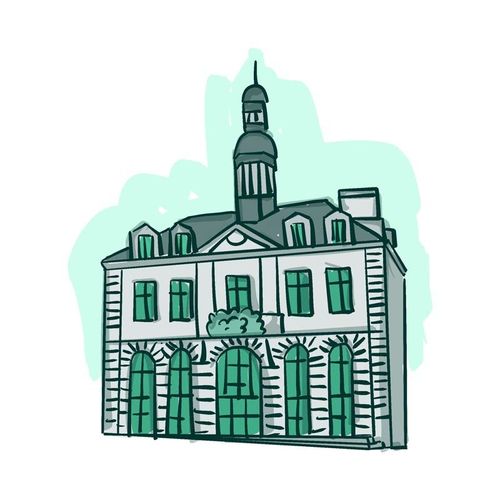
10 - Auray Town Hall
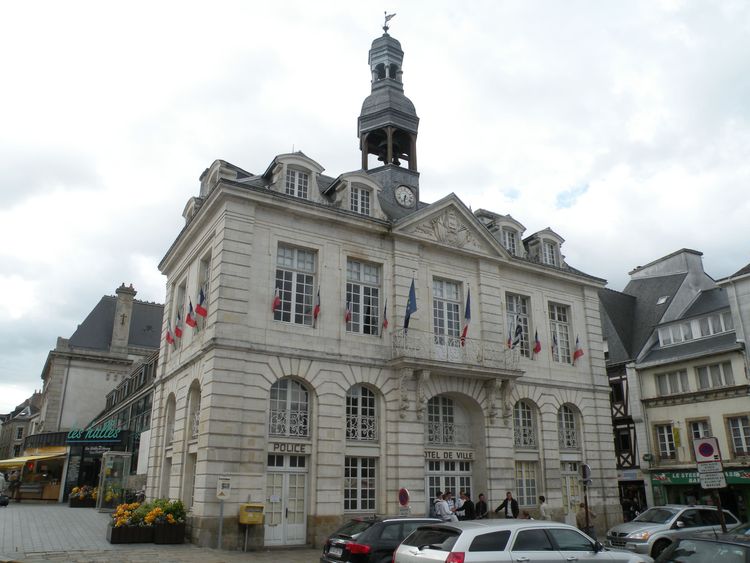
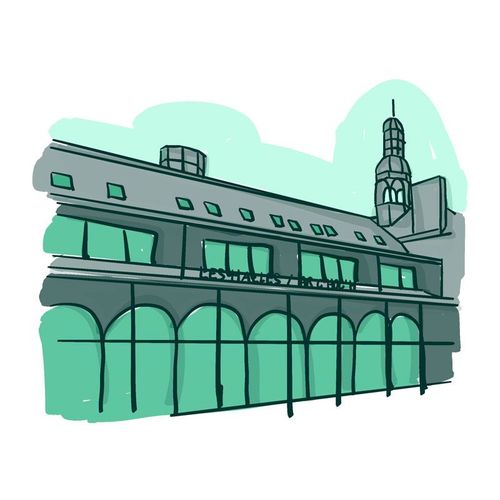
Under the old monarchy, Auray enjoyed royal privileges; a senechaussee, a court dispensing justice for some twenty surrounding parishes, settled here from the Renaissance onward. The current town hall, built at the close of the 18th century, shows a symmetrical facade and bell tower echoing that administrative and judicial role. It once stood against wooden market halls, whose upper floor housed exactly that court's hearings. Local government, justice and trade thus sat almost under one roof.
Free to see from outside
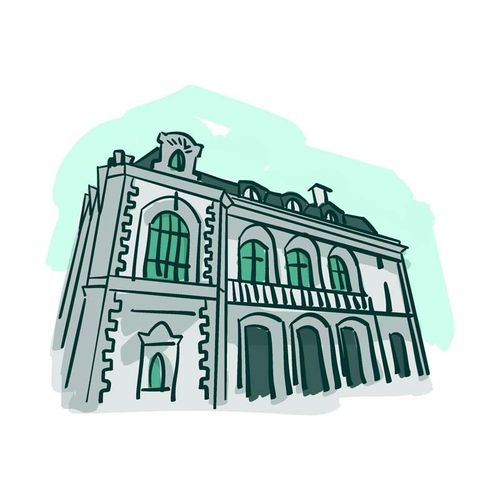
11 - Petit théâtre
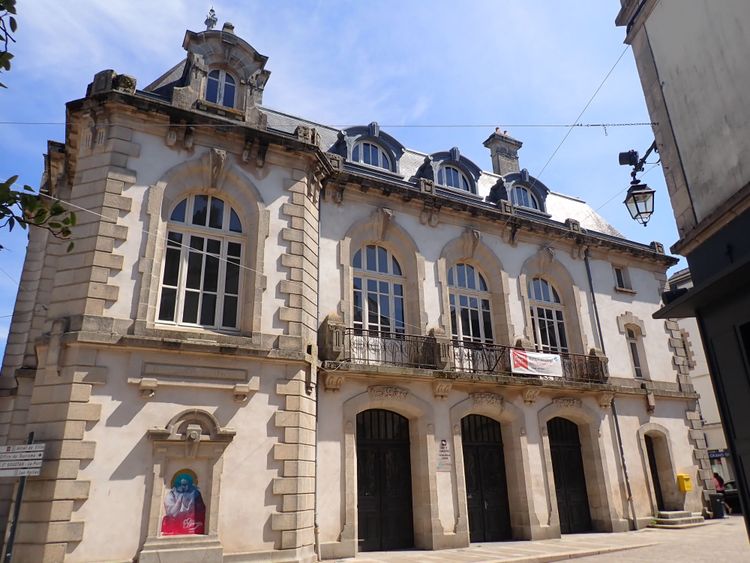
Raised in the early 20th century, this building first served two very different purposes: a court on the ground floor, a function hall upstairs that became today's Petit Theatre. Behind its plain front hides an Italian-style auditorium decorated with Art Nouveau ironwork, where balcony seats let the audience watch the show, and each other, just as closely. A theatre on this scale is rare for a town this size, and the protected building still speaks to Auray's cultural ambitions of the time.
Free to see from outside
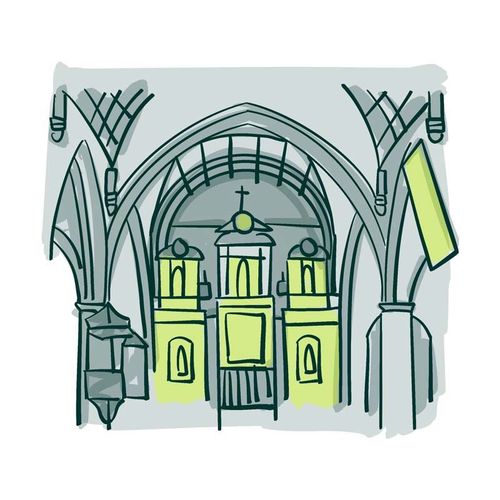
12 - Saint-Gildas Church
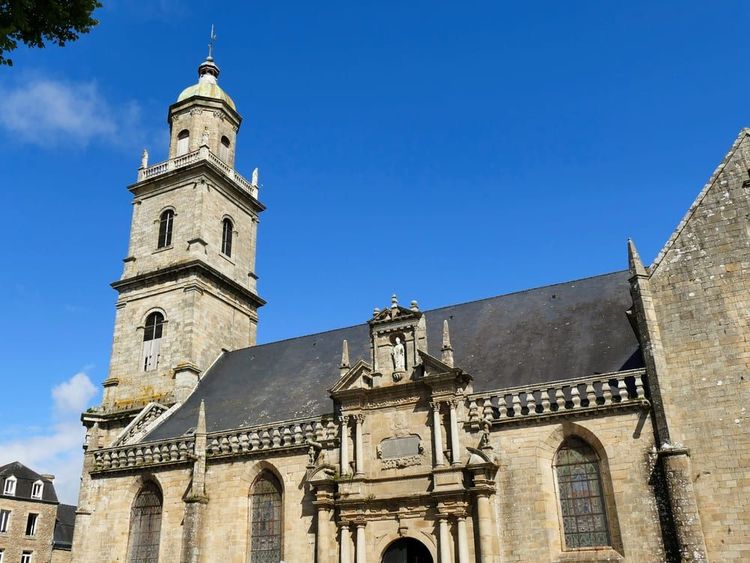
The church owes its name to a priory founded here by the Abbey of Saint-Gildas-de-Rhuys, itself credited to a Breton monk of the 6th century known for a temper as strong as his wisdom. The present building, raised over some forty years in the 17th century to replace a decaying chapel, mixes lingering medieval shapes with a heavily decorated Baroque front; the bell tower dates from the 19th century. Inside wait a stone and marble altarpiece, a fine organ case and windows telling the saint's story.
Free entry
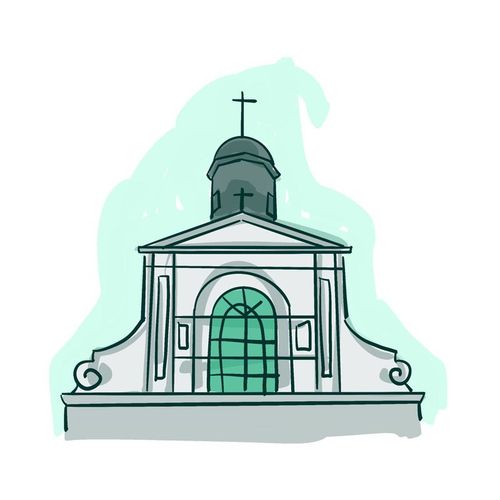
13 - Chapel of the Congregation
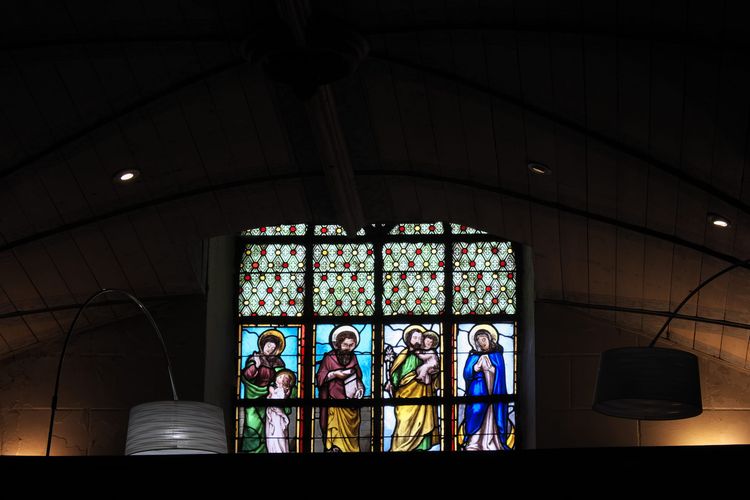
Raised at the close of the 17th century for a brotherhood of craftsmen devoted to the Virgin, this small chapel went on to a far more turbulent life. During the Revolution it hosted lotteries for the National Guard, local elections, and even stored firefighting pumps. Its darkest moment came in 1795, when military courts used it to try prisoners captured after the failed Quiberon landing. It now hosts exhibitions on Auray's heritage, a far quieter chapter than those troubled years.
Free to see from outside
14 - Breton Food
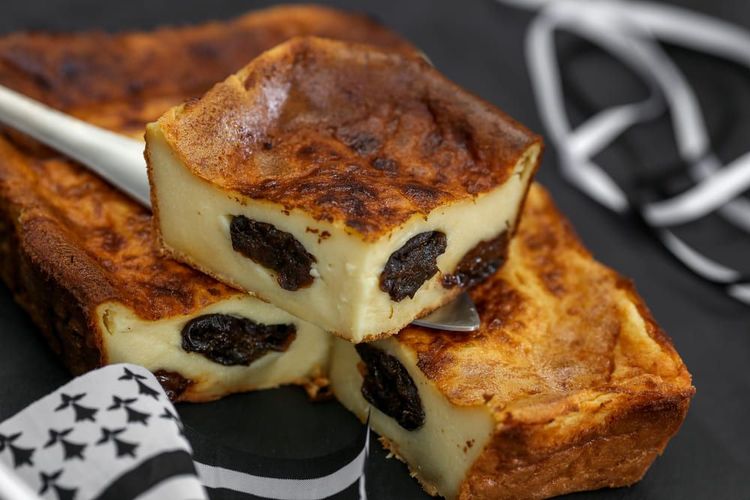
Auray's covered market, whose story traces back to a 1199 charter, carries a Breton name that gave French the word cohue, for the noisy crowd of market days. Rebuilt several times since the Middle Ages, it still draws traders and shoppers every Monday. A good spot to try local fare: salted buckwheat galette, smoky andouille de Guemene, buttery far or gateau breton, and above all kouign-amann, layered dough with salted butter and sugar, crisp outside and soft within. Best enjoyed with a bowl of cider.
Free entry
15 - Beautiful Half-Timbered Houses
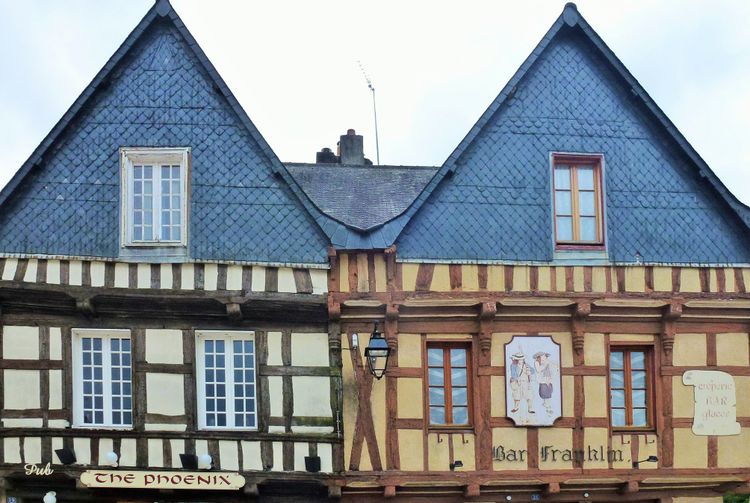
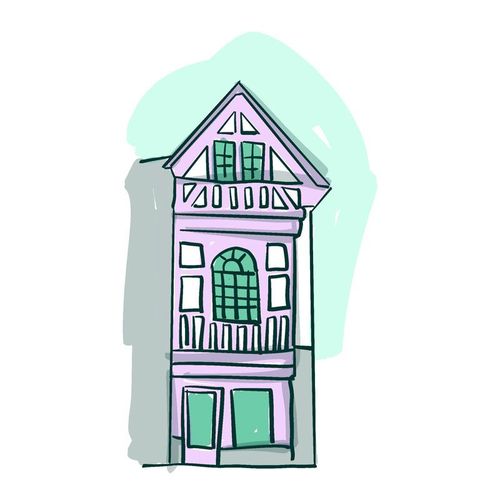
Along these streets typical of old Auray stand timber-framed houses built over some five centuries, their beams forming the frame while gaps were filled with clay, straw, stone or brick. The ground floor often held a shop, the family living above, sometimes jutting out over the street to gain space. Around forty such houses survive in town, a fragile heritage threatened over time by fire and by streets widened elsewhere, which wiped out many others.
Free entry
16 - Former Royal Prison
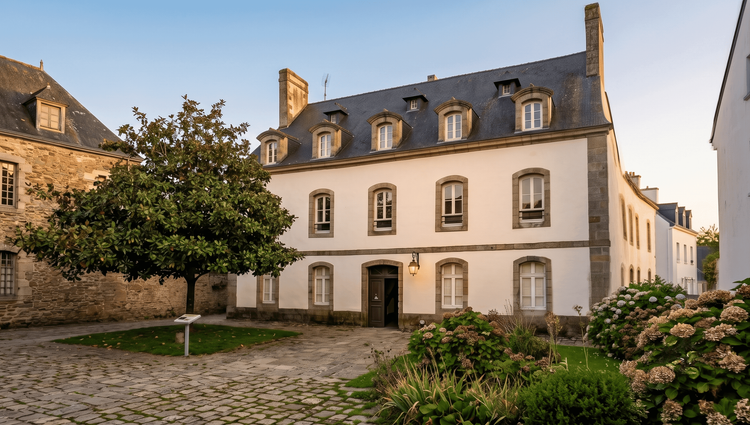
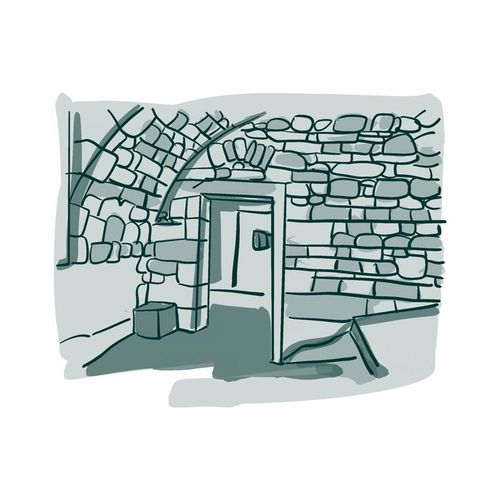
This elegant white house hides a former royal prison, built on the eve of the Revolution and paid for by Louis XVI. Counted among the most modern prisons in Morbihan when it opened in 1788, it could still hold close to 90 inmates on rough oak planks, some of whom carved their names or scratched drawings of boats into the wood. Punished prisoners were sent down to two damp underground cells. Georges Cadoudal, the famed Chouan leader born in Auray, was once held within its walls.
Free to see from outside
17 - Les Rampes du Loch
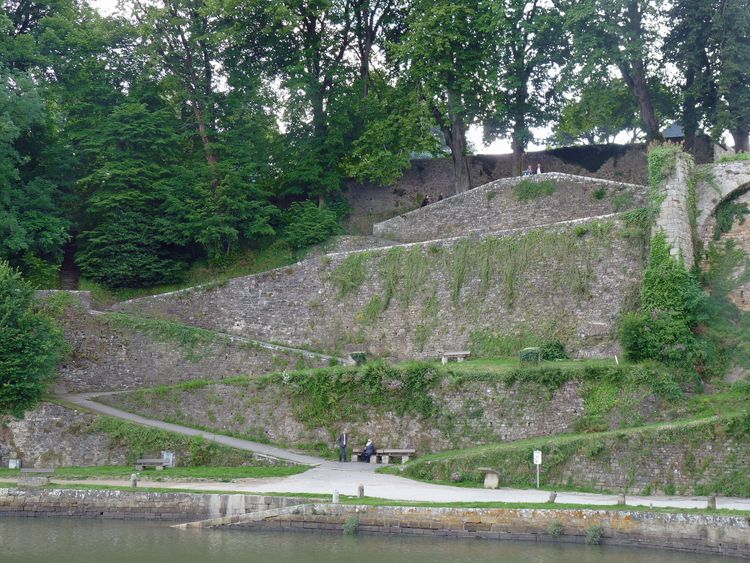
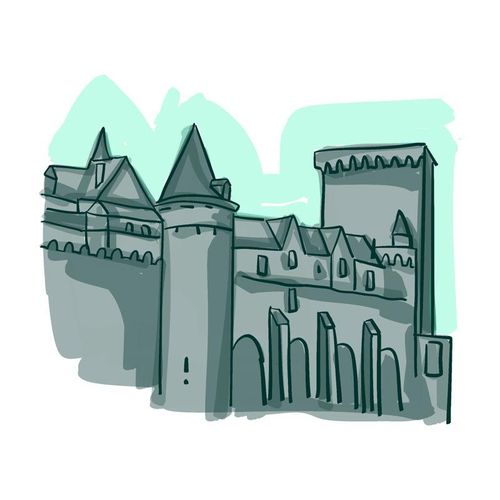
These winding paths down to the Loch sit where a ducal stronghold once rose, built from the 11th century and rebuilt in stone in the 13th, watching over the harbour and river while guarding both Auray and Saint-Goustan. Dukes of Brittany stayed here with their court, and Duke Francois even married here in 1442. Left useless once the duchy joined France, it was torn down by royal order in 1558; some of its stone went to build Belle-Ile, the rest still showing on the slope.
Free entry
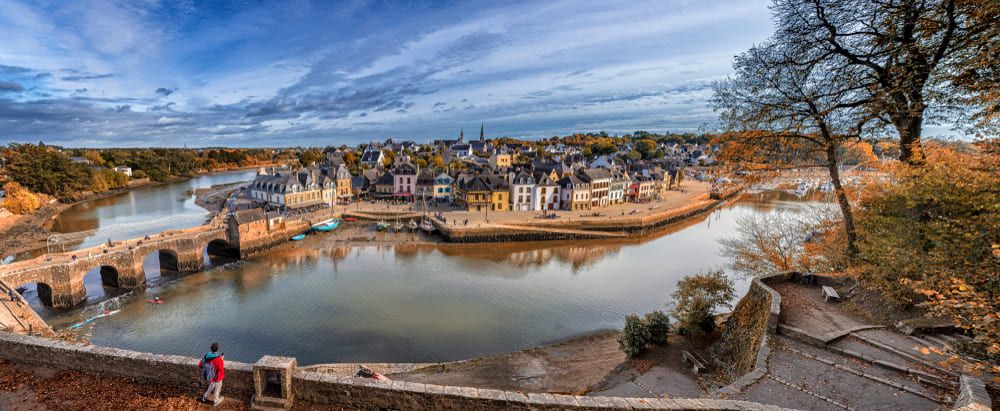
18 - The Picture-Perfect View
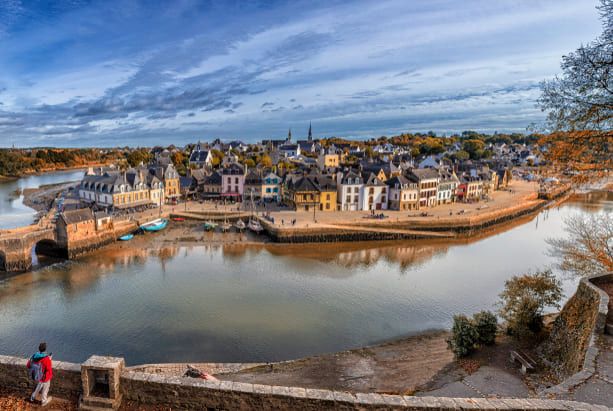
This final outlook takes in Saint-Goustan in a single frame, likely the very picture that drew you to Auray in the first place. Take a moment to enjoy it, and if you can, come back at dusk: the harbour wears a wholly different light then, a fitting close to this walk through seven centuries of Breton history between the upper town and its maritime quarter.
Free entry · Best late in the day
Which neighbourhoods does the tour cross?
The loop links Auray's two faces: the maritime quarter of Saint-Goustan below, and the upper town perched across the water.
From Place Saint-Sauveur, it first follows the quays of Saint-Goustan, where café terraces have taken the place of the old harbour's cargo, heads up to Saint-Sauveur church and squeezes through narrow Rue Neuve to the bridge linking the two banks (stops 1 to 8).
Across the bridge, Rue du Château climbs toward the upper town, past the town hall, the covered market and the Petit Théâtre, then Saint-Gildas church, the Chapel of the Congregation and the former royal prison (stops 9 to 16).
The route finally comes down via the Rampes du Loch, over the ruins of the ducal castle, for one last view over the Saint-Goustan headland (stops 17 and 18).
How much does it cost to visit Auray?
None of the walk's 18 stops charge an entrance fee. Fourteen are freely open, from Saint-Sauveur church to the Rampes du Loch, while the other four (the town hall, the Petit Théâtre, the Chapel of the Congregation and the former royal prison) are usually seen from the street, as their interiors are not always open to visitors.
To park for free, use the Saint-Goustan car park on Chemin de Bellevue, about a 10-minute walk from the harbour.
Information checked in November 2026 and subject to change.
Where to stop for a bite along the tour?
In the upper town, the walk stops in front of Auray's covered market (stop 14), where the Monday market carries on a medieval tradition, and this is where it runs through Breton specialities.
Buckwheat galettes are eaten savoury, filled with ham, egg or cheese, and andouille de Guémené sausage is recognisable by its concentric rings and smoky taste. For dessert, prune-studded far breton sits alongside kouign-amann, bread dough folded over salted butter and sugar. A bowl of cider goes with it all.
Earlier, on the Saint-Goustan quays (stop 2), the walk tells the story of the Auray river's flat oysters, with their almost round shells, long dredged from natural beds: ordering a dozen along the way is also a taste of maritime history.
What should you know before visiting Auray?
Two times make arriving by car harder: summer days and Monday mornings.
In summer the quays fill up fast: it's best to arrive in the morning and avoid looking for parking right along the water, where the streets are narrow. On Monday mornings, the large market takes over part of the town centre and makes parking harder until early afternoon; in blue zones, a parking disc is still required.
A few monuments keep their own hours: the former royal prison only opens on certain occasions, and the doors of Saint-Sauveur church or the Notre-Dame-de-Lourdes chapel may be closed when you pass.
What to see around Auray?
Auray also makes a good base for trips to the neighbouring towns of the Morbihan.
12 km away, Carnac lines up its world-famous standing stones and lively old Breton town; access inside the alignments is free from October to March, but limited to guided visits the rest of the year.
Two more audio-guided walks extend the discovery of the Morbihan: 17 km away, Vannes unfolds its ramparts and timber-framed houses around the cathedral; 23 km away, Quiberon offers a peninsula of storm-battered cliffs facing the calm waters of its bay.
What's on in Auray right now?
This time of year, Auray is marking 250 years since Benjamin Franklin's arrival in Saint-Goustan.
From 20 November to 22 January, a free exhibition set up on Quai Franklin traces these 250 years of history and friendship between western France and the United States, with a digital trail and related events. On 4 December, the exact date of the anniversary, fireworks are set off at 7:30 pm in Place Saint-Sauveur.
In December, the Christmas market also sets up in Place Notre-Dame, with craft stalls, wooden games and a carousel. The other highlights, from the lights to Father Christmas arriving by river, are covered in our guide to Christmas in Auray, with last year's timings.
Information checked in November 2026 and subject to change.
Le plein d'inspirations
Explorez le monde en totale liberté, à pied au cœur des villes ou au fil des routes. Nos guides audios transforment chaque destination en une découverte culturelle immersive et unique.










FAQ for visiting Auray
What is there to do in Auray at Christmas: lights, Christmas market and festive events?
In Auray, Christmas runs from early December to the 24th. The lights are switched on at place de la République, then Santa arrives by river with a flotilla of illuminated boats, followed by fireworks over the port of Saint-Goustan.
The Christmas market gathers around sixty exhibitors on place Notre-Dame. There is also a medieval village for one weekend and a Santa's house set up in a chapel. The times mentioned are those of 2025, and the 2026 times are to be confirmed by the town hall.
All the events, times and tips are covered in our guide: Auray at Christmas: lights, market and Saint-Goustan celebrations.
How many days do you need to visit Auray and what should you see on a 3-day stay?
One day is enough for the historic centre and the Saint-Goustan harbour, but three days let you discover Auray at a relaxed pace. Day one is devoted to the medieval town: place Saint-Sauveur with its half-timbered houses, rue du Château, then the harbour where Benjamin Franklin landed in 1776.
Day two follows the ria to the village of Le Bono and its suspension bridge, with the big Monday market. The stay then continues to Sainte-Anne d'Auray, Carnac or the gulf. May, June and September are the best months.
Find the detailed day-by-day itinerary in our guide to visiting Auray in 3 days.
Vos commentaires, idées et suggestions
Aucun avis pour le moment