





Walk
A Town With Two Faces
Auray, France
Walk
A Town With Two Faces
Auray, France
2.4 km
Distance
1h00
Durée
19
Audios
Loop
Parcours
@Shutterstock
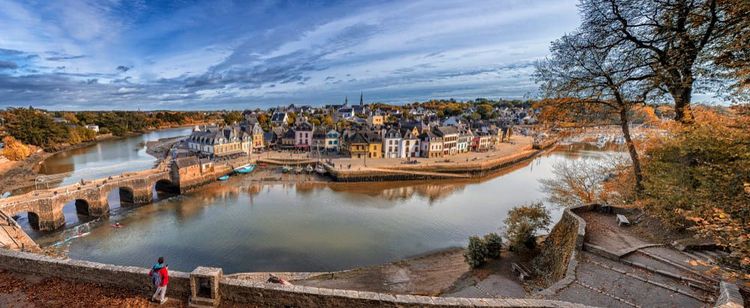
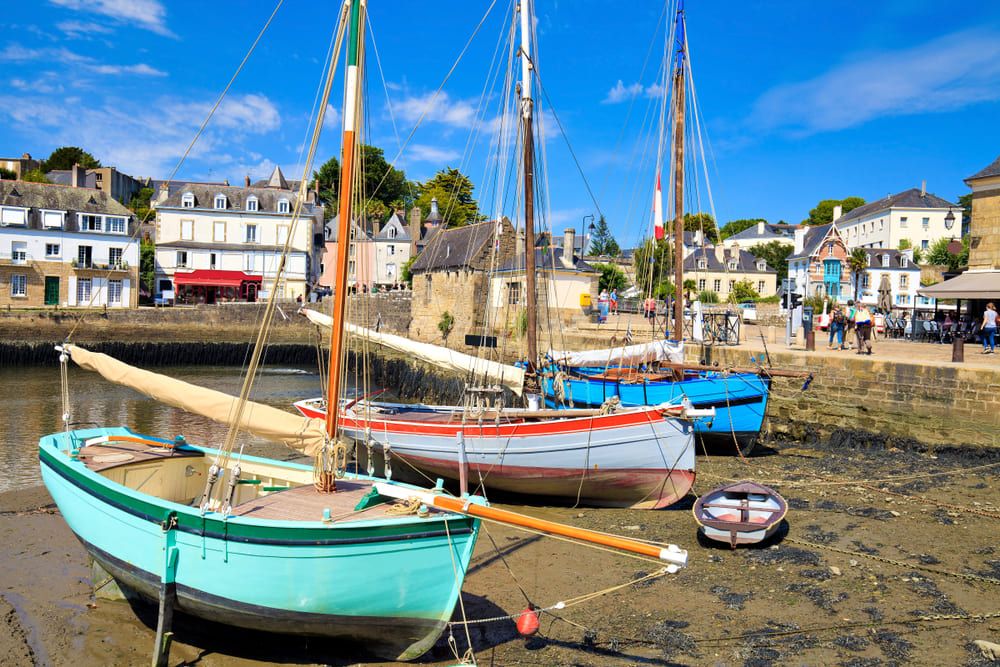
Watching the little boats bob peacefully in front of the café terraces, it’s hard to imagine that Saint-Goustan was once one of the busiest ports in Brittany! The port began to develop in the 15th century and reached its golden age in the 16th and 17th centuries. Fueled by the wine and grain trade, it eventually became Brittany’s third-largest commercial harbor.
For a moment, forget the café terraces and picture the quays piled high with goods. Ships arrived carrying wine, salt, leather, iron, and even steel from northern Spain. They left loaded with wheat, rye, and oats, along with butter, fish, and textiles produced in the region.
In the 18th century, shipbuilding also became an important local industry. But over time, Saint-Goustan began to lose its influence. The creation of the port of Lorient, difficult access from inland areas, and later the expansion of roads and railways gradually drew traffic away.
At the beginning of the 20th century, a few ships were still coming here to load long wooden beams used to support the tunnels in the coal mines of Wales. But by then, the great days of maritime trade were well and truly over. Saint-Goustan remained Auray’s working-class district, and the story goes that the well-to-do residents of the upper town were reluctant to come down and mix with the people of the port, whom they nicknamed the “Bigorneaux,” or periwinkles.
Today, with visitors flocking to the quays to admire the boats, wander through the narrow streets, and relax at the cafés, you could say the Bigorneaux have had the last laugh: the neighborhood people once looked down on has become the most popular part of Auray.
Aucun avis pour le moment
