© Shutterstock
 Votre guide Ryo
Visiting Auray in 3 Days: The Complete Itinerary Between Medieval Town and Sainte-Anne d'Auray (2026)
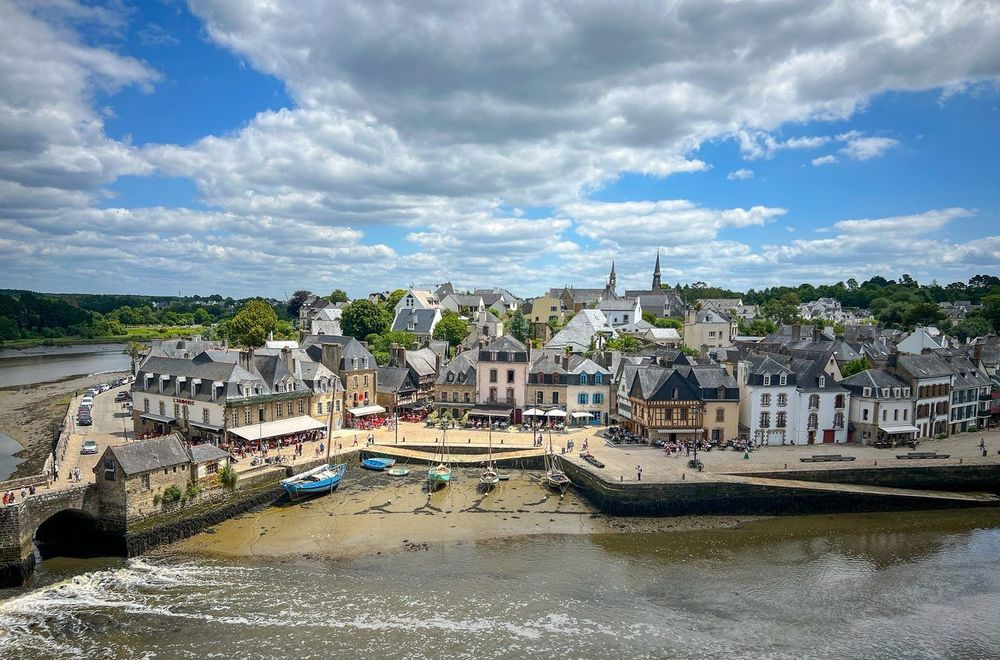
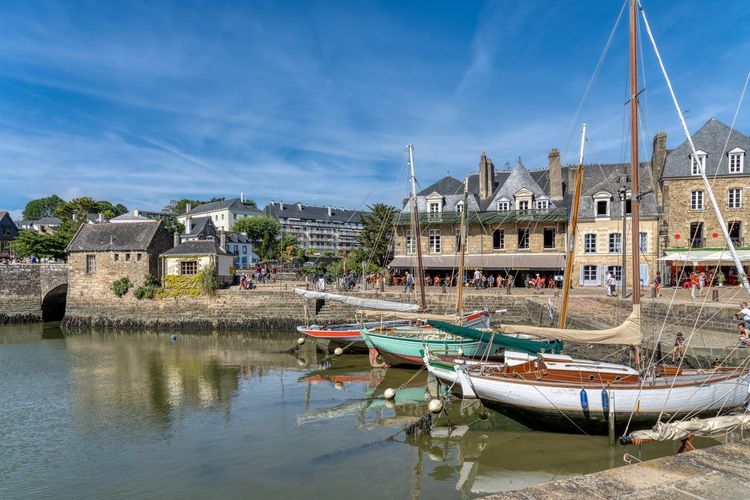
At low tide, the old rigs of Saint-Goustan harbour lean gently on the mud of the Loc'h, just below the half-timbered houses where, in 1776, a certain Benjamin Franklin first set foot in Europe. Few visitors strolling along the quays today know that they are walking in the footsteps of a major diplomatic episode of the American War of Independence. It is this layering of medieval, maritime and religious history that explains why visiting Auray deserves far more than a two-hour stop between Vannes and Carnac. For anyone who wants to visit Auray in 3 days without rushing, the Ryo audio-guided tour of Auray links the lanes of the historic centre and the port on foot, in 19 audio stops and a 2.4 km loop, with no need to look for your way on a map.
Founded on the edge of a ria that made its commercial fortune as early as the Middle Ages, the town has kept this dual identity as a merchant town and fishing port. In three days, you have time to see Auray from every angle: the timber frames of Place Saint-Sauveur, a port that has seen fishermen and American revolutionaries pass through, a river you can follow on foot to a village of slate roofs clinging to the rock, and a basilica that alone attracts more pilgrims each year than the town has inhabitants. This guide details, day by day, what to see, where to eat, how to get there and what to do if Breton rain joins the programme.
Why Visit Auray: A Short History of a Breton Town
A Town Born of the River and the Dukes of Brittany
If you had to remember just one reason to visit Auray, it would be its historical density for a town of barely 14,000 inhabitants. A ducal castle is mentioned there as early as 1082, perched on the escarpment overlooking the Loc'h, then rebuilt in stone by Duke Arthur I in 1201. It was under its walls, on 29 September 1364, that the Battle of Auray was fought: Jean de Montfort defeated Charles de Blois, who was killed in combat, ending the War of the Breton Succession. Having become John IV, the victor founded a collegiate church on the battlefield that would become the Carthusian monastery of Auray, still visible at Brech.
The fortress itself did not survive the Renaissance: an order from Henri II had it dismantled in 1558, and its stones were sent to reinforce the fortifications of Belle-Île. The port of Saint-Goustan, at the foot of the old castle, then took over as the town's engine, with a trade in wine, salt and grain that made Auray one of the busy ports of southern Brittany until the 18th century.
From Benjamin Franklin to the Chouannerie
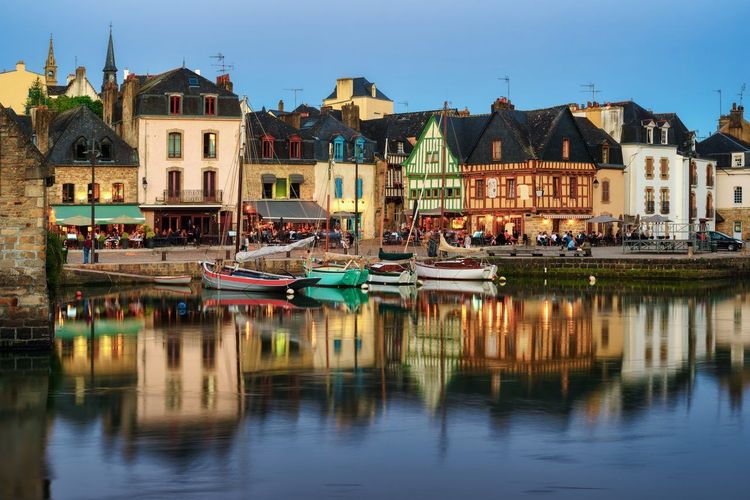
On 3 December 1776, an American ship dropped off a distinguished passenger at Saint-Goustan: Benjamin Franklin, sent by Congress to obtain the support of Louis XVI. The quay that bears his name recalls this stopover. Twenty years later, the Revolution left a darker mark here: after the failure of the royalist landing at Quiberon in 1795, hundreds of émigrés and Chouans were shot near Auray, at the place now called the Champ des Martyrs. The Chouan leader Georges Cadoudal, born at Kerléano in 1771, was in fact a local. Keeping these landmarks in mind changes the way you will see the quays and lanes over the next three days.
When to Visit Auray and How Long to Allow
How Many Days to Visit Auray
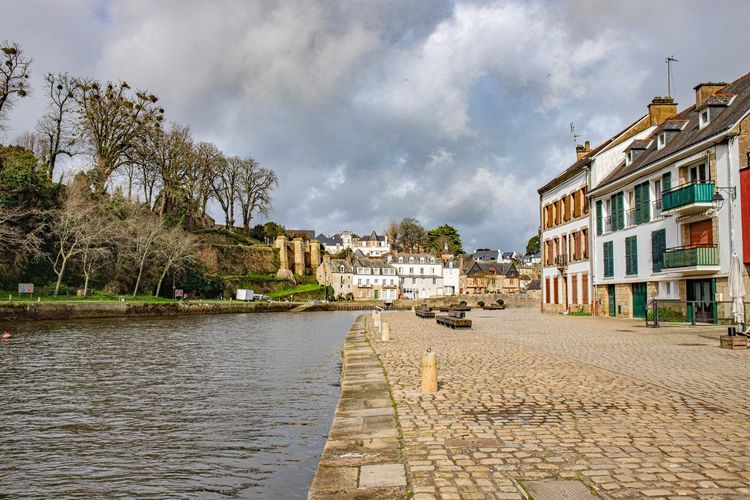
One day is enough to see the historic centre and the port of Saint-Goustan. But to visit Auray in 3 days, as this guide proposes, you also gain the ria, the Le Bono bridge, Sainte-Anne d'Auray and a side trip to Carnac or the gulf, without rushing. A little organisational tip: make sure your stay includes a Monday, the day of the big market.
The Best Season
May, June and September offer the best balance: long daylight, open terraces and car parks that are still accessible. July and August are still pleasant, but expect crowded quays, especially around the great pardon of Sainte-Anne d'Auray on 25 and 26 July. In winter, the town returns to a very local rhythm: ideal if you like deserted lanes, less so if you are counting on boat trips in the gulf, whose sailings are reduced out of season.
Day 1: Medieval Auray and the Port of Saint-Goustan
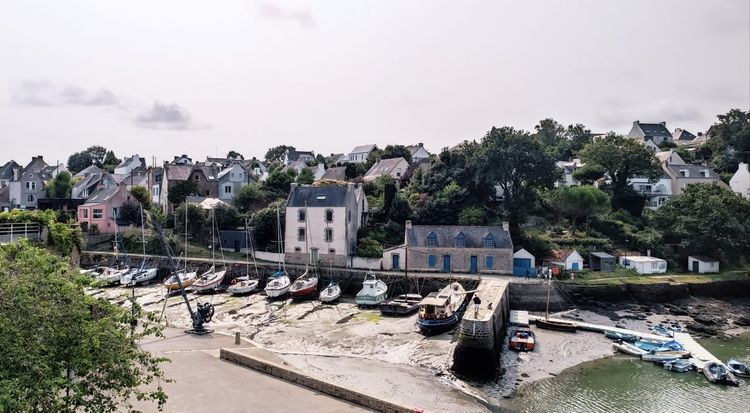
Devote this first day to the upper town before heading down to the water. The morning is ideal for strolling the cobbled lanes of the historic centre, the afternoon for discovering the old port and its lively quays.
The Historic Heart: Medieval Squares and Lanes
The visit logically begins at Place de la République (Place de la République, 56400 Auray), the administrative and commercial heart of the upper town. Lined with stone façades and dominated by the 18th-century town hall, it serves as a landmark before you plunge into the maze of lanes that leads down to the old port. There are plenty of café terraces, handy if you want to start the day with breakfast before the climb through the old centre.
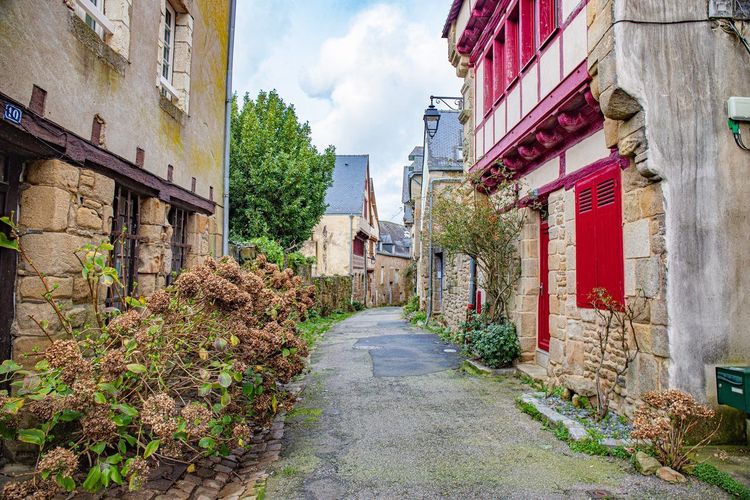
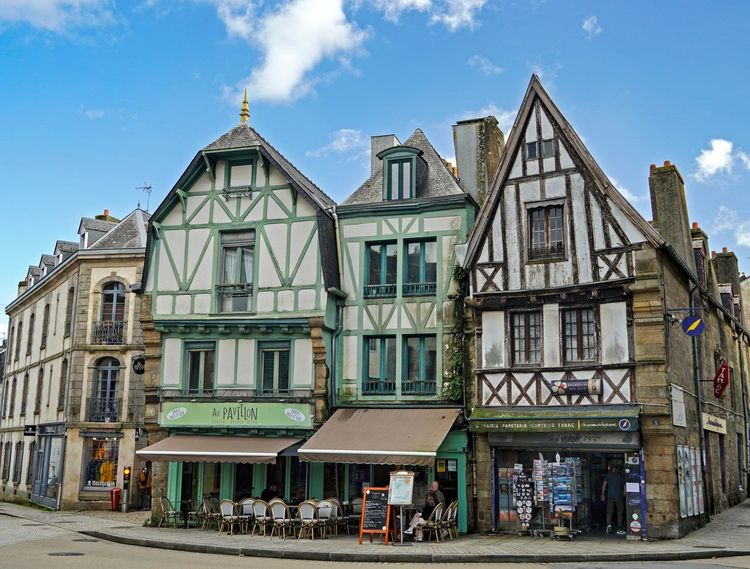
Two minutes' walk away, Place Saint-Sauveur changes register completely: the 16th- and 17th-century half-timbered houses line up in jettied storeys, some leaning almost comically under the weight of the years. It is the image most often associated with Auray, the one found on every Morbihan postcard, and it deserves more than thirty seconds of your time to pick out the carved details on the beams.
Just opposite, the Church of Saint-Sauveur in Auray closes off this medieval ensemble. Its squat bell tower and rather dark nave contrast with the bustle of the square, making it a cool, quiet pause, welcome in midsummer when the paving stones radiate heat.
To extend the walk, head up Rue du Château (Rue du Château, 56400 Auray), which leads to the site of the former castle of the Dukes of Brittany. Nothing remains of the fortress, dismantled in 1558, but the street itself, narrow and cobbled, gives a good idea of medieval urban planning before you head back down to the port. Look out along the way for the former royal prison, one of the buildings you walk past without noticing if nobody points it out.
The lanes of the historic centre also hold a few independent shops, mostly local designers and delicatessens, ideal for bringing back a souvenir that is more than a simple fridge magnet.
The Old Port of Saint-Goustan
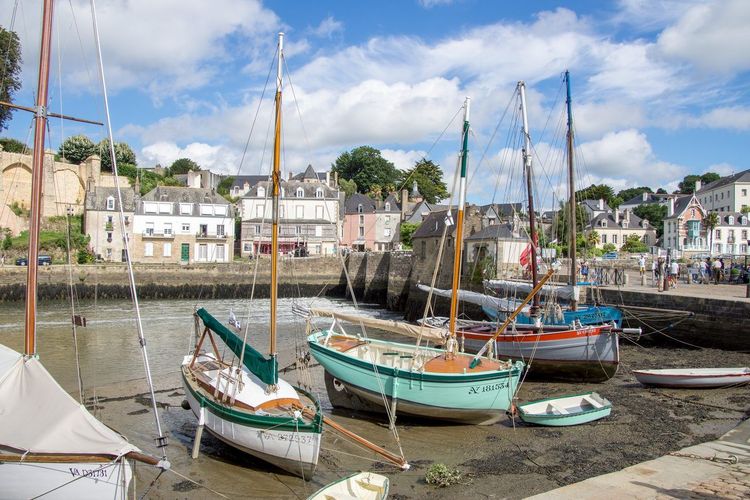
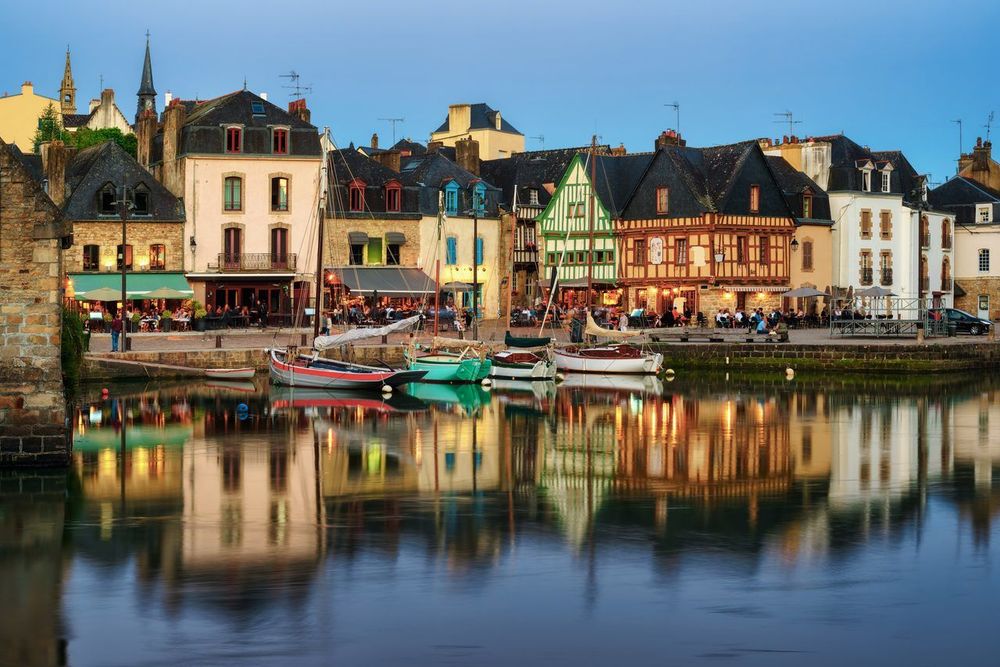
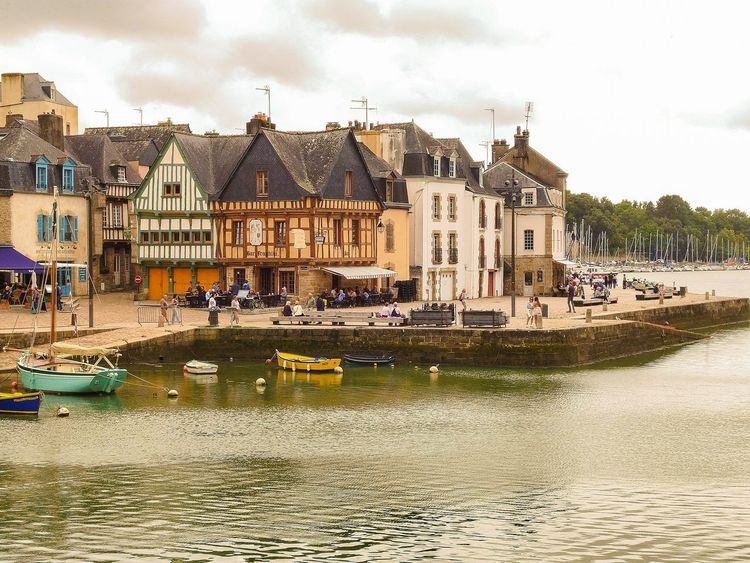
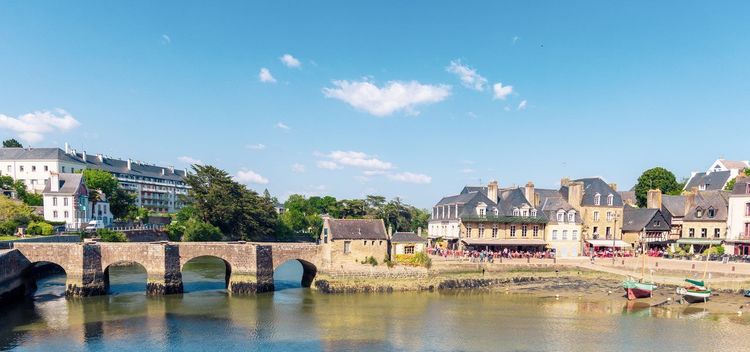
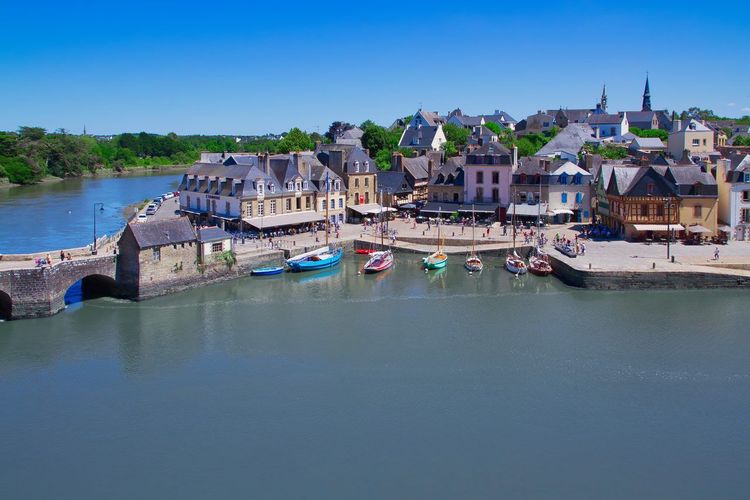
The descent to the old port of Saint-Goustan begins through a maze of steep lanes that suddenly opens onto the quays and the river. The contrast is immediate: the grey stone of the upper town gives way to the colourful façades of fishermen's houses and terraces set facing the water.
The Saint-Goustan bridge, which spans the Loc'h at this point, offers the best view over the whole port and the rooftops of the district climbing in an amphitheatre. It was at its foot, on the quay that now bears his name, that Benjamin Franklin landed in early December 1776, before heading to Paris to negotiate France's support for the American cause. A commemorative plaque, fixed to one of the houses on the quay, recalls this founding episode of Franco-American relations; it easily goes unnoticed amid the summer bustle, but it is worth stopping for a few seconds before continuing your walk.
The picturesque charm of the district long attracted painters: several Breton artists of the late 19th century set up their easels on the quays to capture the sails and the reflections on the water, contributing to the reputation of the place well before the arrival of mass tourism.
Don't miss getting a little lost in Rue du Petit Port (Rue du Petit Port, 56400 Auray), set back from the main quay: the houses are more modest, the lanes narrower, and you meet fewer people than at the water's edge. In the late afternoon, the port terraces fill up and it is the best time to enjoy the light on the river before sunset.
If you prefer a guided visit without booking a time slot, the Ryo audio-guided tour of Auray covers exactly this first day: a loop of about an hour that passes the half-timbered houses of Place Saint-Sauveur, the former royal prison and the oyster-farming heritage, then descends to Saint-Goustan with a stop devoted to the arrival of Benjamin Franklin. The loop can start from any stop, handy if you arrive directly via the port.
Day 2: A Walk Along the Auray Ria and the Food Market
Change pace for this second day: head for nature, along the water, before returning to the bustle of the market, provided your second day falls on a Monday.
The Loc'h Promenade and the Auray Ria
The Loc'h promenade, laid out on the escarpment where the old castle once stood, offers a very different view of Auray: here, no cobblestones or half-timbered façades, but tree-lined paths, benches facing the river and a plunging view over the bridge and the rooftops of Saint-Goustan, with boats stranded on the mud at low tide.
Technically, we shouldn't speak of a river but of the Auray ria: this arm of the sea that reaches inland is subject to tidal influence for several kilometres upstream, which explains the spectacular variations in water level between two visits to the same spot. Downstream of the town, paths follow the bank in places and let you watch herons fishing near the shores; to reach Le Bono, a few kilometres away, the car (about ten minutes) is nonetheless the simplest option.
The promenade paths are easy to access; the wilder riverbank trails run right alongside the mud and call for closed shoes at low tide. For photographers, the late-day light on the ria, between the port and Le Bono, is one of the most photogenic moments of the stay, as long as you aim for an hour before sunset rather than sunset itself, often hidden by the foliage.
The Port of Le Bono, a Riverside Stop
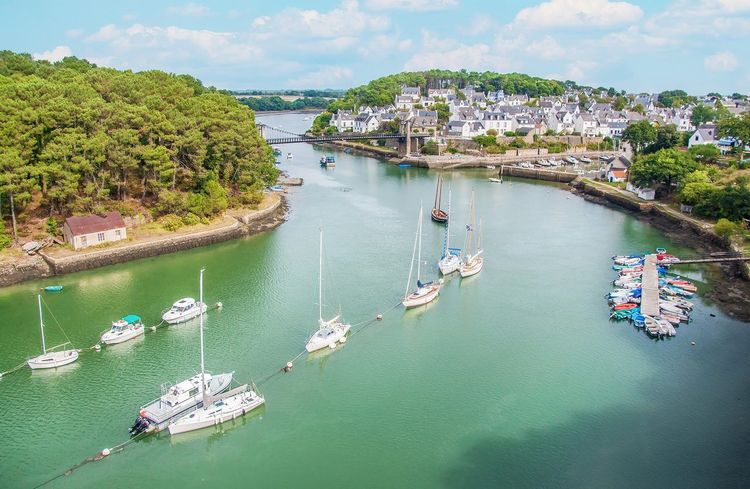
About ten minutes by car, the port of Le Bono is worth the detour on its own. The slate-roofed fishermen's houses are literally set into the rock, some carved right into the cliff, in a style found nowhere else on the ria.
The village is best known for its old suspension bridge, inaugurated in 1840 to cross the Bono river. Replaced for cars by a road bridge in 1969, it was rebuilt identically and reopened to pedestrians in 2005; listed as a historic monument since 1997, it is one of the last bridges of its kind in France, and walking across it offers the finest view of the port. Park on the village square rather than on the quayside, where spaces are scarce and reserved primarily for residents at weekends.
The village also has two or three pleasant spots for a lunch break facing the water, less crowded than the restaurants of Auray's port and often a little cheaper.
Auray Market and Local Crafts
The Auray market (Place de la République, 56400 Auray, rated 4.3/5 on Google from 23 reviews) takes place on Monday mornings, from about 8:15 am to 2 pm, from Place Maréchal-Joffre to Place de la République and in the neighbouring lanes. With up to 400 stallholders in summer, it is one of the most renowned in Morbihan: local producers, fishmongers, cheesemongers and a few craft stalls rub shoulders in an atmosphere that remains resolutely local despite the influx of summer tourists.
The market has existed in one form or another for several centuries, driven by Auray's position at the crossroads of land routes and the river route to the ria. You will find in particular excellent seafood, local goat cheeses, galettes and crêpes made on the spot, as well as a few stalls of artisanal cider and apple juice, typical of this part of Morbihan. On other days, the covered market of Place de la République houses about twenty traders open all year round.
Around the market, several workshops of local crafts are worth a look even on non-market days: ceramicists, art galleries set in the lanes of the historic centre, shops selling Breton specialities. If you haven't done the loop the day before, the Ryo audio guide fits nicely into this market morning: its 19 stops start from the shopping centre and tell, among other things, the oyster-farming past of Auray, which casts a different light on the shellfish stalls you have just walked past.
Day 3: Sainte-Anne d'Auray and the Morbihan Surroundings
On the last day, head for the neighbouring hill and then, if the weather allows, a little further into Morbihan. It is a chance to leave the historic centre and take the measure of the area around Auray.
The Basilica and Sanctuary of Sainte-Anne d'Auray
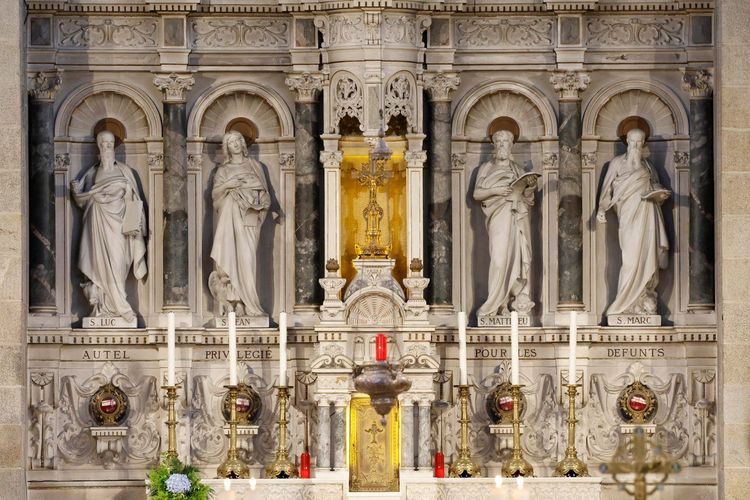
Three kilometres from the town centre, the sanctuary of Sainte-Anne d'Auray attracts around 800,000 visitors and pilgrims each year, making it the foremost pilgrimage site in Brittany. The site is dedicated to Saint Anne, patron saint of the Bretons, who is said to have appeared between 1623 and 1625 to a villager, Yves Nicolazic, asking him to rebuild a chapel in her honour.
The Basilica of Sainte-Anne d'Auray (Rue de Vannes, 56400 Sainte-Anne-d'Auray, rated 4.7/5 on Google from 4,092 reviews), completed in 1877 in a neo-Renaissance style quite spectacular for such a small town, overlooks a vast esplanade where the great Breton national pilgrimage takes place every year on 25 and 26 July. Outside the great pardon, the site remains surprisingly calm, almost contemplative, which lets you appreciate the stained glass and the basilica's treasury at leisure.
Entry to the basilica is free, which is not so common for a building of this scale, and the interior can be visited without strict opening hours outside services. The treasury, the Scala Sancta and the imposing regional memorial dedicated to the Bretons who died in the Great War complete the visit for those who want to go deeper. If you visit around 26 July, the day of the great pardon, expect crowds well above normal and parking difficulties around the sanctuary; in that case it is better to arrive early in the morning or visit the basilica the day before.
The annual pilgrimage remains the key to understanding the special place Sainte-Anne d'Auray holds in Breton identity: unlike many sanctuaries that have become primarily tourist sites, this one retains a genuine living spiritual function, with processions bringing together tens of thousands of people from all over Brittany. To grasp its scale, come on a Sunday morning or during a pardon rather than on a Tuesday in November.
Nearby Sights Not to Miss in Morbihan
If you still have a few hours on this third day, several of the best-known sites in Morbihan are less than thirty minutes by car. The alignments of Carnac, about twenty minutes away, comprise several thousand menhirs erected nearly 6,000 years ago, a site whose exact function archaeologists still debate. History lovers can also continue to the Carthusian monastery of Auray, at Brech, a few minutes from the centre: founded by John IV on the 1364 battlefield, it now houses an expiatory chapel dedicated to the victims of 1795, far less crowded than the basilica.
Further to the south-east, the Gulf of Morbihan deserves an excursion in its own right with its islands, the best known of which, the Île aux Moines, can be reached in a few minutes' crossing from the landing stage at Port-Blanc, in Baden, less than twenty minutes from Auray. If you opt for this excursion, it is best to check boat times in advance: some services depend on tidal coefficients and do not run at all hours, particularly to the islands farthest from the coast. As for nature, the countryside around Auray also includes forests and salt marshes, for those who prefer hiking to the beach.
Finally, the peninsula of Quiberon, about half an hour away, offers a striking contrast between the wild coast, battered by waves, and the sheltered coast facing the bay, much calmer. For this last half-day, it is better to choose just one of these three capes rather than trying to tick everything off: Morbihan lends itself to slowness, not to racing.
How to Get to and Around Auray
Arriving by Train or Car
Auray has its own station, served by direct TGV from Paris-Montparnasse in about 3h15 to 3h30, making it a very accessible destination for a long weekend or a three-day break. The station is about a twenty-minute walk from the historic centre, a pleasant stroll that already lets you get a feel for the town on arrival. As for tickets, booking your train ticket several weeks in advance can often cut the price by half or even two-thirds on this heavily booked route in summer, particularly on Fridays and Sundays in July and August.
To visit Auray by car, access is mainly via the Nantes-Quimper expressway (RN165), with a dedicated exit a few minutes from the centre. Allow about an hour from Nantes and a little over three hours from Paris depending on summer traffic, which can be heavy in July and August on this busy route to the Quiberon peninsula.
Parking and Getting Around the Town Centre
Where to park to visit Auray is the number one practical question, especially in summer. The area around the old port of Saint-Goustan has few spaces and quickly fills up from midday. The simplest solution is to park in one of the upper-town car parks, near the station or on the edge of the historic centre, then walk down to the port: the walk takes no more than ten to fifteen minutes and saves you from driving in circles looking for a space.
For short trips, a bike rented in town is a practical option for quickly reaching Sainte-Anne d'Auray or Le Bono without a car or a long walk, particularly with children who tire quickly on the cobblestones of the centre. Once there, on foot, the narrow and sometimes steep lanes of the town centre can be explored without particular difficulty, and this is where the Ryo audio-guided tour comes in handy: in one hour and 2.4 km, it guides you step by step through this maze, so you don't miss a lane or go in circles looking for the direction of the port.
Where to Stay and Eat in Auray
Our Picks for Where to Stay in Auray
For maximum immersion, choosing accommodation in Saint-Goustan remains the most charming choice: several fishermen's houses renovated as guesthouses or small boutique hotels look directly onto the port, at the price of a little more walking to the station or the upper-town car parks.
In the town centre, hotels near Place de la République offer a practical compromise between proximity to the port, shops and ease of parking, a significant criterion if you are coming by car. For a three-day stay, it is best to book early enough in summer: the small town has limited accommodation capacity compared with Vannes or Quiberon.
For a more budget-friendly stay, several campsites are nearby, notably around the ria and towards Le Bono, an option appreciated by families who want to stay several days without multiplying accommodation costs. Rates are generally more affordable than in Vannes or on the Quiberon peninsula, although the gap narrows sharply in July and August.
Where to Eat on the Port and in the Town Centre
The quays of Saint-Goustan have the highest concentration of restaurants, with most places focused on seafood: crêperies, fish restaurants and a few oyster bars enjoy a superb view over the port, especially pleasant at sunset.
In the upper town, around Place Saint-Sauveur and Place de la République, the offering is more varied and generally a little less touristy in its prices: bakeries, small bistros and tea rooms cater more to locals than passing visitors, making them good options for a quick lunch between visits.
What to Do in Auray When It Rains

Brittany spares no one, and it is useful to have a plan B. Several covered markets and craft galleries in the historic centre can be visited very well in the rain, as can the interior of the Church of Saint-Sauveur or that of the Basilica of Sainte-Anne d'Auray, large enough to keep you occupied for a good hour under cover.
For a full afternoon without setting foot outside again, head for Vannes, twenty minutes away by car or train: its half-timbered old town and covered market let you extend your exploration of Morbihan's heritage without suffering the weather. Museum lovers can also check the temporary exhibitions at the Vannes museum or, closer by, the small art galleries permanently set up in the lanes of central Auray.
There is also a cinema in the town centre, a simple option for filling a rainy evening after a day of sightseeing, alongside the covered markets and small museums mentioned above. Another option: settle into one of the cafés on Place de la République with a view of the square's bustle, rain or shine. It is also a good time to plan the rest of your stay or to mark on a map the sites you will want to save for a future visit if the weather doesn't improve.



FAQ
How long does it take to visit Auray?
One day is enough to see the essentials of the historic centre and the port of Saint-Goustan, but allowing two to three days lets you add the ria, the port of Le Bono and Sainte-Anne d'Auray without rushing, which matches the itinerary detailed above.
What is the best time to visit Auray?
Spring and early autumn offer the best compromise between mild weather and reasonable crowds. Summer is still pleasant, but the harbour lanes and town-centre car parks fill up quickly in July and August, especially on market days and around the great pardon of Sainte-Anne d'Auray in late July.
Where can you park to visit the port of Saint-Goustan?
Spaces directly on the port are scarce and expensive in high season. It is better to park in one of the upper-town car parks, near the station, and then walk down: ten to fifteen minutes on foot is enough to reach the quays without driving in circles.
Can you visit Auray with walking difficulties?
The upper town, around Place de la République, is accessible without much difficulty, but the descent to Saint-Goustan is via steep, cobbled streets, which can be tricky with a wheelchair or a pushchair. Going in pairs to help each other on the steepest stretches is the safest solution.
What can you do around Auray without a car?
The centre, Saint-Goustan and the Loc'h promenade can all be done entirely on foot. The station lets you reach Vannes in about ten minutes and, in summer, Quiberon on the seasonal Tire-Bouchon train, which also answers the question of what to do by train from Auray. Sainte-Anne d'Auray, however, requires a taxi, a local bus, a bike or a good hour's walk from the centre.
What else is there to do in Morbihan after Auray?
Carnac and its menhir alignments, the Gulf of Morbihan with its islands accessible by boat, and the Quiberon peninsula with its wild coast naturally complete a stay of several days based in Auray.
Three days is more than enough to take the measure of Auray, from its medieval lanes to the quiet fervour of Sainte-Anne, via the Le Bono suspension bridge and the bustle of the Monday market. It is a town to be savoured slowly, at the pace of the Loc'h tides rather than that of a classic tourist circuit.
To organise this discovery without wasting time looking for your way, the Ryo audio-guided tour of Auray remains the simplest solution: download our Ryo app before you leave, and let yourself be guided, step by step, from the medieval town to the port, headphones on and a map in your pocket only if needed.