





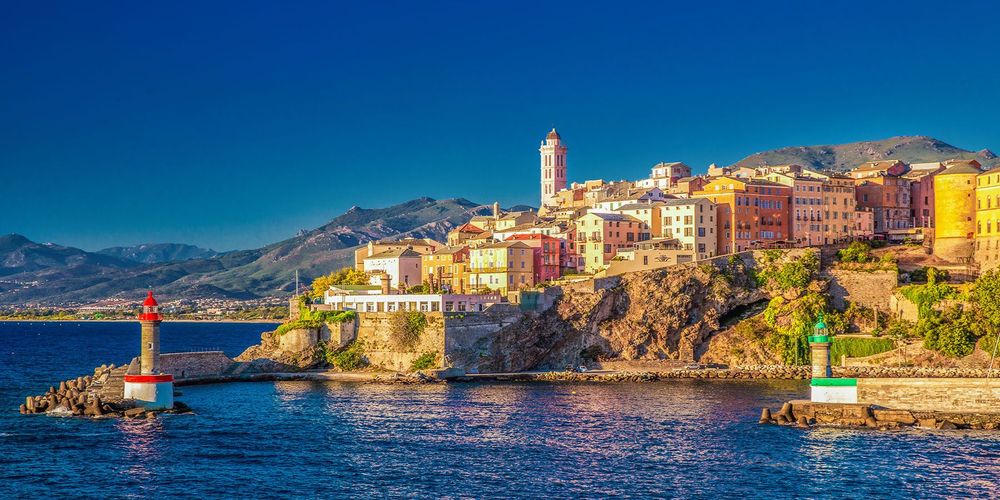
Walk
The Pearl of the Island of Beauty
Bastia, France
Walk
The Pearl of the Island of Beauty
Bastia, France
3.5 km
Distance
1h30
Durée
25
Audios
Loop
Parcours
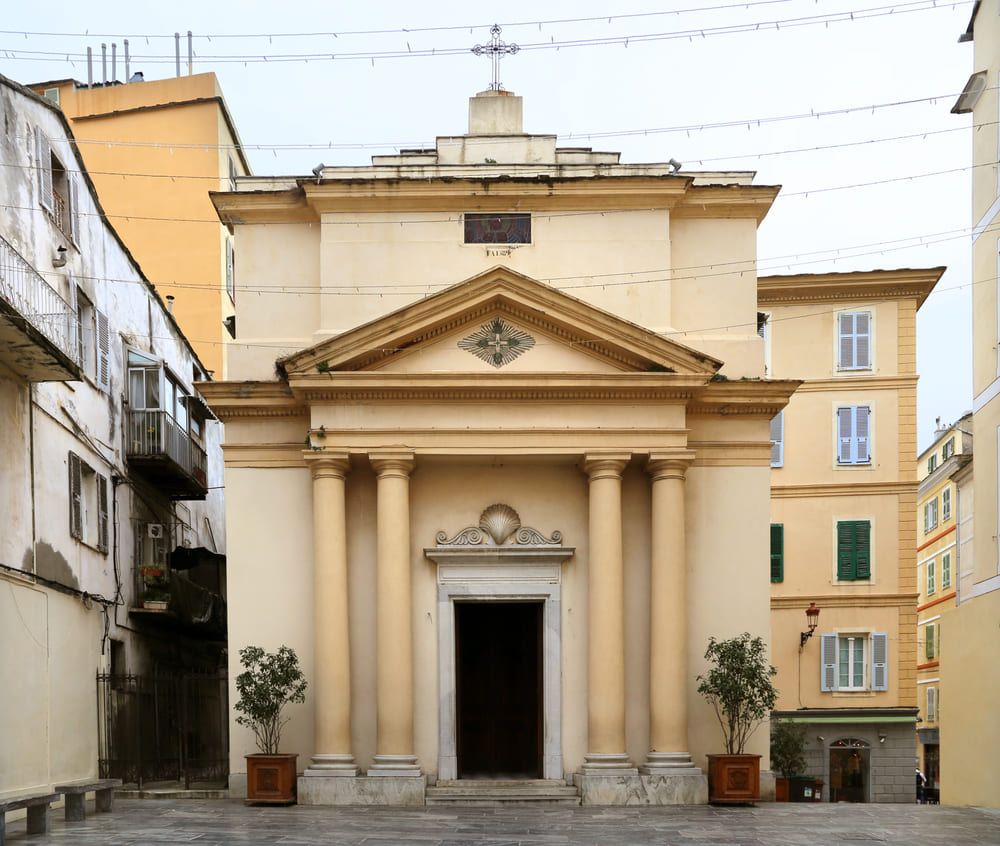
©Sailko CC BY-SA 3.0. <https://creativecommons.org/licenses/by-sa/3.0/deed.fr>via Wikipedia Commons
The Bastia audio-guided tour stops you before the Saint-Roch oratory, in the heart of Rue Napoléon. It is approached with quiet respect: this religious building, dedicated to prayer, testifies to the faith of the people of Bastia in a tragic context.
Although a first building was constructed in the sixteenth century, the present oratory was built in 1604 by Francesco Marengo. Its façade was reworked in the nineteenth century in the neoclassical style, as was the white marble portal, topped with the pilgrims' shell. The idea of an oratory dedicated to Saint Roch arose when Corsica and Europe were struck by the plague, the saint being invoked to protect the population from the epidemic.
The oratory houses a careful interior decor, typical of the Genoese religious tradition, discovered with respect for silence if the doors are open. Its neoclassical façade and its marble portal, adorned with the pilgrims' shell, deserve a close look. It is a moving witness to the spiritual history of Bastia.
The Saint-Roch oratory is on Rue Napoléon, in the historic centre of Bastia. A place of worship, it can be visited with respect for silence; opening times may vary and the doors are not always open. The façade can be contemplated freely from the street.
The present building was constructed in 1604 by Francesco Marengo, on the site of a first sixteenth-century oratory. Its façade was reworked in the nineteenth century.
Saint Roch was invoked to protect against the plague, which then struck Corsica and Europe. The oratory was raised as a sign of devotion to this protector of the sick.
Aucun avis pour le moment
