





Walk
All hands on deck !
Saint-Malo, France
Walk
All hands on deck !
Saint-Malo, France
6.6 km
Distance
2h45
Durée
30
Audios
Loop
Parcours
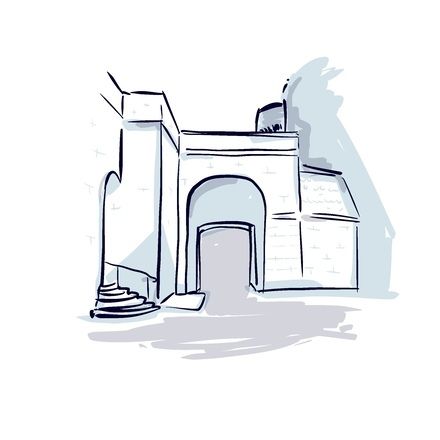
The Saint-Thomas Gate is one of the gates of the ramparts of Saint-Malo, opening onto the beach and the Fort National. The Saint-Malo audio-guided tour stops here to evoke this historic gate, a passage between the walled town and the shore.
Located near the castle, the Saint-Thomas Gate is one of the gates of the ramparts of Saint-Malo. It opens onto the Éventail beach and offers a view of the Fort National, which stands offshore. A passage between the walled town and the shore, it testifies to the defensive system of the city and its close link with the sea, paced by the great tides.
Here you cross the gate of the ramparts to reach the Éventail beach, with a fine view of the Fort National offshore. The Saint-Thomas Gate illustrates the link of the walled town with the sea. It is a stop for lovers of heritage and the seaside, near the castle.
The Saint-Thomas Gate lies on the ramparts of Saint-Malo, near the castle, opening onto the Éventail beach, reachable on foot. It is a public structure freely accessible at all times. The view of the Fort National depends on the tides; it is best to check the tide times to enjoy the shore.
Onto the Éventail beach, with a view of the Fort National that stands offshore from Saint-Malo.
On the ramparts of Saint-Malo, near the castle.
Aucun avis pour le moment
