





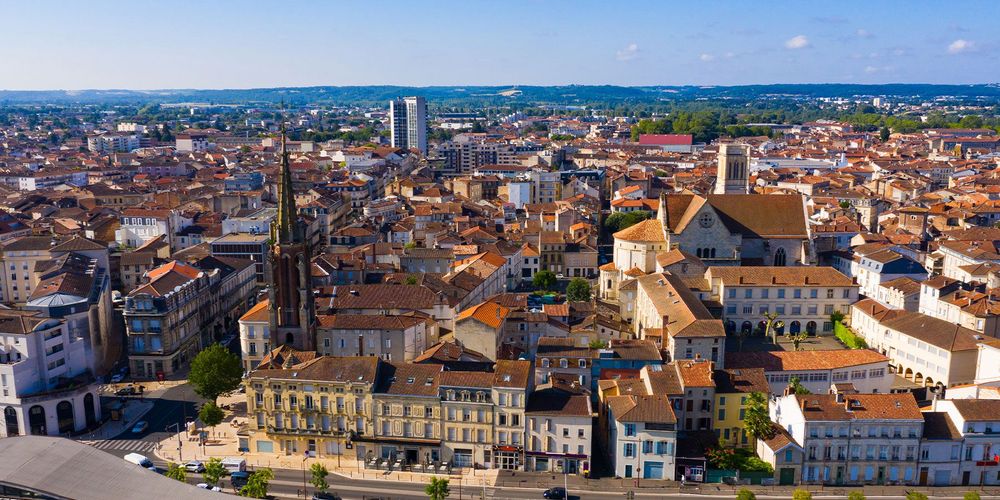
Walk
City of Prunes and Heritage
Agen, France
Walk
City of Prunes and Heritage
Agen, France
3.1 km
Distance
1h15
Durée
20
Audios
Loop
Parcours
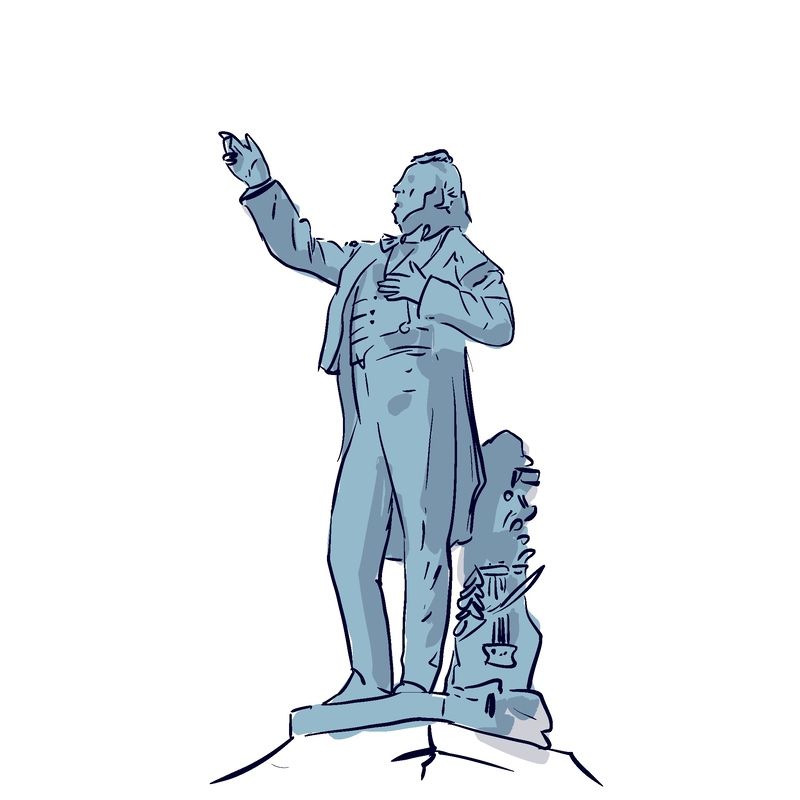
The Agen audio-guided tour leads you to Place Jasmin, before the statue of a man with an eloquent posture, one hand on his chest. But who was he, and what is his link with the "capital of the prune"?
Jacques Boé, known as Jasmin, is at once an illustrious figure of the nineteenth century and a symbol of Occitan culture, who deeply marked French poetry. Son of a tailor and a washerwoman, he was born in the poor quarters of Agen in 1798. A hairdresser by trade, he knew immense success as a poet of Occitan expression, declaiming his verses throughout France and fervently defending his language and his popular roots.
The statue represents Jasmin in a posture of declamation, as if caught in full poetic momentum, on the square that bears his name. It pays tribute to one of the most famous children of Agen and recalls the city's attachment to the Occitan language and culture. An instructive stop on the literary memory of the city.
The statue of Jasmin stands on Place Jasmin, in the centre of Agen. It can be contemplated freely at all hours and on the level, along the walk in the city.
Jacques Boé, known as Jasmin, a poet of Occitan expression born in Agen in 1798, a symbol of Occitan culture and a figure of the nineteenth century.
On Place Jasmin, in the centre of Agen, on the square that bears the poet's name.
Aucun avis pour le moment
