





Walk
The City of Six Harbors
Lorient, France
Walk
The City of Six Harbors
Lorient, France
4.5 km
Distance
1h50
Durée
24
Audios
Loop
Parcours
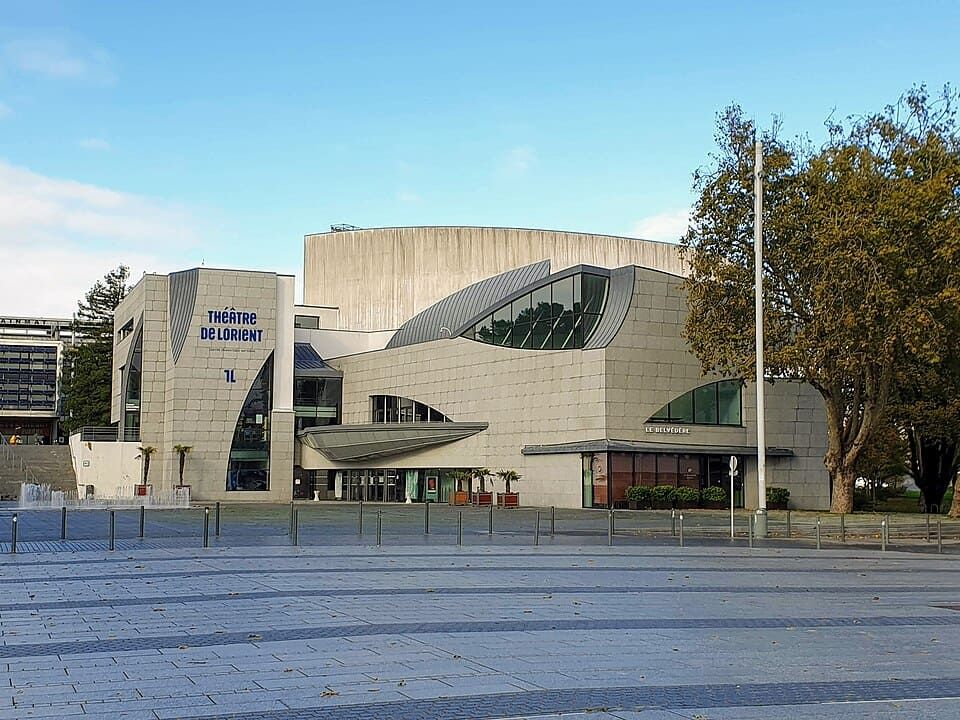
©Camille Gévaudan, CC BY-SA 4.0 httpscreativecommons.orglicensesby-sa4.0, via Wikimedia Commons
You’ve now reached the heart of Lorient’s cultural and sporting life. From this square, two major landmarks come into view: the Grand Theatre and Stade du Moustoir. The Grand Theatre de Lorient, designated a National Drama Center, was designed by architect Henri Gaudin and completed in 2003.
Its main auditorium seats more than 1,000 people, while the building’s architecture pairs modern metal with reconstituted granite, a hallmark of the postwar Reconstruction. Just a few meters (a few yards) away stands Stade du Moustoir, officially named Stade Yves-Allainmat in honor of the city’s former mayor. Rebuilt after the war and inaugurated in 1957, this nearly 17,000-seat stadium is known for its intense match-day atmosphere and is the historic home of FC Lorient, known as Les Merlus—a nickname that pays direct tribute to the sailors of Keroman’s fishing port.
But Le Moustoir is far more than a soccer stadium. Every August, the stadium takes on a completely different role during the Lorient Interceltic Festival. Its field becomes a stage for Celtic music and dance.
This is where the spectacular Triomphe des sonneurs fills the stadium with the powerful sound of bagpipes, bombardes, and drums, and where the Grande Parade of Celtic Nations reaches its destination, as thousands of musicians and dancers in traditional dress stream into the stadium before an awestruck crowd.
Aucun avis pour le moment
