





Walk
Walking Through a Past That Shaped the Future
Saint-Étienne, France
Walk
Walking Through a Past That Shaped the Future
Saint-Étienne, France
4.5 km
Distance
1h45
Durée
15
Audios
Loop
Parcours
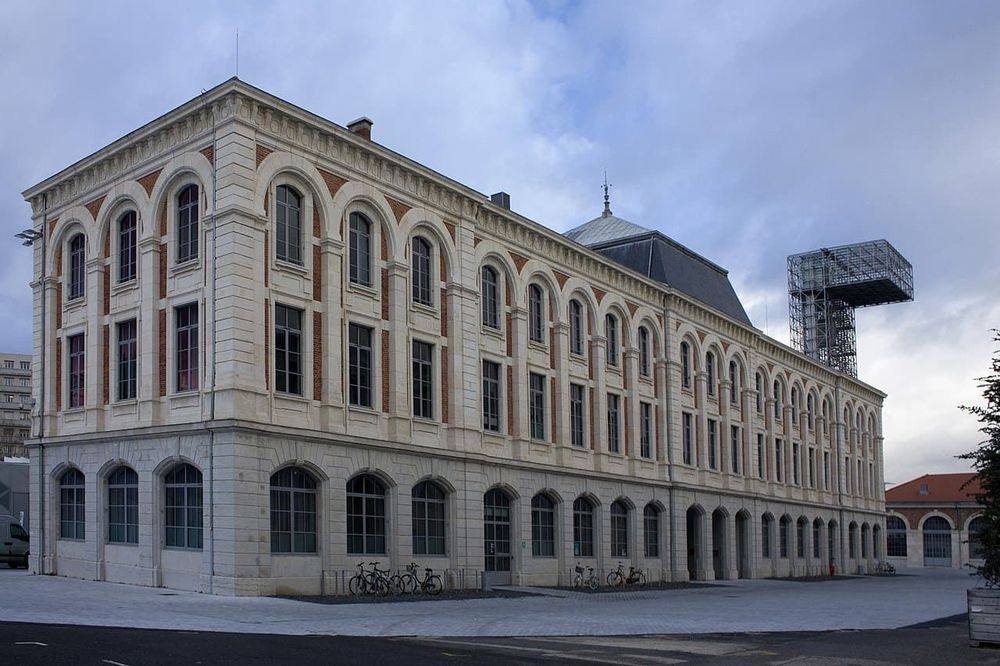
©Daniel Villafruela. CC BY-SA 3.0. <https://creativecommons.org/licenses/by-sa/3.0/deed.fr>via Wikipedia Commons
The monumental gate marked with the seal of the Republic was the official entrance of the Arms Manufactory of Saint-Étienne, heart of an industrial empire. The Saint-Étienne audio-guided tour stops here to evoke this high place of the arms industry, that made the renown and the working-class identity of the town.
You are in front of the imposing gate, marked with the seal of the French Republic, that formerly served as official entrance to the Arms Manufactory of Saint-Étienne. For more than a century, this district was the beating heart of a true industrial empire. Saint-Étienne was indeed the great French capital of the arms industry: from the modern era, the town developed a production of arms that became one of the most important of the country, supplying the armies of France. The Arms Manufactory, a state manufactory, employed thousands of workers and profoundly shaped the town, its urbanism, its economy and its identity. Saint-Étienne was thus a great working-class and industrial town, also famous for its coal, its cycles, its ribbons and its metallurgical know-how, that made its prosperity at the time of the industrial revolution. The Manufactory, long a jewel of this power, marked generations of Saint-Étienne people. Today, the emblematic site has been reconverted and hosts the City of Design, symbol of the creative renaissance of the town, become a UNESCO City of Design. A witness of the industrial and arms past, the Arms Manufactory is a fine stop of the discovery of Saint-Étienne.
You admire the imposing gate marked with the seal of the Republic, former official entrance of the Arms Manufactory of Saint-Étienne, that was for more than a century the heart of an industrial empire; great French capital of the arms industry, the town was a working-class town employing thousands of workers, and the emblematic site today hosts the City of Design, symbol of its creative renaissance. The Arms Manufactory is a witness of the industrial past of Saint-Étienne. It is a fine stop, to be explored on foot.
The gate and the site of the Arms Manufactory lie in the district of the Manufactory, in Saint-Étienne, reachable on foot and by public transport. You admire the gate from the street; the site, reconverted into the City of Design, follows its own hours and conditions, which vary. It is best to inquire before coming.
A state manufactory that made Saint-Étienne the great French capital of the arms industry: for more than a century, this district was the heart of an industrial empire employing thousands of workers and supplying the armies of France; its monumental gate, marked with the seal of the Republic, was its official entrance, and the site today hosts the City of Design.
In the district of the Manufactory, in Saint-Étienne, in France.
Aucun avis pour le moment
