





Walk
Cornouaille’s Capital in All Its Glory
Quimper, France
Walk
Cornouaille’s Capital in All Its Glory
Quimper, France
2.5 km
Distance
1h00
Durée
24
Audios
Loop
Parcours
Shutterstock
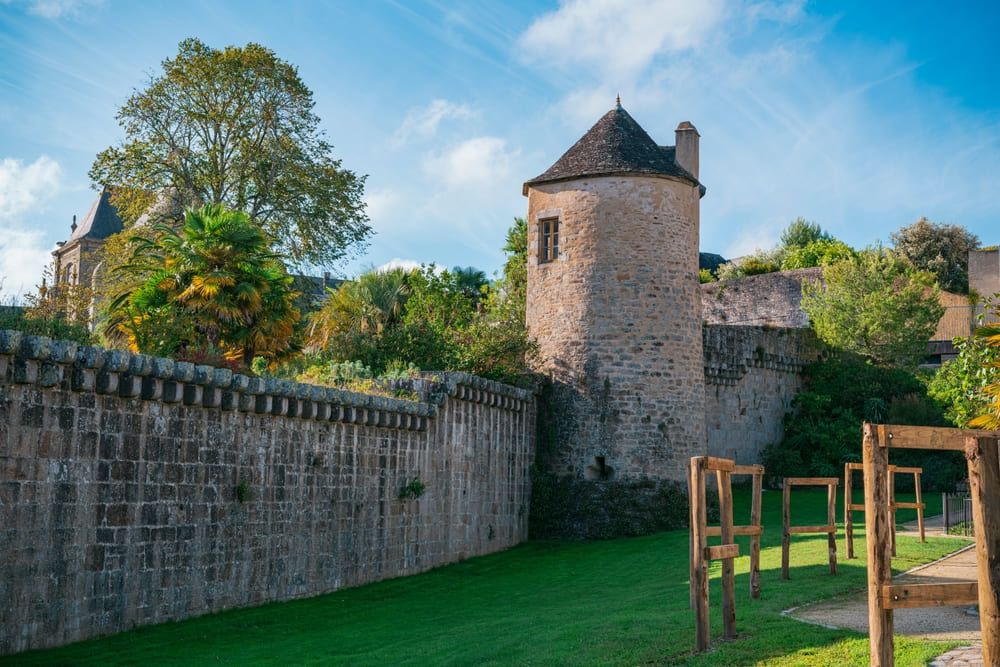
The Quimper audio-guided tour presents you with the vestiges of the medieval ramparts, precious witnesses of the fortified enclosure that once protected the city.
It is between the thirteenth and fourteenth centuries that Quimper surrounded itself with a belt of walls, some one thousand five hundred metres long. To the north and east, wide moats, about fifteen metres, preceded the high walls with machicolations, which made it possible to counter land attacks in these times of insecurity. In the middle of the fifteenth century, deemed of no real use, the ramparts were no longer maintained. Despite this, several stretches have been preserved, which one finds today at various points of the city, notably on the Rue de Juniville, the Rue des Douves and near the La Tour-d'Auvergne college.
The medieval ramparts of Quimper, although reduced to a few stretches, testify to the defensive past of the city. Scattered in several points of the city, they invite a heritage treasure hunt, for those who love history. It is a more discreet but precious aspect of the heritage of Quimper, to be discovered along the walk.
The vestiges of the medieval ramparts can be discovered at several points of the centre of Quimper, notably on the Rue de Juniville and the Rue des Douves. They can be contemplated freely at all hours, along the walk.
Between the thirteenth and fourteenth centuries, over some one thousand five hundred metres, with wide moats and walls with machicolations.
At several points of the city, notably on the Rue de Juniville, the Rue des Douves and near the La Tour-d'Auvergne college.
Aucun avis pour le moment
