





RyoCity
Walking in the Footsteps of a Future-Shaping Past
Saint-Étienne, France
RyoCity
Walking in the Footsteps of a Future-Shaping Past
Saint-Étienne, France
4.5 km
Distance
1h45
Durée
15
Audios
Boucle
Parcours
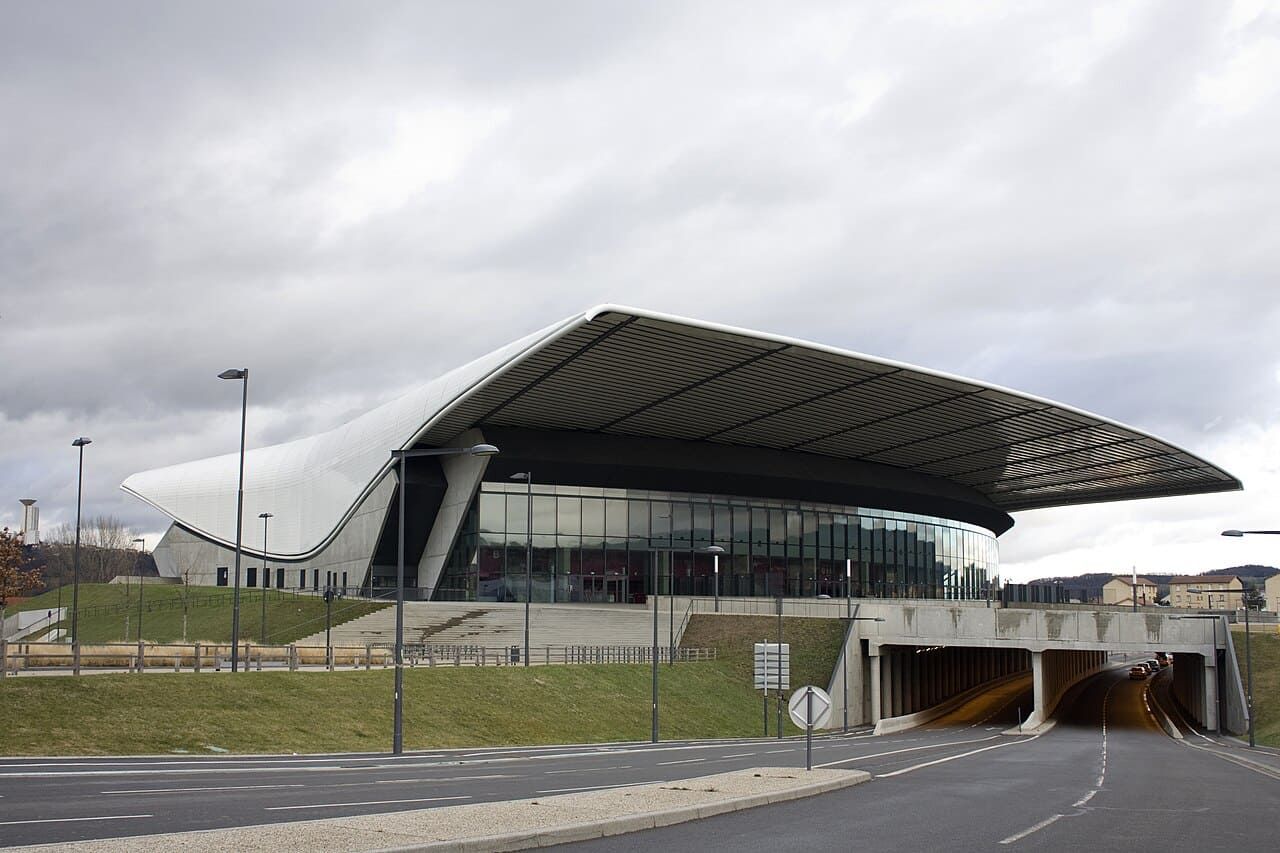
©Daniel Villafruela. CC BY-SA 3.0.
That futuristic-looking building you see is the Zénith of Saint-Étienne. With its ribbed aluminum shell and sleek, clean lines, it looks almost like a spaceship docked on the edge of the district. Opened in 2008, it was designed by British architect Norman Foster, one of the biggest names in contemporary architecture. If the name doesn’t immediately ring a bell, he’s also the mind behind the Millau Viaduct, the glass dome of Berlin’s Reichstag, and London’s famous “Gherkin”, that curved skyscraper nicknamed after a pickle, now a city icon. But back to Saint-Étienne. The city called on such a renowned architect because it wanted a landmark that was both bold and accessible. Inside, there’s space for over 7,000 people seated and standing, with carefully designed acoustics and a varied program: concerts, comedy shows, big public events, and international artists. The Zénith of Saint-Étienne is actually one of the largest in France, drawing audiences from across the Auvergne–Rhône–Alpes region and sometimes even farther. It’s part of the wider transformation of the Manufacture–Plaine Achille district, where the sound of machines once filled the air, it’s now basslines and applause that make the place vibrate. Visible from afar, the building also serves as a city landmark, bridging the space between downtown and the stadium. And if you get the chance to see a show here, it’s well worth it: the hall is adaptable, comfortable, and the atmosphere never disappoints.
